This is a fantasy novel about the Three Kingdoms with great imagination! Do you believe in the existence of dragon veins? Dragon veins are not dragon veins! In the process of exploring the dragon veins, Liu Bei, a mortal, encountered real people, demons, and immortals by chance; he witnessed magical techniques such as the Supreme Light Return Technique, the Technique of Leaping into the Sky, and the Thirty-six Transformations of Tiangang; he harvested countless spiritual treasures, learned Taiping techniques from the old immortal of Nanhua, and even recruited the help of the gods of heaven to finally solve the mystery of the dragon veins. Little did he know, he had been involved in a whirlpool of conspiracies involving the three realms...
A new interpretation of Huang-Lao's teachings, popularizing the teachings of all living beings, and enlightening the ancient and modern philosophy in troubled times.
At the end of the Eastern Han Dynasty, many heroes stood together. They divided states and counties, placed private ministers under their own authority, collected taxes and issued government orders by themselves, and were called county governors and state pastors. In fact, the counties and counties became emperors, and counties became kings. When they were happy, they linked up with each other and rebelled, and when they were angry, they merged with each other with strength. For a time, the princes of Gongun were fighting and attacking, and you just finished singing and I came on stage. At that time, Cao and Cao were preparing a banquet in a small pavilion, cooking wine with green plums and discussing heroes. Eighteen hundred years have passed, but this commentator agrees. Otherwise, these commentators would only cite the Sun family and his sons, Kong Ming, Gong Jin, Zhong Da, and even Yun Chang. However, I would say that at that time, the only person who could be called a hero was the great sage and mentor Zhang Jiao! He or she is doing what he or she is prepared to do, either to support his ancestors or to attach himself to the ministers. Although they have accomplished great things, they are just following people's influence, chasing fame and fortune, and pursuing selfishness and lust. They are not heroes! I look at Zhang Gong, who is far away from this generation. At that time, the Han Dynasty was in a state of corruption, the emperor was ignorant and the officials were cruel, the officials were rich and corrupt, the people were pitiful, and their lives were like grass. There is a song: Hair is like a leek, cut and reborn. The head is like a chicken, it crows again after being cut. Officials need not be feared, and ordinary people should never be taken lightly. Mencius said: He who loses the world loses his people; he who loses his people loses his heart. Therefore, the Han Dynasty lost its heart, and Zhang Gong followed the way of heaven! I say that Zhang Gong has five virtues: hanging a pot to help the world, giving talismans and giving water is his kindness; planting feathers to teach all over the world for ten years is his patience; responding to the world's sensation with one call is his wisdom; being willing to take extraordinary risks and rising up is his courage; having achieved wealth but not changing his original intention to be the leader of Guizhou is his kindness; ugh! What a pity, Mr. Zhang! There is no holiday! What a pity! Yellow scarf! The thief leaked his secret! The great achievements of the ages are finally completed. What is especially hateful is that in the past dynasties, acid scholars, flattery to Confucian scholars, slander and slander have actually turned heroes into demons, and wise and brave men into thieves. Thinking about it makes people sad. Using this as a wedge, I wrote this article, which makes my ears happy.
A new book on the Three Kingdoms that has been updated steadily. I recommend reading this one. It has entered a passionate moment. A piece of political strategy in the era of pure cold weapons
"Broken Game: Another Possibility of Shu Han": An in-depth deduction to construct a strategic break in the cracks of history. When the posthumous title of "Dedicate yourself to death and die" became a footnote to the tragic end of the Shu Han regime, and when the banner of "Reviving the Han Dynasty" sadly fell in the autumn wind of the original five feet, Three Kingdoms enthusiasts never stopped sighing at this regime. The emergence of "Breaking the Game: Another Possibility of the Shu Han" is like a sharp blade, taking 219 AD as the anchor point, tearing open the inherent cracks in the historical narrative, and leading readers to explore the strategic opportunities of the Shu Han under the cover of fate. Different from the fatalistic interpretation of the "innate deficiencies" of the Shu Han in traditional history books, the author of this book abandons the empty talk of "hindsight" and uses rigorous historical data as the basis to restore the complex situation before the loss of Jingzhou. Focusing on the three key clues of Guan Yu's Northern Expedition, Liu Feng Mengda's defense of Shangyong, and Liu Bei's main deployment, the potential variables of Shu Han's military dispatch, diplomatic game, and internal coordination are analyzed layer by layer. It is not a simple assumption that "if Guan Yu did not go to the Northern Expedition", but an in-depth discussion of feasible strategic fine-tuning such as "adjustment of the rhythm of the Northern Expedition" and "closer linkage between the east and west lines", so that "another possibility" can break away from fantasy and be supported by historical logic. The questioning of the nature of "breaking the situation" in the book is particularly moving: the dilemma of the Shu-Han is not only geographically "trapped in Bashu", but also the limitation of strategic vision. The analysis of the Liu Bei Group's "emphasis on friendship and neglect of the overall situation" and "emphasis on military achievements and neglect of overall planning" goes beyond the praise and criticism of individual figures and points directly to the shortcomings of the top-level design of the regime. When readers follow the text to deduce the chain reaction of "seizing the opportunity of 219", they will see not only the possibility of rewriting the pattern of the Three Kingdoms, but also a clear understanding of the deep logic of "historical choice". As a profound and logical historical strategy work, it has distinctive features and unique market positioning. Although its audience is relatively small, it is a rare masterpiece for readers who are keen on historical deduction and strategic analysis. The story is logically deduced, and everything from strategic goals to implementation paths to possible reactions of opponents has been carefully analyzed and verified. This strong logic gives the story a high degree of credibility and persuasiveness. It is neither a traditional "historical novel" - because it incorporates a large number of strategic deductions and assumptions; nor does it fit the entertainment characteristics of "shuangwen" or "fantasy novel". Its positioning is closer to "historical strategy writing". It is a niche but very in-depth genre, which combines the depth of historical writing with the depth of strategic games. Closing the page and looking at the dense cypress shadows of Wuhou Temple, the reader's dialectical thinking about "general trend" and "man-made" will also deepen. This book may not be able to change the ending of history, but it opens a new door for us, giving the story of the tragic Shu Han a more profound and interesting interpretation.
The "mediocre" modern sports student Huo Xiao [face covering] traveled to the late Han Dynasty and the Three Kingdoms. He had no system, let alone invincible [awkward laughter]. He first "trained" under the unparalleled Lu Bu [salute] and then found the true meaning in his heart. Master Ming, join Liu Huangshu's camp [Cool] Let's see how Huo Xiao, the second generation of "champions" can turn the tide [Hold] Help the emperor's uncle revive the Han Dynasty and rule the world~completely end the Han Dynasty's tragedy of the Five Husbands [currently in progress]
 Three Kingdoms Heaven and Earth Fight
20Reads—Score—Shelves
Three Kingdoms Heaven and Earth Fight
20Reads—Score—Shelves
 As Soon as I Traveled Through Time, I Saw the Han Dynasty Fighting Against the Tang Dynasty
31Reads5.8Score—Shelves
As Soon as I Traveled Through Time, I Saw the Han Dynasty Fighting Against the Tang Dynasty
31Reads5.8Score—Shelves
 Late Han Dynasty Taiping Jing
3Reads6.7Score—Shelves
Late Han Dynasty Taiping Jing
3Reads6.7Score—Shelves
 Three Kingdoms: Wukong Ascends Liangshan
102Reads—Score—Shelves
Three Kingdoms: Wukong Ascends Liangshan
102Reads—Score—Shelves
 Water Margin: Looking for the Visitors from the Three Kingdoms with Bajie
9Reads—Score—Shelves
Water Margin: Looking for the Visitors from the Three Kingdoms with Bajie
9Reads—Score—Shelves
 Three Kingdoms: from a Little Kid in the Countryside to an Emperor Through the Ages
85Reads5.8Score—Shelves
Three Kingdoms: from a Little Kid in the Countryside to an Emperor Through the Ages
85Reads5.8Score—Shelves
 Binghan
498Reads8.3Score—Shelves
Binghan
498Reads8.3Score—Shelves
 Three Kingdoms Online Game, Being Hunted at the Beginning
19Reads5.8Score—Shelves
Three Kingdoms Online Game, Being Hunted at the Beginning
19Reads5.8Score—Shelves
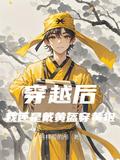 After Time Travel, I Still Wear a Yellow Helmet and a Yellow Robe
938Reads6.4Score101Shelves
After Time Travel, I Still Wear a Yellow Helmet and a Yellow Robe
938Reads6.4Score101Shelves
 Yuan's Hegemony: from the Fourth Generation and the Three Princes to the World Domination
27Reads5.8Score—Shelves
Yuan's Hegemony: from the Fourth Generation and the Three Princes to the World Domination
27Reads5.8Score—Shelves
 The Three Kingdoms of Suan Ding: the Record of Xuan Jing's Beauties
1Reads5.8Score—Shelves
The Three Kingdoms of Suan Ding: the Record of Xuan Jing's Beauties
1Reads5.8Score—Shelves
 Breaking the Situation: Another Possibility for Shu Han
9Reads5.8Score—Shelves
Breaking the Situation: Another Possibility for Shu Han
9Reads5.8Score—Shelves
 Guo Jia on the Left and Guan Yu on the Right: I Conquered the Three Kingdoms
2.2kReads6.4Score145Shelves
Guo Jia on the Left and Guan Yu on the Right: I Conquered the Three Kingdoms
2.2kReads6.4Score145Shelves
 I Went to Join the Emperor, and Lu Bu Shook His Head.
70Reads5.8Score—Shelves
I Went to Join the Emperor, and Lu Bu Shook His Head.
70Reads5.8Score—Shelves
 Fantasy Three Kingdoms: the Thief Cao Is Actually Myself
9Reads5.8Score—Shelves
Fantasy Three Kingdoms: the Thief Cao Is Actually Myself
9Reads5.8Score—Shelves
 Three Kingdoms: a Clear Dragon and a Dark Phoenix, the Story of Shu Han's Determination to Be Twins
83Reads5.8Score—Shelves
Three Kingdoms: a Clear Dragon and a Dark Phoenix, the Story of Shu Han's Determination to Be Twins
83Reads5.8Score—Shelves