I want to read a book similar to "Tempo: Everyone Knows I Want to Rebellion in the Beginning". I found a good-looking book. After reading it, I realized it was Xiao Miao Miao. I don't know if the author will update it or when it will be updated. Woohoo😭
Title: 🔥Suffocated to the point of suffocation! If you insist on winning, you will be forced to die? Emperors of all dynasties collectively broke their guard and cursed Li Longji! Chang'an fell, the emperor fled west, and the mountains and rivers were shattered! In the next chapter, Maweipo's heartbreaking farewell is about to take place! The most painful end of an emperor in history, what is the outcome of Concubine Yang?
✨✨①The male protagonist Qin Jiu is an ordinary person who loves movies and TV. Unexpectedly, he awakened the sky curtain system and was seen by (the ancestor Qin Shihuang) ✨✨②Lin Qi did not know his life. The videos he watched would be put in front of the audiences of all dynasties, which made the Ming Dynasty Emperor Li Shimin very angry [Love]
Here comes the Tianmu text. What this book tells is that Zhu Di and Zhu Yunwen formed a sharp contrast through the Shenbang. In the end, Zhu Di successfully succeeded to the position. Under the guidance of the Shenbang, the Ming Dynasty entered the industrial age. Zhu Di not only completed the great cause of unifying the world, but also explored outer space and discovered the truth of the world and the reason for the emergence of the Shenbang. I hope everyone can like it [smile] [smile]
12. Growth in the 11th Psalm: The story of Wang Xiaoqian and the time under the mango tree. "The mangoes are slanting in the summer in southern Fujian, and the young girls are playfully spending their time." The first two sentences outline the background of the story - a small town in southern Fujian in midsummer. The scorching sunshine bakes the bluestone road. The old mango branches are lush and leafy, and the shade of the trees is spread slanting in the courtyard, becoming a natural playground for childhood. Wang Xiaoqian, who has just turned eight years old, is the most lively "little naughty child" in this era. In her childhood, she did not have a well-behaved and well-behaved mind. She only had an overflowing curiosity about the world and an unfettered naughtiness. She spent her carefree time wantonly amidst the chirping of cicadas and the swaying of mango trees in summer. "Playing with a chicken, plucking its pistils, turning over the garden water, poking at the nest and brushing the turtle's nest makes it messy." These two poems accurately capture Xiaoqian's most troublesome daily life of getting into trouble. She always had wild ideas. She thought the chickens were dirty, so she forced them into an overturned bucket to bathe, and giggled as she watched the chickens flapping. She was curious about whether the rose roots that her mother had carefully tended grew in the water, so she uprooted the entire flower without hesitation and let the petals scatter on the ground; in spring When she found a hornet's nest in the woods while outing, she couldn't help but poke it with branches, attracting a swarm of bees to chase her. The little turtle her father brought back from a business trip was even treated as a "toy" by her, and she put it in a washbasin with dish soap for a "bubble bath". She also used a toothbrush to scrub the carapace vigorously, which frightened the little turtle to death. These seemingly "nonsense" actions are linked to her naughty childhood, making her family angry and helpless, but they also hide the purest desire of exploration in children. "Zeng hid the school bag to surprise his teachers and friends, and also disturbed the classroom by crowing like a rooster", which extends Xiaoqian's naughty scene. In kindergarten, she hid the schoolbags of all the children in the class under the slide to see how everyone would panic when they couldn't find their schoolbags. When she entered elementary school, she went even further. She put bugs in the teacher's chalk box, hid her classmates' homework books, and even suddenly imitated the crow of a rooster in class, causing the whole class to burst into laughter, and the teacher frequently invited her sister to "talk." These naughty and mischievous behaviors made the name "Wang Xiaoqian" synonymous with "naughty", but they also truly demonstrated her unrestrained nature. "The bees flying in the Springfield were poisoned by grasshoppers, and the turtles were thin and clear of frost", which implies an opportunity for growth. The time when she poked a hornet's nest, she and her sister were stung so badly that they burst into tears. After tossing the little turtle, her father moved his hands for the first time. Looking at the little turtle's limp and drooping limbs, Xiaoqian cried especially sadly. These lessons gave her a first taste of the consequences of getting into trouble, and also allowed her to gradually understand from the teachings of her family that some "curiosity" can cause harm to others and that she needs to be measured in her actions. "The chess game inherits the profound principles taught by the ancestors, and the shadow of the book is long and graceful." This is the turning point of the story. During the summer vacation, Grandpa, a retired old teacher, came from the countryside. His gentle and patient character made Xiaoqian particularly close to her. Grandpa loved to play chess, and the stone table under the mango tree became a fixed chessboard. Xiaoqian watched it a few times and then pestered her grandfather to teach her. Her grandfather not only taught her the rules of chess, but also guided her in the game, telling her that "life is like chess, every move must be carefully considered, and you cannot just care about immediate interests." Under the shade of the mango tree, the black and white chess pieces on the chessboard were intertwined. With her grandfather's instructing and the sound of Xiaoqian's book, her childishness gradually faded away, and she slowly learned to think calmly, and learned tolerance and persistence. "The personal words gradually dissolve the confusion, and the rhyme of chess finally melts into the restless heart." This describes Xiaoqian's inner transformation. Her family's patient teachings and her grandfather's chess enlightenment, like the gentle spring rain that moistened things silently, slowly resolved her ignorance and impulsiveness. The little girl who was once impatient and willful learned to face winning and losing calmly on the chessboard. Faced with the neighbor's little girl playing chess cheating and flipping the chessboard, she could pick up the chess pieces with a smile and softly comfort her, "You can win or lose in chess, so play well next time." She no longer cried when she lost, but humbly asked her grandfather for tips. The rhythm of chess and the love of her family completely melted away the impatience in her character and made her calm and gentle. "Driving back to explore the Xiangguan Road, smiling and holding catalpa trees at the sunset" depicts the warm follow-up. In late autumn, the whole family drove back to the countryside to visit her grandfather. Xiaoqian specially brought the chess set given by her grandfather and was very excited along the way. When she arrived at her grandfather's house, she immediately held the chessboard and pulled her grandfather to play chess. The sun set in the west, and the sunset glow shone on the grandfather and grandson. The chess pieces on the chessboard flowed in the light and shadow, full of warmth and longing. This concern for her grandfather and her love for playing chess became the most precious bond in her growth. "Now that I look back in the thick shadow, gentleness has surpassed the madness of the old days", which concludes the whole poem and highlights the theme of growth. Today, Xiaoqian stands under the mango tree in the courtyard again. Looking back at the naughty days, she has long since lost the frivolity and mischief. She is no longer the "troublemaker" who gave her family a headache, but has grown into a sensible, gentle, and responsible child. Her academic performance has steadily improved, and she also won first prize in the school's chess competition. The mango tree witnessed her transformation, just like witnessing a dusty pearl. After years of polishing and nourishment of family love, it finally bloomed with dazzling light. The whole poem uses the mango tree as a clue to connect Xiaoqian's growth process from naughty to sensible. The plot of chess and returning to her hometown to visit her grandfather has become a key node. It not only restores the core content of the story, but also outlines the warmth of family affection and the power of growth with classical strokes, adding a long and lasting charm to the childhood story of this small town in southern Fujian.
 The Barrage Advised Me Not to Commit Suicide!
26Reads8.4Score—Shelves
The Barrage Advised Me Not to Commit Suicide!
26Reads8.4Score—Shelves
 A Macho Man with 500 Million Is Still Stingy, He Meets a Beautiful Woman While Traveling
670Reads5.8Score—Shelves
A Macho Man with 500 Million Is Still Stingy, He Meets a Beautiful Woman While Traveling
670Reads5.8Score—Shelves
 Concubine's Accounting
3Reads8.5Score—Shelves
Concubine's Accounting
3Reads8.5Score—Shelves
 Earning 100 Million a Day, I Am Wild and Uninhibited
2.9kReads5.8Score232Shelves
Earning 100 Million a Day, I Am Wild and Uninhibited
2.9kReads5.8Score232Shelves
 After Being Laid Off, I Will Take up a Job with a Monthly Salary of 3,000 Yuan.
3Reads8.5Score—Shelves
After Being Laid Off, I Will Take up a Job with a Monthly Salary of 3,000 Yuan.
3Reads8.5Score—Shelves
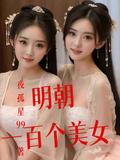 One Hundred Beauties of the Ming Dynasty
1.5kReads5.8Score178Shelves
One Hundred Beauties of the Ming Dynasty
1.5kReads5.8Score178Shelves
 Weird Stories in the Company Pantry
30Reads8.4Score—Shelves
Weird Stories in the Company Pantry
30Reads8.4Score—Shelves
 The First Hunk
6.8kReads5.8Score411Shelves
The First Hunk
6.8kReads5.8Score411Shelves
 Balenciaga in a Semi-Basement in South Korea!
19Reads8.5Score—Shelves
Balenciaga in a Semi-Basement in South Korea!
19Reads8.5Score—Shelves
 Ambiguity Makes You Stronger
2.3kReads5.8Score182Shelves
Ambiguity Makes You Stronger
2.3kReads5.8Score182Shelves
 My Roommate Is a Ghost
—Reads8.5Score—Shelves
My Roommate Is a Ghost
—Reads8.5Score—Shelves
 The Twelfth Lunar Month Shakes People and Presses Pigs
—Reads8.5Score—Shelves
The Twelfth Lunar Month Shakes People and Presses Pigs
—Reads8.5Score—Shelves
 The Seven Days I Was Sold into the Mountains!
1Reads8.5Score—Shelves
The Seven Days I Was Sold into the Mountains!
1Reads8.5Score—Shelves
 The Concubine's Art of War
—Reads8.6Score—Shelves
The Concubine's Art of War
—Reads8.6Score—Shelves
 Fengqiling Table: the History of the Seven Governors of the Five Dynasties
24Reads—Score—Shelves
Fengqiling Table: the History of the Seven Governors of the Five Dynasties
24Reads—Score—Shelves
 Examination for Female Medical Officer
1Reads8.4Score—Shelves
Examination for Female Medical Officer
1Reads8.4Score—Shelves
 The Iron Lady of 90 Factory
—Reads8.4Score—Shelves
The Iron Lady of 90 Factory
—Reads8.4Score—Shelves
 The Spring Breeze Returns Her Again
—Reads8.4Score—Shelves
The Spring Breeze Returns Her Again
—Reads8.4Score—Shelves
 Skyfall: Wukong's Fate Is Buried at the Beginning
2Reads5.8Score—Shelves
Skyfall: Wukong's Fate Is Buried at the Beginning
2Reads5.8Score—Shelves
 School Belle, Please Don't Lick Me, I'm Really Not a Stock Guy.
1.3kReads8.0Score106Shelves
School Belle, Please Don't Lick Me, I'm Really Not a Stock Guy.
1.3kReads8.0Score106Shelves
 Canopy: the Future of a Parallel World
9.6kReads—Score581Shelves
Canopy: the Future of a Parallel World
9.6kReads—Score581Shelves
 The Empress' Secret Guard
5Reads8.5Score—Shelves
The Empress' Secret Guard
5Reads8.5Score—Shelves
 The Unfinished Sacrifice!
2Reads8.5Score—Shelves
The Unfinished Sacrifice!
2Reads8.5Score—Shelves
 After the Sky Was Exposed, Zhu Di Became the Emperor of the Ages.
2.5kReads—Score106Shelves
After the Sky Was Exposed, Zhu Di Became the Emperor of the Ages.
2.5kReads—Score106Shelves
 What to Do? My College Life Was Watched
4kReads8.3Score180Shelves
What to Do? My College Life Was Watched
4kReads8.3Score180Shelves
 Yandere · Entering the Drama
9Reads8.4Score—Shelves
Yandere · Entering the Drama
9Reads8.4Score—Shelves
 Dragon Ball Movie Watching: Witness the Birth of Super League at the Beginning
3.3kReads6.5Score115Shelves
Dragon Ball Movie Watching: Witness the Birth of Super League at the Beginning
3.3kReads6.5Score115Shelves
 Coffin!
7Reads8.5Score—Shelves
Coffin!
7Reads8.5Score—Shelves
 Attack of the Hot-Blooded Hunter God
5.7kReads9.0Score569Shelves
Attack of the Hot-Blooded Hunter God
5.7kReads9.0Score569Shelves
 After the Divorce, I Became His First Party!
—Reads8.5Score—Shelves
After the Divorce, I Became His First Party!
—Reads8.5Score—Shelves
 Naruto: I'm in the Ninja World Directing the Tenmaku Tenmaku
1.2kReads8.0Score—Shelves
Naruto: I'm in the Ninja World Directing the Tenmaku Tenmaku
1.2kReads8.0Score—Shelves
 The High-Class Hunt of a Fake Socialite!
—Reads8.5Score—Shelves
The High-Class Hunt of a Fake Socialite!
—Reads8.5Score—Shelves
 Konoha: I Fabricate False Information in the Ninja World
1.9kReads6.9Score102Shelves
Konoha: I Fabricate False Information in the Ninja World
1.9kReads6.9Score102Shelves
 Crazy Criticism of a Former Patient, Forcing Me to Be Locked up as a Dedicated Caregiver
1.7kReads9.0Score—Shelves
Crazy Criticism of a Former Patient, Forcing Me to Be Locked up as a Dedicated Caregiver
1.7kReads9.0Score—Shelves
 People Are in Naruto, Goldfinger Is Filming the Theatrical Version
44Reads6.1Score—Shelves
People Are in Naruto, Goldfinger Is Filming the Theatrical Version
44Reads6.1Score—Shelves
 Your Majesty, My Grandson Has Burned a Real Car for You.
693Reads8.9Score—Shelves
Your Majesty, My Grandson Has Burned a Real Car for You.
693Reads8.9Score—Shelves
 Comprehensive Manga: There Is a Problem with Hikigaya's Ultra Story
1.5kReads8.1Score169Shelves
Comprehensive Manga: There Is a Problem with Hikigaya's Ultra Story
1.5kReads8.1Score169Shelves
 Tianmu: Taking Stock of the Ten Greatest Emperors Through the Ages
848Reads5.8Score—Shelves
Tianmu: Taking Stock of the Ten Greatest Emperors Through the Ages
848Reads5.8Score—Shelves
 Integrated Martial Arts Movie Watching Pili Puppet Show
843Reads—Score—Shelves
Integrated Martial Arts Movie Watching Pili Puppet Show
843Reads—Score—Shelves
 I? Interview Qin Shihuang and Jing Ke at the Same Time?
5Reads—Score—Shelves
I? Interview Qin Shihuang and Jing Ke at the Same Time?
5Reads—Score—Shelves
 Ming Dynasty Zhu Di: What? My Fourth Child Is the Captain of the Ball
127Reads5.8Score—Shelves
Ming Dynasty Zhu Di: What? My Fourth Child Is the Captain of the Ball
127Reads5.8Score—Shelves
 Daming: Start the Divine List, Choose One of the Two National Fortunes
18Reads5.8Score—Shelves
Daming: Start the Divine List, Choose One of the Two National Fortunes
18Reads5.8Score—Shelves
 Skyline Spoilers: the Ancestors Can No Longer Control Their Blood Pressure
89Reads—Score127Shelves
Skyline Spoilers: the Ancestors Can No Longer Control Their Blood Pressure
89Reads—Score127Shelves
 I Write Poems in Pen and Ink
—Reads—Score—Shelves
I Write Poems in Pen and Ink
—Reads—Score—Shelves
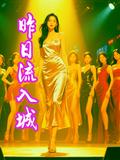 Flow into the City Yesterday
20.2kReads9.2Score2.3kShelves
Flow into the City Yesterday
20.2kReads9.2Score2.3kShelves
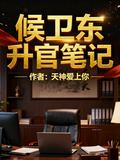 Hou Weidong's Official Notes
2.4kReads6.6Score251Shelves
Hou Weidong's Official Notes
2.4kReads6.6Score251Shelves
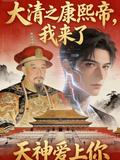 Emperor Kangxi of the Qing Dynasty, Here I Come
—Reads5.8Score—Shelves
Emperor Kangxi of the Qing Dynasty, Here I Come
—Reads5.8Score—Shelves
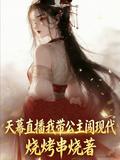 Tianmu Live Broadcast: I Take the Princess into Modern Times
151Reads5.6Score—Shelves
Tianmu Live Broadcast: I Take the Princess into Modern Times
151Reads5.6Score—Shelves
 The Purest Love
4Reads5.8Score—Shelves
The Purest Love
4Reads5.8Score—Shelves
 Sky Screening: Execution of the Ming God of War at the Beginning
8Reads5.8Score—Shelves
Sky Screening: Execution of the Ming God of War at the Beginning
8Reads5.8Score—Shelves