[Love] [Love] [Love] All three books have been completed. Please go and taste [Bookshelf plus one] [Bookshelf plus one] [Bookshelf plus one] The protagonist of the first book, Wang Xiaobao, has a mouth full of curses. He was shot in the head at the beginning and was very pregnant. The protagonist of the second book, Wang Junlin, has a profound background. In the third book, the protagonist Shen Wei starts as a blind man and gradually becomes a thief. The three books have one thing in common. The Jia family and Yi Laogou are both relatively miserable.
🍁🍁In the first book, the protagonist travels through the world of courtyards. I thought that he would be able to take the essentials for time travelers with him, just like in the time travel and rebirth novels, and go on a counterattack journey with pretense, slaps in the face, and super awesomeness. However, the golden finger never came. Fortunately, a great god sent me an adventure. I am romantic but not nasty.
This book is really fascinating. In order to find his daughter, he fought all the way from Siheyuan to Xiangjiang. The protagonist is Lao Mo, the number one killer in Jinghai. He is extremely arrogant and cold-hearted. He is ruthless and doesn't say much, but he kills without blinking an eye. The beasts were killed until they heard the news, and their expressions changed in silence. People who have read it say it is so satisfying. If you don't believe it, you can read the book reviews first before jumping in.
"A Man in a Siheyuan, Dedicated to the Country" uses the hard-core setting of "Anti-Mother" to reconstruct the narrative of the Siheyuan, allowing the time traveler Lin Xiao to use the "super recycling system" to tear through the hypocritical mask of the courtyard, and write a legend of passionate counterattack and responsibility for family and country in a special era. The story uses the identity of the orphan of a martyr as the entry point, and cleverly combines individual struggle with the great vagabonds of the times. It has the excitement of a battle of wits in the marketplace without losing the weight of the main theme. 1. Be the king at the beginning: reject the system trap and enforce the unspoken rules of the compound. The novel begins with a soul test of the "god-level Holy Mother System": the host must donate his family property to the Jia family and promise to provide support, otherwise he will lose his golden finger. The protagonist Lin Xiao decisively chooses "slap the thief with a holy stick + call the police to catch the thief", firing the first shot against oppression with a slap in the face and modern legal thinking. This setting completely subverts the "compromise for peace" logic of the traditional courtyard house theme - when Jia Zhang came to blackmail the family with a stick, Lin Xiao not only went online with "the honorary certificate of the fire-fighting hero was trampled on", but also used the status of "martyr orphan" to leverage the power of the police, leaving the usually arrogant "Siheyuan God of War" Silly Zhu, "Moral God" Yi Zhonghai and others at a loss what to do. This kind of operation of "breaking unspoken rules with rules" not only touches the readers' rebellious psychology towards "the courtyard full of birds", but also lays the foundation for the subsequent setting of "systematic recycling of all things". 2. Innovation in system settings: Recycling all things = Reshaping order Different from the conventional sign-in system, the "Super Recycling System" gives the protagonist the ability to "turn waste into treasure" to break the situation: by recycling garbage to exchange for resources, the Jia family's secretly hidden materials can be "legally recycled", and waste can be used to create scarce goods (such as "recycled fabrics" as revealed in later spoilers). In the first chapter, although Lin Xiao has not officially activated the system, he has already demonstrated his characteristics as a "rule user" by "calling the police to catch the thief" - when Jia Zhang refused to admit the theft, the protagonist forced the police to search Jia's house on the grounds that "the certificate of honor was insulted", and eventually the person and the stolen property were recovered. This design of "using systematic thinking to deconstruct the hidden rules of the courtyard" makes every counterattack by the protagonist both satisfying and logically supported. What's even more clever is that the "test mechanism" in the early stages of the system coincides with a realistic metaphor: in an era of scarcity, the "Mother's Heart" is equivalent to chronic suicide, and only the strong can survive with logic, laying the groundwork for the subsequent plot of the protagonist "recycling waste to support national construction" and sublimating its value. 3. Three-dimensional reconstruction of portraits: from "facialized birds" to "era slices" The author conducts differentiated deconstruction of classic characters, turning the courtyard into a kaleidoscope of the times: - The collapse of the hypocrite: Grandpa Yi Zhonghai discouraged the police on the grounds of "harmony in the compound", but in fact he upheld the unspoken rule of "eating an extinct household". His "moral god" mask shattered into powder after the police intervened, exposing the selfish nature of "exchanging moral kidnapping for pension security"; - Glimmer of the Awakened: Director Yang of the steel rolling mill, as the "conscience within the system", not only proactively provides job opportunities, but also provides shelter as his "father's old subordinate". His care for the protagonist creates a tension with the subsequent fate of being "knocked down", hinting at the idealistic background of the special era; - The multi-faceted nature of the little character: Although the third uncle Yan Bugui is good at calculations, he chooses to remain silent when the protagonist calls the police. This subtle stance of "not helping the tyrants" makes the character break out of the stereotype of "pure villain" and becomes more real. It is worth mentioning that the little Yaya adopted by the protagonist is not a traditional "troublemaker" setting. Her emotional transformation from "fear of the crowd" to "reliance on her brother" is not only the emotional anchor for the protagonist to stick to the bottom line, but also reflects the absurdity and warmth of the compound through a child's perspective, making the "counterattack narrative" more humane. 4. The sublimation of the undercurrent of feelings of family and country: from individual revenge to the mission of the times. The novel embeds multiple red narrative clues in the main line of "quadrangle battle of wits": the sacrifice background of the protagonist's father as a martyr to resist U. S. Aggression and aid Korea, and the setting that his mother died while rescuing national property, all hint at the inheritance of her "red gene". When Director Yang mentioned the "South Korea War", the protagonist's cherishment of the "glory of martyrs" (such as healing the trampled honorary certificates) has transcended personal grievances and risen to the level of "defending national values". In subsequent plots, the protagonist may use systematic recycling technology to assist industrial construction (such as the "waste recycling technology" revealed in the spoiler), allowing the "siheyuan counterattack" and "devoting one's body to the country" to form a value resonance. This interweaving of "small family narrative" and "big country sentiment" allows the story to break out of the traditional house-fighting framework and have both historical depth and reality reflection. Conclusion: When the Recycling System Meets Red Genes "A Man in a Siheyuan, Dedicated to the Country" uses "system recycling" to reconstruct the survival logic of the time travellers, giving the protagonist a natural moral high ground as a "martyr orphan", and carves out a counterattack path that is both refreshing and profound in the quagmire of the "Siheyuan". If you want to experience the hearty feeling of "Slap the Calculator in the Face" and also look forward to seeing "youth taking responsibility in a special era", this work will give you a different reading experience - see how Lin Xiao uses the system to recycle waste, uses faith to recycle dignity, and writes the passion and ideals of a generation in the small space of the courtyard.
 Dress up as a Fool, Marry a Bride, and Raise Eight Children!
14.1kReads8.2Score661Shelves
Dress up as a Fool, Marry a Bride, and Raise Eight Children!
14.1kReads8.2Score661Shelves
 Siheyuan: I Was Secretly Replaced by Yi Zhonghai on the Promotion List
33.4kReads7.8Score1.6kShelves
Siheyuan: I Was Secretly Replaced by Yi Zhonghai on the Promotion List
33.4kReads7.8Score1.6kShelves
 Siheyuan, the Happy Life of Wang Dapeng, a Fun-Loving Man
64.2kReads8.9Score3.1kShelves
Siheyuan, the Happy Life of Wang Dapeng, a Fun-Loving Man
64.2kReads8.9Score3.1kShelves
 Siheyuan: Take Advantage of Everyone at the Beginning
12kReads8.6Score752Shelves
Siheyuan: Take Advantage of Everyone at the Beginning
12kReads8.6Score752Shelves
 The Wonderful Life of Ang Lee in Siheyuan
27.7kReads8.0Score1.5kShelves
The Wonderful Life of Ang Lee in Siheyuan
27.7kReads8.0Score1.5kShelves
 Siheyuan: Rebirth of Silly Pillars and Sinking on Aoi Island
10.3kReads8.5Score558Shelves
Siheyuan: Rebirth of Silly Pillars and Sinking on Aoi Island
10.3kReads8.5Score558Shelves
 Siheyuan: I Asked You to Cultivate Immortality, but You Bullied Animals
20.9kReads8.2Score777Shelves
Siheyuan: I Asked You to Cultivate Immortality, but You Bullied Animals
20.9kReads8.2Score777Shelves
 Siheyuan: I Was Forced to Become the Pillar
14.4kReads8.1Score616Shelves
Siheyuan: I Was Forced to Become the Pillar
14.4kReads8.1Score616Shelves
 Do You Believe That I Was Just Passing by the Siheyuan?
26.9kReads8.3Score787Shelves
Do You Believe That I Was Just Passing by the Siheyuan?
26.9kReads8.3Score787Shelves
 Siheyuan: Miracle Resurrection at the Beginning
10.1kReads7.0Score390Shelves
Siheyuan: Miracle Resurrection at the Beginning
10.1kReads7.0Score390Shelves
 Siheyuan: the Perfect Ending I Want
9.8kReads7.3Score367Shelves
Siheyuan: the Perfect Ending I Want
9.8kReads7.3Score367Shelves
 I Live in a Courtyard, and Animals Are Just Vegetables!
23.8kReads7.7Score951Shelves
I Live in a Courtyard, and Animals Are Just Vegetables!
23.8kReads7.7Score951Shelves
 The Buyer in the Siheyuan Picks up the Heart
31.8kReads7.5Score2kShelves
The Buyer in the Siheyuan Picks up the Heart
31.8kReads7.5Score2kShelves
 Siheyuan: a Good Life Earned
31kReads7.3Score1.5kShelves
Siheyuan: a Good Life Earned
31kReads7.3Score1.5kShelves
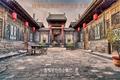 Indifferent Life in the Courtyard
8.8kReads7.9Score348Shelves
Indifferent Life in the Courtyard
8.8kReads7.9Score348Shelves
 Siheyuan: No One Is More Wicked Than Me
30.4kReads8.2Score1.4kShelves
Siheyuan: No One Is More Wicked Than Me
30.4kReads8.2Score1.4kShelves
 Shazhu's Wonderful Life
33.5kReads7.5Score1.5kShelves
Shazhu's Wonderful Life
33.5kReads7.5Score1.5kShelves
 Siheyuan: My Hunting Career
13.1kReads8.1Score534Shelves
Siheyuan: My Hunting Career
13.1kReads8.1Score534Shelves
 Living in a Courtyard
16.6kReads7.8Score439Shelves
Living in a Courtyard
16.6kReads7.8Score439Shelves
 Siheyuan: the Qing Dynasty Is Back
28.3kReads8.5Score920Shelves
Siheyuan: the Qing Dynasty Is Back
28.3kReads8.5Score920Shelves
 Siheyuan: All the Incense in the House Is Pointed at You
6.5kReads6.8Score275Shelves
Siheyuan: All the Incense in the House Is Pointed at You
6.5kReads6.8Score275Shelves
 Siheyuan: Father Is Xu Damao, Mother Is Lou Xiao'e
28.8kReads9.2Score1.6kShelves
Siheyuan: Father Is Xu Damao, Mother Is Lou Xiao'e
28.8kReads9.2Score1.6kShelves
 Siheyuan: All Eunuchs in the Courtyard, My Happy Life
8.4kReads8.2Score603Shelves
Siheyuan: All Eunuchs in the Courtyard, My Happy Life
8.4kReads8.2Score603Shelves
 I Raised 10,000 Wild Boars in the Siheyuan
8.3kReads8.0Score325Shelves
I Raised 10,000 Wild Boars in the Siheyuan
8.3kReads8.0Score325Shelves
 Siheyuan, Fools Like to Watch the Excitement
14.4kReads8.7Score607Shelves
Siheyuan, Fools Like to Watch the Excitement
14.4kReads8.7Score607Shelves
 The Alternative Life of Qin Huairu in the Siheyuan
2.9kReads8.9Score128Shelves
The Alternative Life of Qin Huairu in the Siheyuan
2.9kReads8.9Score128Shelves
 Dressed as Jia Dongxu? My Godmother Has Trouble Raising Children
27.3kReads8.6Score1.5kShelves
Dressed as Jia Dongxu? My Godmother Has Trouble Raising Children
27.3kReads8.6Score1.5kShelves
 Siheyuan: I, He Daqing, Am Never Weaker Than Others in My Life
1.8kReads6.9Score—Shelves
Siheyuan: I, He Daqing, Am Never Weaker Than Others in My Life
1.8kReads6.9Score—Shelves
 Teacher He from Siheyuan
2.2kReads8.6Score—Shelves
Teacher He from Siheyuan
2.2kReads8.6Score—Shelves
 Siheyuan: I Don't Pay Back the Money I Owe, and Jia Zhang Is Angry and Crying
30.4kReads8.3Score1.3kShelves
Siheyuan: I Don't Pay Back the Money I Owe, and Jia Zhang Is Angry and Crying
30.4kReads8.3Score1.3kShelves
 Changing Skills Every Month in Siheyuan
11.9kReads7.8Score600Shelves
Changing Skills Every Month in Siheyuan
11.9kReads7.8Score600Shelves
 Siheyuan: I Married a Foreign Wife
3.5kReads8.5Score155Shelves
Siheyuan: I Married a Foreign Wife
3.5kReads8.5Score155Shelves
 Siheyuan: Ah Mao Looked at It and Nodded.
5.6kReads8.1Score327Shelves
Siheyuan: Ah Mao Looked at It and Nodded.
5.6kReads8.1Score327Shelves
 Leisurely Days in the Courtyard
41.1kReads7.7Score2.3kShelves
Leisurely Days in the Courtyard
41.1kReads7.7Score2.3kShelves
 The Matchmaker in the Courtyard Took Qin Huairu to the Wrong Door on a Blind Date
11.6kReads8.4Score612Shelves
The Matchmaker in the Courtyard Took Qin Huairu to the Wrong Door on a Blind Date
11.6kReads8.4Score612Shelves
 Courtyard: Come Quickly, Sew His Mouth Shut
134.1kReads8.0Score6.3kShelves
Courtyard: Come Quickly, Sew His Mouth Shut
134.1kReads8.0Score6.3kShelves
 Siheyuan: My Name Is Cao Wei
17.4kReads8.5Score767Shelves
Siheyuan: My Name Is Cao Wei
17.4kReads8.5Score767Shelves
 1960S: Traveling Through Nanluoguxiang,
342.4kReads9.4Score31.9kShelves
1960S: Traveling Through Nanluoguxiang,
342.4kReads9.4Score31.9kShelves
 The Third-Level Engineer of Siheyuan Sent Away the Birds
719Reads5.8Score—Shelves
The Third-Level Engineer of Siheyuan Sent Away the Birds
719Reads5.8Score—Shelves
 Siheyuan: the Game Starts with a Trick, Qin Huairu Is Anxious
9.6kReads6.1Score423Shelves
Siheyuan: the Game Starts with a Trick, Qin Huairu Is Anxious
9.6kReads6.1Score423Shelves
 Siheyuan: If You Marry Lou Xiaoe at the Beginning, You Will Get a Hundredfold Return
1.6kReads5.8Score—Shelves
Siheyuan: If You Marry Lou Xiaoe at the Beginning, You Will Get a Hundredfold Return
1.6kReads5.8Score—Shelves
 Siheyuan: Damao Was Arrested, Lou Xiaoe Is Mine
3.4kReads5.1Score101Shelves
Siheyuan: Damao Was Arrested, Lou Xiaoe Is Mine
3.4kReads5.1Score101Shelves
 Siheyuan: the Factory Doctor Is Dishonest and Qin Huairu Is Unlucky
1.9kReads5.8Score107Shelves
Siheyuan: the Factory Doctor Is Dishonest and Qin Huairu Is Unlucky
1.9kReads5.8Score107Shelves
 Siheyuan: Why Bother with Him? He Really Dares to Kill People
13kReads7.8Score628Shelves
Siheyuan: Why Bother with Him? He Really Dares to Kill People
13kReads7.8Score628Shelves
 I Live in a Courtyard and Pledge Myself to My Country.
7.5kReads8.2Score287Shelves
I Live in a Courtyard and Pledge Myself to My Country.
7.5kReads8.2Score287Shelves
 Siheyuan: Popular and Delicious Food
4.6kReads8.1Score258Shelves
Siheyuan: Popular and Delicious Food
4.6kReads8.1Score258Shelves
 Siheyuan: I Have a Small World
17.4kReads8.2Score952Shelves
Siheyuan: I Have a Small World
17.4kReads8.2Score952Shelves
 Siheyuan: the God of Cooking Begins, Awakening to Enlightenment That Defies Heaven
7.1kReads8.2Score255Shelves
Siheyuan: the God of Cooking Begins, Awakening to Enlightenment That Defies Heaven
7.1kReads8.2Score255Shelves
 Siheyuan: Silly Zhu Got Married Secretly, and Everyone Was Dumbfounded
35.2kReads8.1Score1.5kShelves
Siheyuan: Silly Zhu Got Married Secretly, and Everyone Was Dumbfounded
35.2kReads8.1Score1.5kShelves
 Siheyuan: God Gave Me a Chance for Revenge
25.6kReads7.9Score841Shelves
Siheyuan: God Gave Me a Chance for Revenge
25.6kReads7.9Score841Shelves