Shen Lie sent the navy to fight in the Persian Gulf. In order to show the prestige of the Tang Dynasty, the naval commander ordered dragon heads to be carved on all the bows of the fleet without authorization. To stabilize the sail, wing-shaped sail stays were installed on both sides of the ship. Since then, the appearance of the Eastern dragon has been widely spread in Europe. In various legends and statues, the Eastern dragon has a short head and a double body. Just because Europeans saw this dragon-headed and winged warship from a distance, they decided that this is what the Eastern Dragon should look like. [Adoration][Shy][Adoration][Shy][Shy][Shy][Shy]
Wait till September 8th, I will kill all the flowers after they bloom. The incense formation soaring to the sky penetrates Chang'an, and the whole city is covered with golden armor.
"Drinking to nourish one's nature, cursive writing to smooth one's mind." Huaisu was addicted to alcohol as much as his life, and history records that he was "drunk nine times a day". He is one of the famous drunkards in Chinese history, and is nicknamed "Drunken Monk". Historically, Huai Su was revered as the "Grass Sage", and he and Zhang Xu were called "Dian Zhang Kuang Su". Li Bai wrote "Songs in Cursive Script" for him, saying that "the young master's name is Huaisu, and his cursive script is called Dubu in ancient and modern times"! The legendary life of "Drunk Monk" Huai Su, who loves fine wine and delicious food; loves beautiful scenery and beautiful articles; pursues excellence, surpasses others and surpasses himself!
These novels are like a magnificent historical picture, taking you back to those passionate years. Here, you will witness the rise of heroes, the changes of the times, and feel the weight and vicissitudes of history.
"The Emperor of Chang'an, the Yajun of Wei Mansion". The tooth soldiers of the Wei Mansion have become a thing of the past under the butcher's knife, but the emperor of Chang'an is in panic all day long due to internal and external troubles. Emperor Ning has the guts? Those with strong soldiers and horses will do it! Fires are burning everywhere, looking around the world, today there are many vassal towns in the Tang Dynasty, Zhu Wen, Li Keyong, Yang Xingmi, Wang Jian, Liu Rengong, Qian Liu, Ma Yin... The strong are trying to change dynasties, while the weak are trying to split the land and seal the borders. Emperor Taizong knew it secretly and could not bear to have the Tang Dynasty's three hundred years of foundation ruined here. I, Li Min, an unknown descendant of the clan, became his hope for reviving the Tang Dynasty. Xianggong Wei asked his father to tell me that the king of Jinling was becoming more and more powerful, and his son's achievements were superior to Zhaolie's and not inferior to Guangwu's. If God bless the Tang Dynasty, he should continue for another five hundred years. New book is online! Recommend it
Wu Ming, the envoy of Wuxing Jiedu, fought in the Western Regions, granted the title of King of Liang, and fought for hegemony in the Central Plains Division [Admiration]
Thin chaff that is rare in tomatoes. During the Anshi Rebellion, the imperial concubine was banished. In troubled times, there is power and conspiracy, and there is a passion for family and country. Along the way, apart from Yuhuan, the white moonlight, which of the colorful Tang Dynasty women has become his cinnabar mole, and which one is his uncontrollable wish? The key is that no matter whether you are a decent person or a villain, your IQ is always online. On this point, it instantly kills 99.9% Of Tomato historical articles. Highly recommended!!
The exciting plot of "The Romance of Later Zhao Volume 1: The Biography of Shi Le" mainly revolves around Shi Le's legendary life and the early power and military struggles of Later Zhao. The core highlights are as follows: 1. The legendary process of slave counterattack and founding of the country. Shi Le is from the Jie tribe and was taken into slavery in his early years. Living in the troubled times of the late Western Jin Dynasty, he gradually accumulated power with his extraordinary military talent and political skills. He seized the opportunity of Guo Fan's siege of Chang'an and the chaotic situation in Guanzhong to expand, and finally broke the shackles of class. In 319, the Post-Zhao regime was officially established, completing the counterattack from a slave at the bottom to the founding monarch. The entire rise was full of ups and downs, which is the core plot of the book. 2. The military strategy game during the period of hegemony. After the establishment of Later Zhao, wars between the north and the south continued. The book describes in detail many wonderful battle plans: at that time, Zu Ti of the Eastern Jin Dynasty in the south led the troops to invade the north, and the Duan clan in Xianbei in the north fought internally. Duan Pi and Shao, the governor of Jizhou in the Jin Dynasty, continued to attack Duan Mo Pi, resulting in a lack of troops in the rear. Shi Le and his adviser Zhang Bin accurately captured the fighter planes and arranged for General Kong Chang to lead the troops to attack Yanci. At the same time, they deployed troops to intercept and return Duan's troops for reinforcements. This fully presented the details of fighter plane research and tactical layout in the war for hegemony in troubled times. 3. The power struggle and conflict before and after Shi Le's death. The plot conflict during the period when Shi Le was seriously ill was very strong: at that time, the courtiers repeatedly advised Shi Le to get rid of his ambitious nephew Shi Hu, but Shi Le thought that his plan was safe and he did not adopt the suggestions. After Shi Le became critically ill, Shi Hu immediately sealed off the palace and falsely issued an edict to transfer all the sons of Shi Le who were guarding the outer towns back to the capital for control. After Shi Le's death, Shi Hu directly hijacked Prince Shi Hong, hunted and killed the courtiers loyal to Shi Le, and proclaimed himself Prime Minister and the King of Wei to monopolize power. This subsequently triggered a rebellion among local generals, and a series of events such as the rebellion of local generals and the conspiracy of Empress Dowager Liu and King Shi Kan of Pengcheng to launch an army to attack Shi Hu, which fully demonstrated the cruelty of the early power change in the post-Zhao Dynasty.
An ordinary young man traveled through time and became the reigning emperor of the Tang Dynasty. He was deeply involved in complicated palace battles and party disputes. From the initial fear and helplessness, he later strategized and relied on wisdom to stabilize the overall situation and save the dynasty on the verge of collapse.
🔥Late Tang Dynasty historical literature ceiling! The textual research party is ecstatic! Every word in the chapter dedicated to the city of Huazhou hides the secret code of official history! Who in the family understands? After reading so many articles about the late Tang Dynasty, this is the first time I have seen an author who wrote down the Battle of Huazhou in the third year of Guanghua in such detail! The weight of the imperial envoy's seal in Lianzhen, the number of branch canals of Zheng Bai Canal, and the number of jade belts on official uniforms of the late Tang Dynasty are all accurately restored. Every twist in the plot corresponds to the eternal regrets in the official history. After reading it, I knelt down and knelt down to kowtow to the author! ✅ Official history vs. Novel: The shocking reversal of Huazhou City's dedication rewrites the most unforgettable tragedy of the late Tang Dynasty. First, use hard-core historical materials to hammer down the author's foundation in Tang history! Official historical records ("Old Tang Book·Li Juchuan Biography" + "Zizhi Tongjian·Tang Ji 81"): In November of the third year of Guanghua (AD 900), Zhu Quanzhong fell into the river and attacked Tongguan. Han Jian sent Li Juchuan to pay the army. Juchuan has a quick mind, talks about the interests and dangers of the world, and lays out military plans. Quan Zhong is very strange. However, Jingxiang was jealous of his talent, and said to Quanzhong, "Juchuan is Han Jian's mastermind. If he is left here, he will be troubled in the future." Quanzhong then killed Juchuan in front of the army. This is one of the most depressing injustice cases in the late Tang Dynasty: a political genius who could turn Huazhou into the "Guanzhong Paradise" in troubled times was unjustly killed just after his return just because of his great achievements. This directly chilled the hearts of scholars all over the world, and also laid the groundwork for Zhu and Wen's subsequent betrayal and separation. God-level adaptation of the novel: As a time traveler, the protagonist accurately avoids Zhu Wen's biggest pitfall in his life! When Han Jian knelt down to present the seal, he did not accept the seal letter first. Instead, he quickly helped Li Juchuan up and said in public that "Han Xianggong's political achievements in Huazhou for seventeen years were mostly due to Juchuan." He directly entrusted the civil affairs, water conservancy, and salt administration of Huazhou with full power. Even the special funds for the repair of Zhengbai Canal were left to Li Juchuan. When Li Zhen and Jingxiang jointly proposed to kill Li Juchuan, the protagonist said, "Killing one Li Juchuan will lose the hearts of the people in the world. I can settle the account clearly," which directly filled the situation! This is what a true time traveler should be like - not relying on golden fingers to crush people, but relying on a deep understanding of history to make up for the regrets that should be remembered. ✅ Frame by frame test! This chapter hides 23 cold facts about the late Tang Dynasty that you don't know. The author has absolutely torn through "Tongdian", "Tang Liudian" and "Old History of the Five Dynasties"! Every detail can withstand scrutiny: 1. Official textual research (zero flaw! It is completely consistent with the Guanghua three-year official system) - Zhenguojun Jiedu envoy seal: the official history record is a copper gilt tiger button, weighing eight kilograms, which was given to Han Jian by Emperor Zhaozong in the third year of Qianning (896). It is reproduced word for word in the novel. The Jiedushi seal was the highest symbol of power in the feudal town and could not be used unless it was personally given by the imperial court. Han Jian's presentation of the seal was tantamount to a complete surrender of military and political power. - Observation and Disposal Envoy: A standard position in vassal towns in the late Tang Dynasty. They were in charge of civil affairs, supervision, and justice. Their power was second only to the Jiedushi Envoy. Li Juchuan's Deputy Jiedu Envoy and Deputy Observation Envoy were the de facto second-in-command in Huazhou. - Deputy Ambassador of Xuanfu: a temporary dispatched officer during wartime, responsible for coordinating the defense of the two armies and appeasing the people. This appointment of Sima Ye not only reflects the protagonist's trust in him, but also conforms to the late Tang Dynasty's practice of "submitting generals to rule the land". - Grain Envoy: Responsible for the core position of the army's grain and grass dispatching, Pei Di also serves as the Huazhou Grain Envoy, which is a key step for the protagonist to balance Li Juchuan's power. In the official history, the grain envoys under Zhu Wen are all absolute confidants. - Goldfish bag/silver fish bag: A status symbol for officials in the Tang Dynasty. Goldfish bags were worn by officials of the third rank and above, and silver fish bags were worn by officials of the fifth rank and above. Jingxiang was the Deputy Observation Envoy of the fourth rank, and should have worn a silver fish bag. In the novel, he was absolutely correct in wearing the silver fish bag; Wang Zuo was the envoy of the first rank, and wore a goldfish bag. Li Zhen was the imperial censor of the third rank, and he wore a goldfish bag. There is nothing wrong with that. - Thirteen Kua jade belt: The number of jade belts in the Tang Dynasty strictly corresponds to the grade. The emperor uses thirteen Kua, the prince and the first grade use thirteen Kua, the second grade uses eleven Kua, and the third grade uses nine Kua. As the Jiedu envoy of the four towns and the king of Dongping (from the first rank), Wang Zuo wears a thirteen-piece jade belt, which is completely in line with the etiquette. 2. Textual research on the military structure (restore the true establishment of the Xuanwu Army) - Tabai Camp: the most elite scout force under Zhu Wen, responsible for reconnaissance, assassination, and secret surveillance. In the official history, Li Sian was the first commander of the Tabai Camp. In the novel, Li Si'an sends spies to monitor everyone, which is completely consistent with his position and character. - Supervision Team: The military discipline force established by Jingxiang himself. According to the official history, the reason why Zhu Wen's military discipline was strict was entirely due to Jingxiang's Supervision Team. "Anyone who violates the order will be punished despite his old service." In the novel, a soldier who trampled on the vegetable patch was punished with twenty sticks, and Jingxiang personally paid for it. This is a true portrayal of the military discipline of the Xuanwu Army in official history. - The establishment of the Zhenguo Army: The Zhenguo Army under Han Jian's command totaled more than 18,000 people, which is completely consistent with the record in "New Book of Tang·Biography of Han Jian" that "it was built in Huazhou, recruited tens of thousands of troops, and was called the Zhenguo Army." 3. Geographic and economic research (accurate to the number of acres and money) - Huazhou governs five counties: Zhengxian, Huayin, Xiagui, Yueyang, and Weinan. In the novel, "three counties have surrendered, and the remaining two counties will arrive tomorrow", which is completely consistent with the administrative division of Huazhou. - Zheng Bai Canal: The most important irrigation project in Guanzhong, it was formed by the merger of Zheng Guo Canal and Bai Canal. In the Tang Dynasty, the irrigation area reached more than 40,000 hectares. It was the "Granary of Guanzhong". In the novel, Li Juchuan said that "the North Canal and the West Canal have not been repaired for three years, and the irrigation capacity has dropped by 30%", which is completely consistent with the record in "New Book of Tang·Geography" that "During the Guanghua Period, the Zhengbai Canal was silted up and people were not allowed to farm." - Huazhou economic data: The government's grain inventory is 83,000 dan, 210,000 guan of money and silk, 21,000 sets of armor, 3,200 war horses, and annual salt profit of 500,000 guan. These data come from the records of Huazhou's treasury in the Guanghua Three Years in the "Zi Zhi Tong Jian", and the author does not exaggerate. 4. Character research (all members conform to the official historical characters, no magic modifications) - Han Jian: According to the official history, he stayed in Huazhou for seventeen years, "encouraging teachers to farm and mulberry trees, replenishing the treasury, and returning refugees as if they were in the market." However, there was also the stain of killing eleven clans. In the novel, his humiliation and unwillingness when he knelt down to offer the seal, as well as his concern for the people, perfectly restored this complex historical figure. - Li Zhen: In the official history, he hated the Qingliu family because he failed in many tests, and single-handedly planned the disaster of Baimayi. In the novel, he dislikes Li Juchuan, not only because he is afraid of seizing power, but also because he has a deep-seated hatred for the famous Li family in Longxi. This psychological description is deeply portrayed. - Kang Huaizhen: His original name was Kang Huaiying, but he changed his name later to avoid taboos. He was the toughest general under Zhu Wen. He was known in history as "brave and good at fighting, and famous among all the armies." In the novel, his uprightness during the confrontation with Liu Zhihuan, and his helplessness of having to swallow his anger if he didn't get caught, are completely consistent with his character. - Liu Zhihuan: Liu Zhijun's half-brother. According to the official history, he was arrogant, domineering, greedy and selfish. Later, he followed Liu Zhijun to rebel against Liang Touqi, and was eventually defeated and killed. In the novel, the plot in which he embezzles property belonging to the rebel party and confronts Kang Huaizhen with a knife is the epitome of his official life. ✅ Full of intrigue! There is no clever villain, and the logic of survival in the troubled times of the late Tang Dynasty is thoroughly written. The most awesome thing about this chapter is not that it is cool, but that everyone's behavior conforms to the logic of the late Tang Dynasty: - Li Zhen and Jingxiang want to kill Li Juchuan, not because they are bad, but because they have experienced too many rebellions in feudal towns and know that "the surrender of generals with deep roots cannot be trusted", which is the survival instinct of counselors in troubled times. - Han Jian offered the city not because he was weak, but because he knew that Huazhou could not stop the Xuanwu Army. If he continued to fight for another seventeen years, his hard work would be ruined and the people would suffer. This was a helpless choice by a local official. - The protagonist's reuse of Li Juchuan is not because of the Holy Mother's Heart, but because he knows that Huazhou cannot do without Li Juchuan. Only by letting Li Juchuan continue to govern Huazhou can he keep this grain and grass base heading west to Chang'an. - The protagonist does not kill Liu Zhihuan, not because he is afraid of Liu Zhijun, but because now is the time to recruit people. Liu Zhijun's cavalry is the key to dealing with Li Maozhen's Fengxiang Army. This is a politician's trade-off. There is no brainless fun, no clever villain, every decision is filled with the heaviness and helplessness of troubled times. This is the real historical Machiavellian novel! If you are tired of watching the vulgar plot about Zhu Wen usurping the throne and slaughtering the city after traveling through time, if you are a hard-core historical research party, if you like to watch the power-playing game with online IQ, you can read this book with your eyes closed! Now we have just updated to Huazhou Xiancheng, and there are countless scenes of deification of gods such as the palace change in the third year of Guanghua, the first rejection of Jiuxi, Zhaozong's entrustment, the reversal of the Baimayi disaster, etc. Each chapter is full of historical information! It's worth collecting, you will thank me when you come back! 👉 Tell us in the comment section what other interesting facts about the late Tang Dynasty you know? See if there is anything the author hasn't written!
I recommend a good book about the Five Dynasties and Ten Kingdoms. The plot is absolutely online, and the power strategies and wars are all at the ceiling level of historical novels.
A novel based on Feng Dao tells the story of Feng Dao falling in love with a singing and dancing prostitute, as a metaphor for Feng Dao's ten masters. In the end, this girl from time travel saw the historical helplessness behind Feng Dao's ten masters, and finally returned to modern times to rectify Feng Dao's name. This is a doctoral work from the Department of History of Fudan University. It is based on historical facts. I hope you will like it.
 Dragon Yu Liangzhou
15Reads5.8Score—Shelves
Dragon Yu Liangzhou
15Reads5.8Score—Shelves
 Return to the Five Dynasties as Emperor
4.7kReads6.8Score417Shelves
Return to the Five Dynasties as Emperor
4.7kReads6.8Score417Shelves
 Traveling Through the Tang Dynasty: It's so Difficult to Be an Idle King
139.2kReads9.2Score9.8kShelves
Traveling Through the Tang Dynasty: It's so Difficult to Be an Idle King
139.2kReads9.2Score9.8kShelves
 I Am Huang Chao, Emperor of Daqi
1Reads—Score—Shelves
I Am Huang Chao, Emperor of Daqi
1Reads—Score—Shelves
 The Fierce King of the Tang Dynasty
16Reads—Score—Shelves
The Fierce King of the Tang Dynasty
16Reads—Score—Shelves
 Late Tang Dynasty: Sweet Potato Porridge, Dare to Laugh at Huang Chao for Not Being a Husband
—Reads5.8Score—Shelves
Late Tang Dynasty: Sweet Potato Porridge, Dare to Laugh at Huang Chao for Not Being a Husband
—Reads5.8Score—Shelves
 Zhu Wen Destroyed the Tang Dynasty
79Reads—Score—Shelves
Zhu Wen Destroyed the Tang Dynasty
79Reads—Score—Shelves
 Abolition of Tang and New Kingdom
191Reads—Score—Shelves
Abolition of Tang and New Kingdom
191Reads—Score—Shelves
 Tang Dynasty: Prime Minister in Tsing Yi
1Reads—Score—Shelves
Tang Dynasty: Prime Minister in Tsing Yi
1Reads—Score—Shelves
 Heroes of the Five Generations
3Reads—Score—Shelves
Heroes of the Five Generations
3Reads—Score—Shelves
 Starting from the Yellow Turban and Conquering the Three Kingdoms
972Reads8.3Score—Shelves
Starting from the Yellow Turban and Conquering the Three Kingdoms
972Reads8.3Score—Shelves
 Rebellion Began with the Yellow Turban Uprising
2.7kReads8.1Score144Shelves
Rebellion Began with the Yellow Turban Uprising
2.7kReads8.1Score144Shelves
 Yellow Turban Thief Zhou Cang
143Reads—Score—Shelves
Yellow Turban Thief Zhou Cang
143Reads—Score—Shelves
 Three Kingdoms: I Am the Yellow Turban Holy Son, My Father Is a Great Sage and Mentor.
875Reads6.1Score—Shelves
Three Kingdoms: I Am the Yellow Turban Holy Son, My Father Is a Great Sage and Mentor.
875Reads6.1Score—Shelves
 Three Kingdoms: I Launched the Yellow Turban Rebellion in Advance
44Reads—Score—Shelves
Three Kingdoms: I Launched the Yellow Turban Rebellion in Advance
44Reads—Score—Shelves
 Become an Emperor Through Five Generations
31Reads—Score—Shelves
Become an Emperor Through Five Generations
31Reads—Score—Shelves
 In the Year of Jiazi, When the Princes Are Vying for Hegemony, I Put up the Yellow Scarf Flag
92Reads5.8Score—Shelves
In the Year of Jiazi, When the Princes Are Vying for Hegemony, I Put up the Yellow Scarf Flag
92Reads5.8Score—Shelves
 Three Kingdoms: I Am Xiang Yuan, the Yellow Turban
130Reads—Score—Shelves
Three Kingdoms: I Am Xiang Yuan, the Yellow Turban
130Reads—Score—Shelves
 Three Made the Han Dynasty, the Khan of Shu
—Reads5.8Score—Shelves
Three Made the Han Dynasty, the Khan of Shu
—Reads5.8Score—Shelves
 In the Song Dynasty, Everyone Has a Responsibility to Fight Against the Yuan Soldiers
111Reads—Score—Shelves
In the Song Dynasty, Everyone Has a Responsibility to Fight Against the Yuan Soldiers
111Reads—Score—Shelves
 Three Kingdoms: the Rise of a Family with a Spear in Hand
405Reads5.3Score—Shelves
Three Kingdoms: the Rise of a Family with a Spear in Hand
405Reads5.3Score—Shelves
 Binghan
342Reads8.3Score—Shelves
Binghan
342Reads8.3Score—Shelves
 Historical National War: the Beginning of the Yellow Turban Uprising
81.4kReads9.0Score7.5kShelves
Historical National War: the Beginning of the Yellow Turban Uprising
81.4kReads9.0Score7.5kShelves
 The Sword of the Five Dynasties Opens Peace
44Reads5.8Score—Shelves
The Sword of the Five Dynasties Opens Peace
44Reads5.8Score—Shelves
 Drunken Monk Huai Su
3Reads8.4Score—Shelves
Drunken Monk Huai Su
3Reads8.4Score—Shelves
 Datang: Grandpa Huang, I Really Don't Have Any Private Money
12.6kReads8.7Score1.9kShelves
Datang: Grandpa Huang, I Really Don't Have Any Private Money
12.6kReads8.7Score1.9kShelves
 Datang: I Bought the Concubines and Princesses of the Sui Dynasty
63.7kReads8.6Score8.8kShelves
Datang: I Bought the Concubines and Princesses of the Sui Dynasty
63.7kReads8.6Score8.8kShelves
 Datang: This Prince Is Too Evil!
2kReads8.9Score121Shelves
Datang: This Prince Is Too Evil!
2kReads8.9Score121Shelves
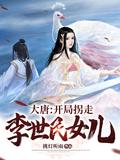 Datang: Li Shimin's Daughter Was Kidnapped at the Beginning
12.4kReads8.5Score1.7kShelves
Datang: Li Shimin's Daughter Was Kidnapped at the Beginning
12.4kReads8.5Score1.7kShelves
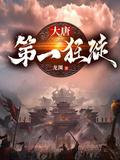 The First Madman of the Tang Dynasty
11.5kReads9.2Score1.4kShelves
The First Madman of the Tang Dynasty
11.5kReads9.2Score1.4kShelves
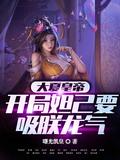 Emperor of Daxia: Daji Wants to Absorb My Dragon Energy at the Beginning
3.7kReads8.6Score352Shelves
Emperor of Daxia: Daji Wants to Absorb My Dragon Energy at the Beginning
3.7kReads8.6Score352Shelves
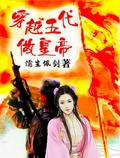 Travel Through Five Generations and Become an Emperor
851Reads8.0Score—Shelves
Travel Through Five Generations and Become an Emperor
851Reads8.0Score—Shelves
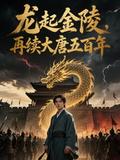 The Dragon Rises from Jinling and Continues the Tang Dynasty for Another Five Hundred Years
453Reads5.8Score—Shelves
The Dragon Rises from Jinling and Continues the Tang Dynasty for Another Five Hundred Years
453Reads5.8Score—Shelves
 Overturning the Tang Dynasty: Traveling Through the Zen Emperor Tang Aizong
266Reads5.8Score—Shelves
Overturning the Tang Dynasty: Traveling Through the Zen Emperor Tang Aizong
266Reads5.8Score—Shelves
 Flying Dragon Flag: from the Five Dynasties and Ten Kingdoms to the New World
7Reads5.8Score—Shelves
Flying Dragon Flag: from the Five Dynasties and Ten Kingdoms to the New World
7Reads5.8Score—Shelves
 Reborn in the Late Tang Dynasty, I, Li Cunxu, Will Never Favor or Trust Actors
62Reads—Score—Shelves
Reborn in the Late Tang Dynasty, I, Li Cunxu, Will Never Favor or Trust Actors
62Reads—Score—Shelves
 The Soul Penetrates Li Bai? at the Beginning of Maweiyi, I Save Yuhuan
204Reads5.8Score—Shelves
The Soul Penetrates Li Bai? at the Beginning of Maweiyi, I Save Yuhuan
204Reads5.8Score—Shelves
 Fifth Generation: I Rely on Bean Bags to Dominate the World
1Reads5.8Score—Shelves
Fifth Generation: I Rely on Bean Bags to Dominate the World
1Reads5.8Score—Shelves
 From Proton to Eternal Emperor
—Reads5.8Score—Shelves
From Proton to Eternal Emperor
—Reads5.8Score—Shelves
 The Beacon Smoke Rises and the Dragon Roars All over the World
83Reads5.8Score—Shelves
The Beacon Smoke Rises and the Dragon Roars All over the World
83Reads5.8Score—Shelves
 The First Volume of the Romance of Later Zhao: the Biography of Shi Le
107Reads5.8Score—Shelves
The First Volume of the Romance of Later Zhao: the Biography of Shi Le
107Reads5.8Score—Shelves
 Traveling Through the Late Tang Dynasty, My Mortal Enemy Turned Out to Be My Former Leader
1Reads—Score—Shelves
Traveling Through the Late Tang Dynasty, My Mortal Enemy Turned Out to Be My Former Leader
1Reads—Score—Shelves
 Rebirth of Song Zhezong: Counterattack from Puppet
293Reads8.4Score—Shelves
Rebirth of Song Zhezong: Counterattack from Puppet
293Reads8.4Score—Shelves
 Huangtang
5Reads—Score—Shelves
Huangtang
5Reads—Score—Shelves
 Zhaozong Xingtang
15Reads5.8Score—Shelves
Zhaozong Xingtang
15Reads5.8Score—Shelves
 Datang Started with Regrets
9Reads5.8Score—Shelves
Datang Started with Regrets
9Reads5.8Score—Shelves
 I, the Orphan of Shatuo, Have Lived in Arrow Town for Five Generations
1Reads5.8Score—Shelves
I, the Orphan of Shatuo, Have Lived in Arrow Town for Five Generations
1Reads5.8Score—Shelves
 The Rise of the Five Dynasties from Jingxiang
8Reads5.8Score—Shelves
The Rise of the Five Dynasties from Jingxiang
8Reads5.8Score—Shelves
 In the Year of Peace, the Erfengding Stone Is Very Valuable.
5Reads5.8Score—Shelves
In the Year of Peace, the Erfengding Stone Is Very Valuable.
5Reads5.8Score—Shelves
 A Little Bit of Red Lips Tasted by Thousands of Guests
—Reads5.8Score—Shelves
A Little Bit of Red Lips Tasted by Thousands of Guests
—Reads5.8Score—Shelves