The author's logic is rigorous and there are many foreshadowings. The key is that it is very interesting and exciting. Marry first and then fall in love with the ceiling.
I vaguely remember that the behavior of the protagonists in these two books is quite interesting. They stand out among all the similar characters. I can learn something about how to behave with others.
This book will help you understand the unspoken rules of officialdom and business. This is textbook level. If I had read it ten years earlier, my destiny might have changed.
These two books meet all your requirements. The first one is about an extremely ordinary woman around you and me. There is no domineering CEO or silly sweetness. The heroine has a mouth, a brain, and a self-motivated spirit. It contains many life skills and insights on marriage and love in the workplace. The second book is about the life of a middle-aged woman. It deeply analyzes the relationship between husband and wife, the relationship between mother-in-law and daughter-in-law, the relationship between best friends and the relationship between the original family. Every character is lifelike and every relationship is close to life. It is beautiful, a must-read, and you can't stop.
Using fate as cargo is a mind-bending story about time and space trading. Shen Yuan traveled around the world, trading antibiotics for the Forbidden City, and his intelligence took away tens of billions of dollars from Wall Street. Every transaction had a hidden price. The unit drama-style plot is compact and neat, seamlessly switching between the past, present and future, and the laws of equivalence and inequality hide the mystery of fate. In the early stage, urban transactions were carried out step by step, and in the later stage, the pattern went straight to the heavens and all realms. It was full of joking and arrogance, but also revealed a deep questioning of cause and effect. The more you read, the more you get excited!
Brothers, please recommend a mind-blowing and exciting book about Grammar! The male protagonist Ji Ye has awakened the "Abyss Filter" and sees everything as daily necessities. 👉 When others see the Headless Horseman, they are so frightened that they feel weak in their legs. He thinks he is a dedicated courier and even gives them tips! 👉 Others were frightened when they saw the Kraken in the deep sea. He thought it was a girl who had fallen into the water. After rescuing him, he forced them to perform a square dance! 👉 The most outrageous thing is that the King in Yellow came to make trouble. He regarded him as a performance artist and forcibly dragged him into the room to kill him with a script. He even disliked the script for being illogical! Now in his yard, demigods are guarding the door, ghost kings are mopping the floor, and S-class monsters are clearing the sewers... All of them are evil (crossed out), and all of them are beating workers! Do you want to see how the protagonist uses a mop to physically transcend the entire universe? "I handed over the unspeakable thing", you won't lose money if you invest in it, you will laugh all the time! [Sinister smile]
Book friends, do you think history textbooks are dry, with emperors' reign names like passwords and event dates like test papers? Come, let me give you Amway a "historical TV series" that will fascinate you - "Last Century". This book doesn't follow any routine. It does one thing: break down the first two decades of the 20th century year by year and write it into a piece of documentary literature that you can't stop following.
I dare say that there is no book on my subject in the entire Tomato!!! Rejecting the diaosi protagonist, I made it by hand, and added the author's unique new subject ideas, which you can't find classified in Tomato. In the end, the full text has a bit of an IQ that is not online or a pseudo-human character, so just come and kill me [full]
"Why do people stay up late to read these five stories?" ——A ridiculous reading guide from Tomato Book Store To be honest, I originally planned to fall asleep after reading only two pages. Finally it was daybreak. The phone screen reflected a face that was torn to pieces by the plot, and I punched the pillow out of shape—not out of anger, but out of joy. There was also a pack of half-empty tissues lying next to it. Don't get me wrong, it wasn't a romantic drama, it was a story about a financial manager managing the ledger that made me laugh to tears. These five stories cover credit cards, taxes, economic laws, financial freedom and financial terminology, which are five daily topics that everyone cannot avoid, but they contain absurdity and pain that you have never read before. They make you think you are opening a financial fable, but only when you put it down do you realize that it is all about people. It's you, it's him, it's everyone who squeezes into the subway every Monday morning. Let's talk about "Credit Card Split Personality" first. Li Mingming is the company's financial director. He keeps accounts more accurately than breathing and never spends money recklessly. Until the company issued a black credit card to each employee-the credit card limit was higher than his bottom line in life. You can probably guess what happened next, but you can never guess how ridiculous it is. He would fight with his right hand in the middle of the night. His left hand wanted to close the shopping app, but his right hand held the mouse tightly and refused to let go. He would hide a pile of limited-edition sneakers without removing the tags on the top floor of the closet, covered with old sheets, like a thief hiding evidence, and the "thief" was not stealing from others, but himself. The most amazing thing about this story is that it uses an extremely concrete contradiction - the pleasure of swiping a credit card and the regret of paying off debt to become two people living in the same body - to explain the psychological shaping of consumer credit on people more thoroughly than any financial column. After laughing, you will subconsciously want to look at your Huabei bill. It's not about being afraid, it's about taking a deep breath. Then there's The Trouble with the Tax Wizard. Ma Qin is the person who hates the tax bureau the most in the company. Every time he fills out a tax return form, he gets physical discomfort. His colleagues always go around during the tax filing days every month. As a result, after taking the risk of saying "I don't hate the tax bureau" at the annual meeting, an eight-centimeter-tall tax elf was bound to the system - it wears a mini tax uniform, will calculate how much value-added tax is included in each bowl of soy milk, will cry on the subway because no one thanks the taxpayers, and will turn transparent and weakly lie on your shoulder to breathe when you scold the tax bureau. When Maliqin's father called and told him, "I just got a flu shot, it's free," and the elf reminded him softly, "There is a tax you pay on that vaccine," Maliqin was silent. I was also silent when I read that page. Taxation has never been written with such warmth - the eight-centimeter golden firefly is the part of yourself you never knew. When it comes to "Fighting the Laws of Economics", Zhao Jindiao faces another kind of disaster. As an investment manager of a major Internet company, all the entrepreneurs he met were applying the laws of economics to decorate their appearance: those who made shared power banks said they were exerting the "broken window effect", those who made fresh food chains claimed to practice the "Veblen effect", and those who engaged in social e-commerce vowed to achieve the "Nash equilibrium". It wasn't until the one-foot-tall Keynesian elf on the conference room table showed up and used his pipe to debunk the flying theories one by one that Zhao Jindiao realized that once these overused words were stuffed into the same decision-making system at the same time, they would really start fighting in the server. When Ding Kai said in front of all investors at the voting meeting, "I used Adam Smith's invisible hand as an algorithm and poured it into the code," this young founder who once wore a turtleneck sweater and talked about the Veblen Effect finally understood what business common sense is. What this story teaches you is not economics, but the power of common sense. And common sense is precisely the rarest thing in the circle. "Financial Freedom Virus" is a group syndrome that is extremely scary if you think about it. The heroine Sun Xiaoxiao discovered that one after another her colleagues were "infected" with the same obsession - no matter what the topic, "passive income" must be mentioned within three sentences. The intern is lying on the table writing the "Ten-Year Financial Freedom Backward Plan" (deposit of 5,000), and the technical department's code comments all have "estimated support for the seventh month target of the FIRE (Financial Independence Early Retirement) curve." Everyone is studying like crazy, the level of book knowledge has soared, wages have not changed, but the threshold of happiness has been raised to an unsustainably high level. Until she met the only "immune" in the company - Yu Shouzhuo, a warehouse manager who had not used a smartphone for fourteen years. He opened the faded hand-made account book. There were not only numbers on it, but also words such as "My daughter has a fever," "Eating hot pot at night," and "Auntie borrowed money" written on each page. He told Sun Xiaoxiao: "I wanted everything when I was young. Later, my grandma became paralyzed and she asked me to buy a new wooden comb. I didn't go right away and couldn't buy it again. From then on, I made a rule: the flow of money and time must be calculated backward from the person, not from the expected rate of return." The most sober person in the entire frenzy of anxiety about financial freedom turned out to be a person who never talks about financial freedom. This story is not against you saving money, it is just that when you are about to run your life evaluator into a compound interest algorithm, it gently stretches out a foot and stumbles you - making you look down at the daily activities that do not require passive income under your feet. It turns out that they have already been your reserve fund. "Financial Terminology Translator" may be the easiest to relate to among these five stories. Song Ci clutched his mother's bank notification text message and stood in the business hall as the financial manager read an entire paragraph of "Structured Deposit Shark Fin Structural Barrier Price Participation Rate" very quickly - he couldn't understand a single word. He discovered that more and more words in the world were not written for human reading. The "Force Majeure Supplementary Agreement Structure" in the contract, the "Risk Mitigation Adjustment Fee" on the loan page, and the "Net Value Product Performance Comparison Benchmark" in the financial management text message - every word is in Chinese, and you can't understand every sentence. Then a small ear icon appeared on his computer. He dragged the financial product manual into it, and a pop-up window popped up: "Your principal will not be less, but the interest will depend on the situation - you have to see the best and worst." Later, this plug-in spread like dandelions throughout the city: salesmen used it to explain plans to customers, bank tellers began to prepare a "customer understanding version" of words, and a retired teacher finally understood what his pension text message was saying. Some people say that the financial barrier is not money, but language. What this translator dismantles is not terminology, but privilege. When Song Ci saw the sentence at the bottom of the plug-in developer's notes - "Because you don't understand, it's not your fault", I stared at the screen for a long time in the rental house late at night. Five stories, more than a hundred characters, each of them carries the familiar shadow of us - afraid to look at bills carefully, blocked by terminology, chased by the dream of financial freedom, and silenced by abused conceptual arguments in the conference room. These stories use absurdity to cover reality, and use humor to fill the truth. Reading them is like riding a roller coaster: as soon as you are amused, you are thrown into a paragraph that makes you silent for a moment; just as you recover from meditation, you are slapped on the table by the next absurd plot. Now, these five independent stories have been officially published on Tomato Books. Our own author Mr. Fu Shuiheng just tried to search, and the result was very smooth - after entering relevant keywords, the covers of these five stories immediately popped up, neatly arranged in the search results, like the front row seats reserved for you. If you also want to accidentally read until dawn that late at night, and want to experience the complex reading experience of being half amused by absurdity and half penetrated by reality, please search for "Fu Shuiheng" or user ID: 26182811 on Tomato Book Store. These five stories are waiting for you there. The era of paper pages has slowly been replaced by various screens, but people's desire for good stories has never changed. You have also heard the old saying - "Reading a good book is like talking to many noble people." At this moment, I just want to thank everyone who is willing to stop their fingers and sit quietly for a while in this fast-paced era. Your words, messages, and inadvertent forwarding are all the stepping stones for the next string of words on the keyboard of our own author, Mr. Fu Shuiheng. He writes very slowly, for a long time, and changes it many times before pressing "Publish". But every time he sees a new message pop up in your dialog box, his hand speed will be twice as fast as usual. Thank you all for your love and preference. I hope these stories can become some kind of common understanding between you and me - like the obscure terms in the stories that have finally been translated into vernacular, like the tax elf that lights up quietly on the shoulder, like the person who finally knows what "enough" looks like. Tomato Bookstore, user 26182811, our own author Mr. Fu Shuiheng has prepared tea and the story is on the shelf. Waiting for you to read.
These two books will definitely make your brain grow! ! ! The first one is from the period from Wenchuan to the Northern and Southern Dynasties. At this moment, you are discovered. How do you prove your identity? Memorize ancient poems no no no The second book is about the heroine in the system! Very realistic article
Regardless of the writing style, logic, or depth of the work, it is a rare masterpiece on the Internet in the past ten years! It was first published on Tomato and has since been reprinted on multiple platforms; it is very suitable for reading by book lovers born in 1960, 70 and 80!
Although the title of the book is very crude, when I read it I found that the author's portrayal of the characters' emotions is very precise and profound. Every character who appears is made of flesh and blood. If you like to read mindless and exciting articles, don't read this.
 It's a Happy Wedding in Beijing, Mr. He Won't Be Harsh Today
7.4kReads8.8Score820Shelves
It's a Happy Wedding in Beijing, Mr. He Won't Be Harsh Today
7.4kReads8.8Score820Shelves
 Official Conspiracy
18.6kReads5.8Score2.9kShelves
Official Conspiracy
18.6kReads5.8Score2.9kShelves
 Zhumenliu
912Reads5.8Score134Shelves
Zhumenliu
912Reads5.8Score134Shelves
 The Little Hand Wears Seventy on the Back, and You Can Do Anything to Make Money
108.6kReads9.6Score12.1kShelves
The Little Hand Wears Seventy on the Back, and You Can Do Anything to Make Money
108.6kReads9.6Score12.1kShelves
 After Passing Through Sherlock Holmes, I Became a Literary Giant
61.6kReads8.7Score8.1kShelves
After Passing Through Sherlock Holmes, I Became a Literary Giant
61.6kReads8.7Score8.1kShelves
 Eleven Madmen
47.2kReads9.4Score7.9kShelves
Eleven Madmen
47.2kReads9.4Score7.9kShelves
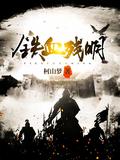 Iron-Blooded and Residual Brightness
100.8kReads9.3Score9.9kShelves
Iron-Blooded and Residual Brightness
100.8kReads9.3Score9.9kShelves
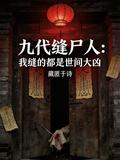 Why Do You Mean That the Corpses I Sewed up Were All Dangerous Things?
79.2kReads8.7Score6.9kShelves
Why Do You Mean That the Corpses I Sewed up Were All Dangerous Things?
79.2kReads8.7Score6.9kShelves
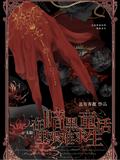 Infinity: Welcome to the Dark Fairy Tale World
123.2kReads9.3Score19.9kShelves
Infinity: Welcome to the Dark Fairy Tale World
123.2kReads9.3Score19.9kShelves
 The Female Ghost Is so Beautiful, I Can't Hold Myself Back
1.4kReads9.8Score—Shelves
The Female Ghost Is so Beautiful, I Can't Hold Myself Back
1.4kReads9.8Score—Shelves
 The Wife Who Returned Is Actually the Princess of the Beijing Circle
4.4kReads9.8Score100Shelves
The Wife Who Returned Is Actually the Princess of the Beijing Circle
4.4kReads9.8Score100Shelves
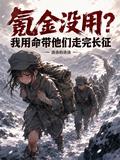 Krypton Gold Is Useless? I Risked My Life to Lead Them Through the Long March
206.9kReads9.4Score26.3kShelves
Krypton Gold Is Useless? I Risked My Life to Lead Them Through the Long March
206.9kReads9.4Score26.3kShelves
 Dead Bride
52.6kReads9.5Score10.5kShelves
Dead Bride
52.6kReads9.5Score10.5kShelves
 The Ceo's Wife Took Care of Bai Yueguang, but Her Home Was Stolen
1.8kReads9.8Score—Shelves
The Ceo's Wife Took Care of Bai Yueguang, but Her Home Was Stolen
1.8kReads9.8Score—Shelves
 I Touched the School Belle's Fox Tail
745Reads9.8Score—Shelves
I Touched the School Belle's Fox Tail
745Reads9.8Score—Shelves
 The First Feng Shui Novel on the Internet That Can Cure Diseases.
9kReads5.8Score1.4kShelves
The First Feng Shui Novel on the Internet That Can Cure Diseases.
9kReads5.8Score1.4kShelves
 Social Arts of the Ten Gods
53Reads5.8Score—Shelves
Social Arts of the Ten Gods
53Reads5.8Score—Shelves
 Ternary Consciousness and Memory Mapping Principle
1.4kReads9.2Score510Shelves
Ternary Consciousness and Memory Mapping Principle
1.4kReads9.2Score510Shelves
 Meishan Lotus
2Reads—Score—Shelves
Meishan Lotus
2Reads—Score—Shelves
 She Works as a Nanny for a Wealthy Family in Shenzhen
6.2kReads9.2Score879Shelves
She Works as a Nanny for a Wealthy Family in Shenzhen
6.2kReads9.2Score879Shelves
 Qingmei Hates Me, but She Caught Me Kissing Me
2.4kReads9.8Score—Shelves
Qingmei Hates Me, but She Caught Me Kissing Me
2.4kReads9.8Score—Shelves
 The Awakening of a Middle-Aged Woman
10.9kReads8.4Score936Shelves
The Awakening of a Middle-Aged Woman
10.9kReads8.4Score936Shelves
 I Sell My Destiny in the Heavens
4.1kReads5.8Score440Shelves
I Sell My Destiny in the Heavens
4.1kReads5.8Score440Shelves
 Dingshuangchen
58Reads—Score—Shelves
Dingshuangchen
58Reads—Score—Shelves
 Abyss Notes
16.4kReads9.2Score3.5kShelves
Abyss Notes
16.4kReads9.2Score3.5kShelves
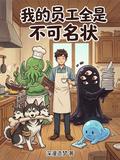 My Employees Are All Nameless
1.2kReads6.3Score118Shelves
My Employees Are All Nameless
1.2kReads6.3Score118Shelves
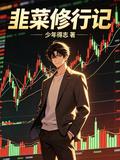 Leek Practice Notes
57.2kReads9.3Score9.3kShelves
Leek Practice Notes
57.2kReads9.3Score9.3kShelves
 Wei Nisheng
341kReads8.9Score46.3kShelves
Wei Nisheng
341kReads8.9Score46.3kShelves
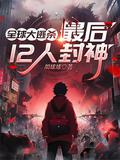 God Disciple Game
112kReads8.2Score14.8kShelves
God Disciple Game
112kReads8.2Score14.8kShelves
 Black
15.1kReads8.9Score2.2kShelves
Black
15.1kReads8.9Score2.2kShelves
 The First Iron and Blood Movie of the Last Century
—Reads—Score—Shelves
The First Iron and Blood Movie of the Last Century
—Reads—Score—Shelves
 Counterattack Against the Poor Family in Officialdom
101.8kReads9.5Score12kShelves
Counterattack Against the Poor Family in Officialdom
101.8kReads9.5Score12kShelves
 System? What System? I'm Not Familiar with Him!
—Reads—Score—Shelves
System? What System? I'm Not Familiar with Him!
—Reads—Score—Shelves
 Kill Them All. There Is No Need to Be Too Normal.
83.8kReads9.6Score17.8kShelves
Kill Them All. There Is No Need to Be Too Normal.
83.8kReads9.6Score17.8kShelves
 Introduction to Doomsday
666Reads—Score152Shelves
Introduction to Doomsday
666Reads—Score152Shelves
 The Creator's Taboo
5.6kReads9.0Score592Shelves
The Creator's Taboo
5.6kReads9.0Score592Shelves
 Financial Term Translator.
2Reads8.5Score—Shelves
Financial Term Translator.
2Reads8.5Score—Shelves
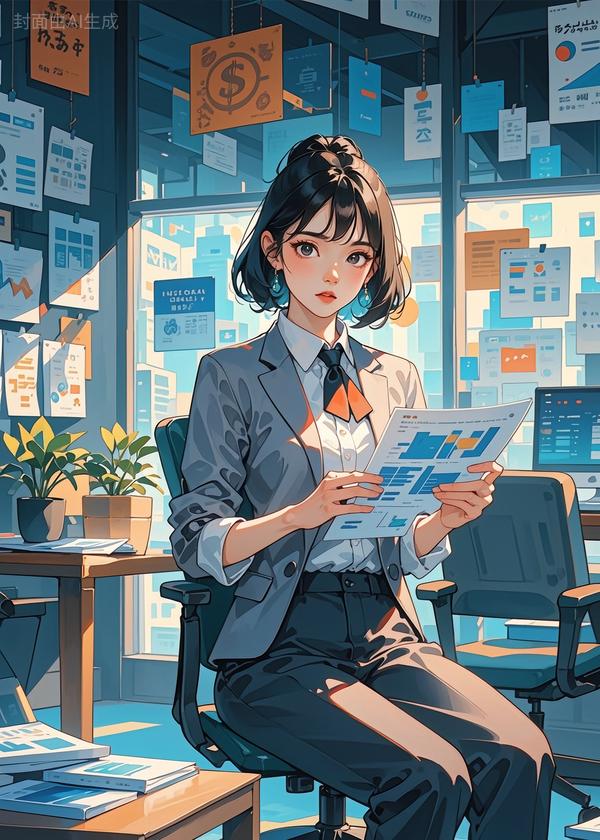 Financial Freedom Virus.
1Reads8.5Score—Shelves
Financial Freedom Virus.
1Reads8.5Score—Shelves
 Traveling from Ancient Times to the Present, the Eldest Princess Is Super Talented in Science
10.4kReads9.3Score1.7kShelves
Traveling from Ancient Times to the Present, the Eldest Princess Is Super Talented in Science
10.4kReads9.3Score1.7kShelves
 The Laws of Economics Fight.
—Reads8.4Score—Shelves
The Laws of Economics Fight.
—Reads8.4Score—Shelves
 Duke Zhou Interprets Dreams
21.4kReads9.0Score2.9kShelves
Duke Zhou Interprets Dreams
21.4kReads9.0Score2.9kShelves
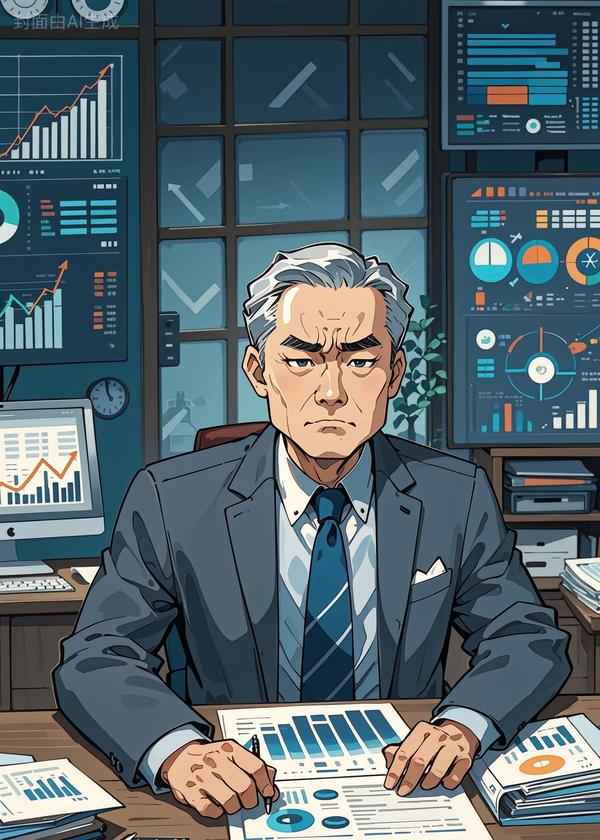 Trouble with the Tax Wizard.
—Reads8.6Score—Shelves
Trouble with the Tax Wizard.
—Reads8.6Score—Shelves
 90: Being Looked Down Upon? Haha, I Am Reborn as the King of Juan
56.9kReads9.1Score7.2kShelves
90: Being Looked Down Upon? Haha, I Am Reborn as the King of Juan
56.9kReads9.1Score7.2kShelves
 Credit Card Split Personality.
—Reads8.6Score—Shelves
Credit Card Split Personality.
—Reads8.6Score—Shelves
 Those Years of Working in Lingnan
15kReads9.3Score1.6kShelves
Those Years of Working in Lingnan
15kReads9.3Score1.6kShelves
 Start Living Forever, Just Eat Dirt in the Lower Realm and Soar to the Sky
247kReads9.0Score19.8kShelves
Start Living Forever, Just Eat Dirt in the Lower Realm and Soar to the Sky
247kReads9.0Score19.8kShelves
 Have You Had Soup Today?
1.1kReads8.5Score206Shelves
Have You Had Soup Today?
1.1kReads8.5Score206Shelves
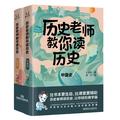 History Teacher Teaches You to Read History (2 Volumes in Total)
543Reads9.3Score161Shelves
History Teacher Teaches You to Read History (2 Volumes in Total)
543Reads9.3Score161Shelves
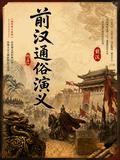 Popular Romance of the Former Han Dynasty
87Reads8.2Score—Shelves
Popular Romance of the Former Han Dynasty
87Reads8.2Score—Shelves
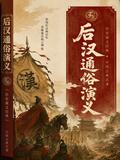 Popular Romance of the Later Han Dynasty
30Reads8.6Score—Shelves
Popular Romance of the Later Han Dynasty
30Reads8.6Score—Shelves