The Five Dynasties and Ten Kingdoms is a slow-burning (in the early stage, I watched the soy sauce), no pretense, no brainlessness, no immortality, no technology, no halo, no golden finger, no system, but history, characters, wars, calculations, and strategies. The adopted son usurps power to control the feudal towns, then unifies the world, and continues the five hundred years of prosperity of the Tang Dynasty! Push
The top four in the imperial examinations of a female country were married to princes of a male country due to political persecution. Among them, the most outstanding prime minister of a female country was actually married to a "mentally retarded" fourth prince of a male country? ! Spy wars, intrigues in palace battles, intrigues in business wars, and battlefield tactics are slowly unfolding.
From a down-and-out hostage who was bullied by others, to the powerful King of Qin, Ying Zheng overcame obstacles all the way and defeated all opponents before he could conquer thousands of miles of mountains and rivers. Having seen through the sinister nature of human nature, he had no desire or desire, but because of Afang's warmth, he was moved by his true love and made a grand engagement. He thought that all the hardships would be rewarded, but fate deliberately made things difficult and insisted on severing the bond between him and his beloved...
He is Zhao De, the fourth prince of the empire who is well-dressed and well-fed, but with an imperial order, he hides his name, abandons the honor of being a prince, and joins the battlefield. Starting from an unknown soldier at the bottom, he fought through bloody border crossings and narrowly escaped death, and with his brothers in life and death, he rose step by step in the war-torn world. We meet in the world of mortals, meet a confidant and beauties, hold the affection of our children, and hide the tenderness in our hearts. There are turbulent undercurrents in the court, brotherly suspicions, imperial power struggles, and aristocratic families; on the battlefield in troubled times, famous generals block the road, powerful enemies are around, and life and death are at stake. He has experienced the estrangement between father and son, the estrangement between brothers, the bondage of beauty, the life of close friends, and the fate of powerful enemies. From a humble soldier, he gradually gained military power, established prestige, controlled the frontiers, and shook up the government and the public. He broke through the chess game in troubled times and became king in the world's disputes. The golden thrones are within easy reach of each other; thousands of miles of mountains and rivers are within the palm of your hand. Is it to maintain sincerity and return power to the emperor? Is it to inherit the eternal legacy and ascend to the 9th Five-Year Plan? The winds and clouds rise and fall, when the troubled times come to an end, and the world bows its head - I wonder who else in the world today, other than me!
A journey through time and space with mountains and rivers as its veins and civilization as its soul [Proud] Opening this book is like unfolding a long ink scroll that stretches for thousands of years. Through the perspective of the male protagonist Lin Yu carrying a scroll of mountains and rivers, the author uses mountains and rivers as the latitude and longitude, and civilization as the context, weaving history, geography, and humanities into a pursuit of light across time and space. This book is not only an affectionate review of Chinese civilization, but also a modern inquiry into cultural inheritance. Mountains and Rivers as Volumes: A Dual Epic of Nature and Humanity [Smile] The description of mountains and rivers in the book transcends the geographical scope, but treats them as witnesses and participants of civilization. This style of writing that blends natural landscapes with humanistic narratives makes mountains and rivers no longer silent backgrounds, but "speaking" historical carriers. Dialogue between Ancient and Modern Times: The Puzzle of Civilization in Fragmented Narratives [Proud] This book uses "chasing light" as a clue to capture the auspicious lights in the long river of history, the collision of flying apsaras in Dunhuang murals with digital restoration technology, the symphony of caravan hooves on the Tea Horse Road and the development of modern cultural tourism... The author abandons linear narrative and instead uses montage-style scene switching to allow readers to independently piece together the outline of civilization in the fragments of time and space. This technique not only eliminates the heaviness of traditional history books, but also uses "small incisions" to stimulate readers' empathy for grand themes. Just like "sleeping for thousands of years, the world knows it when you wake up", history is already "wild" enough. Group portraits of characters: The Soul Mountain traveling between poetry and reality. The depiction of historical figures in the book continues the three-dimensional view. Li Bai is no longer just a "poetry fairy" symbol, but a mortal who resorted to drinking to relieve his sorrow after failing in the imperial examination; Du Fu was reduced to the dilemma of survival in the war and displacement; even the little-known folk craftsmen, tea farmers, and postmen were named in the mountain and river scrolls. The author is particularly good at capturing the "glimmer" of the character's spirit. These details make historical figures come alive from the pile of old papers, and create emotional resonance with contemporary readers across time and space. Visual narrative: a cultural immersion experience intertwined with pictures and texts. As a work that is both imaginative and historical, this book is boldly innovative in form. It intuitively presents thousands of miles of mountains and rivers and the continuation of humanistic sentiments for thousands of years, making readers feel as if they have experienced the shocking moment in person. This "perceptible sense of history" is in line with visual aesthetics. Questioning and Enlightenment: Seeing the Future in Chasing the Light [Naughty] The end of the book does not stop at nostalgia, but uses "chasing the light" as a metaphor to throw out a sharp cultural proposition: How should we protect the fire of civilization. This kind of reflection resonates with the vision - protecting mountains and rivers is essentially the "knot" that protects the inheritance of civilization. Cultural Nostalgia in the Mountain and River Picture Scroll "I Carry the Mountain and River Picture Scroll, Chasing the Light Through Ancient and Modern Times" is a "walking history of civilization". It measures history with mountains and rivers, carves memories with light and shadow, and reconstructs cultural identity in the dialogue between ancient and modern times. For readers, this is not only a feast of knowledge, but also a search for spiritual roots: when we follow the author's brushstrokes to "chase the light," what we finally see may be the cultural genes flowing in our own blood.
More than just cool articles! The male protagonist bears the hatred of his father and the righteousness of his family and country. The plot is so complex that it makes your eyes warm!
In the troubled times of the Eastern Han Dynasty, the geniuses rise together, there are temples, powerful schemes, wars, and no system. It is not a brainless novel. It is slow in the early stage. After leaving the Zhen Mansion, the pace begins to speed up and it becomes more and more interesting.
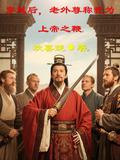 After Time Travel, Foreigners Respectfully Called Me the Whip of God
214Reads—Score—Shelves
After Time Travel, Foreigners Respectfully Called Me the Whip of God
214Reads—Score—Shelves
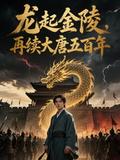 The Dragon Rises from Jinling and Continues the Tang Dynasty for Another Five Hundred Years
453Reads5.8Score—Shelves
The Dragon Rises from Jinling and Continues the Tang Dynasty for Another Five Hundred Years
453Reads5.8Score—Shelves
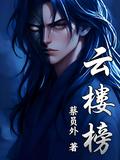 Yun Lou Bang
713Reads5.2Score—Shelves
Yun Lou Bang
713Reads5.2Score—Shelves
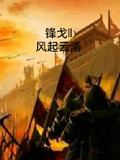 The Storm of War Is Surging
68Reads5.8Score—Shelves
The Storm of War Is Surging
68Reads5.8Score—Shelves
 Chaos Divine Tribulation
29Reads5.8Score—Shelves
Chaos Divine Tribulation
29Reads5.8Score—Shelves
 Decisive Battle at Xuanwu Gate
42Reads—Score—Shelves
Decisive Battle at Xuanwu Gate
42Reads—Score—Shelves
 Where Is the Boat?
16Reads—Score—Shelves
Where Is the Boat?
16Reads—Score—Shelves
 Let Duke Zhou Eat Meat Quickly
32Reads5.8Score—Shelves
Let Duke Zhou Eat Meat Quickly
32Reads5.8Score—Shelves
 Destiny Is the Highest
4Reads—Score—Shelves
Destiny Is the Highest
4Reads—Score—Shelves
 The First Volume of the Romance of Later Zhao: the Biography of Shi Le
107Reads5.8Score—Shelves
The First Volume of the Romance of Later Zhao: the Biography of Shi Le
107Reads5.8Score—Shelves
 Who Can Compete with the King?
4Reads5.8Score—Shelves
Who Can Compete with the King?
4Reads5.8Score—Shelves
 Rebirth and Smiling Proudly in the World
21Reads5.8Score—Shelves
Rebirth and Smiling Proudly in the World
21Reads5.8Score—Shelves
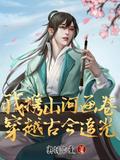 I Carry the Scroll of Mountains and Rivers, Traveling Through the Past and Present to Pursue the Light
22Reads8.7Score—Shelves
I Carry the Scroll of Mountains and Rivers, Traveling Through the Past and Present to Pursue the Light
22Reads8.7Score—Shelves
 Tianlan Lingfei's Legend of Strange Dreams
6Reads—Score—Shelves
Tianlan Lingfei's Legend of Strange Dreams
6Reads—Score—Shelves
 Liu Bowen's Ups and Downs as an Official
153Reads—Score—Shelves
Liu Bowen's Ups and Downs as an Official
153Reads—Score—Shelves
 Han Feng Xing: from Refugees to Photographing Mountains and Rivers
—Reads5.8Score—Shelves
Han Feng Xing: from Refugees to Photographing Mountains and Rivers
—Reads5.8Score—Shelves
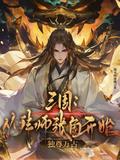 Three Kingdoms: Becoming the Disciple of Zhang Jiao and Becoming the Master of Eternity
—Reads5.8Score—Shelves
Three Kingdoms: Becoming the Disciple of Zhang Jiao and Becoming the Master of Eternity
—Reads5.8Score—Shelves
 Mengjin Ferry
1Reads5.8Score—Shelves
Mengjin Ferry
1Reads5.8Score—Shelves