I highly recommend these two books, which are unsystematic and close to history. Unfortunately, they are still being updated. They are very good-looking. The Anti-Japanese War
There is no system, some just transfer the relatively mature combat methods and training models of later generations after rebirth, and some have a deep understanding of the specifics of all operations, and implement them in different ways to better awaken the Chinese people's awareness of the war of resistance. There isn't much love between children, just fierce battles that you can watch.
Recommended preface: When the military doctor traveled through time and became a "Japanese devil", he made history remember this sentence. At three o'clock in the morning, the cold wind in the mountains of Shanxi blew across his face like a blade. Fu Shuiheng stood outside the burning Japanese military transfer station, and the khaki officer's shirt on his body was scorched by sparks. He had just used the explosives made from his junior high school chemistry knowledge to blow up this heavily guarded stronghold. Behind him is a pursuing Japanese squad, and in front of him is the icy Fen River - and the words he shouted out will soon resound throughout the Taihang Mountains: "No Japanese is allowed to go back!" If you think this is just an ordinary anti-Japanese novel, then you will miss the most shocking time-travel war epic in 2023. "No Japs Allowed" begins with six episodes of nearly 60,000 words, telling a hard-core story of a military doctor struggling, transforming, and finally rising up in the torrent of history. Why is it worth keeping up with you all night long? 1. The most extreme identity dislocation: I became the "jail" I wanted to kill. Fu Shuiheng, a top military expert in 2035, woke up from an experimental accident and found himself lying on the scorched earth of the Xinkou battlefield in 1937. An even crueler joke is that he is wearing the uniform of a lower-level Japanese officer. This is not a simple time travel, this is the beginning of hell difficulty. He was almost executed as a spy by the defeated National Army, and was interrogated at gunpoint at the Eighth Route Army Internment Station. Even when he looked in the mirror, his eyes would be stung by the "yellow skin" on his body. But he used knowledge beyond his time to fight his way out of a desperate situation: · Use military terminology to save himself: "The artillery observation coordinates need to be corrected! You are exposing your own position!" · Use half-baked Japanese to disguise: "Stop immediately! This is a secret operation of the task force directly under the General Staff Headquarters!" · Use psychology to crush the enemy: three sentences to make the Japanese sergeant stand at attention and salute, five sentences to make the stronghold second lieutenant offer medicine This "yellow skin" became his most dangerous amulet and his most serious original sin. 2. The most hard-core "knowledge dimensionality reduction attack": chemical bombing arsenal in junior high schools. When Fu Shuiheng proposed "using chemical fertilizer and sugar to make explosives" in the Eighth Route Army base area, everyone thought that this "madman" dressed in Japanese clothes was talking in his sleep. Three days later, he slapped the data from seventeen experiments on the table: Ammonium nitrate + sugar + pot ash + iron powder = the explosive power equivalent to three kilograms of TNT. But this was just the beginning. This man from 2035 is using the entire modern military science system to fight against invaders of an entire era: · Using data to analyze guerrilla warfare: the first "Japanese Army Behavior Pattern Map", with an ambush warfare prediction accuracy of 90% · Using psychology to train scouts: abandoning traditional drills and teaching soldiers to read, predict, and attack the mind · Using systematic thinking to rebuild tactics: "Guerrilla warfare is not a matter of luck, it is a science that can be optimized with mathematical models." When the veterans sneered, an ambush verified 90% of his predictions - at that moment, the entire base fell silent. 3. The most tearing character arc: from vomiting to habit, from habit to determination. The fourth episode "The First Shot, Hands Shaking and Heart Burning" is the emotional breaking point of the book. After Fu Shuiheng was forced to kill the pursuing Japanese soldiers, he vomited everything in his stomach that night in the ravine. This is the most naked collision between modern civilized man and cruel war. The person he killed might have been a boy under twenty years old, or a son with parents - but in Shanxi in 1937, this man was first and foremost an invader, a Japs who massacred his compatriots. "If you don't kill him, he will kill you. I have seen too many comrades die under the gun of the Japanese, and I have killed traitors and Japanese with my own hands. The first time, I also vomited and couldn't sleep all night. But then I got used to it, because you know that if you don't kill them, they will kill more innocent people." This conversation from underground party member Chen Qiming revealed the heaviest truth of that era. Fu Shuiheng's transformation was the process of seeing his hands stained with blood and then holding the gun barrel more firmly. 4. The most powerful plot rhythm: every episode is the speed of life and death 1. Episode 1: Captured after time travel, facing execution within five minutes 2. Episode 2: Self-rescue in Japanese, encountering a Japanese raiding team 3. Episode 3: Sneaking into the stronghold, outsmarting the drug discovery code book 4. Episode 4: Exposed rescue, psychological collapse after the first shot 5. Episode 5: Review of the base area, "super-era" tactics shocked the chief of staff 6. Episode 6: A surprise attack on the transfer station with homemade explosives, shouting out the soul lines of the book. No water injection, no nonsense. Each episode has 9,000 words, which is 9,000 words of swords, battles of wits, and struggles of human nature. 5. The most anticipated future foreshadowing. This is just the beginning. According to the plan, the 399 episodes of the book will span: · The first 280 episodes: from the Shanxi battlefield to the national victory, from the Anti-Japanese War to the Liberation War · The last 119 episodes: Fu Shuiheng bravely retreated to a mountain village, and his posthumous notes shocked the world · The ultimate shock: his ideas were adopted by the United Nations, affecting the global diplomatic pattern. This is the history of one man's war, and it is also a prairie fire of ideas. Why should you click on Chapter 1 now? Because in this era full of clichéd time-travel stories, "No Japanese Allowed" brings a long-lost hard-core, real, and profound feel. It is not satisfied with "being cool", but asks: How can a modern intellectual elite maintain the bottom line of human nature in the darkest era? How to use scientific reason to fight against the madness of war? How do you find your place in history? Fu Shuiheng is not a born hero, he is not even a qualified warrior - but he has the highest knowledge reserve of human civilization in 2035, the divine perspective of a time traveler overlooking history, and a belief that is tempered in blood and fire and is harder than steel. When he stood in front of the burning transfer station at the end of episode six and yelled "No Japs allowed" into the night sky, it was more than just a slogan. It was a time-traveler's declaration of war on history. It was a scientist's crushing of barbarism. That was a Chinese's final answer to the invaders. Tonight, open the first chapter. See how Fu Shuiheng emerges from the body of a "Japanese officer". See how junior high school chemistry exploded through the Japanese arsenal. See how modern military science reshaped guerrilla warfare. Look at how one sentence can ignite the roar of an entire era. No Japanese are allowed to stay - this is not only his oath, but also a mark that will be engraved in every reader's heart. (Episodes 1-6 of the book have been completed and are updated steadily every day. Click to immerse yourself in the bloody journey of 1937. Fu Shuiheng is waiting for you in the Taihang Mountains to fight side by side.)
I strongly recommend this book. It is completely unsystematic. It is just that the setting is that Li Yunlong, a mechanical engineer, has his soul penetrated. The point is that it doesn't overwhelm you at all, and the description of the battle is also very good. It's highly recommended. One of the highlights is whether Kodera Kota, who was supported by Li Yunlong, can become the Prime Minister of Japan [smile][smile][smile]
Personally, these are the only two books that I think are good to read. ② Although there is a system, there is probably no system at all. Originally there was a book by Jinggong, but then it seemed like it was gone. I hope I can win the Easter match.
No system. 1️⃣The male protagonist traveled back in time to the Anti-Japanese War, and he was still a student who graduated from Huangpu. Entered the army himself. Thus saw the Battle of Songhu. During the battle, the brothers he had just met left one after another, and he understood. Be strong yourself.
There is no system or golden fingers. It is a pure 21st century peacetime youth who travels to the Anti-Japanese War period. It is a new book that is very suitable for your appetite. It summarizes that knowledge is power and you can arm yourself with knowledge. I am looking forward to it and you can read it.
Both of these books are unsystematic, have good memory, or have good physical fitness, and have detailed descriptions, so they are very suitable for reading.
The most perfect ending of "Bright Sword", the highest limit, no system, a little golden finger is too low, General Kong Jie was born in 1955, deputy commander of Shenyang Military Region, acting commander, commander
These are all about the Anti-Japanese War. One or two of them have plug-ins. It's not a system question. I think they're okay. They're all good, but the ratings are not high.
 During the War of Resistance, the Iron Triangle and I Were Comrades-In-Arms
9.9kReads7.2Score346Shelves
During the War of Resistance, the Iron Triangle and I Were Comrades-In-Arms
9.9kReads7.2Score346Shelves
 The Strongest Team of the War Country
10.8kReads5.8Score404Shelves
The Strongest Team of the War Country
10.8kReads5.8Score404Shelves
 My Hundreds of Battles Have Turned into Poems, from the Bloody Battle on the Xiangjiang River to Shangganling
24.4kReads8.1Score1kShelves
My Hundreds of Battles Have Turned into Poems, from the Bloody Battle on the Xiangjiang River to Shangganling
24.4kReads8.1Score1kShelves
 The War of Resistance: 1937 Begins with the German Arms Division Commander
8.7kReads6.7Score546Shelves
The War of Resistance: 1937 Begins with the German Arms Division Commander
8.7kReads6.7Score546Shelves
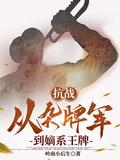 The Flesh Furnace of Resistance
30.9kReads8.6Score2.4kShelves
The Flesh Furnace of Resistance
30.9kReads8.6Score2.4kShelves
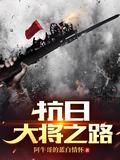 Resistance Against Japan: the Road of a General
24.6kReads9.1Score1.8kShelves
Resistance Against Japan: the Road of a General
24.6kReads9.1Score1.8kShelves
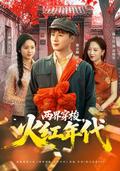 Traveling Between Two Worlds, the Red Era
65.4kReads8.2Score324Shelves
Traveling Between Two Worlds, the Red Era
65.4kReads8.2Score324Shelves
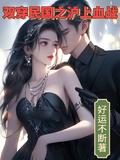 The Bloody Battle in Shanghai During the Shuangchuan Republic of China
6.6kReads7.2Score495Shelves
The Bloody Battle in Shanghai During the Shuangchuan Republic of China
6.6kReads7.2Score495Shelves
 In the 1980S, He Pretended to Be a Great Hero Returning Home.
1.3kReads—Score130Shelves
In the 1980S, He Pretended to Be a Great Hero Returning Home.
1.3kReads—Score130Shelves
 Double-Wearing to Fight Against U. S. Aggression and Aid Korea, I Beat up the Yankees
12kReads5.8Score1.6kShelves
Double-Wearing to Fight Against U. S. Aggression and Aid Korea, I Beat up the Yankees
12kReads5.8Score1.6kShelves
 Anti-Japanese War: All-Out War Begins with the Northeastern Army
65.6kReads9.1Score5.5kShelves
Anti-Japanese War: All-Out War Begins with the Northeastern Army
65.6kReads9.1Score5.5kShelves
 The Rise of the Sichuan Army in the Anti-Japanese War
1.6kReads9.2Score101Shelves
The Rise of the Sichuan Army in the Anti-Japanese War
1.6kReads9.2Score101Shelves
 The Era of Generals: from Chishuihe to the Rank of General
76Reads5.8Score—Shelves
The Era of Generals: from Chishuihe to the Rank of General
76Reads5.8Score—Shelves
 Gunfire in Pingxi
519Reads6.3Score—Shelves
Gunfire in Pingxi
519Reads6.3Score—Shelves
 The Iron-Blooded Eighth Route of Resistance Against Japan
18.4kReads8.8Score1kShelves
The Iron-Blooded Eighth Route of Resistance Against Japan
18.4kReads8.8Score1kShelves
 Let's Work Together to Kill the Japanese Series
2Reads—Score—Shelves
Let's Work Together to Kill the Japanese Series
2Reads—Score—Shelves
 Let's Work Together to Kill the Japanese - Shanxi Chapter
—Reads—Score—Shelves
Let's Work Together to Kill the Japanese - Shanxi Chapter
—Reads—Score—Shelves
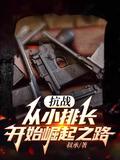 Resistance Against Japan: Beacon Fire Warriors
10.2kReads8.9Score691Shelves
Resistance Against Japan: Beacon Fire Warriors
10.2kReads8.9Score691Shelves
 Let's Work Together to Kill the Devils
10Reads—Score—Shelves
Let's Work Together to Kill the Devils
10Reads—Score—Shelves
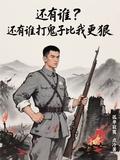 Anti-Japanese War: Starting from the Second Advance Team Going North to Fight Against Japan
17.7kReads8.9Score1.3kShelves
Anti-Japanese War: Starting from the Second Advance Team Going North to Fight Against Japan
17.7kReads8.9Score1.3kShelves
 The War in Shuidong Started with the County Party Secretary
7Reads5.8Score—Shelves
The War in Shuidong Started with the County Party Secretary
7Reads5.8Score—Shelves
 Anti-Japanese War: Li Yunlong Defeated Tian Banzi with His Own Body
44.4kReads9.4Score4kShelves
Anti-Japanese War: Li Yunlong Defeated Tian Banzi with His Own Body
44.4kReads9.4Score4kShelves
 Defending Greater Guangdong During the Anti-Japanese War
8.4kReads8.7Score601Shelves
Defending Greater Guangdong During the Anti-Japanese War
8.4kReads8.7Score601Shelves
 Anti-Japanese War: Counterattack Starts from the Cannon Fodder Regiment
6.9kReads8.9Score311Shelves
Anti-Japanese War: Counterattack Starts from the Cannon Fodder Regiment
6.9kReads8.9Score311Shelves
 Anti-Japanese War: I'm from Fenghua, What's Wrong with Getting Promoted Quickly?
5.9kReads5.8Score243Shelves
Anti-Japanese War: I'm from Fenghua, What's Wrong with Getting Promoted Quickly?
5.9kReads5.8Score243Shelves
 The War of Resistance: Starts with the Search for the Six Sons' Property
188Reads5.8Score—Shelves
The War of Resistance: Starts with the Search for the Six Sons' Property
188Reads5.8Score—Shelves
 Time Travel 1937: They Are Young
2.1kReads5.8Score200Shelves
Time Travel 1937: They Are Young
2.1kReads5.8Score200Shelves
 Huangpu: I Am from the Department of Civil Engineering
3.1kReads5.8Score200Shelves
Huangpu: I Am from the Department of Civil Engineering
3.1kReads5.8Score200Shelves
 The Loyal Soul of Huangpu: from Songhu to Northern Myanmar
17.8kReads9.1Score1.4kShelves
The Loyal Soul of Huangpu: from Songhu to Northern Myanmar
17.8kReads9.1Score1.4kShelves
 Silent 1937
132.4kReads8.3Score16.7kShelves
Silent 1937
132.4kReads8.3Score16.7kShelves
 The Taihang Killing God of the War of Resistance
12.9kReads8.8Score1.1kShelves
The Taihang Killing God of the War of Resistance
12.9kReads8.8Score1.1kShelves
 Bright Sword: the Fox of Northwest Shanxi
9.1kReads8.9Score442Shelves
Bright Sword: the Fox of Northwest Shanxi
9.1kReads8.9Score442Shelves
 Lots of Crafty Soldiers
107Reads—Score124Shelves
Lots of Crafty Soldiers
107Reads—Score124Shelves
 As an Undercover Agent, I Just Wanted to Survive but Was Forced to Do Hard Work.
14.9kReads7.5Score959Shelves
As an Undercover Agent, I Just Wanted to Survive but Was Forced to Do Hard Work.
14.9kReads7.5Score959Shelves
 Wandering with Cannon Fodder: Lang Becomes a Great Warlord
5.7kReads7.3Score266Shelves
Wandering with Cannon Fodder: Lang Becomes a Great Warlord
5.7kReads7.3Score266Shelves
 Anti-Japanese War: I Enjoyed Traveling Through Parallel Time and Space
483Reads8.1Score—Shelves
Anti-Japanese War: I Enjoyed Traveling Through Parallel Time and Space
483Reads8.1Score—Shelves
 Late Qing Dynasty: How Can I Build a Strong Army Without Starting a War?
11.4kReads8.4Score649Shelves
Late Qing Dynasty: How Can I Build a Strong Army Without Starting a War?
11.4kReads8.4Score649Shelves
 Rebirth Starts from Huangpu
8.4kReads8.2Score355Shelves
Rebirth Starts from Huangpu
8.4kReads8.2Score355Shelves
 It's Not Easy to Mess Around in This Republic of China
40.4kReads8.5Score2.8kShelves
It's Not Easy to Mess Around in This Republic of China
40.4kReads8.5Score2.8kShelves
 The War of Resistance: Rising from the Guerrilla Captain
3kReads6.7Score—Shelves
The War of Resistance: Rising from the Guerrilla Captain
3kReads6.7Score—Shelves
 Zhao Gou's Journey with the Sword
488Reads—Score—Shelves
Zhao Gou's Journey with the Sword
488Reads—Score—Shelves
 The Legend of Liangjian Began in Southeastern Shanxi
32Reads5.8Score—Shelves
The Legend of Liangjian Began in Southeastern Shanxi
32Reads5.8Score—Shelves
 This Security Team Is so Good at Beating up the Japanese.
22.1kReads7.9Score2kShelves
This Security Team Is so Good at Beating up the Japanese.
22.1kReads7.9Score2kShelves
 From the Long March to Changjin Lake, I Swallowed Thousands of Miles Like a Tiger
40.1kReads8.0Score1.8kShelves
From the Long March to Changjin Lake, I Swallowed Thousands of Miles Like a Tiger
40.1kReads8.0Score1.8kShelves
 Anti-Japanese War: Give Me Electricity All over the Country
22.5kReads8.3Score874Shelves
Anti-Japanese War: Give Me Electricity All over the Country
22.5kReads8.3Score874Shelves
 Beginning in 1928, Burma Began to Dominate Southeast Asia.
2.3kReads8.0Score103Shelves
Beginning in 1928, Burma Began to Dominate Southeast Asia.
2.3kReads8.0Score103Shelves
 Huang Sanpao: This Warlord Is a Must!
320Reads5.8Score—Shelves
Huang Sanpao: This Warlord Is a Must!
320Reads5.8Score—Shelves
 Anti-Japanese War: the Rise of the Expeditionary Force in Southeast Asia
11.9kReads8.3Score735Shelves
Anti-Japanese War: the Rise of the Expeditionary Force in Southeast Asia
11.9kReads8.3Score735Shelves
 Anti-Japanese War: Shandong Correspondent
4Reads—Score—Shelves
Anti-Japanese War: Shandong Correspondent
4Reads—Score—Shelves
 1938, the Days Side by Side with Bethune
31.3kReads9.1Score3.7kShelves
1938, the Days Side by Side with Bethune
31.3kReads9.1Score3.7kShelves