Looking for Anti-Japanese Books Will Not Bring Wisdom
Views
1.2M
Books
104
Recommendations
357
Updated
1d ago
The details of the war are well depicted. If you don't like the aid business series and the weapons that span the ages, you will like the simple military series.
These books are all super beautiful! Introducing the first book, when you open your eyes, you are actually dressed as a child of the Japanese royal family! Ahhhhh, who can't wear Japanese clothes? ? The sky is falling! Let's see how the male protagonist outsmarts Japan's super high school, outsmarts his Japanese general cousin, and finally sacrifices his life for the country!
War rages, mountains and rivers weep with blood. In "Departing from Nanjing, Expedition to Burma", follow the footsteps of the expeditionary force and return to the tragic years of the Anti-Japanese War. Watch how they overcome the dangers of mountains and rivers, defend the dignity of their home and country with their blood, and feel their fearless heroic spirit.
This book is really good!!! I have read more than a dozen anti-war books, and this one ranks first. To be honest, the author is very attentive. He will check the details of the ordnance and the passwords in the army before coding. There is even Japanese in it. If you want to add anything else, please feel free to add it. Hahahahahaha. To be honest, this book is really good-looking and not intellectual at all!
Didn't your hometown ask you to bring anything? She thought of the insignificant words Zhang Zhenhua said, maybe that was the secret code for communication. Her heart was beating very fast, and her whole body seemed to have been given a shot of adrenaline. She has been out for so long and yet she hasn't written a letter to home?
Here you go 😊 Ensure that you have three correct views, follow logic, and do not deceive your wits * ͈ᴗ͈ˬᴗ͈ෆ A centenarian anti-war veteran who was reborn and returned to the anti-Japanese period to save the country and save the people. It is unsystematic, relatively realistic, and the writing style is simple and delicate. Thank you for your support 😊😊
🍒🍒Recommendation 1: This novel cleverly combines the history of the Anti-Japanese War with the arms trade. The plot is compact and exciting, making people unable to put it down. 🍒🍒Recommendation 2: The protagonist's wisdom and courage are fully demonstrated in the novel, and the process of building a super independent group is exciting. 🍒🍒Recommendation 3: The arms trade in the novel is not only innovative, but also shows the wisdom and tenacity of people in the war years. 🍒🍒Recommendation 4: The author's grasp of historical details is very good, making the novel more realistic and making people feel like they are in that special era. 🍒🍒Recommendation 5: The characters in the novel have distinct images. Whether they are the protagonist or the supporting characters, they all have unique personalities and charms. 🍒🍒Recommendation 6: The plot has ups and downs, sometimes tense and exciting, sometimes tender, making people feel a strong emotional resonance while reading. 🍒🍒Recommendation 7: This novel is not only a work about the Anti-Japanese War, but also a masterpiece that shows the glory of human nature. 🍒🍒Recommendation 8: If you like military-themed novels, then this novel is definitely not to be missed. It will bring you a new reading experience. 🍒🍒Recommendation 9: The arms trade in the novel is not only a battle of intelligence, but also a battle about faith and honor. 🍒🍒Recommendation 10: Reading this novel, you will follow the protagonist through those arduous years and feel the blood and passion of the people of that era.
The novel is completed with more than 2.6 Million words. The protagonist sells arms to the Eighth Route Army and helps develop industry in the base area. Sun Desheng: Commander, it's really fun to use Tiger tanks to fight against the Japanese Doudin tanks, but the number is a bit small; Li Yunlong: There's no rush, let's use them first, there are 200 more on the way. Zhang Dabiao: Commander, my battalion has almost 5,000 people, and I can't accommodate any more. Li Yunlong: Dabiao, the corps is also a regiment. If the superiors don't organize it, there's nothing I can do about it. Wang Xikui: I just killed a Jaap Major General. What's the reward? Li Yunlong: I am a major general and my level is a bit low, so I will reward you with half a catty of sweet potatoes. Chu Yunfei: Brother Yunlong, you and I are joining forces to attack Taiyuan. What do you think? Li Yunlong: Brother Yunfei, after we defeat the enemy, we need to make it clear in advance who will own this territory. Lao Li, I will not do business at a loss.
📍Sisters, look at me! "Snow Leopard: I'm Not Xiao Ya" Everything you mentioned is correct: ✅ No reduction of intelligence - the Japanese are not mentally retarded, the traitors are flesh and blood, everyone lives in their own position ✅ No system, no god drama - the heroine has super powers (blue hair wrapped in silk), but not Long Aotian flying around, killing people will be tiring, saving people will also hurt ✅ Pure military line - it is difficult to make a country without doing business, it is to kill the Japanese + rescue people + break out, and it will lead to darkness. ✅Group portraits - Lin Mo, Shen Fei, Zhao Dezhu, Gu Changfeng, everyone has their own story and choice. The author wrote the part where Wang Guanghai turned over ninety-nine corpses on the river beach before finding his wife and children. I cried until I couldn't breathe😭
Reading three chapters in a row will make your blood boil. Recommend "No Japanese Allowed to Stay". On the snowy night in the Taihang Mountains, a flag was flying. It was a blood-stained battle flag with fifty-eight names, fifty-eight wounds, and fifty-eight hearts that were not cold. If you haven't read "No Prisoner Allowed", I want to tell you - this is a novel that will make you clench your fists, make your eyes red, and keep you awake in the middle of the night. Not because of how "cool" it is. It's because it's so real. To what extent is it true? It's so true that you can hear the crunching sound in the snow, so true that you can smell the smoke in the cave dwelling, so true that you can seem to see the three brothers gathered around the sand table, lighting an oil lamp, and deducing the shadows until dawn. The three episodes that have just been written - Episode 37 "The Battle for Expansion", Episode 38 "The Talks of the Three Fus", and Episode 39 "The Establishment of the Special Operations Group" - are precisely the key chapters that connect the past and the future in the entire work. I can't help but want to talk to you about the things hidden in these three episodes that make people unable to let go. 1. Episode 37: The expansion debate-should "Shanren" become bigger? The title of this episode seems to be a military issue. But after reading it, I realized that it asks a question that every family member asks himself: When I grow up, will I still be me? Fu Shuiheng stood on the playground, holding the commendation order in his hand, his knuckles turning white. Expansion - means more guns, more food, and higher numbers. But it also means that there are 350 new recruits, drawn from various armies, who don't know each other, don't understand each other, and have never cooperated. He is afraid. He was afraid that after those people came, this team would no longer be the same team. He was afraid that if he gave the order, the people below him would be half-hearted. He was afraid - there would be another Daqingshan. Three years ago, there were more than 100 people in their company, but in the end, less than 20 people rushed out. He carried his injured brother on his back and crawled in the snow all night. From then on, he swore that he would never let any brother die where he could not see him again. But Fu Yihai - the younger brother who climbed out of the mine - said something to him, which made my nose feel sore when I read it: "Brother, when I was in the mine, what I feared most was not death. No one knew where I died. It was that after I died, there was no one to collect my body. It was the Japanese who threw me into a mass grave, piled together with brothers who died of exhaustion, starvation, and beatings. No one knows my name, and no one remembers what I look like." "Then I met you and our "Shanren" brothers, and I wasn't afraid anymore. Because I knew that even if I died, you would take me back, build a monument for me, and send a message to my home. But brother, what about those people who are still under the mine? What about the common people who are still suffering at the hands of the devil? They are not afraid of death. What they are afraid of is that after death, no one will avenge them!" Expansion is not for yourself. It was so that more people could climb out of that hell alive. At the end of this episode, Fu Yihui—the twenty-four-year-old top student at Kangda University—brought a third voice. On the sand table, he used a branch to deduce a new possibility for his two brothers: a "special operations group" - five hundred people, four teams, which can not only remain elite, but also be able to undertake more tasks. In the cave dwelling, the fire was burning brightly. The three brothers gathered around the sand table, their shadows cast on the earth wall, stacked on top of each other. At that moment I suddenly understood: some fires cannot be extinguished. Because where every fire goes out, a new fire will grow. 2. Episode 38: Three Fu Talks - Late Night Strategic Deduction If Episode 37 is the debate about "should we change?", Episode 38 is the answer to "How to change". This episode almost entirely takes place in a cave dwelling. Three people, a sand table and a fire, talked about it from dusk to dawn. But it was this night that opened up the entire novel. Fu Yihui lit the sand table with branches and dissected how to fight the future battle bit by bit. Reconnaissance, assault, blocking, preparation - every link was taken into account by him. Reinforcements, accidents, plans - he thought of every possibility. Fu Shuiheng squatted beside the sand table, staring at the flags without blinking. After so many years of fighting, this was the first time that he "saw" the battlefield like this - looking from top to bottom, the situation of the mountains and rivers was clear at a glance, and the situation between the enemy and ourselves was clear. "This is good." He said, "Before fighting in the future, build a sandbox first. It is much better than just looking at the map." But what really made my heart tremble was not those tactical deductions. It was what Fu Yihai asked at the end of the deduction: "Brother, do you think that when we become stronger, can we drive the Japanese out of China?" Fu Shuiheng was silent for a while and said, "Yes." "How long?" "I don't know. Maybe three years, maybe five years, maybe ten years. But one day, it will happen." In the eastern sky, the gray line gradually brightened and turned red. The clouds were dyed golden, layer by layer, like burning fire. "The sun is coming up soon." Fu Yihui said. At that moment, I suddenly felt that I was not reading a novel. He was sitting at the door of the cave dwelling with the three brothers, waiting for dawn. At the end of this episode, before Fu Shuiheng lay down, he glanced at the flag. He said: "Brothers, our team has grown stronger." No one answered him. But he knew that those people had never left. They're on this flag. In this mountain col. It's in the blood of this team. 3. Episode 39: The establishment of the special operations cluster - faith, wisdom, sacrifice. If the first two episodes are "brewing", this episode is "blooming". In the spring of 1940, the Taihang Special Operations Group of the Eighth Route Army was formally established. At the flag-giving ceremony, next to the bloody flag, there were three small flags - red flags, representing faith. The blue flag represents wisdom. The white flag represents sacrifice. When Fu Yihui put the three small flags up, there was silence on the playground. But when you read that, your heart will pound. But what really broke my guard was Fu Yihai's speech. The man who crawled out of the mine stood in front of five hundred people and said in a hoarse and low voice: "I can't forget those seventeen brothers. I can't forget the look in their eyes when they fell. I can't forget their screams when they were dragged away. I can't forget - those Japs, those traitors, and those accomplices who pushed them into mass graves." He raised his head and scanned the whole place. "Today, I stand here and say just one sentence -" His voice suddenly rose up, as if it was about to burst out of his chest: "Don't let any Chinese go into that hell again!" When I read this sentence, my eyes became wet. Not because of sensationalism. It's because I know where this sentence comes from. It was earned by people who crawled out of mass graves and sacrificed their lives. There is another detail in this episode that I will never forget. After the ceremony, Ergouzi went to find out the literacy status of the recruits. Of the three hundred and fifty people, only forty-seven are literate. There are less than a hundred people who can write their own names. Fu Yihai looked at the number, was silent for a while, and said, "Why do the Japanese dare to treat us as animals? Because they think we are illiterate and ignorant. From today on, we have a gun in one hand and a pen in the other!" This is the difference in "No Japanese Left Behind" - it is not just about fighting, it is about how a group of people who crawled out of hell can live like human beings. 4. Why is it worth seeing? Having said all this, you may ask: What is so good about this novel? I thought about it and it was about three o'clock. First, it is "truth". Everyone here is not a tool person. Fu Shuiheng's calmness, Fu Yihai's staunchness, and Fu Yihui's wisdom - three brothers, three personalities, three origins, but they have a common root. They had quarreled, argued, and blushed, but they always stood together at critical moments. Those new recruits are not backgrounds either. Shi Suo, Er Gouzi, Zhou Wen—everyone has his own story, his own origin, and his own concerns. As you read them, you will remember them and hope that they can live. Second, it is "hard". The battle here is not a battle that the "protagonist halo" can win from the start. Every tactic has a deduction; every casualty has a price; every victory has a sacrifice. Fu Yihui said on the sand table: "In the fight against Lijiaping, if everything goes well, there will be no more than five sacrifices and no more than ten injuries." Fu Shuiheng stared at him: "Are you sure?" "I'm sure. The premise is that the preparations are in place, the teams cooperate tacitly, and there are no accidents." This is the core of this novel - it respects war, respects life, and respects everyone who pays the price for victory. The third is "warmth". You may not have imagined that a novel about the Anti-Japanese War would have so many heart-warming moments. It was Fu Shuiheng who squatted beside the sand table and said, "This is good" with bright eyes. It was Fu Yihai who stood under the flagpole and shouted those words in a hoarse voice. When Fu Yihui put the three flags up, the wind blew them loudly. It was the three brothers standing side by side at the door of the cave dwelling, watching the sun rise. These moments make me believe that no matter how difficult the days are, there are still people who grit their teeth and persevere. No matter how dark the night is, there are still people waiting for dawn. 5. Written at the end: By the 39th episode of "No Japs Allowed", the number of "Shanren" has increased from fifty-eight to five hundred. But that flag is still the same flag. The red flag is still there. The blue flag is still there. The white flag is still there. Those who sacrificed their lives are still there. Those who are alive are still fighting. I don't know what the rest of the story will be. I don't know who will survive, who will die, who will see the day of victory. But I know that these three episodes are worth reading. Because what it writes is not a divine drama, but about people. It's not fun, it's difficult. It's not about winning, it's about gritting your teeth and holding on until the day you win. If you haven't read it yet, it's time to jump in. The snow in the Taihang Mountains has not yet melted, but spring has arrived. That flag is still flying. It's waiting for you.
Lin Feng traveled through the Anti-Japanese War and took over a new recruit company. Others thought he was a weak scholar, but he took out the special forces training manual! He forcibly trained a group of new soldiers to become famous warrior kings on the battlefield. When fighting the Japanese, he was full of modern jokes, leaving the enemy confused!
They are all about Japan. The first book just arrived and started in 918. The protagonist prepared in the early stage and started to confront each other. It started to burn.
It also travels through the Republic of China, focusing entirely on war and people. The protagonist carries a gun and fights the war of resistance. He witnesses a lot of sacrifices and spends his days in hiding. After the dust settles, there is only a diary left to be burned.
 Spy War: I Am in the Cao Camp and My Heart Is in the Han Dynasty
8.4kReads9.4Score713Shelves
Spy War: I Am in the Cao Camp and My Heart Is in the Han Dynasty
8.4kReads9.4Score713Shelves
 Anti-Japanese War: Li Yunlong Defeated Tian Banzi with His Own Body
44.4kReads9.4Score4kShelves
Anti-Japanese War: Li Yunlong Defeated Tian Banzi with His Own Body
44.4kReads9.4Score4kShelves
 Anti-Japanese Iron-Blooded Heroes
23.8kReads9.1Score2.6kShelves
Anti-Japanese Iron-Blooded Heroes
23.8kReads9.1Score2.6kShelves
 The Anti-Japanese Blood Is Still Not Cold
8.4kReads8.7Score742Shelves
The Anti-Japanese Blood Is Still Not Cold
8.4kReads8.7Score742Shelves
 Travel Through the Songhu Battlefield and Rise to Become the Strongest Warlord
1.8kReads5.8Score252Shelves
Travel Through the Songhu Battlefield and Rise to Become the Strongest Warlord
1.8kReads5.8Score252Shelves
 War of Resistance: No Surrender! National Team Takes over the Battlefield
137.4kReads8.5Score14.8kShelves
War of Resistance: No Surrender! National Team Takes over the Battlefield
137.4kReads8.5Score14.8kShelves
 Traveling Through the Republic of China: Starting with a Pie
25.4kReads9.2Score2.8kShelves
Traveling Through the Republic of China: Starting with a Pie
25.4kReads9.2Score2.8kShelves
 Reborn from the Ashes: from Troubled Times to Glory
15.6kReads9.2Score7.9kShelves
Reborn from the Ashes: from Troubled Times to Glory
15.6kReads9.2Score7.9kShelves
 Anti-Japanese War: He Was Kicked Out at the Beginning and Turned to Join the Red Army
40.2kReads8.0Score2.8kShelves
Anti-Japanese War: He Was Kicked Out at the Beginning and Turned to Join the Red Army
40.2kReads8.0Score2.8kShelves
 When I First Arrived, the System Urged Me to Repay the Favor.
38.2kReads9.0Score3kShelves
When I First Arrived, the System Urged Me to Repay the Favor.
38.2kReads9.0Score3kShelves
 Bright Sword: the Beginning Begins with Sakata Command
34Reads—Score—Shelves
Bright Sword: the Beginning Begins with Sakata Command
34Reads—Score—Shelves
 Bright Sword: It's Fun to Follow Kong and Create the Strongest Military Industry
16.6kReads8.3Score852Shelves
Bright Sword: It's Fun to Follow Kong and Create the Strongest Military Industry
16.6kReads8.3Score852Shelves
 I Am Using My Sword to Become a Military and Industrial Overlord, and My Enemies Are Going Crazy.
2kReads8.6Score—Shelves
I Am Using My Sword to Become a Military and Industrial Overlord, and My Enemies Are Going Crazy.
2kReads8.6Score—Shelves
 Snow Leopard: I Am Not Xiao Ya
417Reads—Score—Shelves
Snow Leopard: I Am Not Xiao Ya
417Reads—Score—Shelves
 Entering the Beacon Fire Deserter, My Mobile Phone Has Data
9kReads8.8Score716Shelves
Entering the Beacon Fire Deserter, My Mobile Phone Has Data
9kReads8.8Score716Shelves
 Crossing the Beacon Fire Deserter, I Awakened the Anti-Japanese Martial Arts System
2.8kReads—Score210Shelves
Crossing the Beacon Fire Deserter, I Awakened the Anti-Japanese Martial Arts System
2.8kReads—Score210Shelves
 The Flesh and Blood Jungle of the War of Resistance
31.1kReads9.1Score4kShelves
The Flesh and Blood Jungle of the War of Resistance
31.1kReads9.1Score4kShelves
 Food Stamps
430Reads—Score—Shelves
Food Stamps
430Reads—Score—Shelves
 Spy Codename I Am Waste Barbed Wire
193kReads9.5Score19.6kShelves
Spy Codename I Am Waste Barbed Wire
193kReads9.5Score19.6kShelves
 Mistress of the Last Days
105Reads—Score103Shelves
Mistress of the Last Days
105Reads—Score103Shelves
 The Nameless Monument at the Bloody Gate of the Country
17.4kReads9.1Score1.2kShelves
The Nameless Monument at the Bloody Gate of the Country
17.4kReads9.1Score1.2kShelves
 No Japanese Are Allowed to Stay
10Reads5.8Score—Shelves
No Japanese Are Allowed to Stay
10Reads5.8Score—Shelves
 My Resist US Aggression and Aid Korea
3.2kReads8.2Score242Shelves
My Resist US Aggression and Aid Korea
3.2kReads8.2Score242Shelves
 Hunting
5.7kReads9.2Score723Shelves
Hunting
5.7kReads9.2Score723Shelves
 The End of the War (Original TV Series of the Same Name Starring Zhang Han & Jiao Junyan)
10.7kReads9.3Score862Shelves
The End of the War (Original TV Series of the Same Name Starring Zhang Han & Jiao Junyan)
10.7kReads9.3Score862Shelves
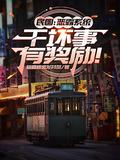 Republic of China: Bully System, There Are Rewards for Doing Bad Things!
239kReads9.4Score26.1kShelves
Republic of China: Bully System, There Are Rewards for Doing Bad Things!
239kReads9.4Score26.1kShelves
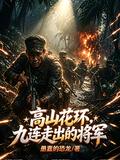 Alpine Garland, the General Who Walked Out of the Ninth Company
41.5kReads8.5Score1.6kShelves
Alpine Garland, the General Who Walked Out of the Ninth Company
41.5kReads8.5Score1.6kShelves
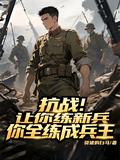 Anti-Japanese War: Let You Train New Soldiers, and You Will Become the King of Soldiers
11Reads8.1Score—Shelves
Anti-Japanese War: Let You Train New Soldiers, and You Will Become the King of Soldiers
11Reads8.1Score—Shelves
 Guandong Little Bandit
17.2kReads9.4Score2.1kShelves
Guandong Little Bandit
17.2kReads9.4Score2.1kShelves
 Blood Oath Journey
8.4kReads9.1Score787Shelves
Blood Oath Journey
8.4kReads9.1Score787Shelves
 The Soul Travels Through the Northeast to Fight Against the War and Save the Country
3.9kReads5.8Score209Shelves
The Soul Travels Through the Northeast to Fight Against the War and Save the Country
3.9kReads5.8Score209Shelves
 Anti-Japanese War: Security Corps? No, Please Call Me Great Power!
10.3kReads8.1Score605Shelves
Anti-Japanese War: Security Corps? No, Please Call Me Great Power!
10.3kReads8.1Score605Shelves
 Traveling Across Northern Myanmar to Become a Hero in Troubled Times
3.1kReads8.5Score162Shelves
Traveling Across Northern Myanmar to Become a Hero in Troubled Times
3.1kReads8.5Score162Shelves
 Upgrade Five Levels in a Row? the Principal Said That This Is How Huangpu Should Be
5.6kReads—Score233Shelves
Upgrade Five Levels in a Row? the Principal Said That This Is How Huangpu Should Be
5.6kReads—Score233Shelves
 Anti-Japanese War: Run! If You Don't Run Away, You Will Enter the Merit Forest.
8.1kReads5.9Score295Shelves
Anti-Japanese War: Run! If You Don't Run Away, You Will Enter the Merit Forest.
8.1kReads5.9Score295Shelves
 Time Travel 1937: They Are Young
2.1kReads5.8Score200Shelves
Time Travel 1937: They Are Young
2.1kReads5.8Score200Shelves
 Liangjian: This Li Yunlong Makes No Mistakes
33.2kReads8.1Score2.2kShelves
Liangjian: This Li Yunlong Makes No Mistakes
33.2kReads8.1Score2.2kShelves
 Show Your Sword in the Name of the People, I Will Be Your Backer
69kReads8.4Score3.6kShelves
Show Your Sword in the Name of the People, I Will Be Your Backer
69kReads8.4Score3.6kShelves
 Traveling Through the Republic of China: from Straw Sandal Soldiers to Red Generals
170Reads—Score114Shelves
Traveling Through the Republic of China: from Straw Sandal Soldiers to Red Generals
170Reads—Score114Shelves
 The Entire Company Was Beaten from Taierzhuang Until the Japanese Surrendered.
434Reads5.8Score—Shelves
The Entire Company Was Beaten from Taierzhuang Until the Japanese Surrendered.
434Reads5.8Score—Shelves
 From the Captain of the Bright Sword to the Commander of the Corps
172Reads5.8Score—Shelves
From the Captain of the Bright Sword to the Commander of the Corps
172Reads5.8Score—Shelves
 Anti-Japanese War: Starting from the Second Advance Team Going North to Fight Against Japan
17.7kReads8.9Score1.3kShelves
Anti-Japanese War: Starting from the Second Advance Team Going North to Fight Against Japan
17.7kReads8.9Score1.3kShelves
 Anti-Japanese War Troops Leave Yimeng
12.3kReads8.2Score951Shelves
Anti-Japanese War Troops Leave Yimeng
12.3kReads8.2Score951Shelves
 Bright Sword: the Fox of Northwest Shanxi
9.1kReads8.9Score442Shelves
Bright Sword: the Fox of Northwest Shanxi
9.1kReads8.9Score442Shelves
 The Legend of Liangjian Began in Southeastern Shanxi
32Reads5.8Score—Shelves
The Legend of Liangjian Began in Southeastern Shanxi
32Reads5.8Score—Shelves
 The Taihang Killing God of the War of Resistance
12.9kReads8.8Score1.1kShelves
The Taihang Killing God of the War of Resistance
12.9kReads8.8Score1.1kShelves
 War of Resistance: I Rely on the System to Summon a Million-Strong Army
51Reads5.8Score—Shelves
War of Resistance: I Rely on the System to Summon a Million-Strong Army
51Reads5.8Score—Shelves
 Anti-Japanese War: Follow the Iron Triangle Across Northwest Shanxi
10.7kReads7.1Score398Shelves
Anti-Japanese War: Follow the Iron Triangle Across Northwest Shanxi
10.7kReads7.1Score398Shelves
 Strange Murder Case in Big Car Shop
1.2kReads—Score165Shelves
Strange Murder Case in Big Car Shop
1.2kReads—Score165Shelves
 The War of Resistance Began with the Dying Datong Coal Miners
3.1kReads8.6Score224Shelves
The War of Resistance Began with the Dying Datong Coal Miners
3.1kReads8.6Score224Shelves