If you are tired of reading the mindless and enlightened novels written in the late Ming Dynasty, you must read this book "The County Official in the Late Ming Dynasty"! The protagonist, Shen Dalang, is a fellow in charge of grain management in Baoding Prefecture, an "ordinary person" who best understands the pain points of the grassroots in the late Ming Dynasty. There is no outrageous plot about becoming an emperor through time travel, only the reality of struggling step by step from grain taxation, land production, military system, and officialdom. From a small official in the county town to a big official in the border areas, he had to fight not only the iron cavalry of the Later Jin Dynasty, but also party disputes in the court, local gentry, and refugee disasters. Every step he took was based on the real historical nodes of the late Ming Dynasty. The author's research is solid. The land prices in Baoding in the late Ming Dynasty, the sales system of prisoners' families, and the details of grain road operation are all hard-core content that can withstand scrutiny. The writing style is even more like Yueguan, with vivid characters and compact plot. The more you read, the more you get hooked! History literature lovers should jump right in, this is what literature in the late Ming Dynasty should look like!
The story of a modern and funny rich second generation and the charming and naive princess of the Ming Dynasty, with a single heroine and no harem. Machiavellian historical textual research online, pure hand-playing without AI and living humanities.
If you want to read Machiavellian, you can read the first volume. The first volume was a bit boring. The part about ascending to the throne felt very interesting.
Recommended book treasures! The ancient Jinyiwei is pursuing a career in modern times, it is funny and relaxed, and your mood will immediately take off after watching it!
There is no golden finger, no system, no gun or running, no reclamation and no wretched development. Jianghu is not about fighting and killing, but about worldliness and top-level tactics. In novels about power and strategy to save the country, look at the emperor's strategy and the top-level conspiracy. You will never be disappointed.
I wrote it. I conceived it for three or four months and made the plot setting after learning a lot of information. Hard-core logic + historical facts, micro-system farming, and the middle and late settings are different from all the Ming and late Ming Dynasty novels now. It not only respects history but also creates a new direction!
The Yong'an establishment was a key turning point in the history of the Taiping Rebellion, which occurred after the Taiping Army captured Yong'an Prefecture (now Mengshan County) in Guangxi in September 1851. This was the first city occupied by the Taiping Army since the uprising, marking its transition from mobile warfare to regime construction. During this period, Hong Xiuquan carried out a series of military and political construction. Politically, the official system was established, and Yang Xiuqing was named the East King, Xiao Chaogui was the West King, Feng Yunshan was the South King, Wei Changhui was the North King, and Shi Dakai was the Wing King. All kings were stipulated to be controlled by the East King, and a leadership core was initially established. At the same time, the "Taiping Etiquette" was promulgated, establishing a strict hierarchy. Economically and militarily, the "holy treasury system" was consolidated, private possession of gold and silver property was strictly prohibited, and military discipline was vigorously rectified. In addition, the Taiping Heavenly Kingdom also abolished the Qing Dynasty calendar and officially promulgated the "Celestial Calendar". The Yong'an establishment initially established the Taiping Heavenly Kingdom's founding scale and military and political system, greatly consolidated the results of the struggle since the Jintian Uprising, improved the army's combat effectiveness, and laid an important foundation for the Taiping Army's subsequent out-of-province operations and rapid development. After the victory of Serdica, the Roman Salvation Army ushered in their "Yongan Organization". This rebel army of more than 10,000 people has officially transformed from the armed forces of the manor owners into a separatist regime that has begun to take shape. At the military and political level, Theodore followed the ancient system and divided his elite into seven battalions, and appointed generals as governors of various parts of the Balkans. From Macedonia to Thrace, from Epirus to Asia, the National Salvation Army initially delineated the military and political territory and established a leadership center with the seven battalions as the core. At the ideological and line level, this establishment is even more undercurrent. Theodore put forward an extreme "class struggle" line, advocating the establishment of absolute rule by dividing the land and killing priests; while Wu Qichuan watched with cold eyes and secretly planned to use the emperor's imperial mentality of "combining leniency with severity" of the Ming Dynasty, and use Theodore's "sword" to realize the great cause of restoring the country by Xingzong bloodline. This "Roman version of the Yong'an establishment" not only allowed the National Salvation Army to gain a foothold in the Balkans, but also laid the groundwork for fierce collisions between different routes. They still have a long and bloody road to go before overthrowing the Ottoman rule. 100 Points
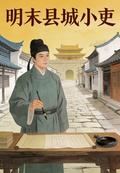 County Official in the Late Ming Dynasty
12.3kReads7.3Score1.2kShelves
County Official in the Late Ming Dynasty
12.3kReads7.3Score1.2kShelves
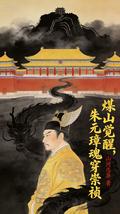 Awakening of Meishan: Zhu Yuanzhang's Soul Penetrates Chongzhen
50Reads—Score—Shelves
Awakening of Meishan: Zhu Yuanzhang's Soul Penetrates Chongzhen
50Reads—Score—Shelves
 Colonial Ming Dynasty
3.8kReads8.8Score299Shelves
Colonial Ming Dynasty
3.8kReads8.8Score299Shelves
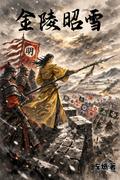 Jinling Zhaoxue
7Reads5.8Score—Shelves
Jinling Zhaoxue
7Reads5.8Score—Shelves
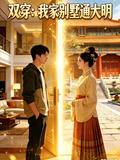 Double Wear: My Villa Is Connected to the Ming Dynasty
5.6kReads6.6Score403Shelves
Double Wear: My Villa Is Connected to the Ming Dynasty
5.6kReads6.6Score403Shelves
 Jiajing Period
5Reads—Score—Shelves
Jiajing Period
5Reads—Score—Shelves
 Gou Lived in the Late Ming Dynasty and Was Invincible When He Lay Flat.
305Reads5.5Score—Shelves
Gou Lived in the Late Ming Dynasty and Was Invincible When He Lay Flat.
305Reads5.5Score—Shelves
 Chongzhen's Seventeenth Year: My Coming Back Is Not a Joke!
29Reads—Score—Shelves
Chongzhen's Seventeenth Year: My Coming Back Is Not a Joke!
29Reads—Score—Shelves
 The Soul Penetrates the Ming Dynasty, and the Big Brother Falls at the Beginning
2.5kReads—Score130Shelves
The Soul Penetrates the Ming Dynasty, and the Big Brother Falls at the Beginning
2.5kReads—Score130Shelves
 The Commander of the Ming Dynasty: I Am a Royal Guard in Modern Times
4Reads5.8Score—Shelves
The Commander of the Ming Dynasty: I Am a Royal Guard in Modern Times
4Reads5.8Score—Shelves
 The Sinister Chongzhen: Another Three Hundred Years of Ming Dynasty
1Reads5.8Score—Shelves
The Sinister Chongzhen: Another Three Hundred Years of Ming Dynasty
1Reads5.8Score—Shelves
 Empress Wu Came to the Ming Dynasty: I Will Support the Ming Dynasty for Three Hundred Years
17Reads—Score—Shelves
Empress Wu Came to the Ming Dynasty: I Will Support the Ming Dynasty for Three Hundred Years
17Reads—Score—Shelves
 Traveling Through Chongzhen, I Fell in Love with Your Daughter
5Reads—Score—Shelves
Traveling Through Chongzhen, I Fell in Love with Your Daughter
5Reads—Score—Shelves
 The Great Separatists Built a Towering China from Hundreds of Households in the Late Ming Dynasty
—Reads—Score—Shelves
The Great Separatists Built a Towering China from Hundreds of Households in the Late Ming Dynasty
—Reads—Score—Shelves
 Qin Shu
—Reads5.8Score—Shelves
Qin Shu
—Reads5.8Score—Shelves
 Conferred God! on the Eve of the Country's Subjugation, I Led Chongzhen to Fight Back
19Reads8.6Score—Shelves
Conferred God! on the Eve of the Country's Subjugation, I Led Chongzhen to Fight Back
19Reads8.6Score—Shelves
 The Sun and the Moon Shine Together, the Eastern Roman Empire and the Ming Dynasty's Western Empire
12Reads—Score—Shelves
The Sun and the Moon Shine Together, the Eastern Roman Empire and the Ming Dynasty's Western Empire
12Reads—Score—Shelves
 Ming Dynasty: the Orthodox New Emperor
63Reads—Score—Shelves
Ming Dynasty: the Orthodox New Emperor
63Reads—Score—Shelves
 The Ming Dynasty and Everything Are Prosperous
6Reads5.8Score—Shelves
The Ming Dynasty and Everything Are Prosperous
6Reads5.8Score—Shelves
 Tang Hun in Guiyi
854Reads5.8Score106Shelves
Tang Hun in Guiyi
854Reads5.8Score106Shelves
 Kingdom of Heaven: the Rise of an Imperial Dynasty
1.2kReads5.8Score103Shelves
Kingdom of Heaven: the Rise of an Imperial Dynasty
1.2kReads5.8Score103Shelves
 Traveling Through the Ming Dynasty: I Am the First Emperor of Xianwu
5.9kReads—Score682Shelves
Traveling Through the Ming Dynasty: I Am the First Emperor of Xianwu
5.9kReads—Score682Shelves