The war of resistance begins with the Sichuan Army! Fight bloody battles, defend Nanjing, occupy Huizhou, and form the Chinese Iron Guard! Send troops north to recapture Outer Mongolia, and cross the sea with armor to crush Japan!
🍒① Traveling back to Zhou Weiguo, he resolutely refused the invitation from the Berlin Military Academy. Killing Japanese and copying traitors is the most hardcore "study abroad" in this era! Facing his sympathetic opponent Shun Takeshita, his principle is simple and crude: if he cannot be assimilated, he will be completely destroyed. Xiao Ya, who had regrets in his previous life, vowed to protect her with his life in this life. 🌱②In times of war and chaos, brothers stand side by side! The modern soldier king Zhou Wu traveled through Snow Leopard and became the brother of Zhou Weiguo. He is familiar with the plot and vows to reverse the tragedy and build a passionate defense line with his brother! With both civil and military skills, we will kill the enemies and invaders together and protect our mountains and rivers!
Explosive modification system + corpse-touching technique, unlimited logistics, explosive modification of China's new equipment, high-end crushing of the Japanese, no matter whether it is a brigade, division or front army, it will be completely annihilated without any discussion! Move to Myanmar to establish the country in Southeast Asia, and kill the Japanese in their homeland! Shake the egg yolk loose and cut the earthworm vertically!
"A Man Graduates from Huangpu and Rise from the Head of a Regiment" is a historical military novel written by the author Shuocheng Zhang. The novel tells the story of the protagonist Qin Feng who traveled to the Anti-Japanese War and became a commander of the Shanxi-Sui Army. In this era, Qin Feng not only shouldered the heavy responsibility of military command, but also activated a sign-in entry system. By checking in every day, he can obtain entries as rewards, which can give his generals and soldiers special abilities. However, Qin Feng found that these entries seemed to have some side effects, which forced him to carefully screen targets to reduce the negative impact of these side effects as much as possible. As the story develops, Qin Feng has gathered many brave generals under his command. He has a powerful air force, navy and heavy machinery units, and has gradually become a military force that cannot be ignored. With its unique system assistance and historical background, the novel builds a world full of strategic and tactical contests, showing how the protagonist rises to become a generation of military leaders in a war-torn era.
"They checked my pens and my ink, but they couldn't find the equipment lists of three divisions hidden in the printing press." "When the Special High School awarded me the literature award, the award words had already been written on their own death sentence."
"Anti-Japanese: I Can Summon the Dark Zone Boy Band". The protagonist leads the dark zone boy band to kill everyone on the anti-Japanese battlefield. This imagination is amazing! I read it in one sitting and couldn't stop!
Five articles penetrating the backbone of the Anti-Japanese War - "No Japanese Allowed" is highly recommended - How long has it been since you read such an anti-Japanese article? It's not a carnival of hand-to-hand devils, not a series of adventures, or a time-traveler's crushing dimension-reducing attack—it's a man, carrying a handful of ashes from 1987, into the Taihang Mountains in 1942, and living his life like a steel drill nailed into the cracks of history. "No Japs Allowed", the title of the book is as hard as the frozen soil in the trench, but when you open it, you will find hot flesh and blood. Each of these five episodes is a trace of quenching. ---Episode 18: The Isolation Zone Between Flame and Lime "If you don't be cruel today, you will never be a village tomorrow." When Fu Shuiheng raised the picture of his mother to the flame, I admit that I held my breath. That was his last connection with 1987. If you burn it, you can never go back. But he burned. In order to persuade the villagers to cremate the plague victims, he burned the only relic he brought with him when he traveled in public, and cut off the return journey with his own hands. This episode is about the plague, about isolation, about life and death within five steps of each other inside and outside the limestone line - but the most poignant thing is Director Qin standing at the entrance of the village, holding a fire stick, Zhang Suozhu who tied the thousand-layer cloth shoes that his fiancée received around his waist and was reluctant to wear them, and Qiu Tang who guarded the memory of his father's death from the plague but personally nursed plague patients nineteen years later. My eyes got hot when I read the part about Li Funi being cremated. The author did not exaggerate the sadness, but just wrote "She put her little hand back into the quilt and folded the corner of the quilt, as if Fu Ni had just fallen asleep." That's it. Grief without wailing hurts the most. ---Episode 19: Yamamoto Kazuki's "Gift" "Anyone who commits injustice will be punished by his own death." This is the first time in the book that the Japanese opponent is presented head-on, and it is also the first time that readers realize that this war is not a drama, but that the opponent is a real "scholar-soldier". Yamamoto Kazuki sent three plague-infected livestock to the base area with a letter: "Science knows no borders, and so does death." Elegant, cold-blooded, and calm. He thought this was the crushing of science and civilization. Fu Shuiheng's return gift was seventeen specially processed letters home from the Japanese soldiers. The edges of the letters were written in Roman alphabet, "May my mother's eye disease be cured" and "Anyone who commits unjust acts will be punished by death." He didn't curse or fight back, he just let Yamamoto know: the mothers of your soldiers are waiting for them to go home, but you let them die in a foreign land, and you can no longer see the cherry blossoms in your hometown. What's even more amazing is that seven days later, Yamamoto made an appointment with Fu Shuiheng on the river beach. He wanted to see this mysterious opponent with his own eyes. Fu Shuiheng went to the appointment alone and stood there for a whole afternoon surrounded by an ambush arranged by Yamamoto. Yamamoto didn't dare to come. Scholars and soldiers are not afraid of bullets, but of looking at themselves in the mirror. This episode explains clearly what "cultural self-confidence" means: you use science as a sword, and I use civilization as a shield. --- Episode 20: Our flag will eventually be planted all over Taihang. "On August 15, 1945, there was a man's voice on the Tokyo Broadcasting Conference." At the celebration banquet, Fu Shuiheng got drunk for the first time. He told the brigade commander the secret that had been buried in his heart for two hundred and seventeen days. There is no foreshadowing, no foreshadowing, no sensationalism - just drunken mumbling. The brigade commander was silent for a long time. Then he said, "I didn't hear anything." There was a pause. "But you must live to see that day. This is an order." - This sentence is worthy of showing off a hundred times through Golden Finger. The line where Fu Shuiheng wrote the theme of the book on the title page of his notebook is worth remembering by every reader: "I can't change the flow of history, but I can temper every wave into a steel knife." This is the literary touch of the entire book and the most touching footnote of this character. He is not a hero who comes to save the nation, he is a craftsman who embeds his flesh and blood into the backbone of the nation. ---Episode 21: New Evidence of Blood Debt·Crying in the Fushun Mine "Brother, wait until I come back--" In 1938, at the Shanghai dock, 16-year-old Fu Yihai was crowded among the people fleeing, and he turned around and waved to his brother. The whistle drowned out the boy's voice, leaving only the shape of his mouth. In 1942, Fu Shuiheng received a secret message from the Jizhong Military Region in the Taihang Mountain Translation Room. On the death register of the Fushun Coal Mine Special Labor Camp, it clearly reads: "No. 420: Fu Yihai (Fujian) failed to escape, life or death unknown." Three years and nine months, one thousand three hundred and fifty three days. He thought his brother was dead. He told himself that his brother was dead. Relying on the assumption that "his brother is dead", he survived the days and nights in Huangya Cave, the flames and lime in Shipan Village, and the provocation of germ warfare by Yamamoto Kazuki - and then a telegram told him: his brother may still be alive. In Fushun. In the coal mine. In a labor camp where more than a dozen people died every day. This episode does not write about Fushun directly, but only about Fu Shuiheng's decision to go to the Northeast. Write about the three names he named when he asked the brigade commander for people: Zhang Suozhu, Qiu Tang, and Lin Mang. It was written that he went to see Director Qin to say goodbye. The women of Shipan Village brought two pairs of thousand-layer cloth shoes overnight and stuffed them into his baggage. He wrote "Fu Yihai, wait for me" in his notebook. This is the first major expansion of the book's narrative territory - from the Taihang Mountains to Guandong, from the epidemic prevention war to the rescue war. And when I read the last sentence, "The entire nation has been buried underground for three thousand years, but its heartbeat still hasn't stopped beating," my back felt numb. ---Episode 22: Thousands of miles of stealth·Seventy-two hours of crossing the blockade "Remember this scene, but the mission comes first." This episode is the most tightly paced chapter in the book. Two thousand three hundred miles, three blockades, three certificates of good citizenship, and four boxes of medicinal materials that were both real and fake. Fu Shuiheng and three companions set out from the Taihang Mountains, crossed the North China Plain tightly controlled by the Japanese army, and advanced towards Shanhaiguan. Three inspections, three dangers. For the first time, he spoke fluent Japanese and pretended to be a returned overseas Chinese from Nagasaki. The young soldier who wanted to eat Nagasaki honey cake when crossing the border sighed softly after being released. The second time, Military Police Captain Inoue detained him, and he took out the badge taken off the corpse of a Japanese agent in 1938 - a lie weaved with death to deceive the living God of Death. The third time, Shanhaiguan. North Korean translator Kim spotted the fake skullcap at the bottom of the medicine box, but did not reveal it. He just took the photo of his wife and daughter out of the drawer, looked at it, and then put it back. "I'm working as a translator for the people who killed my wife and daughter." He said, "I'm not helping you, I'm disgusting myself." This is the most complex image of a "traitor" in the book. No facial expressions, no moral judgment. It's just a man trapped in the cracks of history, using the only way he has left to prove to his dead daughter: Father still remembers that your name is Kim Soon-hee. That night, Fu Shuiheng witnessed the atrocities of the Japanese army on the beach outside Shanhaiguan, driving the entire village to the beach, shooting them collectively, and throwing their bodies into the sea. He lay down behind the ridge and counted the times the sword fell. One knife, two knifes, three knifes... When he counted to the twenty-third knife, Zhang Suozhu behind him had already clenched his palms, and blood seeped out from between his fingers, staining his fiancée's thousand-layer cloth shoes red. "We remember." Fu Shuiheng held down his hand that was touching the shell gun. "Then come back alive." "Then one by one, calculate the total." This episode is about stealth, disguise, and the seventy-two hours of danger - but in the end, it is about the restraint of hatred and the accumulation of strength. It's not that he doesn't hate it. He hates it more than anyone else. But he wants to temper his hatred into a knife. --- Why are these five episodes worth your evening? Because there are no time travelers with golden fingers here. Fu Shuiheng understands modern medicine, but he can only rely on lime and isolation to fight the plague in Shipan Village. He knew Japanese, but every word of Japanese was learned from the tea shop at Fuzhou Pier in 1935, and he used it to save his life seven years later. He understood the direction of history, but when he said "August 15, 1945" at the celebration banquet, he was not showing off as a prophet, but begging the brigade commander to allow him to live to witness that day. He is a time traveler, but he is more like a stowaway - he smuggled into the Taihang Mountains in 1942 and exchanged the knowledge and memories of 1987 for lime, a fuse improvement plan, an epidemic prevention manual, Japanese pronunciation, and a badge taken off a corpse. Because here are the most moving "portraits of little people". Not every supporting character in the anti-Japanese story is called "Wang Erxiao" or "Li Xiangyang". His name was Zhang Suozhu, he was seventeen years old and a fitter apprentice. His fiancée gave him a pair of thousand-layer cloth shoes. He couldn't bear to wear them, so he tied them around his waist and walked for 2,300 miles. His name is Qiutang, and her father died of the Shanxi plague in 1918. For twenty-four years, she thought she could no longer cry, until she rescued the first patient in Shipan Village and squatted at the foot of the wall and cried. His name was Director Qin, and her husband died in Guanjianao. She stood at the entrance of the village holding a fire stick, stopping relatives who wanted to rush into the epidemic area to die, and also stopped her own fear. His name is Kim Soon-hee – and no, she's not the main character. She is the daughter of a Shanhaiguan translator who died at the age of three and lives in a yellowed photo in her father's drawer. These are names you shouldn't forget. Because there is real historical weight here. The author has clearly put in the effort. The incubation period, symptoms, and isolation measures of the plague, the HRC standard for the hardness of fuses in arsenals, the anti-counterfeiting watermark on certificates of good citizenship during the Manchukuo era, the badge shape and internal terminology of the extra-high school courses—every detail has its origin. This is not a show-off. This is respect for history. More importantly, the author does not make "changing history" the protagonist's task. Fu Shuiheng did not assassinate Yamamoto Kazuki, did not stop the germ warfare plan, and did not end the war early. He just saved one person, improved a fuse, controlled a local plague, found his younger brother's name on the death register - and then embarked on a 2,300-mile journey to find his relatives. He knew he couldn't change the tide. He just wanted every wave of water to be tempered into a steel knife. ---Last suggestion: Please start reading from episode 18. There is no need to catch up on the previous seventeen episodes, these five episodes are a complete character arc - from the lime line of the Taihang Mountains, to the beaches of Shanhaiguan, to the wisp of Fujian folk songs on the edge of the Fushun mine. Fu Shuiheng went from a technician who "accidentally gained knowledge on epidemic prevention" to a rescuer who led three companions 2,300 miles deep behind enemy lines. His fear didn't go away. His hatred did not subside. His knowledge of history did not help him win any of his battles. But he lived what the brigade commander ordered him to live: live to see August 15, 1945. If you are tired of the carnival of tearing up Japanese soldiers, and if you want to know how much more depth can be written in the genre of "travel anti-Japanese literature" - please turn to the eighteenth episode of "No Japanese Left Behind". There is fire there. There's lime there. There is a man who burned his own way home and walked the rest of the way for thousands of people who could not go home. --- [Extended Recommendation] If you are hit after reading these five episodes - Episode 23 "Gate of Hell·Night in the Labor Camp" describes Fu Shuiheng touching the edge of the Fushun mine and hearing Fujian folk songs coming from underground; Episode 24 "Mine Pit Riot·The Roar of Three Thousand People" describes Fu Yihai's three-year latent plan to counterattack; ... And Episode 48, on August 15, 1945, Fu Shuiheng was in a Yan'an cave dwelling, watching the radio and waiting for the man's voice. He would live to see that day. This is an order.
Our Qilin Army listens to the general's orders, guards thousands of miles of mountains and rivers, and protects hundreds of millions of dawns. It's so exciting [Like][Like]
①The heroine is cautious and decisive in doing things. She never shows mercy to her enemies. She has a strong aura and often hits the most vulnerable parts of others' hearts. She also has high force value and kills indiscriminately! ②The heroine is dressed in the Republic of China, with golden fingers spread wide, and wearing multiple vests. She can switch identities at any time. She is also super smart, has IQ, and has a strong force value. She is quick and accurate in her actions. It is a cool article! ③ Two siblings travel through the Republic of China. One activates the ace agent system and the other awakens the god-level commander system. Then they cooperate with each other to fight against Japanese pirates and survive in the cruel battlefield!
[The most filial time travel in history: Qi Tongwei traveled through time and became a grandfather, trying his best to improve his performance, just so that he can win in the next life! Independent Regiment Soldier: Deputy Commander Qi is working so hard, what is he trying to do? Qi Tongwei: I hope I can shout out the phrase "I am Qi Tongwei" in my next life!
In the turbulent times of the Anti-Japanese War in 1938, a dying soldier met Lin Feng, a time-traveling special soldier. There were no reinforcements and no radio. They relied on special tactics to break the situation and devil training to become stronger. From counterattacking the elite at the training ground to intercepting supplies in Heilinggou, every step was full of games and reversals. The little characters relied on their strength to survive in troubled times and bravely resisted the enemy. The plot was exciting and logically clear.
What is the most perfect start to the war against Japan? See how Xu Jianfei gathers the four trump cards of "money, guns, territory, and skills" to crush everything.
 Reborn Pretender
5.8kReads7.4Score516Shelves
Reborn Pretender
5.8kReads7.4Score516Shelves
 As Soon as I Arrived at the Songhu Battlefield, I Took Out the System Panel, Pushed the Japanese to the Ground and Beat Him.
5Reads8.4Score—Shelves
As Soon as I Arrived at the Songhu Battlefield, I Took Out the System Panel, Pushed the Japanese to the Ground and Beat Him.
5Reads8.4Score—Shelves
 The Republic of China: Starting from Military Rule, the Country Began to Dominate the World.
110Reads7.5Score—Shelves
The Republic of China: Starting from Military Rule, the Country Began to Dominate the World.
110Reads7.5Score—Shelves
 Wushuang: My Career as a Soldier in the Republic of China
54Reads5.8Score—Shelves
Wushuang: My Career as a Soldier in the Republic of China
54Reads5.8Score—Shelves
 The Sichuan Army Is Ferocious: My Armor Is Designed to Defeat Japanese Soldiers
949Reads7.2Score—Shelves
The Sichuan Army Is Ferocious: My Armor Is Designed to Defeat Japanese Soldiers
949Reads7.2Score—Shelves
 Bright Sword: I, the Sniper, Start with Barrett
44kReads6.8Score5kShelves
Bright Sword: I, the Sniper, Start with Barrett
44kReads6.8Score5kShelves
 Republic of China: Buy the Oiran at the Beginning? Return the German Arms Group
331Reads5.8Score—Shelves
Republic of China: Buy the Oiran at the Beginning? Return the German Arms Group
331Reads5.8Score—Shelves
 Snow Leopard: Build the Strongest Elite Group Through Robbery
10.7kReads8.3Score887Shelves
Snow Leopard: Build the Strongest Elite Group Through Robbery
10.7kReads8.3Score887Shelves
 Republic of China: a Beautiful Agent with Unlimited Resources Comes to Your Door Late at Night
3.7kReads6.5Score211Shelves
Republic of China: a Beautiful Agent with Unlimited Resources Comes to Your Door Late at Night
3.7kReads6.5Score211Shelves
 Snow Leopard: Brothers Fighting the Tiger, Father and Son Join the Battle!
1.9kReads8.0Score—Shelves
Snow Leopard: Brothers Fighting the Tiger, Father and Son Join the Battle!
1.9kReads8.0Score—Shelves
 As an Undercover Agent, I Just Wanted to Survive but Was Forced to Do Hard Work.
14.9kReads7.5Score959Shelves
As an Undercover Agent, I Just Wanted to Survive but Was Forced to Do Hard Work.
14.9kReads7.5Score959Shelves
 Marry a Village Beauty at the Beginning, Farm and Drive Mountains to Fight the War
5.7kReads8.5Score334Shelves
Marry a Village Beauty at the Beginning, Farm and Drive Mountains to Fight the War
5.7kReads8.5Score334Shelves
 The Legend of Liangjian Began in Southeastern Shanxi
32Reads5.8Score—Shelves
The Legend of Liangjian Began in Southeastern Shanxi
32Reads5.8Score—Shelves
 Are All My Wives Spies? Don't Do It, I Want to Live
65.5kReads6.3Score6.4kShelves
Are All My Wives Spies? Don't Do It, I Want to Live
65.5kReads6.3Score6.4kShelves
 In Spy Wars, I Rely Entirely on Editors for All My Intelligence.
18.3kReads6.5Score1.2kShelves
In Spy Wars, I Rely Entirely on Editors for All My Intelligence.
18.3kReads6.5Score1.2kShelves
 Anti-Japanese War: Apply for Military Academy and Rise from the Teaching Corps
943Reads—Score—Shelves
Anti-Japanese War: Apply for Military Academy and Rise from the Teaching Corps
943Reads—Score—Shelves
 Anti-Japanese War: Explosive Modification of Equipment, All Japanese Soldiers Were Destroyed
3.2kReads7.8Score309Shelves
Anti-Japanese War: Explosive Modification of Equipment, All Japanese Soldiers Were Destroyed
3.2kReads7.8Score309Shelves
 The Father God of the Mechanical Tribe, Rise Since the War of Resistance
8Reads5.8Score—Shelves
The Father God of the Mechanical Tribe, Rise Since the War of Resistance
8Reads5.8Score—Shelves
 Liangjian Civilian Supplier
5.7kReads8.4Score426Shelves
Liangjian Civilian Supplier
5.7kReads8.4Score426Shelves
 Spy War! My Female Military Instructor Is Too Hot
3.7kReads7.6Score423Shelves
Spy War! My Female Military Instructor Is Too Hot
3.7kReads7.6Score423Shelves
 Anti-Japanese War: One Dollar Instant Kill at the Beginning, Starting from Songhu
17Reads5.8Score—Shelves
Anti-Japanese War: One Dollar Instant Kill at the Beginning, Starting from Songhu
17Reads5.8Score—Shelves
 Spy War: It's Been a Long Time, and Finally It's the Beauty Trap
10.2kReads7.1Score684Shelves
Spy War: It's Been a Long Time, and Finally It's the Beauty Trap
10.2kReads7.1Score684Shelves
 Spy War: Three Years After Another, I Became the Enemy's General
4.8kReads7.1Score355Shelves
Spy War: Three Years After Another, I Became the Enemy's General
4.8kReads7.1Score355Shelves
 Spy War: a Silent Struggle
10.3kReads8.2Score787Shelves
Spy War: a Silent Struggle
10.3kReads8.2Score787Shelves
 Spy War, If Taijun Doesn't Take It, How Can I Make Progress?
2.7kReads5.8Score328Shelves
Spy War, If Taijun Doesn't Take It, How Can I Make Progress?
2.7kReads5.8Score328Shelves
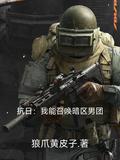 Anti-Japanese: I Can Summon the Dark Zone Boy Band
8.2kReads9.2Score858Shelves
Anti-Japanese: I Can Summon the Dark Zone Boy Band
8.2kReads9.2Score858Shelves
 No Japanese Are Allowed to Stay
10Reads5.8Score—Shelves
No Japanese Are Allowed to Stay
10Reads5.8Score—Shelves
 Guandong Little Bandit
17.2kReads9.4Score2.1kShelves
Guandong Little Bandit
17.2kReads9.4Score2.1kShelves
 In the War of Resistance, I Have the Skills to Hit Every Target
27.9kReads7.5Score2.3kShelves
In the War of Resistance, I Have the Skills to Hit Every Target
27.9kReads7.5Score2.3kShelves
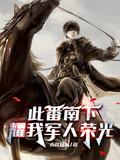 This Trip South Will Bring Glory to Our Soldiers
3.5kReads8.6Score216Shelves
This Trip South Will Bring Glory to Our Soldiers
3.5kReads8.6Score216Shelves
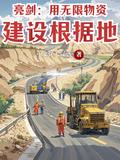 Liang Jian: Half of My System Has Been Cracked
10.3kReads8.3Score807Shelves
Liang Jian: Half of My System Has Been Cracked
10.3kReads8.3Score807Shelves
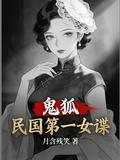 Queen of Military Rule
9.6kReads8.8Score1.3kShelves
Queen of Military Rule
9.6kReads8.8Score1.3kShelves
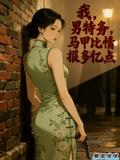 I, a Male Agent, Have More Than 100 Million Intelligence Points in My Vest.
1.7kReads8.8Score167Shelves
I, a Male Agent, Have More Than 100 Million Intelligence Points in My Vest.
1.7kReads8.8Score167Shelves
 Anti-Japanese War: My Sister Is a Pretender and My Brother Is Li Yunlong
1.5kReads7.1Score192Shelves
Anti-Japanese War: My Sister Is a Pretender and My Brother Is Li Yunlong
1.5kReads7.1Score192Shelves
 Anti-Japanese War: Songhu Starts, Beats up the Little Japanese
1Reads5.8Score—Shelves
Anti-Japanese War: Songhu Starts, Beats up the Little Japanese
1Reads5.8Score—Shelves
 Changing One's Life Begins with Traveling Through the Republic of China
15Reads5.8Score—Shelves
Changing One's Life Begins with Traveling Through the Republic of China
15Reads5.8Score—Shelves
 Traveling Between Two Worlds: the 1970S
210Reads5.8Score—Shelves
Traveling Between Two Worlds: the 1970S
210Reads5.8Score—Shelves
 The Red Era of Traveling Between Two Worlds
341Reads5.8Score101Shelves
The Red Era of Traveling Between Two Worlds
341Reads5.8Score101Shelves
 In the 1980S, He Disguised Himself as a Wealthy Countryman and Returned to China.
8kReads5.8Score429Shelves
In the 1980S, He Disguised Himself as a Wealthy Countryman and Returned to China.
8kReads5.8Score429Shelves
 During the Anti-Japanese War, My Husband Xu Guoshi Was a Blessing
1Reads—Score—Shelves
During the Anti-Japanese War, My Husband Xu Guoshi Was a Blessing
1Reads—Score—Shelves
 Double Wear: Gold Rush in the Republic of China
11.2kReads7.7Score921Shelves
Double Wear: Gold Rush in the Republic of China
11.2kReads7.7Score921Shelves
 Qi Tongwei Changed His Destiny: Starting from the Sword
119Reads—Score—Shelves
Qi Tongwei Changed His Destiny: Starting from the Sword
119Reads—Score—Shelves
 Siheyuan: Anti-Japanese War Spy Opens a Tavern in the Capital
1.6kReads6.5Score—Shelves
Siheyuan: Anti-Japanese War Spy Opens a Tavern in the Capital
1.6kReads6.5Score—Shelves
 Siheyuan: Anti-Japanese War Spy Fighting the Japanese in Changbai Mountain
79Reads—Score—Shelves
Siheyuan: Anti-Japanese War Spy Fighting the Japanese in Changbai Mountain
79Reads—Score—Shelves
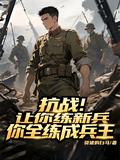 Anti-Japanese War: Let You Train New Soldiers, and You Will Become the King of Soldiers
11Reads8.1Score—Shelves
Anti-Japanese War: Let You Train New Soldiers, and You Will Become the King of Soldiers
11Reads8.1Score—Shelves
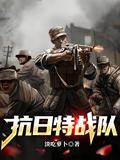 Anti-Japanese Special Forces
7.8kReads7.5Score795Shelves
Anti-Japanese Special Forces
7.8kReads7.5Score795Shelves
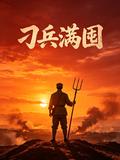 Lots of Crafty Soldiers
107Reads—Score124Shelves
Lots of Crafty Soldiers
107Reads—Score124Shelves
 Strange Outing in the Countryside
722Reads6.5Score117Shelves
Strange Outing in the Countryside
722Reads6.5Score117Shelves