It's a one-unit drama, but it's the kind that's still disconnected from the beginning to the end. Anyway, I'm short of words. You'll understand after watching it.
Cause and effect are not destiny, but the iron law of the world - a review of "Corpse Whispering and Murder: Hong Kong City Mysteries: Four Old Dramas Frighten People, Thrilling People on the Stage" After reading "Old Dramas Frighten People, Throwing Life on the Stage" by Hao Feng, some people lamented that "good and evil will be rewarded", while others lamented "the reincarnation of heaven". However, if we simply equate cause and effect with superstition or fate, we will fail to live up to the realistic weight of this novel. The cause and effect in Hao Feng's works is not punishment from ghosts and gods, nor a trick of fate, but a cold but clear social law: every choice weaves consequences, and every evil deed will eventually bite back on itself. 1. Cause and effect is the logical chain of actions and consequences. Buddhism talks about cause and effect, which is often misunderstood as "destined in previous lives." In fact, the "Za Agama Sutra" says: "There are causes and predestined relationships to gather together in the world, and there are causes and conditions to gather together in the world." ("Za Agama Sutra Volume 12") emphasizes the "harmony and combination of causes and conditions" - things come into being due to the convergence of conditions, and they also perish due to the dispersion of conditions. This is not mysticism, but a description of objective laws. Jiang Yi's death was apparently strangled by Qi Yin, but the underlying reason was his choice ten years ago. He forced the wire parameters to be changed, which is the first "cause"; after the accident, he teamed up with Zhou Kai to frame Chen Yu, which is the second "cause"; he has never regretted or apologized in the past ten years, which is the continuing "cause". The accumulation of these behaviors will inevitably lead to hatred, people will inevitably become intolerable, and some people will inevitably choose extreme measures when they are desperate. The appearance of Qi Yin is not a punishment from heaven, but a thorn that grows from the seeds planted by Jiang Yi himself. The causal logic shown in the novel can be completely matched in real society: bullies will eventually be resisted, deceivers will eventually lose trust, and indifferent people will eventually be isolated. This is not metaphysics, but probability, human heart, and a law that has been repeatedly verified by history. 2. Karma is the inescapability of responsibility. The "Dabao Accumulation Sutra" says: "Even if it lasts for a hundred kalpas, your deeds will not perish. When karma and fate meet, you will receive the retribution." ("Dabao Accumulation Sutra, Volume 57") This sentence is often understood as "judgment in the dark", but it actually reveals a kind of responsibility ethics: the things you have done will not disappear because of the passage of time; the responsibilities you escape will always come back to you in another form at some point. Jiang Yi quit the industry, canceled his account, and moved away from his original address, hoping to erase himself from history. But Xu Qingran's death has not disappeared, Chen Yu's madness has not disappeared, and Qi Yin's hatred has not disappeared. He thought that "a hundred calamities" could dilute everything, but he didn't know that "the work he had done will not perish" - the people he hurt are still alive, their memories are still there, and the pain is still there. As long as these remain, he can never truly "start over." This is the practical significance of the novel: in real society, those who try to use "time" and "disappearance" to escape responsibility often find that they can't escape the law, the memory of the person involved, the fear in their own heart, or the chain reaction of social relationships in real society. Cause and effect is not recorded by God, but by the causes you sow, and there is always someone reaping the fruits. 3. Gongye reveals the inevitable price of systematic evil. The most realistic impact in the novel is the setting of "Gongye". Jiang Yi, Zhou Kai, Gao Tiancheng, Su Man, and even other members of the troupe who remained silent, together constituted a systemic injustice. No one is the sole murderer, but everyone contributes a share of the evil. "The Theory of Awakening of Faith in the Mahayana" says: "According to the method of one mind, there are two kinds of doors. One is the true door of the mind, and the other is the door of birth and death." People's minds learn from each other in the door of birth and death, and fear and selfishness converge into a powerful collective behavior. In reality, many tragedies are not caused by one person: workplace bullying requires the silent cooperation of colleagues, school violence requires the inaction of bystanders, and unjust, false and wrongful convictions require the perfunctory response of the entire system. The profound thing about Hairpin Feng is that she did not let Qi Yin kill only Jiang Yi, but also included Zhou Kai on the list - because Zhou Kai's perjury was also fatal. She also made Suman and Gao Tiancheng live in fear - because they were also accomplices, even if they just stood by and watched. The causal logic of the novel tells readers: In the face of systemic injustice, no one can be immune. If you are silent today, you may become the target of silence tomorrow. 4. The positive meaning of cause and effect: We can choose "cause" Some people regard cause and effect as a negative "acceptance of fate", but in fact it is exactly the opposite. The law of cause and effect means that the future can be changed by current choices. "Dhammapada" says: "The thoughts of all Dharmas are the forerunners, and thoughts lead to creation. If you use pure thoughts, words or actions, then happiness will follow them, like a shadow that is inseparable." ("Dhammapada·Double Product") Pure thoughts bring happiness, and they will follow you like a shadow. This emphasizes human agency. Qi Yin chose revenge and also chose to go to jail; Chen Yu chose to take the blame and choose relief after waking up; Suman finally told the truth in the interrogation room - every choice creates new cause and effect. The ending of the novel is not a simple sermon of "evil begets evil", but a presentation: cause and effect is not the end, but the process. Jiang Yi died, but his family also suffered; Qi Yin went to jail, but Chen Yu was free. There is no pure victory, only each person making their own choices. This practical significance is extremely important: it tells readers that every decision you make now—whether to tell the truth, whether to help the weak, whether to shirk responsibility—will shape your future situation. Cause and effect is not waiting for God to reward and punish you, but you are writing the script of your own destiny with your own hands. 5. Conclusion: Respecting cause and effect is reverence for reality. The most successful aspect of "Old Dramas Shock, Throw Life on Stage" is that it allows readers to touch the iron law of cause and effect in addition to suspense. The rope in the abandoned theater is not the rope of punishment in myth, but the web of relationships and chains of responsibility that everyone is weaving in real life. Hairpin Feng uses Buddhist vocabulary, but what he talks about is the simplest truth: if you sow melons, you will reap melons, and if you sow beans, you will reap beans; good deeds will be rewarded with good deeds, and evil deeds will be rewarded with evil deeds. This "time" is the day when causes and conditions come together. Respecting cause and effect is not about burning incense and worshiping Buddha, but clearly realizing that every action has consequences and every responsibility cannot be avoided. This is the most precious realistic revelation that this novel leaves to readers.
🌟The first modern forensic doctor traveled to ancient times and was forced to sell himself to Liumen as a coolie! Relying on his professional skills to solve strange cases repeatedly! The case is super exciting~👻 🌟The second suspense detective book! Dark series, serial murders 😱, timid people entering by mistake, criminal investigation techniques, interlocking, wonderful ~
[Bookshelf plus one] [Bookshelf plus one] It's so beautiful! ! ! I'm tired of talking about it. I saw the Chinese New Year in one breath. Every case is unique and ingeniously designed. The high-IQ crime is awesome! ! 🌟🌟🌟🌟🌟I give it a five-star recommendation
They are all about solving crimes without a female protagonist. Two of them are about Shuang Nan, some have systems, some have rebirth, and some have supernatural powers. . I have saved it for a long time. You can view it according to the settings you like. You are welcome to take it away.
Two-male protagonist plot yyds~ is currently being serialized. It's slow at the beginning, but the logic and cases are absolutely cool. All unit cases are combined with the main plot, and there are also unsolved cases adapted from real cases.
Slightly different from your request, there is only one case in the whole book, spanning twenty-eight years. But the plot is compact, all members have online IQs, and you won't lose money if you invest in it!
It is suspenseful and supernatural, with a new way of writing the play, multiple different perspectives, and pure crime solving. Come and analyze the foreshadowing and deduce the subsequent plot.
When it comes to personal hobbies, when I encounter detective-related books, I recommend Zijin Chen's book [Thinking][Thinking] The last one is a personal item, a book about cultivating immortals [Please pay attention][Please pay attention][Please pay attention]
. This book is quite good. You can check it out. AA is a story about a female forensic doctor and the captain of the criminal police team who have been in love for a long time. The female forensic doctor is different from normal people. She is paranoid, but she and he can solve the case together. They cooperate with each other from disliking each other to joining hands in the end. .
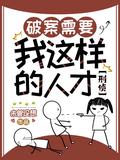 Talents Like Me Are Needed to Solve Crimes [Criminal Investigation]
84kReads9.4Score12.2kShelves
Talents Like Me Are Needed to Solve Crimes [Criminal Investigation]
84kReads9.4Score12.2kShelves
 Ah Ci
150Reads5.8Score—Shelves
Ah Ci
150Reads5.8Score—Shelves
 Lie About Healing
6Reads—Score—Shelves
Lie About Healing
6Reads—Score—Shelves
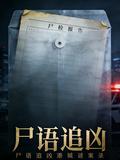 Corpse Whispers: the Mysteries of Hong Kong City
488Reads5.8Score104Shelves
Corpse Whispers: the Mysteries of Hong Kong City
488Reads5.8Score104Shelves
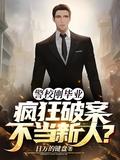 He Just Graduated from the Police Academy and Is Solving Crimes Like Crazy, so He Is Not a Rookie.
19.1kReads8.8Score1.4kShelves
He Just Graduated from the Police Academy and Is Solving Crimes Like Crazy, so He Is Not a Rookie.
19.1kReads8.8Score1.4kShelves
 The Old Detective Is Reborn, Who Dares to Disapprove?
4.7kReads9.3Score430Shelves
The Old Detective Is Reborn, Who Dares to Disapprove?
4.7kReads9.3Score430Shelves
 Strange Tales from a Chinese Studio
175Reads9.0Score—Shelves
Strange Tales from a Chinese Studio
175Reads9.0Score—Shelves
 Tales from the Alley About the Magic City
17Reads8.6Score—Shelves
Tales from the Alley About the Magic City
17Reads8.6Score—Shelves
 Men's Criminal Psychology File 1
203Reads9.1Score—Shelves
Men's Criminal Psychology File 1
203Reads9.1Score—Shelves
 Weird Things in the Song Dynasty: Beheading
247Reads9.1Score—Shelves
Weird Things in the Song Dynasty: Beheading
247Reads9.1Score—Shelves
 Quickly Wear It, the Story of the Salted Fish Girl Solving the Case
4Reads8.2Score—Shelves
Quickly Wear It, the Story of the Salted Fish Girl Solving the Case
4Reads8.2Score—Shelves
 Alluring Female Widow
25.5kReads9.4Score3.9kShelves
Alluring Female Widow
25.5kReads9.4Score3.9kShelves
 Small Mountain River
42.4kReads9.5Score6kShelves
Small Mountain River
42.4kReads9.5Score6kShelves
 Hard Bones
14.7kReads9.3Score2.6kShelves
Hard Bones
14.7kReads9.3Score2.6kShelves
 Roses and Guns [Criminal Investigation]
17.4kReads9.5Score2.9kShelves
Roses and Guns [Criminal Investigation]
17.4kReads9.5Score2.9kShelves
 Arrest Department
75Reads6.4Score—Shelves
Arrest Department
75Reads6.4Score—Shelves
 At the Beginning of the Live Broadcast, a Case Shocked Everyone
5.1kReads9.1Score599Shelves
At the Beginning of the Live Broadcast, a Case Shocked Everyone
5.1kReads9.1Score599Shelves
 Detective Wei Li of City Fog
2Reads—Score—Shelves
Detective Wei Li of City Fog
2Reads—Score—Shelves
 Crime Hunt Files: Punishment Lord
363Reads8.8Score—Shelves
Crime Hunt Files: Punishment Lord
363Reads8.8Score—Shelves
 Forensic Illustrated Book of Criminal Investigation
19.6kReads9.0Score2.6kShelves
Forensic Illustrated Book of Criminal Investigation
19.6kReads9.0Score2.6kShelves
 The Fast-Talking Forensic Doctor and the Policewoman Xiaobao
59Reads6.6Score—Shelves
The Fast-Talking Forensic Doctor and the Policewoman Xiaobao
59Reads6.6Score—Shelves
 The Anchor Does One Good Deed a Day, and the Criminal Goes to Jail
10.1kReads9.0Score1.2kShelves
The Anchor Does One Good Deed a Day, and the Criminal Goes to Jail
10.1kReads9.0Score1.2kShelves
 Reasoning to Solve Crimes: from Auxiliary Police Officer to Ace Police Detective
3.4kReads7.9Score298Shelves
Reasoning to Solve Crimes: from Auxiliary Police Officer to Ace Police Detective
3.4kReads7.9Score298Shelves
 The Undercover Agent Returns and Solves the Case for the First Time, Shocking the Whole Situation
10.5kReads9.3Score1.1kShelves
The Undercover Agent Returns and Solves the Case for the First Time, Shocking the Whole Situation
10.5kReads9.3Score1.1kShelves
 Criminal Investigation: My Psychotic Boyfriend
205Reads—Score—Shelves
Criminal Investigation: My Psychotic Boyfriend
205Reads—Score—Shelves
 Suspect 11
67Reads—Score—Shelves
Suspect 11
67Reads—Score—Shelves
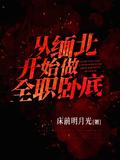 Start Working as a Full-Time Undercover Agent from Northern Myanmar
16.3kReads9.5Score2.3kShelves
Start Working as a Full-Time Undercover Agent from Northern Myanmar
16.3kReads9.5Score2.3kShelves
 The Inner Demon Hunts Down the Murderer
—Reads—Score—Shelves
The Inner Demon Hunts Down the Murderer
—Reads—Score—Shelves
 The Number One Criminal Misbehaves and Gets the Iron Job of a Detective?
18Reads5.8Score—Shelves
The Number One Criminal Misbehaves and Gets the Iron Job of a Detective?
18Reads5.8Score—Shelves
 The Most Wanted Criminal in History
60.9kReads8.5Score4.9kShelves
The Most Wanted Criminal in History
60.9kReads8.5Score4.9kShelves
 The System Chases After People to Feed Them, and the First-Class Merit Is Obtained
4.4kReads8.5Score586Shelves
The System Chases After People to Feed Them, and the First-Class Merit Is Obtained
4.4kReads8.5Score586Shelves
 Candlelight in the Dark Night
41Reads—Score—Shelves
Candlelight in the Dark Night
41Reads—Score—Shelves
 Eyes of the Ning Yuan 3: Embers of Sin
113Reads8.7Score—Shelves
Eyes of the Ning Yuan 3: Embers of Sin
113Reads8.7Score—Shelves
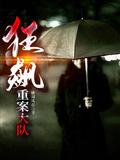 Cyclonus: Crime Squad
6.9kReads9.1Score676Shelves
Cyclonus: Crime Squad
6.9kReads9.1Score676Shelves
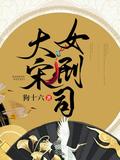 Female Criminal Division of the Song Dynasty
8kReads9.2Score1kShelves
Female Criminal Division of the Song Dynasty
8kReads9.2Score1kShelves
 Forensic Doctor's Return
928Reads—Score115Shelves
Forensic Doctor's Return
928Reads—Score115Shelves
 Dance of Evil
25Reads—Score—Shelves
Dance of Evil
25Reads—Score—Shelves
 Nanjing 1996: Nanda Corpse Dismemberment Case Almost Solved
28Reads—Score—Shelves
Nanjing 1996: Nanda Corpse Dismemberment Case Almost Solved
28Reads—Score—Shelves
 Crime Collection
1.1kReads8.1Score233Shelves
Crime Collection
1.1kReads8.1Score233Shelves
 Just Live up to the World
200Reads5.8Score—Shelves
Just Live up to the World
200Reads5.8Score—Shelves
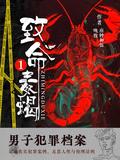 The Deadly Scorpion 1: the Man's Criminal Files
4.1kReads9.3Score492Shelves
The Deadly Scorpion 1: the Man's Criminal Files
4.1kReads9.3Score492Shelves
 Criminal Investigation: My Dumb System Didn't Come with an Instruction Manual
452Reads8.1Score—Shelves
Criminal Investigation: My Dumb System Didn't Come with an Instruction Manual
452Reads8.1Score—Shelves
 Stop Reporting the Crime! the Bureau Is Extremely Busy!
9Reads8.0Score—Shelves
Stop Reporting the Crime! the Bureau Is Extremely Busy!
9Reads8.0Score—Shelves
 Outrageous! the Beginning Is the Crime Scene
4.6kReads6.9Score639Shelves
Outrageous! the Beginning Is the Crime Scene
4.6kReads6.9Score639Shelves
 Are You a Paparazzi Who Destroys the People Every Day?
168Reads6.8Score—Shelves
Are You a Paparazzi Who Destroys the People Every Day?
168Reads6.8Score—Shelves
 The Case Back Part 2: 100 Criminal Investigation Murder Cases
6.5kReads7.5Score757Shelves
The Case Back Part 2: 100 Criminal Investigation Murder Cases
6.5kReads7.5Score757Shelves
 Cold Case: True Crime
9.7kReads8.7Score1.4kShelves
Cold Case: True Crime
9.7kReads8.7Score1.4kShelves
 In 1998, Who Touched the County Magistrate's Donkey?
5Reads—Score—Shelves
In 1998, Who Touched the County Magistrate's Donkey?
5Reads—Score—Shelves
 Criminal Investigation of Serious Cases
22Reads—Score—Shelves
Criminal Investigation of Serious Cases
22Reads—Score—Shelves
 The Daily Life of Dali Si Cheng and the Unfair Brothers in Solving Crimes
508Reads8.8Score125Shelves
The Daily Life of Dali Si Cheng and the Unfair Brothers in Solving Crimes
508Reads8.8Score125Shelves