[Already planted] It meets the requirements very well! 🌱There are glitches but it does not affect normal viewing. It is logical and highly recommended.
Wang Laoliu started out as a bandit in the Northeast and moved to fight across the country, integrating assassination, disc wars, and hegemony. The ruthless protagonist does not follow common sense! Book famine savior! 1.92 Million words have been completed, feel free to read😇😎👍❤️🦠
💥((💣⥎💣))💥Recommend three books. Although there are time travel stories, they are not mindless. I understand them as a way to pay tribute to our revolutionary predecessors in our own way. We have never forgotten them. [Salute] 💣①No time travel or system. A small platoon leader of the Kuomintang Army, after experiencing the defeat of the Kuomintang Army, did not give up serving the country and joined the Eighth Route Army to continue the fight. 💣② He belongs to the Shadow Force✔. He blocks the gun for his comrades. He is reborn back to 1932. He is systematic and not strong. Although history cannot be changed, it does not affect the passionate men fighting for the country. 💣③The captain of the ✔mercenary soldiers traveled through time and became the commander of the 8th Route Company. With 🈚system support, he relied on hard work. He experienced the cruelty of the Anti-Japanese War but had no regrets.
[Love] [Love] [Love] A good book is me, I am a Xun'an dog [Love] [Love] [Love] 1: A modern young man who has gone through nine years of compulsory education went to the Republic of China to see how he made friends with the school belle in front of the school bully, how he survived in front of the big shots, and how he helped the poor. [Love] 2: This is a book that needs to be read with patience. The whole development process is not very fast. There is no system or golden fingers. It contains both the cruelty of war and the tenderness of chivalry. The audience can take a look.
Double wear, this is relatively normal, the details are basically consistent with reality and the history of the Anti-Japanese War period, there are many real people and historical events that are rarely known. He is neither a special soldier nor a dragon king. He has no system and no space. He looks relatively normal and does not act like a dramatic actor.
A very interesting time-travel work about the Anti-Japanese War. The protagonist's father travels to a parallel chaotic world in 1937. The protagonist does not have exclusive cross-border abilities but surrenders them to the country. A full set of modern armaments are transported to the old battlefield, and the scene of heavy equipment against the enemy is extremely shocking.
Guardians of Civilization in the Flames of War: Nine reasons why "From Ordinary to Legend" is worth your time. While most anti-Japanese war stories are still depicting smoke and charge, "From Ordinary to Legend" turns the lens to a deeper dimension - those people who silently guard the fire of civilization among the broken mountains and rivers. If you are looking for a novel that touches your soul and transcends conventional war narratives, the following nine highlights will tell you why this work is worth immersing yourself in: 1. When "system literature" meets serious history: an unprecedented narrative experiment Fu Bikang was once a soldier who relied on the guidance of "system" - this was supposed to be the beginning of a refreshing novel, but it moved towards the most profound deconstruction. In Chapter 270, having lost his system, he stood on the mountaintop before dawn, facing the trauma of war and the dawn of peace with pure human will for the first time. This is not a simple golden finger failure, but a process in which a soul breaks away from mechanics and regains humanity in the flames of war. You will see how an online literary setting collides with serious history to create amazing sparks of thought. 2. Not just a battle: a redefinition of "guarding" Chapter 269 "The Last Mission, Escorting the Dawn" may be the most special chapter in anti-Japanese war novels in recent years. When Fu Bikang received the order to escort ancient books and scholars, the mission goal changed from "annihilation" to "preservation". There is no fierce exchange of fire, but there is a deeper tension - how to bring the fragile fire of civilization out of the line of fire? This chapter redefines the warrior's mission: not just to destroy the enemy, but to protect the things that make humans human. 3. Group portraits of flesh-and-blood characters: Everyone has their own war. Fu Bikang's struggle, Lin Wanning's tenacity, Professor Chen Xutong's persistence, Fu Shuiheng's loyalty—none of these characters has been reduced to a background. When victory comes in Chapter 271, you will see the reactions of thousands of people: some are ecstatic, some are confused, and some are crying for the dead. The author tells you in delicate writing: War means different things to everyone, and so does peace. 4. The authentic texture of historical details: Breathe the air of that era. From the fragments of oracle bone inscriptions in the Yin Ruins to the books on the westward migration of the Southwest Associated University, from Du Fu's poems recited in caves to the live broadcast of the Japanese Emperor's "Edict on the End of the War" - the novel's restoration of historical details is amazing. Not only can you "see" the story, but you can also "smell" the musty smell in the thatched house in Kunming in 1938, "hear" the silence and explosion of the mountain station on August 15, 1945, and "touch" the texture of the ancient books wrapped in oil paper. 5. Philosophical speculation on civilization and barbarism: a higher proposition above war "Civilization is not a palace, it is memory, it is knowledge, it is a fire passed down from generation to generation." This sentence of Professor Chen Xutong forms the spiritual backbone of the novel. When artillery fire destroys a building, what really needs to be protected? The novel does not give a simple answer, but guides readers to think together through scenes such as escorting ancient books, discussing Du Fu, and touching oracle bones. 6. The psychological map from war to peace: the complex reality after victory. Most anti-Japanese war stories end at the moment of victory, and "From Ordinary to Legend" begins to deepen from here. Chapter 271 shows the collective psychological earthquake when the news of victory came: emptiness under ecstasy, confusion after relief, and uncertainty about the future. Fu Bikang's calm decision to say "I want to leave the army" is more powerful than any cheers - it reveals the profound transformation of human nature caused by long-term war. 7. Battlefield writing with literary quality: the art of balancing poetry and cruelty. The author's writing has a rare balancing ability: it can not only present the bloody cruelty of the battlefield, but also find poetry in the ruins. The scene of watching the sunrise on the mountain in Chapter 270 has been marked by many readers as "one of the most beautiful passages I have read this year." This is not to glorify war, but to still capture human nature's desire for beauty in extreme environments. 8. The touching emotion of two-line growth: the flower of love blooming in the flames of war. The emotional line between Fu Bikang and Lin Wanning avoids all clichés. There are no sweet confessions, only the tacit understanding on the operating table, the ginger tea in the wooden house late at night, and the simple longing for the future life. Their love deepened during the escort mission and blossomed in the dawn of peace, becoming the softest yet toughest part in the cruel war. 9. Reinterpretation of "Ordinary": The Road of Return after Legend The most moving promise of the novel is hidden in the title - from ordinary to legendary, and finally back to ordinary. When Fu Bikang imagines the future of "a house, a yard, where she grows herbs and I study", you suddenly understand: the most ordinary daily life is the ultimate meaning to be protected by this war. This affirmation of the value of "ordinaryness" gives the entire work a warm humanistic foundation. --- "From Ordinary to Legendary" is not another story about how a hero is born, but about the journey of how a hero becomes a human being. It tells not only how war changes the country, but also how war changes individual people - their fears, growth, losses and gains. If you are tired of black and white war narratives, if you want to see the depth of thought in historical novels, if you believe that literature should focus on things other than guns and guns that also determine the survival of a nation - then this book is waiting for you. Open it and you will follow Fu Bikang through the Baili Mountain Road escorting ancient books. Standing on the top of the mountain on August 15, 1945, you will hear the breath of a nation waking up from the long night. You will find that some dawns are worth describing in nine thousand words; some legends will eventually return to the deep power of ordinary life. This novel is currently serialized on multiple platforms. Search "From Ordinary to Legend" to start reading this different story of the Anti-Japanese War. Let Fu Bikang and his escort team of ancient books help you re-understand what war is, what protection is, and what is the difficulty and nobility of a nation rebuilding civilization on the ruins.
The single-player system is War Thunder, which takes you to Myanmar in 1942 when the first national army collapsed after the failure of the Southeast Asian expedition. It is not a mindless anti-Japanese drama, nor is it a simple fight to build a new country from scratch.
This is not a lurking, undercover spy story! The protagonist's action team specializes in catching Japanese spies and traitors. Case after case. Fast pace. No procrastination! The writing is refined! Not a novice!
The masterpiece "Barbed Wire" has come to an end. Are the kids running out of books again? Take a look at this book. Although it is not as good as the idol Stallone Liu, it is definitely worth reading and will make you laugh!
 Traveling Through the Republic of China: Starting with a Pie
25.7kReads9.2Score2.8kShelves
Traveling Through the Republic of China: Starting with a Pie
25.7kReads9.2Score2.8kShelves
 Spy War: I Am the God of Wealth
49.2kReads9.5Score5.2kShelves
Spy War: I Am the God of Wealth
49.2kReads9.5Score5.2kShelves
 People in the Republic of China Were Crazy About Absorbing Luck
15.3kReads8.9Score1.8kShelves
People in the Republic of China Were Crazy About Absorbing Luck
15.3kReads8.9Score1.8kShelves
 Global Replication: from a Solitary Man to Become the Emperor of World War II
29.4kReads7.1Score4.2kShelves
Global Replication: from a Solitary Man to Become the Emperor of World War II
29.4kReads7.1Score4.2kShelves
 The Japanese Are Still Fighting for Their Bayonets, and I, Katyusha, Am Washing the Ground.
5.6kReads7.6Score456Shelves
The Japanese Are Still Fighting for Their Bayonets, and I, Katyusha, Am Washing the Ground.
5.6kReads7.6Score456Shelves
 From the Rough Bandit to the King of Killers in the Republic of China
19.7kReads8.3Score1.7kShelves
From the Rough Bandit to the King of Killers in the Republic of China
19.7kReads8.3Score1.7kShelves
 Strange Murder Case in Big Car Shop
1.3kReads—Score164Shelves
Strange Murder Case in Big Car Shop
1.3kReads—Score164Shelves
 Can I Take the Road to Rebirth?
152Reads—Score—Shelves
Can I Take the Road to Rebirth?
152Reads—Score—Shelves
 In the War of Resistance, the Whole World Is Not the Royal Land
339Reads—Score103Shelves
In the War of Resistance, the Whole World Is Not the Royal Land
339Reads—Score103Shelves
 Remnant Soldiers
5.3kReads9.0Score553Shelves
Remnant Soldiers
5.3kReads9.0Score553Shelves
 The Anti-Japanese Blood Is Still Not Cold
8.2kReads8.7Score713Shelves
The Anti-Japanese Blood Is Still Not Cold
8.2kReads8.7Score713Shelves
 The War of Resistance Burns Blood
326Reads5.8Score—Shelves
The War of Resistance Burns Blood
326Reads5.8Score—Shelves
 Resistance Against Japan: the Road of a General
24.6kReads9.1Score1.8kShelves
Resistance Against Japan: the Road of a General
24.6kReads9.1Score1.8kShelves
 Bright Sword: the Fox of Northwest Shanxi
9.2kReads8.9Score445Shelves
Bright Sword: the Fox of Northwest Shanxi
9.2kReads8.9Score445Shelves
 Liang Jian: I, Kong Jie, Will Not Take the Blame
699Reads8.5Score—Shelves
Liang Jian: I, Kong Jie, Will Not Take the Blame
699Reads8.5Score—Shelves
 Cangshan Is Like Blood
170Reads5.8Score—Shelves
Cangshan Is Like Blood
170Reads5.8Score—Shelves
 Logistics Manager
8.7kReads8.2Score573Shelves
Logistics Manager
8.7kReads8.2Score573Shelves
 To Make You Forget Your Roots, I Broadcast Live Broadcast of the War of Resistance, and the Whole Network Burst into Tears
—Reads5.8Score—Shelves
To Make You Forget Your Roots, I Broadcast Live Broadcast of the War of Resistance, and the Whole Network Burst into Tears
—Reads5.8Score—Shelves
 Resistance War: God-Level Warrior
3.2kReads8.5Score303Shelves
Resistance War: God-Level Warrior
3.2kReads8.5Score303Shelves
 Fierce Blood and Smoke
897Reads8.9Score107Shelves
Fierce Blood and Smoke
897Reads8.9Score107Shelves
 Anti-Japanese Iron-Blooded Heroes
23.7kReads9.1Score2.5kShelves
Anti-Japanese Iron-Blooded Heroes
23.7kReads9.1Score2.5kShelves
 The War in Shuidong Started with the County Party Secretary
7Reads5.8Score—Shelves
The War in Shuidong Started with the County Party Secretary
7Reads5.8Score—Shelves
 Bloodbath of Liujiazhai
271Reads6.5Score—Shelves
Bloodbath of Liujiazhai
271Reads6.5Score—Shelves
 Turn in the Portal, and the Combined Brigade Will Push the Japanese Pirates.
51.7kReads5.8Score4.4kShelves
Turn in the Portal, and the Combined Brigade Will Push the Japanese Pirates.
51.7kReads5.8Score4.4kShelves
 I Traveled to Shanxi to Fight Against Japan
16Reads5.8Score—Shelves
I Traveled to Shanxi to Fight Against Japan
16Reads5.8Score—Shelves
 War of Resistance Against Japan: the Spirit of Iron Guts
15Reads5.8Score—Shelves
War of Resistance Against Japan: the Spirit of Iron Guts
15Reads5.8Score—Shelves
 From Ordinary to Legendary
983Reads—Score106Shelves
From Ordinary to Legendary
983Reads—Score106Shelves
 Father and Son Fight Against Japan
1.9kReads5.8Score156Shelves
Father and Son Fight Against Japan
1.9kReads5.8Score156Shelves
 Imperial Rebel
55.6kReads8.7Score4.9kShelves
Imperial Rebel
55.6kReads8.7Score4.9kShelves
 Beacon Plain
1.6kReads6.8Score212Shelves
Beacon Plain
1.6kReads6.8Score212Shelves
 Zhan Lei: People Are Guerrillas in Myanmar, but We Build an Independent Country
30.5kReads8.9Score1.4kShelves
Zhan Lei: People Are Guerrillas in Myanmar, but We Build an Independent Country
30.5kReads8.9Score1.4kShelves
 Human Forbidden Island
1.4kReads8.7Score171Shelves
Human Forbidden Island
1.4kReads8.7Score171Shelves
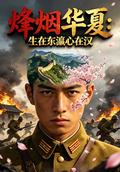 War in China: Born in Japan and in Han at Heart
—Reads5.8Score—Shelves
War in China: Born in Japan and in Han at Heart
—Reads5.8Score—Shelves
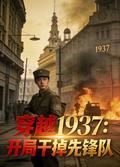 Time Travel 1937: Kill the Vanguard at the Beginning
91Reads—Score—Shelves
Time Travel 1937: Kill the Vanguard at the Beginning
91Reads—Score—Shelves
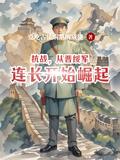 The War of Resistance War Beacons for Thousands of Miles
2.3kReads6.8Score146Shelves
The War of Resistance War Beacons for Thousands of Miles
2.3kReads6.8Score146Shelves
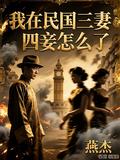 What Happened to Me Having Three Wives and Four Concubines in the Republic of China?
20.1kReads5.8Score1.4kShelves
What Happened to Me Having Three Wives and Four Concubines in the Republic of China?
20.1kReads5.8Score1.4kShelves
 Wandering in 1937
4.7kReads8.7Score367Shelves
Wandering in 1937
4.7kReads8.7Score367Shelves
 My Hundreds of Battles Have Turned into Poems, from the Bloody Battle on the Xiangjiang River to Shangganling
24.6kReads8.1Score1.1kShelves
My Hundreds of Battles Have Turned into Poems, from the Bloody Battle on the Xiangjiang River to Shangganling
24.6kReads8.1Score1.1kShelves
 Spy I Can See Identity Information
7.6kReads8.4Score636Shelves
Spy I Can See Identity Information
7.6kReads8.4Score636Shelves
 Spy War: Three Years and Three Years, I Became the Commander of the Japanese Army
74.5kReads8.8Score6.8kShelves
Spy War: Three Years and Three Years, I Became the Commander of the Japanese Army
74.5kReads8.8Score6.8kShelves
 Spy War, I Caught All the Spies
17.4kReads8.8Score1.4kShelves
Spy War, I Caught All the Spies
17.4kReads8.8Score1.4kShelves
 Spy War, I Lurked and Became a Japanese General! ?
27.6kReads8.5Score2.6kShelves
Spy War, I Lurked and Became a Japanese General! ?
27.6kReads8.5Score2.6kShelves
 Liang Jian: Koi, We Have Hit the Japanese Base Camp.
15.2kReads8.9Score915Shelves
Liang Jian: Koi, We Have Hit the Japanese Base Camp.
15.2kReads8.9Score915Shelves
 Spy War: Let You Lurk, and You Will Become the Head of the Special High School Course
15kReads7.7Score1.1kShelves
Spy War: Let You Lurk, and You Will Become the Head of the Special High School Course
15kReads7.7Score1.1kShelves
 Railway Archives
2Reads5.8Score—Shelves
Railway Archives
2Reads5.8Score—Shelves
 Spy: I Am Screwdriver, Undercover No. 76
55.9kReads8.0Score4.2kShelves
Spy: I Am Screwdriver, Undercover No. 76
55.9kReads8.0Score4.2kShelves
 Spy War: I Get One Piece of Information Every Day
7Reads5.8Score—Shelves
Spy War: I Get One Piece of Information Every Day
7Reads5.8Score—Shelves
 Spy 1937: My Ears Can Decipher Codes
3.2kReads7.2Score428Shelves
Spy 1937: My Ears Can Decipher Codes
3.2kReads7.2Score428Shelves
 During the Anti-Japanese War, I Fought Guerrillas in the Yimeng Mountains
6.3kReads8.9Score520Shelves
During the Anti-Japanese War, I Fought Guerrillas in the Yimeng Mountains
6.3kReads8.9Score520Shelves
 Travel Through the Songhu Battlefield and Rise to Become the Strongest Warlord
1.8kReads5.8Score252Shelves
Travel Through the Songhu Battlefield and Rise to Become the Strongest Warlord
1.8kReads5.8Score252Shelves