In reply to the question that the poster said, as long as it is about the Anti-Japanese War, it is about showing the sword, because as long as it is a good anti-war literary foundation, but you have to deal with the founding marshals, if you don't use the cover to show the sword, you will be banned, especially those from the Red Army period, so it's not that the authors want to write about showing the sword, because if you don't write about the cover, you can't even see it, and you will be sanctioned
Traveling through the Anti-Japanese War era, you can gain points by killing Japanese invaders, which can be exchanged for various supplies. You can collect arms in the system space, build a base with female soldiers, and ambush Japanese invaders to kill Japanese invaders.
Become Li Yunlong, constantly cheating people and extorting equipment. The brigade commander and the division commander even came up with the idea of cheating. In addition, Lao Li's awesome relatives from all walks of life came. The leader of the 357th regiment of the Shanxi-Sui Army was Lao Li's brother. Pit! The leader of the Qingfengling volunteer bandits was Uncle Li. Keep cheating! - The brigade commander was bigger than Li Yunlong and bigger than the King of Heaven?? Pit!? - Unintentionally, Lao Li became a bald relative, and Lao Li started to cheat his bald head!! !!
This is a new book. I'll give it a try, but I won't get much more out of it, but now that I've seen the fifty chapters, it's a completely new routine, and I find it quite interesting!
No sword, no regimental leader, Xuzhou battle. This is a good, new book. The modern angry youth traveled through time and became cannon fodder. In the cruel war, morality fed the dogs and dignity ate shit. He just wants to live, but as cannon fodder, a young groom is forced to start a war of resistance. No system, no grandpa, just a small space. Brought some modern e-waste. Suppressing the front and feeling happy at the back
The Republic of China period! There are five time zones! How many people who wrote about the Republic of China paid attention? Only this one has been written: Longshu Time Zone...
When a stingy maintenance worker becomes a "technical consultant" during the Anti-Japanese War - an anti-routine survival philosophy. What would happen if the protagonist of a time-travel novel is no longer a strategizing general, a suave spy, or a knowledgeable genius, but a stingy maintenance worker from Huaqiangbei, Shenzhen who "saves" himself time-travel in order to save money for a dinner? "Iron Bone: I'm Not a Coward" gives a hilarious and heartbreaking answer. --- 1. The ultimate anti-hero: Who is Lin Mo? Lin Mo is not a hero. He trembled when he heard thunder and took a detour when he saw a fight. After crossing, his first reaction was "How to hide". His core values can be summed up in one sentence: "You won't be hungry when you fall asleep." - Eat only one meal on rest days, and go to bed after eating two buns to save dinner. His native family shaped him: the above two sisters, the eldest sister taught him to "eat without poverty, clothe yourself without poverty, and never be poor forever", and the second sister taught him to cook and wash. The youngest, who grew up in a "heap of women", plunged into the isolated island of Shanghai in 1939 with his housework skills and survival philosophy of making every penny count. His golden finger is called "Fault Analysis Eye" - it can see through the fault points and weak points of any machinery, circuits, weapons, and buildings. But please note that this is limited to physical insights and does not involve predicting the future or reading minds. What's even better is that this cheat has an evolutionary path: Lv1 sees mechanical failure, Lv2 sees the weak points of human bone joints (triggered by anger ≥ 80%), and Lv3 sees the "chain vulnerability" of complex systems (triggered by despair + determination). In other words, this cheat is not for cheating, but for "passive awakening" when forced into a desperate situation. Lin Mo's own attitude towards this is: "Am I out of my mind? Is I hallucinating from hunger? ... Forget it, as long as it works." --- 2. Innocence and Reality: One Person's Survival Algorithm The most exciting part of this book is not the fighting scenes or the spy plot, but how Lin Mo uses his "primary school student logic" and "wet market accounting method" to fight his way through the cruel adult world. His innocence is not stupidity, but an almost childish belief in the "trading rules": five yuan is what he said, one more is not necessary, and one less is not enough. He believes that "keeping his word" is a matter of course. When others renege on his words, he will be seriously confused and ask, "Why are you like this?" His pragmatism is not about being a bully, but about being extremely sensitive to numbers, accounts, commitments, and time: "You said you would come at three o'clock, and now it is three o'clock and seven." "You said five oceans, is this five? This is four and a half." This kind of character may just make people laugh or cry in peacetime, but in Shanghai in 1939, it became a strange survival weapon. When three traitors cornered him in a dead end, his first reaction was not to be extremely frightened, but to try to reason first: "Brothers, have you recognized the wrong person? I am a radio repairman. Do you want to repair the radio? Free? No? Then can you please give in and I will go back to eat in a hurry." When he was cornered and forced to fight back, he squatted next to the corpse and spoke seriously: "I told you, but you refused to listen. I usually don't cause trouble, but you blocked my way... The second sister said that you must be kind. But kindness does not mean stupidity. You see, he wants to If I don't kill him, I will die. If I die, who will fix the radio station for Su Wan? If Su Wan's radio station is broken, more people will die. So you see, if I kill you, you will save so many lives. " ——Using elementary school mathematics to deduce the rationality of murder. This sense of dislocation caused by "innocence" in a cruel environment constitutes the most unique humor and pathos in the book. --- 3. Stinginess as a world view: Money = sense of security Lin Mo's stinginess is not the stereotype of "stinginess", but a post-traumatic survival strategy. He comes from a poor family. "The first lesson for a family leader is not to waste money." He firmly believes that "money = sense of security". Every penny spent means less sense of security. So he also deducts money from others, but only to the people he cares about. He curses "I'm a loser, I'm a loser". It's a lot of money that should be spent, but after spending it, I feel distressed for three days. This collision of values in the context of the Anti-Japanese War is particularly interesting. When he was bargaining with Sister Hong for the first time, he took out a piece of paper from his pocket, with a dense list on it: "The basic maintenance fee is five yuan. But this cipher machine is a modified German Enigma type. The parts are high-precision, and the labor hours must be doubled, which is ten yuan. . In addition, since you were introduced by me, I will give you a discount of 8 yuan, but you have to eat three meals a day, no less than two dishes and one soup... You will have to pay extra for overtime work at night, and you will be charged 10 cents for every hour you work after 8 o'clock. Sister Hong was stunned for five seconds, and then burst out laughing: "How long have you been waiting in line?" "I didn't sleep last night, so I was waiting for three hours. My eldest sister said, if you don't have enough food and clothing, you won't be poor forever." This way of using Excel thinking to fight against the absurdity of troubled times is both funny and sad. When the whole world goes crazy, a person who insists on "settling accounts clearly" appears to be particularly sober - and also very fragile. --- 4. Goldfinger's philosophy: Seeing weakness does not mean becoming stronger. The Goldfinger design of this novel has a profound core: seeing weakness does not mean that you can bear the price of seeing it. At Level 1, Lin Mo saw mechanical failures, repaired motorcycles, defused bombs, and jammed enemy weapons. He can still accept it. At Level 2, he saw the weak points of human bones and joints. This means that he can defeat the enemy with one strike, but it also means that he takes the initiative to kill for the first time. After the killing, my hands shook for ten minutes, I squatted in the corner and vomited, and then I talked to the corpse. At Level 3, he saw the "chain vulnerability" of complex systems - building load-bearing, explosion chain, and blind spot linkage. This means that he can plan large-scale destruction, but the triggering condition is "Despair + Determination". Every evolution is a collapse and reconstruction of psychological defenses. Goldfinger is not a plug-in, it is a torture tool. It makes Lin Mo more and more "useful" and less and less like "Lin Mo". The author sets up an exquisite ending: in Chapter 118, Goldfinger is overloaded and closed permanently. The last time it was used, it showed the "optimal sacrifice path" - how to keep the most people alive. After finishing the calculation, Lin Mo breathed a sigh of relief: "One life for thirty-seven lives, this transaction is not a loss. The eldest sister is right, the general ledger must be used to settle the accounts." - It is very Lin Mo to use the logic of accounting to complete the sacrifice. --- 5. Language style: natural silly humor The language style of this book is a highlight. Lin Mo's humor is not deliberately funny, but a natural sense of dislocation between his "seriousness" and "innocence" in a cruel environment. Classic scene: Facing the muzzle of a gun, his first reaction was not to beg for mercy, but "The sight of your gun is crooked and it's not accurate. Can I help you adjust it?" At the critical moment of life and death, he would suddenly say: "Wait, let's figure out how much it is first. I'm afraid no one will pay the bill if you die." When threatened, he analyzed it seriously: "If you kill me, who will fix the radio for you? Your logic is wrong." When negotiating with Military Commander Wang, the other party slammed the table: "Do you know who you are talking to!" Lin Mo replied honestly: "I know. You are Commander Wang. But you owe me seventeen and a half yuan. You pay first, and we will talk about other things. This is a matter of principle." This style of "using elementary school students' logic to dismantle complex conspiracies to the point of dumbfounding" formed a unique chemical reaction in the serious theme of the Anti-Japanese War. It does not eliminate seriousness, but confronts cruelty in a more essential way - when all grand narratives are reduced to "cost-effective/not cost-effective" and "right/wrong", readers can feel the absurdity and reality more. --- 6. Integrity of Structure and Characters Judging from the outline provided, the book is divided into three volumes, covering the time span from 1939 to 1945, which fits the real historical nodes. Volume One: "The Fangs of Ants" (Isolated Island Period, 1939-1940): Lin Mo grew from a repairman to a "technical consultant" at the underground intelligence station in the concession. He learned to use chatting skills to obtain information. He bargained with Sister Hong for the first time and made a list. The core emotion is the guilt after Su Wan disappeared → the first active murder (Lv2) → learning to "calculate people's hearts in troubled times". The second volume "Abacus of the Dark Night" (the outbreak of the Pacific War in 1941-1942): Lin Mo evacuated Shanghai, traveled to Hong Kong and Chongqing, and cooperated with Hong Gu to establish a cryptographic system. After the fall of Hong Kong, Hong Gu took the initiative to sacrifice herself. The core emotion is from "taking advantage of others" to "being willing to be responsible for others". I begin to understand that "some accounts cannot be settled with money", but I still mumble "lost". Volume 3 "Iron Bone's Choice" (1943-1945 Anti-Japanese War Counterattack): Lin Mo became an intelligence node in Southeast Asia. Faced with a choice of camp, he finally chose to cut off the backbone to protect his comrades. The core emotions are memories (Su Wan, Hong Gu, Ah Fu, Chen Hanhai) + choices + sacrifices, and Golden Finger is overloaded and closed. The portraits of the characters are also very layered: Su Wan is the guide, calm and restrained, with all-or-nothing despair; Sister Hong is the proprietress of the "Import and Export Trade", who taught Lin Mo that "it is more important to count people's hearts than faults"; the mute Ah Fu is the most loyal partner, who did not utter a word for mercy until his death, and Lin Mo cried the hardest for him. Every character has a full arc, and every death has weight. Recommended for everyone to take a look! !
Hey! Family members, come and read this book "Who asked him to fight!" ", The title of the book conveys a sense of arrogance and inexplicable joy! The halo of our protagonist is blinding. Others are pulled into the wave of resistance, but he seems to be pushed by someone, but once he enters, he shows off his magical powers. In the espionage war, he uses all kinds of magic tricks to trick the enemy around, as if he is cheating. It is really enjoyable to watch. The score is as high as 9.3 Points. It would be a big loss if you don't watch it!
 Anti-Japanese War: Give Me Electricity All over the Country
22kReads8.3Score829Shelves
Anti-Japanese War: Give Me Electricity All over the Country
22kReads8.3Score829Shelves
 In the 1980S, He Disguised Himself as a Wealthy Countryman and Returned to China.
8kReads5.8Score422Shelves
In the 1980S, He Disguised Himself as a Wealthy Countryman and Returned to China.
8kReads5.8Score422Shelves
 Traveling Between Two Worlds: the 1970S
210Reads5.8Score—Shelves
Traveling Between Two Worlds: the 1970S
210Reads5.8Score—Shelves
 Spy War: You Will Know Immediately After Surgery, All Patients Are Intelligence Sources
143.8kReads8.9Score14.6kShelves
Spy War: You Will Know Immediately After Surgery, All Patients Are Intelligence Sources
143.8kReads8.9Score14.6kShelves
 Spy War: Two Thousand Deaths at the Start
51.6kReads9.3Score9kShelves
Spy War: Two Thousand Deaths at the Start
51.6kReads9.3Score9kShelves
 Soul Penetrates the Resistance War, Cultivates Immortals and Violently Tortures the Devils
3Reads5.8Score—Shelves
Soul Penetrates the Resistance War, Cultivates Immortals and Violently Tortures the Devils
3Reads5.8Score—Shelves
 Traveling Through the Republic of China to Marry a Beautiful Wife, Her Beauty Turned into Trouble at the Beginning
1.4kReads5.8Score115Shelves
Traveling Through the Republic of China to Marry a Beautiful Wife, Her Beauty Turned into Trouble at the Beginning
1.4kReads5.8Score115Shelves
 War of Resistance: Unlimited Explosive Troops, Beat up the Little Devils!
9.1kReads8.3Score516Shelves
War of Resistance: Unlimited Explosive Troops, Beat up the Little Devils!
9.1kReads8.3Score516Shelves
 In the Republic of China, I Had a Supermarket in Tianjin
2Reads5.8Score—Shelves
In the Republic of China, I Had a Supermarket in Tianjin
2Reads5.8Score—Shelves
 Spy: I Have Space, but I Choose to Go It Alone
40.7kReads8.6Score3kShelves
Spy: I Have Space, but I Choose to Go It Alone
40.7kReads8.6Score3kShelves
 Spy War
51Reads—Score—Shelves
Spy War
51Reads—Score—Shelves
 The War of Resistance Returns to an Era That Cannot Be Forgotten
78Reads—Score—Shelves
The War of Resistance Returns to an Era That Cannot Be Forgotten
78Reads—Score—Shelves
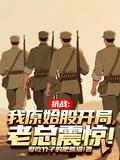 Anti-Japanese War: Abducting Li Yunlong at the Beginning
15.3kReads6.9Score490Shelves
Anti-Japanese War: Abducting Li Yunlong at the Beginning
15.3kReads6.9Score490Shelves
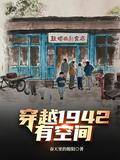 Traveling Through 1942, a Rough Start
12.2kReads8.4Score459Shelves
Traveling Through 1942, a Rough Start
12.2kReads8.4Score459Shelves
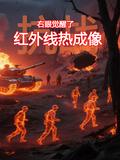 Anti-Japanese War: the Right Eye Awakens to Infrared Thermal Imaging
5.9kReads7.7Score359Shelves
Anti-Japanese War: the Right Eye Awakens to Infrared Thermal Imaging
5.9kReads7.7Score359Shelves
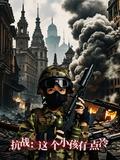 Anti-Japanese War: This Kid Is a Bit Cold
10.3kReads7.9Score669Shelves
Anti-Japanese War: This Kid Is a Bit Cold
10.3kReads7.9Score669Shelves
 The Roaring Eastern Front
12Reads5.8Score—Shelves
The Roaring Eastern Front
12Reads5.8Score—Shelves
 Anti-Japanese War: Report to Lao Li, I Made Another Small Fortune
14.9kReads8.1Score976Shelves
Anti-Japanese War: Report to Lao Li, I Made Another Small Fortune
14.9kReads8.1Score976Shelves
 The Hero of Shanghai at Night Has No Regrets
87Reads5.8Score—Shelves
The Hero of Shanghai at Night Has No Regrets
87Reads5.8Score—Shelves
 The War of Resistance: Begins with the Decisive Battle Between Jin and Cha
586Reads6.8Score—Shelves
The War of Resistance: Begins with the Decisive Battle Between Jin and Cha
586Reads6.8Score—Shelves
 Mountain and River Column
18Reads—Score—Shelves
Mountain and River Column
18Reads—Score—Shelves
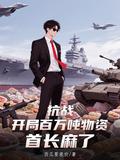 Anti-Japanese War: Millions of Tons of Supplies Started at the Beginning, and the Leader Was Paralyzed
494Reads5.8Score143Shelves
Anti-Japanese War: Millions of Tons of Supplies Started at the Beginning, and the Leader Was Paralyzed
494Reads5.8Score143Shelves
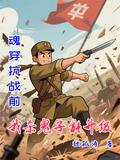 Please, the Rebirth of the War Has Become a Fight Against Monsters and Upgrades.
1kReads6.3Score—Shelves
Please, the Rebirth of the War Has Become a Fight Against Monsters and Upgrades.
1kReads6.3Score—Shelves
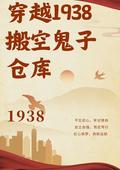 Rebirth of the War: All Invaders Deserve Death
6.6kReads8.9Score456Shelves
Rebirth of the War: All Invaders Deserve Death
6.6kReads8.9Score456Shelves
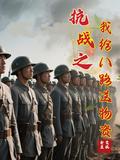 During the Anti-Japanese War, I Sent Supplies to the Eighth Route Army
50Reads5.8Score—Shelves
During the Anti-Japanese War, I Sent Supplies to the Eighth Route Army
50Reads5.8Score—Shelves
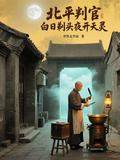 The Barber in Peiping Opens the Door to the Devils at the Beginning
17.5kReads8.1Score1.8kShelves
The Barber in Peiping Opens the Door to the Devils at the Beginning
17.5kReads8.1Score1.8kShelves
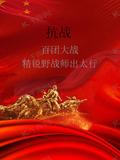 Anti-Japanese War: Hundreds of Regiments Fight Elite Field Divisions Out of Taihang
1kReads8.7Score—Shelves
Anti-Japanese War: Hundreds of Regiments Fight Elite Field Divisions Out of Taihang
1kReads8.7Score—Shelves
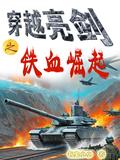 Through the Rise of the Iron-Blooded Sword
7.4kReads8.8Score456Shelves
Through the Rise of the Iron-Blooded Sword
7.4kReads8.8Score456Shelves
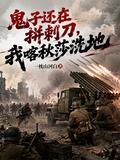 The Japanese Are Still Fighting for Their Bayonets, and I, Katyusha, Am Washing the Ground.
5.6kReads7.6Score456Shelves
The Japanese Are Still Fighting for Their Bayonets, and I, Katyusha, Am Washing the Ground.
5.6kReads7.6Score456Shelves
 Anti-Japanese War: We, Lao Likeng, Assisted and Trapped Millions of Heroes
1.6kReads5.8Score109Shelves
Anti-Japanese War: We, Lao Likeng, Assisted and Trapped Millions of Heroes
1.6kReads5.8Score109Shelves
 Expelled from the Military Academy, I Earn Military Expenses by Doing Skin Care and Daily Cosmetics
72Reads—Score—Shelves
Expelled from the Military Academy, I Earn Military Expenses by Doing Skin Care and Daily Cosmetics
72Reads—Score—Shelves
 During the Anti-Japanese War, I Fought Guerrillas in the Yimeng Mountains
6.3kReads8.9Score520Shelves
During the Anti-Japanese War, I Fought Guerrillas in the Yimeng Mountains
6.3kReads8.9Score520Shelves
 In the War of Resistance, the Whole World Is Not the Royal Land
339Reads—Score103Shelves
In the War of Resistance, the Whole World Is Not the Royal Land
339Reads—Score103Shelves
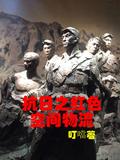 Anti-Japanese Red Space Logistics
2.8kReads7.7Score215Shelves
Anti-Japanese Red Space Logistics
2.8kReads7.7Score215Shelves
 Time Travel: My Factory Supports the Anti-Japanese War
2kReads8.1Score164Shelves
Time Travel: My Factory Supports the Anti-Japanese War
2kReads8.1Score164Shelves
 Global Corpse Tide: China Is the Boundary
56Reads5.8Score—Shelves
Global Corpse Tide: China Is the Boundary
56Reads5.8Score—Shelves
 Building an Army at the Doomsday: I Will Lead the Entire Army to Liberate Kyushu
7.6kReads—Score593Shelves
Building an Army at the Doomsday: I Will Lead the Entire Army to Liberate Kyushu
7.6kReads—Score593Shelves
 Yiping Is Going Crazy! the Japanese Have Made a Lot of Money!
308Reads5.8Score—Shelves
Yiping Is Going Crazy! the Japanese Have Made a Lot of Money!
308Reads5.8Score—Shelves
 Time Travel to 1918: the Red Star Shines over Germany
29Reads5.8Score—Shelves
Time Travel to 1918: the Red Star Shines over Germany
29Reads5.8Score—Shelves
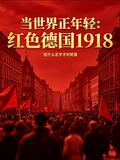 1918: the Red Star Shines in Germany
47.9kReads8.9Score3.4kShelves
1918: the Red Star Shines in Germany
47.9kReads8.9Score3.4kShelves
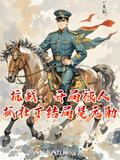 Traveling Through 1938: the Horseman's War of Resistance
1.3kReads7.3Score—Shelves
Traveling Through 1938: the Horseman's War of Resistance
1.3kReads7.3Score—Shelves
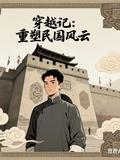 Mr. Republic of China
2.6kReads8.6Score128Shelves
Mr. Republic of China
2.6kReads8.6Score128Shelves
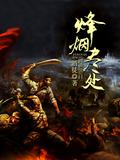 The End of the War
10.6kReads9.3Score815Shelves
The End of the War
10.6kReads9.3Score815Shelves
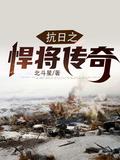 The Legend of the Anti-Japanese Warriors
201Reads5.8Score—Shelves
The Legend of the Anti-Japanese Warriors
201Reads5.8Score—Shelves
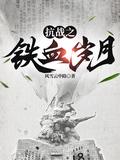 The Iron-Blooded Years of the Anti-Japanese War
2.8kReads8.4Score171Shelves
The Iron-Blooded Years of the Anti-Japanese War
2.8kReads8.4Score171Shelves
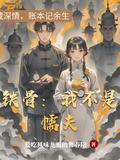 Iron Bone: I'm Not a Coward
—Reads—Score—Shelves
Iron Bone: I'm Not a Coward
—Reads—Score—Shelves
 Anti-Japanese War: I Will Unify Beiyang in Place of Xiaoliu as Commander-In-Chief
76Reads—Score—Shelves
Anti-Japanese War: I Will Unify Beiyang in Place of Xiaoliu as Commander-In-Chief
76Reads—Score—Shelves
 Anti-Japanese War: Marshal Yuan's Legitimate Son, I Became the Principal of Huangpu
131Reads—Score—Shelves
Anti-Japanese War: Marshal Yuan's Legitimate Son, I Became the Principal of Huangpu
131Reads—Score—Shelves
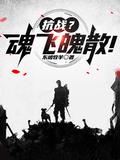 The War of Resistance: Boiling from the Black Land
1.6kReads6.5Score—Shelves
The War of Resistance: Boiling from the Black Land
1.6kReads6.5Score—Shelves
 Anti-Japanese War: Beiyang Warlord, Replaces Xiaoliu as Commander-In-Chief
957Reads5.3Score—Shelves
Anti-Japanese War: Beiyang Warlord, Replaces Xiaoliu as Commander-In-Chief
957Reads5.3Score—Shelves