This book, written about the Ming Dynasty, is so enjoyable to read, especially the struggle and the choices of human nature, it really resonates. There are no villains in the book, or they are all villains. Highly recommended!
In the historical fiction category, I highly recommend the first book. It has good writing, strict logic, compact plot, and is very realistic. War, economy, politics, and resources are very closely intertwined. No time travel, no brainless fun, no cheats, no wisdom, no falling in love, no system. The main plot trend of the first volume: The first volume is about watching a tall building rise, watching the building collapse, and then in the tenth chapter, under the guidance of an expert, a reasonable reversal of tactics is completed. The second volume is full of the bitterness of workers at the bottom of the workplace who are squeezed but find ways to work their way up. The third volume begins with a battle volume, and begins to enter the violent aesthetic of blood and flesh. So far in the fourth volume, the worldview has once again been upgraded to a higher dimension, with the maps of East Asia, Central Asia, and West Asia being fully expanded to include multiple countries and multiple forces, forming a multi-polar geopolitical game pattern. The fifth volume is a passionate and extremely tragic war against the grassland regime. The sixth volume is about peace ushering in after breaking through trade, and a war between the new order and the old order is also going on inside the grassland.
Is the Warring States period possible in Japan? It started at the end of the twilight period, with conquests in troubled times, farming and construction, shipbuilding and cannon building, and fighting for hegemony. The protagonist fights the Jurchens in the middle period, establishes the Liaodong Army, builds treasure ships, fights the Netherlands and Portugal in Southeast Asia, takes over India, discovers Australia, seizes the Middle East, enters the Americas, and fights against the Western powers.
Rigorous research is not a fool's errand. Su Dun took out a few pieces of paper from his sleeves, which were densely written with words. "I was in Hangzhou before. I read hundreds of books and found a few pieces of evidence. Not many, just nine." He spread the paper on the old cases next to him, "But I think the direction is right." Su Dun pointed to the first piece and said in a calm tone: "Look at the sentence in "Dayu Mo" that 'the human heart is in danger, the Dao is only small, but the essence is only one, and the Yunzhi Juezhong' is quoted in "Xunzi Jieye Pian", but Xunzi said it was quoted from the "Tao Jing", not the "Shang Shu"." "And 'Yunzhi Juezhong' should come from the Analects of Confucius. Yao said, "The calendar of heaven is in your hands, and if you are willing to hold on to it, the world will be poor, and the fortune of heaven will last forever." "The Analects of Confucius said that 'Shun also ordered Yu', but what Shun said to Yu in "Dayu Mo" is completely different from what Yao said to Shun." "The so-called sixteen words of Yu Ting are simply made up." He raised his head and glanced at everyone, waiting for them to be shocked, excited, or "enlightened" as written in later novels. However - Fan Xun raised his head and said disapprovingly: "Maybe Xunzi remembered it wrong?" Su Dun was stunned. Zhao Mingcheng nodded, with a serious look on his face: "I saw before that "Xunzi·Junzi Pian" quoted "One person is happy, and the people rely on it", and said it was the "Biography"." "Actually, this sentence comes from "Shangshu·Lu Xing"." "The source of this quotation must be misremembered by Xunzi." Su Xingchong also said: "Pre-Qin books are all bamboo slips, and it is not easy to read them. The scholars cited the scriptures and most likely wrote them from memory. Without reading and checking, the words may not be accurate." Su Dun's mouth twitched. Huh? Is there something wrong with your reaction? Too calm? Too rational? Shouldn't we exclaim, "Oh my god, this is fake" and then people will be angry and share the same hatred? Why are all of them so... Calm? However, it makes so much sense, I am speechless! Li Qingzhao remained silent, just lowered his head and read the original text copied by Su Dun carefully. She stared at those lines of words for a long time, then suddenly raised her head, with a hint of weirdness in her eyes: "The original text of "Xunzi: Uncovering" is: 'In the past, when Shun ruled the world, everything was accomplished without edicts. When he was in danger, he was full of glory; when he raised a little, his glory was unknown.' Later, he quoted the "Tao Jing": "The danger of the human heart, the weakness of the Taoist heart, and the number of dangers can only be known by a wise gentleman." She looked at Su Dun with a strange light in her eyes - a look that doubted her IQ: "You don't think it's the same sentence just because 'the human heart is in danger, the Tao's heart is weak' and 'the human heart is in danger, the Tao's heart is weak' are very similar?" Su Dun was displeased and replied stiffly: "These two sentences are exactly the same, how come they are not plagiarism?" "But the meanings of these two sentences are completely different!" Li Qingzhao talked eloquently: "Xunzi first said that Shun was 'in danger' and 'nurturing the subtlety' - this means that Shun advocated using a single-minded heart to explore the subtle principles of things." "Then he quoted the "Tao Jing" that "the human heart is in danger, the Tao heart is subtle". He quoted the sentence from the "Tao Jing" in order to explain the 'danger' and 'micro' of Shun earlier." "The key point of this sentence is in the last sentence - 'The number of dangers is small, only a wise gentleman can know it'. It is talking about the 'ji' (sign) between 'danger' and 'micro', which only a 'wise gentleman' can detect." She paused, and spoke in a clear voice: "But the key point of the sixteen words of "Dayu Mo" is also at the end, 'Wei Jing Wei Yi, Yu Zhi Ju Zhong', which means to use the 'Jing Yi' skill to 'Zhi Zhong'." "The themes and philosophies of the two sentences are fundamentally different. One talks about detecting signs, and the other talks about adhering to the middle way." "Just because these eight characters are somewhat similar, do you say it is plagiarism?" Fan Wei continued: "Even if it is plagiarism, it may be that the Dao Jing copied Dayu Mo, and then was recorded as the Dao Jing. There are too many such things." He thought for a while and gave an example: "For example, the sentence 'Without indifference, one cannot achieve clear aspirations, without tranquility, one cannot reach far', which comes from "Huainanzi Zhushu Xun" of the Western Han Dynasty. More than three hundred years later, Zhuge Liang quoted it in "The Book of Commandments", and now everyone thinks it was Zhuge Liang who said it." "There is also 'the courage to be big but the heart to be small, the wisdom to be round but the action to be square', which also comes from "Huainanzi Zhushu Xun", Sun Simiao quoted it, and now everyone thinks it is Sun Simiao's words." Zhao Mingcheng added: "This is also the case in "Xunzi" itself. The section about three years of mourning in "Xunzi: Rites", from "Three years of mourning, what" to "It is the same in ancient and modern times", the entire paragraph was included in the "Book of Rites" and became the "Three Years Questions"." "Now when people quote these sentences, they must think that they come from the "Book of Rites", and not from "Xunzi"." Su Xingchong also nodded: "As for what Yao said when he surrendered to Shun, it is different from what Shun said when he surrendered to Yu. Isn't it strange?" "Two generations of holy kings faced different world situations, so they naturally had different things to say." Su Dun was confused by everyone's words and words. Didn't those books of later generations say that the "Sixteen-Character Heart Biography" was the core evidence for Yan Ruochu to falsify the "Gu Wen Shangshu"? Didn't it mean that as soon as this piece of evidence came out, the Neo-Confucianists were speechless? How come you can't even convince a few seven- and eight-year-old children here?
This book has a weird perspective! It's quite different among Hao Hanwen! Nowadays, most of the good Chinese characters in the world are Long Aotian. If they were all Long Aotian, would they still become bandits in a peaceful era?
"Jin Ran Lu" is a masterpiece of historical novels with magnificent atmosphere and far-reaching ideas. The author uses a solid foundation in literature and history to construct a real and tangible time and space of the prosperous Tang Dynasty. The narrative rhythm is relaxed and moderate, with both the delicate presentation of the waves in the East China Sea and the magnificent description of the wars in the Western Regions. The most valuable thing about it is that it transcends the structure of ordinary time-travel stories. Through the fate of rich characters such as Deng Weifeng and Kibi Sakurako, it deeply explores eternal propositions such as civilization exchanges, power boundaries and individual conscience.
🔥This book specializes in the history of the Ming Dynasty. Liu Bowen was reborn and killed like crazy 🔥 The three most painful words in the history of the Ming Dynasty are: Zhu Biao's death, Ma Queen's death, and the hero's death. What if Liu Bowen lived again? With the poisonous wine in his throat, he returned with the "Calculation of the World" system - predicting for three days and seeing through people's hearts! The formation was arranged in advance, all the assassins of the Demon Cult were wiped out, and Prince Zhu Biao escaped from death; he changed his destiny and broke into the palace, and Queen Ma was resurrected from the dead! The court counterattacked and killed the treacherous minister, toughened Zhu Yuanzhang, and recruited the cool and charming Xuannv... The ninth level of martial arts, full of power and intrigue. Every page you turn puts plaster on the wounds of history! After finishing it all night, I was so happy that I burst into tears! # # # Bowen # make up for the difficulty of peace #system counterattack #recommendation
Recommend a good book, watch the Goddess Detective peel away the many fogs to restore the truth, and write the legendary life of the Goddess Detective! Worth recommending!
Crooked tree in Meishan? I'm not worried! Killing the eunuchs | clearing the fields | pacifying Liaodong; opening sea bans | building giant ships | industrial innovation, conquering Japanese pirates, traveling to both poles, planting the Ming dragon flag on the Atlantic Ocean, Chongzhen directly rewrote China's three hundred years of national destiny!
Chapter 4: The blood-soaked knife at the foot of Feilong Mountain The prince and general Xiang Ning Youzhi The flames soaring into the sky at Gou Xi's camp burned all night long. The orange-red fire was like a huge brand of shame, burning deeply into the chest of Hebei Plain and into the bone marrow of everyone who witnessed or heard it. When the gray dawn struggled to tear through the smoke-filled sky, what appeared before the eyes of the world was a charred Shura field that exuded the smell of burnt flesh and ash. The broken flags curled feebly in the cold wind, the baggage trains that were burned into skeletons tilted and fell over, and twisted, carbonized corpses, broken armors, and the remains of weapons were everywhere. The surviving officers and soldiers were like frightened birds, their eyes dull, searching blankly for their comrades or some usable supplies in the ruins. The whereabouts of the coach Gou Xi are unknown, and his life or death is uncertain, which adds a layer of despair to this defeat. In stark contrast, is the camp of Gong Shifan twenty miles away. Although there was also an atmosphere of exhaustion and pain, a kind of ecstasy of surviving a disaster spread in the camp like a plague. The soldiers rushed to tell each other, spitting descriptions
This article is well written. When Meng Zhe was guarding Hangu Pass, he noticed that the Korean and Wei forces broke the flag, and used the newly mended hemp thread to see through the grain road. This feat led to the inheritance of the Cardinals.
Family members, I recently found a treasure, "That Year, That Snow, That Knife" is super awesome and beautiful! It does not follow an ordinary path, has no system blessing, and is not invincible as soon as it crosses over. The protagonist Yang Zhan, an ordinary prison boss, first met the mysterious female prisoner in Tianlao. He just said "No Bilian" and just named her, which made her laugh out loud. Who would have thought that this would be the beginning of a hilarious and passionate adventure! In the fictional world of Xianxia, heavy snow is falling, and the protagonist moves forward with his sword, facing unknown conspiracies and challenges, becoming stronger step by step on his own. The fight scenes written by the author are super exciting, the daily interactions are full of laughter, and the plot is compact and not protracted. Every time you watch it, it is like riding a roller coaster, exciting and enjoyable. Family members, believe me, you won't lose money if you invest in shares, hurry up and catch up!
I recommend this book! The author is like the reincarnation of an ancient person, and the antique flavor between the lines does not seem to be written, it seems to be real! The plot advancement is all based on logic, and it is in line with the logic of the ancients' perspective and historical background. There is absolutely no stupid cheat. It is suitable to read slowly, as it becomes more exciting as you go to the end, and contains a lot of rich cultural and historical knowledge.
No time travel, no system, no cheats! The pinnacle of Machiavellian novels! The Eastern version of "Game of Thrones"! In the story, whether it is a male character or a female character, there is almost no such thing as a forced decline in IQ or a silly and sweet one. Focus on authenticity! In the imaginary oriental history, there are powerful schemes, palace battles, large-scale wars, and the overall situation of the world. It is completely an epic historical narrative. There are many characters, but each has a distinct personality, and there are almost no facial expressions. The description of the human heart and human nature is also super delicate.
Not an invincible stream, respecting history, no system, new book: Cao Yang, a 985 history doctor from Qamdo University, traveled through the Three Kingdoms for the first time and became Cao Cao's eldest son, Cao Ang. Although he escaped the Battle of Wancheng, he was eventually assassinated due to the butterfly effect and time and space chaos. When I woke up for the second time, I realized that academic qualifications were useless in troubled times. The only way to do this was to cultivate cronies, establish authority, seize power, judge the times, and gauge the situation. I embarked on the road of kingship and found the man behind the assassination in his previous life! !
If you love historical travel, don't miss it! The lackeys of powerful ministers are ruthless and sinister, there are constant scenes of backstabbing and disrespectful martial arts, and the plot is so exciting that it is so exciting.
Lin Ruhai and Jia Min are harmonious as husband and wife, so Daiyu not only has parents who love her, but is also about to welcome a younger brother. But his younger brother Qiao An only wants to be Daiyu's child adopter.
①This young man, this doctoral candidate who traveled from China, picked up a county magistrate... A year later, Nantang County became famous all over the world. Three years later, the small county magistrate began to stir up the storm, and the world was shaken... ②Shen Yi, who was about to reach the pinnacle of his life, came to a completely different world due to an accident and became a famous--prodigal son! ③ Traveling back to the second year of Chongzhen in the late Ming Dynasty, he became a military household in the Ming Dynasty. The court was immoral, the emperor was fatuous, the officials were corrupt, and the people's lives were insignificant, pushing Wu Cheng step by step onto the path of rebellion.
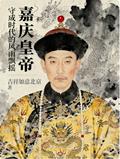 Emperor Jiaqing: the Precarious Times of Shoucheng
3.1kReads7.3Score160Shelves
Emperor Jiaqing: the Precarious Times of Shoucheng
3.1kReads7.3Score160Shelves
 The Father of the First Assistant Is About to Die, and Everyone in the Court Says That I Will Buy the Top Pick.
105Reads—Score—Shelves
The Father of the First Assistant Is About to Die, and Everyone in the Court Says That I Will Buy the Top Pick.
105Reads—Score—Shelves
 The Good and Wise King of the Tang Dynasty
90.3kReads9.4Score9.2kShelves
The Good and Wise King of the Tang Dynasty
90.3kReads9.4Score9.2kShelves
 Why Is It Clear?
882Reads8.2Score—Shelves
Why Is It Clear?
882Reads8.2Score—Shelves
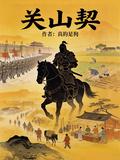 Guanshanqi
2.3kReads9.2Score281Shelves
Guanshanqi
2.3kReads9.2Score281Shelves
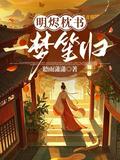 Ming Jing Pillow Book and Dream of Sheng Return
—Reads5.8Score—Shelves
Ming Jing Pillow Book and Dream of Sheng Return
—Reads5.8Score—Shelves
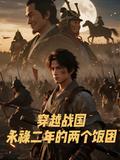 Traveling Through the Warring States Period: Two Rice Balls in the Second Year of Yonglu
1kReads5.8Score128Shelves
Traveling Through the Warring States Period: Two Rice Balls in the Second Year of Yonglu
1kReads5.8Score128Shelves
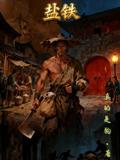 Salt Iron
358Reads—Score—Shelves
Salt Iron
358Reads—Score—Shelves
 Father Su Dongpo's Wife Li Qingzhao and His Father Song Huizong
23.2kReads8.5Score2.9kShelves
Father Su Dongpo's Wife Li Qingzhao and His Father Song Huizong
23.2kReads8.5Score2.9kShelves
 Water Margin: Chaos in the World Is None of My Business
906Reads—Score—Shelves
Water Margin: Chaos in the World Is None of My Business
906Reads—Score—Shelves
 The First Part of Jin Burning: Tang Jin: Haidong Yan
—Reads5.8Score—Shelves
The First Part of Jin Burning: Tang Jin: Haidong Yan
—Reads5.8Score—Shelves
 Shan Tianfang's Commentary Edition of Romance of the Sui and Tang Dynasties
41.5kReads5.8Score3.4kShelves
Shan Tianfang's Commentary Edition of Romance of the Sui and Tang Dynasties
41.5kReads5.8Score3.4kShelves
 Fukou Loquat Fragrance
—Reads8.4Score—Shelves
Fukou Loquat Fragrance
—Reads8.4Score—Shelves
 The War Between the Huangming Natives and the Traveling People
54Reads8.2Score—Shelves
The War Between the Huangming Natives and the Traveling People
54Reads8.2Score—Shelves
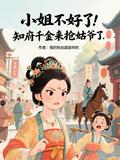 Miss Is Bad! the Magistrate's Daughter Has Come to Snatch My Uncle Away.
27.3kReads8.1Score2.5kShelves
Miss Is Bad! the Magistrate's Daughter Has Come to Snatch My Uncle Away.
27.3kReads8.1Score2.5kShelves
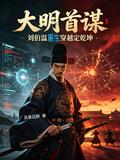 The Ming Dynasty's Chief Conspiracy: Liu Bowen Was Reborn and Traveled Through the World to Determine the Future
1Reads5.8Score—Shelves
The Ming Dynasty's Chief Conspiracy: Liu Bowen Was Reborn and Traveled Through the World to Determine the Future
1Reads5.8Score—Shelves
 The Great Medical Detective
92Reads5.8Score—Shelves
The Great Medical Detective
92Reads5.8Score—Shelves
 Complete Collection of Palace Romances from Past Dynasties
275Reads9.5Score—Shelves
Complete Collection of Palace Romances from Past Dynasties
275Reads9.5Score—Shelves
 The Mountains and Rivers Are Stained with Ink
14Reads—Score—Shelves
The Mountains and Rivers Are Stained with Ink
14Reads—Score—Shelves
 Beiping Folk During the Anti-Japanese War
31Reads8.7Score—Shelves
Beiping Folk During the Anti-Japanese War
31Reads8.7Score—Shelves
 Romance of the Sixteenth Dynasties of the Ming Palace
59Reads9.4Score—Shelves
Romance of the Sixteenth Dynasties of the Ming Palace
59Reads9.4Score—Shelves
 Twin-Eyed Covenant: Throne of Thorns
9Reads8.5Score—Shelves
Twin-Eyed Covenant: Throne of Thorns
9Reads8.5Score—Shelves
 Chongzhen of the Ming Dynasty: I Don't Want to Hang Myself
15Reads—Score—Shelves
Chongzhen of the Ming Dynasty: I Don't Want to Hang Myself
15Reads—Score—Shelves
 Amnesia Sword Immortal
17Reads8.4Score—Shelves
Amnesia Sword Immortal
17Reads8.4Score—Shelves
 Da Qin: Help Su Break the Situation and Rebuild the Qin Empire for a Thousand Years
15Reads—Score—Shelves
Da Qin: Help Su Break the Situation and Rebuild the Qin Empire for a Thousand Years
15Reads—Score—Shelves
 Things About the Northern Song Dynasty
3.1kReads8.4Score287Shelves
Things About the Northern Song Dynasty
3.1kReads8.4Score287Shelves
 The First Volume of the Romance of Later Zhao: the Biography of Shi Le
107Reads5.8Score—Shelves
The First Volume of the Romance of Later Zhao: the Biography of Shi Le
107Reads5.8Score—Shelves
 Fengqiling Table: the History of the Seven Governors of the Five Dynasties
24Reads—Score—Shelves
Fengqiling Table: the History of the Seven Governors of the Five Dynasties
24Reads—Score—Shelves
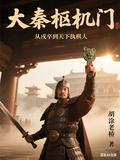 Cardinal Gate of the Qin Dynasty: from Garrison Soldier to Chess Player in the World
1Reads—Score—Shelves
Cardinal Gate of the Qin Dynasty: from Garrison Soldier to Chess Player in the World
1Reads—Score—Shelves
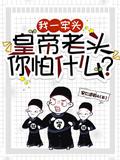 Heavy Snow and Wind Knife
28.4kReads9.0Score3.3kShelves
Heavy Snow and Wind Knife
28.4kReads9.0Score3.3kShelves
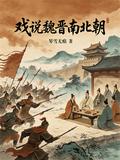 Joking About the Wei, Jin, Southern and Northern Dynasties
3.5kReads6.9Score293Shelves
Joking About the Wei, Jin, Southern and Northern Dynasties
3.5kReads6.9Score293Shelves
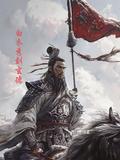 Liu Xuande, the Scholar in White
13.3kReads9.2Score1.6kShelves
Liu Xuande, the Scholar in White
13.3kReads9.2Score1.6kShelves
 County Official in the Late Ming Dynasty
11.8kReads7.3Score1.1kShelves
County Official in the Late Ming Dynasty
11.8kReads7.3Score1.1kShelves
 Unfaithful to Jin
1kReads5.8Score102Shelves
Unfaithful to Jin
1kReads5.8Score102Shelves
 Desire to Ascend to the Ninth Heaven
659Reads5.8Score—Shelves
Desire to Ascend to the Ninth Heaven
659Reads5.8Score—Shelves
 Half-Son of Shengtian, I Am the Eldest Son of Cao Cao
5Reads5.8Score—Shelves
Half-Son of Shengtian, I Am the Eldest Son of Cao Cao
5Reads5.8Score—Shelves
 Quan Zheng
995Reads—Score—Shelves
Quan Zheng
995Reads—Score—Shelves
 Lanling Long Song: Entering the Battle Song
3Reads—Score—Shelves
Lanling Long Song: Entering the Battle Song
3Reads—Score—Shelves
 Northern Qi: Fake Surname Bolingcui
12.5kReads5.7Score794Shelves
Northern Qi: Fake Surname Bolingcui
12.5kReads5.7Score794Shelves
 Looking for the King of Lanling
35Reads—Score—Shelves
Looking for the King of Lanling
35Reads—Score—Shelves
 The Cultivation World Came to the Village to Conduct a Pilot Project
—Reads—Score—Shelves
The Cultivation World Came to the Village to Conduct a Pilot Project
—Reads—Score—Shelves
 Reborn as King Lanling, I Have the Blood of Both Northern and Southern Royal Families
20.7kReads8.4Score3kShelves
Reborn as King Lanling, I Have the Blood of Both Northern and Southern Royal Families
20.7kReads8.4Score3kShelves
 At the Beginning, a Knife Kills the Prisoner on Death Row to the Regent.
23.9kReads8.9Score1.8kShelves
At the Beginning, a Knife Kills the Prisoner on Death Row to the Regent.
23.9kReads8.9Score1.8kShelves
 I Was a Devil in the Western Jin Dynasty
7.1kReads7.1Score696Shelves
I Was a Devil in the Western Jin Dynasty
7.1kReads7.1Score696Shelves
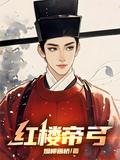 Red Chamber Emperor Bow
44.2kReads9.2Score3.8kShelves
Red Chamber Emperor Bow
44.2kReads9.2Score3.8kShelves
 Luan Jin: I'm Just a Playboy, You Said I Can Be Emperor
2Reads5.8Score—Shelves
Luan Jin: I'm Just a Playboy, You Said I Can Be Emperor
2Reads5.8Score—Shelves
 Bodhisattva County Magistrate
28kReads9.2Score2.9kShelves
Bodhisattva County Magistrate
28kReads9.2Score2.9kShelves
 The Prodigal Son of the Great Zhou Dynasty
30.8kReads9.1Score3.3kShelves
The Prodigal Son of the Great Zhou Dynasty
30.8kReads9.1Score3.3kShelves
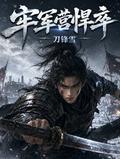 Soldiers in Prison Camp
6.1kReads8.2Score575Shelves
Soldiers in Prison Camp
6.1kReads8.2Score575Shelves
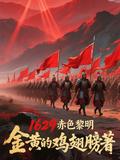 1629Red Dawn
14.1kReads8.8Score1.3kShelves
1629Red Dawn
14.1kReads8.8Score1.3kShelves