The first one is written from the perspective of diplomacy. The second one is written from a diplomatic perspective. To be honest, I think the protagonist is really happy to watch. He is ruthless in his attacks. The third one is similar to the system where the whole picture is visible. All the troops under his command are named. And there will not be any battlefield with tens of thousands of people. Just a few people are disabled here.
For hardcore military style, read this! The setting is very dark, the rules are iron laws of survival, and the protagonist's struggle to survive in a desperate situation feels very real.
The first mercenary novel. The protagonist is a sports shooter from a domestic university. He travels around the world and becomes a mercenary. He becomes a sniper through training and participates in various tasks to become a top mercenary. The second protagonist Mo Fan travels back to the Anti-Japanese War and wipes out several Japanese A divisions in the Songhu Battle and various battlefields. He develops himself and leaves many figures in this land. The protagonist of the third book, Huang Jing, tells the story of a fan of the Expeditionary Force. It rewrites the various characters in the Expeditionary Force TV show, with different destinies, coming together to drive Japan out of China.
The first book is finished, and the second sequel is newly opened. Military weapons, fighter jets, aircraft carriers, submarines and Apaches, these are the real speed bumps for men! If you don't care about life and death, do it if you don't accept it! Katyusha on the left, Bobosha on the right! Put on the sea soul and get on the plane, landing in Los Angeles tonight! After drinking this bottle of vodka, the White House will be your home tomorrow! 😎
It's good to read, but the updates are a bit slow. The author of the first book is still working hard. The author of the second book is now suffering from the flu (Chao Xiaosheng: Maybe he's giving himself a holiday, not sure). There will be no update on February 10th (crying)
Why should you watch "No Japs Allowed"? This is not just a war novel. If you think this is just a story about a group of Eighth Route Army soldiers fighting the Japanese with guns, you may miss a lot. Because when you turn the first page, you will find that this is a story about "people". About how people still choose to be human in the darkest war years; about how people still maintain their humanity in the cruelest environment; about how people still believe in hope in the most desperate moments. If you're still on the fence about reading it, let me tell you why this novel is worth your time. --- 1. Because there are the most real people here. The three brothers Fu Shuiheng, Fu Yihai, and Fu Yihui are not the kind of perfect heroes. They have flesh and blood, weaknesses and struggles. Fu Shuiheng is a time traveler who came to this war-torn era with the memories of future military doctors. But he has no system, no golden fingers, all he has is the knowledge in his head, and a heart that wants to save a few soldiers from dying. When he designed the "Taihang No. 1" Rifle, he was not showing off, but saying: "I don't want our soldiers to go to the battlefield with wood knives anymore." Fu Yihai was a political commissar and initially hated Japanese prisoners. He has seen with his own eyes how the Japanese killed our people, and his hatred is justified. But after he had a long conversation with the Japanese prisoner named Kobayashi Kenichiro on a snowy night, he slowly understood a truth: among the Japanese, there were some who didn't want to be Japanese. This transformation is not cheap sensationalism, but a person's struggle and growth when he truly faces hatred. Fu Yihui is the chief of staff, calm, rational and technically competent. But he would also get red eyes in front of his second brother's frostbitten toes, and he would also clench his fists when his eldest brother was seriously injured. He is not a cold-blooded animal, he just hides all his softness under a calm appearance. These three brothers are the epitome of millions of Chinese people of that era. They are not gods, they are humans. --- 2. Because here is the most shocking "turning enemies into friends" episode 52 "Special Students", which is about three Japanese soldiers who took the initiative to surrender. One of them was a student of Kazuki Yamamoto - the student of the executioner who attacked fifty-eight Eighth Route Army soldiers. Fu Yihai wanted to kill him with one shot at first. But after he heard the story of the Japanese soldier, how he was beaten black and blue in the army for refusing to kill, and how he woke up late at night dreaming about the people he had killed, Fu Yihai fell silent. The Japanese soldier took off his clothes, revealing scars all over his body, and said, "These scars are my choice. I chose not to kill, so they beat me, imprisoned me, and humiliated me. But I don't regret it. Because every time I see these scars, I know that I am still a human being." Another Japanese soldier, 19 years old, was falsely accused of rape and was forced to apologize. He knelt down and kowtowed in front of the Eighth Route Army until his forehead bled, and said, "I apologize for all the Japanese soldiers who killed people in China. I know it's useless to apologize, but I don't know what else to do." There was also Sasaki, a medical student, who shot himself in the foot because he refused to practice bayoneting on a living person. Are these people enemies? Yes. But they are also human beings. When Fu Yihai finally decided to establish the "Japanese Anti-War Alliance", he said: "We are different from the Japanese. The Japanese kill prisoners, but we do not kill them; the Japanese destroy the people, but we protect them; the Japanese have no humanity, and we must have humanity." This sentence is the core value of this story. --- 3. Because here is the most hard-core technology to break through. Episode 53, "The Birth of the "Taihang No. 1" Rifle," tells the story of Fu Shuiheng and the soldiers in the repair shop, using an old machine tool that was falling apart to create his own rifle belonging to the First Independent Brigade. There is no magic weapon in this story, no success achieved with a slap on the head. Some fail again and again and try again. The barrel of the gun exploded, so we had to make steel again; there was not enough steel, so we tried to save it; we couldn't design a modular interface, so I couldn't sleep due to worry. Who was the one who finally helped them solve the key problem? It was a Japanese prisoner-Kenichiro Kobayashi. He remembered the detachable harpoon his father had used in Hokkaido, drew a sketch, and solved the problem that had troubled them for a week. When the first "Taihang-1" was successfully test-fired, and when the soldiers of the reconnaissance team used it to defeat the "Snow Wolf" special team in actual combat, the excitement and pride were indescribable in any language. This is the wisdom of the Chinese people: if there are no conditions, conditions must be created. --- 4. Because here is the most brutal snowfield confrontation. In the 54th episode "Wolf Traces in the Snowfield", the Kwantung Army's ace special team "Snow Wolf" is here. Wearing white camouflage uniforms and riding skis, they moved on the snow like the wind. Their marksmanship is precise, their tactics are ruthless, and they specialize in targeting weak links. In five days and four attacks, the First Independent Brigade lost eighty-seven soldiers. To make matters worse, a stray bullet hit Fu Shuiheng. He fell in a pool of blood and almost couldn't be saved. This battle exposed the army's shortcomings in fighting in cold areas. With a casualty ratio of 1 to 2.5, More than 80 lives were exchanged for more than 30 Japanese. This kind of tragedy is heart-wrenching and alarming. But it was this kind of misery that made Fu Shuiheng determined to take the entire brigade to the coldest place in northern Shanxi for three months of training. --- 5. Because here is the most tempering ninety days. Episode 55, "Ninety Days in the Cold Training Camp", is the most touching episode in the whole story. Two hundred and sixty-three people went to Laojunding in northern Shanxi. It was minus 40 degrees Celsius, and there was no house, no stove, and no hot food. They huddled in the tent, back to back to keep warm. Learn to ski, and fall a hundred times a day; learn to survive in the wild, and your eyes turn green from hunger; learn to fight in the ice and snow, and your hands and feet are cracked by the cold. Fu Yihai's feet were frostbitten and swollen like steamed buns, but he managed to stay out of the line of fire. He limped to the front of the team every day and led the soldiers to practice. At night, he used the faint firelight in the cave to draw the topographic map one stroke at a time. That map was three months of hard work and the lives of more than 200 people. In the end, 263 people went out and 251 came back. Five were sacrificed and seven were cured of illness. The rest is all practiced. When Fu Yihai stood under the moonlight, looked at the returning soldiers, and said, "Brother, let them fight the Snow Wolf now, I can guarantee that we will not lose to them." The passionate feeling cannot be expressed in words. How is steel made? That's how it was made. --- 6. Because this is not just a novel. Some people say that this is just a novel, but it is not true. But I want to say that the people and things in those stories are all true. Those sacrificed soldiers are real, those frostbitten feet are real, those back-to-back warmth in the snowy night are real, those struggles to turn enemies into friends are real, and those ninety days of gritting one's teeth are real. In that era, there were too many people like the three Fu brothers. They are not heroes, they are ordinary people. But it was these ordinary people who held up the sky in the darkest times. This novel is written for them. ---So, why should you watch "No Japs Allowed"? Because you will see the most real people, the most hard-core technical breakthrough, the most brutal snowfield confrontation, and the most tempering ninety days. Because you will understand what it means: "The devils kill prisoners, but we do not kill them; the devils harm the people, we protect them; the devils have no humanity, and we must have humanity." Because you will know that in the darkest era, there was a group of people, in the coldest place, using the simplest tools, fighting the hardest battles and becoming the most human beings. If you want to read a truly good novel, if you want to understand the brilliance of humanity behind that period of history, if you want to feel your blood boiling and your eyes red at the same time - then watch "No Japanese Allowed". You won't regret it. --- "No Japs are allowed to remain" - this sentence is a determination, an oath, and the bottom line of a person's character.
This book is absolutely above the standard. It uses the First World War as an imaginary background. The first step was to destroy the Qing Dynasty and destroy little Japan. Unfortunately, it was blocked by the Qing Dog Report. The author has opened the second book and began to defeat the great powers and compete for world hegemony. From the Sovereign class to the Elizabeth class battleship, from tanks to self-propelled artillery, the struggle for hegemony in the Pacific, the bloody European war, and now it has begun to land in the United States, an era of giant ships and cannons, and an era of sea power! An era of overlords. This is a turbulent era, but it is also an era of good men making contributions!
Firearms, artillery, tanks, fighter planes, mechas, starships. They form the future of blood and fire. Thousands of interstellar battleships and countless void mechas are ready to go. The dense battleship beam cannons intertwined into a huge picture of destruction in the void. This... Is the age of mankind.
 German Talker
3.8kReads5.8Score198Shelves
German Talker
3.8kReads5.8Score198Shelves
 District 9
312.5kReads9.6Score46.2kShelves
District 9
312.5kReads9.6Score46.2kShelves
 Foolish Play of the Gods
788.7kReads9.7Score110.7kShelves
Foolish Play of the Gods
788.7kReads9.7Score110.7kShelves
 The War of Resistance Burns Blood
326Reads5.8Score—Shelves
The War of Resistance Burns Blood
326Reads5.8Score—Shelves
 The War of Resistance: Begins with the Expeditionary Force
367Reads7.4Score—Shelves
The War of Resistance: Begins with the Expeditionary Force
367Reads7.4Score—Shelves
 Hello, Welcome to Griffin Security Contractors
97Reads5.8Score—Shelves
Hello, Welcome to Griffin Security Contractors
97Reads5.8Score—Shelves
 The Game Returns to World War II
49Reads—Score—Shelves
The Game Returns to World War II
49Reads—Score—Shelves
 A Modern Powerful Country in the Apocalypse
410Reads8.7Score—Shelves
A Modern Powerful Country in the Apocalypse
410Reads8.7Score—Shelves
 The End of the World! Hoarding Countless Supplies from Tarkov
55Reads—Score—Shelves
The End of the World! Hoarding Countless Supplies from Tarkov
55Reads—Score—Shelves
 The Road to Second-Generation Leadership: the First Phase of Huangpu
40Reads5.8Score—Shelves
The Road to Second-Generation Leadership: the First Phase of Huangpu
40Reads5.8Score—Shelves
 Order of War
82Reads6.5Score—Shelves
Order of War
82Reads6.5Score—Shelves
 Reopening in the Austro-Hungarian Empire
979Reads7.2Score—Shelves
Reopening in the Austro-Hungarian Empire
979Reads7.2Score—Shelves
 1889 Far Eastern Heroes
354Reads5.8Score—Shelves
1889 Far Eastern Heroes
354Reads5.8Score—Shelves
 The Rise of the Second Empire
7Reads5.8Score—Shelves
The Rise of the Second Empire
7Reads5.8Score—Shelves
 I Am the Commander in the Last Days
372Reads5.8Score—Shelves
I Am the Commander in the Last Days
372Reads5.8Score—Shelves
 The Vicissitudes of the Apocalypse
3.5kReads9.2Score284Shelves
The Vicissitudes of the Apocalypse
3.5kReads9.2Score284Shelves
 The Journey of Marshal Starting from the Soviet-German Battlefield
21Reads5.8Score—Shelves
The Journey of Marshal Starting from the Soviet-German Battlefield
21Reads5.8Score—Shelves
 Core of the Iron Cross: Armored Elite
1.3kReads8.8Score121Shelves
Core of the Iron Cross: Armored Elite
1.3kReads8.8Score121Shelves
 Battle for Hegemony: the Strongest Warlord Sweeps Across the Great Powers
11.1kReads8.0Score513Shelves
Battle for Hegemony: the Strongest Warlord Sweeps Across the Great Powers
11.1kReads8.0Score513Shelves
 The End of the World: a Troll Will Kill the Zombies at the Beginning
1.9kReads8.4Score142Shelves
The End of the World: a Troll Will Kill the Zombies at the Beginning
1.9kReads8.4Score142Shelves
 Anti-Japanese War: All-Out War Begins with the Northeastern Army
64.2kReads9.1Score5.2kShelves
Anti-Japanese War: All-Out War Begins with the Northeastern Army
64.2kReads9.1Score5.2kShelves
 Hell Mercenary
4.4kReads8.7Score415Shelves
Hell Mercenary
4.4kReads8.7Score415Shelves
 I Can't Hide My S-Class Status as Blue Star's Number One Villain.
35.6kReads9.3Score3.6kShelves
I Can't Hide My S-Class Status as Blue Star's Number One Villain.
35.6kReads9.3Score3.6kShelves
 Call Me a Softie? I Am the Number One Arms Dealer in Blue Star.
2.1kReads8.7Score152Shelves
Call Me a Softie? I Am the Number One Arms Dealer in Blue Star.
2.1kReads8.7Score152Shelves
 The Sky of the Republic of China
12.2kReads8.6Score1.4kShelves
The Sky of the Republic of China
12.2kReads8.6Score1.4kShelves
 Interstellar Airborne, Romance from Interstellar Paratroopers
482Reads8.4Score100Shelves
Interstellar Airborne, Romance from Interstellar Paratroopers
482Reads8.4Score100Shelves
 When I Bring Game Firearms into Reality
11.5kReads7.3Score755Shelves
When I Bring Game Firearms into Reality
11.5kReads7.3Score755Shelves
 Starting from Scratch, Establishing the First Special Forces Unit
404Reads7.1Score—Shelves
Starting from Scratch, Establishing the First Special Forces Unit
404Reads7.1Score—Shelves
 Crossing the Beacon Fire Deserter, I Awakened the Anti-Japanese Martial Arts System
2.9kReads—Score216Shelves
Crossing the Beacon Fire Deserter, I Awakened the Anti-Japanese Martial Arts System
2.9kReads—Score216Shelves
 The Flesh and Blood Jungle of the War of Resistance
30.5kReads9.1Score3.8kShelves
The Flesh and Blood Jungle of the War of Resistance
30.5kReads9.1Score3.8kShelves
 Spy Codename I Am Waste Barbed Wire
196.9kReads9.5Score19.6kShelves
Spy Codename I Am Waste Barbed Wire
196.9kReads9.5Score19.6kShelves
 Entering the Beacon Fire Deserter, My Mobile Phone Has Data
9.9kReads8.8Score829Shelves
Entering the Beacon Fire Deserter, My Mobile Phone Has Data
9.9kReads8.8Score829Shelves
 The Nameless Monument at the Bloody Gate of the Country
17.4kReads9.1Score1.2kShelves
The Nameless Monument at the Bloody Gate of the Country
17.4kReads9.1Score1.2kShelves
 No Japanese Are Allowed to Stay
10Reads5.8Score—Shelves
No Japanese Are Allowed to Stay
10Reads5.8Score—Shelves
 My Resist US Aggression and Aid Korea
3.3kReads8.2Score246Shelves
My Resist US Aggression and Aid Korea
3.3kReads8.2Score246Shelves
 Hunting
6kReads9.2Score754Shelves
Hunting
6kReads9.2Score754Shelves
 The End of the War
10.6kReads9.3Score815Shelves
The End of the War
10.6kReads9.3Score815Shelves
 How Can I, an Asian, Be the Commander of an Armored Brigade in the US?
26.3kReads6.7Score5.1kShelves
How Can I, an Asian, Be the Commander of an Armored Brigade in the US?
26.3kReads6.7Score5.1kShelves
 Survival in Another World, Apocalyptic Fantasy Game
20Reads5.8Score—Shelves
Survival in Another World, Apocalyptic Fantasy Game
20Reads5.8Score—Shelves
 Starting from the Dongzhou Empire, Build the Strongest China!
2.7kReads5.8Score104Shelves
Starting from the Dongzhou Empire, Build the Strongest China!
2.7kReads5.8Score104Shelves
 Start with an Infantry Fighting Vehicle
7Reads5.8Score—Shelves
Start with an Infantry Fighting Vehicle
7Reads5.8Score—Shelves
 The Synthetic Brigade Starts at the Beginning, and the Zombies Are Walking Sideways in the Apocalypse!
1.7kReads6.8Score100Shelves
The Synthetic Brigade Starts at the Beginning, and the Zombies Are Walking Sideways in the Apocalypse!
1.7kReads6.8Score100Shelves
 I'm Not a Drama God
1.9MReads9.9Score218.6kShelves
I'm Not a Drama God
1.9MReads9.9Score218.6kShelves
 Another World: I Sprinkled Agent Orange on the Magic Tree
1.6kReads5.8Score328Shelves
Another World: I Sprinkled Agent Orange on the Magic Tree
1.6kReads5.8Score328Shelves
 Let You Support the War of Resistance, China Has Entered the First Level of Combat Readiness
5.7kReads8.0Score290Shelves
Let You Support the War of Resistance, China Has Entered the First Level of Combat Readiness
5.7kReads8.0Score290Shelves
 Alien: Start with a Panzer II Tank
87Reads5.8Score—Shelves
Alien: Start with a Panzer II Tank
87Reads5.8Score—Shelves
 I'm a Submarine Commander
447Reads5.8Score—Shelves
I'm a Submarine Commander
447Reads5.8Score—Shelves
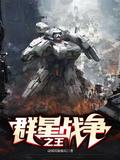 From Launching Mechas to the Star Sea Fleet, I Rule the Stars
49.6kReads9.1Score5.3kShelves
From Launching Mechas to the Star Sea Fleet, I Rule the Stars
49.6kReads9.1Score5.3kShelves
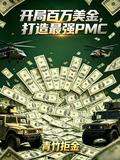 Start with One Million US Dollars to Build the Strongest PMC
16.4kReads8.2Score1.6kShelves
Start with One Million US Dollars to Build the Strongest PMC
16.4kReads8.2Score1.6kShelves
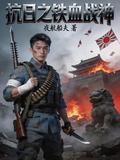 Anti-Japanese Iron-Blooded God of War
7Reads5.8Score—Shelves
Anti-Japanese Iron-Blooded God of War
7Reads5.8Score—Shelves