Come to Siheyuan with Something Thoughtful, Not Idiotic Writing.
Views
22.8M
Books
258
Recommendations
1.5k
Updated
11h ago
I would like to read a book similar to "Siheyuan: Feeling the Atmosphere of the Times". There are more and more Siheyuan novels nowadays, and they are becoming more and more mindless. Come here with something that is cerebral, not a cool novel.
Chuan Cheng is the newly appointed director of the sub-district office. He shoots Jia Zhang at the beginning and sends Yan Bugui to plant trees in the northwest. Gai Wang and her husband are each given a peanut when they are promoted. The old deaf man and the aunt are paraded on the street. Jia Dongxu escapes. Director Yang jumps off the building. Yi Zhonghai is paralyzed by the eunuch. Xu Damao is caught and shot. The second uncle and aunt surrender themselves to jail.
It's a beautiful Siheyuan. The last two books have jumped out of the box and are even better. I highly recommend it. I've tried it for you and they are both complete.
1 Let me start by saying that it is not a 10-point work. If you watch it with a 9.3 Score, you won't have to worry about it. I haven't watched "Love in the Courtyard" and this one is fine. 2 Don't be fooled, I like watching the golden finger setting. The golden finger in the back is very powerful and helps the country's military power to advance by leaps and bounds. I really hope this is the case in reality. 3 There is a golden finger, the only good-looking book in the Siheyuan, with a single female protagonist, dedicated 4 A Siheyuan novel from a female perspective, (short story about parents + farm space + no male protagonist)
"I'm Forced to Be the Pillar of the Siheyuan" breaks out of the "house fighting" framework of traditional Siheyuan novels and takes "survival" as its core proposition. It throws the protagonist into the era of material scarcity in 1958, and uses the golden finger setting of "space + sign-in" to stage a passionate counterattack from "living down as a loser" to "the supporter of the whole family". The novel wraps up the hard-core survival logic with a delicate flow of life narrative, and hides a shocking power of growth in the stories of parents. Time-traveling is hell mode: a suffocating survival challenge. The protagonist Zhang Xingwang faces the triple critical attack of "the whole family is hungry + he is seriously ill + the system shrinks" when he time-travels: his mother and sisters rely on digging wild vegetables to satisfy their hunger, and the only male in the family (original owner) is terminally ill. On the first day of signing in, the system only gives you 2 kilograms of potatoes and 0.1 Cubic meters of space - this configuration can be called a "beggar's gold finger". The author uses graphic details to depict poverty: drinking corn mush mixed with water, the fourth sister lying about having eaten to save food, and the younger sister staring at the empty bowl and swallowing saliva. These scenes allow readers to intuitively feel the pressure of survival in the famine era. Zhang Xingwang's transformation from "disliked the unpalatable wild vegetables" to "actively using space to hunt for food" has made the feeling of "forced growth" even more intense. Goldfinger's "poor" opening method: play big tricks in a small space. Different from the arrogant configuration of "tons of materials + farm space" in similar works, the system in this article focuses on "small but refined": 0.1 Cubic meters of space can only accommodate daily sundries, and the sign-in rewards start from 3 pounds of corn and 2 pounds of potatoes, but the protagonist is forced to develop the cool operation of "bullets are stationary + pointing where to hit". Zhang Xingwang used space to store bullets, and performed the magical operation of "silent pheasant hunting" in the deep mountains. He exchanged 26 bullets for 3 pheasants and more than 10 pheasants. This kind of wisdom of "building a dojo in a snail shell" is more satisfying than mindless cheating. And his caution when exchanging pheasant meat for food - going to the pigeon market late at night, disguising the trading route, and using his eldest sister's natural power to escort him - shows the collision between survival wisdom and the limitations of the times. Family Portraits: A Tender Undertone in Suffering. The most touching thing about the novel is the portrayal of "family love": the mother Wang Xiulan saves the food in the lunch box, the grandfather takes the risk and takes out the shotgun, the eldest sister is careless but feels safe, and the second sister is silent but protective throughout. These characters interpret the meaning of "family" in different ways. When Zhang Xingwang insists that the whole family share chicken, the scene in which his mother compromises in tears not only shows the brilliance of humanity in the face of scarcity, but also hints at the protagonist's change in mentality from "accepting care" to "taking the initiative to give." The indifference of the neighbors in the courtyard (such as the third uncle staring at the basket, Jia Zhang's family avoiding the plague god) is in sharp contrast to the warmth of the Zhang family, highlighting the preciousness of "home" as a safe haven. Slice of the Times: An Epic of Survival in the Age of Hungry. The author uses the Zhang family as an incision to unravel the social texture of 1958: the street office made it difficult to obtain household registration, the village collectively ate from a big pot, the risks of black market transactions were extremely high, and the shotgun was once a life-saving talisman for the villagers. These details make the story go beyond the scope of a "siheyuan cool article" and become a survival memorandum for a generation. Zhang Xingwang witnessed "children looking for worms to eat" and "no dogs barking in the village" in the mountains and forests, and even used line drawing to describe the cruelty of famine. And the plot of him using space to hoard food and plan to open sales points implies the idealism of "using modern thinking to break the old era". Core of growth: Transformation from "lone seedling" to "backbone" Zhang Xingwang's counterattack path is essentially a growth driven by "responsibility": from a sickly young man to a man who can carry a gun for hunting, from relying on his family to being relied on by the whole family. He learned calculations (such as using corn to trap prey), responsibility (guarding his sister late at night in exchange for food), and even intrigue (concealing supplies from the third uncle) in the midst of hunger and danger. When he says, "I am a man, I should support this family." What the readers see is not only the self-rescue of a time traveler, but also the hope of a family rising from suffering. "Siheyuan: I Was Forced to Be the Pillar" uses the contrasting setting of "small space, big survival" to write a hymn of family warmth and survival wisdom in the context of the famine years. If you want to feel the thrill of "survival in a desperate situation" and see how a lying young man uses his mind and responsibility to rewrite the fate of his family, this work will definitely make you feel the power of blood boiling in tears - after all, when survival becomes the highest mission, every breakthrough is worth raising your arms and shouting.
Fans of Siheyuan have read more than 30 completed books, but this one is the only one that has won my heart. The author's writing style is average, but the overall content is extremely rigorous, which puts me to shame even for a textualist like me. The grasp of that period is also quite good. I even suspect that the author himself is probably from Sijiucheng, and he has actually experienced that period and is very likely to be in the system, even if he is not very likely to have very close relatives in the capital system. I even think that this book can basically be used as a content guide for Siheyuan fans. It is also qualified as a textual research reference book for Siheyuan fans.
You've already watched Siheyuan, are you still smart? Let's not be so funny, okay? If you throw away your brain, all you can see are fine products. You can't demand too much from tomatoes.
1. Sign-in system + multiple female protagonists + tomb robbing + hunting and Chinese martial arts. 2. Silly Zhu's mother did not die. The family was not plotted and left the courtyard. 3. Veterans + Security Section. 4. A portrait artist working at the Public Security Bureau.
A very interesting Siheyuan novel! The protagonist comes to an era of shortage of materials and falls into the whirlpool of right and wrong in the courtyard. After being bullied, he awakens to the labor system, receives generous rewards for his labor, and toughens all the greedy neighbors.
 At the Beginning of the Courtyard, Marry the Little Wife First
4.8kReads6.3Score193Shelves
At the Beginning of the Courtyard, Marry the Little Wife First
4.8kReads6.3Score193Shelves
 Siheyuan: Qin Huairu Was Arrested and Bang Gang Died Tragically
7.4kReads6.4Score222Shelves
Siheyuan: Qin Huairu Was Arrested and Bang Gang Died Tragically
7.4kReads6.4Score222Shelves
 Siheyuan: All Three Uncles Are Cuckolds
56.6kReads6.4Score3.5kShelves
Siheyuan: All Three Uncles Are Cuckolds
56.6kReads6.4Score3.5kShelves
 Siheyuan: the Daughter-In-Law Just Came over and Fucked the Jia Family
11.7kReads8.1Score496Shelves
Siheyuan: the Daughter-In-Law Just Came over and Fucked the Jia Family
11.7kReads8.1Score496Shelves
 At the Beginning, He Occupied the He Family's House and Sucked Yi Jia Dry.
36.8kReads8.6Score2.3kShelves
At the Beginning, He Occupied the He Family's House and Sucked Yi Jia Dry.
36.8kReads8.6Score2.3kShelves
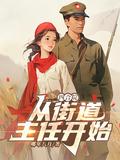 Siheyuan: My Subdistrict Director
24.1kReads7.6Score675Shelves
Siheyuan: My Subdistrict Director
24.1kReads7.6Score675Shelves
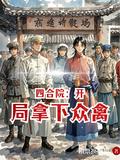 Siheyuan: Report on the Steel Rolling Mill at the Beginning
39.1kReads6.8Score909Shelves
Siheyuan: Report on the Steel Rolling Mill at the Beginning
39.1kReads6.8Score909Shelves
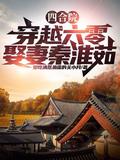 Siheyuan: Traveling Through the 1960S and Marrying Qin Huairu
10.2kReads7.1Score392Shelves
Siheyuan: Traveling Through the 1960S and Marrying Qin Huairu
10.2kReads7.1Score392Shelves
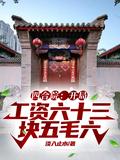 Siheyuan: Don't Mess with Me, If You Mess with Me I'll Be Sent In
24.2kReads7.6Score790Shelves
Siheyuan: Don't Mess with Me, If You Mess with Me I'll Be Sent In
24.2kReads7.6Score790Shelves
 Siheyuan: Electrician at the Beginning, Cut Off Hu Yuli
12kReads6.8Score317Shelves
Siheyuan: Electrician at the Beginning, Cut Off Hu Yuli
12kReads6.8Score317Shelves
 Siheyuan: a Happy Life Begins with the Factory Doctor
30.3kReads6.1Score2kShelves
Siheyuan: a Happy Life Begins with the Factory Doctor
30.3kReads6.1Score2kShelves
 Siheyuan: This Young Cadre Is Too Understanding of Human Affairs and Accidents
131.6kReads6.4Score10.8kShelves
Siheyuan: This Young Cadre Is Too Understanding of Human Affairs and Accidents
131.6kReads6.4Score10.8kShelves
 Siheyuan: Making Things Out of Nothing, I Create Evidence of Crime
24.2kReads5.5Score1.9kShelves
Siheyuan: Making Things Out of Nothing, I Create Evidence of Crime
24.2kReads5.5Score1.9kShelves
 Siheyuan Becomes Yi Zhonghai's Biological Son at the Beginning
2.1kReads—Score134Shelves
Siheyuan Becomes Yi Zhonghai's Biological Son at the Beginning
2.1kReads—Score134Shelves
 Courtyard: My Brother-In-Law Is the Director of the Public Security Bureau
4.5kReads5.4Score186Shelves
Courtyard: My Brother-In-Law Is the Director of the Public Security Bureau
4.5kReads5.4Score186Shelves
 Siheyuan: at the Age of Thirteen, I Was Summoned by the Big Boss
21.1kReads8.3Score1kShelves
Siheyuan: at the Age of Thirteen, I Was Summoned by the Big Boss
21.1kReads8.3Score1kShelves
 The Ordinary Road of He Yuzhu in the Siheyuan
22kReads9.2Score914Shelves
The Ordinary Road of He Yuzhu in the Siheyuan
22kReads9.2Score914Shelves
 The Time of Rebirth
95Reads—Score—Shelves
The Time of Rebirth
95Reads—Score—Shelves
 Siheyuan: My System Can Turn Waste into Treasure
22.5kReads8.7Score1.4kShelves
Siheyuan: My System Can Turn Waste into Treasure
22.5kReads8.7Score1.4kShelves
 Siheyuan: Happiness Starts from One Penny Instant Sale
58.4kReads9.3Score3.8kShelves
Siheyuan: Happiness Starts from One Penny Instant Sale
58.4kReads9.3Score3.8kShelves
 Sun Lotus in the Siheyuan
2kReads8.0Score105Shelves
Sun Lotus in the Siheyuan
2kReads8.0Score105Shelves
 Siheyuan: Anti-Japanese Attack in Beijing
9.2kReads8.2Score327Shelves
Siheyuan: Anti-Japanese Attack in Beijing
9.2kReads8.2Score327Shelves
 Little Ant in the Siheyuan
47Reads5.8Score—Shelves
Little Ant in the Siheyuan
47Reads5.8Score—Shelves
 Bixia Yuanjun, Who Is Full of Love in the Courtyard
3.5kReads8.1Score183Shelves
Bixia Yuanjun, Who Is Full of Love in the Courtyard
3.5kReads8.1Score183Shelves
 Rebirth of the Siheyuan: Starting from the Escape from Famine in 1942
33kReads8.2Score1kShelves
Rebirth of the Siheyuan: Starting from the Escape from Famine in 1942
33kReads8.2Score1kShelves
 Siheyuan: with the Blessing of Lao Liu, Create the Strongest Life
25.9kReads7.9Score1.2kShelves
Siheyuan: with the Blessing of Lao Liu, Create the Strongest Life
25.9kReads7.9Score1.2kShelves
 I, Xu Damao, Come from the 21St Century
6.9kReads8.1Score202Shelves
I, Xu Damao, Come from the 21St Century
6.9kReads8.1Score202Shelves
 Siheyuan: Fatty's Counterattack
2.1kReads8.2Score—Shelves
Siheyuan: Fatty's Counterattack
2.1kReads8.2Score—Shelves
 Siheyuan: the Happy Life of a Little Chef
8.4kReads8.1Score295Shelves
Siheyuan: the Happy Life of a Little Chef
8.4kReads8.1Score295Shelves
 Siheyuan: Damao and I Are In-Laws
1.7kReads8.3Score—Shelves
Siheyuan: Damao and I Are In-Laws
1.7kReads8.3Score—Shelves
 Siheyuan: Starting from the Little Bastard Kang Jiu
9.2kReads8.7Score410Shelves
Siheyuan: Starting from the Little Bastard Kang Jiu
9.2kReads8.7Score410Shelves
 Siheyuan Struggled in Hard Times
4.6kReads8.1Score129Shelves
Siheyuan Struggled in Hard Times
4.6kReads8.1Score129Shelves
 Siheyuan: Put Aside Personal Qualities
18.6kReads8.2Score652Shelves
Siheyuan: Put Aside Personal Qualities
18.6kReads8.2Score652Shelves
 Qin Huairu in the Siheyuan Is Loved to the Heavens by Me
6.3kReads8.2Score266Shelves
Qin Huairu in the Siheyuan Is Loved to the Heavens by Me
6.3kReads8.2Score266Shelves
 Siheyuan: a Song of Loyalty to the Country Shocked the Whole Factory
1.8kReads8.3Score100Shelves
Siheyuan: a Song of Loyalty to the Country Shocked the Whole Factory
1.8kReads8.3Score100Shelves
 Siheyuan: Renovating Life
2.8kReads8.3Score101Shelves
Siheyuan: Renovating Life
2.8kReads8.3Score101Shelves
 Siheyuan: He Yuzhu's Magnificent Life
21kReads8.1Score838Shelves
Siheyuan: He Yuzhu's Magnificent Life
21kReads8.1Score838Shelves
 Siheyuan: in 1948 There Were No Silly Pillars, Only
191Reads5.8Score—Shelves
Siheyuan: in 1948 There Were No Silly Pillars, Only
191Reads5.8Score—Shelves
 Siheyuan: I Can't Hide My Knife Anymore
12.7kReads7.0Score380Shelves
Siheyuan: I Can't Hide My Knife Anymore
12.7kReads7.0Score380Shelves
 Daily Life of Street Office Cadres in the Courtyard House
33.8kReads8.0Score1.3kShelves
Daily Life of Street Office Cadres in the Courtyard House
33.8kReads8.0Score1.3kShelves
 Siheyuan: Start Working at the Street Office
14.2kReads7.9Score484Shelves
Siheyuan: Start Working at the Street Office
14.2kReads7.9Score484Shelves
 Dress up as a Fool, Marry a Bride, and Raise Eight Children!
14.1kReads8.2Score661Shelves
Dress up as a Fool, Marry a Bride, and Raise Eight Children!
14.1kReads8.2Score661Shelves
 Siheyuan: My Grassland, My Horse
1Reads5.8Score—Shelves
Siheyuan: My Grassland, My Horse
1Reads5.8Score—Shelves
 Siheyuan: the Materials Returned Ten Times Are Too Many to Use Up
218.8kReads8.3Score21.6kShelves
Siheyuan: the Materials Returned Ten Times Are Too Many to Use Up
218.8kReads8.3Score21.6kShelves
 The Driver of the Big Truck Started, and His Parents Were Ecstatic
12.8kReads6.6Score579Shelves
The Driver of the Big Truck Started, and His Parents Were Ecstatic
12.8kReads6.6Score579Shelves
 Siheyuan: How Can I Survive If My Father Joins Chiang Kai-Shek and Becomes a Rich Peasant?
22kReads7.4Score1kShelves
Siheyuan: How Can I Survive If My Father Joins Chiang Kai-Shek and Becomes a Rich Peasant?
22kReads7.4Score1kShelves
 The Story of Little People in the Siheyuan
1.2kReads5.8Score149Shelves
The Story of Little People in the Siheyuan
1.2kReads5.8Score149Shelves
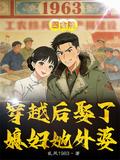 Siheyuan: After Time Travel, I Married My Daughter-In-Law, Her Grandmother.
39.5kReads7.4Score1.7kShelves
Siheyuan: After Time Travel, I Married My Daughter-In-Law, Her Grandmother.
39.5kReads7.4Score1.7kShelves
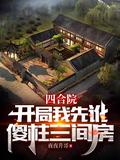 Siheyuan: at the Beginning, I Will Blackmail Silly Zhu into Three Rooms.
22.3kReads8.6Score1kShelves
Siheyuan: at the Beginning, I Will Blackmail Silly Zhu into Three Rooms.
22.3kReads8.6Score1kShelves
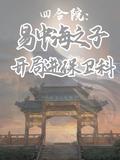 Siheyuan: I, Yi Zhonghai, and My Sister-In-Law, Lou Xiaoe
11.1kReads7.5Score559Shelves
Siheyuan: I, Yi Zhonghai, and My Sister-In-Law, Lou Xiaoe
11.1kReads7.5Score559Shelves