Some novels will be put on the bookshelf after reading, and some will be embedded in life. This work belongs to the latter. It uses an abandoned railway as the stage and a mentally retarded homeless man as the protagonist. It uses extremely restrained language and precise structure to build a complete world about beauty, destruction, memory and rebirth. Daisies grow from the cracks in the gravel again and again, and disappear again and again; knights guard again and again, and forget again and again. This is not repetition, this is a profound allegory about "the cycle itself is eternity". The little white flower with six petals spread out between the railroad tracks, and the skinny figure taking off his pants and charging towards the sunset, have all the qualities to become a literary classic image. It deserves to be read, discussed, and remembered.
If you see through human nature, you can maintain happiness. The world is like a tide, and human relationships are like water. Throughout the ages, those who have experienced the ups and downs of the world and tasted the warmth and coldness of human relationships will eventually realize a truth: after seeing through human nature, they will prefer to be alone, abandon ineffective social interactions, guard their own small world, live a stable life, and love themselves well. In ancient times, there lived a scholar named Ziyuan under Nanshan Mountain. When he was young, he was enthusiastic and sincere. He always felt that people in the world were kind, and as long as he treated others sincerely, he would be able to receive the same kindness. At that time, Ziyuan was keen on making friends from all over the world. Whenever someone came to his door, he would warmly welcome him and help him with all his resources. When someone confided his pain, he would listen patiently and treat each other with his heart. He shuttled between all kinds of entertainment, busy maintaining large and small circles, always surrounded by people, laughing and joking all day long, so lively. Ziyuan always believed that these people who stayed with each other day and night and talked happily over wine were true friends who treated each other sincerely. No matter what storms they encountered in the future, they would support each other. He delivers his sincerity without reservation, is full of enthusiasm for everyone, and regards the affairs of those around him as his own business. Even if he wrongs himself, he still wants to help others. But he doesn't know that in the eyes of those with ulterior motives, his sincerity is nothing more than innocence that can be exploited; his unreserved enthusiasm is nothing more than a disposable burden in the hearts of those who follow the crowd. Later, something unexpected happened to Ziyuan's family. His father failed in business and the family fortune was wiped out. Overnight, he changed from a scholar with no worries about food and clothing to a poor and neglected scholar. The house leaked and it rained all night. He suffered from a minor illness and had no money for treatment. His life was miserable. The "good friends" who once surrounded him all fled away from him after hearing about his situation. The warm greetings and brotherly friendship in the past disappeared without a trace in an instant. He once called for help from his close friends in the past, but some of them closed the door, some were perfunctory, and even worse, instead of reaching out to help, they made sarcastic remarks and spread bad words about him. The people he treated sincerely turned around and plotted against him; the relationships he maintained with all his passion were only cold and alienated when he was in decline; the people he had happily shared every detail of his life with, now see him in trouble, are full of schadenfreude and jealousy. Ziyuan stood in the cold wind, looking at the closed door, listening to the gossip behind him, and finally felt completely chilled. Only then did he realize that the exchange of sincerity he had believed in when he was young was just a wishful fantasy. Most of the human relationships in this world are based on the word benefit. No matter how good you are to others, it is better to make yourself useful to others. When you are prosperous and valuable, you are surrounded by kind, friendly, affectionate and righteous people, and everyone is willing to show goodwill to you and act as a virtuous confidant; but when you hit rock bottom and lose value, all the pretense will fade away, leaving only human selfishness, indifference and callousness. After this experience, Ziyuan lost his youthful enthusiasm, no longer obsessed with lively social interactions, no longer forced himself to integrate into complicated circles, and no longer opened his heart to everyone. He moved away from the noisy village and built a hut halfway up Nanshan Mountain. He stayed away from the hustle and bustle of the world and began to learn to be alone. At first, people around him laughed at him for being lonely and unsociable, saying that he became more and more withdrawn as he lived, his circle became smaller and smaller, and he spoke less and less. But Ziyuan never cared about other people's comments. He gradually discovered that time alone was far more reassuring than false excitement. There is no need to cater to other people's preferences, there is no need to disguise one's emotions, there is no need to be wary of the calculations behind the scenes, and there is no need to consume yourself for ineffective social interactions. When he was alone, he read in the morning, drank tea in the evening, watched the clouds rolling in the mountains, listened to the chirping of birds and insects in the forest, and slowly digested the grievances and sadness of the past in solitude. He no longer tells his experiences to everyone he meets, no longer exposes those hypocritical favors, and no longer deliberately tries to please anyone. After seeing through the complexity of human nature, he learned to be silent, to let go, and to understand that instead of getting entangled in bad people and bad things, it was better to keep his own little world and be alone. He looked at the grass and trees in the mountains, growing in spring and summer, growing on their own, never catering to anyone, and never relying on anyone; he looked at the streams in the forest, meandering forward, never getting along with the turbid currents, and always maintaining their own clarity. Ziyuan understands more and more that the best state of life is never about how many people surround you or how big a circle you have, but about living freely and comfortably, without being burdened by the world's sophistication. In the past, he squeezed himself into various circles, thinking that excitement was happiness and sincerity could be exchanged for sincerity; later, he took the initiative to give up ineffective social interactions, streamlined his circle, and left more time and energy for himself. He no longer likes to make new friends at will, nor is he obsessed with maintaining meaningless relationships. Although the circle is small, it is clean and pure; although the words are few, everything is sincere. He finally understood that in this world, the most reliable thing was never the charity of others or false friendship, but himself. Sincerity is mispaid, enthusiasm is betrayed, and sharing is envied, these are all normal conditions in life. Instead of wasting your energy on unworthy people and things, it is better to love yourself well, leave your sincerity to yourself, and leave your tenderness to the years. Being alone is never loneliness, but a sobriety after seeing human nature clearly; a smaller circle is never a sign of desolation, but transparency after filtering out ineffective social interactions; fewer words are never a sign of indifference, but the accumulation of experience in the world. When a person sees through the complexity of the human heart and tastes the warmth and coldness of human relationships, he will understand that all the noise of the outside world is not as good as the inner peace; all the false feelings are not as good as the joy of being alone. For the rest of your life, you don't have to force yourself to cater to others, you don't have to force yourself to fit into a circle that doesn't belong to you, and you don't have to wrong yourself for people who don't deserve it. Stay away from people and things that consume you, abandon hypocritical social interactions, settle yourself in solitude, improve yourself in silence, love yourself well, and live a good life. Just like Ziyuan on the Nanshan Mountain, guarding the hut, accompanied by the breeze, staying away from the turmoil of the world, not caring about the world, not interested in false excitement, finding inner peace in solitude, and living in self-love as his own support. This is the most transparent way to live after seeing through human nature, and it is also the rarest joy in life. All the prosperity in the world is not as good as inner peace; all the exchanges of human relationships are not as good as being alone and comfortable. Understanding human nature does not mean being passive and avoiding the world, but knowing how to make choices and letting go of obsessions; preferring to be alone does not mean being withdrawn and aloof, but being aware of yourself and being kind to yourself. From now on, don't please, don't give in, don't get entangled, keep your heart warm, keep your happiness alone, and love yourself well, this is the best destination in this life.
The author's writing style is good, and it has the same writing style as "Psychological Crime". If you like to read famous books such as the Chinese version of "The Unbearable Lightness of Being", you can come and read it. The male protagonist has a unique character.
Chang'an City would be destroyed by the war in the late Tang Dynasty, would be demolished by Zhu Wen, and would be buried in the earth by time - but they didn't know...
The author's skill in portraying characters is so profound that you will truly laugh at each of their happiness, worry about each of their choices, and finally sigh at each of their fate. This is not a one-man show by the male protagonist, but a magnificent and extremely sad symphonic poem of fate.
[Adapted from the case of Brother Long from Kunshan] The great master of China Garden starts by killing Brother Long from Kunshan! It made me tremble all over! 🔥Core highlights: Real case background + low-level survival records + hard-core counter-killing + warmth from marginalized people, four critical strikes! 💡Reading Guide: The author's writing is cold and the images are explosive! A must-read for those who like realistic themes such as "I'm Not the God of Medicine" and "Shoplifters"! The early stage is tense and exciting, the middle stage is heart-wrenching, and the later stage is warm and healing! The full text is complete, you can read it in one go without feeling bored! ❤️Personal comment: The most unique realistic theme I have seen this year. The protagonist ranges from a murderer to "beating the worker's eyes". The heroine, a woman who lives in a bridge cave, uses the money collected from rags to treat him to eat noodles - I cried so much that snot bubbles came out of my nose! ! ! ! ---
"Establish a heart for the heaven and earth, and a life for the people!" Others are talking about technology in medical books. The traditional Chinese medicine view and humanistic view conveyed in the novel "Jie Jun Xing" seem to be the most difficult to find beauty in today's society!
This novel uses the legend of "Yellow Emperor Casting the Cauldron" as the anchor, integrating myth tracing and civilization casting. It breaks away from the stereotyped narrative of "miracles coming from heaven" and focuses on "people's aspirations" and "civilization's self-forging". It uses the tripod casting project of Emperor Ji Xuanyuan to unfold an epic picture of technology, belief and power intertwined. Hard-core technical details and profound strategies are embedded in the majestic pattern, allowing the question of "how to become a god" to be grounded in the real historical texture. It not only deconstructs myths, but also reshapes the romance and weight of the origin of civilization. It is a masterpiece of new mythology with both imagination and historical texture.
Recommend "The End of a Female President", workplace writing, high-level strategy. It writes about how female bank president Ma Yuquan went from being an aspiring elite woman with great ambitions, bright eyes, and determined to serve the country through finance. In the face of power and bad capital, she was trapped step by step and lost herself, thus embarking on a dead end in life. The novel has a fast pace, fluent writing, and rich plots. There are many scenes in which the best friend competes for her boyfriend, and the single and elderly heroine secretly gives birth to a child and designs a legal adoption.
Shocking! A masterpiece! Through the world! Zhang Zhang is high energy! Super shocking, shocking and heartbreakingly funny! I sincerely recommend the masterpiece "Dream of the Universe" by King Tomato, which I am currently reading, to those of you who really know how to read. Add it to your bookshelf and follow it. Let's share this good work together! Only after seeing it will you know how good she is! In this life, if you don't miss her, you won't miss the beautiful scenery at the pinnacle of literature! And for those who are desperate in life, this book can save you and help you find the meaning of life. [Send heart][Send heart][Send heart][Send heart][Send heart]
"Feng Shui secrets + supernatural things + Hu Huang Bai Liu Hui + 749 games + Buddhism, Taoism, Confucianism, Mohism and Legalism + Qimen Dunjia + Mohism's mechanism + Lu Ban + mechanism battle + Gu fight + reincarnation of the Living Buddha"! Write Feng Shui stories from the perspective of an architectural Feng Shui master, interpreting the essence of Buddhism, Taoism and Confucianism~~
 Complete Collection of Palace Romances from Past Dynasties
275Reads9.5Score—Shelves
Complete Collection of Palace Romances from Past Dynasties
275Reads9.5Score—Shelves
 A Complete Biography of the Tang Dynasty - the Complete Version
112Reads9.4Score—Shelves
A Complete Biography of the Tang Dynasty - the Complete Version
112Reads9.4Score—Shelves
 Romance of the Sixteenth Dynasties of the Ming Palace
59Reads9.4Score—Shelves
Romance of the Sixteenth Dynasties of the Ming Palace
59Reads9.4Score—Shelves
 See You in the Sunshine and Wind
6Reads—Score—Shelves
See You in the Sunshine and Wind
6Reads—Score—Shelves
 After the Divorce, He Counterattacked
—Reads8.6Score—Shelves
After the Divorce, He Counterattacked
—Reads8.6Score—Shelves
 Party Strife in China's Past Dynasties
280Reads7.8Score100Shelves
Party Strife in China's Past Dynasties
280Reads7.8Score100Shelves
 I'm Here to Work, Not to Do Odd Jobs
—Reads8.6Score—Shelves
I'm Here to Work, Not to Do Odd Jobs
—Reads8.6Score—Shelves
 Magic Seven Days: My Family Is Turned Upside Down!
—Reads8.4Score—Shelves
Magic Seven Days: My Family Is Turned Upside Down!
—Reads8.4Score—Shelves
 Who Will Be with You When You Become a God After Joining the Job?
1Reads—Score—Shelves
Who Will Be with You When You Become a God After Joining the Job?
1Reads—Score—Shelves
 Lifetime: the Gray Eden of the Lone Agent
5Reads5.8Score—Shelves
Lifetime: the Gray Eden of the Lone Agent
5Reads5.8Score—Shelves
 Three Lives, the Emotions Confuse the World
13Reads5.8Score—Shelves
Three Lives, the Emotions Confuse the World
13Reads5.8Score—Shelves
 Standing at the Crossroads of Love and Marriage
—Reads5.8Score—Shelves
Standing at the Crossroads of Love and Marriage
—Reads5.8Score—Shelves
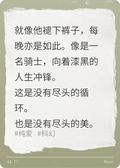 Daisies for Algernon
2Reads8.4Score—Shelves
Daisies for Algernon
2Reads8.4Score—Shelves
 Mourning
16Reads—Score—Shelves
Mourning
16Reads—Score—Shelves
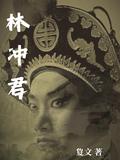 Lin Chongjun
1Reads5.8Score—Shelves
Lin Chongjun
1Reads5.8Score—Shelves
 By the Jingjiang River: a Rural Boy's Journey to Change His Life
5Reads—Score—Shelves
By the Jingjiang River: a Rural Boy's Journey to Change His Life
5Reads—Score—Shelves
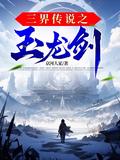 The Jade Dragon Sword of the Legend of the Three Realms
3Reads—Score—Shelves
The Jade Dragon Sword of the Legend of the Three Realms
3Reads—Score—Shelves
 Tongjian of Business History
108Reads5.8Score—Shelves
Tongjian of Business History
108Reads5.8Score—Shelves
 Dust Mountain
273Reads8.2Score—Shelves
Dust Mountain
273Reads8.2Score—Shelves
 The Secret History of Xiling, Yin Qi and the Light of the Matriline
2Reads—Score—Shelves
The Secret History of Xiling, Yin Qi and the Light of the Matriline
2Reads—Score—Shelves
 Hengji Fengjie
12Reads5.8Score—Shelves
Hengji Fengjie
12Reads5.8Score—Shelves
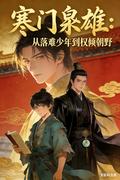 A Hero from a Humble Family: from a Boy in Trouble to a Powerful Man
3Reads—Score—Shelves
A Hero from a Humble Family: from a Boy in Trouble to a Powerful Man
3Reads—Score—Shelves
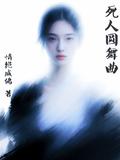 Dead Man's Waltz
1Reads—Score—Shelves
Dead Man's Waltz
1Reads—Score—Shelves
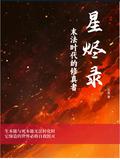 Star Ember Record: Cultivators in the Age of Ending Dharma
—Reads—Score—Shelves
Star Ember Record: Cultivators in the Age of Ending Dharma
—Reads—Score—Shelves
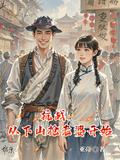 Grab a College Student to Be Your Wife
229Reads—Score—Shelves
Grab a College Student to Be Your Wife
229Reads—Score—Shelves
 I Ching Blind Elephant Biography
2Reads5.8Score—Shelves
I Ching Blind Elephant Biography
2Reads5.8Score—Shelves
 Here in Chang'an
26Reads—Score—Shelves
Here in Chang'an
26Reads—Score—Shelves
 There Is a Cherry Tree in Front of the Door
18Reads—Score—Shelves
There Is a Cherry Tree in Front of the Door
18Reads—Score—Shelves
 Light Meets All Living Beings
84Reads5.8Score—Shelves
Light Meets All Living Beings
84Reads5.8Score—Shelves
 Start by Killing Brother Long of Kunshan
—Reads8.4Score—Shelves
Start by Killing Brother Long of Kunshan
—Reads8.4Score—Shelves
 Medicine Box Scent
111Reads5.8Score—Shelves
Medicine Box Scent
111Reads5.8Score—Shelves
 Qin and Han: My Father Ying Zheng, My Lord Liu Bang
37Reads—Score—Shelves
Qin and Han: My Father Ying Zheng, My Lord Liu Bang
37Reads—Score—Shelves
 Siwo
12Reads—Score—Shelves
Siwo
12Reads—Score—Shelves
 Slanting Shadow
434Reads9.5Score—Shelves
Slanting Shadow
434Reads9.5Score—Shelves
 The Story of Sakyamuni's Life
152Reads8.8Score—Shelves
The Story of Sakyamuni's Life
152Reads8.8Score—Shelves
 Those Stories, Those Words
6Reads6.3Score—Shelves
Those Stories, Those Words
6Reads6.3Score—Shelves
 Farewell Dreams in Red Mansions: Fifty Notes on a Floating Life
11Reads—Score—Shelves
Farewell Dreams in Red Mansions: Fifty Notes on a Floating Life
11Reads—Score—Shelves
 The God of Drought
29Reads8.7Score—Shelves
The God of Drought
29Reads8.7Score—Shelves
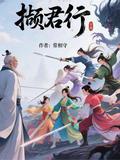 Jiejunxing
48Reads—Score—Shelves
Jiejunxing
48Reads—Score—Shelves
 Qian'er at Home
6Reads—Score—Shelves
Qian'er at Home
6Reads—Score—Shelves
 Skilled in Measuring Characters
204.3kReads9.6Score67kShelves
Skilled in Measuring Characters
204.3kReads9.6Score67kShelves
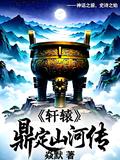 Xuanyuan: the Legend of Dingding Mountains and Rivers
2Reads5.8Score—Shelves
Xuanyuan: the Legend of Dingding Mountains and Rivers
2Reads5.8Score—Shelves
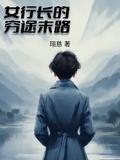 The End of the Road for a Female Bank President
859Reads9.3Score148Shelves
The End of the Road for a Female Bank President
859Reads9.3Score148Shelves
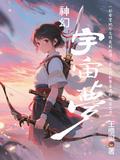 The Dream King of the Fantasy Universe by Gua Chuang
9Reads5.8Score—Shelves
The Dream King of the Fantasy Universe by Gua Chuang
9Reads5.8Score—Shelves
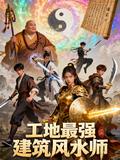 The Strongest Architectural Feng Shui Master on the Construction Site
482Reads5.8Score160Shelves
The Strongest Architectural Feng Shui Master on the Construction Site
482Reads5.8Score160Shelves
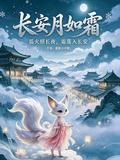 The Moon in Chang'an Is Like Frost
11Reads—Score—Shelves
The Moon in Chang'an Is Like Frost
11Reads—Score—Shelves
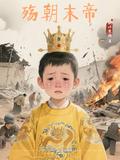 The Last Emperor of the Shang Dynasty
—Reads—Score—Shelves
The Last Emperor of the Shang Dynasty
—Reads—Score—Shelves
 Extraordinary
2Reads—Score—Shelves
Extraordinary
2Reads—Score—Shelves
 Crime of Love
—Reads—Score—Shelves
Crime of Love
—Reads—Score—Shelves
 Romance of Wagangzhai
524Reads9.5Score—Shelves
Romance of Wagangzhai
524Reads9.5Score—Shelves