I can read this alien novel ten times! The beast-eared girl in "Isekai: Beginning to Buy the White-haired Beast-Eared Girl" is so arrogant that her furry tail will trap the male protagonist and act coquettishly! The twist came unexpectedly, she was actually a descendant of the ancient royal family? The male protagonist counterattacks all the way to the harem, and the fighting scenes are so intense that I get goosebumps. After watching it, I just want to shout, "No donkey in the production team dares to rest like this!" #Novelsrecommend #animal ear control ecstasy
The story of Qingqiu Nine-tailed Fox. The nine-tailed fox transformed from Pangu's heart entered the back mountain and met the one he was attracted to. He fought side by side with her and transformed into a human form. However, the consciousness transformed from Pangu's soul also came to him. By chance, they were on the top of the mountain, holding the divine ax Pangu used to create the world, and broke the back mountain magic circle...
I wrote it myself, the writing is not good... Main CP, dual heroines + dual strong characters + fake bones, there are also several pairs of secondary CPs (with BG, GL) (sweet first, then cruel) Be novel, thank you everyone for liking it
[The coder's counterattack, a wonderful journey of intertwined love and dreams - "The coder traveled through time and picked up Bai Fumei"] Dear readers, today I bring you a novel and unique novel with ups and downs of the plot - "The coder traveled through time and picked up Bai Fumei". This work not only integrates technology and otherworldly style, but also opens up an unprecedented reading experience for you with deeply rooted emotional depictions and highly creative settings. The protagonist is a diligent and dedicated coder. With his solid professional skills and perseverance, he travels through time and space in an accident and lands in another world. A technological storm set off in that magical world. The biggest highlight of the novel is that the protagonist encounters a bunch of beautiful and intelligent Bai Fumei after traveling through time. Their encounter is not accidental, but a clever arrangement of fate. As the two experienced challenges and resolved crises together, their emotions gradually heated up and they composed a love movement that spanned time and space. "The Coders Traveled Through Time and Picked up Bai Fumei" uses its unique perspective to perfectly integrate technological elements with classical charm. It has both the inspirational legend of the coders' counterattack and a sweet and touching love story. It allows readers to not only appreciate the protagonist's wit and courage in using modern wisdom to solve ancient problems, but also to be deeply immersed in romantic and beautiful love.
It's almost 100,000 words. Is it the finale or a continuation? Let's make your decision: Why are Shen Ruyu and Chu Xuance still in love when they are both too old?
It's almost 110,000 words, and there's not a single person there. When I searched for solutions on Douyin, all I could find were cut out books, but the worldview in my mind had just begun! I really don't want to give up! I have been seriously anxious recently, and I can only enjoy a moment of peace of mind when writing a book. Cold data slaps me in the face every day, it's so painful to grit my teeth and persist [face covering]
After dressing up as a passerby, she becomes addicted to making money and cheating the boss. There is no CP and no female competition. All the female characters are career-minded.
When he woke up, Mo Chen found that he had become a ball of light floating in the chaotic void. On the other side of the earth, another "he" was using his body to slowly open his scarlet eyes. When Mo Chen originally thought he would be trapped in nothingness forever, he saw a familiar planet. Mo Chen fell from the sky and found that his body had been stolen and was attacking others. For his own reputation, Mo Chen rescued the attacked boy and used his own energy to treat him, but he had to fall into a deep sleep because of the excessive consumption. At the last second when Mo Chen was sleeping, a summoner appeared in the boy's hand. "Now take this and pay off my debt." [Top post]
A painstaking work, super beautiful! High-quality time travel story, dual-line narrative, circular narrative at the end, lots of foreshadowing, very advanced! A wealthy daughter and an ancient princess cross paths with each other, and the domineering president is so passionately in love that he transcends life and death and protects her with all his strength! Rushing in both directions to save each other❤️[Sparrow Food Goddess][Bird Food Goddess]
Ahhhhh, I can't stand it anymore. This novel is too silly. It's almost the end of the term these days. I read the novel under the quilt and laughed like a pig. My mother walked away. Good books should not be buried. I hope the author will not become decadent just because of his temporary achievements, but will work hard to code in the future. Come on
The male protagonist is decisive in killing and is definitely not a saint. He is undecided when encountering problems and cuts them off with one sword. His main theme is to be reckless and just do it when he is happy. The plot is not protracted. Because the author is lazy, the whole main plot is not trying to be soy sauce at all.
See the most authentic appearance of life at the place where the fireworks first light up - a review of the first part of "The Days of Slow Growth" The first part of "The Days of Slow Growth" is like a pot of freshly brewed brown rice tea. It has no strong aroma, but slowly leaches out the mellow flavor of life in the warm mouth. It does not pursue the dramatic tension of "climax at the beginning", but unfolds the days of Xu Jingwei and her son with almost line drawings - the hemp ropes of 28 moves, Xiaoyu's crooked homework books, the fragrance of pickles wafting from the alley, these daily routines that are so small that they are almost "inconspicuous" precisely spell out the most realistic picture of ordinary people's survival, so that everyone who opens the book can see their own shadow between the lines. 1. Narrative: Incorporate "slowness" into daily life and give life a sense of breathing. The best thing about the narrative of the first part is "not rushing" - it is not in a hurry to finish telling a story, but more like "living life" with Xu Jingwei. There are no ups and downs, only the sound of tearing tape when unpacking cartons, only the cough caused by the smoke when making a fire, and only the sound of "Mom" when Xiaoyu came home from school. The author breaks the time into "small fragments": Xu Jingwei squatted on the roadside to repair Xiaoyu's schoolbag, and the stitches were crooked and then removed; Uncle Wang passed by pushing a tricycle and threw a handful of freshly picked vegetables; Zhang Guifen was knitting a sweater on the balcony, and the ball of wool rolled downstairs. When Xiaoyu helped pick it up, she gave the child a piece of fruit candy. These clips do not have the pressure of "must advance the plot", but like a puzzle, they slowly outline the appearance of this small world: Xu Jingwei's "difficulty" is not caused by shouting out, but by her frowning when calculating the rent, and by looking at Xiaoyu's old age. The silence when wearing shoes; the "warmth" of the neighborhood is not deliberately staged. It is the awkwardness of Uncle Wang saying "I can't finish the pork belly" but turning around to eat pickles. It is Zhang Guifen's hard mouth and soft heart when he scolds "Why are you so stubborn?" But helps mend old clothes. This kind of "slow narrative" gives life a sense of breathing - just like our own lives, which never follow a "script" but are strung together by countless "nothing special" moments. 2. Characters: There is no "perfect protagonist", only "real people". The people in the first part all have "imperfect" fireworks, but they are more attractive than the "heroic protagonist". Xu Jingwei is not a "supermom" - she would squat in the corridor in the morning when the landlord kicked her out and secretly wipe her tears; when she couldn't raise the tuition for Xiaoyu, she would borrow money from her neighbors with a voice as thin as a mosquito; she would even raise her voice when Xiaoyu cried, and hold her child in her arms to apologize afterwards. But it is this "imperfection" that makes her "tenacity" even more powerful: she will change old clothes for Xiaoyu to wear, but always buys fresh homework books for her children; she will cook a bowl of hot porridge for Xiaoyu even if she comes back from work late; even though she moved 28 times, she never told Xiaoyu that "life can't go on anymore." Her "strongness" is achieved through gritted teeth, and her softness "has to be tough" for the sake of her children. She is very much like the mothers around us who silently shoulder the burden. Xiaoyu is not the template of "too sensible to be like a child" - he will get angry because his classmates laugh at his old clothes, secretly throw vegetables he doesn't like into the trash can, and learn to make instant noodles by himself when his mother falls asleep after moving and is exhausted. But his "growth" is hidden in those "little actions": he would save the plastic bottles he picked up and "sell them to buy hand cream for his mother"; he would tiptoe to pour hot water for his mother when Xu Jingwei coughed; he would squat next to Uncle Wang when he was repairing the car and pass the wrench, and he would not be discouraged even if he handed the wrong hand. The world of a child is very simple, but it can best reflect the difficulties of adults - his sensibility is not "taught", but is "feeling distressed" that he naturally learns when his mother is too tired. Even the neighbors are not "perfect good people": Uncle Wang will nag "today's young people can't live a good life", Zhang Guifen will complain to the neighbors about "Xu Jingwei Taisha", and when Lao Zhou repairs things, he will complain that "this crap is a waste of time." But it is these "little shortcomings" that make their goodwill even more valuable - Uncle Wang would park the tricycle at Xu Jingwei's door in winter and say, "You send the child off in the morning, it won't be cold when riding the bike." These "hard-spoken but soft-hearted" kindnesses are like street lamps at the entrance of the alley, not bright but warm, lighting up the days with warmth. 3. Theme: "Growth" is not a counterattack, it is "moving forward with scars." The most touching thing about the first part is that it writes "growth" in a very "real" way - there is no sense of "turning over overnight", only the resilience of "step by step". Xu Jingwei's "growth" is from "fear" to "dare": when she first moved, she was always afraid of trouble others, and would refuse when neighbors handed her things; later she would take the initiative to ask Uncle Wang for advice on "how to pickle radishes so they don't rot", and would say to Zhang Guifen, "I'll take care of the kids for you while you go shopping for groceries." She didn't become "powerful", she just learned to "not hide" - if she couldn't avoid the rent, she would work an extra job; if she couldn't avoid her child's grievance, she would hold her child and say, "Let's get better slowly." Xiaoyu's "growth" is from "ignorant" to "sensible": at first he didn't understand "why we keep moving" and would cry and ask "Mom, when will we have our own home"; later he would tell Xu Jingwei, "Mom, I don't need to buy a new schoolbag, I can still carry it after refilling it." He didn't become a "little adult", he just learned to "feel distressed" - the hands of his distressed mother were calluses, and his eyes were always red when he felt distressed for his mother. Even the "growth" of this "small community" was slow: at first, the neighbors were just "familiar", but later they would enjoy the cool weather together at the entrance of the alley, share the secret recipe of pickles, and help someone's family when something happened. There is no "vigorous mutual assistance", only the tacit understanding of "you help me, I will remember you a point" - just like neighbors in reality, not "relatives", but in the daily necessities of life, they gradually develop a "family-like" concern. This book never says slogans such as "come on" or "hold on", but tells us in the simplest way: "Growth" is never about "getting better all of a sudden". It is about carrying a little more today than yesterday. It is about understanding a little more today than yesterday. Even if you fall, you can get up, dust yourself off, and take another step forward. 4. Language: Use "broken details" to touch people's hearts and give the text warmth. The language in the first part does not have gorgeous rhetoric, but it is as friendly and heart-wrenching as the neighbor's aunt speaks. The author is good at grasping "small details": when writing about Xu Jingwei's hands, "there are calluses on the knuckles, and there is always a little dirt between the nails"; when writing about Xiaoyu's homework book, "the cover is wrinkled, and the words inside slowly changed from the crooked "sun"" to the neat "persistence""; when writing about the autumn in the alley, "the lid of the pickle jar was hot in the sun, and the bell of Uncle Wang's tricycle rang slower than in summer." These details are not "deliberately sensational", but have their own warmth - you will think of your mother's hands when cooking, you will think of your crooked homework as a child, and you will think of the fragrance of osmanthus wafting downstairs in autumn. Just like what is written in the book, "The porridge in the pot is simmering, and the rice is slowly blooming inside." The words are also slowly "flowering". It is not surprising, but it can warm my heart. Conclusion: This is a book that "can make you calm down". The first part of "The Days of Slow Growth" is not a book that "makes your blood boil", but it is a book that "can make you calm down". It is like a mirror, reflecting our own difficulties - the pressure of rent, children's tuition fees, and occasional confusion; it is more like a pair of hands, gently patting your back and saying, "Don't worry, life will gradually get better." After reading the whole book, you will not remember any "big plot", but you will remember the porridge Xu Jingwei cooked for Xiaoyu, the vegetables that Uncle Wang handed over, and the candy that Xiaoyu secretly placed on his mother's pillow. These tiny bits of warmth are like new buds in spring, slowly emerging from the soil - it turns out that the days of ordinary people are never "worthy of living only with great vigor". It is about carrying scars, saving warmth, and moving forward step by step, which is already good. And this is the most precious thing about the first part: it laid the "fireworks" root for the entire series, making us fall in love with Xu Jingwei and her son, the neighbors in the alley, and even more, this kind of "slowly growing" life.
🍋🍊📙Shen Lei traveled to parallel time and space and happened to be participating in the global screenwriting competition! He unexpectedly discovered that the level of film and television here was very low, and none of the masterpieces from the previous life had been released yet!
 BTS: Become a Group Favorite in a Different World
2Reads—Score—Shelves
BTS: Become a Group Favorite in a Different World
2Reads—Score—Shelves
 I Can Summon Killing Troops in the Last Days
5.6kReads6.3Score493Shelves
I Can Summon Killing Troops in the Last Days
5.6kReads6.3Score493Shelves
 Before Forced Marriage, Best Friend Kisses Husband
762Reads7.3Score—Shelves
Before Forced Marriage, Best Friend Kisses Husband
762Reads7.3Score—Shelves
 Start with Full Cooking Skills, Earn Money and Grow to Become a Lord
33.9kReads9.1Score3.6kShelves
Start with Full Cooking Skills, Earn Money and Grow to Become a Lord
33.9kReads9.1Score3.6kShelves
 Red Fox Legend
27Reads7.7Score—Shelves
Red Fox Legend
27Reads7.7Score—Shelves
 Kick the Scumbag, She Won When She Made Ready-Made Clothes in the 1990S
115Reads—Score—Shelves
Kick the Scumbag, She Won When She Made Ready-Made Clothes in the 1990S
115Reads—Score—Shelves
 The Chronicle of Liu Xie, Emperor Guangwen of Han Dynasty
6Reads—Score—Shelves
The Chronicle of Liu Xie, Emperor Guangwen of Han Dynasty
6Reads—Score—Shelves
 Divorced and Raising a Baby as a Substitute Driver, the CEO Relied on Me
—Reads—Score—Shelves
Divorced and Raising a Baby as a Substitute Driver, the CEO Relied on Me
—Reads—Score—Shelves
 [Memoirs of the Back Room]
46Reads—Score—Shelves
[Memoirs of the Back Room]
46Reads—Score—Shelves
 Silence
7Reads—Score—Shelves
Silence
7Reads—Score—Shelves
 When I Become Mentally Ill
30Reads8.5Score—Shelves
When I Become Mentally Ill
30Reads8.5Score—Shelves
 I Got Morning Sickness from Being Pampered by a Rough Guy
43Reads9.0Score—Shelves
I Got Morning Sickness from Being Pampered by a Rough Guy
43Reads9.0Score—Shelves
 Bai Gu Jing Zhonghun
—Reads—Score—Shelves
Bai Gu Jing Zhonghun
—Reads—Score—Shelves
 Number Zero: Fate
38Reads—Score—Shelves
Number Zero: Fate
38Reads—Score—Shelves
 The Coder Traveled Through Time and Picked up Bai Fumei
2Reads—Score—Shelves
The Coder Traveled Through Time and Picked up Bai Fumei
2Reads—Score—Shelves
 System: Lord of the Universe
40Reads—Score—Shelves
System: Lord of the Universe
40Reads—Score—Shelves
 Looking for Flowers in the World of Mortals
69Reads—Score—Shelves
Looking for Flowers in the World of Mortals
69Reads—Score—Shelves
 The Fragrance of Books
135Reads—Score—Shelves
The Fragrance of Books
135Reads—Score—Shelves
 The Legend of Ou Sheng
—Reads—Score—Shelves
The Legend of Ou Sheng
—Reads—Score—Shelves
 After Giving Gatlin to the Tyrant
—Reads8.6Score—Shelves
After Giving Gatlin to the Tyrant
—Reads8.6Score—Shelves
 Me in the Snow
1Reads—Score—Shelves
Me in the Snow
1Reads—Score—Shelves
 The Charming Girl Makes a Comeback, and the General Comes to Support Her
1Reads—Score—Shelves
The Charming Girl Makes a Comeback, and the General Comes to Support Her
1Reads—Score—Shelves
 Midsummer Is Hard to Find Again
71Reads—Score—Shelves
Midsummer Is Hard to Find Again
71Reads—Score—Shelves
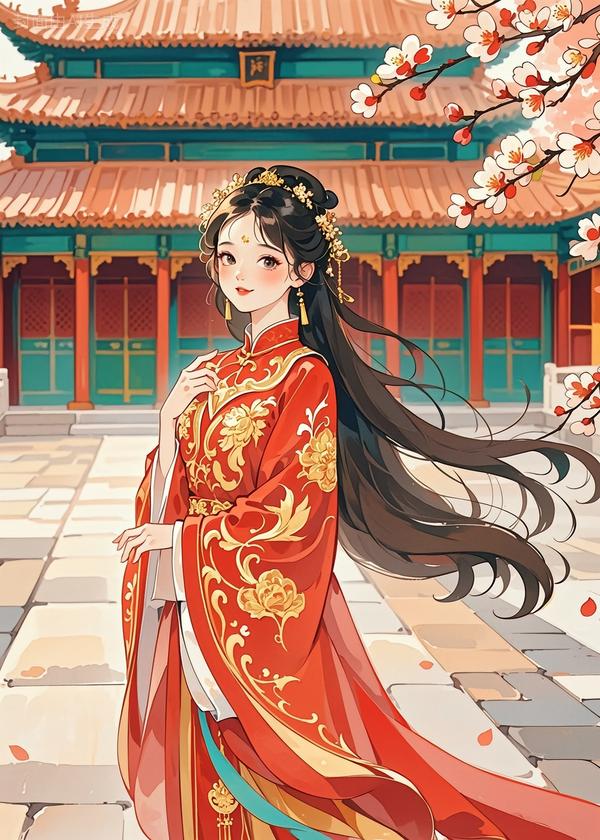 After Pretending to Have Amnesia, the Cold-Faced Prince Became so Sweet to Me
—Reads8.4Score—Shelves
After Pretending to Have Amnesia, the Cold-Faced Prince Became so Sweet to Me
—Reads8.4Score—Shelves
 Hurry up and Clear the Supermarket Before the Nuclear Sewage Is Released!
25Reads—Score—Shelves
Hurry up and Clear the Supermarket Before the Nuclear Sewage Is Released!
25Reads—Score—Shelves
 After They Agreed to Get Married, He Became Addicted to Acting as His Archrival.
—Reads8.4Score—Shelves
After They Agreed to Get Married, He Became Addicted to Acting as His Archrival.
—Reads8.4Score—Shelves
 Rebirth: I Kicked the World Apart
—Reads—Score—Shelves
Rebirth: I Kicked the World Apart
—Reads—Score—Shelves
 Twin Disasters: the Age of Wuji
2Reads8.3Score—Shelves
Twin Disasters: the Age of Wuji
2Reads8.3Score—Shelves
 There Is a Sword Hidden in His Eyes, but He Has Been with Me for Many Years
—Reads—Score—Shelves
There Is a Sword Hidden in His Eyes, but He Has Been with Me for Many Years
—Reads—Score—Shelves
 Destiny Planner
2Reads—Score—Shelves
Destiny Planner
2Reads—Score—Shelves
 My Husband Is Actually the God of War
5Reads9.6Score—Shelves
My Husband Is Actually the God of War
5Reads9.6Score—Shelves
 After Passing Through the Book, I Roped in a Vicious Female Supporting Character to Do Some Tyranny Together
34Reads—Score—Shelves
After Passing Through the Book, I Roped in a Vicious Female Supporting Character to Do Some Tyranny Together
34Reads—Score—Shelves
 World Traveler
3Reads5.8Score—Shelves
World Traveler
3Reads5.8Score—Shelves
 Tired of Playing with Power, I Just Want You
1Reads5.8Score—Shelves
Tired of Playing with Power, I Just Want You
1Reads5.8Score—Shelves
 Sun, Moon and Morning Light in the Fantasy Fruit Continent
2Reads—Score—Shelves
Sun, Moon and Morning Light in the Fantasy Fruit Continent
2Reads—Score—Shelves
 Armor: I Am the Summoner
108Reads—Score—Shelves
Armor: I Am the Summoner
108Reads—Score—Shelves
 Two Bracelets
5Reads5.8Score—Shelves
Two Bracelets
5Reads5.8Score—Shelves
 The Black Devil's Path of Resentment
1Reads—Score—Shelves
The Black Devil's Path of Resentment
1Reads—Score—Shelves
 Journey to the West: Flying Kick to Tang Sanzang at the Beginning
5Reads—Score—Shelves
Journey to the West: Flying Kick to Tang Sanzang at the Beginning
5Reads—Score—Shelves
 An Irregular Person Cannot Become a Hero
—Reads—Score—Shelves
An Irregular Person Cannot Become a Hero
—Reads—Score—Shelves
 Ayadong
2Reads—Score—Shelves
Ayadong
2Reads—Score—Shelves
 Surprised, the Male Protagonist Is Dissatisfied with the Idiotic Author and Writes It Himself
—Reads—Score—Shelves
Surprised, the Male Protagonist Is Dissatisfied with the Idiotic Author and Writes It Himself
—Reads—Score—Shelves
 Encounter a Mysterious Girl at the End of the World and Embark on an Adventure
—Reads—Score—Shelves
Encounter a Mysterious Girl at the End of the World and Embark on an Adventure
—Reads—Score—Shelves
 Awakening Memories Reappear, Reaching the Top of the Police Force Is Unmatched
100Reads—Score—Shelves
Awakening Memories Reappear, Reaching the Top of the Police Force Is Unmatched
100Reads—Score—Shelves
 From Tribal Orphan to King of Ancient Dian
10Reads—Score—Shelves
From Tribal Orphan to King of Ancient Dian
10Reads—Score—Shelves
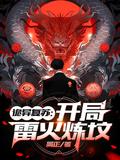 Weird Resurrection: Thunder and Fire Grave Refining at the Beginning
8Reads—Score—Shelves
Weird Resurrection: Thunder and Fire Grave Refining at the Beginning
8Reads—Score—Shelves
 A Game World Where Gods Are Out of Control
—Reads—Score—Shelves
A Game World Where Gods Are Out of Control
—Reads—Score—Shelves
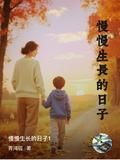 Days of Growing Slowly 1
6Reads—Score—Shelves
Days of Growing Slowly 1
6Reads—Score—Shelves
 Those with Double Eyes Will Go
—Reads—Score—Shelves
Those with Double Eyes Will Go
—Reads—Score—Shelves
 Please Stop Writing, I Can't Finish Memorizing Ancient Poems!
7.4kReads7.3Score499Shelves
Please Stop Writing, I Can't Finish Memorizing Ancient Poems!
7.4kReads7.3Score499Shelves