This book fully complies with the book positioning of "professional depth + lightweight presentation + long-term practicality". The tools can be directly reused, the story conflicts are real and tense, and the survival logic of "rules + human nature + evidence" directly addresses the core demands of people in the workplace to "not be bullied". At the same time, it meets the aesthetic standards of "visualization of structure, precision of expression, and design of memory points". It not only has practical guidance significance, but also provides a strong sense of emotional refreshment. It has the potential to become a popular chapter of "Workplace Survival Guide"
Being rubbed against the ground by life every day, are you in urgent need of an "antidote"? Don't miss this book "Traveling All Over China by Bus"! The author traveled around the country by bus and used AI to dig out a lot of little-known cultural knowledge. The book not only contains all kinds of funny scenes, such as the jokes about differences in dialects when asking for directions, but also the cultural connotations behind the architecture and folk customs of various places, allowing you to laugh while having a deep understanding of Chinese culture. It is a treasure to heal and increase your knowledge at the same time!
Written by myself, it is a painless way to learn the history of the Southern Tang Dynasty, as well as various popular sciences such as ancient diet. And poetry. He's just a little immature, but there's still room for improvement.
The wheel of life is moving forward. You can only recall the old times and never sink. If you have no expectations for the future, no one or anything around you is worthy of staying, and the most important people and things have disappeared into the old days, this kind of forced sinking is the most painful.
The century-old scale of Deshun Grain Store During the Guangxu period of the Qing Dynasty, Furong Street in Jinan Prefecture was a busy place for goods from the north and south. There were no less than ten grain and oil shops on the street, among which "Deshun Grain Store" was the most inconspicuous - the shopkeeper Lin Shouye was a young man in his early twenties. But no one expected that thirty years later, Fengyu Hao would have gone out of business, but Deshun Grain Store would expand into a large shop with three major stores and become a time-honored brand in the grain and oil industry of Jinan Prefecture. Old Jinan people all say: "When buying grain, go to Deshun. Shopkeeper Lin's scale is accurate and his heart is even more accurate." The story behind this sentence has to be told when Lin Shouye first opened his store. Lin Shouye's father used to be a clerk on the Fengyu Ship. He spent his life carrying grain for people. Before his death, he saved a few taels of silver and asked him to open a small grain store. "Work with your conscience, as long as you don't starve to death." Lin Shouye remembered the second half of the sentence, but he didn't quite understand what "according to conscience" meant - when he first opened the store, all he could think about was "how to make the business bigger". He imitated Fengyu Hao and bought the cheapest brown rice, thinking "the low price would attract customers"; he also always mixed some sub-oil in the oil drums, thinking "I could make a few more pennies". But business is not doing well. There are only a few customers who come every day. Most of them are old neighbors who live nearby. They just buy a pound or two of rice and leave. One time, Granny Zhang, who lived at the end of the alley, came to buy oil. She held the oil pot and said, "Shouye, why is your oil not as fragrant as before? My little grandson always gets tired of it after eating vegetables fried with your oil." Lin Shouye blushed and said vaguely, "Maybe it's freshly squeezed and the flavor is not strong." Granny Zhang didn't ask any more questions, but since then, she has never been here again. Seeing that after three months of opening the store, Lin Shouye was getting anxious with little money in the ledger. He squatted at the door of the store, watching the people coming in and out of Fengyu No. Opposite, and wondered: "Why is it sold so expensively, but there are still people buying it?" One night, he left the door open and sat in the store looking through the old ledgers left by his father. Suddenly he saw a note in it, which was his father's handwriting: "Food is the life of the people, and the scale is the heart of the merchant - one less money, one person is lost; one more money, one neighbor is gained." Lin Shouye stared at the note for a long time, and suddenly remembered Granny Zhang's words, and then remembered that he had adulterated oil and sold brown rice - he always thought that "cheapness can attract customers", but he forgot that "food is the life of the people", and what the people want is not cheapness, but peace of mind. That night, he didn't sleep. He poured out all the brown rice in the store and picked out the broken rice and stones. He also poured out the oil in the oil barrel and refilled it with good rapeseed oil. Early the next morning, Lin Shouye put the picked rice into a new cloth bag, with a small strip of cloth sewn on it saying "no broken rice, no stones"; the oil drum was also polished and a small spoon was placed next to it for customers to taste before buying. A regular customer, Uncle Wang, came to buy rice. He picked up the cloth bag, touched it, opened it and tasted a grain. He said in surprise: "Shouye, your rice is much better than before!" Lin Shouye said with a smile: "Uncle Wang, I was confused before, but now we only sell good grain." But good grain is not enough. Lin Shouye found that most of the people who came to buy grain were old people and housewives. The old people couldn't carry big bags of rice, and the housewives couldn't walk steadily carrying oil drums. He immediately asked a carpenter to build a few small bamboo baskets and hired a boy. As long as the customer bought two buckets of rice and three kilograms of oil, he would deliver them to his door for free. One time, Granny Zhang's son was not at home, and she wanted to buy a bag of rice but couldn't carry it. When Lin Shouye found out, he personally delivered the rice to her house and helped her pour the rice into the rice vat. Granny Zhang took his hand and said, "Shouye, you are more considerate than my son!" From then on, Granny Zhang not only came to buy food by herself, but also brought her neighbors with her. Over time, Lin Shouye figured out the customers' thoughts: the elderly were afraid of the weight, so they prepared more small packages; the housewives were afraid of trouble, so they sifted the rice in advance and put the oil into small bottles; nearby restaurants needed more food, so they delivered goods early in the morning or late at night according to their business hours, so as not to delay their business. He also put an opinion book in the store so that anyone could write down their thoughts - someone said "oil goes bad easily in summer", so he built a pergola in the store and put the oil barrel under the pergola; someone said "I want to buy some grains to make porridge", so he immediately put in millet, red beans and mung beans and mixed them into "porridge packets". One year, there was a drought in Jinan Prefecture, and food prices rose sharply. Fengyu took the opportunity to raise the price of grain even higher and mixed it with a lot of old rice. Some people advised Lin Shouye to also raise the price, but he shook his head and said, "It's already hard enough for the people, and we can't make any more dirty money." Not only did he not increase the price, he also took out the grain in the store and distributed it to the poor people nearby on a per capita basis, leaving only enough for himself to turn around. During that time, there was always a long queue at the door of Deshun Grain Store, but no one jumped in. Everyone said: "Shopkeeper Lin is a good person, we can't cause trouble for him." After the drought, Fengyuhao was scolded by the people for selling old rice and raising prices. However, Deshun Grain Store's business became even more popular - not only regular customers came, but people from far away came to buy grain, saying, "Buy grain from Deshun, feel safe and comfortable." Lin Shouye took the opportunity to expand his shop and hired more workers, but he still came to the shop every morning, weighed the food in person and chatted with customers, just like he did when he opened a small shop. Later, when Lin Shouye got old, he handed over the management of the grain store to his son. The first thing he gave his son was the steel scale left by his father, and a newly written note with three sentences added on it: - Products are roots, if they are not strong, they will fall - Services are leaves, if they are not luxuriant, they will wither - Follow the wishes of customers and respond to the situation, and you will prosper for a long time. Later, Deshun Grain Store became a time-honored brand in Jinan Prefecture, passed down from generation to generation. When someone asks for the secret, the shopkeeper will always point to the old scale hanging in the store and say: "There is no secret, just remember one sentence - in business to the end, what matters is not the price, but the heart; not the goods, but the understanding of people." In fact, whether it is an ancient grain store or today's business, the truth is the same: excellent products are the foundation, understanding customers and good service are the confidence, and only by following people's hearts and laws can you move forward steadily and far. Just like the old scale at Deshun Grain Store, what is weighing is grain, but what is measured is the merchant's conscience - if the conscience is enough, business will naturally come.
You can learn how the author writes poetry (probably). The author is a member of a poetry society. This is the kind of book that people who like it will like it very much, but people who don't like it can't read it at all, because his ability to write plots really doesn't have much plot. This author is my friend. If you have any questions, you can contact me directly and I will help you pare him. This guy added a bunch of poems and music he wrote, interspersed throughout the book, in every chapter. I have read a lot of online articles, and this kind of literary style is still interesting. If you like ancient poetry or something, you can read it.
 Idiom Cognition Dictionary: Unlocking the Underlying Algorithm of Life
5Reads5.8Score—Shelves
Idiom Cognition Dictionary: Unlocking the Underlying Algorithm of Life
5Reads5.8Score—Shelves
 Career Transition: Cognitive Methods from Rookie to Expert
1Reads5.8Score—Shelves
Career Transition: Cognitive Methods from Rookie to Expert
1Reads5.8Score—Shelves
 Fantasy, I Can Have Infinite Enlightenment
72.9kReads9.1Score9.5kShelves
Fantasy, I Can Have Infinite Enlightenment
72.9kReads9.1Score9.5kShelves
 Disciple, You Are Invincible. Come Down from the Mountain and Harm Your Junior Sister.
297Reads5.8Score—Shelves
Disciple, You Are Invincible. Come Down from the Mountain and Harm Your Junior Sister.
297Reads5.8Score—Shelves
 On the Day of the Blind Date, the Heir of a Wealthy Family Pulled Me to Get the Certificate.
287.8kReads9.5Score15.4kShelves
On the Day of the Blind Date, the Heir of a Wealthy Family Pulled Me to Get the Certificate.
287.8kReads9.5Score15.4kShelves
 Sister-In-Law, I'm Just a Fool
137Reads5.8Score—Shelves
Sister-In-Law, I'm Just a Fool
137Reads5.8Score—Shelves
 Invincible, Master Wife, Come Uninvited
1.5kReads7.4Score114Shelves
Invincible, Master Wife, Come Uninvited
1.5kReads7.4Score114Shelves
 Rose Crown
94kReads9.6Score11.4kShelves
Rose Crown
94kReads9.6Score11.4kShelves
 My Stunning Boss Lady
1.3kReads8.4Score128Shelves
My Stunning Boss Lady
1.3kReads8.4Score128Shelves
 Tiankeng Buyer
144Reads8.7Score—Shelves
Tiankeng Buyer
144Reads8.7Score—Shelves
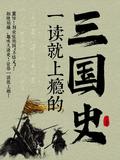 A History of the Three Kingdoms That Will Make You Addicted as Soon as You Read It
1.3kReads9.4Score133Shelves
A History of the Three Kingdoms That Will Make You Addicted as Soon as You Read It
1.3kReads9.4Score133Shelves
 Travel All over China by Bus
3Reads—Score—Shelves
Travel All over China by Bus
3Reads—Score—Shelves
 Romance of the Four Beauties
140Reads8.7Score—Shelves
Romance of the Four Beauties
140Reads8.7Score—Shelves
 Listen to Fenglouge
226Reads5.8Score—Shelves
Listen to Fenglouge
226Reads5.8Score—Shelves
 I Am a Scout - Zhan De
236Reads8.6Score—Shelves
I Am a Scout - Zhan De
236Reads8.6Score—Shelves
 Secret Words to Awaken the World: Travels of the Spirit
44Reads5.8Score—Shelves
Secret Words to Awaken the World: Travels of the Spirit
44Reads5.8Score—Shelves
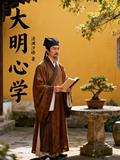 Ming Xue Xue
9Reads5.8Score—Shelves
Ming Xue Xue
9Reads5.8Score—Shelves
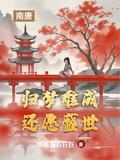 Returning to the Dream Is Hard to Come By, but I Still Hope for a Prosperous Life
1Reads—Score—Shelves
Returning to the Dream Is Hard to Come By, but I Still Hope for a Prosperous Life
1Reads—Score—Shelves
 Romance of the Later Han Dynasty
6Reads8.4Score—Shelves
Romance of the Later Han Dynasty
6Reads8.4Score—Shelves
 Romance of the Former Han Dynasty
2Reads8.4Score—Shelves
Romance of the Former Han Dynasty
2Reads8.4Score—Shelves
 Li Hongzhang, One of the Four Famous Ministers of ZTE
2Reads8.1Score—Shelves
Li Hongzhang, One of the Four Famous Ministers of ZTE
2Reads8.1Score—Shelves
 The History of Song Taizu That I Can't Bear to Read Carefully
2Reads7.8Score—Shelves
The History of Song Taizu That I Can't Bear to Read Carefully
2Reads7.8Score—Shelves
 The Rise and Fall of the Tang Dynasty over Three Hundred Years: Reading the History of the Tang Dynasty over a Thousand Years at a Glance
11Reads8.1Score—Shelves
The Rise and Fall of the Tang Dynasty over Three Hundred Years: Reading the History of the Tang Dynasty over a Thousand Years at a Glance
11Reads8.1Score—Shelves
 Records of Emperor Wu of the Qing Dynasty
1Reads7.8Score—Shelves
Records of Emperor Wu of the Qing Dynasty
1Reads7.8Score—Shelves
 Romance of the Thirteen Dynasties of the Qing Dynasty
2Reads8.1Score—Shelves
Romance of the Thirteen Dynasties of the Qing Dynasty
2Reads8.1Score—Shelves
 The Romance of Zeng Guofan
1Reads7.9Score—Shelves
The Romance of Zeng Guofan
1Reads7.9Score—Shelves
 After Traveling Through Time, She Pampered the Unlucky Secret Guard.
18.7kReads9.5Score2.2kShelves
After Traveling Through Time, She Pampered the Unlucky Secret Guard.
18.7kReads9.5Score2.2kShelves
 Woman Disguises Herself as a Man: Tyrant, She Is Beautiful and Sultry
3.8kReads9.5Score581Shelves
Woman Disguises Herself as a Man: Tyrant, She Is Beautiful and Sultry
3.8kReads9.5Score581Shelves
 Husband, I Have a Lot of Disciples.
2.5kReads9.1Score355Shelves
Husband, I Have a Lot of Disciples.
2.5kReads9.1Score355Shelves
 All the Way to Life
7Reads5.8Score—Shelves
All the Way to Life
7Reads5.8Score—Shelves
 Hengji Fengjie
12Reads5.8Score—Shelves
Hengji Fengjie
12Reads5.8Score—Shelves
 Entering the Red Mansion: the Adventures of a Cute Girl
—Reads5.8Score—Shelves
Entering the Red Mansion: the Adventures of a Cute Girl
—Reads5.8Score—Shelves
 President Juan Likes to Work Overtime, and His Secretary Is Running Around Carrying the Desk.
341Reads—Score—Shelves
President Juan Likes to Work Overtime, and His Secretary Is Running Around Carrying the Desk.
341Reads—Score—Shelves