The best guide to improving yourself. First of all, get to know yourself, accept yourself, slowly change yourself, achieve yourself, and influence others. It is unparalleled. It is really a joy to meet you.
The first and second books should be read by those who want to do self-media. Self-media is really a relatively low-cost and low-risk part-time job. How much money you make depends on your learning ability and talent. The third and fourth books are suitable for students who want to improve their English. Although the fifth and sixth books are both novels, they can teach you how to make a comeback and how to deal with interpersonal relationships. They are very light and funny books.
To read a book, it depends on whether it is based on the simultaneity of time (parallel time and space) and synchronicity (multi-dimensional overlapping universe). From this perspective, the following books are worth studying, and your inner heart will give you the answer [Love]
This book uses philosophical reasoning to decipher the code of human lifespan. Tomato's original philosophical first book - "The Principle of Three-Yuan Consciousness and Memory Mapping", ideology, human nature, the secret of human lifespan, the truth of ancient history, the origin of the moon, the secret of the great flood, the reasoning of past life memory, the analysis of homosexuality, depression, the multi-dimensional world, the difference in attraction between men and women in love, the essential difference between traditional Chinese medicine and Western medicine, the essential difference between Taoism and Confucianism, and the reasoning of various supernatural phenomena. . . . . . Improve yourself!
After the ups and downs of life, do you want to understand yourself? Read this book that explains the Heart Sutra slowly and touch the wisdom of emptiness in the words.
Despite the low rating, the quality is indeed good. The financial management knowledge that everyone in the workplace needs is very rich, and it is a good novel with realistic themes. Very useful for improving yourself
Two male protagonists, contrasting cuteness is the best beauty, a gentle scum and a crazy guy in front of others, and a gentle brother behind the scenes, good-looking (○`ε´○)
This is a novel that teaches you how to become enlightened in real life and how to break through problems in real life. If you understand this book, you will become very powerful. It is recommended to add this book to your bookshelf and focus on reading.
The tortoise hides and the eagle gathers: the way of hiding clumsiness in the court game. In the Spring and Autumn Period and the Warring States Period, heroes competed for the throne. Zhao Xiao, an official of the State of Zheng, was famous for his eloquence, but he always ran into obstacles due to his loud voice and eager words. At that time, the state of Zheng was sandwiched between Jin and Chu, and the counselors in the court had different opinions. Zhao Xiao would raise his voice every time he discussed the case, and his voice shook the beams: "The Chu army is weak, attack it quickly!" "The envoy of Jin is arrogant, and I rebuke him to his face!" However, his sharp words not only failed to convince the king, but also allowed his opponent to find out his trump card. Chu Guoxizuo once wrote in a secret letter: "Zhao Xiao's high voice means that his plans are shallow, and his hasty words mean that he is unprepared, so he can set up a targeted situation." That year, there was a conflict on the border between Zheng and Chu. Zhao Xiao advocated a surprise attack and had an endless dispute with Chen Mo, a doctor from the peace faction in the court. Chen Mo kept lowering his eyes and stroking his beard. When Zhao Xiao stopped breathing heavily, he whispered slowly: "The Chu army has not moved for three days, and there is a fear of an ambush. Our army does not have enough food and grass, so it is difficult to attack in a hurry." His voice was not high, but every word was calm. Zhao Xiao angrily scolded: "You old fox, you can't match the ambition of others!" After walking away, he secretly launched an army. As a result, he was ambushed by the Chu army and lost more than a thousand soldiers. Zheng Jun was furious and demoted Zhao Xiao to the border. Before leaving, Chen Mo gave him a jade turtle, saying only: "Only when a turtle has been quiet for a thousand years can one know the earth's veins; when a person is calm and his heart is calm, one can discover the mysteries." It was bitterly cold at the border, and Zhao Xiao saw the garrison soldiers practicing every day, and watched the old soldiers train eagles - before hunting, the eagle would fold its wings and crouch, with its gaze like a torch but silently, and only attack suddenly when the prey is close at hand. He rubbed the jade turtle and remembered Chen Mo's past actions: the Jin envoy once mocked Zheng's weak national power in public during the alliance meeting. The civil and military officials of the court either stared angrily or rushed to defend themselves. Only Chen Mo drank tea slowly and waited for the Jin envoy. After finishing speaking, he slowly spoke: "Although Zheng is a small country, it guards the thoroughfares of the world. Merchants from Shanxi need to use this road to communicate. If it hurts the diplomatic relations, what good will it do to Jin?" The tone was gentle but hidden with edge. The Jin envoy was speechless for a moment. It is even more unforgettable that during a court meeting, a minister was held accountable by the monarch for miscalculating taxes. The ministers accused him of negligence, but Chen Mo said: "Tax accounting is complicated, and occasional discrepancies are unavoidable. It is better to ask him to make up the calculations before discussing rewards and punishments." He not only gave his colleagues a step forward, but also did not go against the emperor's will, which showed the pattern. Half a year later, Zheng and Chu confronted each other again, and Chen Mo was ordered to go to the border to discuss matters. Zhao Xiao saw that he was still calmly reviewing the documents when facing the scout's urgent military report. After the other party finished speaking, he asked: "Who is the vanguard of the Chu army? Can the food and grass be enough for ten days?" After the scouts answered one by one, Chen Mo gave the order: "Send three hundred people to pretend to be a food team to lure the enemy, and the main force will set up an ambush in the valley." Zhao Xiao couldn't bear it. He interrupted: "This plan is very clever, why didn't you tell me earlier?" Chen Mo raised his eyes: "How does it differ from your rush to attack when you talked about the plan without asking for the military situation?" Zhao Xiao blushed, and then he understood the meaning of "others don't ask and don't answer" - hasty words without verification are just reckless empty talk. On the eve of the decisive battle, the Chu army sent an envoy to pretend to surrender. His words were full of contempt, mocking Zheng's weak military strength. The generals in the tent were furious and drew their swords to kill the envoy, but Zhao Xiao held down the hilt of his sword and said slowly to the envoy: "I have accepted the letter of surrender. Whether it will be fulfilled will be known tomorrow." After the envoy left, the generals were puzzled: "They are insulting my wife. "Why aren't you angry?" Zhao Xiao said, "Anger disturbs the mind, and confusing the mind leads to misjudgment. The messenger wants to inspire us to act impulsively." He followed Chen Mo's example this night, and his expression was calm throughout the night, and he was clear and organized when deploying his troops. In the battle the next day, the Chu army was indeed ambushed, and Zheng Guo won a complete victory. After Banshi returned to the court, Zheng Jun restored Zhao Xiao's official position. During a gathering of princes, an official from a neighboring country deliberately exposed the shortcomings of Zheng's past military defeats. Everyone looked at him sideways, but Zhao Xiao picked up his wine bottle and said slowly: "The defeat in the past taught Zheng that a strong army needs to be steady and steady. Today, I can defend the territory and the people, but I have to thank that day for the lesson." He neither defended nor resented it, but instead won the praise of the princes. When discussing matters in the court, he no longer speaks first. He always waits for others to finish speaking before adding his opinions. His voice is not high but his words are to the point. In private, even if he knows that his colleagues have made mistakes, he never points them out in front of everyone and only reminds them tactfully in private. A few years later, Zhao Xiao had become a pillar of the Zheng Dynasty. When someone asked him the secret of life, he pointed to the jade turtle and eagle feathers on his desk and smiled: "The turtle hides its armor inside to avoid natural enemies; the eagle gathers its wings in the forest to catch its prey. A loud voice cannot show any reason, and a fast speech cannot hide wisdom. If you show emotions and anger, you will be easy to manipulate, and if you reveal someone's shortcomings, you will lose the pattern. A true master never lets people see through his mind, never makes unnecessary arguments on the scene, is as stable as a mountain, and is as quiet as a deep pool, so he can always take the initiative in the game of world affairs. " These words were passed down to later generations and became a motto for life. The world finally understands that the so-called "not angry but self-promoting" is never a stern intimidation, but a calm and restrained aura; the so-called "master's layout" is never a flamboyant showoff, but a sober and defensive attitude. There is propriety hidden in the slow speech, wisdom in the silence, and pattern in the intangible expression of joy and anger. This is the most solid armor for walking in the world.
To improve yourself, you don't have to be trapped in classrooms and books. You can also gain a lot by going on a bus trip. In "Traveling Across China by Bus", the author uses the bus as a boat to travel across the land of China. When encountering cultural mysteries during the journey, AI turns into a wisdom bag and digs into the Chinese culture behind ancient monuments and folk customs. From ancient songs in small frontier towns to hidden past events in ancient water towns, every bus journey becomes novel and interesting with the help of AI, taking you to see mountains and rivers and fill you with knowledge.
📖Excellent, highly recommended. This is the first book to look at history from multiple perspectives, including an economic perspective, a power perspective, and a personal development perspective. Because the perspectives are alternative and rich, it is fascinating. It connects the past to the present, and the underlying logic and games in government and enterprises are very interesting❤️
It is interesting and informative to look at more details of the daily lives of these ancient people. There are too many interesting stories about the three dynasties of Han, Tang, and Song. It is particularly helpful to read the novels after understanding this knowledge.
Recommend the completed novel [The End of the Female Bank Manager]. It's been a long time since I've seen such a professional and realistic book. There was no water in the whole process, and the pace was so fast that I didn't dare to miss a single detail. The logical thinking is tight, the story has ups and downs, and human nature, wisdom, and power are unfolded, crushed, and spread out to talk about. In particular, a large amount of professional knowledge in finance, industry, equity, and even the system is written clearly and thoroughly. In the book, there is also a best friend who steals her boyfriend, and the heroine, who is single at an advanced age, secretly gives birth to a child and legally adopts it. It can be said that there is no omission.
Confucianism 1. Filial piety: filial piety is the first of all virtues 2. Brotherhood: brother and sister friendship 3. Loyalty: loyalty to the king, patriotism, respect for one's job and one's career 4. Faith: a person cannot stand without faith, and there is no increase or decrease 5. Etiquette: respect for teachers in behavior 6. Righteousness: maintain justice and chastity 7. Integrity: be spotless and upright 8. Shame: distinguish right from wrong, the bottom line of being a human being The only thing to start with is yourself Taoism 1. Tao: Follow nature, follow the fundamental laws of the universe, govern by doing nothing, and do not impose interference. 2. Virtue: Uphold a simple and pure nature, have noble moral character, and do not fight for benefits. 3. Purity: The heart is pure and undisturbed by worldly complexities and desires. 4. Quietness: Stay quiet and peaceful, gain insight into all things in tranquility, and cultivate your body and mind. 5. Emptiness: Empty yourself, not be bound by prejudices and inherent ideas, and accept the world with an open and tolerant heart. 6. Wu: Understand the realm of "nothing", let go of attachment to tangible materials and fame and wealth, and return to the true nature. 7. Soft: Live with a gentle and humble attitude, like water, which may seem weak but contains great power. 8. Harmony: Pursue harmony, live harmoniously with nature and others, and avoid creating conflicts and disputes. Buddhism 1. Compassion: Be compassionate, empathize with the suffering of all living beings, and provide care and help. 2. Compassion: Pity the suffering of all living beings and wish to help them escape from the sea of suffering. 3. Joy: Rejoice in the happiness and happiness of all living beings, without any jealousy or hatred. 4. Equanimity: Give up greed, anger, ignorance, pride and doubt, and let go of the pursuit of worldly desires and obsessions. 5. Precepts: abide by the precepts, regulate your own behavior, and do not do anything that harms sentient beings or violates morality. 6. Concentration: Practice meditation, focus on your heart, and not be disturbed by the outside world, so as to gain wisdom and concentration. 7. Wisdom: Open up wisdom, gain insight into the nature of things, and get rid of troubles and confusion. 8. Emptiness: Understand the true meaning of "emptiness", understand that everything in the world is illusion, and not be attached to appearances. The outside is not attached to form, and the inside is not attached to emptiness. There should be no place to live, but to live in the heart. The past heart cannot be grasped, the present mind cannot be grasped, and the future mind cannot be grasped Wang Yangming's Mind Theory 1. Heart: The heart is the principle, the heart is the essence of everything in the universe, and all moral norms and truths originate from the heart. 2. Conscience: Innate moral judgment and intuitive ability, the ability to distinguish right from wrong, good and evil, are the fundamental principles of life. 3. To conscience: Through constant self-reflection and practice, remove the shadow of selfish desires and extend inner conscience to all things. 4. Integration of knowledge and action: Knowledge and action are integrated. Once you have correct understanding, you must put it into action, deepen your understanding in action, and avoid empty talk. 5. Sincerity: Make your thoughts sincere, do not deceive yourself, and be pure in your heart. 6. Be close to the people: care for the people, actively participate in society, and benefit the people with practical actions. 7. Observing things: exploring the principles of nature on specific things, and improving oneself through understanding and practice of things. 8. Ambition: Establish lofty ambitions, clarify life goals, and make unremitting efforts to realize your ideals. Zhang Defen's "Meeting the Unknown Self": Quietness: inner tranquility and far-reaching, abandoning impetuousness and turmoil Saving: constant self-reflection, insight into inner thoughts Enlightenment: understanding the true meaning of life, understanding the wisdom of life Sacrifice: letting go of unnecessary burdens, freeing the soul from shackles Love: having compassion and kindness in the heart, warming all things in the world Harmony: harmonizing the body and mind, accepting the complete self Awareness: awakening inner awareness, insight into the truth of life The only way to explore from the heart "Meet Yourself Who Makes All Your Desires Come True": Dream: Have beautiful dreams and illuminate the way forward. Ambition: Set firm aspirations and anchor the goal. Diligence: Work diligently and accumulate capital for success. Creation: Have the courage to explore and innovate and break through the limitations of thinking. Perseverance: Persevere and persevere, not afraid of difficulties and obstacles. Good: Good at seizing opportunities and keenly observing opportunities. Combining: Reasonably planning actions and advancing dreams in an orderly manner. The only starting point is the present. "Live a Brand New Self": Courage: Bravely challenge yourself and break through the boundaries of comfort. Change: Actively embrace changes and welcome new possibilities. Learn: Continuously learn and grow, improve your own quality. Determination: Decisively let go of the past and bid farewell to old patterns. Joy: Maintain an optimistic attitude and laugh at the ups and downs of life. Health: Pay attention to physical and mental health and consolidate the foundation of life. Truth: Stick to your true self and show your unique style. The only thing starts with change. "Guide to Enlightenment and Immortality in the World" Pursuing the path to immortality is often closely linked to spiritual purification, moral cultivation, and conformity to nature. From these perspectives, we create the "Guide to Enlightenment and Become an Immortal in the Human World" for you: 1. Quietness: To cultivate oneself in silence, stay away from the hustle and bustle of the world, and clarify the heart. 2. Kindness: Based on good thoughts, with compassion and love in the heart, and widening of good relationships. 3. Enlightenment: Understand the principles of nature, have insight into all phenomena in the world, and understand the mind and nature 4. Modesty: Live modestly, neither arrogant nor arrogant, nor discouraged, and be open-minded. 5. Harmony: Live in harmony, be one with all things, and conform to nature. 6. Tolerance: be forbearing and restrained, tolerate things that are intolerable, and cultivate an open mind. 7. Giving up: be willing to let go, abandon fame and wealth, and get rid of the fetters. 8. Diligence: practice diligently, improve your own skills, and never slacken off. 9. The only way to practice it is from the moment. Share it with more people who need it [Love]
Lin Feng, who graduated from a university of traditional Chinese medicine but was unemployed, used his imagination to popularize traditional Chinese medicine in the live broadcast room. Hey, guess what? He was actually bound to a magical system! Whenever the amount of rewards in the live broadcast room explodes, the herbs he popularizes are like magic, and they can "turn into essence"! Ganoderma lucidum dances and ginseng speaks. Thinking about this scene is exciting! The audience was stunned and showered with rewards.
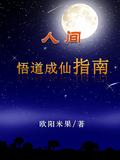 A Guide to Human Enlightenment and Becoming an Immortal
1.2kReads5.8Score129Shelves
A Guide to Human Enlightenment and Becoming an Immortal
1.2kReads5.8Score129Shelves
 Taoist Medical Clinic Notes
195.4kReads9.5Score56.8kShelves
Taoist Medical Clinic Notes
195.4kReads9.5Score56.8kShelves
 Wonderful Doctors Among the People
16.1kReads9.3Score2.7kShelves
Wonderful Doctors Among the People
16.1kReads9.3Score2.7kShelves
 Fifty Years of Chinese Medicine
7.9kReads9.5Score1.7kShelves
Fifty Years of Chinese Medicine
7.9kReads9.5Score1.7kShelves
 Stock Life
42.9kReads9.3Score7.8kShelves
Stock Life
42.9kReads9.3Score7.8kShelves
 Stock Market Sweeper
11.9kReads9.1Score2.5kShelves
Stock Market Sweeper
11.9kReads9.1Score2.5kShelves
 Real Life Record
620.7kReads9.6Score121.3kShelves
Real Life Record
620.7kReads9.6Score121.3kShelves
 I Was Vulgar but Became an Immortal
683Reads5.8Score176Shelves
I Was Vulgar but Became an Immortal
683Reads5.8Score176Shelves
 Cultivation of Immortality Is a Philosophy
397Reads5.8Score127Shelves
Cultivation of Immortality Is a Philosophy
397Reads5.8Score127Shelves
 Outrageous! I Was Ready to Quit the Circle, but I Became Famous
16.2kReads9.0Score2kShelves
Outrageous! I Was Ready to Quit the Circle, but I Became Famous
16.2kReads9.0Score2kShelves
 The Naughty Child Actually Regarded Me as a Nanny, but She Told Me to Value Harmony.
—Reads5.8Score—Shelves
The Naughty Child Actually Regarded Me as a Nanny, but She Told Me to Value Harmony.
—Reads5.8Score—Shelves
 In the Void Dharma Realm, It Is Drizzling
121Reads5.8Score—Shelves
In the Void Dharma Realm, It Is Drizzling
121Reads5.8Score—Shelves
 Hidden Medical Records, Drizzle
51Reads5.8Score—Shelves
Hidden Medical Records, Drizzle
51Reads5.8Score—Shelves
 The Essence of Personal Reality Seth Book
35Reads5.8Score—Shelves
The Essence of Personal Reality Seth Book
35Reads5.8Score—Shelves
 Seth Book of Healthy Ways
12Reads5.8Score—Shelves
Seth Book of Healthy Ways
12Reads5.8Score—Shelves
 The Nature of Individual and Group Events Seth's Book
40Reads5.8Score—Shelves
The Nature of Individual and Group Events Seth's Book
40Reads5.8Score—Shelves
 Ternary Consciousness and Memory Mapping Principle
1.4kReads9.2Score525Shelves
Ternary Consciousness and Memory Mapping Principle
1.4kReads9.2Score525Shelves
 See Prajna Every Word
226Reads5.8Score—Shelves
See Prajna Every Word
226Reads5.8Score—Shelves
 A History of the Three Kingdoms That Will Make You Addicted as Soon as You Read It
1.3kReads9.4Score133Shelves
A History of the Three Kingdoms That Will Make You Addicted as Soon as You Read It
1.3kReads9.4Score133Shelves
 A Must-Know Guide to Changing Your Life Every Day
28Reads5.8Score—Shelves
A Must-Know Guide to Changing Your Life Every Day
28Reads5.8Score—Shelves
 Social Arts of the Ten Gods
53Reads5.8Score—Shelves
Social Arts of the Ten Gods
53Reads5.8Score—Shelves
 The Path to Advanced Leeks
138Reads5.8Score—Shelves
The Path to Advanced Leeks
138Reads5.8Score—Shelves
 The Strongest Accountant in History: I Reported to the Leader at the Beginning
107Reads8.5Score—Shelves
The Strongest Accountant in History: I Reported to the Leader at the Beginning
107Reads8.5Score—Shelves
 The Puppy Is Good and Wants a Kiss from My Brother
2.7kReads8.6Score447Shelves
The Puppy Is Good and Wants a Kiss from My Brother
2.7kReads8.6Score447Shelves
 Online Games Reshape Life
10.2kReads9.5Score723Shelves
Online Games Reshape Life
10.2kReads9.5Score723Shelves
 Hengji Fengjie
12Reads5.8Score—Shelves
Hengji Fengjie
12Reads5.8Score—Shelves
 Tramp? Do You Understand?
20Reads8.5Score—Shelves
Tramp? Do You Understand?
20Reads8.5Score—Shelves
 Medical and Martial Arts
403Reads8.9Score—Shelves
Medical and Martial Arts
403Reads8.9Score—Shelves
 Travel All over China by Bus
4Reads—Score—Shelves
Travel All over China by Bus
4Reads—Score—Shelves
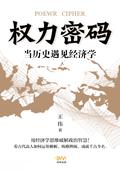 The Power Code: When History Meets Economics
1.6kReads9.5Score657Shelves
The Power Code: When History Meets Economics
1.6kReads9.5Score657Shelves
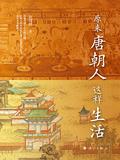 It Turns Out That People in the Tang Dynasty Lived Like This
32Reads8.8Score—Shelves
It Turns Out That People in the Tang Dynasty Lived Like This
32Reads8.8Score—Shelves
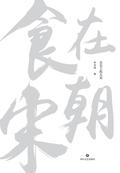 Eating in the Song Dynasty: Song Dynasty on the Tip of Your Tongue
—Reads8.6Score—Shelves
Eating in the Song Dynasty: Song Dynasty on the Tip of Your Tongue
—Reads8.6Score—Shelves
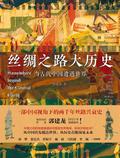 The Great History of the Silk Road: When Ancient China Encountered the World
123Reads9.2Score—Shelves
The Great History of the Silk Road: When Ancient China Encountered the World
123Reads9.2Score—Shelves
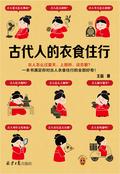 Clothing, Food, Housing and Transportation of Ancient People
2.7kReads9.4Score885Shelves
Clothing, Food, Housing and Transportation of Ancient People
2.7kReads9.4Score885Shelves
 Life, Nowhere to Put It
330Reads8.9Score—Shelves
Life, Nowhere to Put It
330Reads8.9Score—Shelves
 Earthly Things
987Reads8.9Score117Shelves
Earthly Things
987Reads8.9Score117Shelves
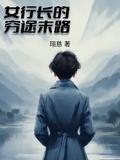 The End of the Road for a Female Bank President
859Reads9.3Score148Shelves
The End of the Road for a Female Bank President
859Reads9.3Score148Shelves
 Taishang Laojun's Taoist Heart Is True
1.8kReads6.7Score427Shelves
Taishang Laojun's Taoist Heart Is True
1.8kReads6.7Score427Shelves
 Crazy Rewards in the Live Broadcast Room of Herbal Medicine
11Reads—Score—Shelves
Crazy Rewards in the Live Broadcast Room of Herbal Medicine
11Reads—Score—Shelves
 Those Green Days
6Reads—Score—Shelves
Those Green Days
6Reads—Score—Shelves
 The World Is Beautiful and You Become the Richest Man
1Reads—Score—Shelves
The World Is Beautiful and You Become the Richest Man
1Reads—Score—Shelves
 The Story of Pizhu in the Tang Dynasty
219.7kReads9.7Score41.2kShelves
The Story of Pizhu in the Tang Dynasty
219.7kReads9.7Score41.2kShelves
 Mirror of Origin
—Reads5.8Score—Shelves
Mirror of Origin
—Reads5.8Score—Shelves
 Cloud Moss
1Reads5.8Score—Shelves
Cloud Moss
1Reads5.8Score—Shelves
 Supreme Wisdom: the Legend of Jiang Ziya
—Reads5.8Score—Shelves
Supreme Wisdom: the Legend of Jiang Ziya
—Reads5.8Score—Shelves
 Siwo
12Reads—Score—Shelves
Siwo
12Reads—Score—Shelves
 Idiom Cognition Dictionary: Unlocking the Underlying Algorithm of Life
5Reads5.8Score—Shelves
Idiom Cognition Dictionary: Unlocking the Underlying Algorithm of Life
5Reads5.8Score—Shelves
 Career Transition: Cognitive Methods from Rookie to Expert
1Reads5.8Score—Shelves
Career Transition: Cognitive Methods from Rookie to Expert
1Reads5.8Score—Shelves
 Alien Beast Disguise Day: Plan to Clear All Human Cognition
2Reads—Score—Shelves
Alien Beast Disguise Day: Plan to Clear All Human Cognition
2Reads—Score—Shelves
 Conferred God Jiang Ziya
872Reads5.8Score—Shelves
Conferred God Jiang Ziya
872Reads5.8Score—Shelves