The History Is True and Has Not Been Tampered With.
Views
6.8M
Books
447
Recommendations
1.6k
Updated
9h ago
History is more shaping, the characters are vivid, history is not distorted, and the writing is refreshing, such as the * dynasties, large and small, wars, civil servants and military generals are loyal and good, and are presented in history
The first book is about traveling through the early Tang Dynasty. The historical research is rigorous, and the technological development is in line with the conditions of the Tang Dynasty. It has a golden finger. The RV that travels with the protagonist carries a small number of modern items, but it can only play a key role. The second book is a historical novel based on the interpretation of history. Needless to say, it must be artistically processed while preserving the historical truth.
There don't seem to be many from the late Qin and early Han dynasties, especially those about Liu Ying and Liu Bang. The father-son interaction in the first book was very interesting.
Chinese civilization lasted for five thousand years. To read the entire history of China, one person would not be able to finish it in his lifetime. We can only selectively read the history that interests us to further enrich our knowledge.
Travel through time but not change, no cheats, no system, respect history, and show the prototype of the hero! This book is based on real historical events. Through thirteen large-scale battles in which the Sichuan Army participated and detailed battlefield descriptions, this book describes a passionate song in which 3.5 Million Sichuan Army soldiers fought bloody battles and were not afraid of sacrifice!
This one! Historical events and historical figures take turns taking place. The protagonist is reborn in the late Qing Dynasty, builds a new army, strengthens shipping administration, fights France, destroys the Japanese country, overthrows the Qing court, and triggers a war. In the most helpless times, turn the tide!
Only by respecting history, understanding history, and understanding the country's past can we better grasp the present and future. (If you find a book you like, please give it a like or add a fan😊)
This unpopular dynasty should not have been chosen in the first place. Not to mention watching it, many people have never heard of this historical period.
Many people missed it because it was not popular, but I think this is the most conscientious Machiavellian work in recent years that should not be underestimated.
No time travel, no system, no cheats! The pinnacle of Machiavellian novels! The Eastern version of "Game of Thrones"! I followed more than 300 chapters in one go and couldn't stop! There are no cliches of mindless novels, every step is reversed, and the power game between the four countries is so wonderfully written. Qi Ming went from passively escaping at the beginning, to later learning to plan and take advantage of people's hearts. The sense of oppression and satisfaction of climbing up from the bottom is really amazing. The supporting characters are not tools. Everyone has their own position and calculation. Even the villain can't be hated. It's so charming!
[Traveling through the Song Dynasty and the Southern Song Dynasty, it is not a brainless and refreshing article] It is close to, restores, and even "reveals" history. The pace is slower, and there is no random killing. It may not be what most people like to watch, and some people who have watched it say they don't understand it. Dear officials, why don't you come in and give me a few words of judgment?
The history of the Tang Dynasty makes people crazy. The author digs deep into the historical roots and restores the historical truth. It has humanities, geography, and philosophy. It is a novel that both adults and children can read. Thanks for supporting originality.
A story about naval battles in World War II. The opponent's aircraft carrier is sunk at the beginning. The various tactical coordination and combat details are an eye-opener.
The history of the previous battles is just embellishment. I want to write about Temujin's battle and review the details of cold weapon battles before reorganizing some typical battles in the late Song Dynasty. It's a bit like writing history, starting from Chapter 118.
"Unsolved Mysteries of History" is a key to opening the maze of time, taking you face to face with the deepest undercurrent of Chinese civilization. Starting from the mystery of the origins of the Xia, Shang and Zhou dynasties - is the Xia Dynasty believed in history or a legend? How many undeciphered codes are hidden in the Yin Ruins oracle bones? What is the complex truth about power behind Duke Zhou's "making rituals and music"? Taking this as a starting point, this book connects the institutions of Qin Shihuang's Mausoleum, the true meaning of Cao Zhi's "Luo Shen Fu", and the eternal mystery of the disappearance of Emperor Jianwen... The author uses a rigorous historical attitude as the cornerstone and an investigative narrative as a clue to build a bridge between classics and archaeological discoveries. The book not only presents puzzles, but also shows the thinking trajectories of scholars through the ages on how to peel off the cocoons and approach the truth. Open it, and what you gain is not a standard answer, but a multi-dimensional perspective on history - between certainty and uncertainty, you can feel the depth and vividness of history.
This book is very good. It respects history and is a rigorous historical text! Don't worry about the love between children, look at the overall situation of the world, travel from Zhen Huan to Mrs. Qi, turn the tide, fight with Empress Lu, save Han Xin, win over the ministers, and change history!
The choice of perspective in this book is very special. It does not look down from a high position, but is close to the characters or events in parallel, making readers feel that they are standing at the scene. This close observation brings a strong sense of immersion, but it also means giving up a certain sense of omniscience. We will be like the characters in the book, not knowing what will happen next and can only make judgments based on limited clues. This restricted perspective makes the reading more intense and realistic. Many of the twists and turns in the book therefore seem both unexpected and reasonable, because they do not appear out of thin air but are foreshadowed. After reading it, I looked back and realized that the author's layout was so detailed. This kind of narrative that requires readers to participate in the construction may be challenging for some people, but it is very attractive to me. It makes reading no longer a one-way reception, but a joint creation that requires mobilizing attention and emotion. I feel very fulfilled to be a part of it.
Following the historical context, some plots require the timeline to be slightly advanced or delayed. I still want to make up for the regrets of history.
Detailed description of the imperial examination; the tragic Battle of Saarhu! Magnificent war scenes reappeared; horns and drums shook the sky, and arrows roared; the sand penetrated the face, cracking the skin and breaking the bones; corpses were lying on the shore of Palembang, and the caves of the Great Wall were filled with blood! Graceful, lingering love is like a timeless song! Poetic emotions are like the warm hands of a lover, caressing the rainy eyes; the quiet parting is like the soft wind of tobacco; there are thousands of kinds of love for each other. The narration seems light, but it is passionate and passionate!
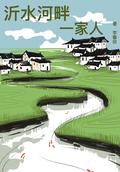 A Family by the Yishui River
4.1kReads8.7Score454Shelves
A Family by the Yishui River
4.1kReads8.7Score454Shelves
 If You Lived in Ancient Times: Experience Various Identities
10Reads—Score—Shelves
If You Lived in Ancient Times: Experience Various Identities
10Reads—Score—Shelves
 The Years of Precipitation
315Reads5.8Score—Shelves
The Years of Precipitation
315Reads5.8Score—Shelves
 Travel Through the Early Tang Dynasty to Create an Alternative Prosperous Age
126Reads5.8Score—Shelves
Travel Through the Early Tang Dynasty to Create an Alternative Prosperous Age
126Reads5.8Score—Shelves
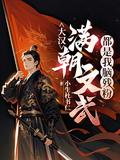 Liu Bang Kicked Me Out of the Car, and I Snatched the Throne as Compensation.
2.1kReads8.7Score139Shelves
Liu Bang Kicked Me Out of the Car, and I Snatched the Throne as Compensation.
2.1kReads8.7Score139Shelves
 The Third Part of the Great Qin Empire "Golden Arms and Iron Horse" Volume 2
14Reads5.8Score—Shelves
The Third Part of the Great Qin Empire "Golden Arms and Iron Horse" Volume 2
14Reads5.8Score—Shelves
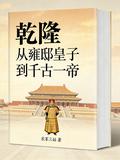 Qianlong from Prince Yongdi to the Emperor of Eternity
11.2kReads8.3Score667Shelves
Qianlong from Prince Yongdi to the Emperor of Eternity
11.2kReads8.3Score667Shelves
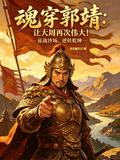 Guo Jing's Soul: Make Zhou Great Again
4.1kReads—Score364Shelves
Guo Jing's Soul: Make Zhou Great Again
4.1kReads—Score364Shelves
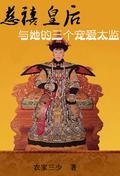 Empress Cixi and Her Three Doting Eunuchs
33.9kReads9.1Score2.5kShelves
Empress Cixi and Her Three Doting Eunuchs
33.9kReads9.1Score2.5kShelves
 The History of Tuibeitu
261Reads5.8Score—Shelves
The History of Tuibeitu
261Reads5.8Score—Shelves
 Blue Owl Love
2.3kReads9.6Score145Shelves
Blue Owl Love
2.3kReads9.6Score145Shelves
 Tragedy Repeats Itself? No, I Must Return to the Country This Time
758Reads8.0Score—Shelves
Tragedy Repeats Itself? No, I Must Return to the Country This Time
758Reads8.0Score—Shelves
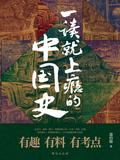 A History of China That Is Addictive Once You Read It
3.2kReads5.8Score968Shelves
A History of China That Is Addictive Once You Read It
3.2kReads5.8Score968Shelves
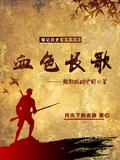 Bloody Song
892Reads8.9Score—Shelves
Bloody Song
892Reads8.9Score—Shelves
 The Stream of Light in the Pile of Old Papers
6Reads—Score—Shelves
The Stream of Light in the Pile of Old Papers
6Reads—Score—Shelves
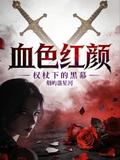 The Vortex of Power Desire
2.3kReads6.1Score178Shelves
The Vortex of Power Desire
2.3kReads6.1Score178Shelves
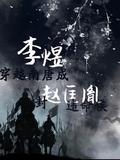 Rongguang of the Southern Tang Dynasty: I, Li Yu, Am More Than Just the Emperor of Ci
862Reads7.2Score—Shelves
Rongguang of the Southern Tang Dynasty: I, Li Yu, Am More Than Just the Emperor of Ci
862Reads7.2Score—Shelves
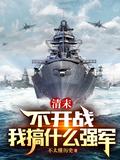 Late Qing Dynasty: How Can I Build a Strong Army Without Starting a War?
11.2kReads8.4Score628Shelves
Late Qing Dynasty: How Can I Build a Strong Army Without Starting a War?
11.2kReads8.4Score628Shelves
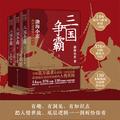 Three Kingdoms Struggle for Hegemony
2kReads9.5Score419Shelves
Three Kingdoms Struggle for Hegemony
2kReads9.5Score419Shelves
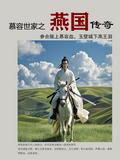 Murong Family: the Legend of Yan Kingdom
65Reads9.1Score—Shelves
Murong Family: the Legend of Yan Kingdom
65Reads9.1Score—Shelves
 Pretending to Be Surnamed Tang: His Skills Shocked the World and Helped Zhenguan
6Reads5.8Score—Shelves
Pretending to Be Surnamed Tang: His Skills Shocked the World and Helped Zhenguan
6Reads5.8Score—Shelves
 A History of the Warring States Period That Can't Be Put Down
524Reads5.8Score158Shelves
A History of the Warring States Period That Can't Be Put Down
524Reads5.8Score158Shelves
 This Han Dynasty Is so Interesting (7 Volumes in Total)
1.4kReads9.5Score346Shelves
This Han Dynasty Is so Interesting (7 Volumes in Total)
1.4kReads9.5Score346Shelves
 Cripple? No, No, No, You All Have to Kneel Down and Call Me Sir.
17.6kReads8.2Score1.2kShelves
Cripple? No, No, No, You All Have to Kneel Down and Call Me Sir.
17.6kReads8.2Score1.2kShelves
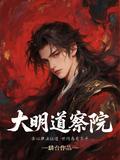 Daming Procuratorate
2.4kReads9.3Score319Shelves
Daming Procuratorate
2.4kReads9.3Score319Shelves
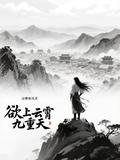 Desire to Ascend to the Ninth Heaven
659Reads5.8Score—Shelves
Desire to Ascend to the Ninth Heaven
659Reads5.8Score—Shelves
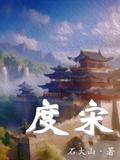 During the Song Dynasty
5Reads—Score—Shelves
During the Song Dynasty
5Reads—Score—Shelves
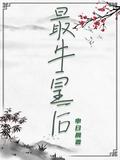 The Most Awesome Queen
497Reads9.4Score—Shelves
The Most Awesome Queen
497Reads9.4Score—Shelves
 The Great Medical Detective
92Reads5.8Score—Shelves
The Great Medical Detective
92Reads5.8Score—Shelves
 Qing Purple Robe
56Reads5.8Score—Shelves
Qing Purple Robe
56Reads5.8Score—Shelves
 Princess Zhu Ainao of Ming Dynasty
72Reads5.8Score—Shelves
Princess Zhu Ainao of Ming Dynasty
72Reads5.8Score—Shelves
 Amnesia Sword Immortal
17Reads8.4Score—Shelves
Amnesia Sword Immortal
17Reads8.4Score—Shelves
 Joking About the Southern and Northern Dynasties
12.5kReads9.4Score970Shelves
Joking About the Southern and Northern Dynasties
12.5kReads9.4Score970Shelves
 Wang Jinya
—Reads8.5Score—Shelves
Wang Jinya
—Reads8.5Score—Shelves
 Tang Shang
—Reads5.8Score—Shelves
Tang Shang
—Reads5.8Score—Shelves
 Twin-Eyed Covenant: Throne of Thorns
9Reads8.5Score—Shelves
Twin-Eyed Covenant: Throne of Thorns
9Reads8.5Score—Shelves
 Clouds on the Sea: Mobile Troops' Conquests
3Reads5.8Score—Shelves
Clouds on the Sea: Mobile Troops' Conquests
3Reads5.8Score—Shelves
 Tactical Games
57Reads5.8Score—Shelves
Tactical Games
57Reads5.8Score—Shelves
 Mr. Republic of China
2.6kReads8.6Score128Shelves
Mr. Republic of China
2.6kReads8.6Score128Shelves
 Living in the Tang Dynasty
9.8kReads7.0Score668Shelves
Living in the Tang Dynasty
9.8kReads7.0Score668Shelves
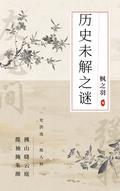 Unsolved Mysteries of History
2Reads—Score—Shelves
Unsolved Mysteries of History
2Reads—Score—Shelves
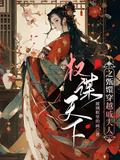 Zhen Huan, Who Plots the World, Travels Through Madam Qi
38Reads8.3Score—Shelves
Zhen Huan, Who Plots the World, Travels Through Madam Qi
38Reads8.3Score—Shelves
 Psychic
2.2MReads9.0Score292kShelves
Psychic
2.2MReads9.0Score292kShelves
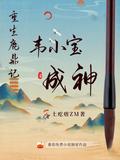 Rebirth of the Deer and the Cauldron, Wei Xiaobao Becomes a God
14.4kReads8.7Score1.4kShelves
Rebirth of the Deer and the Cauldron, Wei Xiaobao Becomes a God
14.4kReads8.7Score1.4kShelves
 End of Ten Days
2MReads9.9Score269.2kShelves
End of Ten Days
2MReads9.9Score269.2kShelves
 The Magic Stick Disturbs the Sky
1.6kReads6.6Score178Shelves
The Magic Stick Disturbs the Sky
1.6kReads6.6Score178Shelves
 I'm Not a Drama God
1.9MReads9.9Score218.6kShelves
I'm Not a Drama God
1.9MReads9.9Score218.6kShelves
 I Live in the Tang Dynasty, and I Am There in the Prosperous Times.
1.3kReads—Score—Shelves
I Live in the Tang Dynasty, and I Am There in the Prosperous Times.
1.3kReads—Score—Shelves
 Wanli Fenghuo
135Reads—Score—Shelves
Wanli Fenghuo
135Reads—Score—Shelves
 Qin Dynasty
3.4kReads9.2Score407Shelves
Qin Dynasty
3.4kReads9.2Score407Shelves