[Teach you how to cultivate immortality and enlightenment, do you want to watch it? ] [Short Story] [I Want to Become an Immortal] [Single Female Protagonist] [Counterattack] [Metaphysics] [Enlightenment] [Philosophy] [Blowing Kiss] Cultivation of Immortality and Enlightenment, a great book, highly recommended, philosophy of cultivation, subverting common sense
This book can be regarded as the top philosophical book. It transcends the knowledge scope of ancient and modern philosophers and scientists and answers the ultimate secrets about the secrets of the universe and the truth of life!
I spent my undergraduate degree in the Department of Philosophy. I searched and confirmed that none of our textbooks were available. I would recommend starting with the history of philosophy. Friends who graduated from philosophy should all know that recommending Nietzsche, Schopenhauer, existentialism and even Heidegger will lead people into the ditch. I also do not recommend Russell's book, which has a strong personal subjective color. As for the history of Chinese philosophy, I recommend Mr. Guo Qiyong (his own version). His logic is particularly strong, and his evaluation of characters is more objective and anti-routine. He does not blindly apply the doctrines of a certain German Marxist to everything. Of course, you can find his book in Tomato, but it is not the history of philosophy. There is also the version co-authored by teachers Guo Qiyong and Feng Dawen. Personally, I feel that it has a certain emotional color, but in general, it strives to be flexible and objective. There is a philosophy course based on this version, such as the 70-hour course taught by Li Weiwu of Wuhan University at Station B. So I don't recommend reading Feng Youlan's version as it is still somewhat classical. If you want to quickly understand the methodology of Chinese philosophy, you can read Teacher Zhang Dainian's "Outline of Chinese Philosophy". As for the history of Western philosophy, I recommend Teacher Zhang Zhiwei. He has another complete textbook on Western philosophy. The one I recommend is "Fifteen Lectures on Western Philosophy" written by him for the public. Of course, Teacher Zhang Zhiwei also has courses at Station B. He is a teacher with great humanistic care. I also recommend "A Brief History of Western Philosophy" by Teacher Zhao Dunhua. The discussion is clear and concise. I think it can be easily understood by beginners. There is also a History of Western Philosophy co-authored by Teachers Deng Xiaomang and Zhao Lin. It is characterized by its strong logic. In addition, I already have a certain understanding of the history of Western philosophy and like German classics. For those who are like Marx, I suggest not to read Marx directly. I suggest starting with Kant. So for the introduction to Kant, our undergraduate course starts with the following blue book that I recommend. This is an introduction to Kant's Critique of Pure Reason. If you have not asked about this book If the question is over, you can continue to read the pure batch, or you can skip reading to understand Hegel and Feuerbach, so that you can enter Marxist philosophy painlessly (those who just want to be familiar with the horse principle and don't want to understand the profoundness of Marx's thoughts can directly watch the zz course for the postgraduate entrance examination. It's not a joke. Many teachers in the zz section of the postgraduate entrance examination teach really well) In addition, there are two ways to get started in Marxist philosophy from now on. The painless but time-consuming version: I recommend the seven-volume history of Marxist philosophy by Huang Nansen. This resource is difficult to find. You can ask me in the comments below and see the reply. The painful but quick version: the textbooks on the history of Marxist philosophy (Ma Engineering Edition, Huang Nansen Textbook Edition) are available, plus the introduction to the original works of Marxism. Please note that the history of Marxist philosophy and the principles of Marxism are two disciplines. Finally, if you read it to the end, the third book is a novel I am writing. I hope you will support me.
Refine your thoughts in the purgatory of stories: Why "Lin Qianqian's Diary of a Cultivation to Immortality" is more "readable" than many philosophical monographs. When we talk about philosophy, what often comes to mind are the magnificent masterpieces of Kant and Nietzsche, which are difficult texts full of terminology and logical deductions. These works are beacons of thought, but the process of climbing is often accompanied by boredom and a sense of distance. "Lin Qianqian's Diary of Cultivation to Immortality" provides a completely different path: it is not a philosophy textbook, but a strange book that integrates philosophical speculation into the bones of the story. Its "endurance" stems from the "experience" of its ideas and the "contemporaryness" of its issues. 1. It does not "tell" philosophy, but "perform" philosophy. Most philosophy books discuss to you that "existence precedes essence", and "Lin Qianqian" allows you to witness with your own eyes how the character Lin Qianqian, in a world seemingly written by the "author" (which refers to the higher-dimensional existence in the book, but also a metaphor for fate or rules), madly defines himself and resists presuppositions through absurd but extremely real choices, thus vividly "performing" the core concepts of existentialism. It moves Sartre's philosophical propositions from the debate table in a cafe directly into a bizarre theater of immortality where life and death are on the line. This kind of "performance" brings an unparalleled sense of substitution and impact. When you struggle with Lin Qianqian in the "cognitive corridor" to distinguish reality from fiction, you are no longer thinking coldly about "what is reality", but experiencing a kind of doubt and questioning of the foundation of cognition. This kind of philosophical thinking forced in the narrative tension is far more profound, more unsettling, and therefore more intriguing than passively accepting a set of theories. 2. It touches on more "contemporary" philosophical anxieties. The core philosophical issues explored in this book are extremely modern and even postmodern. It points directly to the most profound anxieties of our time: "Brain in a vat" and virtual reality: When Lin Qianqian discovered that her life might be just a story written by a higher being, the identity crisis she faced was a literary reflection of the ultimate questioning of "what is the true self" by modern people living in algorithmic recommendations, information cocoons, and the concept of the metaverse. Narrative violence and human objectification: The "author" in the book manipulates the fate of the characters at will for the sake of the "wonderfulness" of the story, triggering a profound discussion on "narrative ethics". This is a metaphor for whether individuals are just materials to be used in the face of grand narratives (such as history, social trends, and ideologies). To what extent is the meaning of our lives defined and exploited by external narratives? The absurdity of existence and the dignity of resistance: Is the world itself meaningless? Many plots in the book reveal this absurdity. But the most touching thing about Lin Qianqian is that even though she has seen through some of the absurdity, she still chooses to "fiddle" and use her actions to carve her own traces in the nothingness. This kind of heroism that still loves life after recognizing the truth of life is an excellent literary interpretation of Camus' "The Myth of Sisyphus". 3. "Multi-dimensionality" and "unfinishedness" of thought A philosophical monograph usually builds a rigorous system around a core argument. "Lin Qianqian" is like a kaleidoscope of ideas, which simultaneously touches multiple dimensions such as existentialism, nihilism, cognitive philosophy, narratology, and even ethics. These thoughts are not developed systematically, but are cleverly woven into the narrative tapestry along with the ups and downs of the plot, like threads of different colors. It does not provide a unique and closed answer, but opens up a field of thinking and invites readers to be confused, struggle, and explore with the characters. This "unfinishedness" makes every re-reading possible to bring new discoveries. You are not reciting conclusions but engaging in an ongoing, open-ended speculative adventure. This is the secret of its "endurance" - it is a philosophical text that requires readers to "complete" it with their own thinking. Conclusion: The greatness of "Lin Qianqian's Diary of Cultivation to Immortality" is that it successfully welds "the fun of the story" with the "seriousness of thought". It is a book in which you will laugh at the funny plots and hold your breath for the suspense plot, and at the same time, you will inadvertently be hit in the soul by an ultimate question about existence, truth and freedom. It may not give you a complete philosophical system, but it will give you a key that allows you to ask the most important philosophical questions in a new and more vital way. This is why it is more enduring and more capable of arousing lasting resonance than many pure but slightly "dry" philosophical treatises. It proves one thing: the most profound philosophy is sometimes born from the most uninhibited imagination and the most heart-warming stories.
Five thousand years of Chinese and foreign philosophy are integrated into one novel. If you act in accordance with the Tao, you will succeed; if you deviate from the Tao, you will fail. Nothing is difficult in this world, the key is to do it. If you respect the Tao and act accordingly, when all conditions are ripe, things will be done. It is impossible for water to turn into oil. What we have to do is to mature various conditions.
Readers and friends who pay attention to literature, art and ideological depth, and have a strong interest in free philosophy, ideological enlightenment, bad nature and servility, as well as gripping love stories are welcome to read my works in their spare time. The works have what you want. The author eagerly looks forward to readers discussing, debating, sharing, and giving feedback on the content of my work. In order to prevent you from feeling bored when reading, the author integrates abstract concepts such as freedom, equality, independence, servility, and inferiority into the storyline through vivid and concrete descriptions, making the storyline lively and interesting, close to real life, and full of ideological depth. The writing is concise and powerful, and reads smoothly and naturally. The ups and downs and magnificent love story will deeply touch the depths of your soul...
All you need is a philosophy, and your request is too satisfying. This is the most distinctive cross-border book you can find. Follow the plot and it will contain the most useful knowledge from 17 hard-core subjects such as psychology, economics, logic, game theory, and advanced mathematics, as well as cutting-edge mainstream scientific explanations. It will quickly build your thinking framework and improve your cognitive level. Feng Shui metaphysics, divination and fortune-telling and other market smarts will no longer be able to fool you. (If you have any questions, jump directly to Chapter 134, explain the problem from the root, and rub the charlatan on the ground.) The story is funny, but not ridiculous. The group of protagonists is not normal. The reason why readers laugh has nothing to do with the author. As for the plot, it's up to you to guess it. Even if you put aside the knowledge, the plot of the whole book is a suspense story with strict logic, with a lot of foreshadowing. The second and third chapters are all interesting. It is not a scattered plot put together to teach subject knowledge. To put it bluntly, you feel tired when reading some chapters because the content of these chapters itself is designed to train multiple thinking. You feel tired because you are growing your brain. If you find that you are tired from reading because the plot's logical structure is unreasonable, the author lies on the floor and lets you beat him! Dear readers, it's free to read. The author became bald just to write this book! This advertisement is sincere. It doesn't pay anyone to recommend the book, and it doesn't believe that all readers are unintelligent children.
How to explain "Blue Trails" to a friend: ① It is not a fan of the Blue Files ② The "fan" tag is a mislabeling ③ True SCP Foundation researcher's love (crossed out) work record! When the blue-haired beauty used the resonance of the jade pendant to suppress Abel, who cared about classification? Take a quick look at this mislabeled hidden gem. If you don't like it, come and tear down my containment room!
Instead of pursuing instant transparency, the two spent a long time analyzing short sentences in detail, which is suitable for readers who are willing to sink their hearts and dig deep into the spiritual core.
Traditional cultivation of immortals, the protagonist wears the Guigu Bahuang panel, but the golden finger is not obvious, slow-heating type, family flow, you can try it
 Romance of the Four Beauties
140Reads8.7Score—Shelves
Romance of the Four Beauties
140Reads8.7Score—Shelves
 I'm Training a Man on the Moon
4Reads—Score—Shelves
I'm Training a Man on the Moon
4Reads—Score—Shelves
 Cultivation of Immortality Is a Philosophy
397Reads5.8Score127Shelves
Cultivation of Immortality Is a Philosophy
397Reads5.8Score127Shelves
 I Was Vulgar but Became an Immortal
683Reads5.8Score176Shelves
I Was Vulgar but Became an Immortal
683Reads5.8Score176Shelves
 A Guide to Human Enlightenment and Becoming an Immortal
1.2kReads5.8Score129Shelves
A Guide to Human Enlightenment and Becoming an Immortal
1.2kReads5.8Score129Shelves
 I'm Pretending to Be a Zombie in the Apocalypse
—Reads—Score—Shelves
I'm Pretending to Be a Zombie in the Apocalypse
—Reads—Score—Shelves
 Soda, Cats and the 10 Million Euro Beluga
1Reads5.8Score—Shelves
Soda, Cats and the 10 Million Euro Beluga
1Reads5.8Score—Shelves
 The Lost City of Alien Beasts
556.7kReads9.7Score94.9kShelves
The Lost City of Alien Beasts
556.7kReads9.7Score94.9kShelves
 I Don't Have a System, but I Have a Hammer
552Reads5.8Score—Shelves
I Don't Have a System, but I Have a Hammer
552Reads5.8Score—Shelves
 Demon Hunter's Notes
10.4kReads8.5Score1.2kShelves
Demon Hunter's Notes
10.4kReads8.5Score1.2kShelves
 A Brief History of Christmas
5Reads9.1Score—Shelves
A Brief History of Christmas
5Reads9.1Score—Shelves
 Common Knowledge of Ancient Chinese Culture
130Reads8.6Score—Shelves
Common Knowledge of Ancient Chinese Culture
130Reads8.6Score—Shelves
 To Find the End of the Journey
—Reads—Score—Shelves
To Find the End of the Journey
—Reads—Score—Shelves
 Ternary Consciousness and Memory Mapping Principle
1.4kReads9.2Score525Shelves
Ternary Consciousness and Memory Mapping Principle
1.4kReads9.2Score525Shelves
 Lin Qianqian's Diary of Cultivating Immortality
1Reads—Score—Shelves
Lin Qianqian's Diary of Cultivating Immortality
1Reads—Score—Shelves
 Social Arts of the Ten Gods
53Reads5.8Score—Shelves
Social Arts of the Ten Gods
53Reads5.8Score—Shelves
 After I Graduated, I Became a Class Teacher Again
—Reads8.6Score—Shelves
After I Graduated, I Became a Class Teacher Again
—Reads8.6Score—Shelves
 Strange Neighbor Lives Forever
1Reads8.5Score—Shelves
Strange Neighbor Lives Forever
1Reads8.5Score—Shelves
 Interesting Things About Marriage
—Reads8.4Score—Shelves
Interesting Things About Marriage
—Reads8.4Score—Shelves
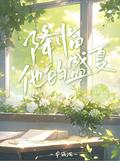 It's Hard to Hide Summer
40.6kReads9.5Score7.5kShelves
It's Hard to Hide Summer
40.6kReads9.5Score7.5kShelves
 Who Says I'm Crazy
1Reads8.4Score—Shelves
Who Says I'm Crazy
1Reads8.4Score—Shelves
 Our Youth
—Reads8.5Score—Shelves
Our Youth
—Reads8.5Score—Shelves
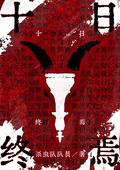 End of Ten Days
2MReads9.9Score276.9kShelves
End of Ten Days
2MReads9.9Score276.9kShelves
 My Management Philosophy
—Reads—Score—Shelves
My Management Philosophy
—Reads—Score—Shelves
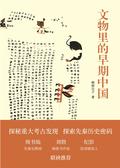 Early China in Cultural Relics
23Reads8.9Score—Shelves
Early China in Cultural Relics
23Reads8.9Score—Shelves
 "Sword"
22Reads8.6Score—Shelves
"Sword"
22Reads8.6Score—Shelves
 Sword Fairy
91.8kReads9.3Score13kShelves
Sword Fairy
91.8kReads9.3Score13kShelves
 The Three Kingdoms Is Actually Very Interesting
126Reads9.3Score—Shelves
The Three Kingdoms Is Actually Very Interesting
126Reads9.3Score—Shelves
 Liu Xiu, Emperor Guangwu
746Reads9.3Score150Shelves
Liu Xiu, Emperor Guangwu
746Reads9.3Score150Shelves
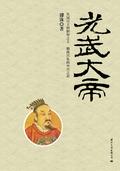 Emperor Guangwu
35Reads9.3Score—Shelves
Emperor Guangwu
35Reads9.3Score—Shelves
 2015: She Tore Open the Gates of Hell
356Reads6.3Score—Shelves
2015: She Tore Open the Gates of Hell
356Reads6.3Score—Shelves
 Reborn into a Top Family, My Wonderful Life
1.8kReads5.8Score261Shelves
Reborn into a Top Family, My Wonderful Life
1.8kReads5.8Score261Shelves
 In Order Not to Be Punished by the Nine Tribes, I Can Only Take the Initiative to Send
16.6kReads9.2Score1.4kShelves
In Order Not to Be Punished by the Nine Tribes, I Can Only Take the Initiative to Send
16.6kReads9.2Score1.4kShelves
 The Decline of the West
43Reads8.5Score—Shelves
The Decline of the West
43Reads8.5Score—Shelves
 I'm Not a Drama God
1.9MReads9.9Score225.5kShelves
I'm Not a Drama God
1.9MReads9.9Score225.5kShelves
 Taishang Laojun's Taoist Heart Is True
1.8kReads6.7Score427Shelves
Taishang Laojun's Taoist Heart Is True
1.8kReads6.7Score427Shelves
 Da Qin: Transcendent to the Saint! Start from the Unity of Knowledge and Action
3.1kReads8.3Score112Shelves
Da Qin: Transcendent to the Saint! Start from the Unity of Knowledge and Action
3.1kReads8.3Score112Shelves
 Teramurahara
41Reads—Score—Shelves
Teramurahara
41Reads—Score—Shelves
 Haotian Yi Meng
4Reads—Score—Shelves
Haotian Yi Meng
4Reads—Score—Shelves
 Pursue a Better Life
—Reads5.8Score—Shelves
Pursue a Better Life
—Reads5.8Score—Shelves
 Dying Wish
174Reads5.8Score102Shelves
Dying Wish
174Reads5.8Score102Shelves
 Steady! I Am the Strongest Shelter Researcher
326Reads5.8Score—Shelves
Steady! I Am the Strongest Shelter Researcher
326Reads5.8Score—Shelves
 Zero Sum Game
313Reads8.0Score—Shelves
Zero Sum Game
313Reads8.0Score—Shelves
 Ming Xue Xue
9Reads5.8Score—Shelves
Ming Xue Xue
9Reads5.8Score—Shelves
 See Prajna Every Word
226Reads5.8Score—Shelves
See Prajna Every Word
226Reads5.8Score—Shelves
 This Heart Is Clear
4Reads5.8Score—Shelves
This Heart Is Clear
4Reads5.8Score—Shelves
 Wu Family's Road to Immortality
4.7kReads6.4Score242Shelves
Wu Family's Road to Immortality
4.7kReads6.4Score242Shelves
 Low Tide
4Reads—Score—Shelves
Low Tide
4Reads—Score—Shelves
 Little Glimmer
—Reads8.5Score—Shelves
Little Glimmer
—Reads8.5Score—Shelves
 Confused Mind
2Reads8.4Score—Shelves
Confused Mind
2Reads8.4Score—Shelves