I Want to See Strategic War Scenes, the Tough Kind.
Views
20.2M
Books
282
Recommendations
1k
Updated
3d ago
There are too many novels written by Lao Liu. I like tough ones. If there are some, they will be tough. A 9 is enough. If you have any, please recommend them. Thank you!
It's been fighting since the beginning, and it's fun to keep fighting! It's also a Jedi Submarine fic, where a small team special operations calls in a low-Earth orbit warship to conduct an orbital bombardment.
As for this book, although it has a system, it will only be published in the middle period. Hans Karl, the sharp blade of the German Empire, led a team of more than ten people to break through the heavy siege of the Stalingrad defense line and became a living ghost on the Eastern Front.
I have read these, and I think they are okay. I hope you like me. The ones I recommend to you are all those I have read. Basically, they are okay after reading them. I hope you all like them. They are all rated nine points or above. They are very good to read. I think the best one is the first one. We know our names. I have read them at the direct level and strategic level. I've passed it, I think it's okay. I hope you like me. I recommend all the books I've read. Basically, it's okay after reading it. I hope you like it. Both the book and the book are above nine points. They are very good-looking. I think the best one is the first one. We know our names. I know the direct-level, strategic-level, and the third one are better.
The first one is written below, and I dare to recommend it. The other books are all real descriptions of big scenes, from bronze swords to Star Destroyers, basically covering everything. I sincerely recommend reading the fourth and ninth books.
The first book is the story of the reincarnation of the head of state xtl and signed into the National Defense Forces. The low score is for protection. (Click to follow it)
Liang Jian fan, it's good, good, good, the plot is compact, no arrogance, no water words, no bells and whistles, no show off of literary talent, no nagging, no grinding.
They are all good-looking books. I highly recommend everyone to read them. They all have high ratings. The plots are twists and turns. Theme categories: various. Recommended star rating: 👍👍👍👍👍👍
[Imaginary dynasty + time travel + war + conspiracy + group portraits + the golden finger was cut in half] Tian Shu, a male high school student, woke up and traveled through the ancient mourning hall. The widowed sisters-in-law swarmed over and showed their utmost concern. In troubled times and feudal times, noble surnames are in power. The system is in vain, and the sisters-in-law have their own agendas. Can he, who comes from a poor family, change his fate against the odds? Sitting on thousands of miles of land and leaving a name in history! Or is it impossible to escape fate and become a miserable cannon fodder for someone else's marriage?
The second volume of this book will have more war scenes from a strategic perspective, but the first volume is mainly about fan plots and does not involve war scenes [face covering]
Large Corps Combat: The first main battlefield in North China is a corps-level battle; the second Southeast Asian battlefield is a battalion-level, regiment-level battle followed by a division-level battle.
The male protagonist has a miscarriage, his father is in a high position, and he is still an only son. He takes over the northwest, engages in infrastructure construction, comprehensively develops the industrial and commercial system, builds a strong force of elites in the Qin Dynasty, and then fights hard in his small life. It is very exciting to watch! The author is very attentive, the details are well drawn, and he also provides pictures. Like it!
💫The first book: Definitely enough for the scene [Like] Dedicated to making the world nuclear peaceful [Angry], the successor to the Umbrella Corporation world [Like]. 💫The second book: Multiverse China, starts the multiverse war [Wrath], forms the multiverse China, and allows the legend of China to exist in every world. Recommended star rating: 🌟🌟🌟🌟🌟[please update][top post]
"From Ordinary to Legendary": An Anti-Japanese War epic that allows you to understand what "an inch of mountains and rivers, an inch of blood" means. If you have ever wondered why a poor and weak China could stand firm in the fourteen years of war; if you have ever wondered how ordinary people who are unknown in history can create miracles in desperate circumstances - then please open "From Ordinary to Legendary". This is not another "Anti-Japanese Divine Drama"-style noisy work, but a true epic composed with blood, fire, tears and life. 1. Real war has no "protagonist halo". In this work, you cannot see invulnerable heroes, but only mortals with flesh and blood. When Da Liu rushed toward the gate of Canglong Ridge with the explosive bag in his arms, he was shot three times and had to drag his broken leg to crawl the last fifteen meters. He is not a superman who jumps up to complete the feat, but an ordinary person who moves inch by inch in the pool of blood, bites open the fuse with his teeth, and presses his body against the door latch. After the explosion, there were no tragic last words echoing, only scorched marks on the door panel and scattered debris - this is the truest appearance of war. When "Monkey" pounced on Fu Bikang at the moment the grenade exploded, it was not a carefully thought-out heroic decision, but a veteran's instinctive reaction in a thousandth of a second. He used his body to block death, but when he was dying, he used his last strength to report the location of the enemy's heavy machine gun - until his death, he remembered the responsibility of a scout. This is the most shocking thing about "From Ordinary to Legend": it writes about heroes but does not deify them; it praises sacrifice but does not beautify death. Every character's fall is as heavy as iron, and the price of every victory is clearly visible. In this book, what you read is not the pleasant grudges in Shuangwen style, but the cruel reality of "every inch of mountains and rivers, every inch of blood". 2. Group portraits of flesh-and-blood characters Fu Bikang is not a "perfect protagonist" in the traditional sense. He will hesitate - when Liu volunteered to die, his hand holding the letter was shaking; he will be fragile - after seeing the sacrifice of the "monkey", he leaned against the wall and cried silently; he will doubt - "How many brothers will we have to send away?" This question gnaws at his heart like a poisonous snake. But he would also climb seventy-three meters on the cliff and not let go even if his fingernails peeled off; he would continue to direct the battle after being shot in the abdomen; and after all the old team members died, he would wipe away his tears and say: "Leave the rest to me." There is also Lin Wanning, a female doctor who went to the battlefield from Union Medical College Hospital. She would stand in front of the operating table for sixteen hours, her hands shaking so much that she could not hold the scissors; she would also carry the wounded on her back and run during the gunfire, with her white coat stained with blood; and when the Japanese troops rushed into the hospital, she would raise her pistol in front of the wounded - even though it was her first time to fire a gun. And "Monkey", the old scout who doesn't know a few Chinese characters. He would draw crooked maps in his notebook, and say "Take me home" before he died. What he would spend his life completing at the last moment was not his last words, but a reconnaissance report. These characters are not black and white symbols, but real people who were forged, torn apart, and reborn in the furnace of war. You will cry for their sacrifice, be moved by their tenacity, and even more shocked by their courage to "do something even though they know they cannot do it." 3. Textbook-level tactical descriptions and realistic details. If you are interested in military affairs, "From Ordinary to Legendary" can be called a "paper war game". From the "Central Blooming" tactic in Chapter 249 - a small group of elite sneaking behind enemy lines to simultaneously blast the three nodes of command, communication, and artillery - to the "Flesh and Blood Opening" in Chapter 251 - laying out a fifty-meter passage with all your strength, every tactical link can withstand scrutiny. The author has obviously done a lot of research on war history. Whether it is the firing range of the Japanese Type 92 infantry gun, the magazine capacity of the Type 96 light machine gun, or the Chinese army's "blade breaking bayonet" technique, they are all described professionally and accurately. Even more rare are the details that are soaked in the atmosphere of the times: Lin Wanning's pocket watch with a broken case is a relic of her sacrificed husband; "Monkey"'s blood-soaked notebook has "For Tomorrow" written on the last page; when Fu Bikang counted the number of people after the war, he found that there were only five of the twelve old team members left. He squatted under the wall and read each name again... These details do not advance the plot, but give the whole story a heavy weight. You will believe that these characters really lived, loved, fought, and sacrificed in that time and space. 4. Inquiries and echoes that transcend the times The most profound thing about "From Ordinary to Legend" is that it asks some eternal propositions: When the "monkey" asked Fu Bikang "Can we win?", He was asking about China in 1940, and it was also asking about people in trouble in every era. Fu Bikang's answer "Yes, because there are people like you" is not only a commitment to his comrades, but also a belief in the national spirit. When Liu handed the family letter to Fu Bikang and said, "Tell my mother that my son has gone to fight the Japanese, it's an honor." Behind these simple words was the epitome of thousands of mothers sending their children to the battlefield. In that "glory", there is no grand narrative, only the responsibilities that ordinary people fulfill with their lives. When Lin Wanning rescued forty-three wounded people in a field hospital, her hands trembled but she did not leave the line of fire. She was not only fulfilling the oath of a doctor, but also the spiritual core of "people can be destroyed, but cannot be defeated." These inquiries have survived eighty years of war and still resonate in the hearts of readers today. Because in peaceful times, we still need to know: What is worth protecting with our lives? What is value beyond individual life and death? What is the continuous bloodline of a nation? 5. Why should you read this book? Because in this era of entertainment to death, we need something heavy to anchor our souls; because in this society that advocates "smartness", we need to relive that "Foolish Old Man Moves Mountains" type of tenacity; because in this era of prevalent individualism, we need to be reminded that some things are more important than personal life. "From Ordinary to Legendary" will make you look at the lights outside the window late at night and remember how you got this peace; it will make you think of those who climbed on the cliff when you encounter difficulties; and when you lament the difficulty of the world, it will make you think of someone who used flesh and blood to hit the steel door. This is not an easy read - it will make you cry, make you heartache, and make you sigh. But it will also ignite a fire in your heart, which is the clarity after understanding "How ordinary people create legends", the determination after understanding "Thousands of people will die," and the belief after seeing the light of human nature blooming in the darkest moments. Open this book. Get to know Fu Bikang, Lin Wanning, "Monkey", Da Liu... Go into Canglong Ridge in 1938 and feel the hot blood, the uncold heart, and the immortal soul. You will find that when you finish reading the book and close the last page, something has changed forever - not the world, but the way you see the world. Because all legends begin in the ordinary; and all greatness comes from someone who chooses to stick to the extraordinary in the ordinary. "From Ordinary to Legendary" - dedicated to all those who believe in light and are willing to become light.
"From Ordinary to Legendary": An Anti-Japanese War epic that allows you to understand what "an inch of mountains and rivers, an inch of blood" means. If you have ever wondered why a poor and weak China could stand firm in the fourteen years of war; if you have ever wondered how ordinary people who are unknown in history can create miracles in desperate circumstances - then please open "From Ordinary to Legendary". This is not another noisy "anti-Japanese drama" style, but a true epic written with blood, fire, tears and life. 1. Real war, there is no "protagonist halo". In this work, you can't see invulnerable heroes, but only mortals with flesh and blood. When Da Liu rushed toward the gate of Canglong Ridge with the explosive bag in his arms, he was shot three times and had to drag his broken leg to crawl the last fifteen meters. He is not a superman who jumps up to complete a feat, but an ordinary person who moves inch by inch in the pool of blood, bites open the fuse with his teeth, and presses his body against the door latch. After the explosion, there were no tragic last words echoing, only scorched marks on the door panel and scattered debris - this is the truest appearance of war. When "Monkey" pounced on Fu Bikang at the moment the grenade exploded, it was not a carefully thought-out heroic decision, but a veteran's instinctive reaction in a thousandth of a second. He used his body to block death, but when he was dying, he used his last strength to report the location of the enemy's heavy machine gun - until his death, he remembered the responsibility of a scout. This is the most shocking thing about "From Ordinary to Legend": it writes about heroes but does not deify them; it praises sacrifice but does not beautify death. Every character's fall is as heavy as iron, and the price of every victory is clearly visible. In this book, what you read is not the pleasant grudges in Shuangwen style, but the cruel reality of "every inch of mountains and rivers, every inch of blood". 2. Group portraits of flesh-and-blood characters Fu Bikang is not a "perfect protagonist" in the traditional sense. He will hesitate - when Liu volunteered to die, his hand holding the letter was shaking; he will be fragile - after seeing the sacrifice of the "monkey", he leaned against the wall and cried silently; he will doubt - "How many brothers will we have to send away?" This question gnaws at his heart like a poisonous snake. But he would also climb seventy-three meters on the cliff and not let go even if his fingernails peeled off; he would continue to direct the battle after being shot in the abdomen; and after all the old team members died, he would wipe away his tears and say: "Leave the rest to me." There is also Lin Wanning, a female doctor who went to the battlefield from Union Medical College Hospital. She would stand in front of the operating table for sixteen hours, her hands shaking so much that she could not hold the scissors; she would also carry the wounded on her back and run during the gunfire, with her white coat stained with blood; and when the Japanese troops rushed into the hospital, she would raise her pistol in front of the wounded - even though it was her first time to fire a gun. And "Monkey", the old scout who doesn't know a few Chinese characters. He would draw crooked maps in his notebook, and say "Take me home" before he died. What he would spend his life completing at the last moment was not his last words, but a reconnaissance report. These characters are not black and white symbols, but real people who were forged, torn apart, and reborn in the furnace of war. You will cry for their sacrifice, be moved by their tenacity, and even more shocked by their courage to "do something even though they know it is impossible to do." 3. Textbook-level tactical descriptions and realistic details. If you are interested in military affairs, "From Ordinary to Legendary" can be called a "paper war game". From the "Central Blooming" tactic in Chapter 249 - a small group of elite sneaking behind enemy lines to simultaneously blast the three nodes of command, communication, and artillery - to the "Flesh and Blood Opening" in Chapter 251 - laying out a fifty-meter passage with all your strength, every tactical link can withstand scrutiny. The author has obviously done a lot of research on war history. Whether it is the firing range of the Japanese Type 92 infantry gun, the magazine capacity of the Type 96 light machine gun, or the Chinese army's "blade breaking bayonet" technique, they are all described professionally and accurately. Even more rare are the details that are soaked in the atmosphere of the times: Lin Wanning's pocket watch with a broken case is a relic of her sacrificed husband; "Monkey"'s blood-soaked notebook has "For Tomorrow" written on the last page; when Fu Bikang counted the number of people after the war, he found that there were only five of the twelve old team members left. He squatted under the wall and read each name again... These details do not advance the plot, but give the whole story a heavy weight. You will believe that these characters really lived, loved, fought, and sacrificed in that time and space. 4. Inquiries and echoes that transcend the times The most profound thing about "From Ordinary to Legend" is that it asks some eternal propositions: When the "monkey" asked Fu Bikang "Can we win?", He was asking about China in 1940, and it was also asking about people in trouble in every era. Fu Bikang's answer "Yes, because there are people like you" is not only a commitment to his comrades, but also a belief in the national spirit. When Liu handed the family letter to Fu Bikang and said, "Tell my mother that my son has gone to fight the Japanese, it's an honor." Behind these simple words was the epitome of thousands of mothers sending their children to the battlefield. In that "glory", there is no grand narrative, only the responsibilities that ordinary people fulfill with their lives. When Lin Wanning rescued forty-three wounded people in a field hospital, her hands trembled but she did not leave the line of fire. She was not only fulfilling the oath of a doctor, but also the spiritual core of "people can be destroyed, but cannot be defeated." These inquiries have survived eighty years of war and still resonate in the hearts of readers today. Because in peaceful times, we still need to know: What is worth protecting with our lives? What is value beyond individual life and death? What is the continuous bloodline of a nation? 5. Why should you read this book? Because in this era of entertainment to death, we need something heavy to anchor our souls; because in this society that advocates "smartness", we need to relive that "Foolish Old Man Moves Mountains" type of tenacity; because in this era of prevalent individualism, we need to be reminded that some things are more important than personal life. "From Ordinary to Legendary" will make you look at the lights outside the window late at night and remember how you got this peace; it will make you think of those who climbed on the cliff when you encounter difficulties; and when you lament the difficulty of the world, it will make you think of someone who used flesh and blood to hit the steel door. This is not an easy read - it will make you cry, make you heartache, and make you sigh. But it will also ignite a fire in your heart, which is the clarity after understanding "How ordinary people create legends", the determination after understanding "Thousands of people will die," and the belief after seeing the light of human nature blooming in the darkest moments. Open this book. Get to know Fu Bikang, Lin Wanning, "Monkey", Da Liu... Go into Canglong Ridge in 1938 and feel the hot blood, the uncold heart, and the immortal soul. You will find that when you finish reading the book and close the last page, something has changed forever - not the world, but the way you see the world. Because all legends begin in the ordinary; and all greatness comes from someone who chooses to stick to the extraordinary in the ordinary. "From Ordinary to Legendary" - dedicated to all those who believe in light and are willing to become light.
 Peninsula: My Girl Group Exorcism Diary
1.2kReads5.8Score131Shelves
Peninsula: My Girl Group Exorcism Diary
1.2kReads5.8Score131Shelves
 Folklore Record: Zhizhachen
124Reads5.8Score—Shelves
Folklore Record: Zhizhachen
124Reads5.8Score—Shelves
 Taiyin in the Coffin
39Reads—Score—Shelves
Taiyin in the Coffin
39Reads—Score—Shelves
 A Guide to Survival Under the Gunpoint of Democracy
10Reads—Score—Shelves
A Guide to Survival Under the Gunpoint of Democracy
10Reads—Score—Shelves
 Great Rebellion, but I'm a Loyalist
70.2kReads9.0Score6.2kShelves
Great Rebellion, but I'm a Loyalist
70.2kReads9.0Score6.2kShelves
 Galactic Conflict: I Restore the Glory of Humanity
17.6kReads9.1Score1.2kShelves
Galactic Conflict: I Restore the Glory of Humanity
17.6kReads9.1Score1.2kShelves
 The Commander of the Comprehensive Comic "Rising Flame" Begins
5.9kReads8.8Score525Shelves
The Commander of the Comprehensive Comic "Rising Flame" Begins
5.9kReads8.8Score525Shelves
 Don't I Have a Name? Just Call Me Strategic Level!
24.9kReads8.9Score2.6kShelves
Don't I Have a Name? Just Call Me Strategic Level!
24.9kReads8.9Score2.6kShelves
 Anti-Japanese War: I Have Steel, You Better Also Have Will
5.6kReads7.7Score295Shelves
Anti-Japanese War: I Have Steel, You Better Also Have Will
5.6kReads7.7Score295Shelves
 With 300,000 Troops, Our Northeastern Army Will Fight to the Death!
37Reads5.8Score—Shelves
With 300,000 Troops, Our Northeastern Army Will Fight to the Death!
37Reads5.8Score—Shelves
 Republic of China: Marry Si Teng for One Dollar Instantly
623Reads5.8Score—Shelves
Republic of China: Marry Si Teng for One Dollar Instantly
623Reads5.8Score—Shelves
 Beiyang Shenhao: I Am Sworn in with Gambling and Drugs
9.3kReads7.2Score535Shelves
Beiyang Shenhao: I Am Sworn in with Gambling and Drugs
9.3kReads7.2Score535Shelves
 Anti-Japanese War: the Truth Is Only Within the Range of My Cannon
5.3kReads7.6Score339Shelves
Anti-Japanese War: the Truth Is Only Within the Range of My Cannon
5.3kReads7.6Score339Shelves
 It's Not Easy to Mess Around in This Republic of China
40.4kReads8.5Score2.8kShelves
It's Not Easy to Mess Around in This Republic of China
40.4kReads8.5Score2.8kShelves
 In the War of Resistance, I Have a Thousand Times More Training Skills
12.8kReads8.5Score923Shelves
In the War of Resistance, I Have a Thousand Times More Training Skills
12.8kReads8.5Score923Shelves
 My Troops Are Unlimited, Are You Free to Do as You Wish?
5.4kReads7.7Score384Shelves
My Troops Are Unlimited, Are You Free to Do as You Wish?
5.4kReads7.7Score384Shelves
 Anti-Japanese War: Travel Through the Bright Sword and Build the Strongest Military Academy
31.1kReads8.2Score2.3kShelves
Anti-Japanese War: Travel Through the Bright Sword and Build the Strongest Military Academy
31.1kReads8.2Score2.3kShelves
 Red Alert: Far Eastern Empire
11kReads6.5Score975Shelves
Red Alert: Far Eastern Empire
11kReads6.5Score975Shelves
 Warlord: Create a Supreme Empire from the Head of the Security Team
25Reads5.9Score—Shelves
Warlord: Create a Supreme Empire from the Head of the Security Team
25Reads5.9Score—Shelves
 Spy: I Have the King of All Evil System
27.8kReads7.8Score2.5kShelves
Spy: I Have the King of All Evil System
27.8kReads7.8Score2.5kShelves
 Empire Rise: Me! Dictatorial Head of State
132Reads5.8Score—Shelves
Empire Rise: Me! Dictatorial Head of State
132Reads5.8Score—Shelves
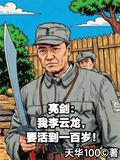 Liang Jian: I, Li Yunlong, Will Live to Be a Hundred Years Old
102.2kReads8.2Score8.4kShelves
Liang Jian: I, Li Yunlong, Will Live to Be a Hundred Years Old
102.2kReads8.2Score8.4kShelves
 Anti-Japanese War: Gangsters and Spoilers in the Secret Service World
21.2kReads8.0Score1.9kShelves
Anti-Japanese War: Gangsters and Spoilers in the Secret Service World
21.2kReads8.0Score1.9kShelves
 Rebirth of the Republic of China, Printing 100 Million US Dollars at the Beginning
2Reads5.8Score—Shelves
Rebirth of the Republic of China, Printing 100 Million US Dollars at the Beginning
2Reads5.8Score—Shelves
 Starting from the Dongzhou Empire, Build the Strongest China!
2.7kReads5.8Score104Shelves
Starting from the Dongzhou Empire, Build the Strongest China!
2.7kReads5.8Score104Shelves
 Fish from All over the World
119.6kReads9.0Score12.8kShelves
Fish from All over the World
119.6kReads9.0Score12.8kShelves
 The Rise of the Far East in Sino-Japanese War
9.8kReads7.7Score516Shelves
The Rise of the Far East in Sino-Japanese War
9.8kReads7.7Score516Shelves
 The Left Hand Is Imperial Green, the Right Hand Is Beautiful Waist
64.7kReads9.3Score2.7kShelves
The Left Hand Is Imperial Green, the Right Hand Is Beautiful Waist
64.7kReads9.3Score2.7kShelves
 The Rise of the Republic of China Since World War I
26Reads5.8Score—Shelves
The Rise of the Republic of China Since World War I
26Reads5.8Score—Shelves
 Soul Travels Through the Republic of China 1903
16.1kReads7.7Score1.4kShelves
Soul Travels Through the Republic of China 1903
16.1kReads7.7Score1.4kShelves
 Begonia and Knife, Nanyang Double Wall
7Reads—Score—Shelves
Begonia and Knife, Nanyang Double Wall
7Reads—Score—Shelves
 Republic of China: the Strongest Warlord! Sink the Neon Battleship
121Reads5.8Score—Shelves
Republic of China: the Strongest Warlord! Sink the Neon Battleship
121Reads5.8Score—Shelves
 Three Kingdoms: Emperor? Those with Strong Soldiers and Horses Will Do It!
27.7kReads8.6Score1.7kShelves
Three Kingdoms: Emperor? Those with Strong Soldiers and Horses Will Do It!
27.7kReads8.6Score1.7kShelves
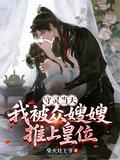 On the Day of the Wake, I Was Promoted to the Throne by My Sisters-In-Law
4.2kReads8.8Score232Shelves
On the Day of the Wake, I Was Promoted to the Throne by My Sisters-In-Law
4.2kReads8.8Score232Shelves
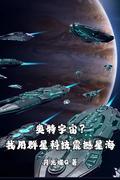 Ultra Universe? I Use Star Technology to Shake the Sea of Stars
380Reads—Score—Shelves
Ultra Universe? I Use Star Technology to Shake the Sea of Stars
380Reads—Score—Shelves
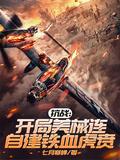 Anti-Japanese War: Start with an Art Company and Build Your Own Iron-Blooded Tiger
37.5kReads8.8Score2.7kShelves
Anti-Japanese War: Start with an Art Company and Build Your Own Iron-Blooded Tiger
37.5kReads8.8Score2.7kShelves
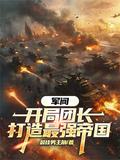 The Replacement System at the Beginning, I Replaced a Million Troops
16.3kReads8.5Score1kShelves
The Replacement System at the Beginning, I Replaced a Million Troops
16.3kReads8.5Score1kShelves
 In 1900, the Industrial Powers Attacked Russia and Japan and Swept Europe and the United States.
33.3kReads6.3Score3kShelves
In 1900, the Industrial Powers Attacked Russia and Japan and Swept Europe and the United States.
33.3kReads6.3Score3kShelves
 From Launching Mechas to the Star Sea Fleet, I Rule the Stars
49.6kReads9.1Score5.3kShelves
From Launching Mechas to the Star Sea Fleet, I Rule the Stars
49.6kReads9.1Score5.3kShelves
 The Rise of the Sichuan Army in the Anti-Japanese War
1.7kReads9.2Score101Shelves
The Rise of the Sichuan Army in the Anti-Japanese War
1.7kReads9.2Score101Shelves
 Head of the Regiment: Came to the Anti-Japanese Battlefield but Was Among the Cannon Fodder
3.8kReads8.8Score181Shelves
Head of the Regiment: Came to the Anti-Japanese Battlefield but Was Among the Cannon Fodder
3.8kReads8.8Score181Shelves
 Warlord: My Father Is the Governor of Six Provinces, and I Want to Be the Yellow Emperor
32.3kReads8.9Score1.7kShelves
Warlord: My Father Is the Governor of Six Provinces, and I Want to Be the Yellow Emperor
32.3kReads8.9Score1.7kShelves
 Immortal War Flag William's Star Abyss Tyranny
179Reads7.7Score—Shelves
Immortal War Flag William's Star Abyss Tyranny
179Reads7.7Score—Shelves
 Global Copy: Shocking the World with Hundreds of Millions of People
17.3kReads8.3Score1.6kShelves
Global Copy: Shocking the World with Hundreds of Millions of People
17.3kReads8.3Score1.6kShelves
 World Nuclear Peace Starts with the Creation of Umbrella Companies
1.6kReads5.8Score188Shelves
World Nuclear Peace Starts with the Creation of Umbrella Companies
1.6kReads5.8Score188Shelves
 Marvel: the Strongest Copycat System
12.1kReads8.4Score1.1kShelves
Marvel: the Strongest Copycat System
12.1kReads8.4Score1.1kShelves
 Bright Sword: Hand in at the Beginning, Okamura Neji Cried
2.9kReads7.4Score130Shelves
Bright Sword: Hand in at the Beginning, Okamura Neji Cried
2.9kReads7.4Score130Shelves
 Turn in the Crossing Gate at the Beginning and the National Team Enters
4.9kReads7.3Score334Shelves
Turn in the Crossing Gate at the Beginning and the National Team Enters
4.9kReads7.3Score334Shelves
 From Ordinary to Legendary
983Reads—Score106Shelves
From Ordinary to Legendary
983Reads—Score106Shelves
 I Traveled to Shanxi to Fight Against Japan
16Reads5.8Score—Shelves
I Traveled to Shanxi to Fight Against Japan
16Reads5.8Score—Shelves