I'm here to join in the fun. "Broken Game: Another Possibility of Shu Han": An in-depth deduction to construct a strategic break in the cracks of history. When the posthumous title of "Dedicate yourself to death and die" became a footnote to the tragic end of the Shu Han regime, and when the banner of "Reviving the Han Dynasty" sadly fell in the autumn wind of the original five feet, the lovers of the Three Kingdoms never stopped sighing at this regime. The appearance of "Breaking the Game: Another Possibility of the Shu Han" is like a sharp blade, taking 219 AD as the anchor point, tearing open the inherent cracks in the historical narrative, and leading readers to explore the strategic opportunities of the Shu Han under the cover of fate. Different from the fatalistic interpretation of the "innate deficiencies" of the Shu Han in traditional history books, the author of this book abandons the empty talk of "hindsight" and uses rigorous historical data as the basis to restore the complex situation before the loss of Jingzhou. Focusing on the three key clues of Guan Yu's Northern Expedition, Liu Feng Mengda's garrison at Shangyong, and Liu Bei's main deployment, the potential variables of Shu Han's military dispatch, diplomatic game, and internal coordination are analyzed layer by layer. It is not a simple assumption that "if Guan Yu does not go to the Northern Expedition", but an in-depth discussion of feasible strategic fine-tuning such as "adjustment of the rhythm of the Northern Expedition" and "closer linkage between the east and west lines", so that "another possibility" can break away from fantasy and be supported by historical logic. The book's questioning of the nature of "breaking the situation" is particularly moving: the Shu Han's dilemma is not only geographically "trapped in Bashu", but also the limitation of strategic vision. The analysis of the Liu Bei Group's "emphasis on friendship and neglect of the overall situation" and "emphasis on military achievements and neglect of overall planning" goes beyond the praise and criticism of individual figures and points directly to the shortcomings of the top-level design of the regime. When readers follow the text to deduce the chain reaction of "seizing the opportunity of 219", they will see not only the possibility of rewriting the pattern of the Three Kingdoms, but also a clear understanding of the deep logic of "historical choice". As a profound and logical historical strategy work, it has distinctive features and unique market positioning. Although its audience is relatively small, it is a rare masterpiece for readers who are keen on historical deduction and strategic analysis. The story is logically deduced, and everything from strategic goals to implementation paths to possible reactions of opponents has been carefully analyzed and verified. This strong logic gives the story a high degree of credibility and persuasiveness. It is neither a traditional "historical novel" because it incorporates a large number of strategic deductions and assumptions; nor does it conform to the entertainment characteristics of "shuangwen" or "fantasy novel". Its positioning is closer to "historical strategy writing". It is a niche but very in-depth genre, which combines the depth of historical writing with the depth of strategic games. Closing the page and looking at the dense cypress shadows of Wuhou Temple, the reader's dialectical thinking about "general trend" and "man-made" will also deepen. This book may not be able to change the ending of history, but it opens a new door for us, giving the story of the tragic Shu Han a more profound and interesting interpretation.
 Three Kingdoms************
—Reads5.8Score—Shelves
Three Kingdoms************
—Reads5.8Score—Shelves
 One Kick**********
—Reads5.8Score—Shelves
One Kick**********
—Reads5.8Score—Shelves
 Troubled Times**
—Reads5.8Score—Shelves
Troubled Times**
—Reads5.8Score—Shelves
Sissy *************** 473Reads5.8Score—Shelves
 Late Han Dynasty**
—Reads5.8Score—Shelves
Late Han Dynasty**
—Reads5.8Score—Shelves
 Three Kingdoms *********
—Reads5.8Score—Shelves
Three Kingdoms *********
—Reads5.8Score—Shelves
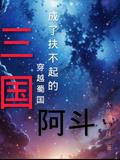 Three Kingdoms************
—Reads5.8Score—Shelves
Three Kingdoms************
—Reads5.8Score—Shelves
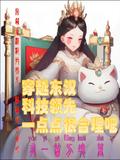 Traveling Through ***************
—Reads5.8Score—Shelves
Traveling Through ***************
—Reads5.8Score—Shelves
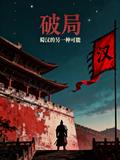 Break *********
—Reads5.8Score—Shelves
Break *********
—Reads5.8Score—Shelves
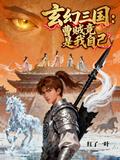 Fantasy**********
—Reads5.8Score—Shelves
Fantasy**********
—Reads5.8Score—Shelves