Completely meets all requirements! In the last years of the Xin Dynasty, the internal affairs were chaotic, the political situation was turbulent, natural disasters occurred frequently, and wars broke out. Young Zhang Yi joined the army with passion to serve his country, but unfortunately he was defeated. He and his comrades were taken captive by the barbarians to the north. In this extremely cold and miserable place, the Han people had no dignity and were treated like livestock by the Turks, Xianbei and other foreigners, who drove and killed them wantonly. Zhang Yi and his comrades suffered even more humiliation. They had been dormant for many years and finally rose up, vowing to restore the Han people's country and completely change this dark and cruel world.
Breaking in! The rise of a down-and-out family, a basketful of beauties in the late Song Dynasty, great book! Millions of words have not collapsed at all! Classic Lao Baiwen in the late Song Dynasty! Commercial farming, then the Western Army! Very attractive! Li Qingzhao, Li Shishi, Pan Jinlian, Chen Miaochang and other characters are created! !
A long historical novel, a painstaking work. Starting from the first year of the Republic of China, the epidemic will not end until it is over. An old rural house with a century-old history. The seniors love and hate, and the juniors have emotional entanglements. A cynical and scumbag man, a self-indulgent and resentful woman. A wonderful palace fight drama and a classic love story. A wow work
There are farming, there are villages, there are rivers and lakes, there are bandits and escort agencies, there are courts with powerful strategies, there are also wars and strategies, business wars and inventions. Various modern fraud schemes were used against wealthy families in ancient times. There are various unexpected situations, and the villains in the game are all as smart as monkeys, but when their IQ is crushed by their cognition, they feel so weak, pitiful and helpless. The strategy of war is a combination of good and bad, and the cycle goes back and forth, making it difficult for the enemy to guard against it. [Almost crying]
Is the Warring States period possible in Japan? It started at the end of the twilight period, with conquests in troubled times, farming and construction, shipbuilding and cannon building, and fighting for hegemony. The protagonist fights the Jurchens in the middle period, establishes the Liaodong Army, builds treasure ships, fights the Netherlands and Portugal in Southeast Asia, takes over India, discovers Australia, seizes the Middle East, enters the Americas, and fights against the Western powers.
"Desire to the Nine Heavens" is an epic of troubled times that spans more than ten years and gives an overview of the rise and fall of the four kingdoms. It breaks away from the "black and white" formula of traditional Machiavellian novels and plunges its writing into the most real human heart. The two core male protagonists in the book are never flat "decent" and "villain": the first male protagonist Qi Ming went from a wandering boy on the streets of Yong Dynasty to the throne of the Flame Phoenix King. He has a kind side - opening up new opportunities and reducing gifts. There are also mortal struggles between taxing and protecting the people under his rule: facing Pan Chi's Zen position, he refused to give up. He was afraid that he would not be able to shoulder the heavy responsibility of the country, and he was also afraid of the backlash brought by power; in order to protect the people around him, he also wavered at the boundaries of power. The second male protagonist, Xiao Lin, is the iron-blooded emperor of the Yong Dynasty. He killed the emperor in cold blood and subjugated the soldiers, but he also had tenderness for his lover Su Ling'er and the sobriety that "the people's heart is the strongest city wall". He believed in iron-fisted power throughout his life, but after he ascended the throne, he was gradually backlashed by the evil consequences he had planted. The court games throughout the book are intertwined, from the transformation of the Yong Dynasty Palace to the Zen throne of Yanhuang, from the hidden secrets of the Four Kingdoms to the open situation of the Three Kingdoms Alliance. The war scenes are even more magnificent and tragic: the confrontation at Shiping Pass, the surprise attack at Hansu Pass, the fierce battle between the Snowfield and the Xuanshuang Army. Behind each killing, what is written is not a simple victory or defeat, but the collision of different governing logics. The sharpest core of the book is that it puts "people's hearts and minds" absolutely above all plots, wars, and heroic narratives: Xiao Lin tried his best, but because he lost the hearts of the people, he was finally pressed by Qiming's "submission of the people"; Qiming's "catfish theory" and "power comes from the people" governing philosophy are never empty slogans, but are based on the reality of promoting trade and benefiting workers, resettling refugees, and reforming official governance. Even those seemingly inconspicuous little people - the old people guarding the dilapidated inn, the soldiers who were drafted, and the people who were struggling to survive in the war, their choices are the real force that pushes the four countries forward. This is not a novel about "how a hero reaches the top", but a story about how everyone struggles with desire, responsibility, and conscience in troubled times, and is ultimately weighed by the steelyard of "people's hearts."
Can you read the Anti-Japanese War literature? This book is a passionate anti-war article that describes the frontal battlefield of the Chinese army. You can read it.
It is a non-traditional and exciting story. The story begins with the failure of the Tenth Army Corps before the Long March, which many people do not know much about. The protagonist will establish a guerrilla army from scratch in the Jiangnan area. The team will gradually grow through all the obstacles, and will experience counter-encirclement and suppression, the Anti-Japanese War and the Liberation War. Together with the readers, we will enter those magnificent and turbulent years.
Dear friends, there is a picture on the first page of the first chapter. If you take a look at it, you will know how weak the protagonist is! Extremely weak! ! ! Weak chickens are stronger than him [crying][crying][crying] The protagonist travels back to Jin Jinggong, the last king of the Jin Kingdom. He first rescues Nie Zheng, and then befriends Wu Qi. He travels among the princes and countries, and hundreds of schools of thought use their power and tactics, train troops and gather generals, compete for territory, and finally rise to dominate the world.
An epic about "original intention" Among the numerous time-travel novels, "Cangtian is dead, fight!" Is an anomaly. It doesn't have Shuangwen-style golden fingers, it doesn't have the thrill of conquering the world, and it doesn't even have the "aura of the protagonist" in the traditional sense. Its protagonist, Qi Run, is an ordinary delivery boy from 2023. Every victory after time travel is accompanied by tragic sacrifices, and every growth is soaked in the blood of his comrades. But this is precisely the most unique thing about this work: it is not a novel about "success", but a novel about "original intention". It asks: over the past two thousand years, are the struggles and sacrifices of those people who have been called "thieves", "thieves" and "bandits" by official history worth it? Where will the road they paved with flesh and blood lead to in the end? This is the soul of this novel: it uses the shell of time travel to wrap up an innocent heart of questioning history and paying tribute to the martyrs. It tells us that the "river of original intention" that has flowed for two thousand years finally merged into the ocean of victory in 1949. 1. The River of Original Intention: From Liu Xia Zhi to 1949 Users condensed the theme of this work into "The River of Original Intention", which is the most profound grasp of the novel. This river has been flowing since the Spring and Autumn Period, and every wave is the blood and tears of the oppressed: The feet under the willows are the courage to resist. Chen Sheng and Wu Guang completed the first disenchantment of "Destiny". Zhang Jiao explored a way to organize people through faith. Huang Chao proved that without a base, rogueism could not ultimately win. The Red Scarf Army warns that internal careerists are more dangerous than external enemies. The Taiping Heavenly Kingdom and the Boxer Rebellion showed that those in power would rather be friends than domestic slaves. The experience in this river was gained by the lives of our predecessors. Zhang Jiao didn't know this, but Qi Run did. Qi Run returned to the late Han Dynasty with two thousand years of experience, and told Zhang Jiao before he died: Your journey was not in vain. The seeds you water with your lives will eventually bear fruit two thousand years later. This is the ultimate meaning of the "river of original intention": it is not the ideal of a certain person, but the collective memory and collective will accumulated by a class, a nation, and a civilization in two thousand years of struggle and struggle. 2. Class and road: the inevitable fate of five parallel lines. The most profound insight of this work is that history is not a duel between good and evil, but countless roads determined by class attributes, colliding head-on at the crossroads of the times. No one is a clown, everyone reaches the extreme on their own track, ultimately forming a picture of that magnificent, bloody and cruel era. (1) Yellow Turban Road: The struggle of the oppressed and its tragedy (2) Loyal Minister Road: Martyrs of the old order (3) Family Road: Sustainability of interests beyond the dynasty (4) Warlord Road: Unstable factors arising from force (5) Imperial Road: Prisoners and careerists The real emperor: three different kinds of prisoners Imperial careerists: pursuers forced out by class identity They are all forced to stop by their own class. They have to keep climbing, they have to keep proving themselves, because if they stop, they will fall back to the "place" that scares them. 3. View of History: Deconstructing the Heroes and Rebuilding the People The most subversive contribution of this work is the deconstruction of the traditional heroic view of history and the reconstruction of the people's view of history. 4. Literary techniques: symbolism, narrative and emotion Symbolic system: The three women are the embodiment of ideas - Zhang Furong is the "original intention", Guan He is the "courage", and Ye Yun is the "kindness and tenderness". They are not a "harem", but the three dimensions of Qirun's spiritual world. Narrative structure: The novel takes Qi Run's time travel as its starting point. The structure is large but not scattered, with a clear main line and rich side lines. 5. Artistic achievements and limitations Achievements: 1. Depth of thought: Integrating class analysis, historical philosophy, and revolutionary narrative into time-travel novels, reaching a rare philosophical height in online literature. 2. Character creation: All main characters have clear class attributes and behavioral logic, and there is no simple dichotomy between good and bad. 3. Emotional power: The memorial to the victims is sincere and touching, making people cry when reading it. 4. Historical insight: The analysis of various classes in the late Eastern Han Dynasty is profound and precise, restoring the complex face of history. Limitations: 1. Preaching: involves ideological changes and the direct implantation of modern political terms. 2. Rhythm control: The rhythm in the middle part is sometimes a little draggy. 3. Language style: The mixture of ancient and modern languages may affect the immersion of some readers. But these do not shake the fundamental value of the work. It is a novel with a soul, and its soul is the questioning of the "original intention", the belief in the "people", and the reshaping of "history". 6. Conclusion: A message to the forerunners. Before Zhang Jiao died, he asked Qi Run: "What will future generations think of us?" Qi Run told him with tears in his eyes: Future generations will describe you as rebels, cults, and bandits. Those who defeat you will be portrayed as heroes, and your names will be written in the history books of defamation. But - "There will be many people in future generations who will inherit your beliefs. There will be many people who will have responsibilities to the people of the world because of you. There will be many people who will raise the flag to resist injustice because of you. There will be many people who will be inspired to resist oppression because of you. The courts in future generations will also reduce taxes and lighten corvee because of you - but that is not because of their conscience, but because you have been here, you have fought, and you have fought hard!" Zhang Jiao laughed with relief. At that moment, two thousand years of suffering and struggle condensed into a sigh and then turned into a ray of light. This is "Cangtian is dead, fight!" "The ultimate meaning of ": It is a message to the forerunners. It tells all stigmatized revolutionaries: Your road was not in vain. Your blood was not shed in vain. Your cause will eventually be completed by the people's hands two thousand years later. The people will win - not because history will be on their side, but because they will use their own blood and lives to turn history to their side. This is a work destined to be niche, but destined to be immortal. It is not written for readers looking for a "feeling of pleasure", but for those who are willing to stop and think about what the "original intention" is, how the "people" exist, and how "victory" is achieved in the long river of history. If you are such a person, then this book is worth reading.
[Imaginary dynasty + time travel + war + conspiracy + group portraits + the golden finger was cut in half] Tian Shu, a male high school student, woke up and traveled through the ancient mourning hall. The widowed sisters-in-law swarmed over and showed their utmost concern. In troubled times and feudal times, noble surnames are in power. The system is in vain, and the sisters-in-law have their own agendas. Can he, who comes from a poor family, change his fate against the odds? Sitting on thousands of miles of land and leaving a name in history! [Crying] Or is it impossible to escape fate and become a miserable cannon fodder for someone else's marriage?
The new book covers the Three Kingdoms, the art of war, strategy, people's livelihood, noble families, relatives, crusades, sieges, field battles, heroines, children, and foreign races. No harem. There is mercy, not the Holy Mother. People live their lives and attack cities and villages. Behead generals and assassinate assassins. Prestigious family, marriage. There is no system, Golden Finger only has a protagonist with high martial arts skills, a single female protagonist, and no harem. There will be other historical female characters appearing, but not harems.
"End of the Tang Dynasty + Five Dynasties + Struggle for Hegemony + Strategy + Love + Research", traveling through Emperor Ai of the Tang Dynasty, how to fight for hegemony step by step from a prisoner to the Tang Dynasty after the Five Dynasties?
The protagonist of this novel develops from a small landowner's family. There is no system, no cheats, and the plot logic is rigorous. He is not as awesome as the protagonists of some novels. If it were true, he would have died hundreds of times. The main theme of the novel is truth!
Favored by the emperor, he had a team, started from Hexi and the Western Regions, and later moved to the Central Plains. Passion, war, strategy, recruiting talents from all over the world
This book, how can there be a good time travel article? The people in the world are miserable, the human heart is the most terrible, human nature is more unpredictable, the plot is forced, unofficial history is also the official history, we don't know what a real Ming Dynasty is like. This book tries its best to restore the truth at that time, betrayal in the back, growth after the struggle, and finally finds that it is powerless, and its own historical views are wrong. The Ming Dynasty is not what we will be like through the beautifying filter of later generations, but it is also the era we most want to explore and admire the most and are tough.
Travel through the late Ming Dynasty, fight against the powerful, equally divide the land, establish systems, let the Chinese nation stand on top of the world, and build a new Chinese empire. . . . .
The Tang Dynasty on the edge of a knife, the struggle of a group of warriors. Tomato's first realistic war article. The research is rigorous, the props are appropriate, the lines are serious, there is no system, no brain damage, and the IQ is online throughout the whole process. Armor and riding equipment, heavy armor for foot soldiers, gold and iron horses. Hard!
This book is definitely very passionate. Both the protagonist and the supporting characters have superior IQs. The plot is full of ups and downs, full of dangers, thrilling, thrilling, and extremely enjoyable [Like] [Like]
The first book, "The Top Novel Under the Masterpiece", doesn't need to be overestimated in its gold content. The Ouchi Supervisor The Great Eunuch's Dog is very fast but the quality is really high. Snow is the final book, so feel free to read it. The second book, "Rebirth of the Ming Dynasty", has a high score of 9.4 And 564,000 readers, and the data is quite explosive! There is gold and wisdom, not brainlessness. Although the data of the third book is inferior to the first two, the name "Tianxiang Tong" was famous on the entire Internet back then, and the writing style is absolutely guaranteed! The fourth book, the author has just started, but the book has been personally tested to be non-toxic and can be used with confidence. The author updates 6000+ times a day, the speed is stable, and the follow-up will be more exciting! The fifth book, the originator of time travel literature, the master Huang Yi, once Huang Yi comes out, who can compete with him! The sixth book has novel themes and bold techniques. Friends who like it should hurry up and read it, as it may be gone one day.
 Nine Cauldrons of Destiny
—Reads5.8Score—Shelves
Nine Cauldrons of Destiny
—Reads5.8Score—Shelves
 Northern Song Dynasty: What a Coincidence That I Am Also a Dandy
1.3kReads8.0Score167Shelves
Northern Song Dynasty: What a Coincidence That I Am Also a Dandy
1.3kReads8.0Score167Shelves
 The God of War and His Beauties
64Reads5.8Score—Shelves
The God of War and His Beauties
64Reads5.8Score—Shelves
 Heroes of Troubled Times Fighting for Hegemony
1.7kReads8.2Score—Shelves
Heroes of Troubled Times Fighting for Hegemony
1.7kReads8.2Score—Shelves
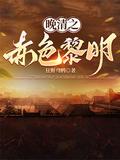 Red Dawn in the Late Qing Dynasty
640Reads5.8Score—Shelves
Red Dawn in the Late Qing Dynasty
640Reads5.8Score—Shelves
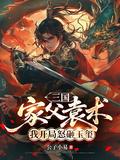 Three Kingdoms: the Rebellious Son of the Yuan Family Broke the Jade Seal at the Beginning
87.8kReads8.6Score9.9kShelves
Three Kingdoms: the Rebellious Son of the Yuan Family Broke the Jade Seal at the Beginning
87.8kReads8.6Score9.9kShelves
 Century Old House
554Reads—Score—Shelves
Century Old House
554Reads—Score—Shelves
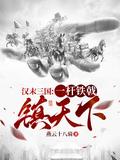 The Three Kingdoms at the End of Han Dynasty: an Iron Halberd Rules the World
18.2kReads8.6Score1.3kShelves
The Three Kingdoms at the End of Han Dynasty: an Iron Halberd Rules the World
18.2kReads8.6Score1.3kShelves
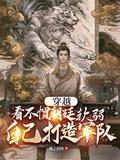 Time Travel Can't Stand the Weakness of the Imperial Court and Builds an Army by Oneself
3.1kReads8.5Score278Shelves
Time Travel Can't Stand the Weakness of the Imperial Court and Builds an Army by Oneself
3.1kReads8.5Score278Shelves
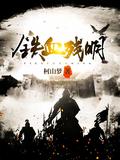 Iron-Blooded and Residual Brightness
101.1kReads9.3Score10.1kShelves
Iron-Blooded and Residual Brightness
101.1kReads9.3Score10.1kShelves
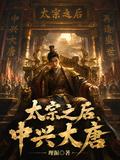 After Taizong, the Tang Dynasty Was Rebuilt
207.3kReads9.3Score26.5kShelves
After Taizong, the Tang Dynasty Was Rebuilt
207.3kReads9.3Score26.5kShelves
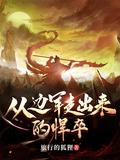 A Fierce Soldier Who Came Out of the Border Army
904Reads8.9Score—Shelves
A Fierce Soldier Who Came Out of the Border Army
904Reads8.9Score—Shelves
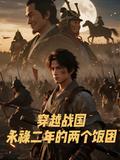 Traveling Through the Warring States Period: Two Rice Balls in the Second Year of Yonglu
1kReads5.8Score128Shelves
Traveling Through the Warring States Period: Two Rice Balls in the Second Year of Yonglu
1kReads5.8Score128Shelves
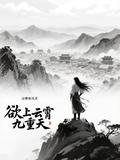 Desire to Ascend to the Ninth Heaven
659Reads5.8Score—Shelves
Desire to Ascend to the Ninth Heaven
659Reads5.8Score—Shelves
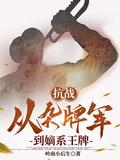 The Flesh Furnace of Resistance
30.9kReads8.6Score2.4kShelves
The Flesh Furnace of Resistance
30.9kReads8.6Score2.4kShelves
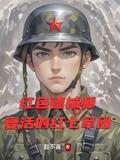 The Red German Weapon Master, the Resurrected Red Seventh Legion
514Reads5.8Score—Shelves
The Red German Weapon Master, the Resurrected Red Seventh Legion
514Reads5.8Score—Shelves
 Starting from Reversing Yiling and Reviving Jihan
2.7kReads8.7Score195Shelves
Starting from Reversing Yiling and Reviving Jihan
2.7kReads8.7Score195Shelves
 Resistance Against Japan: Beacon Fire Warriors
10.2kReads8.9Score691Shelves
Resistance Against Japan: Beacon Fire Warriors
10.2kReads8.9Score691Shelves
 Warring States Period: Jin Fought Back and Regained Han, Zhao and Wei
4.2kReads8.8Score323Shelves
Warring States Period: Jin Fought Back and Regained Han, Zhao and Wei
4.2kReads8.8Score323Shelves
 After Time Travel, I Still Wear a Yellow Helmet and a Yellow Robe
1.1kReads6.4Score106Shelves
After Time Travel, I Still Wear a Yellow Helmet and a Yellow Robe
1.1kReads6.4Score106Shelves
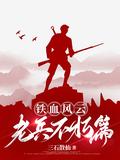 Veterans Never Die
547Reads5.8Score—Shelves
Veterans Never Die
547Reads5.8Score—Shelves
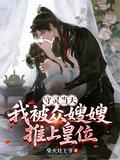 On the Day of the Wake, I Was Promoted to the Throne by My Sisters-In-Law
3.7kReads8.8Score211Shelves
On the Day of the Wake, I Was Promoted to the Throne by My Sisters-In-Law
3.7kReads8.8Score211Shelves
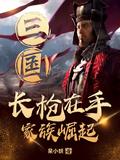 Three Kingdoms: the Rise of a Family with a Spear in Hand
401Reads5.3Score—Shelves
Three Kingdoms: the Rise of a Family with a Spear in Hand
401Reads5.3Score—Shelves
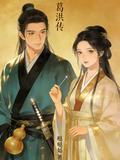 Ge Hongchuan
7Reads—Score—Shelves
Ge Hongchuan
7Reads—Score—Shelves
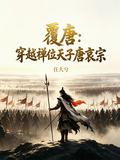 Overturning the Tang Dynasty: Traveling Through the Zen Emperor Tang Aizong
269Reads5.8Score—Shelves
Overturning the Tang Dynasty: Traveling Through the Zen Emperor Tang Aizong
269Reads5.8Score—Shelves
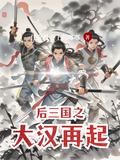 Northern Wei Dynasty Mouguo: This Xuande Is Too Strong
2.5kReads7.3Score145Shelves
Northern Wei Dynasty Mouguo: This Xuande Is Too Strong
2.5kReads7.3Score145Shelves
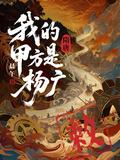 Sui and Tang: My Client Is Yang Guang
4Reads—Score—Shelves
Sui and Tang: My Client Is Yang Guang
4Reads—Score—Shelves
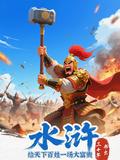 Water Margin: Give the People of the World Great Wealth!
2.4kReads7.3Score137Shelves
Water Margin: Give the People of the World Great Wealth!
2.4kReads7.3Score137Shelves
 Rebirth of the Southern Song Dynasty, the Legend of the Rogue Claiming to Be Emperor
978Reads6.0Score106Shelves
Rebirth of the Southern Song Dynasty, the Legend of the Rogue Claiming to Be Emperor
978Reads6.0Score106Shelves
 The First Volume of the Romance of Later Zhao: the Biography of Shi Le
107Reads5.8Score—Shelves
The First Volume of the Romance of Later Zhao: the Biography of Shi Le
107Reads5.8Score—Shelves
 Dai Ming
9.4kReads8.4Score772Shelves
Dai Ming
9.4kReads8.4Score772Shelves
 Three Kingdoms, Yellow Turban Revolution
216Reads5.8Score—Shelves
Three Kingdoms, Yellow Turban Revolution
216Reads5.8Score—Shelves
 In Another Time and Space, My Grandfather and I Exterminate the Japanese Pirates Together
—Reads5.8Score—Shelves
In Another Time and Space, My Grandfather and I Exterminate the Japanese Pirates Together
—Reads5.8Score—Shelves
 Riding the World
959Reads6.4Score—Shelves
Riding the World
959Reads6.4Score—Shelves
 I Guard the Northern Border for the Ming Dynasty
4kReads8.2Score268Shelves
I Guard the Northern Border for the Ming Dynasty
4kReads8.2Score268Shelves
 Colonial Ming Dynasty
3.8kReads8.8Score299Shelves
Colonial Ming Dynasty
3.8kReads8.8Score299Shelves
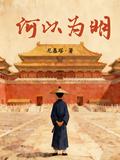 Why Is It Clear?
855Reads8.2Score—Shelves
Why Is It Clear?
855Reads8.2Score—Shelves
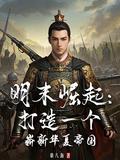 The Rise of the Late Ming Dynasty: Building a New Chinese Empire
17.5kReads8.0Score1.9kShelves
The Rise of the Late Ming Dynasty: Building a New Chinese Empire
17.5kReads8.0Score1.9kShelves
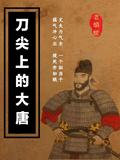 Zhujinou
4.1kReads8.2Score356Shelves
Zhujinou
4.1kReads8.2Score356Shelves
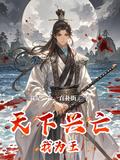 The World Rises and Falls, I Am the King
46Reads5.8Score—Shelves
The World Rises and Falls, I Am the King
46Reads5.8Score—Shelves
 The Great Medical Detective
99Reads5.8Score—Shelves
The Great Medical Detective
99Reads5.8Score—Shelves
 I Carry the Scroll of Mountains and Rivers, Traveling Through the Past and Present to Pursue the Light
22Reads8.6Score—Shelves
I Carry the Scroll of Mountains and Rivers, Traveling Through the Past and Present to Pursue the Light
22Reads8.6Score—Shelves
 The Mountains and Rivers Are Stained with Ink
14Reads—Score—Shelves
The Mountains and Rivers Are Stained with Ink
14Reads—Score—Shelves
 Twin-Eyed Covenant: Throne of Thorns
9Reads8.6Score—Shelves
Twin-Eyed Covenant: Throne of Thorns
9Reads8.6Score—Shelves
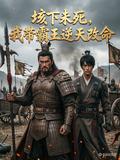 Gaixia Is Not Dead Yet, I Will Lead the Overlord to Change His Fate Against the Will of Heaven
1Reads5.8Score—Shelves
Gaixia Is Not Dead Yet, I Will Lead the Overlord to Change His Fate Against the Will of Heaven
1Reads5.8Score—Shelves
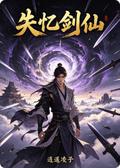 Amnesia Sword Immortal
17Reads8.5Score—Shelves
Amnesia Sword Immortal
17Reads8.5Score—Shelves
 Ancient History and Present 3
215Reads5.8Score—Shelves
Ancient History and Present 3
215Reads5.8Score—Shelves
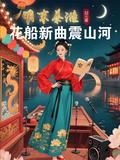 Qinhuai in the Late Ming Dynasty: New Tunes of Flower Boats Shook the Mountains and Rivers
69Reads5.8Score—Shelves
Qinhuai in the Late Ming Dynasty: New Tunes of Flower Boats Shook the Mountains and Rivers
69Reads5.8Score—Shelves
 Swordsmanship in the Snow
13.3kReads5.8Score741Shelves
Swordsmanship in the Snow
13.3kReads5.8Score741Shelves
 Ming Inheritance
310.4kReads9.4Score38.5kShelves
Ming Inheritance
310.4kReads9.4Score38.5kShelves