These are the only books I've read, and the ratings are pretty good, but they're all still there, and not many have been completed. I don't know if they're war-related, but I feel like they're pretty good.
The male protagonist was originally a spendthrift playboy who was possessed by a "saint-type" time traveler for three years. After finally regaining his body, he was forced to imitate the other person and pretend to be a "perfect persona." What's even more amazing is that he brings his own koi buff, he can break through secret conversations between enemy agents while drinking tea, and he can pick up key information while strolling around the street. Others praise him for his ability to predict things, but only he knows: it was all a matter of luck!
If you like reading war books, you will definitely like - "Time Travel: The Romance of Ping Liuli in the Iron-blooded Jianghu" 1. The historical depth of time-travel narrative and the sublimation of the revolutionary theme "Time-travel: The Romance of Ping Liuli in the Iron-Blooded Jianghu" achieves a breakthrough in subject matter and theme within the framework of the traditional time-travel novel. The work takes the Pingliuli Uprising in 1906 as the historical background, and through the perspectives of revolutionary figures such as Liu Daoyi and Cai Shaonan, it elevates the literary technique of "time travel" from the rewriting of personal destiny to the grand narrative of national salvation. Different from the time-space adventure of early time-travel novels such as "Looking for the Qin" or the court love of "Step by Step", this book abandons the "time-travel and cheating" novel mode and instead focuses on the struggles and sacrifices of individuals in the torrent of history. For example, the book's portrayal of uprising leaders such as Xiao Kechang and Liao Shubao not only retains the heroism of knights, but also gives them the idealism of revolutionaries, forming a narrative tension of "a blend of historical reality and literary imagination." This approach coincides with the creative concept of "historical research style". The author has obviously made in-depth research on the social structure of the late Qing Dynasty, the operating mechanism of the Hui Party and the details of the uprising, such as the living conditions of Anyuan coal miners, the organizational rules of the Hongjiang Hui, etc. They are all based on historical materials and avoid the shortcomings of many time-travel novels that are "fake for the sake of comfort". At the same time, through the time-travel setting of holographic projection, the work allows historical figures such as Cixi and Guangxu to "spectate" the collapse of their own rule. This not only coincides with the core charm of time-travel novels of "examining history from a modern perspective", but also reveals the historical logic of the inevitable decline of the Qing Dynasty through the drama of time and space dislocation. 2. Time and space dialogue and character creation under dual-line narrative The narrative structure of this book adopts dual parallel lines: one is the tragic epic of the entire uprising in 1906, and the other is the "historical trial" under the holographic projection of Masi Street in 2026. This design not only enhances the layering of the story, but also deepens the theme through time and space dialogue. For example, the psychological changes of Cixi and Guangxu when watching the uprising process - from initial arrogance and fear to final silent reflection - are actually the soul torture of feudal rulers by the modern historical perspective. Liu Daoyi's "confrontation" with the future time and space before his death closely connected his personal destiny with the national awakening, forming a symbolic meaning of "death but still life". In terms of character creation, the work escapes the stereotype trap of traditional revolutionary narratives. Take Xiao Kechang as an example. He was both a miner leader and an ordinary person who was forced to be involved in the political whirlpool: his decisiveness when facing the Qing army's encirclement and suppression, his tenderness when he parted with his wife, his persistence in the revolutionary fire before his death, and his multiple character dimensions that made his image full and real. In addition, the tragic fate of female characters such as Yao Meizi and Zhang Hanying's wisdom and courage have broken through the limitations of women's "foil" in traditional historical novels and demonstrated the awakening and resistance of women in troubled times. 3. Integration and Innovation of Jianghu Chivalry and Revolutionary Ideals Another highlight of the work lies in the integration of "jianghu culture" and "revolutionary spirit". The party itself in the late Qing Dynasty had both the traditional chivalrous attributes of resisting the Qing Dynasty and restoring the Ming Dynasty and the political demands of the modern revolution, and the author strengthened this characteristic through detailed descriptions. For example, the secret codes and rituals used by members of the Hongjiang Society not only conformed to Jianghu rules, but also contained anti-Qing political metaphors; the weapons used by the rebels ranged from swords and cannons to captured foreign guns, symbolizing the transition from traditional folk power to modern revolution. This integration not only enriches the cultural heritage of the story, but also highlights the complexity of the historical process. Compared with "Thriving to Save the Nation" works such as "Ruling the World" and "New Song Dynasty", this book pays more attention to the perspective of the bottom: revolution is not the plan of a few elites, but a road paved with the flesh and blood of countless miners, farmers, and party members. For example, when Liao Shubao was killed, he shouted, "Twenty years later, there will be men who will come to dig up the ancestral graves." This was not only a declaration of war against the Qing court, but also a belief in the intergenerational inheritance of revolution. This kind of heroism in folk discourse is more contagious than a simple political declaration. 4. The balance between the sense of historical weight and the context of online literature. As an online novel, this book maintains readability without sacrificing historical seriousness. The author adopts a language style of "literary and white", which not only restores the context of the late Qing Dynasty (such as the wording of memorials and appeals), but also enhances the sense of substitution through modern narrative rhythm (such as the fast-paced editing of battle scenes). For example, when describing Liu Daoyi's torture, sensory details (the coldness of the shackles, the strong smell of blood) are intertwined with psychological monologues, allowing readers to feel the cruelty of history without giving up reading due to excessive depression. In addition, the work's "blank" treatment of historical events is also commendable. For example, the whereabouts of the remaining rebels after the failure of the uprising and the endings of some historical figures have not been fully explained, which not only conforms to the reality of incomplete historical data, but also leaves room for readers' imagination. This "virtual realism" approach is different from the "hardcore" style that emphasizes technical details in works such as "Lingao Qiming", and focuses more on the emotional resonance of historical situations. 5. The cultural value and practical inspiration of time-travel literature The success of this book reflects the transformation trend of time-travel literature from "entertainment" to "historical dialogue". It is no longer satisfied with allowing modern people to return to ancient "dimensionality reduction strikes", but attempts to explore the unfinished questions in history through the collision of time and space: If revolutionaries could foresee failure, would they still persist? If rulers could see the future, would they change their choices? This kind of thinking coincides with the scholar Fang Wei's suggestion that "time travel novels should become a medium for dialogue between history and reality." At the same time, the work's exploration of the relatively unpopular historical event of the Pingliuli Uprising has cultural salvage significance. It makes readers realize that the success of the Revolution of 1911 was not achieved overnight, but was the cumulative result of numerous local uprisings. This "bottom-up" view of history complements the current tendency in history education to focus too much on big figures. Conclusion: Historical Echoes in Iron-blooded Jianghu "Time Travel: The Romance of Ping Liuli in Iron-Blooded Jianghu" has set a new benchmark for online historical novels with its solid historical material foundation, multi-dimensional narrative innovation and profound humanistic care. It proves that time-travel literature can fully carry serious historical reflection and find a contemporary path for the inheritance of the national spirit in the collision of chivalry and revolutionary ideals. Just like Liu Daoyi's last words in the book: "The blood-fertile Central Plains are fertile with strong grass, and the cold and frozen earth is full of spring flowers." This work itself is a seed of fire sowing into the future.
Hard-core special warfare novels, overseas anti-terrorism operations. It's not systematic, it doesn't travel through time, and it's not wordy. The key is to be smart. China's version of Operation Valor. The whole novel is written fluently and has a sense of immersion and imagery.
A golden and refreshing article from the troubled times of Shanghai in the Republic of China is coming! Chemistry genius Shen Yanzhi returns to China with his top-notch skills, and joins forces with the stunningly talented Su Manqing to lead a team to tear down traitors, destroy Japanese military factories, outwit gold, and use science to integrate ancient laws to protect bronze national treasures. Throughout the whole process, there is a high-powered battle of wits, a happy counterattack, alchemy and heart-warming to protect the homeland, handsome guys and beauties are on fire in Shanghai, and there is no need to urinate to get ahead!
This is a very interesting novel about the war and love of the Republic of China, adapted from real people and true events. The plot is full of twists and turns, and the fate of the characters is ups and downs. You are welcome to open the book and read it!
 Sex-Changing Military Advisor: I Became the Strongest in Another World
178Reads5.8Score—Shelves
Sex-Changing Military Advisor: I Became the Strongest in Another World
178Reads5.8Score—Shelves
 New God of War in Southern Anhui
839Reads6.6Score—Shelves
New God of War in Southern Anhui
839Reads6.6Score—Shelves
 Fox of Hengyang
911Reads6.6Score—Shelves
Fox of Hengyang
911Reads6.6Score—Shelves
 Thirteen Provinces New Handbags
33Reads—Score—Shelves
Thirteen Provinces New Handbags
33Reads—Score—Shelves
 Passionate War
10Reads8.1Score—Shelves
Passionate War
10Reads8.1Score—Shelves
 The Storm in the City
100Reads8.5Score—Shelves
The Storm in the City
100Reads8.5Score—Shelves
 Older Youth Wang Pu
64Reads8.1Score—Shelves
Older Youth Wang Pu
64Reads8.1Score—Shelves
 Fantasy: I Open a Blind Box in the World of Beast Control!
10.3kReads8.7Score919Shelves
Fantasy: I Open a Blind Box in the World of Beast Control!
10.3kReads8.7Score919Shelves
 Pirates: Extremely Evil People, the Celestial Dragons Are Frightened by the News.
5.4kReads8.9Score280Shelves
Pirates: Extremely Evil People, the Celestial Dragons Are Frightened by the News.
5.4kReads8.9Score280Shelves
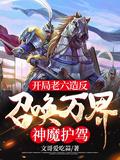 At the Beginning, Lao Liu Rebelled and Summoned Gods and Demons from All over the World to Protect Him.
24.2kReads8.1Score1.6kShelves
At the Beginning, Lao Liu Rebelled and Summoned Gods and Demons from All over the World to Protect Him.
24.2kReads8.1Score1.6kShelves
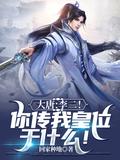 Tang Dynasty: the Dandy Prince Became the God of War to Protect the Country!
1.4kReads8.6Score103Shelves
Tang Dynasty: the Dandy Prince Became the God of War to Protect the Country!
1.4kReads8.6Score103Shelves
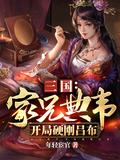 Three Kingdoms: Brother Dian Wei Starts the Game Tough with Lu Bu
59.4kReads9.6Score6.8kShelves
Three Kingdoms: Brother Dian Wei Starts the Game Tough with Lu Bu
59.4kReads9.6Score6.8kShelves
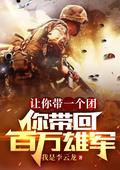 Save Lao Li at the Beginning and I Become a Ghost Legend
17.8kReads9.2Score1.7kShelves
Save Lao Li at the Beginning and I Become a Ghost Legend
17.8kReads9.2Score1.7kShelves
 The Killer with Bright Sword Is Invincible
15Reads5.8Score—Shelves
The Killer with Bright Sword Is Invincible
15Reads5.8Score—Shelves
 The Criminal Transactions in Northern Myanmar Are Shocking Every Step of the Way!
795Reads8.5Score101Shelves
The Criminal Transactions in Northern Myanmar Are Shocking Every Step of the Way!
795Reads8.5Score101Shelves
 Dragon City Twins: the Sword God Protects Her Forever
14Reads—Score—Shelves
Dragon City Twins: the Sword God Protects Her Forever
14Reads—Score—Shelves
 The Number One Acting School in the Republic of China Is Still Pretending to Be a Saint Today
115Reads5.8Score—Shelves
The Number One Acting School in the Republic of China Is Still Pretending to Be a Saint Today
115Reads5.8Score—Shelves
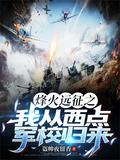 The Beacon Expedition Through the Republic of China
1.2kReads6.3Score—Shelves
The Beacon Expedition Through the Republic of China
1.2kReads6.3Score—Shelves
 Welcome to the Absurd 20Th Century
38Reads8.2Score—Shelves
Welcome to the Absurd 20Th Century
38Reads8.2Score—Shelves
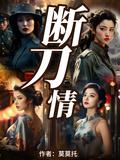 Broken Knife Love
143Reads—Score—Shelves
Broken Knife Love
143Reads—Score—Shelves
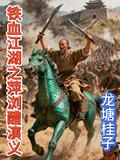 The Story of Ping Liuli in Iron-Blooded Jianghu
—Reads—Score—Shelves
The Story of Ping Liuli in Iron-Blooded Jianghu
—Reads—Score—Shelves
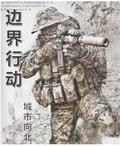 Border Operation
800Reads7.2Score128Shelves
Border Operation
800Reads7.2Score128Shelves
 Girls and Vehicles Fight in Super-Designed Dimensions
13Reads—Score—Shelves
Girls and Vehicles Fight in Super-Designed Dimensions
13Reads—Score—Shelves
 Tactical Games
55Reads5.8Score—Shelves
Tactical Games
55Reads5.8Score—Shelves
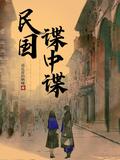 Spy: Impossible
59Reads—Score—Shelves
Spy: Impossible
59Reads—Score—Shelves
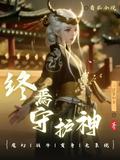 Patron Saint of Death
9Reads5.8Score—Shelves
Patron Saint of Death
9Reads5.8Score—Shelves
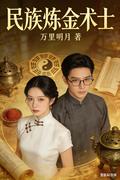 National Alchemist
41Reads5.8Score—Shelves
National Alchemist
41Reads5.8Score—Shelves
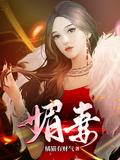 Charming Wife
188Reads—Score—Shelves
Charming Wife
188Reads—Score—Shelves
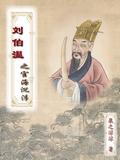 Liu Bowen's Ups and Downs as an Official
142Reads—Score—Shelves
Liu Bowen's Ups and Downs as an Official
142Reads—Score—Shelves
 Bad Soldiers, Good Soldiers, Mercenaries
662Reads8.2Score—Shelves
Bad Soldiers, Good Soldiers, Mercenaries
662Reads8.2Score—Shelves
 Full Deck Attack
—Reads5.8Score—Shelves
Full Deck Attack
—Reads5.8Score—Shelves
 After Time Travel, Foreigners Respectfully Called Me the Whip of God
220Reads—Score—Shelves
After Time Travel, Foreigners Respectfully Called Me the Whip of God
220Reads—Score—Shelves
 Viola Flower
21Reads—Score—Shelves
Viola Flower
21Reads—Score—Shelves
 Beimen Nancheng
36Reads—Score—Shelves
Beimen Nancheng
36Reads—Score—Shelves
 Ming Navy Soldiers
387Reads8.4Score—Shelves
Ming Navy Soldiers
387Reads8.4Score—Shelves
 Jinling Flowers Are Blooming in the Doomsday
4Reads5.8Score—Shelves
Jinling Flowers Are Blooming in the Doomsday
4Reads5.8Score—Shelves
 The Brave Will Win
2Reads5.8Score—Shelves
The Brave Will Win
2Reads5.8Score—Shelves
 The Hero of Shanghai at Night Has No Regrets
86Reads5.8Score—Shelves
The Hero of Shanghai at Night Has No Regrets
86Reads5.8Score—Shelves
 The Martian Era: the Road to Venus
37Reads5.8Score—Shelves
The Martian Era: the Road to Venus
37Reads5.8Score—Shelves
 Shanghai at Night: Shanghai Beach
52Reads5.8Score—Shelves
Shanghai at Night: Shanghai Beach
52Reads5.8Score—Shelves
 Titans: Stardust War
14Reads5.8Score—Shelves
Titans: Stardust War
14Reads5.8Score—Shelves
 Greetings from E-Star
11Reads5.8Score—Shelves
Greetings from E-Star
11Reads5.8Score—Shelves
 Chariot of the Sun
11Reads5.8Score—Shelves
Chariot of the Sun
11Reads5.8Score—Shelves
 Traveling Through the Water Margin and Dominating the World
543Reads5.9Score—Shelves
Traveling Through the Water Margin and Dominating the World
543Reads5.9Score—Shelves
 The Rise of Shuttle Between Two Worlds
253Reads5.4Score—Shelves
The Rise of Shuttle Between Two Worlds
253Reads5.4Score—Shelves
 The Controller of All Realms Is at Ease in the City
750Reads6.4Score—Shelves
The Controller of All Realms Is at Ease in the City
750Reads6.4Score—Shelves
 Traveling Between Two Realms: 1970
152Reads5.8Score—Shelves
Traveling Between Two Realms: 1970
152Reads5.8Score—Shelves
 Thunder of the Northern Han Dynasty
—Reads—Score—Shelves
Thunder of the Northern Han Dynasty
—Reads—Score—Shelves
 2030Defending Peace
8Reads5.8Score—Shelves
2030Defending Peace
8Reads5.8Score—Shelves
 Capture the Bandit
58Reads—Score—Shelves
Capture the Bandit
58Reads—Score—Shelves