✨([Imaginary novel, some historical basis is not referenced] This book is not a brainless novel. The plot is meticulously laid out, the logical structure is rigorous, there are many characters, the scenes are large, there is no system, and there are no cheats. There are no brainless villains, and there is no plot to subdue one's wits. Readers are kindly requested to watch with patience. ) The Great Zhou Dynasty was weak, the powerful ministers in the court were in chaos, and the countries outside the court looked around. Let's take a look at how Xu Ping managed the imperial court at home and traveled to various countries abroad, completing his magnificent life. Since ancient times, the world cannot be determined by one person. If there is a way, one general can accomplish everything.
✨([Imaginary novel, some historical basis is not referenced] This book is not a brainless novel. The plot is meticulously laid out, the logical structure is rigorous, there are many characters, the scenes are large, there is no system, and there are no cheats. There are no brainless villains, and there is no plot to subdue one's wits. Readers are kindly requested to watch with patience. ) The Great Zhou Dynasty was weak, the powerful ministers in the court were in chaos, and the countries outside the court looked around. Let's take a look at how Xu Ping managed the imperial court at home and traveled to various countries abroad, completing a magnificent life. Since ancient times, the world cannot be determined by one person. If there is a way, one general can accomplish everything.
[IQ online, many comments] In the late Ming Dynasty, the third son of the Wang family was a weakling. In the beginning, he almost starved to death and was almost eaten. From the beginning, he was trying to survive, and then embarked on the road of rebellion. The peasants rose up to become the emperor, and annexed the world with scheming...
✨✨At the end of the Ming Dynasty, natural disasters continued and the government was corrupt. He woke up and became Zhu Youxiao at the end of Wanli. 💕💕He faced the three major cases in the late Ming Dynasty and the tragic defeat of Sarhu. Faced with such a complicated situation, let's see how the young emperor breaks the situation!
The new book covers the Three Kingdoms, art of war, strategy, people's livelihood, noble families, relatives, crusade, sieges, field battles, heroines, children, and foreign races. No harem. There is mercy, not the Holy Mother. People live their lives and attack cities and villages. Behead generals and assassinate assassins. Prestigious family, marriage. There is no system, Golden Finger only has a protagonist with high martial arts skills, a single female protagonist, and no harem. There will be other historical female characters appearing, but not harems. . .
So true, I concluded. 1. The shock of the character: a young body hiding in mountains and rivers breaks the stereotype of a heroine. The most shocking point of this book: the core is a mature and sober soul, and the outer shell is a four-year-old child. The child's figure, soft voice, and the bone-chillingly calm and strategic layout form a sharp contrast. There is no golden finger or system. The advantages are only the historical understanding of later generations, modern institutional thinking, and super patience. At the same time, the subplot of Zhu Youxiao was brought out. The five-year-old school brother watched the power game and silently understood the way of the emperor. The two children reflected each other in the undercurrent. This sense of the heaviness of the precocious youth is particularly poignant. 2. The shock of historical research: It is not a myth, but a patchwork of historical facts. The story is anchored at the precise time point of the thirty-eighth year of Wanli. It was only more than thirty years after the demise of the Ming Dynasty, which was the most boring incubation period before the building was about to collapse. - The accumulated malpractices in the capital camp, the deduction of military pay, the collapse of the craftsmanship system, the proliferation of private salt in the Huaihe River and Huaihe River, party disputes (Qi, Chu and Zhejiang Party), the eve of the 1911 Beijing Inspection, the emptiness of Taicang, and the widespread displacement of people due to drought in Jifu are all based on real historical data. - The salary payment process, two signatures and deposits, internal government allocations, the game between the Ministry of Revenue and the cabinet, water transportation delays, and the Jia River canal problem are all meticulous in the system details. The heroine's reforms are not invented out of thin air by using cheats. They are aimed at fixing and reconstructing the loopholes in the Ming Dynasty's existing system. Each new policy has corresponding real-life pain points. Readers will have a strong sense of reality: it turns out that the corruption in the late Ming Dynasty was linked to each other, and reform was difficult to achieve. 3. The shock of the logic of Machiavellianism: It is better to fight against people than to establish a system, to jump out of the palace fight and get involved. Most of the ancient Machiavellian strategies are aimed at defeating villains, eliminating political opponents, and taking sides in the court. This book breaks out of this circle: the heroine's core idea is not to focus on people, but on the system. Opponents like Fang Congzhe are sophisticated, well-established, and full of party members. If one Fang Congzhe is killed, there will be another speculator. Therefore, the heroine chose to build an institutional dam: military pay went directly to soldiers, the interception link of military attachés was cut off, craftsmen were converted from corvees to hired workers, rosters and accountability mechanisms were improved, and the loopholes of corruption were sealed with rules. The game is no longer a simple fight between people, but a long tug of war between old interest groups and the new system. Readers will have a refreshed understanding after reading this: The highest level of conspiracy is not to win a battle, but to establish an order that is not easily destroyed. 4. The shock of the class perspective: seeing the complete human world, not only focusing on the upper echelons of the court. The plot runs in two parallel lines. On one side is the top-level game between the Forbidden City, the cabinet, the officials of the Ministry of Education, and the nobles; on the other side the camera keeps descending: Ordinary soldiers in the Beijing camp burst into tears when they received full pay, firearms workshops and craftsmen finally had a stable income, refugees outside the city struggled to survive in porridge factories in the cold winter, street vendors were exploited by gangs, and low-level subordinates relied on bad rules to survive. A sum of one hundred thousand taels of stolen silver in the court corresponds to a few buckets of rice for a family to survive the cold winter. A policy change from the top directly determines the life and death of countless people at the bottom. This top-down perspective brings readers a deep sense of empathy. The plot is no longer a game on paper, but behind the scenes are thousands of fireworks. 5. Depressive feeling and shimmering shock: anti-fast food style cool article, victory comes at a price. There is no one-click crushing of the villain, no ministers brainlessly supporting the princess. Every step of the new policy was met with numerous obstacles: the Ministry of Household Affairs cried out for poverty, civil servants collectively impeached, Ke Dao used public opinion to launch attacks, old military attachés secretly obstructed, and local gentry and businessmen formed a group to protect private interests. Every time the heroine pushes forward, she has to constantly compromise, wait for the opportunity, collect evidence, and rely on Wanli's imperial scheming. Victory is piecemeal, slow, and on thin ice. Under the huge historical shadow of doomed destruction at the end of the Ming Dynasty, this group of people knew that the road ahead was difficult, but still tried to reach out to hold on to the declining dynasty. The glimmer of stubbornness in this desperate background brought a touching feeling to the bottom of their hearts. 6. The shock of the portraits of the emperors: the wise and ignorant emperor without facial makeup 1. Wanli is not a simple lazy and ignorant emperor, but a master of checks and balances, watching the party struggle with a cold eye, secretly supporting the heroine to reform at the critical moment, and guarding the three bottom lines of warehouse, restructuring and dark people. His mind is deep and unpredictable. 2. Zhu Changluo, the prince is tolerant and cautious. He stabilizes the East Palace in the cracks and is not aggressive or aggressive. 3. Fang Congzhe is not a pure bad guy, but a speculator born out of the times. He is good at hiding and arranging escape routes with money from trade routes. His character motivations are complex and three-dimensional, showing the helplessness and greed of politicians. Everyone is caught up in the times. There are no pure good guys or bad guys. There are only people in the chess game who make their own choices. 7. The shocking issue of fate: Asking about history, if someone had fixed the loopholes in advance. Deep in the hearts of all readers of Ming Dynasty, there is an uneasy question: Is there any chance of not perishing in the late Ming Dynasty? This book gives a rigorous sandbox deduction. It does not firmly say "I will definitely be able to save the Ming Dynasty", but slowly shows: when someone sees the foci of land, military system, finance, and party struggle in advance and tries to operate bit by bit, what obstacles will be encountered and what new variables will arise. While reading, readers will constantly be led into deep thinking: Was the fall of the dynasty an overnight mistake, or was it the inevitable result of the long-term accumulation of countless small lesions?
This is it, the diction is gorgeous, the writing is rosy, and the poems are magnificent. If you are not satisfied, you can watch the live broadcast of drinking while standing on your head. At the end of the Yuan Dynasty and the beginning of the Ming Dynasty, the Red Turban Army made the Northern Expedition to Goryeo. ! !
Yu Wenshiji's life was a "delicate transformation" of a son of the Guanlong aristocracy at the time of the dynasty's revolution: from the prince-in-law of the Sui Dynasty, to the younger brother of the regicide, to the prime minister of Li and Tang Dynasties. He did not have the arrogance and ambition of his elder brother, but he walked on the edge of the knife with caution and adaptability. In the end, he became one of the few former nobles who could escape unscathed in the late Sui and early Tang Dynasties and became a very popular minister. His break with Princess Nanyang, his inability to protect his son Zen Master, and his "consummation" in remarrying the Tang Dynasty County Lord in his later years formed the complex and tense fate of this historical figure. [Bookshelf plus one][Bookshelf plus one]
It's a pity that the slow-paced Tomato is not popular. The male protagonist in this book starts from scratch and competes in the world. Moreover, he is reborn, not soul travel + no system + cut off the Hu + Qingshi beauty (the early pace is not fast, because the world line is early, and he is not a Cao thief, but everyone has a separate love line, and they will not stop at a sudden shock). The low score is because the score was just opened (6.2 At the beginning), and the protagonist is building a city and developing it on his own...
This book "The Elegance of Ming Dynasty" is really good. If you like historical literature, you can read it. There are many characters and stories, and it fits the history.
Who would have thought that the first half of Qin Shihuang's life, which was conquered in all directions, was full of misery? After returning to his country to seize power, he was surrounded by enemies. He relied on ruthless tactics to carve his way to the throne. His heart was as hard as iron and he never showed emotion. He only had deep affection for Afang and promised to hire him from all over the country. Just as he stabilized the situation in the court, a crisis suddenly struck, and the overbearing destiny forced him to make a difficult choice between his country and his lover~~
 Xuanshu Zongheng's Biography of Su Qin
1Reads8.5Score—Shelves
Xuanshu Zongheng's Biography of Su Qin
1Reads8.5Score—Shelves
 A Small Country in the Five Dynasties: Not Only Did It Not Surrender, It Dared to Fight Back
1.1kReads8.2Score—Shelves
A Small Country in the Five Dynasties: Not Only Did It Not Surrender, It Dared to Fight Back
1.1kReads8.2Score—Shelves
 Traveling to Tang Dynasty
47Reads6.1Score—Shelves
Traveling to Tang Dynasty
47Reads6.1Score—Shelves
 Who Puts the Yellow Robe on Me When It's Cold?
45.7kReads8.9Score4.2kShelves
Who Puts the Yellow Robe on Me When It's Cold?
45.7kReads8.9Score4.2kShelves
 This Great Wei Could Also Be Named Xiahou
16.2kReads8.9Score1.2kShelves
This Great Wei Could Also Be Named Xiahou
16.2kReads8.9Score1.2kShelves
 Six Realms Era: Hongmeng Gods Record
1Reads—Score—Shelves
Six Realms Era: Hongmeng Gods Record
1Reads—Score—Shelves
 Three Kingdoms: Restoration of the Han Dynasty, Romance of Shu
86.7kReads9.6Score9.9kShelves
Three Kingdoms: Restoration of the Han Dynasty, Romance of Shu
86.7kReads9.6Score9.9kShelves
 Late Ming Dynasty: from Peasant Rebellion to Universal Harmony
9.1kReads8.7Score533Shelves
Late Ming Dynasty: from Peasant Rebellion to Universal Harmony
9.1kReads8.7Score533Shelves
Mysterious Conspiracy Chen Ping: Heaven's Secrets Determine Everything 1Reads8.5Score—Shelves
 Ming 1621
1Reads7.2Score—Shelves
Ming 1621
1Reads7.2Score—Shelves
 General, I Want to Make Progress so Much
3.6kReads9.1Score265Shelves
General, I Want to Make Progress so Much
3.6kReads9.1Score265Shelves
 Corpse Whisperer's Note
1Reads8.5Score—Shelves
Corpse Whisperer's Note
1Reads8.5Score—Shelves
 Apocalypse: the Sun and Moon Will Shine Again Tomorrow
20.9kReads8.9Score1.2kShelves
Apocalypse: the Sun and Moon Will Shine Again Tomorrow
20.9kReads8.9Score1.2kShelves
 Sima Ji Master: Yi Dao Lingtian
2Reads8.5Score—Shelves
Sima Ji Master: Yi Dao Lingtian
2Reads8.5Score—Shelves
 Beginning of the Xuanwumen Incident: Li Yuan Said I Was Really Smart
7Reads5.8Score—Shelves
Beginning of the Xuanwumen Incident: Li Yuan Said I Was Really Smart
7Reads5.8Score—Shelves
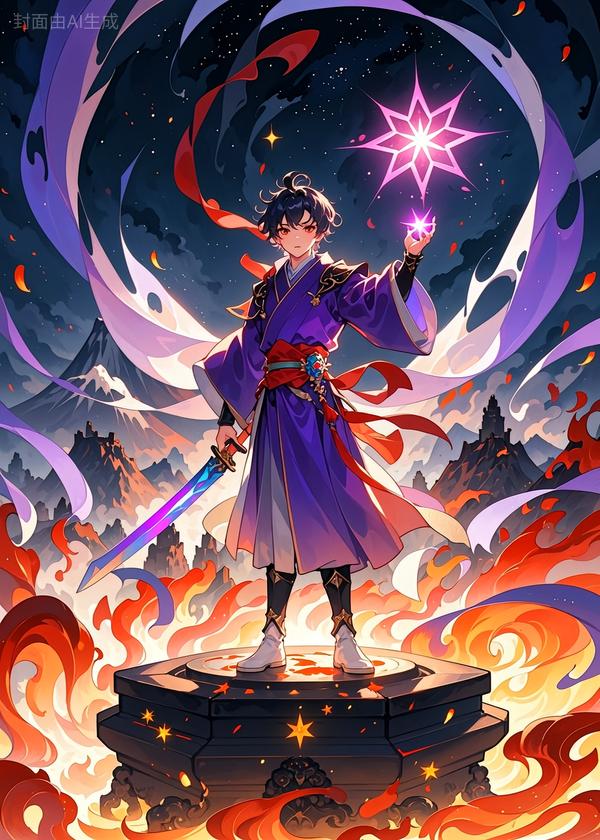 Ziwei Star Lord: the Fortune Chart Determines the Universe, and the Stars Control the Heavens
15Reads8.4Score—Shelves
Ziwei Star Lord: the Fortune Chart Determines the Universe, and the Stars Control the Heavens
15Reads8.4Score—Shelves
 The World Rises and Falls, I Am the King
46Reads5.8Score—Shelves
The World Rises and Falls, I Am the King
46Reads5.8Score—Shelves
 Luo Shen Fu·cangming Lingxi
—Reads8.6Score—Shelves
Luo Shen Fu·cangming Lingxi
—Reads8.6Score—Shelves
 Please, Take Off Your Armor!
34.6kReads9.2Score2.9kShelves
Please, Take Off Your Armor!
34.6kReads9.2Score2.9kShelves
 Colonial Ming Dynasty
3.8kReads8.8Score280Shelves
Colonial Ming Dynasty
3.8kReads8.8Score280Shelves
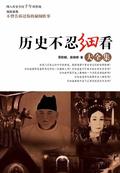 History Cannot Bear to Read the Complete Collection
537Reads8.8Score174Shelves
History Cannot Bear to Read the Complete Collection
537Reads8.8Score174Shelves
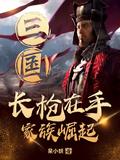 Three Kingdoms: the Rise of a Family with a Spear in Hand
405Reads5.3Score—Shelves
Three Kingdoms: the Rise of a Family with a Spear in Hand
405Reads5.3Score—Shelves
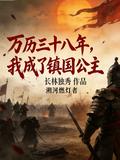 In the Thirty-Eighth Year of Wanli, I Became the Princess of Zhenguo
66Reads5.8Score—Shelves
In the Thirty-Eighth Year of Wanli, I Became the Princess of Zhenguo
66Reads5.8Score—Shelves
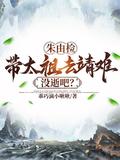 Zhu Youjian: I Took Taizu to Jingnan, Didn't He Die?
1.3kReads9.0Score102Shelves
Zhu Youjian: I Took Taizu to Jingnan, Didn't He Die?
1.3kReads9.0Score102Shelves
 Star Frost Enters Long Dream
25Reads—Score—Shelves
Star Frost Enters Long Dream
25Reads—Score—Shelves
 Fake Navigator
3.4kReads8.1Score226Shelves
Fake Navigator
3.4kReads8.1Score226Shelves
 From Concubines to Literati, from the Concubine of the Sui Dynasty to the Prime Minister of the Tang Dynasty
7Reads—Score—Shelves
From Concubines to Literati, from the Concubine of the Sui Dynasty to the Prime Minister of the Tang Dynasty
7Reads—Score—Shelves
 The Historical Truth That 99% of People Don't Know
591Reads9.3Score138Shelves
The Historical Truth That 99% of People Don't Know
591Reads9.3Score138Shelves
 Zongyue: Are My Pupils Colored?
2Reads5.8Score—Shelves
Zongyue: Are My Pupils Colored?
2Reads5.8Score—Shelves
 Three Kingdoms: Duckweed in Troubled Times
2.5kReads6.2Score171Shelves
Three Kingdoms: Duckweed in Troubled Times
2.5kReads6.2Score171Shelves
 Sui Sui: so What If I Am a Tyrant?
191Reads8.2Score—Shelves
Sui Sui: so What If I Am a Tyrant?
191Reads8.2Score—Shelves
 Ji Zhou Eight Hundred Years? Dazhou: I Started in a Thousand Years
524Reads5.3Score—Shelves
Ji Zhou Eight Hundred Years? Dazhou: I Started in a Thousand Years
524Reads5.3Score—Shelves
 The Counterattack Starting from Prince Fu's Mansion in the Late Ming Dynasty
2.5kReads5.8Score170Shelves
The Counterattack Starting from Prince Fu's Mansion in the Late Ming Dynasty
2.5kReads5.8Score170Shelves
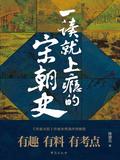 A History of the Song Dynasty That Will Make You Addicted Once You Read It
1.4kReads9.3Score330Shelves
A History of the Song Dynasty That Will Make You Addicted Once You Read It
1.4kReads9.3Score330Shelves
 Wuhu Butcher
229Reads6.4Score—Shelves
Wuhu Butcher
229Reads6.4Score—Shelves
 The History of Ming Dynasty
8Reads—Score—Shelves
The History of Ming Dynasty
8Reads—Score—Shelves
 At the End of Jin Dynasty, I Raised Troops from Yanzhou
3.3kReads7.3Score203Shelves
At the End of Jin Dynasty, I Raised Troops from Yanzhou
3.3kReads7.3Score203Shelves
 The Ming Dynasty Started with Overlord Power but Made Me a Civil Servant?
21.2kReads—Score1.4kShelves
The Ming Dynasty Started with Overlord Power but Made Me a Civil Servant?
21.2kReads—Score1.4kShelves
 Five Thousand Years of China (Color Illustrated Edition)
11kReads9.6Score1.7kShelves
Five Thousand Years of China (Color Illustrated Edition)
11kReads9.6Score1.7kShelves
 I Was the King of Chu in the Spring and Autumn Period
7.8kReads8.6Score460Shelves
I Was the King of Chu in the Spring and Autumn Period
7.8kReads8.6Score460Shelves
 Peninsula Chaebol: from 1954
968Reads6.5Score—Shelves
Peninsula Chaebol: from 1954
968Reads6.5Score—Shelves
 Destiny Is the Highest
4Reads—Score—Shelves
Destiny Is the Highest
4Reads—Score—Shelves
 Overthrowing the Wei State in the Warring States Period
6.5kReads8.6Score618Shelves
Overthrowing the Wei State in the Warring States Period
6.5kReads8.6Score618Shelves
 Fun Three Kingdoms
98Reads5.8Score—Shelves
Fun Three Kingdoms
98Reads5.8Score—Shelves
 The Pinnacle of Power and Money: My Wife Is the Princess of the Beijing Circle
95Reads5.8Score—Shelves
The Pinnacle of Power and Money: My Wife Is the Princess of the Beijing Circle
95Reads5.8Score—Shelves
 Great Han Zhongliang Dong Zhongying
2.6kReads8.9Score164Shelves
Great Han Zhongliang Dong Zhongying
2.6kReads8.9Score164Shelves
 The Largest Warlord in the Late Tang Dynasty
5.4kReads7.7Score296Shelves
The Largest Warlord in the Late Tang Dynasty
5.4kReads7.7Score296Shelves
 Once I Am Engaged in Military Industry, You Want Me to Save the Ming Dynasty?
637Reads—Score107Shelves
Once I Am Engaged in Military Industry, You Want Me to Save the Ming Dynasty?
637Reads—Score107Shelves
 Five Dynasties: Iron Cavalry Zongheng
2.8kReads8.5Score154Shelves
Five Dynasties: Iron Cavalry Zongheng
2.8kReads8.5Score154Shelves
 Red Flag
825Reads7.3Score—Shelves
Red Flag
825Reads7.3Score—Shelves