2025.08.11 You are in pain, the roads are intertwined in the distance, and poetry is swaying on the edge of the cliff. I hesitate. The joys and sorrows of the past are just plots arranged by God. There is no central idea. The past is no longer a memory, just a broken bridge. Now I can't go through it. I can't go through it in the past. I want to write a story to tell you that the future is not a mystery but a poem. ~Recording the writing process of Tomato novel serial "Suspense, Thriller and Poetry", the strongest in history
This is not the story of becoming an immortal, but the epic of a monk. When he pointed his sword at the abyss, what he saw in the broken void was a cage of cause and effect created by the obsession of all living beings. Are those people who were annihilated in ancient times fighting against destiny, or are they trying to find the glimmer of humanity that was obliterated by magic? [I also strongly recommend][Top post][Already planted][Add one to the bookshelf][Please update]
Five ancient mirrors reflect the present world: the timeless survival wisdom in "The Play Next Door". When you open "The Play Next Door", it is not only a novel, but also a dialogue that travels through three hundred years - a dialogue with those forgotten professions, despised rules, and ridiculed "stupid methods". You will be surprised to find that these dusty stories contain the code to crack the current dilemma. 1. Code words and algorithms: The nature of exploitation has never changed. In "The Code Words of Pawn Shop Courtesy", Zhao Shouren lowered the price by 90% by saying "flawed", and the old man pawned the family heirloom in tears. Do you think this is just a trick of ancient profiteers? Wait a minute - today's big data, algorithmic pricing, and information black boxes, are they not the "code words" of the digital age? The eyes behind the pawn shop counter have transformed into codes behind the screen, still exploiting information asymmetry to harvest anxiety and ignorance. The story brutally reveals: Information exploitation is never just about giving less money, but also taking away hope, dignity, and sometimes even life. When Zhao Shouren smashed the code cards, he smashed the unspoken rules of an industry, and also illuminated a wake-up call that every era needs: Under the cloak of technological change, greed and redemption in human nature have never changed. 2. Bridge of Trust: The paradox of intermediaries in ancient and modern times. In "Yaxing's "Make Three and Break Two"", the old man Zheng Laoshi sticks to the saying "the only bridge is good information", while the new man Qian Jinbao quickly became rich by deceiving both sides. Does this scene look very much like some platforms today? On one side are "stupid companies" that insist on quality and transparent transactions, and on the other side are "unicorns" that burn money for expansion and falsify data. The story is profound in that it predicts the outcome: the wealth building built on information barriers will eventually collapse due to the collapse of trust. The ending of Qian Jinbao living on the street forms a dazzling echo with the numerous P2P and bankrupt sharing economy projects currently. Zheng Laoshi's words, "The essence of an intermediary is a bridge of trust." In today's world of ratings, fraudulent orders, and scammers, it sounds like a drum in the evening and a bell in the morning. 3. Internal vulnerabilities: The strongest fortress is broken from the inside. "Caobang's Encryption of Waybills" is a vivid system security lesson. The secret security of the Cao Gang can prevent foreign thieves, counterfeiting, and tampering, but it cannot prevent the greed of the gang leader's nephew Chen Shaotang. When Chen Shaotang secretly learned how to secretly forge waybills, what he destroyed was not a system of symbols, but the livelihoods of more than 300 families. This story accurately stabs at the weakness of modern organizations: no matter how advanced technological protection or strict system design is, they may be vulnerable to the greed and shortsightedness of insiders. From corporate data leaks to internal financial crimes, from the defection of core team members to theft by management, the "Taihang wolves" on the outside are certainly scary; the "family thieves" on the inside are the real gravediggers. The words of the old gang leader, "What is protected by secret security are not goods, but the jobs of hundreds of brothers" are worthy of being engraved on the desk of every manager. 4. Fear of Risk: Slow Philosophy in the Era of Fast Money "The Endorser of Shiobiki" presents the ultimate showdown between two business philosophies. Shen Shenzhi spent twenty-six years establishing "Shen Zhitang", checking every order for three generations, and rejecting nine out of ten cases; Jia Dafang used "no rejection of anyone who comes, and discounts on commissions" to become the first in the industry in one year. The ending is dramatic, and even more inevitable: when the salt market collapsed, most of Shen Shenzhi's clients were able to survive, but Jia Dafang was forced to death by his creditors. In this era of chasing "blitz expansion" and "quick realization", Shen Shenzhi's "slowness" seems out of place. But the story tells us: Real risk control is not to predict that risks will not occur, but to fear that risks will inevitably occur. When Jia Dafang was offered a libation by Shen Shenzhi at the funeral, the libation was given with the professional awe of "guarantee, every word counts." This is a cruel lesson about "survivor bias" for all financial practitioners, investors, and entrepreneurs. 5. Backbone of Responsibility: The Ultimate Currency in the Business World "The Escort's Compensation Statement" is perhaps the most impactful chapter. After Lin Zhenshan's escorts were robbed and his entire family went bankrupt, he still sold his ancestral home and sabers, fulfilling his promise of "compensating for everything at the price". The clerk asked: "The flag can be fallen, but the order cannot be abolished?" He replied: "The flag is the face, and the indemnity is the backbone." This answer reveals the essence of business: for all great brands, what remains standing in the end is not the logo, but the backbone of fulfilling the promise. Today, when buck-passing has become the norm and limited liability has become a talisman, Lin Zhenshan's "unlimited responsibility" style of responsibility is like a lonely light in the business world. And when the customer brings bigger business in return, "I only trust escort agencies that can afford to pay compensation," the story completes a perfect closed loop about the trust economy: taking responsibility is not a cost, but the highest-yield investment. Why You Must Read The Play Next Door? Because these five stories are like five polished ancient mirrors, but what they reflect is the present of you and me: · When you spend more money on products recommended by big data, what you see is "The Code Words of Pawn Shops" · When you are deceived by the platform's fraudulent orders, what comes to mind is "Yaxing's "Into Three Breaks Two"" · When your company is exposed to thunder due to internal control loopholes, what you are shocked to see is "Caobang's Secret Security of Waybills" · When you are tempted by high-yield financial products, what rings in your ears is "The Endorser of Yanyin" · When your company is facing a credibility crisis, what it needs is the backbone of "The Escort's Compensation Statement". "The Play Next Door" has no condescending preaching, only flesh-and-blood stories. It allows ancient professional wisdom to travel through time and space, land in the current confusion, and illuminate the common confusion. When you open it, what you read is not history, but a conversation with wise men - about how to hold the bottom line in a complex world, how to stay awake in the face of temptation, and how to straighten your spine in times of crisis. In these stories, there is the "old-school wisdom" that we have lost for a long time: reverence for rules, adherence to commitments, responsibility, and awareness of risks. Today, when everything is pursuing "iteration", "subversion" and "shortcuts", perhaps what we need most is precisely this kind of "slowing down" wisdom. "The Play Next Door" is worth reading, not only because it is well written, but also because it is so true - so true that you can see your own shadow in the ancients; you can find solutions to new situations in old things. This is the charm of classics: it tells about the past, but it is always about the present and points to the future.
Although w has just started writing, it is updated basically every day. The time-travel growth stream is not a cool novel with a brainless system, but a story about a boy who travels through this wonderful world and gradually grows and becomes stronger.
Taoism, Buddhism, Confucianism, chivalry, and medicine are the strongest worldviews. Protagonist: Yin Chengzhu, Ximen Chuchu Volume 1: Nurturing a beautiful woman under Shennongjia, leaving the mountains and entering the world to travel around the world. Volume 2: Storms and rains in Chang'an City, fighting evil spirits from birth to death. Volume 3: Flying sand and snow outside Jiayuguan Pass, realizing Taihe in a miraculous way. Volume 4: Fighting against treacherous eunuchs in the Jinluan Palace, discussing Taoism and Buddhism from the simple to the profound. Volume 5: Visiting virtuous men from all over the country, going from the ordinary to the victorious to determine the world.
A must-read time travel story for the whole family! You don't travel to ancient times alone, you travel with your family as a group. The system restricts the purchase of domestic goods only, and the dimensionality reduction of modern materials affects ancient life. Family affection, love, and career are all available [Sparrow Food Masterpiece]
When the great catastrophe begins, the [already planted grass] mountains and rivers are shattered, the land of China sinks, and the five demon gods pour out of the sky. Li Xuan stood alone in front of tens of thousands of people, his sword pointed at the sky, blood staining the sky. "I came here just to borrow the flesh and blood of gods like you to build my way to mend the sky." A thrilling fantasy novel with time-travel, sinister underbelly, passionate fighting, grand layout, constant reversals, staying up late to pursue the novel, the protagonist is decisive in killing, and there is no competition when it comes to taking action. It is exciting from the beginning to the end.
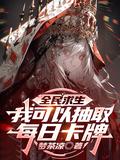 Everyone Survives, I Can Draw Daily Cards
175kReads8.9Score15.3kShelves
Everyone Survives, I Can Draw Daily Cards
175kReads8.9Score15.3kShelves
 Log in to the Game World in Advance: a Charming Start
335.8kReads8.5Score60.8kShelves
Log in to the Game World in Advance: a Charming Start
335.8kReads8.5Score60.8kShelves
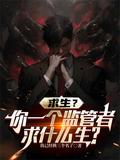 Survive? What Do You Want to Do as a Supervisor?
209.9kReads8.8Score29.9kShelves
Survive? What Do You Want to Do as a Supervisor?
209.9kReads8.8Score29.9kShelves
 Hello! I Really Think I Am Hakimi! Spinosaurus Opens
509.3kReads5.8Score74.3kShelves
Hello! I Really Think I Am Hakimi! Spinosaurus Opens
509.3kReads5.8Score74.3kShelves
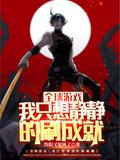 Global Games: I Just Want to Quietly Earn Achievements
25.4kReads9.2Score1.7kShelves
Global Games: I Just Want to Quietly Earn Achievements
25.4kReads9.2Score1.7kShelves
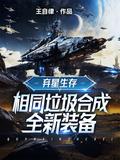 Abandoned Star Survival: the Same Garbage Is Synthesized into New Equipment
107.4kReads9.1Score14.1kShelves
Abandoned Star Survival: the Same Garbage Is Synthesized into New Equipment
107.4kReads9.1Score14.1kShelves
 Suspenseful Thriller Poetic
8Reads—Score—Shelves
Suspenseful Thriller Poetic
8Reads—Score—Shelves
 Who Said This Is Evil? I Specialize in Treating the Most Dangerous Things!
57.4kReads9.1Score5.8kShelves
Who Said This Is Evil? I Specialize in Treating the Most Dangerous Things!
57.4kReads9.1Score5.8kShelves
 I Have Billions of Clones, You Catch Me to Mine
67.1kReads9.0Score7.3kShelves
I Have Billions of Clones, You Catch Me to Mine
67.1kReads9.0Score7.3kShelves
 I Have Been Refining Gu for Thirty Years in Southern Xinjiang, and the World Respects Me as a God.
157.6kReads9.1Score18.7kShelves
I Have Been Refining Gu for Thirty Years in Southern Xinjiang, and the World Respects Me as a God.
157.6kReads9.1Score18.7kShelves
 Spiritual Recovery: Omniscient and Omnipotent Professional
—Reads5.8Score—Shelves
Spiritual Recovery: Omniscient and Omnipotent Professional
—Reads5.8Score—Shelves
 I Am Lawless in the Arms of My Yandere Chaebol Wife
57.6kReads9.4Score6.1kShelves
I Am Lawless in the Arms of My Yandere Chaebol Wife
57.6kReads9.4Score6.1kShelves
 Campus Ultimate: Sign in a Super Power Every Day
—Reads5.8Score—Shelves
Campus Ultimate: Sign in a Super Power Every Day
—Reads5.8Score—Shelves
 Go Crazy! You Call This SSS-Level Talent
140.2kReads9.3Score12.4kShelves
Go Crazy! You Call This SSS-Level Talent
140.2kReads9.3Score12.4kShelves
 If the Daily High Temperature Increases by 1 Degree, I Only Have Space to Quit
1Reads5.8Score—Shelves
If the Daily High Temperature Increases by 1 Degree, I Only Have Space to Quit
1Reads5.8Score—Shelves
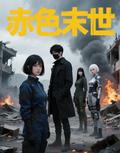 Red Apocalypse
1Reads—Score—Shelves
Red Apocalypse
1Reads—Score—Shelves
 Goofing Around in the Late Ming Dynasty
234Reads5.3Score—Shelves
Goofing Around in the Late Ming Dynasty
234Reads5.3Score—Shelves
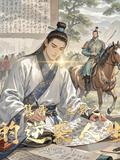 Usurping the Jin Dynasty, Wang Ningzhi's Counterattack Life
10.1kReads8.7Score994Shelves
Usurping the Jin Dynasty, Wang Ningzhi's Counterattack Life
10.1kReads8.7Score994Shelves
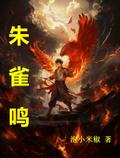 Suzaku Calls
24.6kReads8.9Score3kShelves
Suzaku Calls
24.6kReads8.9Score3kShelves
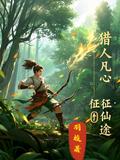 A Hunter's Journey to Immortality
33Reads8.2Score—Shelves
A Hunter's Journey to Immortality
33Reads8.2Score—Shelves
 The Time Ring for Mortals to Cultivation to Immortality
5kReads8.4Score849Shelves
The Time Ring for Mortals to Cultivation to Immortality
5kReads8.4Score849Shelves
 Li Yunlong Becomes Lu Bu, Fierce, Fierce, Cunning and Slippery
182Reads7.1Score—Shelves
Li Yunlong Becomes Lu Bu, Fierce, Fierce, Cunning and Slippery
182Reads7.1Score—Shelves
 Fortune Teller Book
256Reads7.0Score—Shelves
Fortune Teller Book
256Reads7.0Score—Shelves
 Readers' Reward System for the Ultimate Enjoyable Article of Zhutian Martial Arts
29Reads—Score—Shelves
Readers' Reward System for the Ultimate Enjoyable Article of Zhutian Martial Arts
29Reads—Score—Shelves
 Next Door Drama
5Reads—Score—Shelves
Next Door Drama
5Reads—Score—Shelves
 Death Martial Arts Game: Obtain God-Level Talents at the Start
544Reads—Score—Shelves
Death Martial Arts Game: Obtain God-Level Talents at the Start
544Reads—Score—Shelves
 The Final God: the Living Beings of the Gods
1Reads—Score—Shelves
The Final God: the Living Beings of the Gods
1Reads—Score—Shelves
 The Battle for Supremacy in Troubled Times Begins by Summoning Xiang Yu, the Overlord of Western Chu.
9.2kReads8.0Score813Shelves
The Battle for Supremacy in Troubled Times Begins by Summoning Xiang Yu, the Overlord of Western Chu.
9.2kReads8.0Score813Shelves
 I Am 18 Years Old, and the Peace Elite Has Become a God
18Reads5.8Score—Shelves
I Am 18 Years Old, and the Peace Elite Has Become a God
18Reads5.8Score—Shelves
 Others Control Ghosts and I Cultivate Immortality; Others Are Afraid and I Am Greedy
26.5kReads7.7Score2.4kShelves
Others Control Ghosts and I Cultivate Immortality; Others Are Afraid and I Am Greedy
26.5kReads7.7Score2.4kShelves
 Yin Chengzhu, the Doctor of Shennongjia
9Reads8.9Score—Shelves
Yin Chengzhu, the Doctor of Shennongjia
9Reads8.9Score—Shelves
 Eighteen Years After Being Adopted by Weird
19.5kReads8.1Score1.8kShelves
Eighteen Years After Being Adopted by Weird
19.5kReads8.1Score1.8kShelves
 Family Time Travel: My System Can Only Buy Domestic Goods
5kReads9.3Score444Shelves
Family Time Travel: My System Can Only Buy Domestic Goods
5kReads9.3Score444Shelves
 Rui Crowns Nothingness
40Reads5.8Score—Shelves
Rui Crowns Nothingness
40Reads5.8Score—Shelves
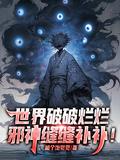 This Evil God of Mine Is Too Righteous!
82.3kReads9.0Score10.4kShelves
This Evil God of Mine Is Too Righteous!
82.3kReads9.0Score10.4kShelves
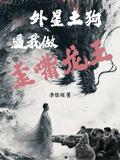 The Alien Earth Dog Forced Me to Be the Dragon King with a Crooked Mouth
42kReads8.9Score4.7kShelves
The Alien Earth Dog Forced Me to Be the Dragon King with a Crooked Mouth
42kReads8.9Score4.7kShelves
 After Seven Rebirths, I Was Favored by Tianyuyutianmo
16Reads8.5Score—Shelves
After Seven Rebirths, I Was Favored by Tianyuyutianmo
16Reads8.5Score—Shelves
 Open Your Eyes! the Prince's Vicious Girlfriend Is Reborn
241.8kReads8.2Score281.3kShelves
Open Your Eyes! the Prince's Vicious Girlfriend Is Reborn
241.8kReads8.2Score281.3kShelves
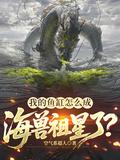 Why Did My Fish Tank Become the Ancestral Star of Sea Beasts?
4kReads7.0Score539Shelves
Why Did My Fish Tank Become the Ancestral Star of Sea Beasts?
4kReads7.0Score539Shelves
 There Was No Scandal About the School Beauty Until I Went to College
467.9kReads9.8Score56.4kShelves
There Was No Scandal About the School Beauty Until I Went to College
467.9kReads9.8Score56.4kShelves
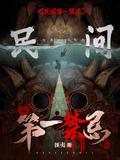 The First Taboo Among the People
367.5kReads9.3Score36.2kShelves
The First Taboo Among the People
367.5kReads9.3Score36.2kShelves
 Three Sticks of Incense Are Used Up, Please Ask God for Life
15.8kReads8.1Score2.1kShelves
Three Sticks of Incense Are Used Up, Please Ask God for Life
15.8kReads8.1Score2.1kShelves
 Are You a Taoist Priest and Want Netizens to Believe in Science?
63.2kReads8.2Score8.2kShelves
Are You a Taoist Priest and Want Netizens to Believe in Science?
63.2kReads8.2Score8.2kShelves
 Rule! Supreme!
1.9kReads5.8Score231Shelves
Rule! Supreme!
1.9kReads5.8Score231Shelves
 Reborn as a Fool, He Became a Billionaire by Collecting Rags
5.1kReads6.2Score420Shelves
Reborn as a Fool, He Became a Billionaire by Collecting Rags
5.1kReads6.2Score420Shelves
 Infinite Resurrection: I Become a God by Killing More Times
2.6kReads8.7Score231Shelves
Infinite Resurrection: I Become a God by Killing More Times
2.6kReads8.7Score231Shelves
 Doctor, My Sister Is Drooling When She Sees Me. Is There Any Help?
23.4kReads8.9Score2.8kShelves
Doctor, My Sister Is Drooling When She Sees Me. Is There Any Help?
23.4kReads8.9Score2.8kShelves
 He Was Driven Down the Mountain by His Stunning Wife, Causing Harm to His Fiancée
19.6kReads9.1Score2.4kShelves
He Was Driven Down the Mountain by His Stunning Wife, Causing Harm to His Fiancée
19.6kReads9.1Score2.4kShelves
 Serving as a Soldier in Peacetime, My Kd Is Number One in the World
33.2kReads9.0Score2.8kShelves
Serving as a Soldier in Peacetime, My Kd Is Number One in the World
33.2kReads9.0Score2.8kShelves
 Imperial Examination: from a Pig-Killing Family, a Literary Star Emerged
270.7kReads8.8Score31.6kShelves
Imperial Examination: from a Pig-Killing Family, a Literary Star Emerged
270.7kReads8.8Score31.6kShelves