"Siheyuan: You Are Really My Brother" reshapes the Siheyuan narrative with a hard-core time-travel experience. The protagonist Yang Jun enters the game with an "emotional value system" and creates a storm in the Qinman Siheyuan in the 1950s. The author uses the ruthless style of veterans as the fulcrum, leverages the unspoken rules of the compound, and uses the combination of "violent aesthetics + system cheating" to create a counterattack novel that is anti-routine. 1. Dimensionality reduction strike of veterans: The survival philosophy of fists as rules. Before time travel, the protagonist Yang Jun was a soldier who died on a mission. After time travel, he inherited the identity of the original owner as the "One Overlord of the Quadrangle", combining the discipline of a modern soldier with the violent personality of the original owner. Faced with Jia Zhang's evil deeds of seizing houses and selling furniture privately by Yi Zhonghai, he did not give in. Instead, he directly blocked the door and questioned and slapped the fourth uncle. He even used "burning the courtyard" as a threat to force the street to intervene. This style of "fighting violence with violence" is in sharp contrast to the "moral kidnapping" of the courtyard house - when Jia Zhang cried and complained about "arresting people and paying money", he backhandedly exposed his illegal behavior of privately selling sealed houses; when Yi Zhonghai used "respecting the elderly" to put pressure, he directly posted the street filing documents and used loopholes in the rules to counter moral kidnapping. This feeling of "fighting to the end" accurately taps into the readers' rebellious psychology against the "evil forces in the Siheyuan". 2. Innovation in system settings: a causal closed loop driven by emotional values. The "emotional value system" breaks out of the traditional check-in model and transforms the negative emotions of "fear, greed, jealousy" and other negative emotions of everyone in the courtyard into upgrade resources: - Acquisition logic: Famous scenes such as beating up Xu Damao, scaring Jia Xudong to piss, and forcing Yi Zhonghai to retreat can all harvest a large amount of emotional values, perfectly interpreting the system logic of "the more fearful you are, the more points you will receive"; - Functional iteration: In the early stage, the emotional value is exchanged for nutrients and fighting skills, and in the later stage, the advanced chef skill book is unlocked, which not only improves the survivability, but also lays the groundwork for infiltrating the steel rolling mill (such as canteen competition); - Hidden rules: The system compulsorily requires "activation by moving into the courtyard", implying that the fate of the protagonist is bound to the compound, and the follow-up may involve the deep task of "transforming the ecology of the courtyard". What is worth pondering is that the "Fighting Skill Pack" and "Advanced Chef Skill Book" included in the system's first deposit gift package coincide with the protagonist's all-round character of "literary master of cooking and military mastery of the courtyard", providing him with double protection in the dual competition for "food rights" (canteen) and "property rights" (real estate). 3. Deconstruction and reconstruction of character portraits: the beasts retreat and the villain makes a fool of himself. The author uses black humor to reshape the classic characters and create strong contrasts: - Jia Zhang: from the "summoner of the undead" to the "old woman who was scared to piss", her behavior of privately selling furniture and defrauding her daughter-in-law exposed her "greed without bottom line" nature, and the scene of urinary incontinence when Yang Jun blocked the door completely eliminated her deterrence as an "old gunner in the compound"; - Yi Zhonghai: Behind the mask of "Moral God" is the selfishness of "calculating for old age", the operation of privately occupying houses and shirking responsibilities. The street seals posted by Yang Jun were ruthlessly broken, and he was eventually sent to a labor camp, which revealed his true face of "hypocrisy"; - Qin Huairu: Breaking out of the stereotype of "White Lotus", she took the initiative to see through the Jia family's scam and divorced, and then turned around and had a flash marriage with Xu Damao, showing the realistic background of "egoism". Her choice of "who follows whom" satirizes the hypocritical logic of the compound's "moral supremacy". The classic ugly scenes in the courtyard, such as "the third uncle plotting oysters and the second uncle showing off his official airs", were all broken under Yang Jun's violent intimidation, forming a fixed and satisfying formula of "the flock of birds panics - the protagonist crushes". 4. The true projection of the details of the times: the survival metaphor behind violence. The novel is set in the 1950s, and reveals the underlying logic of violent conflicts through details such as material scarcity and the ticket system: - Fighting for houses: Yang Jun's defense of real estate is essentially a fight for "living space." In an era when per capita living space was tight, one room was equivalent to one life. Jia Zhang's seizure and Yi Zhonghai's private sale were the epitome of the distortion of human nature in the hungry era; - Power structure: The intervention of street director Aunt Wang and the law enforcement of the police station showed the regulatory effect of institutional power on grassroots conflicts, and Yang Jun's operation of "using institutional rules to counteract the bugs within the system" (such as posting filing documents), hinting that "rules are both restraints and weapons" in the special era; - Women's dilemma: Qin Huairu's choice of flash marriage and divorce reflects the passive dependence of women on "survival resources" at that time. Her transformation from "Jia's daughter-in-law" to "Xu's bride" is actually the helplessness of jumping from one fire pit to another. Conclusion: When violence becomes the passport for justice, "Siheyuan: You are really my brother" uses the cool writing mode of "opening the way with fists + cheating the system" to inject new vitality into the theme of Siheyuan. If you are tired of "wars of words" and "Mother's Heart" and want to experience the thrill of "kicking open the door of calculation and punching out the living space", this work is worth reading. See how Yang Jun used the iron-blooded skills of a soldier to fight his way through the Qinman courtyard, making the title "brother" synonymous with fear.
[Laughing evilly] The first must-read novel is Siheyuan. Wang Dapeng has the final say whether the Siheyuan is chaotic or not. You say he is bad. With his help, He Yuzhu married a wife. You say he is good. He Yuzhu's wife knows how to wear an iron shirt with a golden bell. From then on, Huairu is a passerby [smile] [smile] The helpful Ma Fan comes to the courtyard, and the courtyard is in big trouble from then on [sneaky laugh] [note] Xiao Fenggu is the soft rice, and the wife has a strong background. All he needs to do is be the man behind his wife [sneaky smile]
I highly recommend these two books, especially the first one. If you have the patience to read 200 chapters, you will realize that it is a treasure novel. Many authors' ideological perspectives tell you some facts about those special times.
When he returned to the courtyard, he was looked down upon by everyone, and everyone stepped on him and said he had no future. The male protagonist directly activates the emotional predatory system, which specializes in capturing the strange negative emotions in the hospital. The marriage was cut off at the blind date, the red-headed document showing the change of job was shown, and the neighbors who looked down on others were slapped in the face. They did not feel aggrieved and kept shining brightly all the way. 💥
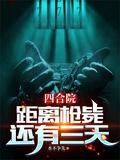 Siheyuan: Three Days Left Until Execution
49.6kReads9.0Score3.9kShelves
Siheyuan: Three Days Left Until Execution
49.6kReads9.0Score3.9kShelves
 Siheyuan: Come Here, Let Me Kick You
40.5kReads8.1Score2.4kShelves
Siheyuan: Come Here, Let Me Kick You
40.5kReads8.1Score2.4kShelves
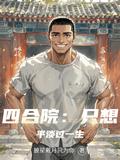 Siheyuan: I Just Want to Live a Peaceful Life
34.7kReads7.8Score1.5kShelves
Siheyuan: I Just Want to Live a Peaceful Life
34.7kReads7.8Score1.5kShelves
 Siheyuan: the Chronological History of Li Xiuyu
24.8kReads8.2Score646Shelves
Siheyuan: the Chronological History of Li Xiuyu
24.8kReads8.2Score646Shelves
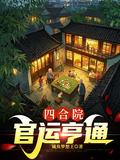 Siheyuan: Prosperous Official Career
12.8kReads8.6Score330Shelves
Siheyuan: Prosperous Official Career
12.8kReads8.6Score330Shelves
 The Ordinary Road of He Yuzhu in the Siheyuan
22kReads9.2Score914Shelves
The Ordinary Road of He Yuzhu in the Siheyuan
22kReads9.2Score914Shelves
 Siheyuan Small Citizen
5.4kReads8.9Score137Shelves
Siheyuan Small Citizen
5.4kReads8.9Score137Shelves
 I, Xu Damao, Come from the 21St Century
6.8kReads8.1Score206Shelves
I, Xu Damao, Come from the 21St Century
6.8kReads8.1Score206Shelves
 Daily Life Since 1955
93Reads5.8Score—Shelves
Daily Life Since 1955
93Reads5.8Score—Shelves
 Courtyard: Forcing Yi Zhonghai to Marry Silly Zhu
37.2kReads7.0Score1.8kShelves
Courtyard: Forcing Yi Zhonghai to Marry Silly Zhu
37.2kReads7.0Score1.8kShelves
 Siheyuan: Does Being a Factory Doctor Lead the Way?
21kReads5.3Score2kShelves
Siheyuan: Does Being a Factory Doctor Lead the Way?
21kReads5.3Score2kShelves
 Siheyuan: Courtyard of a Juehu
9.5kReads5.5Score596Shelves
Siheyuan: Courtyard of a Juehu
9.5kReads5.5Score596Shelves
 Siheyuan: All Three Uncles Are Cuckolds
56.6kReads6.4Score3.5kShelves
Siheyuan: All Three Uncles Are Cuckolds
56.6kReads6.4Score3.5kShelves
 Siheyuan: I Made a Fortune by Breaking Other People's Legs
38kReads5.9Score2.4kShelves
Siheyuan: I Made a Fortune by Breaking Other People's Legs
38kReads5.9Score2.4kShelves
 Siheyuan: Shazhu's Road to Lordship
63.6kReads7.0Score3.9kShelves
Siheyuan: Shazhu's Road to Lordship
63.6kReads7.0Score3.9kShelves
 Quickly Travel Through the Courtyard: Liquidate Quickly, Never Get Used to It
34.2kReads8.2Score2kShelves
Quickly Travel Through the Courtyard: Liquidate Quickly, Never Get Used to It
34.2kReads8.2Score2kShelves
 Siheyuan: Ruthless People Enter the Courtyard
134.1kReads6.4Score8.7kShelves
Siheyuan: Ruthless People Enter the Courtyard
134.1kReads6.4Score8.7kShelves
 The People of the Motherland Are in the Courtyard
13.6kReads7.4Score843Shelves
The People of the Motherland Are in the Courtyard
13.6kReads7.4Score843Shelves
 Siheyuan: Lock Yi Zhonghai and Jia Jia at the Beginning
132.9kReads5.9Score10.1kShelves
Siheyuan: Lock Yi Zhonghai and Jia Jia at the Beginning
132.9kReads5.9Score10.1kShelves
 After Traveling Through He Yuyu, the Beginning Turned Out to Be in Baocheng
4.9kReads—Score1.4kShelves
After Traveling Through He Yuyu, the Beginning Turned Out to Be in Baocheng
4.9kReads—Score1.4kShelves
 When I Was Seven Years Old and Raising a Baby, the Whole Courtyard Went Crazy.
73.1kReads6.1Score6.2kShelves
When I Was Seven Years Old and Raising a Baby, the Whole Courtyard Went Crazy.
73.1kReads6.1Score6.2kShelves
 Little Ant in the Siheyuan
47Reads5.8Score—Shelves
Little Ant in the Siheyuan
47Reads5.8Score—Shelves
 Courtyard: Xu Damao, I Want to Go to the Moon
2.8kReads6.4Score179Shelves
Courtyard: Xu Damao, I Want to Go to the Moon
2.8kReads6.4Score179Shelves
 Siheyuan: I Really Want to Be a Good Person
5.2kReads8.1Score184Shelves
Siheyuan: I Really Want to Be a Good Person
5.2kReads8.1Score184Shelves
 Siheyuan, Rescue Qin Huairu at the Beginning
22.9kReads5.8Score2kShelves
Siheyuan, Rescue Qin Huairu at the Beginning
22.9kReads5.8Score2kShelves
 Siheyuan: the Daughter-In-Law Just Came over and Fucked the Jia Family
11.7kReads8.1Score496Shelves
Siheyuan: the Daughter-In-Law Just Came over and Fucked the Jia Family
11.7kReads8.1Score496Shelves
 Siheyuan, I Have the Final Say over This Canteen
17.9kReads7.6Score780Shelves
Siheyuan, I Have the Final Say over This Canteen
17.9kReads7.6Score780Shelves
 Siheyuan, I, Liu Guangqi, Rushed into the Department
4Reads5.8Score—Shelves
Siheyuan, I, Liu Guangqi, Rushed into the Department
4Reads5.8Score—Shelves
 Sumeru Precepts: Rebirth in Sixty Years of Cultivation, Beauty, and Conspiracy for the World
15.8kReads7.3Score2kShelves
Sumeru Precepts: Rebirth in Sixty Years of Cultivation, Beauty, and Conspiracy for the World
15.8kReads7.3Score2kShelves
 Mortal Monk
6.6kReads8.5Score711Shelves
Mortal Monk
6.6kReads8.5Score711Shelves
Potato's Omnipotent Answer to the Magic Stick Theory 382Reads8.5Score—Shelves
 Era: My Understanding Is Incredible, I Became a Craftsman of a Great Country
16.5kReads7.7Score774Shelves
Era: My Understanding Is Incredible, I Became a Craftsman of a Great Country
16.5kReads7.7Score774Shelves
 Mechanic in the Red Age: I Help My Ancestors Forge Heavy Weapons
46.1kReads8.8Score3kShelves
Mechanic in the Red Age: I Help My Ancestors Forge Heavy Weapons
46.1kReads8.8Score3kShelves
 Courtyard: the Start Scares Xu Damao
20Reads5.8Score—Shelves
Courtyard: the Start Scares Xu Damao
20Reads5.8Score—Shelves
 Siheyuan: at the Age of Thirteen, I Was Summoned by the Big Boss
21.1kReads8.3Score1kShelves
Siheyuan: at the Age of Thirteen, I Was Summoned by the Big Boss
21.1kReads8.3Score1kShelves
 Siheyuan: After Picking up Qin Jingru, the Whole Hospital Cried with Envy
18.8kReads8.4Score899Shelves
Siheyuan: After Picking up Qin Jingru, the Whole Hospital Cried with Envy
18.8kReads8.4Score899Shelves
 Siheyuan: Sign in and Take Off, the Matchmaker Talks About Matchmaking Yu Li
7.4kReads7.5Score259Shelves
Siheyuan: Sign in and Take Off, the Matchmaker Talks About Matchmaking Yu Li
7.4kReads7.5Score259Shelves
 Era: Fight Through the Courtyard at the Beginning and Travel to the Great Northern Wilderness
24.3kReads8.8Score1.3kShelves
Era: Fight Through the Courtyard at the Beginning and Travel to the Great Northern Wilderness
24.3kReads8.8Score1.3kShelves
 Siheyuan: Letting You Change Your Life Is Not About Changing the World
6Reads8.9Score—Shelves
Siheyuan: Letting You Change Your Life Is Not About Changing the World
6Reads8.9Score—Shelves
 Siheyuan: I Use National Law to Suppress All Dissent
33.7kReads8.7Score1.6kShelves
Siheyuan: I Use National Law to Suppress All Dissent
33.7kReads8.7Score1.6kShelves
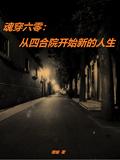 Soul Crossing Sixty Years: Starting a New Life in the Siheyuan
2.3kReads7.9Score—Shelves
Soul Crossing Sixty Years: Starting a New Life in the Siheyuan
2.3kReads7.9Score—Shelves
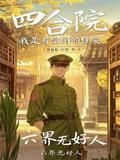 Travel Through 60 and Use Space as a Security Guard
88.5kReads8.5Score6.4kShelves
Travel Through 60 and Use Space as a Security Guard
88.5kReads8.5Score6.4kShelves
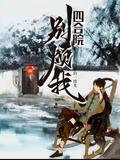 Siheyuan: Leave Me Alone
2.5kReads7.9Score106Shelves
Siheyuan: Leave Me Alone
2.5kReads7.9Score106Shelves
 Siheyuan: Factory Manager and Driver, Truck Hit the Courtyard
186Reads5.4Score—Shelves
Siheyuan: Factory Manager and Driver, Truck Hit the Courtyard
186Reads5.4Score—Shelves
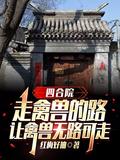 Siheyuan Follows the Path of the Beast, Leaving the Beast with Nowhere to Go
23Reads—Score—Shelves
Siheyuan Follows the Path of the Beast, Leaving the Beast with Nowhere to Go
23Reads—Score—Shelves
 Siheyuan: I Mingle with Animals
7Reads5.8Score—Shelves
Siheyuan: I Mingle with Animals
7Reads5.8Score—Shelves
 Siheyuan: Start by Signing in as a Level 4 Chef
5.5kReads6.7Score150Shelves
Siheyuan: Start by Signing in as a Level 4 Chef
5.5kReads6.7Score150Shelves
 Siheyuan: the Good Start Is to Frame Me for Stealing Chickens
431Reads6.6Score—Shelves
Siheyuan: the Good Start Is to Frame Me for Stealing Chickens
431Reads6.6Score—Shelves
 If You Are Asked to Retire from the Army, Will You Cut Off Lou Xiao'e?
175Reads—Score913Shelves
If You Are Asked to Retire from the Army, Will You Cut Off Lou Xiao'e?
175Reads—Score913Shelves
 Siheyuan: This Resident Is so Terrifying
13.7kReads6.9Score745Shelves
Siheyuan: This Resident Is so Terrifying
13.7kReads6.9Score745Shelves