A pair of twin sisters actually traveled to the Northern Wei Dynasty during the Wei, Jin, Southern and Northern Dynasties, and participated in that era of intrigue and chaos. By chance, the two sisters entered the ranks of the emperor's concubines... Who is the winner? Who are the losers? Who is the spoiler? "Traveling to the Northern Wei Dynasty to fight for the throne" allows you to be as creative as you want...
. In the Central Plains after the Rebellion of the Eight Kings, the Western Jin Dynasty collapsed, the conflict between Hu and Han became acute, and social order completely collapsed. The political corruption of the Western Jin Dynasty was extremely corrupt and unable to deal with internal and external troubles; Han refugees and internally-immigrated Hu people were also oppressed and became revolutionary forces; long-term wars caused the people to desperately desire order, no matter what ethnic group this order came from. As a slave, Shi Le broke free from the shackles of identity; as a Jieren, he broke through the ethnic barriers. The "Eighteen Cavalry" he formed in the early stage showed a multi-ethnic character. Later, when its power grew, it widely absorbed the forces of Han, Xianbei, Wuhuan and other ethnic groups. This open and inclusive talent strategy is in sharp contrast to many forces at the same time that cling to ethnic boundaries. Especially after being assisted by the Han counselor Zhang Bin, Shi Le truly realized the transformation from a rogue bandit to a regime builder. Zhang Bin's strategy of "occupying Xiangguo, establishing Yedu, and benefiting the world" provided Shi Le with a clear development blueprint, which was also a model of elite cooperation between Hu and Han. In the post-Zhao regime established, most of the laws and regulations followed the Han system, including the establishment of Imperial College, the selection of Confucian students, and the embryonic recommendation system of the imperial examination. From a longer historical perspective, Shi Le was a key figure in the Five Hus and Sixteen Kingdoms period who connected the past and the future. He destroyed the former Zhao and basically unified the north, laying the foundation for the subsequent unification of the former Qin; although his policy of dividing Hu and Han was not perfect, it explored a model of multi-ethnic coexistence; his rise itself symbolized the historical transformation of the Hu people from being ruled to rulers, and opened a new stage of the great integration of northern ethnic groups. Ancient Han people and officials mostly regarded it as a barbarian head that "ruined China", while modern historians view its historical role more objectively. In fact, Shi Le was a much more complex character: he was a cruel warrior at first, and he was ruthless in trapping and subduing soldiers; later he was a sober politician, with a profound insight into the laws of history; he was both a cultural imitator and worked hard to learn the Han system; and he was a stickler for national identity, always maintaining a Jieren consciousness. In Shi Le's life, we saw not only the legend of a man, but also the mirror image of an era. In that chaotic and dynamic era, the old order had collapsed, the new order had not yet been established, and everyone was looking for their place. Shi Le found it. From slave to emperor, he completed an almost impossible life journey. But his story also reminds us: personal success is magnificent, but establishing a lasting order and achieving true harmony requires more than military conquest - cultural tolerance, institutional innovation, and the transcendence of human nature. This is the most precious legacy Shi Le left to future generations: an eternal reflection on struggle and limitations, power and wisdom, nation and culture. After thousands of years, we can still see the glory and pathos of that era from him, and we can also illuminate some eternal themes in the human condition. History does not repeat, but it always rhymes - Shi Le's story is still echoing in our time in different ways.
The rare fine bran of tomatoes. The Anshi Rebellion, the banishment of the immortal noble concubine, the conspiracy in troubled times, and the passion for the family and the country. A man is a boy until he dies. Along the way, apart from Yuhuan, the white moonlight, which of the colorful Tang Dynasty women has become his cinnabar mole? Who else could he find difficult to appease? The key is, no matter if you are a decent person or a villain, your IQ is always online. On this point, it instantly kills 99.9% Of Tomato historical articles. Highly recommended
Traditional martial arts, history, background of Feishui in the Eastern Jin Dynasty, hot-blooded young people, no time travel, no immortality, no fans, you can try to see if you can read it, it is more sophisticated
Written by a friend, it is a historical article about the Five Dynasties and Ten Kingdoms period. It is not brainless or systematic. I highly recommend it.
"End of the Tang Dynasty + Five Dynasties + Struggle for Hegemony + Strategy + Love + Research", traveling through Emperor Ai of the Tang Dynasty, how to fight for hegemony step by step from a prisoner to the Tang Dynasty after the Five Dynasties? 🍊🍐
"There is still a clear moon, which once illuminated King Gao's thousands of horses." A person from the future accidentally traveled to the late Northern Wei Dynasty and was involved in the power vortex of Gao Huan and Yu Wentai, witnessing with his own eyes the most thrilling turning point of that era. As a bystander and participant, she will enter the world of Gao Huan and Lou Zhaojun and experience their love, hate and choices. This is not a simple time travel, but a soul dialogue across time and space. The moonlight is still there, the hero is far away, but the story has just begun.
 Three Hundred Years of Troubled Times: Gossip About the Unification of the Southern and Northern Dynasties
27Reads5.8Score—Shelves
Three Hundred Years of Troubled Times: Gossip About the Unification of the Southern and Northern Dynasties
27Reads5.8Score—Shelves
 Galan Misty Rain, Dusk in the Northern Wei Dynasty
49Reads—Score—Shelves
Galan Misty Rain, Dusk in the Northern Wei Dynasty
49Reads—Score—Shelves
 Kirin's Elegy
46Reads—Score—Shelves
Kirin's Elegy
46Reads—Score—Shelves
 The Courtesy of the Emperor and His Ministers Is the Courtesy of Serving the Emperor for One Dynasty.
33Reads—Score—Shelves
The Courtesy of the Emperor and His Ministers Is the Courtesy of Serving the Emperor for One Dynasty.
33Reads—Score—Shelves
 Once the Emperor Did Not Bow Down, the Wind Blew up in Lanling
22Reads—Score—Shelves
Once the Emperor Did Not Bow Down, the Wind Blew up in Lanling
22Reads—Score—Shelves
 For a Time, the Emperor Did Not Bow Down, and He Was Messy with Mandarin Ducks.
16Reads—Score—Shelves
For a Time, the Emperor Did Not Bow Down, and He Was Messy with Mandarin Ducks.
16Reads—Score—Shelves
 Once the Emperor Did Not Bow Down, the Cuckoo Cries Blood
17Reads—Score—Shelves
Once the Emperor Did Not Bow Down, the Cuckoo Cries Blood
17Reads—Score—Shelves
 Traveling to the Northern Wei Dynasty and Fighting for the Throne
28Reads—Score—Shelves
Traveling to the Northern Wei Dynasty and Fighting for the Throne
28Reads—Score—Shelves
 Tragedy Repeats Itself? No, I Must Return to the Country This Time
758Reads8.0Score—Shelves
Tragedy Repeats Itself? No, I Must Return to the Country This Time
758Reads8.0Score—Shelves
 Kingdom of Heaven: the Rise of an Imperial Dynasty
1.2kReads5.8Score103Shelves
Kingdom of Heaven: the Rise of an Imperial Dynasty
1.2kReads5.8Score103Shelves
 Folklore Record: Zhizhachen
124Reads5.8Score—Shelves
Folklore Record: Zhizhachen
124Reads5.8Score—Shelves
 Peninsula: My Girl Group Exorcism Diary
1.2kReads5.8Score131Shelves
Peninsula: My Girl Group Exorcism Diary
1.2kReads5.8Score131Shelves
 The First Volume of the Romance of Later Zhao: the Biography of Shi Le
107Reads5.8Score—Shelves
The First Volume of the Romance of Later Zhao: the Biography of Shi Le
107Reads5.8Score—Shelves
 Ancient History and Present 3
215Reads5.8Score—Shelves
Ancient History and Present 3
215Reads5.8Score—Shelves
 Flying Dragon Flag: from the Five Dynasties and Ten Kingdoms to the New World
7Reads5.8Score—Shelves
Flying Dragon Flag: from the Five Dynasties and Ten Kingdoms to the New World
7Reads5.8Score—Shelves
 Jiang Yan's Dream Pen Brings Flowers to Life
28Reads5.8Score—Shelves
Jiang Yan's Dream Pen Brings Flowers to Life
28Reads5.8Score—Shelves
 The Soul Penetrates Li Bai? at the Beginning of Maweiyi, I Save Yuhuan
204Reads5.8Score—Shelves
The Soul Penetrates Li Bai? at the Beginning of Maweiyi, I Save Yuhuan
204Reads5.8Score—Shelves
 Liu Ling Doesn't Entertain Guests
4Reads5.8Score—Shelves
Liu Ling Doesn't Entertain Guests
4Reads5.8Score—Shelves
 People in Nanhan
6Reads5.8Score—Shelves
People in Nanhan
6Reads5.8Score—Shelves
 Overturning the Tang Dynasty: Traveling Through the Zen Emperor Tang Aizong
266Reads5.8Score—Shelves
Overturning the Tang Dynasty: Traveling Through the Zen Emperor Tang Aizong
266Reads5.8Score—Shelves
 Traveling Through Wuhuanhua: Bloody Chang'an War Hymn
35Reads5.8Score—Shelves
Traveling Through Wuhuanhua: Bloody Chang'an War Hymn
35Reads5.8Score—Shelves
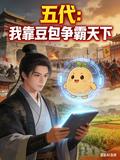 Fifth Generation: I Rely on Bean Bags to Dominate the World
1Reads5.8Score—Shelves
Fifth Generation: I Rely on Bean Bags to Dominate the World
1Reads5.8Score—Shelves
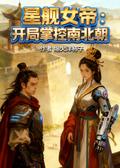 Starship Empress: Take Control of the Northern and Southern Dynasties at the Beginning
1Reads5.8Score—Shelves
Starship Empress: Take Control of the Northern and Southern Dynasties at the Beginning
1Reads5.8Score—Shelves
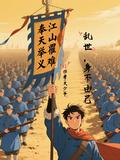 In Troubled Times, You Can't Help Yourself
—Reads5.8Score—Shelves
In Troubled Times, You Can't Help Yourself
—Reads5.8Score—Shelves
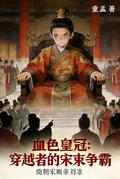 Bloody Crown: the Time Traveler's Struggle for Hegemony in the Late Song Dynasty
6Reads5.8Score—Shelves
Bloody Crown: the Time Traveler's Struggle for Hegemony in the Late Song Dynasty
6Reads5.8Score—Shelves