Read Yangming's Enlightenment again, and through hard work in life, you will eventually understand the wisdom of survival behind his practice and conscience.
"A gentleman should not lose his six arts, but a woman of eight elegances is deeply sad", "Everything in the world is exhausted, leisurely refining elixirs and cultivating immortality". In addition to the original creation, he also quoted many classical poems. The most important thing is that the author has clear thinking and reasonable logic. Highly recommended!
So pretty and so sweet that you can stomp your feet! Secret love comes true + running in both directions, the girl's heart bursts! My aunt laughed the whole time, warning of excessive sugar!
There were tears in Cheng Jingyi's eyes: "Professor Lin, sometimes I'm... Afraid. I'm afraid that what we do is in vain, that history doesn't care about our efforts, that everything will be in vain in the end." "I'm afraid too." Lin Zhenshu confessed, "But I still have to do it. It's like knowing that people will die, but still living; knowing that flowers will wither, but still blooming. This is human dignity - pursuing the infinite in the limited, creating meaning in nothingness."
The male protagonist has the strength of a bear, the speed of a leopard, the eyes of an eagle and the ears of a wolf! You can also use the human cannon to fire! If you don't laugh your teeth off after reading a few chapters, then you are in the late stages of depression! R
Classic while watching! Chemistry genius Shen Yanzhi returns to China with his top-notch skills, and joins forces with the stunningly talented Su Manqing to lead a team to tear down traitors, destroy Japanese military factories, outwit gold, and use science to integrate ancient laws to protect bronze national treasures. Throughout the whole process, there is a high-powered battle of wits, a happy counterattack, alchemy and heart-warming to protect the homeland, handsome guys and beauties are on fire in Shanghai, and there is no need to urinate to get ahead!
The mountain of love is hard to overcome, so who is sad for those who are lovelorn? Meeting by chance reveals the beauty of others. Isn't this a classic? I read an imaginative book because of one sentence
The stone road in Guhuai Lane records the footsteps of Wang Shengxi's growth, and the stone steps in Sanshengmen bear witness to his progress in spiritual practice. The two roads connect his life. The book borrows the image of road to explore the necessity of growth and transformation.
The way of thinking about high-dimensional cognitive problems is essentially a "dimension-enhancing movement" of cognitive dimensions - from "being pushed by the problem" to "looking at the problem from a standpoint", from "solving problems within a known framework" to "reconstructing the framework to define problems". It is not just about more comprehensive analysis, but also about breaking the "ceiling" of cognition and making every problem a fulcrum to push the boundaries of cognition. 1. Breaking the "experience cocoon": from "path dependence" to "context calibration" The inertia of conventional thinking is to use the past "success formula" to solve current problems - it worked in the past, and it should be done now. The first step in high-dimensional cognition is to tear off the "experience label" and ask: "What is the essential difference between the current context and the context in which experience is established?" For example, if a traditional manufacturing company is struggling with "how to increase sales," conventional thinking will follow the old method of "adding advertising and promoting distribution." High-dimensional cognition will first calibrate the context: "Has the current user decision-making logic changed? In the industrial era, it was 'What the company promotes, users buy', now it is 'What users need, can the company accurately match it?' - The essence of the sales problem may not be 'not enough promotion,' but 'insufficient granular understanding of user needs.'" Experience is a "map", but the world is changing and the map will expire. High-dimensional cognition does not deny the value of experience, but makes experience a "reference system" rather than a "standard answer." Just like sailing, past route records are important, but what is more important is whether the current ocean currents and wind directions are the same as in the past - otherwise, experience will only become a "sunk cost" trap. 2. Establish "system coordinates": from "single point attribution" to "relationship insight". Conventional thinking analyzes problems and is used to looking for "single cause and single effect": poor performance is due to lack of effort in sales, and child rebellion is due to ignorance in adolescence. High-dimensional cognition will put the problem into the "relationship network" to see which "connection methods" it is in the system. The core of the system is not the "elements", but the "relationship between elements". For example, the team's execution ability is weak, and conventional thinking focuses on "employee capabilities"; high-dimensional cognition will look at the "relationship stuck points" in the system: is "the goal breakdown too vague, causing everyone to not know the impact of their actions on the results?" Is it because the "feedback mechanism fails, and there is no timely response to right and wrong decisions, which weakens the motivation for action"? Or is it that "department walls are too thick, allowing the hidden costs of cross-department collaboration to eat up execution capabilities"? Just like when a doctor looks at the human body, he will not say "Headache is a problem with the head", but rather look at "the relationship between the head and cervical vertebrae, blood vessels and nerves". High-dimensional cognitive processing problems never judge a "point" in isolation, but find the "breakpoint of the relationship" in the system - repairing a breakpoint can often naturally improve the efficiency of the entire system. 3. Get through the "phenomenon fog": from "symptom solution" to "essential anchoring" Conventional thinking is easy to get lost in the "phenomenon details": users complain that the product is difficult to use, so they are busy changing the interface; there are many employees leaving, so they think about raising wages. High-dimensional cognition will penetrate the phenomenon and ask: "What is the 'minimum necessary condition' of this problem? If this condition disappears, will the problem still exist?" The "minimum necessary condition" is the "essential anchor" of the problem. For example, users complain that "the interface is difficult to use", which may appear to be a "design problem", but may actually be due to "user needs for 'efficiency' not being met" - what they want is not a "good-looking interface", but "completion of operations within 3 steps"; there are many employees leaving the company, which may appear to be "less money", but may actually be due to "misalignment between growth needs and job value" - young people often leave their jobs not because of low wages, but because they "cannot see a path for ability growth". The key to grasping the essence is to do "subtraction thinking": stripping away all phenomena until the "must-have" core remains. Just like peeling an onion, you will find at the end that what makes the onion "spicy" is not the multiple layers of skin, but the volatile substances inside. To solve the problem of the number of skin layers, it is better to deal with the volatile substances. 4. Observe the "evolutionary trajectory": from "static judgment" to "trend acceleration". The judgment of problems by conventional thinking mostly stays in the "current state": If this thing seems feasible now, do it; if it is risky now, don't do it. High-dimensional cognition will put the problem on the "time axis" and look at its "evolutionary acceleration" - not "what it is now", but "in what direction it is accelerating change." For example, if a person is struggling with "whether to enter the artificial intelligence industry", conventional thinking will calculate "the current salary and competition intensity"; high-dimensional cognition will observe the "critical point of the trend": has the industry's technological maturity (such as the degree of commercialization of large models), the growth rate of talent gaps, and the penetration rate of application scenarios passed the inflection point of "from quantitative change to qualitative change"? Just like looking at smartphones in 2010, sales at that time were just a "phenomenon", but the "accelerated formation of the mobile Internet application ecosystem" was the "acceleration" that determined the industry's explosion. The core of dynamic evolution is not to predict the future, but to identify the "inertia of the trend": if something is growing "exponentially" rather than "linearly", even if it is not perfect at the moment, its long-term value will be far greater than "something that is perfect but stagnant at the moment". 5. Create a "symbiotic solution": from "zero-sum game" to "value network" When conventional thinking faces contradictions, it is easy to fall into an "either-or" confrontation: either I win and you lose, or each gives in. High-dimensional cognition believes that the essence of the contradiction in any system is a problem with the "value connection method" - finding a new connection method can make the opposing parties become "symbioses." For example, the conflict between the platform and the merchants: the platform wants to get higher commissions, while the merchants want more profits, and the conventional thinking is to "negotiate to lower the price"; high-dimensional cognition will reconstruct the value network: "Can the platform's commission be linked to the merchant's 'user repurchase rate'? By improving services and retaining customers, the platform can not only get more commissions (more repurchases), but the merchants can also reduce customer acquisition costs due to repurchases - from 'competing for immediate profits' to 'making the pie bigger together'." The key to symbiosis is to find the "hidden common needs" of both parties: employees need "stability", companies need "flexibility", and the common need is "security" - companies can replace "fixed wages" with "basic salary + project dividends", which not only gives employees basic security (security), but also allows the company's costs to fluctuate with performance (flexibility). Opposition is only a symptom, and failure to find a "symbiotic value interface" is the root cause. The ultimate in high-dimensional cognition: making the cognitive dimension higher than the problem dimension. Just like a problem in a two-dimensional plane, it may be easily solved in a three-dimensional space - such as a point trapped in a square. From a three-dimensional perspective, you only need to "jump out of the plane" to get out of trouble. The core of high-dimensional cognition is to keep your cognitive dimension higher than the dimension of the problem. It does not rely on skills, but on a kind of "cognitive awareness": when encountering a problem, first ask yourself, "Am I looking at this problem with lower-dimensional thinking?" Are "system problems" regarded as "single point problems"? Do you regard "trend issues" as "status issues"? In the end, every problem that arises is not to "embarrass" us, but to remind us: "It's time to upgrade your knowledge."
Revolutionary red ideas. This work uses a fantasy style to write the heaviest history of class struggle in mankind. In the collision of star chains and great achievements, it reflects the blood of a hundred years from the Paris Commune to the October Revolution. When Qiu Jiefang's public support was extinguished by the trampling of the masses, the novel completed the most tragic question about the revolution: Can we stop forging new shackles after smashing the chains?
The rare fine bran of tomatoes. The Anshi Rebellion, the banishment of the immortal noble concubine, the political intrigues in troubled times, and the passion for the family and the country. A man is a boy until he dies. Along the way, apart from Yuhuan, the white moonlight, which of the colorful Tang Dynasty women has become his cinnabar mole? Who else could he find difficult to appease? The key is, no matter if you are a good guy or a bad guy, your IQ is always online. On this point, it instantly kills 99.9% Of Tomato historical articles. Highly recommended! !
This is a story where "everything can be capitalized". Ghost? Those are special skills talents. Fear? That's user experience. After reading this book, I realized: the world is a huge playground
There is a sentence in it that I think is very classic: Loneliness is poison! ... Large scale? The plot is exciting? That's nothing, accepting plot customization is the way to go! Get in the car and have everything!
The struggle of Gleaner is like a flower that grows stubbornly in the wind and sand! This counterattack in the college entrance examination, rooted in faith and with perseverance as its wings, is full of the passionate power of youthful inspiration!
 Six Realms Era: Hongmeng Gods Record
1Reads—Score—Shelves
Six Realms Era: Hongmeng Gods Record
1Reads—Score—Shelves
 Ziwei Star Lord: the Fortune Chart Determines the Universe, and the Stars Control the Heavens
15Reads8.4Score—Shelves
Ziwei Star Lord: the Fortune Chart Determines the Universe, and the Stars Control the Heavens
15Reads8.4Score—Shelves
 Yin Fu Zhao Yan Lu
—Reads8.6Score—Shelves
Yin Fu Zhao Yan Lu
—Reads8.6Score—Shelves
 Lingshu Tianzang
3Reads8.5Score—Shelves
Lingshu Tianzang
3Reads8.5Score—Shelves
 Luo Shen Fu·cangming Lingxi
—Reads8.6Score—Shelves
Luo Shen Fu·cangming Lingxi
—Reads8.6Score—Shelves
 Nine Days of Ink Printing
6Reads8.6Score—Shelves
Nine Days of Ink Printing
6Reads8.6Score—Shelves
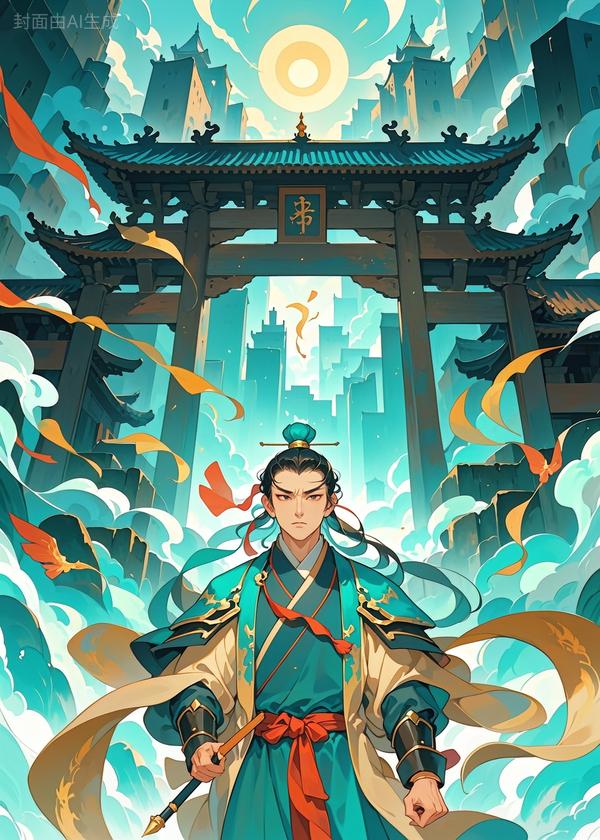 The Spiritual Path: Zhang Yi Xuance
—Reads8.5Score—Shelves
The Spiritual Path: Zhang Yi Xuance
—Reads8.5Score—Shelves
 The Six Realms of Hongmeng Return to the Heart Era
—Reads—Score—Shelves
The Six Realms of Hongmeng Return to the Heart Era
—Reads—Score—Shelves
 Changqianxing·lianxinxu
2Reads8.6Score—Shelves
Changqianxing·lianxinxu
2Reads8.6Score—Shelves
 I Rely on Ancient Methods to Weave Brocade and Become Famous All over the Internet
—Reads8.4Score—Shelves
I Rely on Ancient Methods to Weave Brocade and Become Famous All over the Internet
—Reads8.4Score—Shelves
 Classic of Mountains and Seas·kunlun Ruins
1Reads8.5Score—Shelves
Classic of Mountains and Seas·kunlun Ruins
1Reads8.5Score—Shelves
 Xuanxing Town in Troubled Times
4Reads—Score—Shelves
Xuanxing Town in Troubled Times
4Reads—Score—Shelves
 Taiyi Divine Number-Tianyuan Secret
27Reads8.5Score—Shelves
Taiyi Divine Number-Tianyuan Secret
27Reads8.5Score—Shelves
 Tang Dynasty Tianwei's Heavenly Strategy Changfeng
3Reads5.8Score—Shelves
Tang Dynasty Tianwei's Heavenly Strategy Changfeng
3Reads5.8Score—Shelves
Mysterious Conspiracy Chen Ping: Heaven's Secrets Determine Everything 1Reads8.5Score—Shelves
 Ming Xue Xue
9Reads5.8Score—Shelves
Ming Xue Xue
9Reads5.8Score—Shelves
 Sunset Rivers and Lakes
30Reads—Score—Shelves
Sunset Rivers and Lakes
30Reads—Score—Shelves
 Half-Fallen Green Plum, Five-Cent Sugar
337Reads5.8Score—Shelves
Half-Fallen Green Plum, Five-Cent Sugar
337Reads5.8Score—Shelves
 Strange Snow City
33Reads5.8Score—Shelves
Strange Snow City
33Reads5.8Score—Shelves
 A Foreign Country
66Reads—Score—Shelves
A Foreign Country
66Reads—Score—Shelves
 Useless
17Reads—Score—Shelves
Useless
17Reads—Score—Shelves
 I Don't Have Super Powers
29Reads—Score—Shelves
I Don't Have Super Powers
29Reads—Score—Shelves
 The Republic of China: the Age of Enlightenment
4Reads5.8Score—Shelves
The Republic of China: the Age of Enlightenment
4Reads5.8Score—Shelves
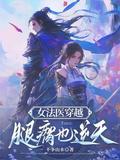 A Female Forensic Doctor Traveled Through Time, and Her Legs Were Lame.
293Reads8.2Score—Shelves
A Female Forensic Doctor Traveled Through Time, and Her Legs Were Lame.
293Reads8.2Score—Shelves
 After Being Broken into Pieces, I Control the Universe
106Reads8.3Score—Shelves
After Being Broken into Pieces, I Control the Universe
106Reads8.3Score—Shelves
 I Touched the School Belle's Fox Tail
745Reads9.8Score—Shelves
I Touched the School Belle's Fox Tail
745Reads9.8Score—Shelves
 The Wife Who Returned Is Actually the Princess of the Beijing Circle
4.4kReads9.8Score100Shelves
The Wife Who Returned Is Actually the Princess of the Beijing Circle
4.4kReads9.8Score100Shelves
 National Alchemist
36Reads5.8Score—Shelves
National Alchemist
36Reads5.8Score—Shelves
 Taixuan Burning Heaven Technique
82Reads5.8Score—Shelves
Taixuan Burning Heaven Technique
82Reads5.8Score—Shelves
 The Return of All Laws to the Ruins 3
99Reads5.8Score—Shelves
The Return of All Laws to the Ruins 3
99Reads5.8Score—Shelves
 After Five Years of Waiting in Vain, My Husband and Daughter Forced Me to Divorce.
4kReads9.3Score358Shelves
After Five Years of Waiting in Vain, My Husband and Daughter Forced Me to Divorce.
4kReads9.3Score358Shelves
 Kuroto Tenzun
10Reads—Score—Shelves
Kuroto Tenzun
10Reads—Score—Shelves
 Shan Tianfang's Commentary Edition of Romance of the Sui and Tang Dynasties
41.5kReads5.8Score3.4kShelves
Shan Tianfang's Commentary Edition of Romance of the Sui and Tang Dynasties
41.5kReads5.8Score3.4kShelves
 Zhang Yifeng's 19Th Book
10Reads5.8Score—Shelves
Zhang Yifeng's 19Th Book
10Reads5.8Score—Shelves
 Strange Tales from a Chinese Studio [Humorous Version]
4Reads5.8Score—Shelves
Strange Tales from a Chinese Studio [Humorous Version]
4Reads5.8Score—Shelves
 Click the Link to Travel Back to 1960
15Reads—Score—Shelves
Click the Link to Travel Back to 1960
15Reads—Score—Shelves
 Just Three or Two Minutes
22Reads—Score—Shelves
Just Three or Two Minutes
22Reads—Score—Shelves
 Not Me, Not Me
7Reads6.8Score—Shelves
Not Me, Not Me
7Reads6.8Score—Shelves
 Magical Little Catcher
7kReads8.8Score733Shelves
Magical Little Catcher
7kReads8.8Score733Shelves
 Secret Decoding
4Reads5.8Score—Shelves
Secret Decoding
4Reads5.8Score—Shelves
 Hope, I Will Bring True Fire to the Slaves
6Reads5.8Score—Shelves
Hope, I Will Bring True Fire to the Slaves
6Reads5.8Score—Shelves
 The Soul Penetrates Li Bai? at the Beginning of Maweiyi, I Save Yuhuan
204Reads5.8Score—Shelves
The Soul Penetrates Li Bai? at the Beginning of Maweiyi, I Save Yuhuan
204Reads5.8Score—Shelves
 Screenwriter, What Happened to You If I Messed Up?
1Reads—Score—Shelves
Screenwriter, What Happened to You If I Messed Up?
1Reads—Score—Shelves
 Phoenix in the Night: Ten Beauties
949Reads8.7Score—Shelves
Phoenix in the Night: Ten Beauties
949Reads8.7Score—Shelves
 Guizhou Road Crazy Biao
37Reads8.2Score—Shelves
Guizhou Road Crazy Biao
37Reads8.2Score—Shelves
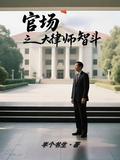 The Legal World Asked
689Reads5.8Score141Shelves
The Legal World Asked
689Reads5.8Score141Shelves
 Gleaner
48Reads5.8Score—Shelves
Gleaner
48Reads5.8Score—Shelves
 The Adventures of Po
61Reads—Score—Shelves
The Adventures of Po
61Reads—Score—Shelves
 The Days I Spent with a Rich Woman in Bangkok
19Reads5.8Score—Shelves
The Days I Spent with a Rich Woman in Bangkok
19Reads5.8Score—Shelves
 The Original Wife Travels Through Mistress, the Life of a Woman Born in the 1960S
2.4kReads9.3Score153Shelves
The Original Wife Travels Through Mistress, the Life of a Woman Born in the 1960S
2.4kReads9.3Score153Shelves