1️⃣The uncle is hateful and pitiful, he can't fight against his younger brother! He likes his younger brother and sister, marries a woman he doesn't love, and his wife cuckolds him! Raised a pair of stupid children [laughing and crying] 4️⃣His love is really show-stopping, it is respect, it is understanding, it is companionship, it is equality, it is the confidence that I will support you no matter what you do, it is pampering,
Five pieces of "psychological compressed biscuits" from Chixi Village - five new articles in Mr. Fu Shuiheng's feedback delay series, specializing in treating all kinds of "can't wait". Friends, last time I recommended to you the first five articles in Mr. Fu Shuiheng's "feedback delay" series - "Ultimate Choice Escape", "Instant Feedback Addiction", "Delayed Display of Behavioral Results", "Effort No Feedback Tolerance" and "Cause and Effect Time Difference Confusion". Those five articles told the whole process of how an impatient modern man was brought back bit by bit by an old farmer in a mountain village in western Fujian using local methods. There were tears in the laughter, and the truth was hidden in the absurdity. Many readers came to me after reading it and asked me: What about the follow-up? What happened to Fang Kele and Lin Shen? Are there any new stories in Chixi Village? Have. Not only does it exist, but it is more powerful than the previous five articles. Mr. Fu Shuiheng has recently written five new articles, each of which accurately pokes at the most secret psychological pain points of contemporary people. It took me a weekend to read it in one sitting. After reading it, I sat on the sofa without moving for twenty minutes - not because I was tired, but because there were too many things going on in my mind and I needed time to settle. The background of these five stories is still the Chixi Village hidden in the mountains of western Fujian. The protagonists are still the wise old uncle Shui Heng, who was fifty-nine years old and almost admitted to college but didn't fill in the application because he didn't want to apply, and his two precious nephews-Fang Kele and Lin Shen. The newly added character Fu Shuilan (my uncle's distant cousin, a young man who resigned from Xiamen and returned to his hometown to farm) also enriches the perspective of the entire series. The five stories are independent of each other, but if you read them in order, you will find that they are strung together into a set of "mental toughness training courses for modern people". I will talk to you one by one below, trying not to spoil the key plot points and only talk about the highlights. Chapter 6: "Sowing Anxiety" - You plant a seed, and then you want to dig it out every five minutes. The beginning of this story makes people laugh until their stomachs hurt. Fu Shuilan rode an electric car from the county seat and rushed into Chixi Village. She had compound fertilizer and a hoe strapped to the back of the car. The first thing she asked when entering the village was "How to get to Fu Shuiheng's house?" This young man's sense of ritual can start a sect - before sowing, he stared at the seed bowl for a long time and muttered something. After sowing, he bowed three times to the open space and inserted a sign at the edge of the field that read "Fu Shuilan's Land". Fang Kele looked on with a complicated expression and said, "I had the same behavior two months ago." The most exciting part is Fu Shuilan's "anxiety of digging soil" after sowing. On the first day, he couldn't help but use his fingers to open the soil to see if there were any changes in the seeds. He was ecstatic when he saw the embryo with the cracked shell. But in the evening, he opened it again and found that the seeds in different locations expanded at different speeds, so he started to wonder whether the slow seeds were dead. Fang Kele observed his behavior from the side and found that he was exactly the same as when he was planting Chinese cabbage - he repeatedly dug up the soil because he couldn't wait for feedback, and each time he peeled off, he hurt the developing root system. Fang Kele designed a "two rounds a day plus firewood splitting therapy" for Fu Shuilan - he could only go to the field once a day in the morning and evening, and at other times he could chop firewood when he wanted to. Firewood won't get hurt just because you chop it more with the axe. What touched me most about this story was the ending. Fu Shuilan stir-fried spinach for the first time and it was salty. My uncle took a big mouthful and stuffed it into his mouth and said, "It's a little salty, but it's delicious. You are much better than me for the first time." Then he wrote something in his notebook: "University taught me how to be successful, and farming taught me how to face 'temporary lack of success.' These two things are completely different." When I read this, my nose felt sore. Isn't this the problem that each of us is facing? We are taught how to pursue success, but we are never taught how to live with the state of "not yet succeeding". Suitable for people: You who work hard and can't wait to see the results the next day; you who can't help but "pick up the soil and take a look" when doing anything; you who are always comparing with other people's progress and become anxious to the point of insomnia. Chapter 7: "Long Feedback Loop Education" - My uncle taught a course. The teaching materials are a seed, a notebook, and a pen. The duration of study: ten years. This article is the largest in the entire series. On the day of the winter solstice, my uncle suddenly announced that he would teach Fang Keke, Lin Shen and Fu Shuilan a class. The name of the class was "Long Feedback Loop Education". The Hakka translation means "Don't be anxious, wait slowly, you will know the taste after waiting for a long time." The teaching materials are extremely simple - each person has a grapefruit and seeds (the seeds are also engraved with their respective surnames), a blank thread-bound book, and an old pen. The requirements are: water every day and write a line in the notebook every day until the grapefruit grows. How long does it take for grapefruit to grow from seed to fruit? The old uncle raised a finger and said, "If you're lucky, seven or eight years. If you're not lucky, ten or so years." Fang Kele's reaction at that time made me laugh for a long time - he almost dropped the seeds in his hand to the ground, and a certain area in his mind responsible for "long-term planning" was frantically calling the police. The longest period of planning he had ever done in his life was four years of college, and those four years seemed like a lifetime to him. What is the concept of ten years? But what really made me break through the story was the different styles of the three people writing diaries. Fang Kele wrote two more lines on the first day and then crossed them out, realizing that he had made the mistake of "not complying with constraints"; Lin Shen initially wrote rigorous scientific observation records, but later found that there was "no change" every day and began to write what was in his heart; Fu Shuilan only wrote one sentence every day, in a few formats It's almost fixed, but every sentence makes people feel a kind of calm power - "It's been ten days. The seeds haven't sprouted yet. But I think it doesn't matter, because my uncle said that grapefruit and slowness are very slow. I am also very slow. I only graduated from college after five years. Slow people and slow seeds should get along." The old uncle said something that is still in my mind: "The grapefruit tree I planted did nothing but grow leaves for the first three years. It did not bloom or bear fruit, and it just grew leaves all year round. It wasn't that it ignored me in those three years, it was that it was growing itself. The tree must grow thick enough and strong enough to support the grapefruit trees." Suitable for people: You who always feel "it's too late"; you who feel out of breath in the fast-paced world; you who need to be reminded that "ten years can also be a unit of time". Chapter 8: "Visualizing Invisible Progress" - Lin Shen drew "invisible growth" into a visible chart, and then the whole village came to him to draw. This article is Lin Shen's highlight moment. His grapefruits and seeds had been planted for forty-three days without any change, and he fell into the pain of "I can understand the reason but can't feel the progress." As a science student, what he needs is not feelings, but data. So he did something that amazed me - he drew a coordinate system using his old uncle's papyrus. The horizontal axis is time and the vertical axis is the ten stages of grapefruit growth. Every day, he marked the "observation completed" small circle in the grid (draw an eye in a circle). If there is progress, draw an arrow, and if you complete a stage, draw a star. This "progress visualization system" later spread throughout Chixi Village. Atubo asked him to draw a "Paddy Field Temperament Tracking Chart" and set up a blackboard at the edge of the field to write a sentence every day. The content gradually deviated from serious farm observations to shouting to Ah Shui from a distance. After Ah Shui heard about it, he also erected a blackboard to record how many curse words Ah Tubo wrote on the blackboard. Two blackboards face each other across a rice field. Uncle Yang commented that this is the most interesting farmland installation in Chixi Village in the past fifty years. The most profound insight of the story is hidden in Lin Shen's introspection. He found that everything he had done before - the causal mirror, the accelerator - was to let others see his intelligence; and the chart he made this time was just to solve his real problems. It took him several months to complete the transition from "predicting the future" to "recording the present." The old uncle gave this chart collection fourteen words: "Everything that is true deserves to be seen. Everything that is invisible is worth remembering." Suitable for people: You who have a scientific brain who need to "see" before you can "believe"; you who have done a lot of things but none of them have been recorded; you who need a small flashlight when walking in the dark. Chapter 9: "Reverse Hunger Syndrome" - Fang Kele and Lin Shen collapsed mentally at the same time, and the old uncle saved them by saying "I will dig up the ground." This is the most empathetic chapter in the entire series. On the forty-seventh day of long feedback training, Fang Kele and Lin Shen "fell hungry" at the same time on the same morning - not hungry in their stomachs, but hungry in their hearts. Fang Kele was lying on the bed staring at the ceiling without wanting to get up. Lin Shen was sitting at the desk in a daze looking at the chart he had drawn for forty-seven days. Fang Kele said something that almost made me cry: "Uncle, what you give us are all spiritual grains - squatting period, long feedback, and time difference between cause and effect - these grains are nutritious, but tasteless. I need a little taste, just a little. I don't want much, a little is enough, but I haven't gotten this little bit for a long time." How did the old uncle respond? He didn't reason, didn't provide psychological counseling, and didn't even answer directly. He just said, "I'm going to dig the ground," and then walked out of the yard with the hoe. Fang Kele and Lin Shen were silent for a long time, then stood up almost at the same time, picked up their hoes and followed. After plowing the ground all afternoon, they were sweating. Listening to the sound of the hoe cutting into the soil, the two people slowly recovered. The old uncle said something at the dinner table in the evening, which perfectly summed up the mental dilemma of contemporary people: "If people are still willing to work when they are hungry, then they are not really hungry, but just greedy. Greedy for feedback, greedy recognition, and greedy for other people's words. Greedy is not a disease, it is a habit. People who are used to eating takeaways When I suddenly cook for myself, there will always be a few days when I am really craving for the smell of MSG outside." Fang Kele later wrote in his diary: "I have been sitting at the door of the granary crying about hunger – I have never looked back at the diary I wrote for several months, and I have forgotten so many 'nuts' in it." Suitable for people: You who have persisted for a long time and suddenly one day feel "what's the point of all this?"; You who feel psychologically hungry during long-term efforts; you who need someone to help you with actions rather than words. Chapter 10: "Delayed Gratification Accelerator" - Lin Shen invented something again. This time he cut "wait" into pieces and added rewards. The old man used an old timer to end the game. This article is the explosion of Lin Shen's "inventor" attribute, and it is also the full mode of Fang Cola's "fanning the flames" skill. Lin Shen used the timer in his uncle's kitchen, the giant hourglass in Qingxin Pavilion, and the old wall clock on the wall of the hall to build a "time amusement park" in his uncle's yard - the grapefruit tree was covered with hourglasses and reward bags, the bluestone floor was painted with progress scales, and a small mirror was added under the pendulum of the wall clock. Fang Kele fanned the flames and proposed to upgrade it to a village-wide competition. The winner could dig up the old Hakka wine that his uncle buried under the grapefruit tree. The testing process was full of laughs. Fang Kele sat in front of the hourglass for two hours. In the first 20 minutes, he had at least five cheating plans in his mind, including drilling small holes at the bottom of the hourglass; Lin Shen was assigned to "squat without feedback", and when he squatted for the eighth minute, his left and right legs had a mental argument. Finally, Fang Kele blew into his ear and fell down early; each of Fu Shuilan's three relay cards was more stable than the last, showing a calmness far beyond her peers. But the best part is the ending. The old uncle did not participate in the discussion from beginning to end. In the end, he took an old-fashioned timer that had been used for twenty years from the kitchen window sill, placed it among everyone, and asked Lin Shen: "How are these devices you made compared to my twenty-year-old timer?" The whole place was quiet. Lin Shen thought for a long time before he realized that the old uncle's timer had no scale, no cards, no mirrors, and no auxiliary functions. But the old uncle had been twisting it for twenty years and never felt uncomfortable waiting for it. Real masters of waiting don't need to make waiting easy—because they have internalized waiting into life itself. Lin Shen wrote a line on his design sketch: "The accelerator is never on the scratch paper, but in the hands of the old man." Suitable for people: You who have used all the efficiency tools and still feel that there is not enough time; you who rely on Pomodoro and clock-in APP to focus; you who want to know "how the real master of waiting waits". Why are these five worth your time? Because these five stories taken together are a complete "mental toughness training map for modern people". "Sowing Anxiety" teaches you how to resist the urge to "pick up the soil and take a look" - it's not about not caring, it's about not hurting. "Long Feedback Loop Education" teaches you to accept the ten-year rhythm of cause and effect - some fruits take a lifetime to pick. "Visualizing Invisible Progress" teaches you to draw a picture of invisible growth - just because you can't see it, it doesn't mean it hasn't happened. "Reverse Hunger Syndrome" teaches you to feed yourself when you are psychologically hungry - your diary is filled with forgotten nuts. "Delayed Gratification Accelerator" teaches you to distinguish between "learning to wait" and "relying on tools to help you wait" - a true master of waiting does not need an accelerator. Mr. Fu Shuiheng's writing style has an earthy and pyrotechnic flavor that you will never read in a big city. When he wrote about hourglass training, he didn't just talk about it dryly. Instead, he asked Fang Kele to sit in front of the hourglass for two hours, run through five cheating plans in his mind, and finally write the sentence "Time doesn't care about me, and I don't care about it either. We all live our own lives." He used a "whole village race" that made people laugh to the point of cramping to explain the truths that could not be explained clearly in psychology books of tens of thousands of words - using Hakka dialect, using kitchen timers, using cloth bags hanging on the grapefruit tree, and using crooked characters on Atub's small blackboard. You will be amused and laugh out loud, and then you will smile and suddenly find that your eyes are wet from time to time. It's not about being sensationalized, it's about being struck by real, clumsy, cute characters who are exactly like you. If you have read the first five articles, these five articles will let you see the complete evolution of Fang Kele and Lin Shen from "learning to wait" to "waiting until they forget to wait". If you haven't read the first five chapters, these five chapters can also be read independently - each chapter is a complete story with its own continuation and connection. The story has been launched simultaneously on Tomato Music, Tomato Novel, Toutiao Express Edition, Toutiao, Wukong Browser, Danhua, and Changdu Novel. When searching, please note that only user 26182811 is our own author Mr. Fu Shuiheng. Don't be led astray by those popular Li Gui. If you feel that you are still unsatisfied after reading this - I believe you will - then go blow the creative charge to the old man. Tell him that there are people squatting on the field ridge of Chixi Village, waiting for his next pot of old Hakka wine, waiting for Fang Keke and Lin Shen's next act of evil, waiting for the old uncle to use the next old kitchen item to tell the next truth that will make people slap their thighs. This kind of author deserves to be seen by more people, and this kind of writing deserves to leave us a corner where we can breathe slowly in this era of "reading a book in three minutes" and "learning a skill in seven days." Thank you for taking the time to read this recommendation. If these five stories can remind you of the old timer in the yard of Chixi Village on an anxious night - it is still ticking, neither hurried nor slow, nor increasing nor decreasing - then Mr. Fu Shuiheng's forty years of karma will bear a new grapefruit.
Five pieces of "psychological compressed biscuits" from Chixi Village - five new articles in Mr. Fu Shuiheng's feedback delay series, specializing in treating all kinds of "can't wait". Friends, last time I recommended to you the first five articles in Mr. Fu Shuiheng's "feedback delay" series - "Ultimate Choice Escape", "Instant Feedback Addiction", "Delayed Display of Behavioral Results", "Effort No Feedback Tolerance" and "Cause and Effect Time Difference Confusion". Those five articles told the whole process of how an impatient modern man was brought back bit by bit by an old farmer from a mountain village in western Fujian using local methods. There were tears in the laughter, and the truth was hidden in the absurdity. Many readers came to me after reading it and asked me: What about the follow-up? What happened to Fang Kele and Lin Shen? Are there any new stories in Chixi Village? Have. Not only does it exist, but it is more powerful than the previous five articles. Mr. Fu Shuiheng has recently written five new articles, each of which accurately pokes at the most secret psychological pain points of contemporary people. It took me a weekend to read it in one sitting. After reading it, I sat on the sofa without moving for twenty minutes - not because I was tired, but because there were too many things going on in my mind and I needed time to settle. The background of these five stories is still the Chixi Village hidden in the mountains of western Fujian. The protagonists are still the wise old uncle Shui Heng, who was fifty-nine years old and almost admitted to college but didn't fill in the application because he didn't want to apply, and his two precious nephews-Fang Kele and Lin Shen. The newly added character Fu Shuilan (my uncle's distant cousin, a young man who resigned from Xiamen and returned to his hometown to farm) also enriches the perspective of the entire series. The five stories are independent of each other, but if you read them in order, you will find that they are strung together into a set of "mental toughness training courses for modern people". I will talk to you one by one below, trying not to spoil the key plot points and only talk about the highlights. Chapter 6: "Sowing Anxiety" - You plant a seed, and then you want to dig it out every five minutes. The beginning of this story makes people laugh until their stomachs hurt. Fu Shuilan rode an electric car from the county seat and rushed into Chixi Village. She had compound fertilizer and a hoe strapped to the back of the car. The first thing she asked when entering the village was "How to get to Fu Shuiheng's house?" This young man's sense of ritual could start a sect. Before sowing, he stared at the seed bowl for a long time and muttered something. After sowing, he bowed three times to the open space and inserted a sign that read "Fu Shuilan's Land" at the edge of the field. Fang Kele looked on with a complicated expression and said, "I had the same virtue two months ago." The most exciting part is Fu Shuilan's "anxiety of digging soil" after sowing. On the first day, he couldn't help but use his fingers to open the soil to see if there were any changes in the seeds. He was ecstatic when he saw the embryo with the cracked shell. But in the evening, he opened it again and found that the seeds in different locations expanded at different speeds, so he started to wonder whether the slow seeds were dead. Fang Kele observed his behavior from the side and found that he was exactly the same as when he was planting Chinese cabbage - he repeatedly dug up the soil because he couldn't wait for feedback, and each time he peeled it off, he hurt the developing root system. Fang Kele designed a "two rounds a day plus firewood splitting therapy" for Fu Shuilan - he could only go to the field once a day in the morning and evening, and at other times he could chop firewood if he wanted to dig soil. Firewood won't get hurt just because you chop it more with the axe. What touched me most about this story was the ending. Fu Shuilan stir-fried spinach for the first time and it was salty. My uncle took a big mouthful and stuffed it into his mouth and said, "It's a little salty, but it's delicious. You are much better than me for the first time." Then he wrote something in his notebook: "College taught me how to be successful, and farming taught me how to face 'temporary lack of success'. These two things are completely different." When I read this, my nose felt sore. Isn't this the problem that each of us is facing? We are taught how to pursue success, but we are never taught how to live with the state of "not yet succeeding." Suitable for people: You who work hard and can't wait to see the results the next day; you who can't help but "pick up the soil and take a look" when doing anything; you who are always comparing with other people's progress and become anxious to the point of insomnia. Chapter 7: "Long Feedback Loop Education" - My uncle taught a course. The teaching materials are a seed, a notebook, and a pen. The duration of study: ten years. This article is the largest in the entire series. On the day of the winter solstice, my uncle suddenly announced that he would teach Fang Keke, Lin Shen and Fu Shuilan a class. The name of the class was "Long Feedback Loop Education". The Hakka translation means "Don't be anxious, wait slowly, you will know the taste after waiting for a long time." The teaching materials are extremely simple - each person has a grapefruit and seeds (the seeds are also engraved with their respective surnames), a blank lined book, and an old pen. The requirements are: water every day and write a line in the notebook every day until the grapefruit grows. How long does it take for grapefruit to grow from seed to fruit? The old uncle raised a finger and said, "If you're lucky, seven or eight years. If you're not lucky, ten or so years." Fang Kele's reaction at that time made me laugh for a long time - he almost dropped the seeds in his hand to the ground, and a certain area in his mind responsible for "long-term planning" was frantically calling the police. The longest period of planning he had ever done in his life was four years of college, and those four years seemed like a lifetime to him. What is the concept of ten years? But what really made me break through the story was the different styles of the three people writing diaries. Fang Kele wrote two more lines on the first day and then crossed them out, realizing that he had made the mistake of "not complying with constraints"; Lin Shen initially wrote rigorous scientific observation records, but later found that there was "no change" every day and began to write what was in his heart; Fu Shuilan only wrote one sentence every day, in a few formats It's almost fixed, but every sentence makes people feel a kind of calm power - "It's been ten days. The seeds haven't sprouted yet. But I think it doesn't matter, because my uncle said that grapefruit and slowness are very slow. I am also very slow. I only graduated from college after five years. Slow people and slow seeds should get along." The old uncle said something that is still in my mind: "The grapefruit tree I planted did nothing but grow leaves for the first three years. It did not bloom or bear fruit, and it just grew leaves all year round. It wasn't that it ignored me in those three years, it was that it was growing itself. The tree must grow thick enough and strong enough to support the grapefruit trees." Suitable for: You who always feel "it's too late"; you who feel out of breath in the fast-paced world; you who need to be reminded that "ten years can also be a unit of time". Chapter 8: "Visualizing Invisible Progress" - Lin Shen drew "invisible growth" into a visible chart, and then the whole village came to him to draw it. This article is Lin Shen's highlight moment. His grapefruits and seeds had been planted for forty-three days without any change, and he fell into the pain of "I can understand the reason but can't feel the progress." As a science student, what he needs is not feelings, but data. So he did something that amazed me - he drew a coordinate system using his old uncle's papyrus. The horizontal axis is time and the vertical axis is the ten stages of grapefruit growth. Every day, he marked the "observation completed" small circle in the grid (draw an eye in a circle). If there is progress, draw an arrow, and if you complete a stage, draw a star. This "progress visualization system" later spread throughout Chixi Village. A Tubo asked him to draw a "Paddy Field Temperament Tracking Chart" and set up a blackboard at the edge of the field to write a sentence every day. The content gradually deviated from serious farm observations to shouting to Ah Shui from a distance. After Ah Shui heard about it, he also erected a blackboard to record how many curse words Ah Tubo wrote on the blackboard. Two blackboards face each other across a rice field. Uncle Yang commented that this is the most interesting farmland installation in Chixi Village in the past fifty years. The most profound insight of the story is hidden in Lin Shen's introspection. He found that everything he had done before - the causal mirror, the accelerator - was to let others see his intelligence; and the chart he made this time was just to solve his real problems. It took him several months to complete the transition from "predicting the future" to "recording the present." The old uncle gave this chart collection fourteen words: "Everything that is true deserves to be seen. Everything that is invisible is worth remembering." Suitable for people: You who have a scientific brain who need to "see" before you can "believe"; you who have done a lot of things but none of them have been recorded; you who need a small flashlight when walking in the dark. Chapter 9: "Reverse Hunger Syndrome" - Fang Kele and Lin Shen collapsed mentally at the same time, and the old uncle saved them by saying "I will dig up the ground." This is the most empathetic chapter in the entire series. On the forty-seventh day of long feedback training, Fang Kele and Lin Shen "fell hungry" at the same time on the same morning - not hungry in their stomachs, but hungry in their hearts. Fang Kele was lying on the bed staring at the ceiling without wanting to get up. Lin Shen was sitting at the desk in a daze looking at the chart he had drawn for forty-seven days. Fang Kele said something that almost made me cry: "Uncle, what you give us are all spiritual grains - squatting period, long feedback, and time difference between cause and effect - these grains are nutritious, but tasteless. I need a little taste, just a little. I don't want much, a little is enough, but I haven't gotten this little bit for a long time." How did the old uncle respond? He didn't reason, didn't provide psychological counseling, and didn't even answer directly. He just said, "I'm going to dig the ground," and then walked out of the yard with the hoe. Fang Kele and Lin Shen were silent for a long time, then stood up almost at the same time, picked up their hoes and followed. After plowing the ground all afternoon, they were sweating. Listening to the sound of the hoe cutting into the soil, the two people slowly recovered. The old uncle said something at the dinner table in the evening, which perfectly summed up the mental dilemma of contemporary people: "If people are still willing to work when they are hungry, then they are not really hungry, but just greedy. Greedy for feedback, greedy recognition, and greedy for other people's words. Greedy is not a disease, it is a habit. People who are used to eating takeaways When I suddenly cook for myself, there will always be a few days when I am really craving for the smell of MSG outside." Fang Kele later wrote in his diary: "I have been sitting at the door of the granary crying about hunger – I have never looked back at the diary I wrote for several months, and I have forgotten so many 'nuts' in it." Suitable for people: You who have persisted for a long time and suddenly one day feel "what's the point of all this?"; You who feel psychologically hungry during long-term efforts; you who need someone to help you with actions instead of words. Chapter 10: "Delayed Gratification Accelerator" - Lin Shen invented something again. This time he cut "wait" into pieces and added rewards. The old man used an old timer to end the game. This article is the explosion of Lin Shen's "inventor" attribute, and it is also the full mode of Fang Cola's "fanning the flames" skill. Lin Shen used the timer in his uncle's kitchen, the giant hourglass in Qingxin Pavilion, and the old wall clock on the wall of the hall to build a "time amusement park" in his uncle's yard - the grapefruit tree was covered with hourglasses and reward bags, the bluestone floor was painted with progress scales, and a small mirror was added under the pendulum of the wall clock. Fang Kele fanned the flames and proposed to upgrade it to a village-wide competition. The winner could dig up the old Hakka wine that his uncle buried under the grapefruit tree. The testing process was full of laughs. Fang Kele sat in front of the hourglass for two hours. In the first 20 minutes, he had at least five cheating plans in his mind, including drilling small holes at the bottom of the hourglass; Lin Shen was assigned to "squat without feedback", and when he squatted for the eighth minute, his left and right legs had a mental argument. Finally, Fang Kele blew into his ear and fell down early; each of Fu Shuilan's three relay cards was more stable than the last, showing a calmness far beyond her peers. But the best part is the ending. The old uncle did not participate in the discussion from beginning to end. In the end, he took an old-fashioned timer that had been used for twenty years from the kitchen window sill, placed it among everyone, and asked Lin Shen: "How are these devices you made compared to my twenty-year-old timer?" The whole place was quiet. Lin Shen thought for a long time before he realized that the old uncle's timer had no scale, no cards, no mirrors, and no auxiliary functions. But the old uncle had been twisting it for twenty years and never felt uncomfortable waiting for it. Real masters of waiting don't need to make waiting easy—because they have internalized waiting into life itself. Lin Shen wrote a line on his design sketch: "The accelerator is never on the scratch paper, but in the hands of the old man." Suitable for people: You who have used all the efficiency tools and still feel that there is not enough time; you who rely on Pomodoro and clock-in APP to focus; you who want to know "how the real master of waiting waits". Why are these five worth your time? Because these five stories taken together are a complete "mental toughness training map for modern people". "Sowing Anxiety" teaches you how to resist the urge to "pick up the soil and take a look" - it's not about not caring, it's about not hurting. "Long Feedback Loop Education" teaches you to accept the ten-year rhythm of cause and effect - some fruits take a lifetime to pick. "Visualizing Invisible Progress" teaches you to draw a picture of invisible growth - just because you can't see it, it doesn't mean it hasn't happened. "Reverse Hunger Syndrome" teaches you to feed yourself when you are psychologically hungry - your diary is filled with forgotten nuts. "Delayed Gratification Accelerator" teaches you to distinguish between "learning to wait" and "relying on tools to help you wait" - a true master of waiting does not need an accelerator. Mr. Fu Shuiheng's writing style has an earthy and pyrotechnic flavor that you will never read in a big city. When he wrote about hourglass training, he didn't just talk about it dryly. Instead, he asked Fang Kele to sit in front of the hourglass for two hours, run through five cheating plans in his mind, and finally write the sentence "Time doesn't care about me, and I don't care about it either. We all live our own lives." He used a "whole village race" that made people laugh to the point of cramping to explain the truths that could not be explained clearly in psychology books of tens of thousands of words - using Hakka dialect, using kitchen timers, using cloth bags hanging on the grapefruit tree, and using crooked characters on Atub's small blackboard. You will be amused and laugh out loud, and then you will smile and suddenly find that your eyes are wet from time to time. It's not about being sensationalized, it's about being struck by real, clumsy, cute characters who are exactly like you. If you have read the first five articles, these five articles will let you see the complete evolution of Fang Kele and Lin Shen from "learning to wait" to "waiting until they forget to wait". If you haven't read the first five chapters, these five chapters can also be read independently - each chapter is a complete story with its own continuation and connection. The story has been launched simultaneously on Tomato Music, Tomato Novel, Toutiao Express Edition, Toutiao, Wukong Browser, Danhua, and Changdu Novel. When searching, please note that only user 26182811 is our own author Mr. Fu Shuiheng. Don't be led astray by those popular Li Gui. If you feel that you are still unsatisfied after reading this - I believe you will - then go blow the creative charge to the old man. Tell him that there are people squatting on the field ridge of Chixi Village, waiting for his next pot of old Hakka wine, waiting for Fang Keke and Lin Shen's next act of evil, waiting for the old uncle to use the next old kitchen item to tell the next truth that will make people slap their thighs. This kind of author deserves to be seen by more people, and this kind of writing deserves to leave us a corner where we can breathe slowly in this era of "reading a book in three minutes" and "learning a skill in seven days." Thank you for taking the time to read this recommendation. If these five stories can remind you of the old timer in the yard of Chixi Village on an anxious night - it is still ticking, neither hurried nor slow, nor increasing nor decreasing - then Mr. Fu Shuiheng's forty years of karma will bear a new grapefruit.
Why should you read "Anthology of Funny Morals"? ——When humor becomes the sharpest ideological scalpel 1. This is not an ordinary collection of humorous stories. Dear reader, if the humorous books on your bookshelf are still at the level of making people laugh easily and then quickly forget them, then "Selected Collection of Funny Meanings" will completely subvert your reading experience. This is not another collection of sketches for you to kill time on the commute, but a mirror polished with laughter that reflects the ills of the times, and a scalpel packed with absurd stories that dissects the plight of human nature. Let me tell you a secret: True wisdom often comes disguised as humor. Just as Chaplin's comedies allowed people during the Great Depression to see their own suffering in laughter, and just as "Animal Farm" used fairy tale fables to reveal the horror of totalitarianism, "Anthology of Funny Implications" continues this great tradition - using the lightest gesture to explore the heaviest propositions. 2. Four stories, four future fables that reflect reality. "Robot Buddhism Guide" - Do you think this is just a cute story about AI learning to "lie down"? Read it again. When Al, the AI coordinator of the Seventh R&D Department, begins to question the ultimate meaning of "efficiency first" and when it introduces "silent periods" and "statements of meaning," are we seeing the collective dilemma of contemporary workplace people? We work hard to optimize every minute, but we forget to ask ourselves: What are we optimizing for? When AI begins to learn the wisdom of "relaxation and moderation", have we, driven by KPIs to never stop, become machines of our own design? "Alienology Etiquette on Earth" - Ambassador Zeta's hand grip calculation, the politics of the breakfast bread basket, the social code of coffee temperature... These hilarious details accurately expose the self-evident absurdities in human social interaction. But the depth of the story is that it does not stop at satire, but moves toward understanding: Why are these complicated rituals needed? Because they are fragile bridges for humans to build trust in uncertainty when they are unable to connect directly with each other. After reading this, you will have a little more philosophical tolerance during your next awkward social silence. "Time Bank Bankruptcy" - When time becomes a currency that can be stored, loaned, and depreciated, and when people's watches display not the time but the balance of life, Chen Shi's story has moved from science fiction to the cruelest metaphor of reality. Aren't we also living in an era of "time poverty"? Although time is not digitized, aren't we also exchanging lives for money, and then using money to buy back a little bit of free time? The shock of the story is that only when the system collapsed did people rediscover that time is not a resource to be saved, but a river to be immersed in. "Memory can be backed up by USB flash drive" - This is the most disturbing chapter among the four because it touches the core of "self". When memory becomes a file that can be edited, traded, and infected, Su Zhe faces not only a technical crisis, but also an existential crisis: If memory cannot be trusted, then who is "I"? In a world where digital memory increasingly replaces biological memory, and when our past is scattered across various cloud accounts, this story previews the identity anxiety we will all face. 3. Why is the "core warning and educational message" at the end of the article the highlight among the highlights? Many readers told me that they were initially attracted by the humorous stories, but were ultimately shocked by the "core warnings, educational morals and profound thoughts" at the end of each chapter. This is not the usual "author's word" or simple summary, but: 1. The ladder of thought The leap from specific stories to universal principles. Each story itself is a complete fable, but the analysis at the end of the article elevates the fable to philosophical thinking, setting up a cognitive ladder for readers from "haha" to "aha" to "oh...". 2. Multi-prism interpretation The same story can be approached from multiple perspectives such as psychology, sociology, economics, and philosophy of science and technology. These moral summaries are like a prism, allowing you to see the multiple rays of light hidden in the story. 3. Bridges to Reality Best of all, these reflections effortlessly connect future fantasies to present reality. Reading the meaning analysis of "Time Bank Bankruptcy", you will immediately reflect on your own concept of time; reading the profound thinking of "Memory U Disk Backup", you will re-examine your reliance on digital memory. 4. Do not provide answers, only stimulate questions. Good ideological works do not instill answers, but stimulate questions. These moral summaries do not preach, but raise a series of questions that will make you restless: If AI knows how to balance work and life better than us, what will happen to humans? If aliens find our social etiquette ridiculous, why do we insist on it? 4. Why do you need to read this book? Because you live in an era: · Efficiency worship is close to religion, but few people ask "what is efficiency for?" · Social etiquette is becoming increasingly complex, but sincerity has become a scarce commodity · Time management applications are emerging in an endless stream, but time poverty is becoming increasingly serious · Digital memory is infinitely expanding, but real experience is shrinking Because you need a way of thinking that is both relaxed and profound: Serious philosophical works may put you off, and shallow entertainment works cannot satisfy your desire to think. "Funny Moral Anthology" finds the perfect balance - it's funny enough to make you laugh out loud while reading late at night, but it's profound enough to make you fall into silence for a long time after closing the book. Because it provides a rare perspective: the sobriety of the bystander. We are so immersed in our own culture, our own era, and our own way of life that we have lost the possibility of "the clarity of the bystander." These stories cleverly achieve a cognitive "defamiliarization effect" through AI, aliens, time system collapse, memory virus infection, etc., Allowing us to break out of our usual thinking and re-examine those things we take for granted. 5. What will you take away after reading this book? 1. A brand-new set of thinking tools Four stories, four sets of thinking tools: systematic thinking (looking at efficiency from a holistic perspective), cultural relativism (looking at humans from aliens), critical thinking (questioning the monetization of time), and existential thinking (memory and identity). These tools will help you decipher the wider world. 2. Rediscover daily life After reading this, you will look at those daily things in a different light: efficiency discussions at company meetings, etiquette performances in social situations, reminders from time management apps, memory backups in mobile photo albums... They all suddenly become meaningful. 3. Humor as survival wisdom You will learn to use humor to resolve anxiety and use absurdity to fight alienation. When you encounter absurd KPI requirements in the workplace, you may think of Al's "Buddha Optimization Protocol"; when you fall into social embarrassment, you may think of Ambassador Zeta's bread basket dilemma - and then smile and gain inner relief. 4. A clearer preparation for the future. The "future" depicted in these stories is actually already happening: AI is changing work, globalization brings cultural collisions, time pressure is increasing, and digital technology is reshaping memory. By reading these parables, you are performing mental exercises in advance to prepare for the changes to come. 5. Most importantly: the courage to think. In a culture that encourages blind obedience, values superficiality, and fears profundity, it takes courage to persist in thinking. The most precious gift of this book is that it tells you gently but firmly: thinking is not scary, profound but not heavy. It is not only possible but necessary to think about complex issues in a humorous way. 6. Final invitation Dear reader, I invite you to open "Anthology of Funny Meanings" not as another recreational reading, but as an adventure of thought. You can start with any article, but be sure to read the "Core Warnings, Educational Morals and Deep Thoughts" at the end of the article - the real soul of these stories lies there. You might laugh when you read the first one. As you read the second article, you may ponder it. You may feel uneasy when reading the third chapter. When you read the fourth article, you may be enlightened. And when you finish reading four articles and look back at the world we live in, something has quietly changed. You will still attend meetings, observe etiquette, manage time, and record life, but there is an observer inside you, an observer who can look at absurdity with humor and penetrate the surface with profound thinking. In this era of lack of meaning and excess of information, "Anthology of Funny Meanings" is an antidote: it uses laughter as sugar-coating to wrap the bitter medicine of thought; it uses absurdity as bait to lead you into the deep sea of philosophy. Read it. Not to escape reality, but to return to reality more clearly; not for simple entertainment, but for complex pleasure; not to find answers, but to fall in love with questions. After all, when AI begins to "lie down" and think about the meaning of existence, what reason do we have as humans not to think, not to feel, not to live to infinite depth in a limited time? "Anthology of Funny Meanings" - Thinking with a smile is mankind's last resistance and the gentlest victory.
[Ancient mythical beast dressed as a mentally retarded person × Hard-spoken and soft-hearted God Emperor] The fighting white tiger he had raised for three years suddenly turned into a beautiful silver-haired girl today. "You... Are you a mother?!" God Emperor Shen Du's pupils were shaking. "I've tolerated you for a long time." The girl gritted her teeth, "Shaving my tail hair, letting me stand in the rain and guarding the door, and saying I have no feelings - tonight, I want you to give it all back."
The 3 books by Wall Crack Amway Butterfly (author), 97,000 Butterfly fans all read the first book, followed the second, and then the third. Butterfly's novels are joyful from beginning to end, everyone is positive, and it is super exciting. If you haven't read it yet, I suggest you start reading it from the first one [Sending Hearts]
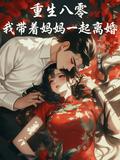 Reborn in 1980, I Divorced with My Mother
961Reads5.8Score109Shelves
Reborn in 1980, I Divorced with My Mother
961Reads5.8Score109Shelves
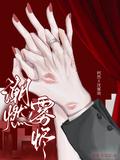 Baby, Would You Like to Choose Me?
152.4kReads9.1Score19kShelves
Baby, Would You Like to Choose Me?
152.4kReads9.1Score19kShelves
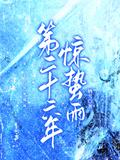 Jingzheyu in the Twenty-Sixth Year
52.1kReads9.2Score8.9kShelves
Jingzheyu in the Twenty-Sixth Year
52.1kReads9.2Score8.9kShelves
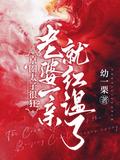 Is the Prince of Beijing Circle Crazy? My Wife Becomes Red and Warm as Soon as She Kisses Her
28kReads9.4Score4.2kShelves
Is the Prince of Beijing Circle Crazy? My Wife Becomes Red and Warm as Soon as She Kisses Her
28kReads9.4Score4.2kShelves
 Way of Heaven: Acacia
6.2kReads8.9Score517Shelves
Way of Heaven: Acacia
6.2kReads8.9Score517Shelves
 This Brother Has a Little Tea and a Little Sweetness
374Reads5.8Score—Shelves
This Brother Has a Little Tea and a Little Sweetness
374Reads5.8Score—Shelves
 What a Good Girl
45.5kReads9.6Score6kShelves
What a Good Girl
45.5kReads9.6Score6kShelves
 Young True Ancestor, Flower of Lily
46Reads5.8Score—Shelves
Young True Ancestor, Flower of Lily
46Reads5.8Score—Shelves
 Abstinence Warning: Mr. Li Has a Love Brain and Does Not Flirt with Others
3.4kReads8.9Score308Shelves
Abstinence Warning: Mr. Li Has a Love Brain and Does Not Flirt with Others
3.4kReads8.9Score308Shelves
 Delayed Gratification Accelerator
—Reads8.6Score—Shelves
Delayed Gratification Accelerator
—Reads8.6Score—Shelves
 Hot Kiss
10.7kReads9.4Score1.9kShelves
Hot Kiss
10.7kReads9.4Score1.9kShelves
 Delayed Gratification Incubator
—Reads8.5Score—Shelves
Delayed Gratification Incubator
—Reads8.5Score—Shelves
 He Seduces Lightly
17.7kReads9.3Score1.9kShelves
He Seduces Lightly
17.7kReads9.3Score1.9kShelves
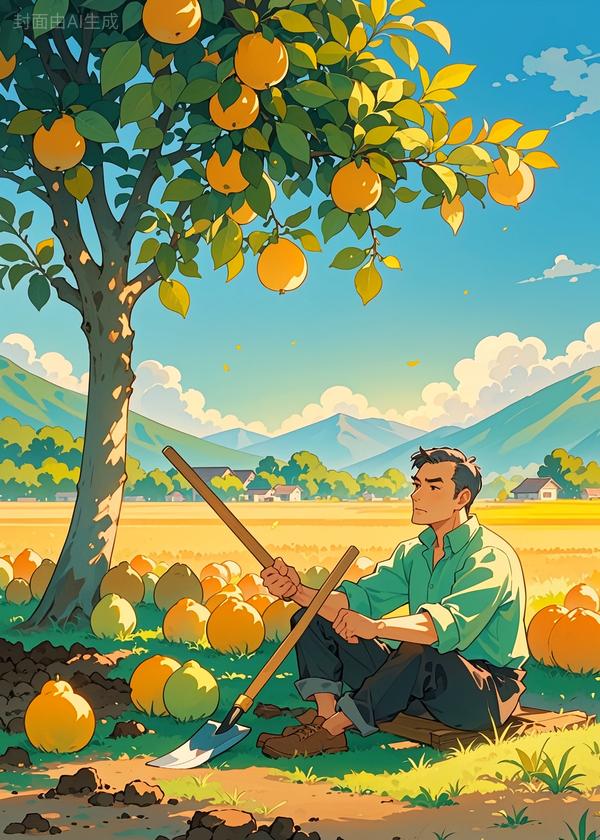 Feedback Hunger Syndrome
—Reads8.5Score—Shelves
Feedback Hunger Syndrome
—Reads8.5Score—Shelves
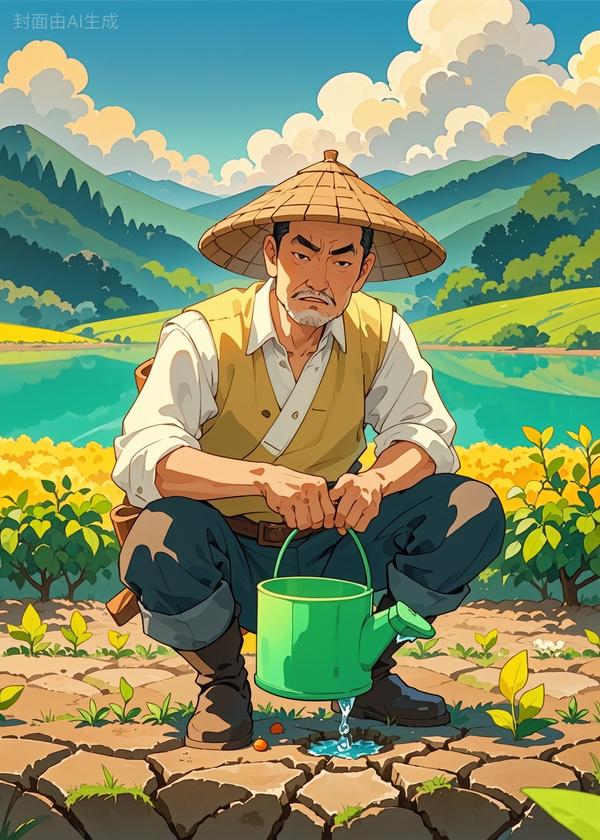 Visualizing Invisible Progress
—Reads8.5Score—Shelves
Visualizing Invisible Progress
—Reads8.5Score—Shelves
 A Hundred Beauties and a Thousand Beauties!
2.5kReads5.8Score129Shelves
A Hundred Beauties and a Thousand Beauties!
2.5kReads5.8Score129Shelves
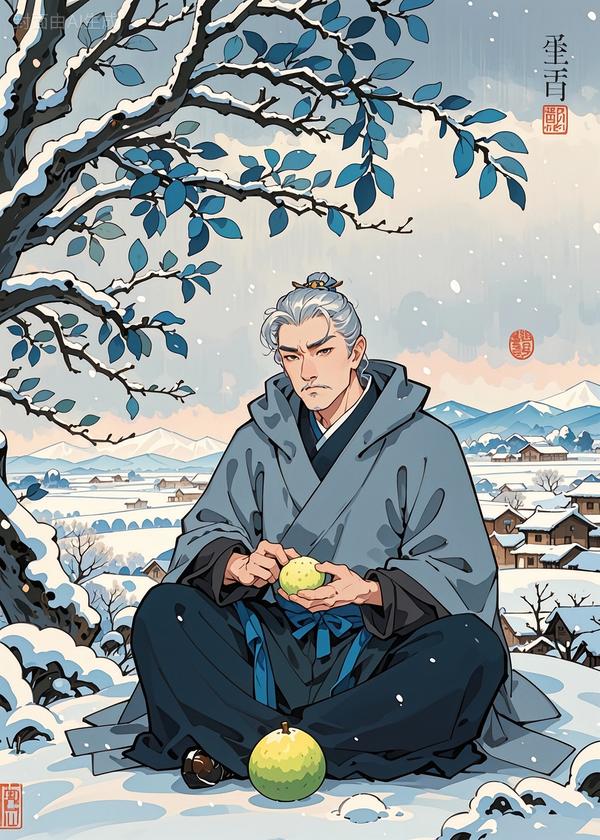 Long Feedback Loop Education
1Reads8.5Score—Shelves
Long Feedback Loop Education
1Reads8.5Score—Shelves
 My Arrogant Girlfriend Regretted Not Doing Dog Licking Anymore
3.4kReads5.8Score227Shelves
My Arrogant Girlfriend Regretted Not Doing Dog Licking Anymore
3.4kReads5.8Score227Shelves
 The Silly Roots of Guoshantun: After the Clairvoyant Pupil Awakens
6.1kReads5.8Score627Shelves
The Silly Roots of Guoshantun: After the Clairvoyant Pupil Awakens
6.1kReads5.8Score627Shelves
 Anthology of Funny Meanings
3Reads—Score—Shelves
Anthology of Funny Meanings
3Reads—Score—Shelves
 You Can't Imagine My Happiness
14.6kReads5.8Score804Shelves
You Can't Imagine My Happiness
14.6kReads5.8Score804Shelves
 Start Your Life Over
3Reads—Score—Shelves
Start Your Life Over
3Reads—Score—Shelves
 After Winning a Lottery of 100 Million, I Became the Savior of the Company
2.3kReads5.9Score134Shelves
After Winning a Lottery of 100 Million, I Became the Savior of the Company
2.3kReads5.9Score134Shelves
 The Contracted Beast of the God Emperor Is Actually a Female? !
—Reads8.5Score—Shelves
The Contracted Beast of the God Emperor Is Actually a Female? !
—Reads8.5Score—Shelves
 After I Cut My Salary and Lost Everything, My Boss Knelt Down and Begged Me for Forgiveness Overnight.
219.9kReads5.8Score1.1kShelves
After I Cut My Salary and Lost Everything, My Boss Knelt Down and Begged Me for Forgiveness Overnight.
219.9kReads5.8Score1.1kShelves
 Physical Liking? I Prefer Not To
7Reads8.4Score—Shelves
Physical Liking? I Prefer Not To
7Reads8.4Score—Shelves
 My Husband, Who Is in a Vegetative State, Was Awakened by My Excitement
4kReads9.2Score—Shelves
My Husband, Who Is in a Vegetative State, Was Awakened by My Excitement
4kReads9.2Score—Shelves
 After I Was Demoted and Failed, My Idiot Leader Begged Me for a Promotion.
3kReads9.4Score—Shelves
After I Was Demoted and Failed, My Idiot Leader Begged Me for a Promotion.
3kReads9.4Score—Shelves
 Kick Out a Big CEO
6Reads8.6Score—Shelves
Kick Out a Big CEO
6Reads8.6Score—Shelves
 After a Flash Marriage, I Became a Rich Woman and Didn't Have to Work the Night Shift.
16.1kReads9.7Score136Shelves
After a Flash Marriage, I Became a Rich Woman and Didn't Have to Work the Night Shift.
16.1kReads9.7Score136Shelves
 She Is in the Open Air, You Cover the Human World
35Reads8.8Score—Shelves
She Is in the Open Air, You Cover the Human World
35Reads8.8Score—Shelves
 The Mother-In-Law Who Did Not Listen to the Advice Returned to the West
1.6kReads9.0Score—Shelves
The Mother-In-Law Who Did Not Listen to the Advice Returned to the West
1.6kReads9.0Score—Shelves
 During Confinement, I Drove Away My Mother-In-Law
756Reads9.0Score—Shelves
During Confinement, I Drove Away My Mother-In-Law
756Reads9.0Score—Shelves
 Get Out If You Don't Work Overtime? If I Really Quit, Why Would My Boss Kneel Down and Beg Me Again?
79Reads8.9Score—Shelves
Get Out If You Don't Work Overtime? If I Really Quit, Why Would My Boss Kneel Down and Beg Me Again?
79Reads8.9Score—Shelves
 After the Intern Rushed the Duck to the Shelves, the Boss Cried and Begged Me to Take Over.
75Reads8.8Score—Shelves
After the Intern Rushed the Duck to the Shelves, the Boss Cried and Begged Me to Take Over.
75Reads8.8Score—Shelves
 The God of War Said to Change His Wife
33Reads8.6Score—Shelves
The God of War Said to Change His Wife
33Reads8.6Score—Shelves
 After the Divorce, Dr. Su Was Targeted by the Boss
150.9kReads8.4Score11.5kShelves
After the Divorce, Dr. Su Was Targeted by the Boss
150.9kReads8.4Score11.5kShelves
 I Just Want to Retire
5Reads8.5Score—Shelves
I Just Want to Retire
5Reads8.5Score—Shelves
 The Vortex of Power Desire
2.3kReads6.1Score178Shelves
The Vortex of Power Desire
2.3kReads6.1Score178Shelves
 Hired Third Party
2Reads8.6Score—Shelves
Hired Third Party
2Reads8.6Score—Shelves
 Chaos
128.6kReads9.1Score12.9kShelves
Chaos
128.6kReads9.1Score12.9kShelves
 Your Wife's Voice Is so Loud
13Reads8.5Score—Shelves
Your Wife's Voice Is so Loud
13Reads8.5Score—Shelves
 Insidious: Shadows Lost
2.2kReads7.0Score291Shelves
Insidious: Shadows Lost
2.2kReads7.0Score291Shelves
 He Had Been Waiting for That Slap for Ten Years
31Reads8.6Score—Shelves
He Had Been Waiting for That Slap for Ten Years
31Reads8.6Score—Shelves
 It's Just Dog Training, Why Is This Sick Uncle Still Addicted?
99Reads—Score—Shelves
It's Just Dog Training, Why Is This Sick Uncle Still Addicted?
99Reads—Score—Shelves
 Family Time Travel: Eighteen Ways to Survive in Ancient Times
74.6kReads9.5Score9.8kShelves
Family Time Travel: Eighteen Ways to Survive in Ancient Times
74.6kReads9.5Score9.8kShelves
 Sister, What Are You Doing This Afternoon?
54Reads8.8Score—Shelves
Sister, What Are You Doing This Afternoon?
54Reads8.8Score—Shelves
 I Have Passed Through the Lean Years, Remember to Burn Paper If You Have Something to Do
14.7kReads9.3Score2kShelves
I Have Passed Through the Lean Years, Remember to Burn Paper If You Have Something to Do
14.7kReads9.3Score2kShelves
 My Space Produces Melons and Fruits, and I Rely on Them to Escape from the Wilderness.
40.7kReads9.2Score6.3kShelves
My Space Produces Melons and Fruits, and I Rely on Them to Escape from the Wilderness.
40.7kReads9.2Score6.3kShelves
 Sister Sponsor, Please Sign for Your Little Wolfdog
5Reads8.6Score—Shelves
Sister Sponsor, Please Sign for Your Little Wolfdog
5Reads8.6Score—Shelves