Ruling the world, a high-ranking humble scholar, a first-class official, a generation of military advisors who drifted with the tide, a son-in-law, a beautiful country, a doctor who ruled the country, picked up a first emperor, the end of the Song Dynasty, the new Song Dynasty, more than a year of celebration. I have seen these, are there any similar ones, where the protagonist has a high IQ and strategizes?
The one I saw recently I thought was super good-looking [Sending Hearts], the logic is very good and there are no inexplicable emotional lines [Read carefully] Su Ce once traveled through the Ming Dynasty, but became a sick scholar. Occasionally I met a young man with similar interests on the road, and the two went to Beijing together. "Brother Su, do you know how to replenish the imperial treasury?" "Why are the Ming Dynasty treasures so unwilling to be used by the people?" "Brother Su, did you make this refined salt?" "Brother Su, this cement, this sugar..." [Full] [full] [full]
Tomato's first historical realistic article, the background is completely real, the dates of major events are all real, the author has read at least two Tang books, all Tang texts. As a history buff and a military enthusiast, I basically can't find any technical faults. Awesome.
These are three of my favorite long and super-reading Three Kingdoms time travel novels and the Three Kingdoms Rebirth novel. They mainly focus on planning for large-scale wars, supplemented by marrying beautiful women, and are historical hegemony novels about defeating princes and alien races to finally dominate the world.
A rare masterpiece of tomatoes! Quite a wonderful historical time travel article! The plot is exciting and tortuous, the writing style is also very concise, and the degree of restoration of the apocalyptic dynasty is quite high. The protagonist has a calm yet passionate personality. He is very decisive in dealing with things. He is ruthless to his enemies and gentle and affectionate towards beauties. He is said to have a tiger in his heart and smells the roses. It makes people want to watch it! It's not a brainless and cool article, novices should be careful! ! .
Wear it quickly! History! The two kings of Qin, Brother Zheng and Erfeng! I got into the trap from the previous book. In this book, Brother Zheng is still so smart and wise, decisive in killing, has the world in mind, controls the overall situation, attaches great importance to love and righteousness, and honors promises. Erfeng is also firm in his goals, and a little emotional. The father-son love is deep and sticky. I look forward to him and Erfeng working together to build infrastructure, develop the Tang Dynasty, and then expand the territory and dominate the world!
I recommend this one, the real bottom. The daily stories of small officials and people in the county. The exquisite details and simple descriptions of the world make you feel like you are being pulled into the old times of the two Song Dynasties a thousand years ago. It's not a cool article, but it's emotionally refreshing. It's not Machiavellian, but humane and worldly. There is no CP, no cheats, no modern knowledge dimensionality reduction attack, super realistic ancient world sentiments. The word count is almost a million, and it's so plump and juicy that it's ready to be read. Disadvantages: slow to develop, not a cool novel, no CP, the plot is not very ups and downs, a few chapters are too detailed, don't fall into this trap if you are impatient.
You have to read each paragraph carefully to understand the meaning of the book. Every supporting character has a historical prototype. Slow-burning, logical and rigorous, with control over details. The middle-aged bald veteran military fan comes in quickly! So many customized military fan memes! ——1744, 100 Years after the fall of the Ming Dynasty, was the eve of the Industrial Revolution. But in this strange world, there are no metal mines, no iron ore or copper mines. But Western technology is still half a generation ahead. On the eve of the Industrial Revolution, without metal, there would be no Industrial Revolution. Britain was always bullied by France and was just a piece of food. How could it have the majesty that the sun never sets. There are Dashun, Eight Banners, Tatars, Ming Dynasty restoration, rebel generals, pirates, and some unscrupulous businessmen who take all... There are soldiers, battleships, Galen ships, Clark ships, treasure ships, fortune ships... There are beauties, there are Cang teachers, there are female generals who have great plans, there are Western aristocratic women, there are palace waltzes... Don't always dress up as emperors and princes, princes and ministers, literati and rich people, can't small people change history? Military technology is backward. If we don't use technology, we can't defeat the West? The imperial examination died, and China prospered!
A super awesome historical article, written by a drunkard master. The feelings of family and country are fully written, and there is a strong sense of history.
These four books are a must! ! !
1Tells the helplessness and persistence in the world
2Integrate into that era with your own strength
3The official system of the Song Dynasty is also described in detail.
4You can turn around as a poor scholar through time travel, inspiring people.
Traveling through an ancient poor mountain village, at the beginning, the government issued a beautiful and virtuous wife, relied on modern knowledge to forge iron to make sugar and soap, and made glass to be auctioned as diamonds, and the Spring Tower Poetry Club used five thousand years of Chinese ancient poetry to win the championship and shine!
Share a niche realistic late Ming masterpiece "Ming Dynasty: Don't rush me!" I, the Governor, Just Wants to Fish" There are too many mindless and cool articles on the market that make light of the troubled times of the late Ming Dynasty. This book has a completely different style and solid historical research. The protagonist Goldfinger only summons famous historical generals once, and then completely returns to the realistic route. There is no brainless cheating, no harem, and no cliché hooks. It tells the story of the internal and external difficulties during the Chongzhen period with a calm heart. The lines are full of the helpless struggles of ordinary people and officials in troubled times. It is suitable for book lovers who prefer serious history of the late Ming Dynasty and reject fast food short stories. The pace is not too slow, but the more you read, the more interesting it becomes.
Zhao Zilong, the sixth grandson of Zhao Kuangyin, was a member of the Song Dynasty clan that was not considered a clan. Marry Hu Sanniang, kill Song Gongming, recruit Liangshan bandits, suppress Fang Lakou, and separatize Jiangdong. The Jingkang Incident suddenly broke out. Seizing the opportunity, they took back the country of the Song Dynasty that had been occupied by Zhao Guangyi and his family for 140 to 50 years. Then they destroyed Jin Kexia, pacified the Japanese islands in the east, captured the city in the south, captured Mongolia, chased and annihilated the Western Liao, swept through Central Asia, annihilated the Crusaders, and swept Europe with the whip of God... The great Song Dynasty was so majestic that it reached far beyond the Han and Tang Dynasties!
This book is super good-looking, slow-burning, technical, and detail-oriented. It is unsystematic and not brainless. It intervenes in history through Wang Jun's mutiny.
Column on the Jin Dynasty, the first book about the struggle for hegemony in the late Jin Dynasty, cold-blooded heroes, military exploits and power schemes, and official farming [Sparrow Food Masterpiece] [plus one on the bookshelf]
King of Chu? Don't know? The younger brother of Emperor Wu of the Han Dynasty! The owner of the Guishan Han Tomb in Xuzhou, the most luxurious tomb of the princes and kings! Known as the Pyramid of the East! No, Your Majesty, our country of Chu is very poor... [Laughing] [Smiling]
"Sun and Moon Prosperity" - a passionate legend of the glory of the Ming Dynasty. The direct emperor Zhu Yuntong, with the blood of Taizu and the glory of Chang Lan, is involved in the turbulent whirlpool of imperial power as the most orthodox heir. When the iron blood of Hongwu meets the elegance of Jianwen, let's see how the young emperor re-creates the prosperous Chinese era of "the sea embraces all rivers and all nations come to court" amidst the conflicts and intrigues of the court. Here is the most thrilling power struggle, the most soul-stirring passionate journey, a majestic epic that subverts the trajectory of history, and is about to begin its ups and downs - How will he, who is destined to do his bidding, break through the obstacles and create a true Ming Dynasty on which the sun and the moon never set?
In history, look at the glory of the Ming Dynasty, look at the Ming Dynasty at the end of the Ming Dynasty, and look at the late Ming Dynasty at the end of the Ming Dynasty! Try this book, it is unsystematic, not brain-dead, has an online IQ, you will fall in love with it as soon as you read it, the favorite of the historical Chinese Party! The protagonist travels through the last years of the Southern Ming Dynasty, one month before the fall of the country. One hundred thousand Qing troops arrive in Yunnan, and hell begins! Forcibly marry a princess, marry a warlord, show weakness to powerful ministers, defraud military power, and train troops at all costs! In western Yunnan, he teamed up with Li Dingguo to kill Wu Sangui. From then on, he embarked on the road of supervising the country and becoming an emperor, and the Ming Dynasty's national destiny continued for another 500 years! The protagonist is decisive in killing, has a thick face and a ruthless hand, and is a fine historical novel with powerful plots, military affairs, and palace chaos! Worth 2 brushes!
High quality without traffic, rigorous and logical, not brainless. Su Dun took out a few pieces of paper from his sleeves, which were densely written with words. "I was in Hangzhou before. I read hundreds of books and found a few pieces of evidence. Not many, just nine." He spread the paper on the old cases next to him, "But I think the direction is right." Su Dun pointed to the first piece and said in a calm tone: "Look at the sentence in "Dayu Mo" that 'the human heart is in danger, the Dao is only small, but the essence is only one, and the Yunzhi Juezhong' is quoted in "Xunzi Jieye Pian", but Xunzi said it was quoted from the "Tao Jing", not the "Shang Shu"." "And 'Yunzhi Juezhong' should come from the Analects of Confucius. Yao said, "The calendar of heaven is in your hands, and if you are willing to hold on to it, the world will be poor, and the fortune of heaven will last forever." "The Analects of Confucius said that 'Shun also ordered Yu', but what Shun said to Yu in "Dayu Mo" is completely different from what Yao said to Shun." "The so-called sixteen words of Yu Ting are simply made up." He raised his head and glanced at everyone, waiting for them to be shocked, excited, or "enlightened" as written in later novels. However - Fan Xun raised his head and said disapprovingly: "Maybe Xunzi remembered it wrong?" Su Dun was stunned. Zhao Mingcheng nodded, with a serious look on his face: "I saw before that "Xunzi·Junzi Pian" quoted "One person is happy, and the people rely on it", and said it was the "Biography"." "Actually, this sentence comes from "Shangshu·Lu Xing"." "The source of this quotation must be misremembered by Xunzi." Su Xingchong also said: "Pre-Qin books are all bamboo slips, and it is not easy to read them. The scholars cited the scriptures and most likely wrote them from memory. Without reading and checking, the words may not be accurate." Su Dun's mouth twitched. Huh? Is there something wrong with your reaction? Too calm? Too rational? Shouldn't we exclaim "Oh my God, this is fake" and then people will be angry and share the same hatred? Why are all of them so... Calm? However, it makes so much sense, I am speechless! Li Qingzhao remained silent, just lowered his head and read the original text copied by Su Dun carefully. She stared at those lines of words for a long time, then suddenly raised her head, with a hint of weirdness in her eyes: "The original text of "Xunzi: Uncovering" is: 'In the past, when Shun ruled the world, everything was accomplished without edicts. When he was in danger, he was full of glory; when he raised a little, his glory was unknown.' Later, he quoted the "Tao Jing": "The danger of the human heart, the weakness of the Taoist heart, and the number of dangers can only be known by a wise gentleman." She looked at Su Dun with a strange light in her eyes - a look that doubted her IQ: "You don't think it's the same sentence just because 'the human heart is in danger, the Tao's heart is weak' and 'the human heart is in danger, the Tao's heart is weak' are very similar?" Su Dun was displeased and replied stiffly: "These two sentences are exactly the same, how come they are not plagiarism?" "But the meanings of these two sentences are completely different!" Li Qingzhao talked eloquently: "Xunzi first said that Shun was 'in danger' and 'nurturing the subtlety' - this means that Shun advocated using a single-minded heart to explore the subtle principles of things." "Then he quoted the "Tao Jing" that "the human heart is in danger, the Tao heart is subtle". He quoted the sentence from the "Tao Jing" in order to explain the 'danger' and 'micro' of Shun earlier." "The key point of this sentence is in the last sentence - 'The number of dangers is small, only a wise gentleman can know it'. It is talking about the 'ji' (sign) between 'danger' and 'micro', which only a 'wise gentleman' can detect." She paused, and spoke in a clear voice: "But the key point of the sixteen words of "Dayu Mo" is also at the end, 'Wei Jing Wei Yi, Yu Zhi Ju Zhong', which means to use the 'Jing Yi' skill to 'Zhi Zhong'." "The themes and philosophies of the two sentences are fundamentally different. One talks about detecting signs, and the other talks about adhering to the middle way." "Just because these eight characters are somewhat similar, do you say it is plagiarism?" Fan Wei continued: "Even if it is plagiarism, it may be that the Dao Jing copied Dayu Mo, and then was recorded as the Dao Jing. There are too many such things." He thought for a while and gave an example: "For example, the sentence 'Without indifference, one cannot achieve clear aspirations, without tranquility, one cannot reach far', which comes from "Huainanzi Zhushu Xun" of the Western Han Dynasty. More than three hundred years later, Zhuge Liang quoted it in "The Book of Commandments", and now everyone thinks it was Zhuge Liang who said it." "There is also 'the courage to be big but the heart to be small, the wisdom to be round but the action to be square', which also comes from "Huainanzi Zhushu Xun", Sun Simiao quoted it, and now everyone thinks it is Sun Simiao's words." Zhao Mingcheng added: "This is also the case in "Xunzi" itself. The section about three years of mourning in "Xunzi: Rites", from "Three years of mourning, what" to "It is the same in ancient and modern times", the entire paragraph was included in the "Book of Rites" and became the "Three Years Questions"." "Now when people quote these sentences, they must think that they come from the "Book of Rites", and not from "Xunzi"." Su Xingchong also nodded: "As for what Yao said when he surrendered to Shun, it is different from what Shun said when he surrendered to Yu. Isn't it strange?" "Two generations of holy kings faced different world situations, so they naturally had different things to say." Su Dun was confused by everyone's words and words. Didn't those books of later generations say that the "Sixteen-Character Heart Biography" was the core evidence for Yan Ruochu's falsification of "Gu Wen Shangshu"? Didn't it mean that as soon as this piece of evidence came out, the Neo-Confucianists were speechless? How come you can't even convince a few seven- and eight-year-old children here?
Welcome to pay attention to my work, the history before the founding of the Tang Dynasty. The plot follows the historical events of the troubled times in the last years of the Southern and Northern Dynasties. The rebellion in the six towns of the Northern Wei Dynasty split the Eastern and Western Wei Dynasties, the establishment of the Northern Zhou Dynasty and the Northern Qi Dynasty, and finally the unification of the Sui Dynasty. . . . However, in order not to cause trouble for serious history enthusiasts, I used fictional history and fictional characters to write. Drawing on the style of Master Huang Yihuang. .
 Iron-Blooded and Residual Brightness
100.8kReads9.3Score9.9kShelves
Iron-Blooded and Residual Brightness
100.8kReads9.3Score9.9kShelves
 I, the Immortal of the Ming Dynasty, Have Experienced Sixteen Emperors
243.8kReads9.3Score19.8kShelves
I, the Immortal of the Ming Dynasty, Have Experienced Sixteen Emperors
243.8kReads9.3Score19.8kShelves
 The Sick Man Actually Became the Master of the Ming Dynasty Emperor
3.8kReads8.8Score359Shelves
The Sick Man Actually Became the Master of the Ming Dynasty Emperor
3.8kReads8.8Score359Shelves
 History of the Palace of the Ming Dynasty
23.5kReads9.5Score605Shelves
History of the Palace of the Ming Dynasty
23.5kReads9.5Score605Shelves
 History of the Palace of the Song Dynasty
3.2kReads9.5Score108Shelves
History of the Palace of the Song Dynasty
3.2kReads9.5Score108Shelves
 Red Wall Secrets: a Complete Unabridged History of China (Full Unabridged Version)
1.9kReads9.3Score370Shelves
Red Wall Secrets: a Complete Unabridged History of China (Full Unabridged Version)
1.9kReads9.3Score370Shelves
 Qin Qi: Herding Horses to Establish a Country
53Reads—Score—Shelves
Qin Qi: Herding Horses to Establish a Country
53Reads—Score—Shelves
 Qin Li: the Fourth Generation Opened the Frontier
46Reads—Score—Shelves
Qin Li: the Fourth Generation Opened the Frontier
46Reads—Score—Shelves
 Zhujinou
4.2kReads8.2Score359Shelves
Zhujinou
4.2kReads8.2Score359Shelves
 Three Taoyuan Brothers Reborn in the Three Kingdoms
1.5kReads8.2Score138Shelves
Three Taoyuan Brothers Reborn in the Three Kingdoms
1.5kReads8.2Score138Shelves
 Jin Yiwei: Our Boss Is a Bit of a Thief
37.7kReads9.1Score4.2kShelves
Jin Yiwei: Our Boss Is a Bit of a Thief
37.7kReads9.1Score4.2kShelves
 Three Kingdoms: Traveling Through the Yellow Turban and Reversing the World
951Reads8.8Score—Shelves
Three Kingdoms: Traveling Through the Yellow Turban and Reversing the World
951Reads8.8Score—Shelves
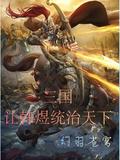 Three Kingdoms: Let Han Yu Rule the World
1kReads8.0Score—Shelves
Three Kingdoms: Let Han Yu Rule the World
1kReads8.0Score—Shelves
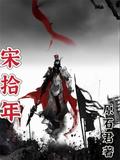 Song Shinian
268Reads6.9Score—Shelves
Song Shinian
268Reads6.9Score—Shelves
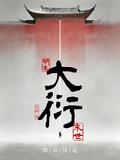 The End of Dayan: the Wind Rises in Handzhou
650Reads5.8Score104Shelves
The End of Dayan: the Wind Rises in Handzhou
650Reads5.8Score104Shelves
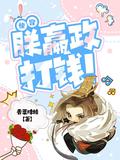 Quick Wear: I, Ying Zheng, Send Money!
1.1kReads8.4Score—Shelves
Quick Wear: I, Ying Zheng, Send Money!
1.1kReads8.4Score—Shelves
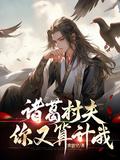 Villager Zhuge, You Are Plotting Against Me Again
48kReads9.3Score6.4kShelves
Villager Zhuge, You Are Plotting Against Me Again
48kReads9.3Score6.4kShelves
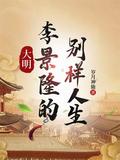 Ming Dynasty, Li Jinglong's Different Life
190.7kReads9.2Score23.9kShelves
Ming Dynasty, Li Jinglong's Different Life
190.7kReads9.2Score23.9kShelves
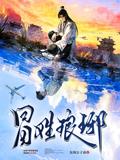 Pretending to Be Surnamed Langya
1.7MReads9.7Score121.3kShelves
Pretending to Be Surnamed Langya
1.7MReads9.7Score121.3kShelves
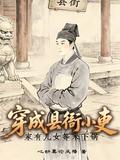 He Is a County Official and Has Children Waiting for Rice to Be Cooked.
138.5kReads8.8Score17.6kShelves
He Is a County Official and Has Children Waiting for Rice to Be Cooked.
138.5kReads8.8Score17.6kShelves
 The Hundred-Yuan War: the War Between the Scumbags and the Overachievers
6Reads—Score—Shelves
The Hundred-Yuan War: the War Between the Scumbags and the Overachievers
6Reads—Score—Shelves
 Home
2.8kReads9.2Score399Shelves
Home
2.8kReads9.2Score399Shelves
 Drunk and Lying in the Country
907Reads7.9Score—Shelves
Drunk and Lying in the Country
907Reads7.9Score—Shelves
 Senior Official of Song Dynasty
1.8kReads8.4Score154Shelves
Senior Official of Song Dynasty
1.8kReads8.4Score154Shelves
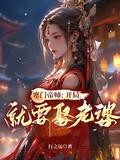 The Emperor of the Poor Family: Marry a Wife at the Beginning
—Reads5.8Score—Shelves
The Emperor of the Poor Family: Marry a Wife at the Beginning
—Reads5.8Score—Shelves
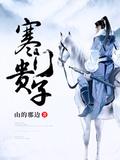 A Noble Son from a Poor Family
43.3kReads9.1Score4.3kShelves
A Noble Son from a Poor Family
43.3kReads9.1Score4.3kShelves
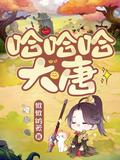 Xitang
149kReads9.4Score16.5kShelves
Xitang
149kReads9.4Score16.5kShelves
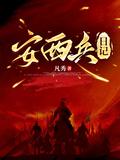 Diary of Anxi Soldier
18.4kReads9.4Score2.3kShelves
Diary of Anxi Soldier
18.4kReads9.4Score2.3kShelves
 The Jin Army Besieged the City and Song Qinzong Was Reborn
164.1kReads9.4Score22.1kShelves
The Jin Army Besieged the City and Song Qinzong Was Reborn
164.1kReads9.4Score22.1kShelves
 The Daily Life of a Peasant Boy Who Made Progress in Ancient Times
48.6kReads9.2Score3.9kShelves
The Daily Life of a Peasant Boy Who Made Progress in Ancient Times
48.6kReads9.2Score3.9kShelves
 Ming Mo: Stop Rushing! I, the Governor, Just Want to Fish
2.5kReads—Score148Shelves
Ming Mo: Stop Rushing! I, the Governor, Just Want to Fish
2.5kReads—Score148Shelves
 Water Margin: Unable to Become a Son-In-Law, He Became the Emperor of the Song Dynasty
2.6kReads7.3Score165Shelves
Water Margin: Unable to Become a Son-In-Law, He Became the Emperor of the Song Dynasty
2.6kReads7.3Score165Shelves
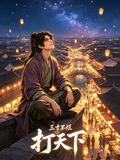 Three Inches of Invulnerability Conquers the World
10.4kReads9.3Score906Shelves
Three Inches of Invulnerability Conquers the World
10.4kReads9.3Score906Shelves
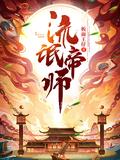 Royal Gold Magistrate
426.2kReads9.5Score65.9kShelves
Royal Gold Magistrate
426.2kReads9.5Score65.9kShelves
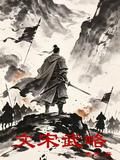 Wen and Song Martial Arts
79Reads—Score—Shelves
Wen and Song Martial Arts
79Reads—Score—Shelves
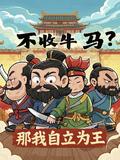 Not Collecting Cattle and Horses? Then I Will Make Myself King!
—Reads5.8Score—Shelves
Not Collecting Cattle and Horses? Then I Will Make Myself King!
—Reads5.8Score—Shelves
 Dai Jin
31.3kReads8.4Score2.3kShelves
Dai Jin
31.3kReads8.4Score2.3kShelves
 Western Han Dynasty: the Prince Cries and the Poor Spirit
75Reads—Score—Shelves
Western Han Dynasty: the Prince Cries and the Poor Spirit
75Reads—Score—Shelves
 What Do You Mean, You Want Me to Marry the Number One Female Devil?
207.2kReads9.3Score15.7kShelves
What Do You Mean, You Want Me to Marry the Number One Female Devil?
207.2kReads9.3Score15.7kShelves
 Return to Datang with Strategic Warehouse
186kReads9.5Score24.1kShelves
Return to Datang with Strategic Warehouse
186kReads9.5Score24.1kShelves
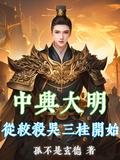 Resurgence of the Ming Dynasty Started with the Strangulation of Wu Sangui
9.5kReads8.1Score737Shelves
Resurgence of the Ming Dynasty Started with the Strangulation of Wu Sangui
9.5kReads8.1Score737Shelves
 Song Dynasty: Face-To-Face Counterattack Stirs up the World
5Reads—Score—Shelves
Song Dynasty: Face-To-Face Counterattack Stirs up the World
5Reads—Score—Shelves
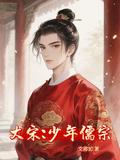 Father Su Dongpo's Wife Li Qingzhao and His Father Song Huizong
23.2kReads8.5Score2.9kShelves
Father Su Dongpo's Wife Li Qingzhao and His Father Song Huizong
23.2kReads8.5Score2.9kShelves
 How Are the Mountains and Rivers What They Used to Be?
1Reads—Score—Shelves
How Are the Mountains and Rivers What They Used to Be?
1Reads—Score—Shelves
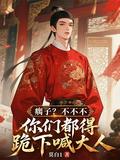 Cripple? No, No, No, You All Have to Kneel Down and Call Me Sir.
17.9kReads8.2Score1.2kShelves
Cripple? No, No, No, You All Have to Kneel Down and Call Me Sir.
17.9kReads8.2Score1.2kShelves
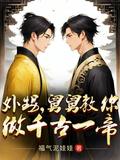 Uncle Zongheng of the Tang Dynasty
4.9kReads8.6Score287Shelves
Uncle Zongheng of the Tang Dynasty
4.9kReads8.6Score287Shelves
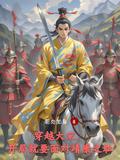 Traveling Through the Song Dynasty, You Will Face the Shame of Jingkang at the Beginning
2Reads5.8Score—Shelves
Traveling Through the Song Dynasty, You Will Face the Shame of Jingkang at the Beginning
2Reads5.8Score—Shelves
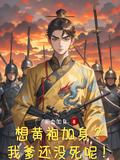 Want to Wear a Yellow Robe? My Father Is Not Dead Yet!
24Reads—Score—Shelves
Want to Wear a Yellow Robe? My Father Is Not Dead Yet!
24Reads—Score—Shelves
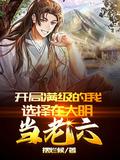 When I Started at Full Level, I Chose to Be the Sixth in Ming Dynasty.
29.2kReads7.9Score1.8kShelves
When I Started at Full Level, I Chose to Be the Sixth in Ming Dynasty.
29.2kReads7.9Score1.8kShelves
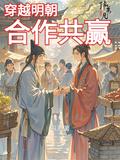 Travel Through the Ming Dynasty, Win-Win Cooperation
4.2kReads8.5Score265Shelves
Travel Through the Ming Dynasty, Win-Win Cooperation
4.2kReads8.5Score265Shelves