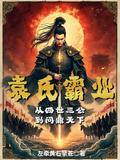
"The Third Timeline of the Legend of Yuan Yao: Speedy Hegemony and Global Journey" 1. The arrival of time-travelling, a God-given hero. Modern young Yuan Yao accidentally time-traveled and became the son of Yuan Shu. At the end of the Eastern Han Dynasty, the world was in chaos. However, Yuan Yao, armed with knowledge beyond his time and a unique dragon-slaying technique, came to the world like a chosen son. When he first arrived in Luzhou, he quickly integrated local resources with his extraordinary leadership and wise vision. With the introduction of advanced farming equipment and planting technology, food production has increased exponentially, the people have enough food and clothing, and the people have become loyal. At the same time, he personally improved military training methods and combined them with modern military concepts to train an elite division with strict discipline and explosive combat effectiveness. He also recruited talents from all over the world and gathered civil servants and generals under his command. Under his governance, Luzhou rose like a bright star in troubled times and became the focus of attention from all parties. 2. Centralized reform, both military and political excellence. Yuan Yao knew that in order to achieve a great cause, he must break the monopoly of power by aristocratic families. He vigorously and resolutely promoted a series of innovative measures. In politics, he created a new official selection system, abandoned the idea of family status, and promoted meritocracy. Through strict assessment and selection, a large number of capable people stood out and were recruited into government offices at all levels, greatly improving administrative efficiency. On the military front, he strengthened the centralization of military power, unified the military establishment and command system, and firmly controlled military power in his own hands. They also vigorously developed military technology and developed new weapons, such as improved crossbows, with longer range and stronger power, giving the Luzhou army an overwhelming advantage on the battlefield. 3. Lightning expansion, sweeping the princes. With powerful military power and excellent strategic planning, Yuan Yao started his path of lightning expansion. His army swept through the surrounding areas like a violent storm, and wherever it went, the princes' power collapsed. He adopted the tactics of disintegration and defeating each one. He first used inducements to win over some weak forces, and then concentrated his forces to attack the main enemy. In just a few years, he successively conquered Jingzhou, Yangzhou and other places, and his sphere of influence rapidly expanded. Its rapid expansion shocked the princes of the world. Before all the forces could react, they were defeated by Yuan Yao's army. Yuan Yao's name shocked China. 4. Unification of China, the foundation has been solidified. Yuan Yao's army continued to advance towards the hinterland of the Central Plains. In a series of decisive battles, he fully demonstrated his outstanding military command skills and skillful use of tactics. He was able to handle both large-scale legion operations and small-scale surprise attacks with ease. His army had high morale and strict discipline, and defeated the coalition of powerful princes such as Yuan Shao and Cao Cao with overwhelming force. In the end, he successfully unified the land of China and established a large and powerful dynasty. Yuan Yao ascended the throne and proclaimed himself emperor, becoming the common ruler of the world. He immediately set about consolidating his rule, establishing a complete administrative system, strengthening local management and control; building water conservancy projects to promote agricultural production; attaching great importance to culture and education, setting up schools and cultivating talents, which laid a solid foundation for the long-term stability of the dynasty. 5. Overseas exploration and fleet sailing After the domestic situation in China stabilized, Yuan Yao set his sights overseas. He is well aware that the earth is vast and overseas contains endless opportunities and challenges. Therefore, he vigorously developed the shipbuilding industry, invested a lot of manpower, material and financial resources, and built a huge fleet. These warships are not only large in scale, but also adopt advanced navigation technology and have the ability to sail long distances. He sent a fleet to explore the sea. The crew slowly moved along the coastline, drew navigation maps, and recorded information about the customs, products and resources of the places they visited. The fleet successively arrived in the Liaodong Peninsula, the Korean Peninsula, the Japanese Islands and other places, and conducted preliminary exchanges and trade with local residents, ushering in a new era of China's foreign exchanges. 6. Asia dominates and deters all parties. With the deepening of overseas exploration, Yuan Yao's ambitions have further expanded. He decided to expand his influence throughout Asia. His army embarked on the Western Expedition, relying on advanced weapons, equipment and tactics to defeat enemies along the way. In Central Asia, there was a fierce battle with the Kushan Empire. Yuan Yao's cavalry troops used their superb mobility and strong combat effectiveness to defeat the Kushan army and make it surrender. In the South Asian subcontinent, his armies defeated many local kingdoms and brought them under his rule. In Southeast Asia, Yuan Yao used diplomatic means combined with military deterrence to make countries flock to him. At this point, Yuan Yao became a veritable overlord of Asia. His dynasty became so famous that neighboring countries sent envoys to pay tribute and learn from China's advanced culture and technology. 7. Global layout, the journey begins. Yuan Yao is not satisfied with Asia's dominance. He has set his sights on more distant places such as Europe and Africa. He once again expanded the size of the fleet, improved navigation technology, and prepared for a large-scale voyage around the world. The fleet carried Chinese culture, goods, and technology across the Indian Ocean, around the Cape of Good Hope, and into the Atlantic Ocean. In Europe, he met powerful forces such as the Roman Empire, and the two sides launched a series of exchanges and conflicts. With their unique tactics and advanced weapons, Yuan Yao's army gained the upper hand in the confrontation with the Roman Empire and gradually established its own stronghold and influence in Europe. At the same time, his fleet continued southward, exploring the African continent, conducting trade with local tribes, and spreading Chinese civilization. Yuan Yao's global journey officially kicked off. His name gradually shone on the stage of world history, becoming a legendary existence and opening up a new world order. Chinese culture and influence have been widely spread and far-reaching around the world.
Let me just say one thing, if you don't travel through time and just adapt history, it will be different, right? As a Shu Han fan of the Three Kingdoms, I wanted to recommend myself. I updated the first non-time-travel adaptation novel on the Internet "Recreating the Three Kingdoms: Wu Hou Xuan". Because I felt sorry for Zhuge Liang, I started to rewrite history from Wuzhangyuan. The whole process is unintentionally time-traveling through Golden Finger, and historical figures are carefully studied and advanced in a reasonable manner. It has been written for 5 years now and has 1.1 Million words. It's just a hobby, not for making money, I just hope that like-minded fans of the Three Kingdoms can read and communicate with each other. I will insist on finishing it.
The characterization is exemplary. The portrayal of the protagonist Sima Yi is extremely successful. It completely shows his transformation trajectory from a young man in Hanoi to an "old thief in Luoshui", and its complexity, contradiction and tragedy are vividly displayed on the page. His machinations, forbearance, coldness, and the remaining painful struggles deep in his heart (such as for Qiu He, Jiang Ji, and Zhang Chunhua) form a huge tension, making this character both awe-inspiring and sighing. The portraits are vivid, including Cao Cao's heroic guessing, Zhuge Liang's tragedy, Cao Pi's gloom, Cao Mao's determination, Jiang Wei's loneliness, Zhong Hui's arrogance, Deng Ai's perseverance, even Jiang Ji's grief and indignation, Xia Houxuan's calmness... Many historical figures have distinctive personalities, each with its own spiritual core and destiny arc, which together form a magnificent picture of the times.
In 996, Liu Kun, a social animal, accidentally traveled through the Three Kingdoms. He became a disciple of the mysterious master Yu Zhenzi and learned the secret technique of body refining. Starting as the governor of Yanmen, he destroyed the southern Xiongnu, conquered the Yellow Turbans, and pacified the princes, and finally reversed his fate and wrote a new chapter in history. 🍒
Fantasy Three Kingdoms, no system, careful study of historical materials, not a novice, slow to gain popularity in the early stage, but after leaving Zhen's Mansion, the pace began to speed up, and it became more and more interesting.
Although there are only a few prequels, interested book friends can take a look first. If you think it's good, throw it on the bookshelf and let it fatten up before reading again.
It is recommended to listen to the book. It is suitable for friends who are tired of reading cool articles. The book is already full and can be finished.
The writing is good and engaging, and it makes people not feel bored. It is better than other Three Kingdoms novels I have read. Many others have been too bland until now. In terms of character creation, Yuan Yao, the only son of the Yuan family, is perfectly portrayed. He not only firmly grasps the identity of the only son, Bo's favor, but also uses Yuan Shu's strength to build momentum for himself. While gathering talented people from all over the world, there is also a war going on, which is very interesting to watch. There are many chapters that pave the way for Yuan Shu to become emperor. I guess that chapter is also the climax of this article. All in all, this is an excellent work that has the appeal of the work, the shaping of the characters and the ups and downs of the plot. It's neither boring nor too exaggerated. I hope the author doesn't
The ultimate form of Liu Guan and Zhang Liu Yufei is synthesized at the beginning. Everyone in the world says, "Crouching dragon and phoenix chick can settle the world." I have the Crouching Dragon and Phoenix chick card. How do you deal with it? I also heard that Da Qiao and Xiao Qiao can warm the boudoir. I have Qiao Qiao. How will you deal with it? 15
A masterpiece of the Three Kingdoms! Trading system! A lot of supplies! CP Zhao Yun! The heroine has an online IQ, is smart and prudent, and has a very high emotional intelligence, which is very able to win people's hearts. The hero is a loyal dog, has incredible strength, and has a sense of contrast in his innocence. The interaction between the two is very sweet and has a super sense of CP! The golden finger is also very strong, awesome and cool!
[Travel + Three Kingdoms + System + Modern Weapons + Technology + History] Chu Fan used the modern weapons and technological products exchanged in the time and space store to quickly accumulate wealth and gain a foothold in troubled times. He taught modern farming techniques to the villagers, which greatly increased food production and solved the people's food and clothing problems, and thus gained a high reputation. Chu Fan's talents gradually attracted the attention of various forces. Cao Cao, Liu Bei, and Sun Quan all extended olive branches to him and tried to win him over. Chu Fan dealt with various forces, using his understanding of historical trends to skillfully balance the relations between all parties and strive for the greatest interests for himself. He secretly supported Liu Bei and provided him with modern weapons, equipment and strategic materials, hoping to help him fulfill his ideal of supporting the Han Dynasty. However, Liu Bei's benevolence and indecisiveness also worried Chu Fan, and he began to think about whether to go into battle personally to end this troubled world. In the end, in a key battle that determined the ownership of the world, Chu Fan used the system to exchange for the ultimate weapon, helping Liu Bei achieve a decisive victory and the Three Kingdoms unified. However, Chu Fan, who was successful and famous, chose to give up everything and live in seclusion in the mountains with his beloved woman, enjoying a hard-won peaceful life...
A masterpiece of hard-core Machiavellian tactics that was delayed by the title! The title of the book looks like a mindless novel, but when you click on it, you will find that it is a cold and realistic epic of troubled times! The martial arts scenes are full of punches, and it is often a meat grinder battle involving 200,000 people; the Machiavellian plots are bloody, and one moment they are drinking, and the next moment they are digging holes to bury people. The pace of the plot is fast enough to take off, and it's never sloppy. It's the most exciting martial arts story in recent times, and it's done right away!
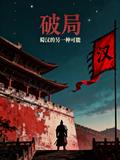
"Broken Game: Another Possibility of Shu Han": An in-depth deduction to construct a strategic break in the cracks of history. When the posthumous title of "Dedicate yourself to death and die" became a footnote to the tragic end of the Shu Han regime, and when the banner of "Reviving the Han Dynasty" sadly fell in the autumn wind of the original five feet, Three Kingdoms enthusiasts never stopped sighing at this regime. The emergence of "Breaking the Game: Another Possibility of the Shu Han" is like a sharp blade, taking 219 AD as the anchor point, tearing open the inherent cracks in the historical narrative, and leading readers to explore the strategic opportunities of the Shu Han under the cover of fate. Different from the fatalistic interpretation of the "innate deficiencies" of the Shu Han in traditional history books, the author of this book abandons the empty talk of "hindsight" and uses rigorous historical data as the basis to restore the complex situation before the loss of Jingzhou. Focusing on the three key clues of Guan Yu's Northern Expedition, Liu Feng Mengda's defense of Shangyong, and Liu Bei's main deployment, the potential variables of Shu Han's military dispatch, diplomatic game, and internal coordination are analyzed layer by layer. It is not a simple assumption "if Guan Yu does not go to the Northern Expedition", but an in-depth discussion of feasible strategic fine-tuning such as "adjustment of the rhythm of the Northern Expedition" and "closer linkage between the east and west lines", so that "another possibility" can break away from fantasy and be supported by historical logic. The book's questioning of the nature of "breaking the situation" is particularly moving: the Shu Han's dilemma is not only geographically "trapped in Bashu", but also the limitation of strategic vision. The analysis of the Liu Bei Group's "emphasis on friendship and neglect of the overall situation" and "emphasis on military achievements and neglect of overall planning" goes beyond the praise and criticism of individual figures and points directly to the shortcomings of the top-level design of the regime. When readers follow the text to deduce the chain reaction of "seizing the opportunity of 219", they will see not only the possibility of rewriting the pattern of the Three Kingdoms, but also a clear understanding of the deep logic of "historical choice". As a profound and logical historical strategy work, it has distinctive features and unique market positioning. Although its audience is relatively small, it is a rare masterpiece for readers who are keen on historical deduction and strategic analysis. The story is logically deduced, and everything from strategic goals to implementation paths to possible reactions of opponents has been carefully analyzed and verified. This strong logic gives the story a high degree of credibility and persuasiveness. It is neither a traditional "historical novel" - because it incorporates a large number of strategic deductions and assumptions; nor does it fit the entertainment characteristics of "shuangwen" or "fantasy novel". Its positioning is closer to "historical strategy writing". It is a niche but very in-depth genre, which combines the depth of historical writing with the depth of strategic games. Closing the page and looking at the shadowy cypresses of Wuhou Temple, the reader's dialectical thinking about "general trend" and "man-made" will also deepen. This book may not be able to change the ending of history, but it opens a new door for us, giving the story of the tragic Shu Han a more profound and interesting interpretation.
 Traveling Through the Three Kingdoms and Conquering the World with Dian Wei
140Reads—Score—Shelves
Traveling Through the Three Kingdoms and Conquering the World with Dian Wei
140Reads—Score—Shelves
 Three Kingdoms: Two and a Half Years of Farming, I Will Taste the Beauty First
47Reads8.2Score—Shelves
Three Kingdoms: Two and a Half Years of Farming, I Will Taste the Beauty First
47Reads8.2Score—Shelves
 Three Kingdoms: the Ghost Carried Guo Jia, and Hulao Pass Tore Lu Bu Apart
2.1kReads6.5Score290Shelves
Three Kingdoms: the Ghost Carried Guo Jia, and Hulao Pass Tore Lu Bu Apart
2.1kReads6.5Score290Shelves
 The Coquettish Three Kingdoms Diaochan Cai Wenji and Xiao Qiao Are All Numb
876Reads5.8Score115Shelves
The Coquettish Three Kingdoms Diaochan Cai Wenji and Xiao Qiao Are All Numb
876Reads5.8Score115Shelves
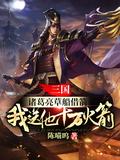 Three Kingdoms: Zhuge Liang Borrowed Arrows from a Straw Boat, I Gave Him 100,000 Rockets
5.3kReads7.6Score523Shelves
Three Kingdoms: Zhuge Liang Borrowed Arrows from a Straw Boat, I Gave Him 100,000 Rockets
5.3kReads7.6Score523Shelves
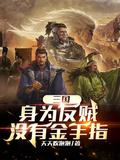 I Really Don't Want to Be a Rebel
10.4kReads8.9Score850Shelves
I Really Don't Want to Be a Rebel
10.4kReads8.9Score850Shelves
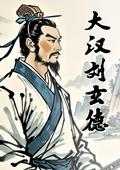 Han Liu Xuande
22Reads5.8Score—Shelves
Han Liu Xuande
22Reads5.8Score—Shelves
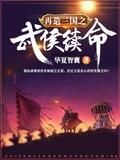 Rebuilding the Three Kingdoms and Extending the Life of Wuhou
358Reads8.1Score—Shelves
Rebuilding the Three Kingdoms and Extending the Life of Wuhou
358Reads8.1Score—Shelves
 Three Kingdoms: from Yellow Turban Saint to Human Trafficker
6Reads5.8Score—Shelves
Three Kingdoms: from Yellow Turban Saint to Human Trafficker
6Reads5.8Score—Shelves
 In the Ming Dynasty, No One Dares to Mess with You!
11.2kReads9.1Score931Shelves
In the Ming Dynasty, No One Dares to Mess with You!
11.2kReads9.1Score931Shelves
 Once Upon a Time There Was a Demon Gate
241.5kReads9.6Score30.4kShelves
Once Upon a Time There Was a Demon Gate
241.5kReads9.6Score30.4kShelves
 Daming: Whoever Seizes the Throne of Eldest Brother Will Be Beaten
41.9kReads8.8Score2.6kShelves
Daming: Whoever Seizes the Throne of Eldest Brother Will Be Beaten
41.9kReads8.8Score2.6kShelves
 Ming Dynasty: My Father Yongle, Yongzhenshanhe
39.6kReads9.2Score4.3kShelves
Ming Dynasty: My Father Yongle, Yongzhenshanhe
39.6kReads9.2Score4.3kShelves
 Three Kingdoms: the Opening Game Saves Wei, Kills the Eunuch and Plays Diao Chan
—Reads5.8Score—Shelves
Three Kingdoms: the Opening Game Saves Wei, Kills the Eunuch and Plays Diao Chan
—Reads5.8Score—Shelves
 The Eight-Year-Old Blind Grandson Climbed Out of the Ming Dynasty's Mausoleum at the Beginning
33.3kReads9.1Score4.1kShelves
The Eight-Year-Old Blind Grandson Climbed Out of the Ming Dynasty's Mausoleum at the Beginning
33.3kReads9.1Score4.1kShelves
 Three Kingdoms: Being Humiliated When Joining the Alliance, He Turned Back and Recognized His Ancestors.
6.7kReads8.7Score766Shelves
Three Kingdoms: Being Humiliated When Joining the Alliance, He Turned Back and Recognized His Ancestors.
6.7kReads8.7Score766Shelves
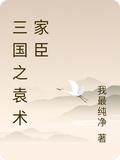 Yuan Shu's Retainers in the Three Kingdoms
1.6kReads9.0Score—Shelves
Yuan Shu's Retainers in the Three Kingdoms
1.6kReads9.0Score—Shelves
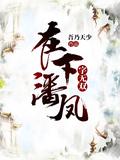 Beginning: Pan Feng Was in a Panic at the Beginning
18.8kReads8.9Score1.8kShelves
Beginning: Pan Feng Was in a Panic at the Beginning
18.8kReads8.9Score1.8kShelves
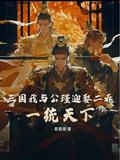 Three Kingdoms: Gong Jin and I Marry Er Qiao and Rule the World
7Reads5.8Score—Shelves
Three Kingdoms: Gong Jin and I Marry Er Qiao and Rule the World
7Reads5.8Score—Shelves
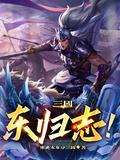 Three Kingdoms: Return to the East!
7.9kReads9.0Score721Shelves
Three Kingdoms: Return to the East!
7.9kReads9.0Score721Shelves
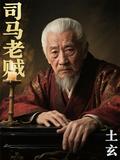 Sima Old Thief
503Reads9.3Score—Shelves
Sima Old Thief
503Reads9.3Score—Shelves
 The Romance of the Three Kingdoms
33Reads—Score—Shelves
The Romance of the Three Kingdoms
33Reads—Score—Shelves
 Three Kingdoms: What's Wrong with the Millions of Soldiers from Our Han Clan?
2.5kReads7.5Score140Shelves
Three Kingdoms: What's Wrong with the Millions of Soldiers from Our Han Clan?
2.5kReads7.5Score140Shelves
 Plan for the Three Kingdoms
471Reads8.6Score—Shelves
Plan for the Three Kingdoms
471Reads8.6Score—Shelves
 Three Kingdoms: Becoming the Disciple of Zhang Jiao and Becoming the Master of Eternity
—Reads5.8Score—Shelves
Three Kingdoms: Becoming the Disciple of Zhang Jiao and Becoming the Master of Eternity
—Reads5.8Score—Shelves
 Three Kingdoms: Help Liu Beisan Build a Powerful Man
11Reads—Score—Shelves
Three Kingdoms: Help Liu Beisan Build a Powerful Man
11Reads—Score—Shelves
 Such Three Kingdoms: I Will Put an End to the Troubled Times
—Reads5.8Score—Shelves
Such Three Kingdoms: I Will Put an End to the Troubled Times
—Reads5.8Score—Shelves
 This Great Wei Could Also Be Named Xiahou
16.2kReads8.9Score1.2kShelves
This Great Wei Could Also Be Named Xiahou
16.2kReads8.9Score1.2kShelves
 Late Han Dynasty: Starting from the Pavilion Chief, Cooking Small Delicacies
669Reads6.4Score—Shelves
Late Han Dynasty: Starting from the Pavilion Chief, Cooking Small Delicacies
669Reads6.4Score—Shelves
 Travel Through the Nianghua Three Kingdoms and Ride into the World of Famous Generals!
205Reads5.8Score—Shelves
Travel Through the Nianghua Three Kingdoms and Ride into the World of Famous Generals!
205Reads5.8Score—Shelves
 Three Kingdoms: I Am the Eldest Grandson of Guan Yu, Maicheng Saved My Grandfather First
751Reads8.8Score111Shelves
Three Kingdoms: I Am the Eldest Grandson of Guan Yu, Maicheng Saved My Grandfather First
751Reads8.8Score111Shelves
 Three Kingdoms: from the Synthesis of Liu Yufei to Zhuge Tong
1Reads—Score—Shelves
Three Kingdoms: from the Synthesis of Liu Yufei to Zhuge Tong
1Reads—Score—Shelves
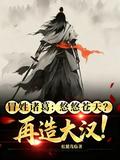 Pretending to Be Surnamed Zhuge: Youyou Cangtian? Make a Big Man Again!
107Reads—Score—Shelves
Pretending to Be Surnamed Zhuge: Youyou Cangtian? Make a Big Man Again!
107Reads—Score—Shelves
 Traveling Through the Three Kingdoms: She Carries Unlimited Supplies to Build Infrastructure
1.8kReads9.2Score239Shelves
Traveling Through the Three Kingdoms: She Carries Unlimited Supplies to Build Infrastructure
1.8kReads9.2Score239Shelves
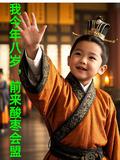 I Am Eight Years Old This Year and Came to the Jujube Association
4.7kReads7.3Score319Shelves
I Am Eight Years Old This Year and Came to the Jujube Association
4.7kReads7.3Score319Shelves
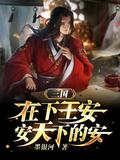 Three Kingdoms: the King Is Safe, and the World Is Safe
3.4kReads8.8Score260Shelves
Three Kingdoms: the King Is Safe, and the World Is Safe
3.4kReads8.8Score260Shelves
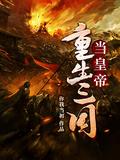 Rebirth of the Three Kingdoms as Emperor
10.2kReads8.5Score892Shelves
Rebirth of the Three Kingdoms as Emperor
10.2kReads8.5Score892Shelves
 Traveling Through the Three Kingdoms to Become Jiahua, the Beginning Is Hongmen
40Reads—Score—Shelves
Traveling Through the Three Kingdoms to Become Jiahua, the Beginning Is Hongmen
40Reads—Score—Shelves
 Traveling Through the Three Kingdoms: I Have a Mobile Store!
18Reads—Score—Shelves
Traveling Through the Three Kingdoms: I Have a Mobile Store!
18Reads—Score—Shelves
 Military Advisor Pang Tong
39Reads8.8Score—Shelves
Military Advisor Pang Tong
39Reads8.8Score—Shelves
 Three Kingdoms: at the Beginning, Cai Hao and I Led Jingzhou to Change Their Fate Against the Odds.
110Reads5.8Score—Shelves
Three Kingdoms: at the Beginning, Cai Hao and I Led Jingzhou to Change Their Fate Against the Odds.
110Reads5.8Score—Shelves
 Return to the Three Kingdoms: Sun Shao's Rise to Power
89Reads—Score—Shelves
Return to the Three Kingdoms: Sun Shao's Rise to Power
89Reads—Score—Shelves
 Secret of Shu, Minutes of the Work of the Three Great Han Dynasties
314Reads7.4Score—Shelves
Secret of Shu, Minutes of the Work of the Three Great Han Dynasties
314Reads7.4Score—Shelves
 The Three Kingdoms of Jiwu: I, Zhao Yun, Use My Gun to Destroy the Way of Heaven
4.9kReads6.1Score360Shelves
The Three Kingdoms of Jiwu: I, Zhao Yun, Use My Gun to Destroy the Way of Heaven
4.9kReads6.1Score360Shelves
 Travel Through the Late Han Dynasty and Dominate Jiaozhou
339Reads—Score—Shelves
Travel Through the Late Han Dynasty and Dominate Jiaozhou
339Reads—Score—Shelves
 Yuan's Hegemony: from the Fourth Generation and the Three Princes to the World Domination
54Reads5.8Score—Shelves
Yuan's Hegemony: from the Fourth Generation and the Three Princes to the World Domination
54Reads5.8Score—Shelves
 I, Zhou Yu, Cannot Die
3.3kReads9.5Score1.7kShelves
I, Zhou Yu, Cannot Die
3.3kReads9.5Score1.7kShelves
 Breaking the Situation: Another Possibility for Shu Han
8Reads5.8Score—Shelves
Breaking the Situation: Another Possibility for Shu Han
8Reads5.8Score—Shelves
 From the Three Kingdoms to the World
3Reads—Score—Shelves
From the Three Kingdoms to the World
3Reads—Score—Shelves
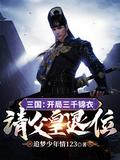 Three Kingdoms: Three Thousand Brocade Clothes at the Beginning, Please Ask Your Father to Abdicate.
2.5kReads8.4Score202Shelves
Three Kingdoms: Three Thousand Brocade Clothes at the Beginning, Please Ask Your Father to Abdicate.
2.5kReads8.4Score202Shelves