😇Bai Yueguang refused to be the stand-in for the original male protagonist! It doesn't matter if the spiritual root is taken away, even if you are in a desperate situation, you can still find your own way to cultivate immortality. A growth-oriented heroine without CP, a must-do in cultivating immortality!
Recommend this in-depth and good article "Shuobei Dragon Song", a historical fictional novel? Let's see how the special time-travel instructor counterattacks life.
I read it, and I was a little shocked anyway. I thought I had heard about Chengdu characteristics, but this female channel novel also has something similar to Chengdu characteristics. It's a little bit, everyone understands it.
This book does not mindlessly write about the protagonist pretending to be a slap in the face, but seriously conceives the history of human development under a mentally retarded worldview. The characters are created very delicately, whether it is the self-destruction when faith collapses or the difference in perspective between genius and ordinary people, they are all well written. Some parts are so written that it makes people feel chills on their backs, especially the part where the protagonist sees the photo of 28 geniuses, which made my scalp tingle.
This should be it. It starts with the apocalyptic explosion of the Ming Dynasty. The story mainly talks about consciousness control. It organizes the story from four dimensions: the real world, the fantasy world, time travel and future interstellar travel, ghosts, split personality, virtual reality, and organ transplantation. The author has a big imagination and a great world view. It is an unpopular work, not a cliché novel.
A high-quality novel with new themes, a hard-core work for men in science and engineering. It is a slow-burning, magical, realistic, suspenseful and brain-burning novel. The writing is bright and logical, the narrative is funny but not boring, and there is no golden finger of the time-travel and rebirth system. The content covers history, workplace, military, scientific research, national security, criminal investigation, scheming, murder, as well as high-tech espionage, hacker warfare, and aerospace electronic warfare. The ending has a profound twist and is tailor-made for old bookworms. If it doesn't look good, I will kill myself to death!
This book, firstly, the shock of the character: the young body hides in the mountains and rivers, breaking the inherent template of the heroine. The most shocking point of this book: the core is a mature and sober soul, and the outer shell is a four-year-old child. The child's figure, soft voice, and the bone-chillingly calm and strategic layout form a sharp contrast. There is no golden finger or system. The advantages are only the historical understanding of later generations, modern institutional thinking, and super patience. At the same time, the subplot of Zhu Youxiao was brought out. The five-year-old school brother watched the power game and silently understood the way of the emperor. The two children reflected each other in the undercurrent. This sense of the heaviness of the precocious youth is particularly poignant. 2. The shock of historical research: It is not a myth, but a patchwork of historical facts. The story is anchored at the precise time point of the thirty-eighth year of Wanli. It was only more than thirty years after the demise of the Ming Dynasty, which was the most boring incubation period before the building was about to collapse. - The accumulated malpractices in the capital camp, the deduction of military pay, the collapse of the craftsmanship system, the proliferation of private salt in the Huaihe River and Huaihe River, party disputes (Qi, Chu and Zhejiang Party), the eve of the 1911 Beijing Inspection, the emptiness of Taicang, and the widespread displacement of people due to drought in Jifu are all based on real historical data. - The salary payment process, two signatures and deposits, internal government allocations, the game between the Ministry of Revenue and the cabinet, water transportation delays, and the Jia River canal problem are all meticulous in the system details. The heroine's reforms are not invented out of thin air by using cheats. They are aimed at fixing and reconstructing the loopholes in the Ming Dynasty's existing system. Each new policy has corresponding real-life pain points. Readers will have a strong sense of reality: it turns out that the corruption in the late Ming Dynasty was linked to each other, and reform was difficult to achieve. 3. The shock of the logic of Machiavellianism: It is better to fight against people than to establish a system, to jump out of the palace fight and get involved. Most of the ancient Machiavellian strategies are aimed at defeating villains, eliminating political opponents, and taking sides in the court. This book breaks out of this circle: the heroine's core idea is not to focus on people, but on the system. Opponents like Fang Congzhe are sophisticated, well-established, and full of party members. If one Fang Congzhe is killed, there will be another speculator. Therefore, the heroine chose to build an institutional dam: military pay went directly to soldiers, the interception link of military attachés was cut off, craftsmen were converted from corvees to hired workers, rosters and accountability mechanisms were improved, and the loopholes of corruption were sealed with rules. The game is no longer a simple fight between people, but a long tug of war between old interest groups and the new system. Readers will have a refreshed understanding after reading this: The highest level of conspiracy is not to win a battle, but to establish an order that is not easily destroyed. 4. The shock of the class perspective: seeing the complete human world, not only focusing on the upper echelons of the court. The plot runs in two parallel lines. On one side is the top-level game between the Forbidden City, the cabinet, the officials of the Ministry of Education, and the nobles; on the other side the camera keeps descending: Ordinary soldiers in the Beijing camp burst into tears when they received full pay, firearms workshops and craftsmen finally had a stable income, refugees outside the city struggled to survive in porridge factories in the cold winter, street vendors were exploited by gangs, and low-level subordinates relied on bad rules to survive. A sum of one hundred thousand taels of stolen silver in the court corresponds to a few buckets of rice for a family to survive the cold winter. A policy change from the top directly determines the life and death of countless people at the bottom. This top-down perspective brings readers a deep sense of empathy. The plot is no longer a game on paper, but behind the scenes are thousands of fireworks. 5. Depressive feeling and shimmering shock: anti-fast food style cool article, victory comes at a price. There is no one-click crushing of the villain, no ministers brainlessly supporting the princess. Every step of the new policy was met with numerous obstacles: the Ministry of Household Affairs cried out for poverty, civil servants collectively impeached, Ke Dao used public opinion to launch attacks, old military attachés secretly obstructed, and local gentry and businessmen formed a group to protect private interests. Every time the heroine pushes forward, she has to constantly compromise, wait for the opportunity, collect evidence, and rely on Wanli's imperial scheming. Victory is piecemeal, slow, and on thin ice. Under the huge historical shadow of doomed destruction at the end of the Ming Dynasty, this group of people knew that the road ahead was difficult, but still tried to reach out to hold on to the declining dynasty. The glimmer of stubbornness in this desperate background brought a touching feeling to the bottom of their hearts. 6. The shock of the portraits of the emperors: the wise and ignorant emperor without facial makeup 1. Wanli is not a simple lazy and ignorant emperor, but a master of checks and balances, watching the party struggle with a cold eye, secretly supporting the heroine to reform at the critical moment, and guarding the three bottom lines of warehouse, restructuring and dark people. His mind is deep and unpredictable. 2. Zhu Changluo, the prince is tolerant and cautious, holding the East Palace in the middle of the cracks, not being aggressive or taking the lead. 3. Fang Congzhe is not a pure bad guy, but a speculator born out of the times. He is good at hiding and arranging escape routes with money from trade routes. His character motivations are complex and three-dimensional, showing the helplessness and greed of politicians. Everyone is caught up in the times. There are no pure good guys or bad guys. There are only people in the chess game who make their own choices. 7. The shocking issue of fate: Asking about history, if someone had fixed the loopholes in advance. Deep in the hearts of all readers of Ming Dynasty, there is an uneasy question: Is there any chance of not perishing in the late Ming Dynasty? This book gives a rigorous sandbox deduction. It does not firmly say "I will definitely be able to save the Ming Dynasty", but slowly shows: when someone sees the foci of land, military system, finance, and party struggle in advance and tries to operate bit by bit, what obstacles will be encountered and what new variables will arise. While reading, readers will constantly be led into deep thinking: Was the fall of the dynasty an overnight mistake, or was it the inevitable result of the long-term accumulation of countless small lesions?
The rare fine bran of tomatoes. The Anshi Rebellion, the banishment of the immortal noble concubine, the conspiracy in troubled times, and the passion for the family and the country. The key is, no matter if you are a decent person or a villain, your IQ is always online. On this point, it instantly kills 99.9% Of Tomato historical articles. Highly recommended!
 My Dad's Ridiculous Love Story
86.3kReads9.6Score787Shelves
My Dad's Ridiculous Love Story
86.3kReads9.6Score787Shelves
 My Cousin Got Admitted to Harvard University and Sent Me to a Mental Hospital
24.3kReads9.2Score172Shelves
My Cousin Got Admitted to Harvard University and Sent Me to a Mental Hospital
24.3kReads9.2Score172Shelves
 After Sending His Ex-Boyfriend to a Wealthy Family, His Whole Family Was Ruined
13.1kReads9.0Score187Shelves
After Sending His Ex-Boyfriend to a Wealthy Family, His Whole Family Was Ruined
13.1kReads9.0Score187Shelves
 After Being Released from Prison, He Picked up a CEO
7.6kReads9.1Score126Shelves
After Being Released from Prison, He Picked up a CEO
7.6kReads9.1Score126Shelves
 An Honest Person Has to Resist After Being Bullied for a Long Time.
3Reads5.8Score—Shelves
An Honest Person Has to Resist After Being Bullied for a Long Time.
3Reads5.8Score—Shelves
 Did Your Husband Die Today?
6.5kReads8.9Score112Shelves
Did Your Husband Die Today?
6.5kReads8.9Score112Shelves
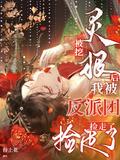 After My Spiritual Roots Were Dug Up, I Was Picked up by the Villain Group
130.5kReads8.7Score35.7kShelves
After My Spiritual Roots Were Dug Up, I Was Picked up by the Villain Group
130.5kReads8.7Score35.7kShelves
 Bai Yueguang Is Just Old, Not Dead
5.3kReads8.9Score110Shelves
Bai Yueguang Is Just Old, Not Dead
5.3kReads8.9Score110Shelves
 My Sister Fu Bao, After Her Husband Died
2.7kReads9.3Score—Shelves
My Sister Fu Bao, After Her Husband Died
2.7kReads9.3Score—Shelves
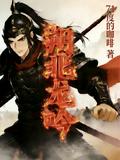 Shuobei Longyin
15.8kReads9.2Score1.7kShelves
Shuobei Longyin
15.8kReads9.2Score1.7kShelves
 My Parents, Who Were Top Students, Forced Me to Go to Jail.
1.2kReads9.1Score—Shelves
My Parents, Who Were Top Students, Forced Me to Go to Jail.
1.2kReads9.1Score—Shelves
 Five Corpses in the Cellar
1.5kReads9.3Score—Shelves
Five Corpses in the Cellar
1.5kReads9.3Score—Shelves
 A Collection of Super Short Sweet Stories
4.5kReads8.2Score273Shelves
A Collection of Super Short Sweet Stories
4.5kReads8.2Score273Shelves
 Alian in the Mountains
64kReads7.4Score1.7kShelves
Alian in the Mountains
64kReads7.4Score1.7kShelves
 After Rebirth, the Gun Ancestor Stopped Pretending
4Reads5.8Score—Shelves
After Rebirth, the Gun Ancestor Stopped Pretending
4Reads5.8Score—Shelves
 The Days When I Was a Publicist
10.9kReads7.5Score906Shelves
The Days When I Was a Publicist
10.9kReads7.5Score906Shelves
 My Romantic Past
693Reads5.8Score100Shelves
My Romantic Past
693Reads5.8Score100Shelves
 Living on a Deserted Island, You Must Survive!
9.2kReads7.7Score946Shelves
Living on a Deserted Island, You Must Survive!
9.2kReads7.7Score946Shelves
 The Nth Day of Pretending to Be a Genius in a Mentally Retarded World
33kReads9.0Score3.5kShelves
The Nth Day of Pretending to Be a Genius in a Mentally Retarded World
33kReads9.0Score3.5kShelves
 Desert Island Hunk
42.3kReads5.8Score2kShelves
Desert Island Hunk
42.3kReads5.8Score2kShelves
 The Most Handsome Man in the Palace
18kReads6.5Score1.2kShelves
The Most Handsome Man in the Palace
18kReads6.5Score1.2kShelves
 Strong Man in the Workplace
13kReads5.8Score807Shelves
Strong Man in the Workplace
13kReads5.8Score807Shelves
 You Broke Your Promise
87.9kReads9.5Score17.7kShelves
You Broke Your Promise
87.9kReads9.5Score17.7kShelves
 A Delivery Boy Who Can Teleport
1.9kReads—Score105Shelves
A Delivery Boy Who Can Teleport
1.9kReads—Score105Shelves
 He Is in Yunnan
36.8kReads9.7Score7.5kShelves
He Is in Yunnan
36.8kReads9.7Score7.5kShelves
 Me and the Beautiful Tenant
917Reads—Score—Shelves
Me and the Beautiful Tenant
917Reads—Score—Shelves
 Anti-Japanese War: God-Level Marksmanship Will Be Given at the Beginning!
4.4kReads5.8Score337Shelves
Anti-Japanese War: God-Level Marksmanship Will Be Given at the Beginning!
4.4kReads5.8Score337Shelves
 Get Rewarded for Scolding
9.5kReads7.1Score615Shelves
Get Rewarded for Scolding
9.5kReads7.1Score615Shelves
 Luxury Pampering
14.3kReads9.3Score1.4kShelves
Luxury Pampering
14.3kReads9.3Score1.4kShelves
 Desert Island Wilderness
824Reads5.8Score100Shelves
Desert Island Wilderness
824Reads5.8Score100Shelves
 The Hunk on the Desert Island!
3.7kReads5.8Score222Shelves
The Hunk on the Desert Island!
3.7kReads5.8Score222Shelves
 The Countryside Is Infinitely Better
4.9kReads5.8Score246Shelves
The Countryside Is Infinitely Better
4.9kReads5.8Score246Shelves
 Safe House Beauty
2.1kReads5.8Score178Shelves
Safe House Beauty
2.1kReads5.8Score178Shelves
 The Most Handsome Man in the City
2kReads5.7Score214Shelves
The Most Handsome Man in the City
2kReads5.7Score214Shelves
 Nine Beauties of the Tang Dynasty
1.8kReads5.8Score199Shelves
Nine Beauties of the Tang Dynasty
1.8kReads5.8Score199Shelves
 The Most Powerful Man in the Song Dynasty
609Reads5.8Score—Shelves
The Most Powerful Man in the Song Dynasty
609Reads5.8Score—Shelves
 A Macho Man with 500 Million Is Still Stingy, He Meets a Beautiful Woman While Traveling
670Reads5.8Score—Shelves
A Macho Man with 500 Million Is Still Stingy, He Meets a Beautiful Woman While Traveling
670Reads5.8Score—Shelves
 Earning 100 Million a Day, I Am Wild and Uninhibited
2.9kReads5.8Score232Shelves
Earning 100 Million a Day, I Am Wild and Uninhibited
2.9kReads5.8Score232Shelves
 One Hundred Beauties of the Ming Dynasty
1.4kReads5.8Score168Shelves
One Hundred Beauties of the Ming Dynasty
1.4kReads5.8Score168Shelves
 The First Hunk
6.8kReads5.8Score411Shelves
The First Hunk
6.8kReads5.8Score411Shelves
 Extremely Boundless
242Reads8.6Score—Shelves
Extremely Boundless
242Reads8.6Score—Shelves
 Ambiguity Makes You Stronger
2.3kReads5.8Score182Shelves
Ambiguity Makes You Stronger
2.3kReads5.8Score182Shelves
 Residual Seal
3.4kReads8.4Score487Shelves
Residual Seal
3.4kReads8.4Score487Shelves
 318 the Romantic Past on the Sichuan-Tibet Line
77.2kReads7.8Score4.5kShelves
318 the Romantic Past on the Sichuan-Tibet Line
77.2kReads7.8Score4.5kShelves
 When She Matures
79.5kReads8.1Score5.9kShelves
When She Matures
79.5kReads8.1Score5.9kShelves
 In the Thirty-Eighth Year of Wanli, I Became the Princess of Zhenguo
68Reads5.8Score—Shelves
In the Thirty-Eighth Year of Wanli, I Became the Princess of Zhenguo
68Reads5.8Score—Shelves
 On the Day of the Proposal, the Fiancée Said to Her Boss: Let Him Take Over, He Is Honest and Easy to Deceive.
488Reads9.6Score—Shelves
On the Day of the Proposal, the Fiancée Said to Her Boss: Let Him Take Over, He Is Honest and Easy to Deceive.
488Reads9.6Score—Shelves
 The Soul Penetrates Li Bai? at the Beginning of Maweiyi, I Save Yuhuan
204Reads5.8Score—Shelves
The Soul Penetrates Li Bai? at the Beginning of Maweiyi, I Save Yuhuan
204Reads5.8Score—Shelves
 People Are on Business Trips, and My Home Becomes Their Part-Time Room.
8.6kReads9.8Score—Shelves
People Are on Business Trips, and My Home Becomes Their Part-Time Room.
8.6kReads9.8Score—Shelves
 Sharing Location Exposed My Wife's Secret, I Made Her Lose Her Reputation and Leave the House
889Reads9.8Score—Shelves
Sharing Location Exposed My Wife's Secret, I Made Her Lose Her Reputation and Leave the House
889Reads9.8Score—Shelves