Recommend this one! Criminal investigation is combined with psychology, strict reasoning, logical closed loop, double strength, unit case, light emotional line, micro group portrait.
A crime story ten years later, a unit drama, the case is compact and not procrastinating, and there is no love brain. Does the development of science and technology bring a threat to life, or the end of crime? !
The first one is still being serialized, the second one is very brain-burning, yyds, and the heroine of the third one is a yandere [adoration][adoration][adoration]
If we work together, no one can escape - another review of "The Murderer in Corpse Whispers: Hong Kong City Mysterious Cases - Four Old Dramas: Shocking, Shocking, Life on the Stage" by Hao Feng. In "Old Drama: Frightening, Life on the Stage", no one is purely innocent, and no one is purely evil. This is exactly what Buddhism reveals about "common karma": a group of people are involved in the same retribution due to common causes and conditions, and are entangled with each other, and no one can be alone. "Za Agama Sutra" says: "There are causes and predestined relationships to gather together in the world, and there are causes and predestined relationships to gather together in the world." ("Za Agama Sutra Volume 12") The Weiya accident ten years ago was such a "gathering" of common karma. 1. The web of common karma: actors on stage, promoters off the stage. Buddhism divides karma into "common karma" and "different karma." Common karma refers to the karma that a group of people create and bear together. The core members of Guanghua Troupe - Jiang Yi, Zhou Kai, Gao Tiancheng, Su Man, and even the dead Xu Qingran and the wronged Chen Yu - all are tied in the same business network. Jiang Yi's forcible change of wire parameters was a personal act; Zhou Kai's false testimony and frame-up was a verbal act; Gao Tiancheng, as the boss, hastily closed the case afterwards and was eager to cut it off, which was an intentional act; Suman knew the truth but silently left the scene, which was also an accomplice. "The Theory of Awakening of Faith in the Mahayana" says: "According to the method of one mind, there are two kinds of doors. One is the true door of the mind, and the other is the door of birth and death." ("The Theory of Awakening of Faith in the Mahayana") People's hearts are influenced by each other in the door of birth and death, and fear, selfishness, and indifference are intertwined into a powerful torrent of common karma. Xu Qingran's death was not the fault of one person, but the convergence of everyone's bad thoughts. Hairpin Feng does not entirely attribute the blame to Jiang Yi alone, but allows readers to see: indifferent bystanders, silent insiders, and bosses eager to protect themselves, all left their mark on Gongye. 2. Different karma has different consequences: same starting point, different end points. Under the common karma, everyone has different karma and different results. Jiang Yi and Zhou Kai took the initiative to commit evil, and the consequences were tragic - they were strangled to death on the stage. Although Gao Tiancheng did not directly frame Chen Yu, due to poor management and eagerness to shirk responsibility after the accident, he was depressed for ten years and ultimately lived in fear. Suman did not participate in the frame-up, but chose to leave and remain silent after the incident. Her retribution was lifelong guilt and fear. The most interesting ones are Chen Yu and Qi Yin. Chen Yu was completely innocent, but was involved in Gongye and endured ten years of mental torture. This is the most unfair part of "different industry". "The Theory of the Yoga Master" says: "There are many kinds of karma, some are fixed and uncertain, some are experienced and not received." ("The Theory of the Yoga Master, Volume 90") Is what Chen Yu endured in her past life? Or is it an inevitable disaster in this life? Buddhism recognizes the existence of "effect without cause" - some suffering is not caused by oneself, but is an individual sacrifice under the crushing influence of common karma. Qi Yin's revenge originates from this "injustice". Qi Yin could have stayed out of the game. She was not involved in any evil deeds back then, she was just Xu Qingran's sister. But because of blood love and witnessing the tragic death of her sister, she took the initiative to jump into the network of common industry. In the interrogation room, she said: "Qingran is my only blood relative in this life, and I owe her justice." She claimed this "owe" herself - she originally had no karmic debt, but she developed attachments because of love, and created new karma because of attachments. Her murderous karma was her own karma, not forced on her by Xu Qingran. 3. Obsession is the cause, and reincarnation is the effect. Buddhism believes that the root of reincarnation is "ignorance" and "grasping." Qi Yin has been unable to let go for ten years, not because she can't let go of her sister, but because she can't let go of her obsession that "I want to seek justice for her." "Lotus Sutra" says: "All dharmas are from their original state, and they always have the phase of tranquility and cessation." ("Lotus Sutra: Convenient Products") Xu Qingran is dead, and there is no grudge or grudge in the phase of cessation of tranquility. However, Qi Yin solidified his sister's death as an event that must be solved, and repeatedly replayed, recreated and rehearsed it in his mind. The miniature stage in the rental house, the outline of the stage drawn with paint, and the positions of the paper figures - these are all the external manifestations of "persistence". She turned her obsessions into physical installation art to remind herself not to forget. This is like what is said in the Buddhist scriptures: "recognizing thieves as fathers", taking illusory obsessions as real missions. After Jiang Yi and Zhou Kai died, her obsession did not disappear, but it changed from "revenge" to "accepting trial". Her calmness in the interrogation room was not relief, but the completion of another obsession: she finally no longer had to act. 4. Incredible Karma: Two Ends of the Rope The crime rope is the most symbolic object in this case. One end of it is Jiang Yi's neck, and the other end is Qi Yin's hand. Buddhism teaches that "karma is like a rope", pulling all living beings through reincarnation in the six paths. Qi Yin thought she was "using a rope" to punish others, but little did she know that she had long been trapped by the rope of karma - the rope of karma had been tied when she witnessed her sister's death at the back door of the theater ten years ago. Every step she takes, the rope tightens a little; every day she plans, the rope ties a knot. The "Surangama Sutra" says: "You owe me your life, and I will repay your debt. Because of this karma, it has passed through hundreds of thousands of kalpas, and it is always in life and death." (Volume 4 of the "Surangama Sutra") Jiang Yi owed Xu Qingran one life, and Qi Yin came to ask for it; Qi Yin owed Jiang Yi and Zhou Kai two lives, and the law came to ask for it. Begged and begged, no one was relieved. After hundreds of thousands of kalpas, always in life and death - this is the eternal cycle of human tragedy. 5. Possibility of liberation: letting go is renunciation. The novel gives a glimmer of hope for liberation - Chen Yu. She went crazy and woke up, and finally chose not to hate and wait (not waiting for Qi Yin to come back for revenge, just waiting for her to come back as this person). She didn't kill anyone anymore, she didn't take the blame anymore, she just lived. This may seem cowardly, but it is actually courageous. The "Diamond Sutra" says: "The past heart cannot be obtained, the present heart cannot be obtained, and the future heart cannot be obtained." ("Diamond Sutra: One Body and One Mind") Chen Yu is not bound by the past heart (grievances), and is not driven by the future heart (revenge). He lives in the present and gains freedom. Qi Yin doesn't work. She couldn't let go of the past. So she is in prison and Chen Yu is outside in the sunshine. The same karmic rope, one is still tied and the other has been untied. Conclusion: Hairpin Feng draws a picture of the flow of karma through the suspense story. Common karma draws everyone into the game, while different karma leads to suffering and happiness, and obsession becomes the fuel of reincarnation. The ropes of the abandoned theater are finally removed, but the ropes in the readers' hearts are not necessarily. After closing the book, you might as well ask yourself: Is there any "ten years ago" that I can't let go of? Are there any karma ropes that you are weaving by yourself? Cause and effect are true, so be careful.
This book is really good to read. You don't know what it's talking about at first, it's a bit foggy, but after two or three pictures, you will find out the story behind it. The two protagonists change the development of the future in different time and space, exchange information through the music box, and find the murderer together.
I like this book very much. The suspense reasoning is wonderful, interlocking, classic, and very funny. There are many characters created in the article, with good image and temperament.
Let's take a look. The male protagonist is cold on the outside and hot on the inside, a detective captain, and the female protagonist is a funny and talkative private detective. They started to cooperate because of a corpse dismemberment case, and a series of seemingly unrelated cases are linked to the heroine's past and the conspiracy of the criminal group. The female protagonist is super strong, a funny woman in the world of beauty and beauty, her life experience is a bit sad but optimistic and strong. The male and female protagonists go in both directions, and their love is super sweet HE
Solving crimes + reasoning + suspense + plant detective alliance, the cases are getting more and more brain-burning, see if you can guess the real murderer
As for the first book, the structure is very rigorous. The author's literary talent is very good. He has already remade a TV series. If you are interested, you can read it. I haven't finished the second one yet, but everyone said it is very good.
The climax is at the beginning, the frozen hands will explode in the refrigerator. The plot is intertwined with half-hearted detectives + cute brothers. It is funny and exciting, such as the red mud mine, the mysterious man, and the collective disappearance case. The atmosphere is full of neither fairy nor fantasy. In the early stage, it is just an ordinary person's investigation. It is real and suffocating. The pit is very firmly buried. It has constant twists and turns. If you are timid, you will be cautious. The more you watch, the more you can't stop!
This! The male protagonist is a policeman and the female protagonist is a judge. They both work together to solve the case. They are both powerful! The layout is huge! The last line of defense between people and evil! Updates are a little slow at first, but it's not a loss if you invest in it!
I have been following this book for a long time. The plot is compact and the images are strong. The character design is also very vivid and completely intelligent. Even with this case, the author writes very close to life, simple and easy to read, and highly recommended!
The writing is solid, the atmosphere is first-class, and the reading experience is great. The detection process of each case is like watching a high-quality criminal investigation drama😎
Two male protagonists, a strong and retired gangster pretends to be a pig and eats the tiger, and the elegant young master joins hands to solve ancient crimes, a unit drama.
 Daybreak 1: Undertide
951Reads8.9Score161Shelves
Daybreak 1: Undertide
951Reads8.9Score161Shelves
 Detective Di Renjie Part 5: the Wind Rises in the City of Gods
2.4kReads8.8Score176Shelves
Detective Di Renjie Part 5: the Wind Rises in the City of Gods
2.4kReads8.8Score176Shelves
 Fatal Profile: Detective Captain, Don't Be Tempted
34Reads—Score—Shelves
Fatal Profile: Detective Captain, Don't Be Tempted
34Reads—Score—Shelves
 Light in the Dark: Forensic Doctor Charlotte
3Reads—Score—Shelves
Light in the Dark: Forensic Doctor Charlotte
3Reads—Score—Shelves
 Yun Tide Has Been Practicing Immortality for Hundreds of Millions of Years, What's Wrong with Being Stronger?
3Reads5.8Score—Shelves
Yun Tide Has Been Practicing Immortality for Hundreds of Millions of Years, What's Wrong with Being Stronger?
3Reads5.8Score—Shelves
 Bad Story
20Reads—Score—Shelves
Bad Story
20Reads—Score—Shelves
 Marry Fox Bride
81Reads6.3Score—Shelves
Marry Fox Bride
81Reads6.3Score—Shelves
 From Ordinary to Extraordinary
40.6kReads9.2Score4.4kShelves
From Ordinary to Extraordinary
40.6kReads9.2Score4.4kShelves
 Notes of Visiting the Spirit
315Reads8.3Score—Shelves
Notes of Visiting the Spirit
315Reads8.3Score—Shelves
 Fox Marriage
512Reads9.1Score104Shelves
Fox Marriage
512Reads9.1Score104Shelves
 King of Feng Shui
784.4kReads9.4Score58.1kShelves
King of Feng Shui
784.4kReads9.4Score58.1kShelves
 Thirteen Things
72.3kReads8.8Score1.8kShelves
Thirteen Things
72.3kReads8.8Score1.8kShelves
 The Dragon King's Debt, Marrying a Yin Relative
107Reads6.9Score—Shelves
The Dragon King's Debt, Marrying a Yin Relative
107Reads6.9Score—Shelves
 Great Use for Cold Cases: 1
29kReads9.6Score4.2kShelves
Great Use for Cold Cases: 1
29kReads9.6Score4.2kShelves
 Police Station Police [Public Security and Criminal Investigation]
1.6kReads5.8Score155Shelves
Police Station Police [Public Security and Criminal Investigation]
1.6kReads5.8Score155Shelves
 Snakes Pregnant Again and Again
76Reads8.7Score—Shelves
Snakes Pregnant Again and Again
76Reads8.7Score—Shelves
 Hidden Lineanti-Drug
35Reads5.8Score—Shelves
Hidden Lineanti-Drug
35Reads5.8Score—Shelves
 Snake Marriage
77Reads8.4Score—Shelves
Snake Marriage
77Reads8.4Score—Shelves
 Palace Case
517Reads9.3Score111Shelves
Palace Case
517Reads9.3Score111Shelves
 Once I Traveled Through Time, I Became Famous All over the World by Solving Crimes.
9.1kReads9.0Score1.3kShelves
Once I Traveled Through Time, I Became Famous All over the World by Solving Crimes.
9.1kReads9.0Score1.3kShelves
 Corpse Whispers: the Mysteries of Hong Kong City
496Reads5.8Score104Shelves
Corpse Whispers: the Mysteries of Hong Kong City
496Reads5.8Score104Shelves
 Prison of the Forsaken
—Reads—Score—Shelves
Prison of the Forsaken
—Reads—Score—Shelves
 Misplaced Pursuit of the Murderer
17.8kReads9.3Score2.8kShelves
Misplaced Pursuit of the Murderer
17.8kReads9.3Score2.8kShelves
 Detective: Best Partner
59Reads—Score—Shelves
Detective: Best Partner
59Reads—Score—Shelves
 Revenge Is Back
3Reads6.8Score—Shelves
Revenge Is Back
3Reads6.8Score—Shelves
 Evil Nature
—Reads5.8Score—Shelves
Evil Nature
—Reads5.8Score—Shelves
 Go Crazy in a City
9Reads8.4Score—Shelves
Go Crazy in a City
9Reads8.4Score—Shelves
 Real Criminal Investigation Cases
—Reads5.8Score—Shelves
Real Criminal Investigation Cases
—Reads5.8Score—Shelves
 Under the Consequences
10Reads8.1Score—Shelves
Under the Consequences
10Reads8.1Score—Shelves
 Crime-Solving Partner, Unidentified
1.8kReads9.1Score220Shelves
Crime-Solving Partner, Unidentified
1.8kReads9.1Score220Shelves
 The Cool Forensic Doctor's Canine Boyfriend
4.4kReads9.1Score547Shelves
The Cool Forensic Doctor's Canine Boyfriend
4.4kReads9.1Score547Shelves
 In the Middle of the Night, I Bumped into a Killer Killing Someone
23Reads—Score—Shelves
In the Middle of the Night, I Bumped into a Killer Killing Someone
23Reads—Score—Shelves
 Review Her Plan
17Reads—Score—Shelves
Review Her Plan
17Reads—Score—Shelves
 After Understanding the Language of Plants, She Became Famous
2.3kReads8.3Score375Shelves
After Understanding the Language of Plants, She Became Famous
2.3kReads8.3Score375Shelves
 Mysterious Cases
200Reads6.7Score—Shelves
Mysterious Cases
200Reads6.7Score—Shelves
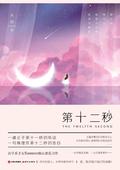 Twelfth Second
4.8kReads5.8Score1.1kShelves
Twelfth Second
4.8kReads5.8Score1.1kShelves
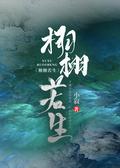 Lifelike
189.9kReads9.5Score30.8kShelves
Lifelike
189.9kReads9.5Score30.8kShelves
 Encryption Mystery
41Reads8.7Score—Shelves
Encryption Mystery
41Reads8.7Score—Shelves
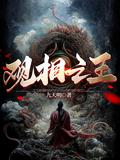 King of Observation
11Reads—Score—Shelves
King of Observation
11Reads—Score—Shelves
 I Broke into the Mine to Uncover the Secrets of My Father's Generation
—Reads—Score—Shelves
I Broke into the Mine to Uncover the Secrets of My Father's Generation
—Reads—Score—Shelves
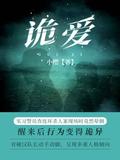 Cunning Love
43Reads5.8Score—Shelves
Cunning Love
43Reads5.8Score—Shelves
 Graffiti on the Case
1Reads—Score—Shelves
Graffiti on the Case
1Reads—Score—Shelves
 Justice Is Immortal
141Reads—Score—Shelves
Justice Is Immortal
141Reads—Score—Shelves
 Shadows
414Reads8.4Score—Shelves
Shadows
414Reads8.4Score—Shelves
 404 Midnight Radio: Nether Frequency
—Reads5.8Score—Shelves
404 Midnight Radio: Nether Frequency
—Reads5.8Score—Shelves
 After Rebirth, Li Xiaomi Has 100 Million Points of Strength
—Reads—Score—Shelves
After Rebirth, Li Xiaomi Has 100 Million Points of Strength
—Reads—Score—Shelves
 Crow Falls on Sin City
9Reads—Score—Shelves
Crow Falls on Sin City
9Reads—Score—Shelves
 Evil Story (Full Text)
2kReads8.8Score360Shelves
Evil Story (Full Text)
2kReads8.8Score360Shelves
 It Is Difficult to Deal with His Highness Who Has a Split Personality and Becomes a Paranoid Yandere.
115Reads6.7Score—Shelves
It Is Difficult to Deal with His Highness Who Has a Split Personality and Becomes a Paranoid Yandere.
115Reads6.7Score—Shelves
 Floating and Lingering Clouds!
369Reads5.8Score—Shelves
Floating and Lingering Clouds!
369Reads5.8Score—Shelves