It's coming, it's coming. The first life simulation where the male protagonist encounters danger and wakes up [Eat Melon] Living in a world affected by natural disasters for the first time, the originally happy and happy family [Cool] and Qingmei, who has been growing up, have an accident. Only the male protagonist and Qingmei are left [Eat Melon] In order to protect Qingmei, the male protagonist chooses to lure the enemy away alone [Cool] When he is seriously injured, his talent awakens and burns himself [Thinking] Clear the pursuers and bring Qingmei Tao to the day of birth [Cool] In the second book, the male protagonist became disabled due to the change in the aura of heaven and earth, but five years later he had an adventure [Eating Melon] and conducted a life simulation [Thinking] There were baby girls who were abandoned on the road, a witch who lived alone and in despair, and a princess who was hunted down [Cool] The man took the initiative to show compassion and took them in [Thinking] He had been caught in the rain and held an umbrella for them [Cool]
I should be able to read about 100 pictures in the first book. I didn't even want to read the second book until I saw 100 pictures. I think I've read Chapter 200 of the third book. Book 4 is really good, I can't seem to see 100 pictures. Apart from the 5th and 7th books which are my favorite, I can just read the rest.
The first book "Ten years later, the clan will be destroyed, and I will use simulation to save the world!" Book review: Entering the game with your own body, you can win half the world. Update: more stable every day | Tags: Time Travel / System Simulation / Fantasy Imagination / Family Counterattack. Teng Cheng came through time travel with the wood-type spiritual root. He built a foundation at the age of fifteen and enjoyed great success. The next second, the prophecy of "the demise of the Teng family in ten years" hit his face. The extreme contrast between "Tianhu's opening" and "catastrophe" sets the tone for the tension of the whole story. Changing one's fate against fate is no longer a matter of personal heroism, but a civilization-level proposition related to the survival of the entire family. In this long struggle with fate, the two "prime minister" situations in the simulation can be called the most shocking soul chapters in the book. 1. Simulator: From Golden Finger to Prism of Destiny The "Sims" system here is not a mindless plug-in, but a prism that reflects destiny. It breaks down the inevitability of "genocide" into countless intervenable variables: a deviation in a certain diplomatic wording, a fallacy in the direction of an elder's cultivation, or even a neglected weakness in the protagonist's own character. Every simulation is a challenge to "inevitability", and every death is transformed into a more accurate layout in reality. "Gou + Upgrade Flow" therefore has a double meaning: Gou is to obtain more information in the simulation, and upgrading is to enhance control of destiny. The brightest and most tragic thing in the simulation is the lifeline of Fuji Makoto who was called "Prime Minister" twice by later generations - not because he was actually in the phase, but because he burned the attribute of "flexibility" to the extreme, and his intelligence was almost demonic, so that all onlookers had to call him "Prime Minister" to show their awe. 2. Game 1: Burning and adapting, so much wisdom that it's almost like a demon. In that critical simulation, Fujicheng chose an extreme path - he burned away his talent of "flexibility" in exchange for wisdom and planning far beyond ordinary people. At that moment, he was no longer a practitioner, but a breathtakingly sophisticated computing machine. In the court, he manipulated all forces; in the world of spiritual practice, he leveraged the power of cultivating immortals with his ordinary wisdom. Every opponent's next move has been calculated in his mind thousands of times; every seemingly accidental disturbance is a carefully designed chess move by him. His long-term layout and in-depth planning made the whole world a chessboard in his hands. However, this chess game that lasted for decades failed to win the variable named "Wang Lin". Wang Lin is not an ordinary person - he is the favored chess piece of heaven, the back-up man reserved by fate, and the only puzzle that Teng Cheng has calculated for all the people but cannot figure out. When the end came, Fujicheng was defeated and died. But what he left to Wang Lin was an indelible memory in this life - the fear of being driven to the cliff by wisdom and suffocated by conspiracy is more unforgettable than any magical power. Many years later, Wang Lin traveled all over the world and never encountered an opponent as difficult as Teng Cheng. He often thought of the counselor who died in his own hands, but in the end it just turned into a sigh: "Those who are not Teng Cheng are weak." This is Wang Lin's highest evaluation of Teng Cheng, and also his deepest fear - since then, no one he has met can match Teng Cheng's wisdom. Although Teng Cheng died in that game, he lived on every night for the rest of Wang Lin's life. 3. The second game: Youyou Cangtian, why should you treat me worse than me? The second time, Fujicheng entered the simulation again, still with the same wise and almost demonic attitude. But this time, he was crazier, crazier, and more accurate than last time - as if every death brought him closer to the secret. He no longer tried to kill Wang Lin, but was betting on a bigger game, a possibility that even he himself didn't know whether he could come back from. He dragged his remains, carrying all the memories of his last failure, but he was still strategizing despite his gray hair. Finally, on a snowy late night, he sat alone under the broken lamp, approved the last memorial, and his fingertips touched the family token in his sleeve that had been rubbed until it shone brightly - it was the status symbol of the young master of the Fuji family in reality, but in the simulation it became a heart-cutting knife. He closed his bloodshot eyes and sighed in a low voice: "How can the long sky be inferior to me." These were the last words he left to this world. All the strategies, all the flexibility, all the wisdom gained by burning life, fell silent at this moment. At that moment, all readers who read this paragraph knew that this was the last time. He is gone, but he left an invisible seed on the chessboard of destiny, waiting to break out of the ground at some point in reality. 4. Entering the game with your own body can win half the world. If "Seven Body Transformations" is the most gorgeous technical operation in the book, then the two games of "Prime Minister" are the deepest spiritual background in the book. In reality, Fujicheng seems to be "cooling", but in fact, he has already inherited all the wisdom gained from those two desperate burns in the simulation. He is no longer alone, but carries all the pain, failure and obsession of the "Prime Minister" and moves forward. The words "very wise and almost demonic" are aptly placed on these two life lines. Teng Cheng uses a mortal body to do the things of heaven; with one person's wisdom, he shakes up the situation of an entire world. He allows readers to see how real counselors struggle in desperate situations, how to use wisdom to fight against brute force, and how to exchange death for the possibility of breaking the situation. Wang Lin said that "all those who are not Teng Cheng are weak." Looking at this sentence in turn, it is the highest crowning for Teng Cheng - he is dead, but he allows those who defeat him to live in his shadow forever. 5. Conclusion: Rebuilding the Narrative on the Ruins of Fate. The most touching aspect of "Genocide Ten Years Later" is its attitude towards "fate" - recognizing the laws but not succumbing to them. Fujicheng used the tragedy of his two "prime minister" lives and the pain of countless simulations to exchange for a glimmer of hope for a comeback in reality. It is not a fast-food novel, but a serious attempt to rebuild the immortality narrative on the ruins of routines. The character of "Prime Minister" Fujicheng deserves to be remembered - he is not the strongest person, but he must be the most terrifying opponent, because he makes you win, but you will never forget him. The poem says: Ten years of calamity, the fire shines on the lonely city, and one dream leads to a thousand bloody battles. Incarnated as a seven-body chess game between heaven and earth, his life hangs on a thread of life-and-death alliance. All the calculations in the court have come true, and the old names are weeping with the remaining lamps in the wind and snow. I don't know that the sky will fail me in the end, and this chess game will be overturned and ghosts and gods will be shocked. I ate so many stones just for this moment, Prime Minister, I can't forget you! The second book "After Transforming into a Fairy, I Simulated the Immortal Realm" In-depth Book Review: When the "Life Simulator" Meets the Immortal Shura Field Update: Four chapters are updated daily, and the volume is full | Tags: Transformation article / System simulation / Fantasy imagination / Decisive killing 1. A critical attack at the beginning: System Awakening in Desperate Situation The smartest thing about this book is that it forces the protagonist to a dead end at the beginning. Lin Qing (who became Lin Qingyu after time travel) woke up in a secret room, her spiritual power was completely sealed, and she was at the mercy of others. At the critical moment of life and death, the "life simulator" is activated. In the simulation, she can throw away her moral shackles and survive in the devil's path as an "Acacia witch". Every choice she makes is like walking on thin ice, and she interprets the word "hard work" to the extreme; but in reality, she must maintain the pure and innocent "fairy of the right path" persona, showing deep thoughts at every turn. This kind of "one body and two sides" setting allows readers to see a complex protagonist who wanders in a moral gray area and trades all kinds of suffering in simulation for success in reality. 2. Core settings: The simulator is a "indulgence", not a brainless plug-in. Simulation comes with a price. Every death is a real psychological trauma, being pierced by a sword, drained of value, reduced to goods... "Death settlement" is not a data panel, but a real memory imprint. The entry system adds to the strategy. How to match, when to hold back and when to explode all require precise calculations. The most important thing is the "causal entanglement" between simulation and reality - the characters met in the simulation and the skills acquired often have an impact in reality in unexpected ways. The two story lines interact organically rather than in parallel narratives. 3. Character creation: Lin Qingyu - a sober egoist. She has a firm mind, which stems from the purest desire to "live" and "become stronger". The death and humiliation in the simulation made her more tolerant and unfathomable in reality. She is neither the Virgin White Lotus nor the dark stream with no bottom line. She kills decisively and switches characters like a shadow and then becomes possessed. These eight words, "You show your prowess in front of others, but you are miserable behind others" accurately summarize her core contradiction. In terms of supporting roles, "Zhenren Duanwang" is full of oppression, and the group of portraits of the Hehuan Sect build a demonic ecology of the jungle and the strong, forming a spicy contrast with the righteous path in reality. 4. Plot structure: Two lines running in parallel, advancing alternately Reality line: Escape → Join the righteous path → Hide strength → Cope with the sect struggle → Get involved in a bigger whirlpool. Simulation line: Acacia witch route → life and death pursuit → dealing with the devil → exploring secret treasures → death through constant trial and error. The two lines are the inside and outside of each other: the simulation line provides the "hard work" training and key information, and the reality line provides the "profound" stage and growth. The rhythm is tight in the early stage, but in the later stage, it escalates from personal survival to power game, and the pattern opens up. 5. World view and foreshadowing: more than Shuangwen. The mystery of life experience is a hidden thread. The disappearance of the mother, the reason for the time travel, and the origin of the system are gradually revealed. The foreshadowing is hidden in simulation fragments and ancient classics. The distinction between good and evil is worth pondering: the right path is full of hypocrisy, and the evil path also has a cruel logic of survival. The protagonist walks between the two, deconstructing black and white values. The transformation from a mortal to a golden elixir relies on the combat experience and mental tempering accumulated in the simulation, and the hard-core immortal cultivation has a solid texture. 6. Summary of Highlights 1. Full of contrast: the unfathomable abyss of the holy fairy vs. The desperate survival of the Acacia witch. 2. The rhythm is tight, the information density is high, and the author updates four chapters every day, so the experience of following updates is excellent. 3. The protagonist's IQ is online, and his scheming and depth are both based on the pain in the simulation. 4. The system is deep, requires strategic management and is costly. 5. The group portraits are vivid and non-tool people. 7. Disadvantages: The "death-restart" cycle of the simulation line has the risk of repetition, so it is recommended to add variables. The love line is currently shallow and needs to be more detailed if it is expanded later. In the middle and later stages, the pattern expands and branch lines increase. Care must be taken to tighten up the main line to avoid loosening. 8. Suitable for the crowd: Recommended to readers who like to kill decisively, have online IQ protagonists, like to watch pretending to be pigs and eat tigers, and can accept moral gray areas. If you have any objections to the theme of transformation or dealing with demons, please proceed with caution. 9. Conclusion This work is not a fast-food novel, but a story with a solid setting, a three-dimensional protagonist, and a clear narrative. Lin Qingyu used the most embarrassing method in the simulation to become stronger, just to become the dazzling herself in reality - "She appears to be strong in front of others, but miserable in front of others" accurately summarizes her tolerance and growth. The plot is currently in a critical period of unfolding the worldview, and the author maintains a steady pace of updating four chapters a day, making the update experience very user-friendly. If you are in a book shortage, you might as well click on it and read it. The poem says: The ice soul hides in the world, and the enchantress in the phantom body devours the devil's heart. All the sufferings are paid for, in exchange for being the best in the world. Who can break through the thoughts of good and evil? The thought of life and death will sink. The road to immortality is full of treacherous things, and Qingyu is just singing in an illusion. One sentence recommendation: The ultimate contrast, is Sister Lin still a good girl? "You thought she was on the first floor, but actually she was on the fifth floor. And when you thought she was on the fifth floor, she had already exchanged countless painful deaths in the simulation for the deep layout of overlooking all living beings on the tenth floor in reality."
 By Extracting Simulated Entries, I Became a Genius?
10kReads7.5Score1.1kShelves
By Extracting Simulated Entries, I Became a Genius?
10kReads7.5Score1.1kShelves
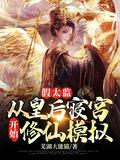 Fake Eunuch: Simulation of Immortal Cultivation Begins from the Queen's Palace
13Reads6.9Score—Shelves
Fake Eunuch: Simulation of Immortal Cultivation Begins from the Queen's Palace
13Reads6.9Score—Shelves
 Calling You a Simulation, You Three-Day Nascent Soul Ancestor?
6.2kReads7.2Score560Shelves
Calling You a Simulation, You Three-Day Nascent Soul Ancestor?
6.2kReads7.2Score560Shelves
 Wearing Another World, Luckily I Have a Training Simulator!
2Reads6.7Score—Shelves
Wearing Another World, Luckily I Have a Training Simulator!
2Reads6.7Score—Shelves
 Xingtie: Only After My Death Did Liuying Understand Love.
12.4kReads9.4Score1.6kShelves
Xingtie: Only After My Death Did Liuying Understand Love.
12.4kReads9.4Score1.6kShelves
 Life Simulator, There Are New Ways to Die Every Time
530Reads7.1Score—Shelves
Life Simulator, There Are New Ways to Die Every Time
530Reads7.1Score—Shelves
 The Empress Pursues Her Husband, but I Live in Her Previous Life
7Reads8.1Score—Shelves
The Empress Pursues Her Husband, but I Live in Her Previous Life
7Reads8.1Score—Shelves
 Star Dome: the Opening Made Black Tower Regret for Life
3.2kReads9.3Score396Shelves
Star Dome: the Opening Made Black Tower Regret for Life
3.2kReads9.3Score396Shelves
 Poor Prince, I Can Check the Luck Path
—Reads7.1Score—Shelves
Poor Prince, I Can Check the Luck Path
—Reads7.1Score—Shelves
 The Empress Was Forced into Seclusion and Had No Choice but to Rule the Country for Her
6.1kReads8.9Score358Shelves
The Empress Was Forced into Seclusion and Had No Choice but to Rule the Country for Her
6.1kReads8.9Score358Shelves
 It's Just a Love Simulation, How Can It Still Synchronize Memories?
30.3kReads9.1Score3.5kShelves
It's Just a Love Simulation, How Can It Still Synchronize Memories?
30.3kReads9.1Score3.5kShelves
 Life Simulation: My Wife Actually Came True
508Reads6.7Score—Shelves
Life Simulation: My Wife Actually Came True
508Reads6.7Score—Shelves
 Fantasy: the Empress Kills My Nine Tribes at the Beginning
71Reads5.8Score—Shelves
Fantasy: the Empress Kills My Nine Tribes at the Beginning
71Reads5.8Score—Shelves
 Simulator: My Three Kingdoms Can Be Infinitely Rewinded
3.9kReads8.8Score255Shelves
Simulator: My Three Kingdoms Can Be Infinitely Rewinded
3.9kReads8.8Score255Shelves
 Simulation: a Fairy with Lifelong Regret Comes to Your Door?
14Reads5.4Score—Shelves
Simulation: a Fairy with Lifelong Regret Comes to Your Door?
14Reads5.4Score—Shelves
 Genshin Impact: Simulation, at the Beginning, He Was Chased by the Yandere Sister
653Reads8.9Score108Shelves
Genshin Impact: Simulation, at the Beginning, He Was Chased by the Yandere Sister
653Reads8.9Score108Shelves
 Simulated Star Dome: Memories of the Underworld, Got Stabbed at the Beginning
364Reads8.8Score—Shelves
Simulated Star Dome: Memories of the Underworld, Got Stabbed at the Beginning
364Reads8.8Score—Shelves
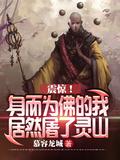 Shock! as a Buddha, I Actually Massacred Lingshan Mountain
8.2kReads9.2Score922Shelves
Shock! as a Buddha, I Actually Massacred Lingshan Mountain
8.2kReads9.2Score922Shelves
 Star Dome Simulation: Starting from My Girlfriend Liuying
39Reads5.8Score—Shelves
Star Dome Simulation: Starting from My Girlfriend Liuying
39Reads5.8Score—Shelves
 Xingtie: Starting from Jingliu to Repay the Eternal Love Debt
256Reads7.2Score—Shelves
Xingtie: Starting from Jingliu to Repay the Eternal Love Debt
256Reads7.2Score—Shelves
 Life Simulator: I Stole My Ancestral Tomb at the Beginning
2Reads5.8Score—Shelves
Life Simulator: I Stole My Ancestral Tomb at the Beginning
2Reads5.8Score—Shelves
 Star Iron: the Black Tower Transformed into a Doll at the Beginning to Seduce Me
4.6kReads9.1Score536Shelves
Star Iron: the Black Tower Transformed into a Doll at the Beginning to Seduce Me
4.6kReads9.1Score536Shelves
 Ha? Shenhaowen Simulator? Are You Proud of Being Urged to Update?
—Reads5.8Score—Shelves
Ha? Shenhaowen Simulator? Are You Proud of Being Urged to Update?
—Reads5.8Score—Shelves
 Star Iron Simulation: the Hope That Shines on the World
628Reads8.4Score105Shelves
Star Iron Simulation: the Hope That Shines on the World
628Reads8.4Score105Shelves
 Go to the Extreme and Cultivate the Path to Immortality
33.1kReads8.6Score2.5kShelves
Go to the Extreme and Cultivate the Path to Immortality
33.1kReads8.6Score2.5kShelves
 Bound to a Yandere, I Am Forced to PUA Every Day
1.1kReads7.1Score123Shelves
Bound to a Yandere, I Am Forced to PUA Every Day
1.1kReads7.1Score123Shelves
 Fairy, Calm Down, I Am Really Not the Dead Husband in Your Dream
33.9kReads8.1Score3.6kShelves
Fairy, Calm Down, I Am Really Not the Dead Husband in Your Dream
33.9kReads8.1Score3.6kShelves
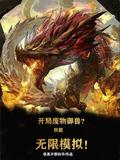 Beast Control Simulator: My Beast Can Evolve Infinitely
5.6kReads8.9Score703Shelves
Beast Control Simulator: My Beast Can Evolve Infinitely
5.6kReads8.9Score703Shelves
 The Incredibly Powerful Female Swordswoman Found My Home
6Reads—Score—Shelves
The Incredibly Powerful Female Swordswoman Found My Home
6Reads—Score—Shelves
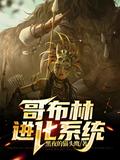 Goblin Evolution System
33kReads9.1Score3.2kShelves
Goblin Evolution System
33kReads9.1Score3.2kShelves
 Xian Xia: a Hundred Lives of Hard Work Can Lead to One Life of Brilliance
1.5kReads7.6Score102Shelves
Xian Xia: a Hundred Lives of Hard Work Can Lead to One Life of Brilliance
1.5kReads7.6Score102Shelves
 Simulate the Contrast of Female Nuns, the Greater the Contrast, the Greater the Reward
116Reads—Score—Shelves
Simulate the Contrast of Female Nuns, the Greater the Contrast, the Greater the Reward
116Reads—Score—Shelves
 Simulation: After Turning into Flames, Qingmei Regrets Her Whole Life
37.4kReads9.2Score5.2kShelves
Simulation: After Turning into Flames, Qingmei Regrets Her Whole Life
37.4kReads9.2Score5.2kShelves
 My Fantasy Simulator
1.9kReads8.2Score167Shelves
My Fantasy Simulator
1.9kReads8.2Score167Shelves
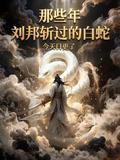 In Those Years, the White Snake Liu Bang Killed
4Reads—Score—Shelves
In Those Years, the White Snake Liu Bang Killed
4Reads—Score—Shelves
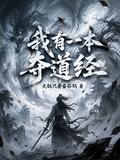 I Have a Book of Seizing the Way
77.6kReads7.8Score13.1kShelves
I Have a Book of Seizing the Way
77.6kReads7.8Score13.1kShelves
 Protagonist, Please Pay Attention, Your Old Enemy Is Saving the World
10.1kReads7.8Score947Shelves
Protagonist, Please Pay Attention, Your Old Enemy Is Saving the World
10.1kReads7.8Score947Shelves
 Will You Die in Eight Years? Look at Me Struggling to Refine the Void-Destroying Golden Pill
59.7kReads8.0Score5.2kShelves
Will You Die in Eight Years? Look at Me Struggling to Refine the Void-Destroying Golden Pill
59.7kReads8.0Score5.2kShelves
 Immortality Simulator
455Reads6.4Score—Shelves
Immortality Simulator
455Reads6.4Score—Shelves
 After Simulating It a Hundred Thousand Times, I Will Be Invincible in the Past, Present and Future.
14.9kReads8.3Score1.5kShelves
After Simulating It a Hundred Thousand Times, I Will Be Invincible in the Past, Present and Future.
14.9kReads8.3Score1.5kShelves
 Cultivation Simulator: Change Your Life and Become Stronger
887Reads8.5Score—Shelves
Cultivation Simulator: Change Your Life and Become Stronger
887Reads8.5Score—Shelves
 Simulating a Year, the Day Soars
1.1kReads7.4Score100Shelves
Simulating a Year, the Day Soars
1.1kReads7.4Score100Shelves
 Beginning: Pan Feng Was in a Panic at the Beginning
18.8kReads8.9Score1.8kShelves
Beginning: Pan Feng Was in a Panic at the Beginning
18.8kReads8.9Score1.8kShelves
 Simulate Hundreds of Millions of Times: How to Lose with Colorful Talent
62.3kReads7.3Score6.3kShelves
Simulate Hundreds of Millions of Times: How to Lose with Colorful Talent
62.3kReads7.3Score6.3kShelves
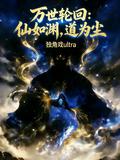 Eternal Reincarnation: Immortals Are Like Abyss, Tao Is Dust
102.6kReads8.8Score7.1kShelves
Eternal Reincarnation: Immortals Are Like Abyss, Tao Is Dust
102.6kReads8.8Score7.1kShelves
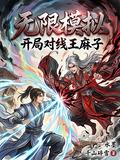 Infinite Simulation: the King of the Opening Match Is Mazi!
24.3kReads7.4Score2.3kShelves
Infinite Simulation: the King of the Opening Match Is Mazi!
24.3kReads7.4Score2.3kShelves
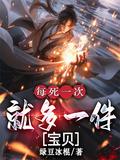 Simulating Immortal Cultivation: Whoever Kills Me Is Also My Benefactor
50.1kReads7.7Score5kShelves
Simulating Immortal Cultivation: Whoever Kills Me Is Also My Benefactor
50.1kReads7.7Score5kShelves
 You Call This a Love Simulation?
10.8kReads9.4Score1.2kShelves
You Call This a Love Simulation?
10.8kReads9.4Score1.2kShelves
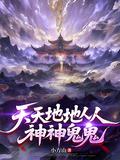 What Should I Do If the Person in the Simulator Wants to Join Forces with Me?
25.7kReads8.9Score3.2kShelves
What Should I Do If the Person in the Simulator Wants to Join Forces with Me?
25.7kReads8.9Score3.2kShelves
 After Dying a Hundred Thousand Times, I Directly Bought the River of Time and Space
60.9kReads9.4Score6.8kShelves
After Dying a Hundred Thousand Times, I Directly Bought the River of Time and Space
60.9kReads9.4Score6.8kShelves