🌿🌿Online IQ + no shit + no talismans + exquisite details + novel angles, preaching marriage laws, Yi Zhonghai was arrested; preaching public security management regulations, He Yuzhu can no longer be the god of war in the courtyard; preaching anti-superstition, Jia Zhang will no longer dare to summon spirits! There is a golden finger, but it does not have much effect. It is mainly a story about modern people using legal thinking to live in a courtyard.
The protagonist comes to a courtyard house in 1959. The neighbors are narrow-minded and try every means to take away his residence. They no longer tolerate it, burn down the house, trigger the mysterious return system, and rely on materials to build a new home to stay away from the dispute.
🔥🔥🔥🔥Highly recommended, highly recommended🔥🔥🔥These books are really good to read. You can tell by looking at the time I spent on them, 4000 hours. I have personally tried these books and they are still very good. ❤️❤️In the first book, the protagonist checks his attributes like crazy and becomes a level 4 fitter in one day and a level 6 fitter in January. What is outrageous is that he also married Lou Xiao'e as his wife 😂😂😂 🔥🔥🔥In the second book, the protagonist returns from overseas. Although he has awakened the system, he has to live in compound No. 95 Before he can use it. For this reason, he enters the compound and lives in a 300-square-meter cross-yard. The most important protagonist is the third generation of red. The backstage background is incredible.
Wang Hongtao traveled back in time to 1961, and accidentally rescued Deputy Director Li of the steel rolling mill. He got a job and worked as a driver for Deputy Director Li. He also stole his home, moved into a courtyard, and became neighbors with Xu Damao. He also became the boss next door that he had to guard against.
"Siheyuan: From the 1950s" uses the unique perspective of "spectator + stocking flow" to explore the theme of the courtyard, allowing Wang Ping'an, a 21st century takeaway boy, to travel to a martyr's family in 1958. With the "double space golden finger", he managed steadily in the special era. He not only watched the life of the courtyard with a cold eye, but also survived with an advanced layout. The author uses a delicate period texture and light comedy style to create a unique work that combines realistic fireworks with a sense of time travel. 1. Anti-traditional time-travel positioning: being an outsider in the Siheyuan Different from the conventional routine of "slap in the face and revenge", the protagonist Wang Ping'an has the attribute of "bystander": he is aware of the calculations of everyone in the Siheyuan (such as Jia Zhang's greed and Yi Zhonghai's hypocrisy), but he actively keeps a distance and adheres to the principle of "I will not offend others unless they offend me". In the first chapter, he responded politely to the second uncle Liu Haizhong's overtures and Qin Huairu's enthusiasm, but always observed the dynamics of the compound from an "outsider" perspective - when Si Zhu and Xu Damao were fighting, and when Jia Zhang peeked at his family's supplies, he only laughed and did not intervene in the dispute. This "sober sense of alienation" breaks the depressing atmosphere of traditional courtyard themes, allowing readers to examine the various aspects of human nature under the limitations of the times from a "God's perspective". 2. Pragmatic development of space cheats: hoarding is the hard currency. The protagonist's "dual space" setting (planting space + static space) abandons the constraints of "system tasks" and returns to the essence of "rigorous needs for survival": - Planting space: can cultivate automatically and accelerate growth. Wang Pingan went to the countryside to purchase seeds (rice, corn, vegetables) to achieve mass production of food in the space, laying the groundwork for subsequent famines; - Still space: used to store supplies. He cashes in the harvested vegetables on the black market (such as selling fresh cabbage for 10 cents per catty), and then uses the funds to replace meat stamps and livestock cubs, forming a closed loop of "planting - cashing - stocking up". It is worth mentioning that the author weakened the fantasy color of "Goldfinger" and focused on depicting the pragmatic operations of the protagonist: in order to obtain seeds, he lied about "the uncle in the courtyard passed away" and asked for leave to go to the countryside; in order to avoid censorship, he wore a cotton-padded jacket and covered his face when trading in the black market, making the logic of "hoarding goods to save the country" more realistic and convincing. 3. A vivid outline of group portraits of the era: a true picture of ordinary people in the city. The author uses "1958" as the time anchor to accurately restore the quality of life in a special era: - The appearance of all living beings under material scarcity: the stinginess of the third uncle Yan Fugui in "dividing pickles based on their roots", Xu Damao's showing off of his "projectionist identity", and the wretchedness of Silly Zhu's "peeping at Qin Huairu" all reflect the undertones of human nature under material shortages; - The hidden power of institutional relationships: the protagonist is protected by the chief because of his status as a "descendant of martyrs" (such as his mother's transfer to the supply and marketing cooperative, and priority in obtaining bicycle tickets), which reflects the actual role of the "relationship network" in a special era; - The complex writing of female characters: Qin Huairu's enthusiasm before going dark, the Queen Mother's traditional concept of "eagerly looking forward to her grandson", showing the survival strategies of women of different generations under the framework of the times. These details interweave into a "Siheyuan Ukiyo-e", which contains both the fireworks of neighborhood greetings and the undercurrent of calculations, making readers feel like they are in that scarce but vivid era. 4. The soothing tension of the narrative rhythm: burying long-term stories in daily life. The novel takes "high school life + space management" as the main line, and adopts a "slow-heat" narrative: the first five chapters focus on the protagonist's adaptation to time travel, space development, and black market transactions. It does not directly intervene in the core contradiction of the courtyard, but extends the perspective to a broader era background (such as the upcoming natural disaster in 1959) through the main line of "hoarding food to prepare for shortages." This writing method of "reflecting the changes of the times with personal destiny" not only retains the urban interest of the courtyard theme, but also gives the story a pattern that goes beyond house fighting - when Wang Ping'an grows wheat and breeds poultry in the space, readers can already foresee that he will become a game-breaker in the future famine as a "food holder". Conclusion: When time travelers become observers of the times, "Siheyuan: From the 1950s" uses the "hoarding flow" to reconstruct the value of time travel, allowing the protagonist to establish himself in the Siheyuan as a "material reserver" rather than a "conflict participant". If you are tired of "punch-to-flesh" revenge novels and want to experience the pragmatic time travel of "fighting steadily against the tide of the times", this work will give you a different reading experience. Watch how the delivery boy uses modern thinking to manage the dual space, and writes his own survival legend while watching indifferently in the Qinman Courtyard.
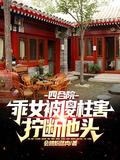 Siheyuan: a Good Girl Is Harmed by a Stupid Pillar and Breaks His Head
3kReads6.6Score104Shelves
Siheyuan: a Good Girl Is Harmed by a Stupid Pillar and Breaks His Head
3kReads6.6Score104Shelves
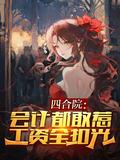 Siheyuan: Do You Dare to Offend the Accountant? All Wages Deducted
3.3kReads5.9Score119Shelves
Siheyuan: Do You Dare to Offend the Accountant? All Wages Deducted
3.3kReads5.9Score119Shelves
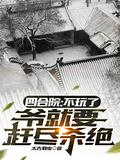 Siheyuan: No More Fun, I Will Kill Them All
17Reads5.8Score—Shelves
Siheyuan: No More Fun, I Will Kill Them All
17Reads5.8Score—Shelves
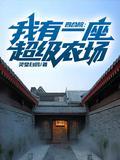 Siheyuan: I Have a Super Farm
138Reads5.8Score—Shelves
Siheyuan: I Have a Super Farm
138Reads5.8Score—Shelves
 Siheyuan of Silly Pillars
17.1kReads8.8Score793Shelves
Siheyuan of Silly Pillars
17.1kReads8.8Score793Shelves
 Siheyuan: Cancer at the Beginning, but All the Birds Continue to Live
71Reads5.8Score—Shelves
Siheyuan: Cancer at the Beginning, but All the Birds Continue to Live
71Reads5.8Score—Shelves
 Siheyuan Started in 1953
34.8kReads8.7Score1.2kShelves
Siheyuan Started in 1953
34.8kReads8.7Score1.2kShelves
 Rebirth of the Siheyuan, Start with Zero Yuan Purchase!
16kReads7.8Score819Shelves
Rebirth of the Siheyuan, Start with Zero Yuan Purchase!
16kReads7.8Score819Shelves
 Siheyuan: After Marrying Lou Xiaoe, I Got Promoted
9.5kReads6.9Score421Shelves
Siheyuan: After Marrying Lou Xiaoe, I Got Promoted
9.5kReads6.9Score421Shelves
 My Chinese Medicine Is Unscientific
171Reads5.8Score—Shelves
My Chinese Medicine Is Unscientific
171Reads5.8Score—Shelves
 Siheyuan: Traveling to Become Xu Damao, the Medicine Cannot Be Stopped
11.6kReads8.3Score602Shelves
Siheyuan: Traveling to Become Xu Damao, the Medicine Cannot Be Stopped
11.6kReads8.3Score602Shelves
 In the Siheyuan, Jia Dongxu and I Exchange Wives
13Reads5.8Score—Shelves
In the Siheyuan, Jia Dongxu and I Exchange Wives
13Reads5.8Score—Shelves
 Siheyuan: My Space Can Collect All Things
54kReads8.6Score3.7kShelves
Siheyuan: My Space Can Collect All Things
54kReads8.6Score3.7kShelves
 Siheyuan: This Resident Is so Terrifying
13.7kReads6.9Score745Shelves
Siheyuan: This Resident Is so Terrifying
13.7kReads6.9Score745Shelves
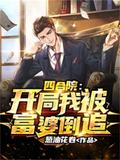 Siheyuan: I Was Chased by a Rich Woman at the Beginning
9.3kReads7.6Score524Shelves
Siheyuan: I Was Chased by a Rich Woman at the Beginning
9.3kReads7.6Score524Shelves
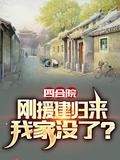 Siheyuan: I Just Came Back from the Construction Aid and My House Is Gone?
6.3kReads7.1Score182Shelves
Siheyuan: I Just Came Back from the Construction Aid and My House Is Gone?
6.3kReads7.1Score182Shelves
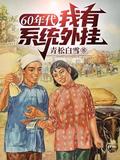 In the 1960S, I Had System Plug-Ins
9.8kReads8.0Score706Shelves
In the 1960S, I Had System Plug-Ins
9.8kReads8.0Score706Shelves
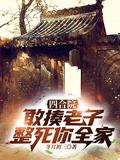 Siheyuan: If You Dare to Beat Me, Your Whole Family Will Be Killed.
58Reads5.8Score—Shelves
Siheyuan: If You Dare to Beat Me, Your Whole Family Will Be Killed.
58Reads5.8Score—Shelves
 Siheyuan: Blind Box at the Beginning, Defeat the Beast!
962Reads5.5Score—Shelves
Siheyuan: Blind Box at the Beginning, Defeat the Beast!
962Reads5.5Score—Shelves
 Siheyuan: a Bright Start with an Explosion of Protection from Ma He!
1.2kReads6.2Score—Shelves
Siheyuan: a Bright Start with an Explosion of Protection from Ma He!
1.2kReads6.2Score—Shelves
 Rebirth at 40, Cai Pingan's Comfortable Life
9kReads7.1Score358Shelves
Rebirth at 40, Cai Pingan's Comfortable Life
9kReads7.1Score358Shelves
 Siheyuan: After 60 Years of Escaping Famine, Yi Zhonghai Fainted
13.9kReads7.2Score408Shelves
Siheyuan: After 60 Years of Escaping Famine, Yi Zhonghai Fainted
13.9kReads7.2Score408Shelves
 The Courtyard Cook Is on the Train
4.7kReads6.5Score136Shelves
The Courtyard Cook Is on the Train
4.7kReads6.5Score136Shelves
 Siheyuan: the Quality of Life Must Not Be Reduced
8.1kReads6.7Score247Shelves
Siheyuan: the Quality of Life Must Not Be Reduced
8.1kReads6.7Score247Shelves
 Siheyuan: Switch Rooms with Silly Zhu at the Beginning
34.5kReads7.8Score1.1kShelves
Siheyuan: Switch Rooms with Silly Zhu at the Beginning
34.5kReads7.8Score1.1kShelves
 Siheyuan: Zhang Family Courtyard
7.8kReads7.9Score221Shelves
Siheyuan: Zhang Family Courtyard
7.8kReads7.9Score221Shelves
 Siheyuan: in the Beginning, Yi Zhonghai, I Will Confess Directly
11.7kReads7.6Score428Shelves
Siheyuan: in the Beginning, Yi Zhonghai, I Will Confess Directly
11.7kReads7.6Score428Shelves
 Siheyuan: Silly Zhu Knows His Ending at the Beginning
11.1kReads7.3Score435Shelves
Siheyuan: Silly Zhu Knows His Ending at the Beginning
11.1kReads7.3Score435Shelves
 Siheyuan: a Pig's Hind Leg Is Replaced by a Wife
13.6kReads7.3Score620Shelves
Siheyuan: a Pig's Hind Leg Is Replaced by a Wife
13.6kReads7.3Score620Shelves
 Huddling in the Courtyard for Warmth
6.7kReads6.8Score221Shelves
Huddling in the Courtyard for Warmth
6.7kReads6.8Score221Shelves
 Siheyuan, the Happy Life of Wang Dapeng, a Fun-Loving Man
64.2kReads8.9Score3.1kShelves
Siheyuan, the Happy Life of Wang Dapeng, a Fun-Loving Man
64.2kReads8.9Score3.1kShelves
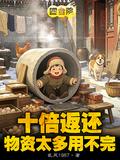 Siheyuan: the Materials Returned Ten Times Are Too Many to Use Up
218.8kReads8.3Score21.6kShelves
Siheyuan: the Materials Returned Ten Times Are Too Many to Use Up
218.8kReads8.3Score21.6kShelves
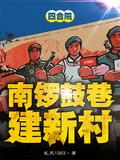 Siheyuan: How Can I Survive If My Father Joins Chiang Kai-Shek and Becomes a Rich Peasant?
22kReads7.4Score1kShelves
Siheyuan: How Can I Survive If My Father Joins Chiang Kai-Shek and Becomes a Rich Peasant?
22kReads7.4Score1kShelves
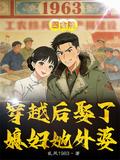 Siheyuan: After Time Travel, I Married My Daughter-In-Law, Her Grandmother.
39.5kReads7.4Score1.7kShelves
Siheyuan: After Time Travel, I Married My Daughter-In-Law, Her Grandmother.
39.5kReads7.4Score1.7kShelves
 Siheyuan: I Am a Street Kid, Picking up Attributes to Counterattack!
32.7kReads8.1Score2.3kShelves
Siheyuan: I Am a Street Kid, Picking up Attributes to Counterattack!
32.7kReads8.1Score2.3kShelves
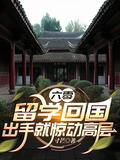 Siheyuan: with the Blessing of Lao Liu, Create the Strongest Life
25.9kReads7.9Score1.2kShelves
Siheyuan: with the Blessing of Lao Liu, Create the Strongest Life
25.9kReads7.9Score1.2kShelves
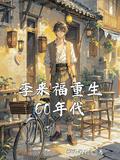 1960S: Traveling Through Nanluoguxiang,
342.4kReads9.4Score31.9kShelves
1960S: Traveling Through Nanluoguxiang,
342.4kReads9.4Score31.9kShelves
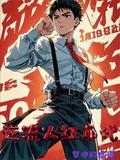 I Support My Family by Solving Crimes.
72kReads9.3Score6.3kShelves
I Support My Family by Solving Crimes.
72kReads9.3Score6.3kShelves
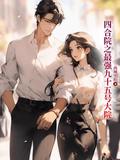 The Strongest Courtyard No. 95
179.6kReads9.0Score12.8kShelves
The Strongest Courtyard No. 95
179.6kReads9.0Score12.8kShelves
 My Old House Is Connected to 49 Cities
9.8kReads8.4Score673Shelves
My Old House Is Connected to 49 Cities
9.8kReads8.4Score673Shelves
 Rebirth 59 Nanluogu Alley: Small Daily Life
85.5kReads8.2Score4.1kShelves
Rebirth 59 Nanluogu Alley: Small Daily Life
85.5kReads8.2Score4.1kShelves
 My System in Siheyuan Is Very Powerful
50.4kReads8.6Score2.6kShelves
My System in Siheyuan Is Very Powerful
50.4kReads8.6Score2.6kShelves
 The Spirit of the Old Driver Passed Through the Courtyard, and the Birds Trembled.
20.6kReads8.4Score1.1kShelves
The Spirit of the Old Driver Passed Through the Courtyard, and the Birds Trembled.
20.6kReads8.4Score1.1kShelves
 Siheyuan: Become the Deputy Factory Director at the Beginning
139Reads5.8Score—Shelves
Siheyuan: Become the Deputy Factory Director at the Beginning
139Reads5.8Score—Shelves
 The Whole Courtyard Is My Baby
2.6kReads6.0Score126Shelves
The Whole Courtyard Is My Baby
2.6kReads6.0Score126Shelves
 Siheyuan: the Courtyard Is Full of Confidantes
21.3kReads8.2Score1.1kShelves
Siheyuan: the Courtyard Is Full of Confidantes
21.3kReads8.2Score1.1kShelves
 Who Is Qin Huairu in the Opening Scene Who Is Not a Cao Thief?
1.8kReads6.1Score127Shelves
Who Is Qin Huairu in the Opening Scene Who Is Not a Cao Thief?
1.8kReads6.1Score127Shelves
 Siheyuan: Many Children, Many Blessings, Silly Pillar's Road to the Richest Man
4.5kReads7.1Score249Shelves
Siheyuan: Many Children, Many Blessings, Silly Pillar's Road to the Richest Man
4.5kReads7.1Score249Shelves
 Siheyuan: at the Beginning, the Jia Family Will Be Sent to Squat.
6.5kReads6.6Score388Shelves
Siheyuan: at the Beginning, the Jia Family Will Be Sent to Squat.
6.5kReads6.6Score388Shelves
 Siheyuan: Be a Well-Educated Gangster
182.6kReads8.4Score8kShelves
Siheyuan: Be a Well-Educated Gangster
182.6kReads8.4Score8kShelves