"Silly Zhu! My brother woke up and asked you to go to his place." He Yuyu didn't have a good look towards Silly Zhu. In her impression, Silly Zhu was either helping others or helping others. Silly Zhutou hummed without raising his head, but He Yuyu didn't care so much. It was disgusting for her to just walk away with her legs up and to be around these people.
🍂🍂In the first book, the protagonist travels through the world of Qingmansiheyuan. The time point he comes to is the autumn of 1964, which is still one year before the plot begins. It comes with a system. As long as the people and things related to him have certain emotional fluctuations, he can gain emotional value. The system gives him a system space and a system mall? The whole courtyard is full of my confidante.
I strongly recommend you to read this new book on Siheyuan, it is definitely a breath of fresh air in Siheyuan! Absolutely not brainless! The foreshadowing and face-slapping settings are very advanced! You don't even realize it if you don't have any brains! No anger, no cowardice, no virginity, no extreme pulling, and a lot of fun. The inventions, creations and historical backgrounds in it can definitely stand the test and are very real. The characters are portrayed very realistically and there is no deliberate slander or distortion! Very down to earth! A rare good book! The face is a little timid, but the slap in the face is actually very harsh! It incorporates a lot of memes, a lot of self-created scenes, and poems and songs written by the author, which is great! !
Thank you, pretty boys and girls. I am the author of this book. I have finished the first one with a million words. It is a book with a score of 8.5 And I can barely read it. The protagonist is an idiot and the heroine is not the original character. She is frivolous. Please ignore the ridiculous title. In the second book, the male protagonist travels back in time to the present, Aixinjueluo Hongzhou becomes the uncle's nephew, and the female protagonist travels back in time to the present day. Both are the sixth child. It's very fun, but the number of words is still short. If you like it, you can add a bookshelf.
"The Fifty Years: Prosperous Life" uses a relaxed and lively style to outline a unique picture of life in the era. Sun Zhengguo's journey of rebirth did not involve bitterness and hatred. Instead, he relied on modern wisdom and family advantages to carve out a "sleep and win" path in a courtyard full of calculations, which can be called a breath of fresh air in the literature of the times. A golden start: the combination of parents who are all-rounders + space cheats. The most enviable setting in the novel is the family background of the protagonist Sun Zhengguo. Her father, Sun Dajiang, was a senior electrician at a steel rolling mill, and her mother, Lin Wencui, was the director of the Women's Federation. The dual-income family was considered an "aristocratic configuration" in the 1950s. A 75-square-meter house, higher-than-average food standards, and even 5 kilograms of stick noodles and Erguotou can be used to maintain relationships. This material foundation directly widens the gap with other residents in the courtyard. What's even better is the "spiritual golden finger" awakened by the protagonist - the superposition of past life memories and current life brain power, allowing him to easily skip levels and become self-taught. He can even practice back boxing to the level of the early Ming Jin within two months. This "student master + martial master" setting satisfies readers' imagination of an almighty protagonist. The author is quite ingenious in restoring the details of the era. From the geographical setting of "Forty-Nine Cities in the 1950s" to the currency units of "495,000 yuan salary" and "7,500 yuan bus fare", to life elements such as Erhe Noodles steamed buns and Arctic soda, it not only creates a true era texture, but also creates contrasting cuteness through the protagonist's modern thinking. When Sun Zhengguo uses the method of "collecting stamps" to invest in the future, readers can clearly feel the information gap advantage of the reborn. This "unpredictable" feeling runs through the entire text. The battle of wits in the Siheyuan: The Buddhist counterattack with softness overcoming the strong. Different from the fierce confrontation between the protagonist and the "beasts" in the Siheyuan in similar themes, Sun Zhengguo's survival strategy is more intelligent. Facing Yan Bugui's calculations, he watched with cold eyes; when he saw Yi Zhonghai accepting Jia Dongxu as his disciple, he understood the pension plan behind it; even the farce between Silly Zhu and Xu Damao, he just watched from the sidelines. This kind of Buddhist attitude of "you waste yours, I will live mine" allowed him to avoid the core contradiction of the courtyard. But being Buddhist does not mean being weak. When Xu Damao spread rumors about He Daqing, Sun Zhengguo, although not directly involved, accurately predicted Si Zhu's revenge; he took the initiative to learn Tongbei Quan from his grandfather, not only to strengthen his body, but also to imply that "defense against others is indispensable". This principle of "not causing trouble but not being afraid of trouble" is more realistic and convincing than blind tolerance or tough confrontation. In particular, he uses the information gap to plan for the future - considering college entrance examination and investment after the layout is changed - showing a pattern that transcends the times, reducing the house fight in the courtyard to a background, and the protagonist's life blueprint is the core of the narrative. Portraits of Groups: The Reminiscences of All Living Beings under the Filter of the Age. The author is full of ingenuity in reshaping the classic characters of Siheyuan. At this time, Yi Zhonghai is still an enthusiastic person with "no airs" and has not yet started the "moral kidnapping" mode; Yan Bugui's "stinginess" has just begun to show signs, but has not yet evolved to the extreme; Shazhu is a 14-year-old apprentice in Hongbin Building, and He Yuyu is still a 6-year-old brat. These early settings make the characters more growth-oriented. Sun Zhengguo's family has assumed the function of "ideal relatives" - his father is progressive, his mother is open-minded, and his siblings are lovely, which is in sharp contrast to the complex interpersonal relationships in the courtyard. There are many hilarious details in the article: Yan Bugui's surprise when he received game sausages, Xu Damao's embarrassment when he was kicked into the manure pit, and Silly Zhu's innocence when he sneezed. These life-like scenes make the characters come alive on the page. Even marginal characters such as the deaf old lady and Liu Hai show their living conditions marked by the times in just a few strokes, forming a three-dimensional picture of the city in the 1950s. Plot tension: The growth line and the era line are parallel. The story takes Sun Zhengguo's growth as the main line, connecting plots such as jumping from grade to grade, learning martial arts, and collecting stamps. The rhythm is relaxed and moderate. He has gradually shown maturity beyond his years since he was an 11-year-old primary school student. Whether he is helping his younger siblings with their homework or planning the future of his family, he has the calmness of an "old soul". At the same time, the advancement of the historical background also adds a sense of historical depth to the story: from the budding of the eight-level labor system, to the loosening of gun management, to the foreshadowing of the "barren years" in the future, the author skillfully integrates his personal destiny into the current of the times. It is worth mentioning that the novel uses "golden fingers" just right. Although the space settings are not frequently used, plots such as medicinal baths and hunting are both logical and provide reasonable assistance for character growth. Sun Zhengguo's "attribute of a great scholar" has not been overly deified. He still needs to prepare carefully for the grade-skipping exam, and he also needs to put in sweat to practice martial arts. This growth path of "effort + talent" is more likely to resonate with readers. "The Fifty Years: Prosperous Life" uses a relaxed writing style to deconstruct the depressive feeling of the courtyard theme, allowing readers to experience the refreshing feeling of "rebirth and counterattack" in a nostalgic atmosphere. When Sun Zhengguo practices Tongbei Quan in the morning light, when he prepares sumptuous meals for his family, and when he quietly lays the foundation for wealth for the future, what we see is not only the cheating life of a reborn person, but also the yearning for "family warmth" and "quiet years." For readers who like chronicles and courtyard themes, this work is undoubtedly a pyrotechnic reading experience.
 Siheyuan: Shazhu's Part-Time Cultivation of Immortality Online Game NPC
6.5kReads8.8Score315Shelves
Siheyuan: Shazhu's Part-Time Cultivation of Immortality Online Game NPC
6.5kReads8.8Score315Shelves
 Siheyuan: Yi Zhonghai Was Torn Apart and Forced to Pay 6,000 Yuan
43.4kReads5.1Score2kShelves
Siheyuan: Yi Zhonghai Was Torn Apart and Forced to Pay 6,000 Yuan
43.4kReads5.1Score2kShelves
 Siheyuan: Insulting Martyrs' Families? at the Beginning, the Fool Went to Jail
31.7kReads6.4Score1.1kShelves
Siheyuan: Insulting Martyrs' Families? at the Beginning, the Fool Went to Jail
31.7kReads6.4Score1.1kShelves
 Siheyuan: Invincible at the Start, Giving Away Countless Resources to the Country
16.9kReads7.4Score658Shelves
Siheyuan: Invincible at the Start, Giving Away Countless Resources to the Country
16.9kReads7.4Score658Shelves
 Siheyuan: Beasts Plotting Against My Treasure
4.3kReads7.9Score145Shelves
Siheyuan: Beasts Plotting Against My Treasure
4.3kReads7.9Score145Shelves
 Siheyuan: Send the Beasts Back to the West with Your Own Hands
10.7kReads7.4Score415Shelves
Siheyuan: Send the Beasts Back to the West with Your Own Hands
10.7kReads7.4Score415Shelves
 Siheyuan: You Will Be in Trouble If You Listen to My Lies or Not.
5.4kReads5.5Score226Shelves
Siheyuan: You Will Be in Trouble If You Listen to My Lies or Not.
5.4kReads5.5Score226Shelves
 Siheyuan: He Occupied My Room at the Beginning and Told Me to Get Out
11.8kReads7.9Score350Shelves
Siheyuan: He Occupied My Room at the Beginning and Told Me to Get Out
11.8kReads7.9Score350Shelves
 Siheyuan: God Rewards Hard Work, and Fitters Become Engineers.
16.1kReads7.5Score542Shelves
Siheyuan: God Rewards Hard Work, and Fitters Become Engineers.
16.1kReads7.5Score542Shelves
 Siheyuan: with the Blessing of Lao Liu, Create the Strongest Life
25.9kReads7.9Score1.2kShelves
Siheyuan: with the Blessing of Lao Liu, Create the Strongest Life
25.9kReads7.9Score1.2kShelves
 The Strongest Courtyard No. 95
179.6kReads9.0Score12.8kShelves
The Strongest Courtyard No. 95
179.6kReads9.0Score12.8kShelves
 Siheyuan: Beat the Stupid Pillar at the Beginning
3.6kReads7.6Score110Shelves
Siheyuan: Beat the Stupid Pillar at the Beginning
3.6kReads7.6Score110Shelves
 Siheyuan of Silly Pillars
17.1kReads8.8Score793Shelves
Siheyuan of Silly Pillars
17.1kReads8.8Score793Shelves
 Siheyuan: Happiness Starts from One Penny Instant Sale
58.4kReads9.3Score3.8kShelves
Siheyuan: Happiness Starts from One Penny Instant Sale
58.4kReads9.3Score3.8kShelves
 Siheyuan: I Am Not Cao Ah Man
170Reads5.8Score—Shelves
Siheyuan: I Am Not Cao Ah Man
170Reads5.8Score—Shelves
 Siheyuan: a Journey Through the Dazzling Life of the 1960S
1.2kReads8.2Score—Shelves
Siheyuan: a Journey Through the Dazzling Life of the 1960S
1.2kReads8.2Score—Shelves
 Siheyuan: Starting from the Director of the Supply and Marketing Cooperative
55Reads5.8Score—Shelves
Siheyuan: Starting from the Director of the Supply and Marketing Cooperative
55Reads5.8Score—Shelves
 Siheyuan: Reject Qin Huairu at the Beginning
3.5kReads7.9Score148Shelves
Siheyuan: Reject Qin Huairu at the Beginning
3.5kReads7.9Score148Shelves
 I Live in a Courtyard and Pledge Myself to My Country.
7.5kReads8.2Score287Shelves
I Live in a Courtyard and Pledge Myself to My Country.
7.5kReads8.2Score287Shelves
 Siheyuan: Rise from Signing In
105Reads5.8Score—Shelves
Siheyuan: Rise from Signing In
105Reads5.8Score—Shelves
 Siheyuan: Enter the Most Sinister Place
69.5kReads7.4Score5kShelves
Siheyuan: Enter the Most Sinister Place
69.5kReads7.4Score5kShelves
 Siheyuan Lives a Good Life with He Yushuang
9.2kReads6.8Score161Shelves
Siheyuan Lives a Good Life with He Yushuang
9.2kReads6.8Score161Shelves
 Siheyuan: a Good Girl Is Harmed by a Stupid Pillar and Breaks His Head
3kReads6.6Score104Shelves
Siheyuan: a Good Girl Is Harmed by a Stupid Pillar and Breaks His Head
3kReads6.6Score104Shelves
 Siheyuan: Becoming a Couple with Lou Xiao'e
121Reads5.2Score—Shelves
Siheyuan: Becoming a Couple with Lou Xiao'e
121Reads5.2Score—Shelves
 Siheyuan: the More Excited You Are, the More Excited I Am
23.2kReads7.4Score932Shelves
Siheyuan: the More Excited You Are, the More Excited I Am
23.2kReads7.4Score932Shelves
 Siheyuan: Fishing System, All the Animals Beg for Mercy
112Reads5.3Score—Shelves
Siheyuan: Fishing System, All the Animals Beg for Mercy
112Reads5.3Score—Shelves
 Siheyuan: My System Can Turn Waste into Treasure
22.2kReads8.7Score1.4kShelves
Siheyuan: My System Can Turn Waste into Treasure
22.2kReads8.7Score1.4kShelves
 Siheyuan: Silly Zhu, What Should I Do If I'm Pregnant?
17.4kReads8.4Score929Shelves
Siheyuan: Silly Zhu, What Should I Do If I'm Pregnant?
17.4kReads8.4Score929Shelves
 Siheyuan: the Courtyard Is Full of Confidantes
21.3kReads8.2Score1.1kShelves
Siheyuan: the Courtyard Is Full of Confidantes
21.3kReads8.2Score1.1kShelves
 The Happy Life of a Courtyard Buyer
42.5kReads7.8Score2.1kShelves
The Happy Life of a Courtyard Buyer
42.5kReads7.8Score2.1kShelves
 Siheyuan: Enjoy a Silky Life
10.3kReads7.5Score470Shelves
Siheyuan: Enjoy a Silky Life
10.3kReads7.5Score470Shelves
 Siheyuan: I Was Forced to Become the Pillar
14.4kReads8.1Score616Shelves
Siheyuan: I Was Forced to Become the Pillar
14.4kReads8.1Score616Shelves
 Siheyuan: I Will Become Stronger After Listening to Advice, I Am Invincible
12.6kReads7.1Score532Shelves
Siheyuan: I Will Become Stronger After Listening to Advice, I Am Invincible
12.6kReads7.1Score532Shelves
 The Ups and Downs of Life in the Siheyuan
4.5kReads7.3Score159Shelves
The Ups and Downs of Life in the Siheyuan
4.5kReads7.3Score159Shelves
 In the Siheyuan, I Am Invincible in the Qing Dynasty.
9.1kReads7.5Score340Shelves
In the Siheyuan, I Am Invincible in the Qing Dynasty.
9.1kReads7.5Score340Shelves
 Siheyuan: Turning a Dilapidated Courtyard into a Peach Blossom Garden
19.1kReads5.4Score951Shelves
Siheyuan: Turning a Dilapidated Courtyard into a Peach Blossom Garden
19.1kReads5.4Score951Shelves
 Damao's Proud Life in Soul Time 60
12.8kReads7.8Score598Shelves
Damao's Proud Life in Soul Time 60
12.8kReads7.8Score598Shelves
 Siheyuan: the Reversal Life of Silly Zhuzhu
11.9kReads8.4Score591Shelves
Siheyuan: the Reversal Life of Silly Zhuzhu
11.9kReads8.4Score591Shelves
 The Beginning of Siheyuan Reveals That Jia Zhang Murdered Her Husband
355Reads6.4Score—Shelves
The Beginning of Siheyuan Reveals That Jia Zhang Murdered Her Husband
355Reads6.4Score—Shelves
 The 1950S: a Prosperous Life
37.1kReads8.2Score1.4kShelves
The 1950S: a Prosperous Life
37.1kReads8.2Score1.4kShelves
 Siheyuan: Fusion of 129,600 Selves
8kReads8.3Score410Shelves
Siheyuan: Fusion of 129,600 Selves
8kReads8.3Score410Shelves
 Siheyuan: My Grandfather Was so Angry That He Reported the Deaf Old Lady
16.6kReads8.5Score649Shelves
Siheyuan: My Grandfather Was so Angry That He Reported the Deaf Old Lady
16.6kReads8.5Score649Shelves
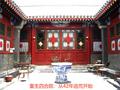 Rebirth of the Siheyuan: Starting from the Escape from Famine in 1942
33kReads8.2Score1kShelves
Rebirth of the Siheyuan: Starting from the Escape from Famine in 1942
33kReads8.2Score1kShelves
 Siheyuan: Anti-Japanese Attack in Beijing
9.2kReads8.2Score327Shelves
Siheyuan: Anti-Japanese Attack in Beijing
9.2kReads8.2Score327Shelves
 Reborn in the Courtyard, I Am a Lone Wolf
8.2kReads8.3Score314Shelves
Reborn in the Courtyard, I Am a Lone Wolf
8.2kReads8.3Score314Shelves
 Siheyuan, Silly Zhu Is My Brother
37.3kReads8.3Score1.5kShelves
Siheyuan, Silly Zhu Is My Brother
37.3kReads8.3Score1.5kShelves
 The Reincarnation of He Yuzhu in Siheyuan Began in 1951
19.9kReads8.3Score602Shelves
The Reincarnation of He Yuzhu in Siheyuan Began in 1951
19.9kReads8.3Score602Shelves
 Teacher He from Siheyuan
2.2kReads8.6Score—Shelves
Teacher He from Siheyuan
2.2kReads8.6Score—Shelves
 Military Marriage in the 1970S: Cheating with My Sister All the Way After Exchanging Marriages
11.5kReads8.4Score1.3kShelves
Military Marriage in the 1970S: Cheating with My Sister All the Way After Exchanging Marriages
11.5kReads8.4Score1.3kShelves
 Liu Dazhuang Wears Books
17.2kReads8.3Score715Shelves
Liu Dazhuang Wears Books
17.2kReads8.3Score715Shelves