The Eastern Han Dynasty is not about the Three Kingdoms. Let's look at the Three Kingdoms from Ma Chao's perspective. From different entry points, we can look at the contradictions in the late Eastern Han Dynasty and what is loyalty and traitor. Everyone who can leave a name in history has the persistence and desire in their heart. Look at Ma Chao's transformation from a loyal minister to a hero.
It is not a cool novel, but a rigorous novel about the Three Kingdoms. Breaking away from the random writing of famous generals, the wise men traveled through time to assist Liu Feng, not only dealing with Wei and Wu, but also internal factions, etc., To see if they could change their fate against the odds.
There are two books on the Three Kingdoms, one of which is about Wei Yan. In the beginning, he rushes thousands of miles to Jingzhou to save Guan Yu. Another story about traveling through time and becoming the son-in-law of Lu Bu's family, watching how he reversed the fate of Xiapi, which was flooded.
Come and taste the saltiness? "Broken Game: Another Possibility of Shu Han": An in-depth deduction to construct a strategic break in the cracks of history. When the posthumous title of "Dedicate yourself to death and die" became a footnote to the tragic end of the Shu Han regime, and when the banner of "Reviving the Han Dynasty" sadly fell in the autumn wind of the original five feet, the lovers of the Three Kingdoms never stopped sighing at this regime. The appearance of "Breaking the Game: Another Possibility of the Shu Han" is like a sharp blade, taking 219 AD as the anchor point, tearing open the inherent cracks in the historical narrative, and leading readers to explore the strategic opportunities of the Shu Han under the cover of fate. Different from the fatalistic interpretation of the "innate deficiencies" of the Shu Han in traditional history books, the author of this book abandons the empty talk of "hindsight" and uses rigorous historical data as the basis to restore the complex situation before the loss of Jingzhou. Focusing on the three key clues of Guan Yu's Northern Expedition, Liu Feng Mengda's garrison at Shangyong, and Liu Bei's main deployment, the potential variables of Shu Han's military dispatch, diplomatic game, and internal coordination are analyzed layer by layer. It is not a simple assumption that "if Guan Yu does not go to the Northern Expedition", but an in-depth discussion of feasible strategic fine-tuning such as "adjustment of the rhythm of the Northern Expedition" and "closer linkage between the east and west lines", so that "another possibility" can break away from fantasy and be supported by historical logic. The book's questioning of the nature of "breaking the situation" is particularly moving: the Shu Han's dilemma is not only geographically "trapped in Bashu", but also the limitation of strategic vision. The analysis of the Liu Bei Group's "emphasis on friendship and neglect of the overall situation" and "emphasis on military achievements and neglect of overall planning" goes beyond the praise and criticism of individual figures and points directly to the shortcomings of the top-level design of the regime. When readers follow the text to deduce the chain reaction of "seizing the opportunity of 219", they will see not only the possibility of rewriting the pattern of the Three Kingdoms, but also a clear understanding of the deep logic of "historical choice". As a profound and logical historical strategy work, it has distinctive features and unique market positioning. Although its audience is relatively small, it is a rare masterpiece for readers who are keen on historical deduction and strategic analysis. The story is logically deduced, and everything from strategic goals to implementation paths to possible reactions of opponents has been carefully analyzed and verified. This strong logic gives the story a high degree of credibility and persuasiveness. It is neither a traditional "historical novel" because it incorporates a large number of strategic deductions and assumptions; nor does it fit the entertainment characteristics of "shuangwen" or "fantasy novel". Its positioning is closer to "historical strategy writing". It is a niche but very in-depth genre, which combines the thickness of historical writing with the depth of strategic games. Closing the page and looking at the shadowy cypresses of Wuhou Temple, the reader's dialectical thinking about "general trend" and "man-made" will also deepen. This book may not be able to change the ending of history, but it opens a new door for us, giving the story of the tragic Shu Han a more profound and interesting interpretation.
[No system] ~ [Three Kingdoms in the late Han Dynasty] ~ [Farming] ~ [Harem] Traveled through the world and became Qu Yi, a famous general in Hebei Province at the end of the Han Dynasty. He saw through Yuan Shao's Hongmen Banquet at the beginning, and intercepted Hu Zhaoyun, Guo Jia, and Dian Wei first. From then on, he became a first-in-command hegemon who should have fallen after the Battle of Jieqiao. The king, with a thousand soldiers armed with strong bows and crossbows, competed with Cao Cao, Liu Bei, Yuan Shao, Yuan Shu, Lu Bu, Sun Ce, Liu Biao and other princes of the late Han Dynasty in the troubled times, vowing to rewrite the new history of "I established the Three Kingdoms before they were completed, and all the heroes bowed to me as the peak."
It's a pity that Slow-paced Tomato is not popular. This book refers to some history (but there will be a butterfly effect, and major events should be kept unchanged). The male protagonist starts from scratch and competes in the world. Moreover, he is reborn, not soul travel + no system + cut off the Hu + Qingshi beauty (the early pace is not fast, because the world line is earlier, and he is not a Cao thief, but everyone has a separate love line, and they will not stop at a sudden shock). The low score is because of the score at the beginning (6.2 At the beginning), and the protagonist later builds a city and develops by himself...
The new book covers the Three Kingdoms, art of war, strategy, people's livelihood, noble families, relatives, crusade, sieges, field battles, heroines, children, and foreign races. No harem. There is mercy, not the Holy Mother. People live their lives and attack cities and villages. Behead generals and assassinate assassins. Prestigious family, marriage. There is no system, Golden Finger only has the protagonist Gao Wu, a single female protagonist, and no harem. There will be other historical female characters appearing, but not harems. For example, Cai Wenji recommended herself.
Hope you like it. This book tells the story of a modern ordinary insurance officer traveling through the Three Kingdoms, using modern marketing concepts to inspire and improve the lives of the people in the Three Kingdoms, and finally dominate the world.
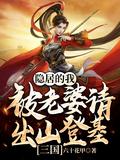 Three Kingdoms: I Was Invited by My Wife to Come Out and Ascend the Throne While Living in Seclusion
10.2kReads8.6Score689Shelves
Three Kingdoms: I Was Invited by My Wife to Come Out and Ascend the Throne While Living in Seclusion
10.2kReads8.6Score689Shelves
 Dahanshu
5Reads—Score—Shelves
Dahanshu
5Reads—Score—Shelves
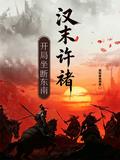 Xu Chu at the End of Han Dynasty: Seize the Southeast in the Beginning
13.7kReads9.0Score1.4kShelves
Xu Chu at the End of Han Dynasty: Seize the Southeast in the Beginning
13.7kReads9.0Score1.4kShelves
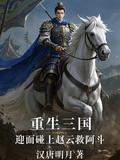 Rebirth of the Three Kingdoms: Meeting Zhao Yun to Save Adou
694Reads—Score—Shelves
Rebirth of the Three Kingdoms: Meeting Zhao Yun to Save Adou
694Reads—Score—Shelves
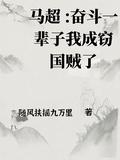 Ma Chao: I Will Become a Thief After Struggling All My Life.
18Reads5.8Score—Shelves
Ma Chao: I Will Become a Thief After Struggling All My Life.
18Reads5.8Score—Shelves
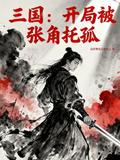 Three Kingdoms: I Was Left Alone at the Beginning by Zhang Jiao
20Reads7.7Score—Shelves
Three Kingdoms: I Was Left Alone at the Beginning by Zhang Jiao
20Reads7.7Score—Shelves
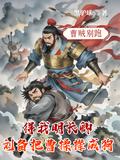 My Ming Dynasty Minister, Liu Bei Turned Cao Cao into a Dog
51Reads5.8Score—Shelves
My Ming Dynasty Minister, Liu Bei Turned Cao Cao into a Dog
51Reads5.8Score—Shelves
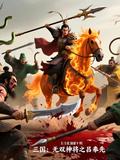 Three Kingdoms: Lu Fengxian, the Unparalleled Divine General
3Reads5.8Score—Shelves
Three Kingdoms: Lu Fengxian, the Unparalleled Divine General
3Reads5.8Score—Shelves
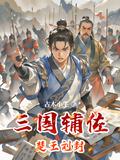 The Assistant of the Three Kingdoms, Liu Feng, King of Chu
127Reads5.8Score—Shelves
The Assistant of the Three Kingdoms, Liu Feng, King of Chu
127Reads5.8Score—Shelves
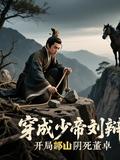 Transformed into the Young Emperor Liu Bian, Dong Zhuo Was Killed in Mangshan in the Beginning
13Reads5.8Score—Shelves
Transformed into the Young Emperor Liu Bian, Dong Zhuo Was Killed in Mangshan in the Beginning
13Reads5.8Score—Shelves
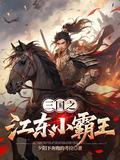 The Little Overlord of Jiangdong of the Three Kingdoms
91Reads5.8Score—Shelves
The Little Overlord of Jiangdong of the Three Kingdoms
91Reads5.8Score—Shelves
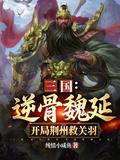 Three Kingdoms: Wei Yan Rebelled, Jingzhou Rescued Guan Yu at the Beginning
6.7kReads7.8Score658Shelves
Three Kingdoms: Wei Yan Rebelled, Jingzhou Rescued Guan Yu at the Beginning
6.7kReads7.8Score658Shelves
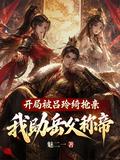 At the Beginning, Lu Lingqi Kidnapped Me, so I Helped My Father-In-Law Become Emperor.
52.7kReads7.7Score5.5kShelves
At the Beginning, Lu Lingqi Kidnapped Me, so I Helped My Father-In-Law Become Emperor.
52.7kReads7.7Score5.5kShelves
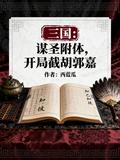 Three Kingdoms: Possessed by the Saint, Intercept Hu Guojia at the Beginning
11Reads5.8Score—Shelves
Three Kingdoms: Possessed by the Saint, Intercept Hu Guojia at the Beginning
11Reads5.8Score—Shelves
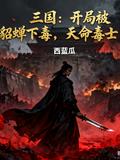 Three Kingdoms: at the Beginning, He Was Poisoned by Diao Chan, the Destined Poisoner
—Reads5.8Score—Shelves
Three Kingdoms: at the Beginning, He Was Poisoned by Diao Chan, the Destined Poisoner
—Reads5.8Score—Shelves
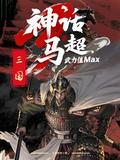 Mythical Three Kingdoms: Ma Chao, the Force Value Is Max!
433Reads8.8Score—Shelves
Mythical Three Kingdoms: Ma Chao, the Force Value Is Max!
433Reads8.8Score—Shelves
 The Soul Penetrates the Late Han Dynasty and Mends the Cracks in the Sky with One Hand
367Reads6.0Score—Shelves
The Soul Penetrates the Late Han Dynasty and Mends the Cracks in the Sky with One Hand
367Reads6.0Score—Shelves
 Breaking the Situation: Another Possibility for Shu Han
8Reads5.8Score—Shelves
Breaking the Situation: Another Possibility for Shu Han
8Reads5.8Score—Shelves
 Three Kingdoms Online Game, Being Hunted at the Beginning
8Reads5.8Score—Shelves
Three Kingdoms Online Game, Being Hunted at the Beginning
8Reads5.8Score—Shelves
 From the Three Kingdoms to the World
3Reads—Score—Shelves
From the Three Kingdoms to the World
3Reads—Score—Shelves
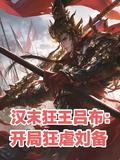 Lu Bu, the Mad King of the Late Han Dynasty, Killed Liu Bei at the Beginning!
6.7kReads8.1Score616Shelves
Lu Bu, the Mad King of the Late Han Dynasty, Killed Liu Bei at the Beginning!
6.7kReads8.1Score616Shelves
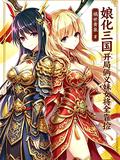 Nianghua Three Kingdoms: in the Beginning, the Two Sworn Sisters and Female Generals All Rely on Picking Up
426Reads5.8Score—Shelves
Nianghua Three Kingdoms: in the Beginning, the Two Sworn Sisters and Female Generals All Rely on Picking Up
426Reads5.8Score—Shelves
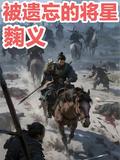 Be the First to Become the Overlord and Conquer the End of Han Dynasty. Only When You Start to Gather Ghosts Can You Be Evil.
3.6kReads7.2Score382Shelves
Be the First to Become the Overlord and Conquer the End of Han Dynasty. Only When You Start to Gather Ghosts Can You Be Evil.
3.6kReads7.2Score382Shelves
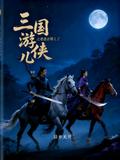 Where Is the Father of the Three Kingdoms Rangers Son?
3Reads—Score—Shelves
Where Is the Father of the Three Kingdoms Rangers Son?
3Reads—Score—Shelves
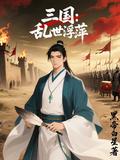 Three Kingdoms: Duckweed in Troubled Times
2.5kReads6.2Score171Shelves
Three Kingdoms: Duckweed in Troubled Times
2.5kReads6.2Score171Shelves
 Han Zhongzu
1Reads5.8Score—Shelves
Han Zhongzu
1Reads5.8Score—Shelves
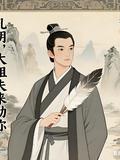 Kong Ming, Brother-In-Law Is Here to Help You!
13Reads5.8Score—Shelves
Kong Ming, Brother-In-Law Is Here to Help You!
13Reads5.8Score—Shelves
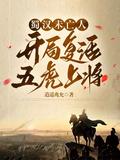 The Widows of the Shu Han Dynasty: Resurrection of the Five Tiger Generals at the Beginning
2kReads7.3Score185Shelves
The Widows of the Shu Han Dynasty: Resurrection of the Five Tiger Generals at the Beginning
2kReads7.3Score185Shelves
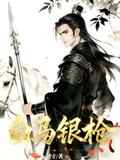 White Horse Silver Gun
14Reads5.8Score—Shelves
White Horse Silver Gun
14Reads5.8Score—Shelves
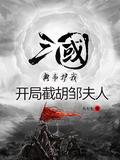 Three Kingdoms: Dian Wei Protects Me, and Intercepts Mrs. Hu Zou at the Beginning
14.1kReads8.7Score1kShelves
Three Kingdoms: Dian Wei Protects Me, and Intercepts Mrs. Hu Zou at the Beginning
14.1kReads8.7Score1kShelves
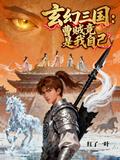 Fantasy Three Kingdoms: the Thief Cao Is Actually Myself
15Reads5.8Score—Shelves
Fantasy Three Kingdoms: the Thief Cao Is Actually Myself
15Reads5.8Score—Shelves
 The Winner in the Late Han Dynasty Is King
80Reads—Score—Shelves
The Winner in the Late Han Dynasty Is King
80Reads—Score—Shelves
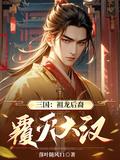 Three Kingdoms: Descendants of the Ancestral Dragon, Destroy the Han Dynasty
7.1kReads7.7Score496Shelves
Three Kingdoms: Descendants of the Ancestral Dragon, Destroy the Han Dynasty
7.1kReads7.7Score496Shelves
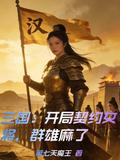 Three Kingdoms: the Female General in the Contract at the Beginning, the Heroes Are Numb
984Reads5.8Score149Shelves
Three Kingdoms: the Female General in the Contract at the Beginning, the Heroes Are Numb
984Reads5.8Score149Shelves
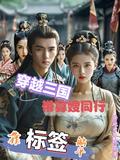 Travel Through the World of the Three Kingdoms: Take Your Widowed Sister-In-Law with You! Label
23Reads5.8Score—Shelves
Travel Through the World of the Three Kingdoms: Take Your Widowed Sister-In-Law with You! Label
23Reads5.8Score—Shelves
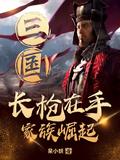 Three Kingdoms: the Rise of a Family with a Spear in Hand
405Reads5.3Score—Shelves
Three Kingdoms: the Rise of a Family with a Spear in Hand
405Reads5.3Score—Shelves
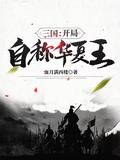 Three Kingdoms: Claiming to Be the King of China at the Beginning
533Reads7.2Score—Shelves
Three Kingdoms: Claiming to Be the King of China at the Beginning
533Reads7.2Score—Shelves
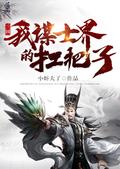 Three Kingdoms: I Am the Leader of the Counselor World
1.8kReads8.5Score105Shelves
Three Kingdoms: I Am the Leader of the Counselor World
1.8kReads8.5Score105Shelves
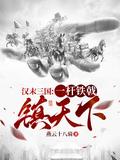 The Three Kingdoms at the End of Han Dynasty: an Iron Halberd Rules the World
17.8kReads8.6Score1.3kShelves
The Three Kingdoms at the End of Han Dynasty: an Iron Halberd Rules the World
17.8kReads8.6Score1.3kShelves