Recommendation 1: Using science and technology to ignite the galaxy of the times. When a laptop full of modern data accidentally fell into the Gobi Desert in 1960, the gears of history began to rotate misaligned in the code and fireworks. There are no ready-made precision instruments, and there is not enough material supply. The protagonist holds this "secret from the future" and plunges into the windy and sandy testing ground. What he wants to do is not to rely on technology to crush the times, but to use the formulas on the screen to open a thorny road for the predecessors who have grasped the atomic bomb blueprints and save ten years of detours. From the computing power showdown between slide rules and computers, to late-night fortifications in Gobi tents, every data beat is connected to the country's confidence, and every explosion flash reflects the backbone of a generation. This is not a Shuangwen-style one-way rescue, but the resonance of wisdom from two eras. Let's see how the "future" adheres to the context of history, allowing the mushroom cloud to bloom in the East as scheduled. Recommendation 2: The "Future Terminal" in the Gobi hides the code of a powerful weapon. In 1960, China was starving and blockaded, clenching its fists to create its own "victorious bomb"; and his backpack contained "black technology" that could calculate the parameters of nuclear explosions in advance. While others are still calculating a complex set of data for weeks, his computer screen has already lit up with the answer - but this "advancement" is both a trump card and a hot potato. How to turn modern knowledge into drawings that seniors can understand without exposing secrets? How to use technological thinking to solve the problems of explosive purification and parts processing in the face of material shortages? From the debate in the laboratory to the test explosion in the Gobi Desert, every step is torn between "hiding identity" and "breaking the situation with all your strength", and every choice is connected with the expectations of millions of people. This is a story that will make you clench your fists and read until dawn, watching how a computer became the fulcrum of history, adding a beam of light from the future to the birth of a great country and important equipment. Recommendation 3: When a keyboard meets an abacus, this is how we create an atomic bomb. You may have heard of the magnificent epic of "two bombs and one satellite", but you may not have thought about it: What would happen if a modern computer traveled back to that era? It is not the fantasy of "one-click bomb making", but the formulas typed on the keyboard must adapt to the rhythm of abacus calculation; the three-dimensional model on the screen must be turned into precise lines on hand-drawn paper. The protagonist brings the computer to the test base in 1960. What he faces is not the smooth road of "cheating", but how to make the predecessors believe in "future technology", how to keep the computer running with limited power, and how to keep secrets under the prying eyes of external spies. There is the persistence and perseverance of the older generation of scientists, the struggle and responsibility of the young protagonist, and the sparks of the collision between technology and the times - when the wind in the Gobi stirs up the drawings, and when the dim light of the computer illuminates the tent in the middle of the night, you will see that regardless of whether there are "future tools", China's determination to create a man-made atomic bomb has always been the most hard-core "confidence".
Chapter 1 Memory awakening! The system appears! "Brain storage." In the middle of the night, the moon hangs high in Chenjia Village. On the edge of the village, several houses made of loess and mud are connected together. There are also courtyard walls piled with loess blocks around them. Perhaps it is because of the time.
 Take Your Computer to 1960 to Build an Atomic Bomb
44Reads5.8Score—Shelves
Take Your Computer to 1960 to Build an Atomic Bomb
44Reads5.8Score—Shelves
 I Raised Cute Babies During the 1990S
775Reads9.0Score—Shelves
I Raised Cute Babies During the 1990S
775Reads9.0Score—Shelves
 The Red Era of Traveling Between Two Worlds
1Reads5.8Score—Shelves
The Red Era of Traveling Between Two Worlds
1Reads5.8Score—Shelves
 In the 1980S, He Disguised Himself as a Wealthy Countryman and Returned to China.
8kReads5.8Score429Shelves
In the 1980S, He Disguised Himself as a Wealthy Countryman and Returned to China.
8kReads5.8Score429Shelves
 The Wealth of the Republic of China Is as Great as That of the Enemy.
148Reads5.8Score—Shelves
The Wealth of the Republic of China Is as Great as That of the Enemy.
148Reads5.8Score—Shelves
 The Two Worlds Are Ruined from 1988 to 2025
995Reads5.8Score—Shelves
The Two Worlds Are Ruined from 1988 to 2025
995Reads5.8Score—Shelves
 Take the Silly Girl to 60
387Reads5.8Score—Shelves
Take the Silly Girl to 60
387Reads5.8Score—Shelves
 The Red Era of Traveling Between Two Worlds
341Reads5.8Score101Shelves
The Red Era of Traveling Between Two Worlds
341Reads5.8Score101Shelves
 Traveling Between Two Worlds: the 1970S
210Reads5.8Score—Shelves
Traveling Between Two Worlds: the 1970S
210Reads5.8Score—Shelves
 The Bloody Battle in Shanghai During the Shuangchuan Republic of China
6.6kReads7.2Score495Shelves
The Bloody Battle in Shanghai During the Shuangchuan Republic of China
6.6kReads7.2Score495Shelves
 Double Wear: Gold Rush in the Republic of China
11.2kReads7.7Score921Shelves
Double Wear: Gold Rush in the Republic of China
11.2kReads7.7Score921Shelves
 The Rise of the Nation Across the Sixties
117Reads5.8Score—Shelves
The Rise of the Nation Across the Sixties
117Reads5.8Score—Shelves
 Double Wear of the 1960S
159Reads5.8Score—Shelves
Double Wear of the 1960S
159Reads5.8Score—Shelves
 Double-Crossing the 60S, the Country Is Rich and the People Are Strong
109Reads5.8Score—Shelves
Double-Crossing the 60S, the Country Is Rich and the People Are Strong
109Reads5.8Score—Shelves
 Traveling Through the Republic of China Twice, Sacrificing Blood to Mountains and Rivers
224Reads5.8Score—Shelves
Traveling Through the Republic of China Twice, Sacrificing Blood to Mountains and Rivers
224Reads5.8Score—Shelves
 Double-Crossing the Republic of China and Killing Japanese Pirates
493Reads6.7Score—Shelves
Double-Crossing the Republic of China and Killing Japanese Pirates
493Reads6.7Score—Shelves
 Time Travel of the Great Song Dynasty
359Reads7.2Score—Shelves
Time Travel of the Great Song Dynasty
359Reads7.2Score—Shelves
 The Rise of Shuttle Between Two Worlds
253Reads5.4Score—Shelves
The Rise of Shuttle Between Two Worlds
253Reads5.4Score—Shelves
 The Controller of All Realms Is at Ease in the City
750Reads6.4Score—Shelves
The Controller of All Realms Is at Ease in the City
750Reads6.4Score—Shelves
 Traveling Through the Water Margin and Dominating the World
543Reads5.9Score—Shelves
Traveling Through the Water Margin and Dominating the World
543Reads5.9Score—Shelves
 The Iron-Blooded Tiger Fights Against the Ming Dynasty
529Reads7.2Score—Shelves
The Iron-Blooded Tiger Fights Against the Ming Dynasty
529Reads7.2Score—Shelves
 Traveling Between Two Realms: 1970
152Reads5.8Score—Shelves
Traveling Between Two Realms: 1970
152Reads5.8Score—Shelves
 Traveling Between Two Worlds 1973
163Reads5.8Score—Shelves
Traveling Between Two Worlds 1973
163Reads5.8Score—Shelves
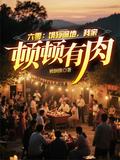 Sixty: Starving People Everywhere, but My Family Has Meat Every Day
1.2kReads5.8Score172Shelves
Sixty: Starving People Everywhere, but My Family Has Meat Every Day
1.2kReads5.8Score172Shelves
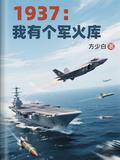 1937: I Have an Arsenal
22Reads5.8Score—Shelves
1937: I Have an Arsenal
22Reads5.8Score—Shelves