The Battle of Wushang Forest, the decisive battle of Yuehe River, and the "Battle of the Burial Cavalry"... There are many war scenes. You are welcome to take a look when you have time [Please pay attention] [Please pay attention] [Please pay attention]
The heroes are as strong as horses and the warriors are all playing swords, and the young ones are like the final army. Every inch of mountains and rivers is full of blood, and there are one hundred thousand people and one hundred thousand troops! Emperor Guangwu went through many ups and downs in his life, but he was fortunate to have Zhongxing generals and twenty-eight stars assist him to destroy Wang Mang, pacify Wang Lang, capture Hebei, enter Hanoi, fight in Green Forest, exterminate Red Eyebrows, capture Longyou, and conquer Western Shu. What a blessing! Anyone who offends our strong men will be killed no matter how far away!
Guns N' Roses 🌸! Use his naughty😜 to amaze your eyes! Highly intelligent and resourceful 💡 rigorous research! Brother's time, your Luoyang, are different! Recommendation index: 💎💎💎💎💎 Traveler⚡️, let a different wind float in the sky at Sui Shi🚲! You, a little spy, walk on the stormy road of the ☔️era of late Sui Dynasty... 🔥Tribe, 💋family, love💏, friendship, hypocrisy, 🔍treacherous love, enemy love, 👻ruthlessness, expression... There is always a mysterious power that brings him closer to the truth that has been deliberately concealed... The dream of family and country🐴 is the last pride and indulgence of a weak person... Even a king is vulnerable sometimes, and it happens in vain💡! Passers-by, seeing his tired figure, offered him a drink🍸
This book contains intense and cruel war scenes and stories - "Time Travel: The Romance of Ping Liuli in the Iron-blooded Jianghu" 1. The historical depth of the time-travel narrative and the sublimation of the revolutionary theme "Time-travel: The Romance of Ping Liuli in the Iron-Blooded Jianghu" achieves a breakthrough in subject matter and theme within the framework of the traditional time-travel novel. The work takes the 1906 Pingliuli Uprising as the historical background, and through the perspectives of revolutionary figures such as Liu Daoyi and Cai Shaonan, it elevates the literary technique of "time travel" from the rewriting of personal destiny to the grand narrative of national salvation. Different from the time-space adventure of early time-travel novels such as "Looking for the Qin" or the court love of "Step by Step", this book abandons the "time-travel and cheating" style of writing and instead focuses on the struggles and sacrifices of individuals in the torrent of history. For example, the book's portrayal of uprising leaders such as Xiao Kechang and Liao Shubao not only retains the heroism of knights, but also gives them the idealism of revolutionaries, forming a narrative tension of "a blend of historical reality and literary imagination." This approach coincides with the creative concept of "historical research style". The author has obviously conducted in-depth research on the social structure of the late Qing Dynasty, the operating mechanism of the Hui Party and the details of the uprising, such as the living conditions of Anyuan coal miners, the organizational rules of the Hongjiang Hui, etc. They are all based on historical data and avoid the shortcomings of many time-travel novels that are "fake for the sake of comfort". At the same time, through the time-travel setting of holographic projection, the work allows historical figures such as Cixi and Guangxu to "spectate" the collapse of their own rule. This not only coincides with the core charm of time-travel novels of "examining history from a modern perspective", but also reveals the historical logic of the inevitable decline of the Qing Dynasty through the drama of time and space dislocation. 2. Time and space dialogue and character creation under dual-line narrative The narrative structure of this book adopts dual parallel lines: one is the tragic epic of the entire uprising in 1906, and the other is the "historical trial" under the holographic projection of Masi Street in 2026. This design not only enhances the layering of the story, but also deepens the theme through time and space dialogue. For example, the psychological changes of Cixi and Guangxu when watching the uprising process - from initial arrogance and fear to final silent reflection - are actually the soul torture of feudal rulers by the modern historical perspective. Liu Daoyi's "confrontation" with the future time and space before his death closely connected his personal destiny with the national awakening, forming a symbolic meaning of "death but still life". In terms of character creation, the work escapes the stereotype trap of traditional revolutionary narratives. Take Xiao Kechang as an example. He was both a miner leader and an ordinary person who was forced to be involved in the political whirlpool: his decisiveness when facing the Qing army's encirclement and suppression, his tenderness when he parted with his wife, his persistence in the revolutionary fire before his death, and his multiple character dimensions that made his image full and real. In addition, the tragic fate of female characters such as Yao Meizi and Zhang Hanying's wisdom and bravery have broken through the limitations of women's "foil" in traditional historical novels and demonstrated the awakening and resistance of women in troubled times. 3. Integration and Innovation of Jianghu Chivalry and Revolutionary Ideals Another highlight of the work lies in the integration of "jianghu culture" and "revolutionary spirit". The party itself in the late Qing Dynasty had both the traditional chivalrous attributes of resisting the Qing Dynasty and restoring the Ming Dynasty and the political demands of the modern revolution, and the author strengthened this characteristic through detailed descriptions. For example, the secret codes and rituals used by members of the Hongjiang Society not only conformed to Jianghu rules, but also contained anti-Qing political metaphors; the weapons used by the rebels ranged from swords and cannons to captured foreign guns, symbolizing the transition from traditional folk power to modern revolution. This integration not only enriches the cultural heritage of the story, but also highlights the complexity of the historical process. Compared with "Thriving to Save the Nation" works such as "Ruling the World" and "New Song Dynasty", this book pays more attention to the perspective of the bottom: revolution is not the plan of a few elites, but a road paved with the flesh and blood of countless miners, farmers, and party members. For example, when Liao Shubao was killed, he shouted, "Twenty years later, there will be men who will come to dig up the ancestral graves." This was not only a declaration of war against the Qing court, but also a belief in the intergenerational inheritance of revolution. This kind of heroism in folk discourse is more contagious than a simple political declaration. 4. The balance between the sense of historical weight and the context of online literature. As an online novel, this book maintains readability without sacrificing historical seriousness. The author adopts a language style of "literary and white", which not only restores the context of the late Qing Dynasty (such as the wording of memorials and appeals), but also enhances the sense of substitution through modern narrative rhythm (such as the fast-paced editing of battle scenes). For example, when describing Liu Daoyi's torture, sensory details (the coldness of the shackles, the strong smell of blood) are intertwined with psychological monologues, allowing readers to feel the cruelty of history without giving up reading due to excessive depression. In addition, the work's "blank" treatment of historical events is also commendable. For example, the whereabouts of the remaining rebels after the failure of the uprising and the endings of some historical figures have not been fully explained, which is in line with the reality of incomplete historical data and leaves room for readers' imagination. This "virtual realism" approach is different from the "hardcore" style of works such as "Lingao Qiming" that emphasizes technical details, and focuses more on the emotional resonance of historical situations. 5. The cultural value and practical inspiration of time-travel literature The success of this book reflects the transformation trend of time-travel literature from "entertainment" to "historical dialogue". It is no longer satisfied with allowing modern people to return to ancient "dimensionality reduction strikes", but attempts to explore the unfinished questions in history through the collision of time and space: If revolutionaries could foresee failure, would they still persist? If rulers could see the future, would they change their choices? This kind of thinking coincides with the scholar Fang Wei's suggestion that "time travel novels should become a medium for dialogue between history and reality." At the same time, the work's exploration of the relatively unpopular historical event of the Pingliuli Uprising has cultural salvage significance. It makes readers realize that the success of the Revolution of 1911 was not achieved overnight, but was the cumulative result of numerous local uprisings. This "bottom-up" view of history complements the current tendency in history education to focus too much on big figures. Conclusion: Historical Echoes in Iron-blooded Jianghu "Time Travel: The Romance of Ping Liuli in Iron-Blooded Jianghu" has set a new benchmark for online historical novels with its solid historical material foundation, multi-dimensional narrative innovation and profound humanistic care. It proves that time-travel literature can fully carry serious historical reflection, and find a contemporary path for the inheritance of the national spirit in the collision of chivalry and revolutionary ideals. Just like Liu Daoyi's last words in the book: "The blood-fertile Central Plains are fertile and the grass is fertile, and the cold and frozen earth is full of spring flowers." This work itself is a seed of fire that is sown into the future.
[Love] [Love] Everything is possible. There is no way of knowing what Mingyi has encountered or what he is experiencing. At this moment, they, especially Yao Qin, focused all their beautiful thoughts on Ming Yi, forgetting that at this moment, they were also being carried away by the trend of the times, and headed towards an unknown tomorrow under the influence of an unknown fate. They also realize that some things are actually doomed. That is because their hearts are still hot and they still have the passion to fight for their ideals. They will move forward without hesitation, no matter what the outcome is.
This is a very interesting novel about the war and love of the Republic of China, adapted from real people and true events. The plot is full of twists and turns, and the fate of the characters is ups and downs. You are welcome to open the book and read it!
☀☀The fierce battle between the eagles has a strong sense of reality and strategy! An underrated and shocking realistic account of the anti-Japanese air war! It's so vividly written that it makes your blood boil! ☀☀The ace fighter pilot, flying a classic World War II fighter plane, has been participating in the large-scale war against Japan in the air battlefield. The combat airspace spans north, south, west and east, from southern Guangdong to the Great Wall, from the Yangtze River to Myanmar, from the southwest mountains to the Pacific island chain. He keeps exploring and working hard to fight against Japan, and gradually achieves success! ☀☀The author has wonderful writing style and comprehensive historical and military knowledge. With a unique air combat perspective, he has put a lot of effort into describing the details of various classic fighter planes. He also describes the battle links and fierce battle scenes in great detail. It is very enjoyable to read! ☀☀The logic is rigorous, the content is extensive, and it flows smoothly. It has a strong sense of reality and strategy. The characters are flesh-and-blood and down-to-earth, and the storyline is interlocking. ☀☀The rating of the new work is not high, it is complicated and brain-burning, so read it patiently and experience the magnificent live scene of bloody battle in the sky!
The novel of the late Tang Dynasty is unsystematic and the writing style is light and funny. It tells the story of the foreign wars between the Uighurs and Tubo, the civil war and the rebellion of the Jiedushi, and the story of 3,000 Tang people fighting against the 100,000 Uighur army. It is refreshing. [Love]
 Bad Soldiers, Good Soldiers, Mercenaries
662Reads8.2Score—Shelves
Bad Soldiers, Good Soldiers, Mercenaries
662Reads8.2Score—Shelves
 Welcome to the Absurd 20Th Century
38Reads8.2Score—Shelves
Welcome to the Absurd 20Th Century
38Reads8.2Score—Shelves
 Tactical Games
55Reads5.8Score—Shelves
Tactical Games
55Reads5.8Score—Shelves
 Spy: Impossible
59Reads—Score—Shelves
Spy: Impossible
59Reads—Score—Shelves
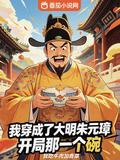 I Dressed up as the Bowl That Zhu Yuanzhang of the Ming Dynasty Opened With
615Reads—Score—Shelves
I Dressed up as the Bowl That Zhu Yuanzhang of the Ming Dynasty Opened With
615Reads—Score—Shelves
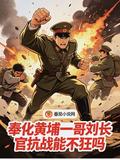 Can Mr. Liu, the First Brother of Fenghua Huangpu, Not Be Crazy About Fighting the War?
246Reads5.8Score—Shelves
Can Mr. Liu, the First Brother of Fenghua Huangpu, Not Be Crazy About Fighting the War?
246Reads5.8Score—Shelves
 The God of War and His Beauties
64Reads5.8Score—Shelves
The God of War and His Beauties
64Reads5.8Score—Shelves
 At the Beginning, the Son of the Plane Swept the Four Directions
5Reads—Score—Shelves
At the Beginning, the Son of the Plane Swept the Four Directions
5Reads—Score—Shelves
 Qi Sui
26Reads5.8Score—Shelves
Qi Sui
26Reads5.8Score—Shelves
 Liu Bowen's Ups and Downs as an Official
142Reads—Score—Shelves
Liu Bowen's Ups and Downs as an Official
142Reads—Score—Shelves
 Ninth Grade Exorcist
69.5kReads9.1Score8kShelves
Ninth Grade Exorcist
69.5kReads9.1Score8kShelves
 Join the Army
31.8kReads9.2Score3.6kShelves
Join the Army
31.8kReads9.2Score3.6kShelves
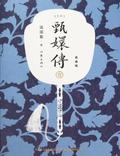 Harem·the Legend of Zhen Huan
18.1kReads8.8Score3kShelves
Harem·the Legend of Zhen Huan
18.1kReads8.8Score3kShelves
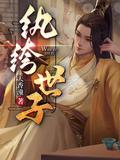 Dandy Prince
137.9kReads9.1Score13.9kShelves
Dandy Prince
137.9kReads9.1Score13.9kShelves
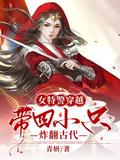 A Female Special Police Officer Traveled Through Time and Brought Four Cute Babies to Blow up Ancient Times.
4.4kReads9.3Score829Shelves
A Female Special Police Officer Traveled Through Time and Brought Four Cute Babies to Blow up Ancient Times.
4.4kReads9.3Score829Shelves
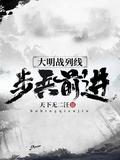 The Ming Dynasty Battle Line Infantry Advances
9.3kReads9.1Score942Shelves
The Ming Dynasty Battle Line Infantry Advances
9.3kReads9.1Score942Shelves
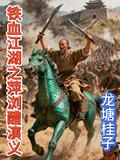 The Story of Ping Liuli in Iron-Blooded Jianghu
—Reads—Score—Shelves
The Story of Ping Liuli in Iron-Blooded Jianghu
—Reads—Score—Shelves
 World War II: French Fries on the Eastern Front
490Reads8.6Score—Shelves
World War II: French Fries on the Eastern Front
490Reads8.6Score—Shelves
 Mingyue Castle
14Reads—Score—Shelves
Mingyue Castle
14Reads—Score—Shelves
 Forging the Military Soul: from the Seventh Steel Company to the International Battlefield
201Reads5.8Score—Shelves
Forging the Military Soul: from the Seventh Steel Company to the International Battlefield
201Reads5.8Score—Shelves
 Yangcheng
72Reads—Score—Shelves
Yangcheng
72Reads—Score—Shelves
 Travel Through Verdun, but the Plug-In Is Krieger
2.7kReads5.7Score209Shelves
Travel Through Verdun, but the Plug-In Is Krieger
2.7kReads5.7Score209Shelves
 Dreaming Back to the Pearl River
3Reads—Score—Shelves
Dreaming Back to the Pearl River
3Reads—Score—Shelves
 Dark Web Live Battle Royale
7Reads—Score—Shelves
Dark Web Live Battle Royale
7Reads—Score—Shelves
 He Was Arrogant, Reborn in the Republic of China, and Had Three Thousand Warlords as His Subordinates.
68Reads—Score—Shelves
He Was Arrogant, Reborn in the Republic of China, and Had Three Thousand Warlords as His Subordinates.
68Reads—Score—Shelves
 Film Variety: Traveling Through Troubled Times, Warlords Become Stronger When They Marry Wives
344Reads5.4Score—Shelves
Film Variety: Traveling Through Troubled Times, Warlords Become Stronger When They Marry Wives
344Reads5.4Score—Shelves
 Immortality System, the Ancestor Is Dying Again!
1Reads5.8Score—Shelves
Immortality System, the Ancestor Is Dying Again!
1Reads5.8Score—Shelves
 Charming Wife
188Reads—Score—Shelves
Charming Wife
188Reads—Score—Shelves
 Villain: I Went Crazy with Joy After Marrying the Vegetable Empress
51Reads—Score—Shelves
Villain: I Went Crazy with Joy After Marrying the Vegetable Empress
51Reads—Score—Shelves
 Capture the Bandit
58Reads—Score—Shelves
Capture the Bandit
58Reads—Score—Shelves
 Chahar Will Not Forget
3Reads5.8Score—Shelves
Chahar Will Not Forget
3Reads5.8Score—Shelves
 Rebirth 1936 I Am an Ace Pilot
1Reads5.8Score—Shelves
Rebirth 1936 I Am an Ace Pilot
1Reads5.8Score—Shelves
 Different Time and Space Begins with a Little Warlord
158Reads6.6Score—Shelves
Different Time and Space Begins with a Little Warlord
158Reads6.6Score—Shelves
 Anti-Japanese War: the Warlord System Had Just Become King, and World War II Broke Out
4Reads5.8Score—Shelves
Anti-Japanese War: the Warlord System Had Just Become King, and World War II Broke Out
4Reads5.8Score—Shelves
 Extraordinary Rural Doctor
1Reads5.8Score—Shelves
Extraordinary Rural Doctor
1Reads5.8Score—Shelves
 The Hero of Shanghai at Night Has No Regrets
86Reads5.8Score—Shelves
The Hero of Shanghai at Night Has No Regrets
86Reads5.8Score—Shelves
 Titans: Stardust War
14Reads5.8Score—Shelves
Titans: Stardust War
14Reads5.8Score—Shelves
 Greetings from E-Star
11Reads5.8Score—Shelves
Greetings from E-Star
11Reads5.8Score—Shelves
 Chariot of the Sun
11Reads5.8Score—Shelves
Chariot of the Sun
11Reads5.8Score—Shelves
 Strong Dragon in Troubled Times
9Reads8.1Score—Shelves
Strong Dragon in Troubled Times
9Reads8.1Score—Shelves
 Sun Fleet: Jedi Strikes Back
17Reads5.8Score—Shelves
Sun Fleet: Jedi Strikes Back
17Reads5.8Score—Shelves
 Full Deck Attack
—Reads5.8Score—Shelves
Full Deck Attack
—Reads5.8Score—Shelves
 Undercover, Become the Biggest Spy Leader
135Reads5.8Score—Shelves
Undercover, Become the Biggest Spy Leader
135Reads5.8Score—Shelves
 Broken Heaven
5Reads5.8Score—Shelves
Broken Heaven
5Reads5.8Score—Shelves
 Moon Palace in the Sea of Flowers
5Reads8.4Score—Shelves
Moon Palace in the Sea of Flowers
5Reads8.4Score—Shelves
 The Wonderland of Purple Bamboo Forest
16Reads8.6Score—Shelves
The Wonderland of Purple Bamboo Forest
16Reads8.6Score—Shelves
 Across the Ocean
27Reads8.6Score—Shelves
Across the Ocean
27Reads8.6Score—Shelves
 A Stick from the Tang Dynasty
2.6kReads8.8Score202Shelves
A Stick from the Tang Dynasty
2.6kReads8.8Score202Shelves