Why Can't I Find the Book I Listened to Yesterday?
- Views
- 92.6M
- Books
- 378
- Recommendations
- 807
- Updated
- 1d ago
In this list
464 books · page 10 of 10
-
423
重
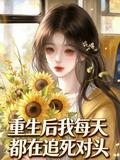 After Rebirth, I Have Been Chasing My Enemy Every Day
Is It Xiao Lin?Modern Romance104k Wordscompleted
5Reads—Score—Shelves
After Rebirth, I Have Been Chasing My Enemy Every Day
Is It Xiao Lin?Modern Romance104k Wordscompleted
5Reads—Score—Shelves
Reader note
Good-looking😄Good-looking
-
424
乖
 Good Girl Vs Loyal Dog
Is It Xiao Lin?6k Wordscompleted
10Reads8.5Score—Shelves
Good Girl Vs Loyal Dog
Is It Xiao Lin?6k Wordscompleted
10Reads8.5Score—Shelves
Reader note
Good-looking😄Good-looking
-
425
高
 The Flower of the High Mountain Was Pulled Down by Me
Is It Xiao Lin?completed
8kReads9.0Score—Shelves
The Flower of the High Mountain Was Pulled Down by Me
Is It Xiao Lin?completed
8kReads9.0Score—Shelves
Reader note
Good-looking😄Good-looking
-
434
误
 Wandering into the Immortal Path and Modern Cultivation
Daoye Wants to Quit SmokingUrban2.1M Wordscompleted
26.1kReads8.9Score2.7kShelves
Wandering into the Immortal Path and Modern Cultivation
Daoye Wants to Quit SmokingUrban2.1M Wordscompleted
26.1kReads8.9Score2.7kShelves
Reader note
Beautiful and worth reading
-
435
纯
The Power of Pure Yang Is Too Strong, the Ghost King Wants to Give Birth to a Child for Me Daoye Wants to Quit SmokingUrban1.2M Wordsongoing 6.1kReads7.0Score622Shelves
Reader note
Beautiful and worth reading
-
442
我
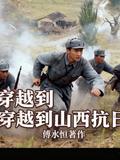 I Wear ****
completed
—Reads5.8Score—Shelves
I Wear ****
completed
—Reads5.8Score—Shelves
Reader note
The tranquility tempered by beacon fire, the legend rooted in knowledge: Why is "From Ordinary to Legend" worth reading again and again? Among the vast number of Anti-Japanese War-themed works, the "From Ordinary to Legend" series has opened up a unique narrative path with its unique perspective and profound humanistic care. The just-completed Chapters 279 to 281 - "A Visit from an Old Friend", "The Kindness of the Doctor" and "The Wheel of History" - have pushed the charm of this work to a new level. If you are looking for a work that can touch the soul, inspire thinking, and illuminate the dark corners of history at the same time, then the world built in these three chapters is definitely not to be missed. 1. After the smoke has cleared, life itself is the most profound epic. Chapter 279, "A Visit from an Old Friend, a Silent Understanding" allows us to see a rare "post-war narrative" in war literature. Instead of continuing to exaggerate the glory of the battlefield, we face a more complex problem: How do heroes return to the ordinary? Fu Bikang and Lin Wanning chose to hide in Taihang Mountain Village, not as an escape, but as a deeper commitment. When political commissar Fu Biyue came to visit through the morning mist, the three of them sat around the stone table, "quietly drinking tea and enjoying this hard-won peace" - the power of this scene is better than a thousand words of descriptions of the battle. Those unspoken names of comrades-in-arms and unmentioned past sacrifices build a palace of memory in silence that is stronger than any monument. This chapter teaches us: True peace is not the absence of war, but the ability to learn to chop wood, cook, and sit in the doctor again after the baptism of war, and to place an extraordinary soul in the ordinary. 2. The Benevolence of Doctors: A New Battlefield Without Gunfire Chapter 280 "The Benevolence of Doctors, a New Battlefield" completes an exquisite sublimation of the theme. When Fu Bikang lost the system's assistance, Lin Wanning put down the scalpel and picked up the herbal basket. Their battle had just begun. Mountain clinics have become new trenches, and disease has become the new enemy. From rescuing children with meningitis to delivering babies with difficult labor, every case is a life-or-death "battle." The most touching thing is the details: Fu Bikang's concentration when manually calculating the dosage of medicine, and Lin Wanning's steady hand on the needle that she learned on the battlefield - everything learned on the battlefield has found a new mission in peacetime. This chapter answers a fundamental question: When the grand narrative comes to an end, how will individual value continue? The answer lies in the baskets of eggs and the calls of "Doctor Lin", transforming life-saving skills into the ability to protect daily happiness. 3. The secret resonance between personal destiny and the wheel of the times Chapter 281 "The Wheel of History, Silent Attention" shows the most unique narrative wisdom of this work: how individuals dialogue with history. Through letters without return addresses, old newspapers, and an expensive radio, Fu Bikang and his wife maintained an inseparable connection with their distant comrades and national construction. The "seeds" of knowledge they left behind - battlefield medical manuals, machine tool improvement diagrams, hydraulic calculation data - are sprouting and growing in invisible places. This gesture of "silent attention" is precisely the most touching participation. They are not on the front line of construction, but they influence construction through the dissemination of knowledge; they are far away from the political center, but they are closer to the real pulse of this land than anyone else. This chapter tells us: History is not only created by heroes, but also written by countless unknown devotees with their professional knowledge, daily life, and perseverance. 4. Another responsibility of intellectuals: Let advanced wisdom take root in the soil. The creation of the character Fu Bikang broke the framework of the traditional anti-war narrative. The system knowledge he possesses is far ahead of the times, but he chooses not to subvert, but to transform, adapt, and sow. In Chapter 281, we see him transforming systematic medical knowledge into a training manual for rural doctors and simplifying engineering principles into sketches for improved farm tools. This kind of "knowledge dimensionality reduction" is not a compromise, but a real responsibility - allowing the most advanced wisdom to serve the most urgent needs. In today's era of explosion of knowledge but often disconnected from reality, Fu Bikang's choice is particularly worth pondering: true wisdom does not lie in how much cutting-edge knowledge is mastered, but in how much knowledge can be allowed to take root and sprout in the soil of reality. 5. Extreme restraint and great tension in emotional description. The emotional description in these three chapters is a masterclass. There is no sensationalism, no tragic exaggeration, all emotions flow naturally in the details and blank spaces: · Fu Biyue's words "go forward, don't look back" when he left · Lin Wanning woke up from a dream and said "I dreamed about the field hospital in the past" · The couple's silence when they listened to the radio for the first time under the electric light · The complex eyes of "pleased and disappointed" when they read that their knowledge was being applied The author trusts the reader's wisdom and leaves enough space for us to fill in the unsaid words and unshed tears. This restraint instead creates a stronger emotional impact, making each scene linger. 6. An exquisite balance between historical reality and literary imagination. The work is based on the setting of a systemic anti-war novel, but it does not have the alienation of science fiction at all. On the contrary, it uses this setting to explore very real themes: technological ethics, knowledge inheritance, the relationship between individuals and collectives, and the healing of war wounds. After the system was handed over, Fu Bikang faced a more real challenge than when he owned the system - how to continue to contribute based on his own memory and judgment without "plug-ins"? Isn't this problem a dilemma that every professional worker may face? Why start reading now? If you are looking for a work that can: 1. Make you calm down in an impetuous era - here are the smoke, morning mist and snowy nights deep in the Taihang Mountains 2. A story that rethinks the definition of "hero" and "ordinary" - there is no superman here, only people who turn extraordinary experiences into daily good deeds 3. A narrative that witnesses how knowledge can truly change the world - there is no magic here, only solid learning, transformation and practice 4. Feel the beauty of Chinese narrative text - concise, restrained, precise, every word falls where it should. 5. The reading experience of finding realistic enlightenment in the depth of history - the choice made seventy years ago still shines on us today. Then, Chapters 279-281 of "From Ordinary to Legend" is the next must-read on your bookshelf. These three chapters are like a prism, reflecting from different angles the complex relationships between war and peace, individuals and countries, knowledge and practice, memory and progress. They tell us: legend does not lie in the number of military exploits, but in being able to maintain the benevolence of a doctor after being tempered by the fire of war; it does not lie in standing in the center of the historical stage, but in quietly pushing the wheel of history at the edge. When you open this book, you open not only a story, but also a life journey worth pondering, a profound dialogue with another possibility. --- "From Ordinary to Legend" Chapter 279-281 Where the smoke has cleared, doctors continue to write legends with kindness. When knowledge takes root, ordinary life reflects greatness. Under the wheel of history, silent attention is also affectionate.
-
443
从
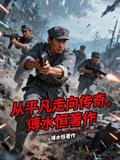 From Ordinary to Legendary
User 26182811Historical2.0M Wordscompleted
1.2kReads—Score111Shelves
From Ordinary to Legendary
User 26182811Historical2.0M Wordscompleted
1.2kReads—Score111Shelves
Reader note
The tranquility tempered by beacon fire, the legend rooted in knowledge: Why is "From Ordinary to Legend" worth reading again and again? Among the vast number of Anti-Japanese War-themed works, the "From Ordinary to Legend" series has opened up a unique narrative path with its unique perspective and profound humanistic care. The just-completed Chapters 279 to 281 - "A Visit from an Old Friend", "The Kindness of the Doctor" and "The Wheel of History" - have pushed the charm of this work to a new level. If you are looking for a work that can touch the soul, inspire thinking, and illuminate the dark corners of history at the same time, then the world built in these three chapters is definitely not to be missed. 1. After the smoke has cleared, life itself is the most profound epic. Chapter 279, "A Visit from an Old Friend, a Silent Understanding" allows us to see a rare "post-war narrative" in war literature. Instead of continuing to exaggerate the glory of the battlefield, we face a more complex problem: How do heroes return to the ordinary? Fu Bikang and Lin Wanning chose to hide in Taihang Mountain Village, not as an escape, but as a deeper commitment. When political commissar Fu Biyue came to visit through the morning mist, the three of them sat around the stone table, "quietly drinking tea and enjoying this hard-won peace" - the power of this scene is better than a thousand words of descriptions of the battle. Those unspoken names of comrades-in-arms and unmentioned past sacrifices build a palace of memory in silence that is stronger than any monument. This chapter teaches us: True peace is not the absence of war, but the ability to learn to chop wood, cook, and sit in the doctor again after the baptism of war, and to place an extraordinary soul in the ordinary. 2. The Benevolence of Doctors: A New Battlefield Without Gunfire Chapter 280 "The Benevolence of Doctors, a New Battlefield" completes an exquisite sublimation of the theme. When Fu Bikang lost the system's assistance, Lin Wanning put down the scalpel and picked up the herbal basket. Their battle had just begun. Mountain clinics have become new trenches, and disease has become the new enemy. From rescuing children with meningitis to delivering babies with difficult labor, every case is a life-or-death "battle." The most touching thing is the details: Fu Bikang's concentration when manually calculating the dosage of medicine, and Lin Wanning's steady hand on the needle that she learned on the battlefield - everything learned on the battlefield has found a new mission in peacetime. This chapter answers a fundamental question: When the grand narrative comes to an end, how will individual value continue? The answer lies in the baskets of eggs and the calls of "Doctor Lin", transforming life-saving skills into the ability to protect daily happiness. 3. The secret resonance between personal destiny and the wheel of the times Chapter 281 "The Wheel of History, Silent Attention" shows the most unique narrative wisdom of this work: how individuals dialogue with history. Through letters without return addresses, old newspapers, and an expensive radio, Fu Bikang and his wife maintained an inseparable connection with their distant comrades and national construction. The "seeds" of knowledge they left behind - battlefield medical manuals, machine tool improvement diagrams, hydraulic calculation data - are sprouting and growing in invisible places. This gesture of "silent attention" is precisely the most touching participation. They are not on the front line of construction, but they influence construction through the dissemination of knowledge; they are far away from the political center, but they are closer to the real pulse of this land than anyone else. This chapter tells us: History is not only created by heroes, but also written by countless unknown devotees with their professional knowledge, daily life, and perseverance. 4. Another responsibility of intellectuals: Let advanced wisdom take root in the soil. The creation of the character Fu Bikang broke the framework of the traditional anti-war narrative. The system knowledge he possesses is far ahead of the times, but he chooses not to subvert, but to transform, adapt, and sow. In Chapter 281, we see him transforming systematic medical knowledge into a training manual for rural doctors and simplifying engineering principles into sketches for improved farm tools. This kind of "knowledge dimensionality reduction" is not a compromise, but a real responsibility - allowing the most advanced wisdom to serve the most urgent needs. In today's era of explosion of knowledge but often disconnected from reality, Fu Bikang's choice is particularly worth pondering: true wisdom does not lie in how much cutting-edge knowledge is mastered, but in how much knowledge can be allowed to take root and sprout in the soil of reality. 5. Extreme restraint and great tension in emotional description. The emotional description in these three chapters is a masterclass. There is no sensationalism, no tragic exaggeration, all emotions flow naturally in the details and blank spaces: · Fu Biyue's words "go forward, don't look back" when he left · Lin Wanning woke up from a dream and said "I dreamed about the field hospital in the past" · The couple's silence when they listened to the radio for the first time under the electric light · The complex eyes of "pleased and disappointed" when they read that their knowledge was being applied The author trusts the reader's wisdom and leaves enough space for us to fill in the unsaid words and unshed tears. This restraint instead creates a stronger emotional impact, making each scene linger. 6. An exquisite balance between historical reality and literary imagination. The work is based on the setting of a systemic anti-war novel, but it does not have the alienation of science fiction at all. On the contrary, it uses this setting to explore very real themes: technological ethics, knowledge inheritance, the relationship between individuals and collectives, and the healing of war wounds. After the system was handed over, Fu Bikang faced a more real challenge than when he owned the system - how to continue to contribute based on his own memory and judgment without "plug-ins"? Isn't this problem a dilemma that every professional worker may face? Why start reading now? If you are looking for a work that can: 1. Make you calm down in an impetuous era - here are the smoke, morning mist and snowy nights deep in the Taihang Mountains 2. A story that rethinks the definition of "hero" and "ordinary" - there is no superman here, only people who turn extraordinary experiences into daily good deeds 3. A narrative that witnesses how knowledge can truly change the world - there is no magic here, only solid learning, transformation and practice 4. Feel the beauty of Chinese narrative text - concise, restrained, precise, every word falls where it should. 5. The reading experience of finding realistic enlightenment in the depth of history - the choice made seventy years ago still shines on us today. Then, Chapters 279-281 of "From Ordinary to Legend" is the next must-read on your bookshelf. These three chapters are like a prism, reflecting from different angles the complex relationships between war and peace, individuals and countries, knowledge and practice, memory and progress. They tell us: legend does not lie in the number of military exploits, but in being able to maintain the benevolence of a doctor after being tempered by the fire of war; it does not lie in standing in the center of the historical stage, but in quietly pushing the wheel of history at the edge. When you open this book, you open not only a story, but also a life journey worth pondering, a profound dialogue with another possibility. --- "From Ordinary to Legend" Chapter 279-281 Where the smoke has cleared, doctors continue to write legends with kindness. When knowledge takes root, ordinary life reflects greatness. Under the wheel of history, silent attention is also affectionate.
-
447
退
 After Breaking Off the Engagement, the Silly Concubine and Her Four Maids Married for Nine Thousand Years
Clingy Little TomatoAncient Romance1.1M Wordsongoing
41.3kReads7.9Score5.4kShelves
After Breaking Off the Engagement, the Silly Concubine and Her Four Maids Married for Nine Thousand Years
Clingy Little TomatoAncient Romance1.1M Wordsongoing
41.3kReads7.9Score5.4kShelves
Reader note
Don't get lost in the book shortage, this book is worth pursuing. The plot is online, link by link, and the characters are stable. There is no appendix in the whole process, and you will not be disappointed after reading it. Highly recommend this book! The plot is compact but not procrastinating, it is exciting but not boring. The writing is smooth and has a strong sense of immersion. Once you get into the trap, you will stay up all night to chase it to the end! The characters are likeable, the plot is explosive, and there are no peeing spots throughout the whole process. Don't miss it if you like this kind of subject matter! [The masterpiece of bird food]
-
448
狗
 Dog Webmaster Sister Hua
Tomato Loachcompleted
181Reads8.5Score—Shelves
Dog Webmaster Sister Hua
Tomato Loachcompleted
181Reads8.5Score—Shelves
-
449
鸡
 There Is a Sunny Sky Above the Chicken Feathers
Tomato LoachModern Romance356k Wordscompleted
831Reads6.6Score—Shelves
There Is a Sunny Sky Above the Chicken Feathers
Tomato LoachModern Romance356k Wordscompleted
831Reads6.6Score—Shelves
-
450
黑
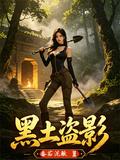 Black Earth Stealing Shadow
Tomato Loachcompleted
—Reads8.6Score—Shelves
Black Earth Stealing Shadow
Tomato Loachcompleted
—Reads8.6Score—Shelves
-
451
白
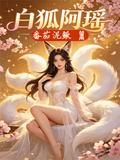 White Fox Ayao
Tomato Loachcompleted
—Reads8.4Score—Shelves
White Fox Ayao
Tomato Loachcompleted
—Reads8.4Score—Shelves
-
452
龙
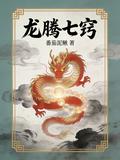 Dragon Soaring Seven Apertures
Tomato LoachAncient Romance52k Wordscompleted
—Reads—Score—Shelves
Dragon Soaring Seven Apertures
Tomato LoachAncient Romance52k Wordscompleted
—Reads—Score—Shelves
-
453
诈
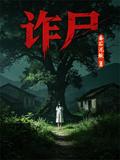 Fake Corpse
Tomato Loachcompleted
—Reads8.4Score—Shelves
Fake Corpse
Tomato Loachcompleted
—Reads8.4Score—Shelves