⑴A modern science and engineering man, dressed as Yan Jiecheng, the eldest son of the Yan family in the courtyard. ⑵ Yan Chen, who was reading novels and making complaints, took the system to become Yan Jiecheng. ⑶ System + Space + Lingquan After Yan Cheng took a nap, he traveled through time and became Yan Jie Cheng, who was getting married. Let us see how he can live comfortably in this era. ⑷Dressed as the eldest son of the third uncle Yan Bugui. I don't cause trouble, but I'm not afraid of it either. I relied on the system to play around with the courtyard. Marry Yu Li and take good care of my little daughter-in-law. Qin Huairu, you don't want Banggeng to be hurt either. Let's take a look at Yan Jiefang's road to success. ⑸Can't go back. This is a courtyard world, and he is a time traveler. As the author of Xiaofan, he stayed up late coding and wore it as soon as he woke up, changing from Liu Guangqi to Liu Guangqi.
① Yan Jiefang, who has a sign-in system, started in 1961 ② Yan Jiefang, who has space, started in 1965 ③ Liu Guangqi, who has a system space, started in 1956
✨In the first book, Liu Guangtian becomes the boy of the second uncle's family. He has no food and clothing, but needs to be beaten twice in three days. He decisively chooses to separate the family and live his own small life with advanced knowledge. ✨In the second book, Yan Jiecheng travels through the courtyard and works as a technician in the steel rolling factory. He relies on the knowledge of his previous life to make inventions, rise to the leadership level, and revitalize the national industry [seeking attention]
The current salesman traveled to the world of courtyard houses and became Yan Bugui's biological son. In that era of lack of food and clothing, the story of his hard work to survive was a story of short-lived parents, no hostility, no life-and-death struggle, only the struggles of small people.
I sincerely invite you to give me a one-star review for this article! Written by a newbie, slow-burning and realistic! There is no system, the space does not increase the speed, it seems that the parents are short-sighted and hate the best, but in fact it is a way to make a lot of money against the times. There is an undercurrent of feelings about family and country in the lines, and there are foreshadowings everywhere that are worth savoring. You can complain about the logic and rationality of the plot. Book friends who love to use their brains to dig out details can come and unlock this era of counterattack!
There is a shortage of books, just @. @——@. 🌟The first book travels through the courtyard and becomes the second son of the third uncle. Travels through the time of famine. Awakening sign-in system. Make money through translation. The parents are short-tempered [love] and not too violent [love]💫 🌟The second book travels through the courtyard and becomes the eldest son of the second uncle. Awakening system. Daily life. Go to technical secondary school. Translate to make money. Then enlist in the army. [Love] Enter the rolling mill. Enter the security department. Also change the second uncle's unfilial children and unkind parents. Change the ending 💫 Pay attention and don't get lost❤️ Rush rush rushグッ!(๑•̀ㅂ•́)و✧
"Siheyuan: I am Yan Jiekuang" is unique among the Siheyuan genre with its unique time-travel perspective and relaxed and humorous style. When the modern soul traveled through time and became Yan Jiekuang, the third son of the third uncle's family, faced with the gruel and the stingy father who could make out human figures, a cool story about counterattacking through space and cooking in a courtyard began. The author uses down-to-earth writing to cleverly integrate the life of the times, the golden fingers of the system and the shortcomings of the parents in the courtyard, bringing a highly contrasting reading experience. Time-travel Beginning: From Hungry to Space in Hand. The protagonist Yan Jiekuang's time-travel start is full of "misery" - on his wedding night, when he opened his eyes, he could only eat gruel and pickles for each person. His father, Yan Bugui, was stingy and even charged rent for fishing rods. But this embarrassment was quickly broken by the system. Although the system was "tsundere" untied, it left behind a novice gift package containing 10 acres of black land, ponds and seeds, and directly started the "farming mode". The time flow rate of 1:40 in the space allows the food to be cooked in three days, instantly solving the problem of food and clothing. This contrast from hunger to food freedom is the core charm of Shuangwen. Yan Jiekuang's character design is also very likable. He does not pretend to be a saint, but faces the need for survival. He snatches the beggar's chicken from the "Saint Thief" just after traveling through time. When faced with his stingy father, he dares to say that he "doesn't have enough to eat". He is ruthless when taking advantage of space, but he also knows how to leave food rations for his family. This real "worker" mentality is closer to the reader's psychology than the forced virgin. Group portraits in the courtyard: the fireworks of the conspiracy. The "stinginess" of the third uncle Yan Bugui is vividly portrayed. Locking the fishing rod to collect rent, walking away with peanuts during meetings, and instantly becoming a "speed taker" when his son carries back prey. These details not only show the embarrassment of the times, but also reveal the survival wisdom of the little people. The interaction between Yan Jiekuang and his father can be called a "famous scene" - when Yan Jiekuang proposed hunting, his father immediately changed from an "iron rooster" to a "supporter". The calculation and reconciliation between father and son are full of life-like humor. Classic characters from Siheyuan also appear in turn in the main storyline of Qianfan. Silly Zhu and Xu Damao were fighting over chickens, Qin Huairu was greedy for prey and wanted to take advantage, Jia Zhang was acting like a fool, and the second uncle took advantage of the meeting to show off his authority... These familiar "birds" were reduced to backgrounds one after another in the face of Yan Jiekuang's spatial advantage. When Yan Jiekuang carries the hare and pheasant back to the courtyard, the three uncles close the door at the speed of light, which vividly interprets the survival rule of "everyone who sees it" in the courtyard house, and makes the readers laugh. Plot Highlights: Space Farming and Age Survival Techniques Yan Jiekuang's "space farming" line is the biggest highlight. The land expanded from 10 acres to 20 acres, and the grain output increased from a few kilograms to a steady stream. Not only did he realize his own food freedom, he was also able to sell it on the black market to improve his life. This closed loop of "planting - harvesting - cashing out" satisfies readers' imagination of "getting rich while sitting still". And his operation of using space water to improve his physical condition and secretly hunting for money not only fits the background of the era, but also highlights the practicality of the golden finger. The plot of finding a job shows the protagonist's survival wisdom. He first "painted a cake" to deliver fish to Director Wang of the subdistrict office, and then used a letter of introduction + "management" to successfully join the postman job, integrating modern workplace thinking into the background of the times. The work of the eight members can not only travel between urban and rural areas to sell goods, but also avoid the risk of going to the countryside. It can be called the "optimal solution". When he used the money earned from the black market to buy rice and White Rabbit toffees, the sense of transition from poverty to wealth is the essence of Shuangwen. Relaxing tone: a refreshing novel without any aggression. Different from the depressive style of traditional courtyard houses, this book focuses on a relaxed and non-violent style. When Yan Jiekuang grabbed chicken with stick stems, he "kept half of it so as not to ruin the plot." He cleverly avoided Qin Huairu's taking advantage of him, and even the "fight of wits" with his father was full of family warmth. Even scenes where conflicts are concentrated, such as the general meeting, are made humorous by Yan Jiekuang's "food man" perspective - he watches the show when others quarrel, and he can get some peanuts to eat afterwards. This optimistic attitude makes the story full of fireworks. The author's restoration of chronological details is also very good. From the use of food stamps and the caution in black market transactions to the scenes of families drinking gruel and hungry children, the social scene of 1959 is truly reproduced. When Yan Jiekuang exchanges food stamps for money on the black market and uses "Daqianmen" cigarettes to maintain relationships, readers can not only feel the hardship of the times, but also applaud the character's wit. Sublimation of the theme: The work continues and the counterattack continues. The title of the book, "I am Yan Jiekuang," is not only a declaration of identity, but also a struggle against fate. In the original play, Yan Jiekuang served as the background, and the ending was mostly drifting; in this book, he relies on space to counterattack, not only to provide food and clothing, but also to benefit his family, and may even change the "bird" ecology of the courtyard. This theme of "little people rewrite their destiny with their golden fingers" conveys a positive philosophy of survival - even if you are in trouble, you must rely on your wisdom and hands (and space) to live a wonderful life. When Yan Jiekuang watched the grain harvest in space, sold it at a high price on the black market, and ate rice behind closed doors in the courtyard, what the readers saw was not only a time traveler's enjoyable journey, but also an ordinary person's simplest pursuit of "having enough to eat" in a special era. This down-to-earth feeling makes "Siheyuan: I am Yan Jiekuang" a rare masterpiece for dinner. In general, "Siheyuan: I am Yan Jiekuang" relies on the golden finger of space farming, the witty interpretation of the Siheyuan group portraits, and the wisdom of survival in the era to successfully create a refreshing novel that can easily relieve stress. Whether you like the detailed attention to detail of period writing, or the fast pace of refreshing writing, you can find your own fun in the book. Yan Jiekuang's counterattack on the Siheyuan has just begun. Let us hope that he will use the space to grow more food and work better in the Siheyuan!
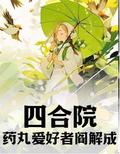 Siheyuan: Pill Lover Yan Jiecheng
2.2kReads7.7Score—Shelves
Siheyuan: Pill Lover Yan Jiecheng
2.2kReads7.7Score—Shelves
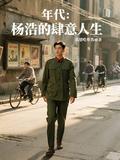 Siheyuan: a Wanton Life Begins with Military Service
23.6kReads7.6Score1.1kShelves
Siheyuan: a Wanton Life Begins with Military Service
23.6kReads7.6Score1.1kShelves
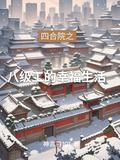 The Happy Life of the Eighth Grade Workers in the Siheyuan
49kReads7.9Score1.9kShelves
The Happy Life of the Eighth Grade Workers in the Siheyuan
49kReads7.9Score1.9kShelves
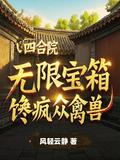 Siheyuan: Infinite Treasure Chest, Greedy Beasts
155Reads5.8Score—Shelves
Siheyuan: Infinite Treasure Chest, Greedy Beasts
155Reads5.8Score—Shelves
 Siheyuan: Refuse to Take the Blame and Start a Counterattack
16.8kReads7.4Score918Shelves
Siheyuan: Refuse to Take the Blame and Start a Counterattack
16.8kReads7.4Score918Shelves
 Siheyuan: Another Life
50.1kReads7.3Score4.2kShelves
Siheyuan: Another Life
50.1kReads7.3Score4.2kShelves
 Rumors Abound in the Courtyard
29.1kReads7.6Score1.4kShelves
Rumors Abound in the Courtyard
29.1kReads7.6Score1.4kShelves
 Siheyuan: the System Asked Me to Cultivate Immortality
362Reads5.8Score—Shelves
Siheyuan: the System Asked Me to Cultivate Immortality
362Reads5.8Score—Shelves
 Flowers Bloom on the Other Side of the Courtyard
4.5kReads6.8Score214Shelves
Flowers Bloom on the Other Side of the Courtyard
4.5kReads6.8Score214Shelves
 Siheyuan: Liu Guangqi's Road to Self-Redemption!
1.5kReads7.0Score—Shelves
Siheyuan: Liu Guangqi's Road to Self-Redemption!
1.5kReads7.0Score—Shelves
 Siheyuan: the First Kill by a Big Mom at the Beginning
1Reads5.8Score—Shelves
Siheyuan: the First Kill by a Big Mom at the Beginning
1Reads5.8Score—Shelves
 Liu Guangqi of Siheyuan Rebirth 56
399Reads5.4Score—Shelves
Liu Guangqi of Siheyuan Rebirth 56
399Reads5.4Score—Shelves
 Becoming King and Dominating Starts from the Courtyard House
8.3kReads8.3Score301Shelves
Becoming King and Dominating Starts from the Courtyard House
8.3kReads8.3Score301Shelves
 Siheyuan: Yan Jiekuang's Qi Refining Life
4.6kReads7.1Score172Shelves
Siheyuan: Yan Jiekuang's Qi Refining Life
4.6kReads7.1Score172Shelves
 Siheyuan: I Traveled Through Time and Became a Puppet Army
430Reads5.8Score113Shelves
Siheyuan: I Traveled Through Time and Became a Puppet Army
430Reads5.8Score113Shelves
 Siheyuan: the Most Powerful System in History, It Hurts to Hit People
—Reads5.8Score—Shelves
Siheyuan: the Most Powerful System in History, It Hurts to Hit People
—Reads5.8Score—Shelves
 Siheyuan Prequel: Siheyuan in Liu Guangtian's Eyes
12Reads5.3Score—Shelves
Siheyuan Prequel: Siheyuan in Liu Guangtian's Eyes
12Reads5.3Score—Shelves
 Siheyuan: Building a Harmonious Renaissance with a Steel Dragon
5.4kReads6.3Score158Shelves
Siheyuan: Building a Harmonious Renaissance with a Steel Dragon
5.4kReads6.3Score158Shelves
 Siheyuan Starts from Shocking the Progressive Father
2.9kReads—Score131Shelves
Siheyuan Starts from Shocking the Progressive Father
2.9kReads—Score131Shelves
 Siheyuan from Cook to Wealthy Boss
20.7kReads6.3Score796Shelves
Siheyuan from Cook to Wealthy Boss
20.7kReads6.3Score796Shelves
 Siheyuan: Kill the Deaf Old Lady at the Beginning!
40.6kReads7.1Score1.9kShelves
Siheyuan: Kill the Deaf Old Lady at the Beginning!
40.6kReads7.1Score1.9kShelves
 Siheyuan: People Are Lying on the Bed, and Their Minds Are Filled with Technology
2Reads5.8Score—Shelves
Siheyuan: People Are Lying on the Bed, and Their Minds Are Filled with Technology
2Reads5.8Score—Shelves
 Siheyuan: Father Is Xu Damao, Mother Is Lou Xiao'e
28.8kReads9.2Score1.6kShelves
Siheyuan: Father Is Xu Damao, Mother Is Lou Xiao'e
28.8kReads9.2Score1.6kShelves
 Siheyuan: the Chronological History of Li Xiuyu
24.8kReads8.2Score646Shelves
Siheyuan: the Chronological History of Li Xiuyu
24.8kReads8.2Score646Shelves
 The Strongest Courtyard No. 95
179.6kReads9.0Score12.8kShelves
The Strongest Courtyard No. 95
179.6kReads9.0Score12.8kShelves
 Siheyuan, My Space Is Super Big
64.1kReads8.3Score3.6kShelves
Siheyuan, My Space Is Super Big
64.1kReads8.3Score3.6kShelves
 Siheyuan: Three Days Left Until Execution
49.6kReads9.0Score3.9kShelves
Siheyuan: Three Days Left Until Execution
49.6kReads9.0Score3.9kShelves
 Siheyuan: I Have a Universe
4.9kReads8.7Score211Shelves
Siheyuan: I Have a Universe
4.9kReads8.7Score211Shelves
 Siheyuan: the Soul of a Junk Guy Travels Through 60 Years
16.6kReads8.9Score648Shelves
Siheyuan: the Soul of a Junk Guy Travels Through 60 Years
16.6kReads8.9Score648Shelves
 Siheyuan: After Picking up Qin Jingru, the Whole Hospital Cried with Envy
18.8kReads8.4Score899Shelves
Siheyuan: After Picking up Qin Jingru, the Whole Hospital Cried with Envy
18.8kReads8.4Score899Shelves
 Siheyuan: Super Monster Fighting System
11.1kReads8.2Score523Shelves
Siheyuan: Super Monster Fighting System
11.1kReads8.2Score523Shelves
 The Space Farm of the Rain Pillar in the Siheyuan
14.3kReads8.5Score565Shelves
The Space Farm of the Rain Pillar in the Siheyuan
14.3kReads8.5Score565Shelves
 Siheyuan: I Can Accurately Find Enemy Agents
11.7kReads7.9Score562Shelves
Siheyuan: I Can Accurately Find Enemy Agents
11.7kReads7.9Score562Shelves
 Shura in the Siheyuan
7.9kReads8.9Score329Shelves
Shura in the Siheyuan
7.9kReads8.9Score329Shelves
 Siheyuan: a Shocking Secret Is Discovered at the Beginning
33.5kReads8.5Score1.1kShelves
Siheyuan: a Shocking Secret Is Discovered at the Beginning
33.5kReads8.5Score1.1kShelves
 Mechanic in the Red Age: I Help My Ancestors Forge Heavy Weapons
46.1kReads8.8Score3kShelves
Mechanic in the Red Age: I Help My Ancestors Forge Heavy Weapons
46.1kReads8.8Score3kShelves
 Starting Courtyard: I Am Invincible, You Can Do Whatever You Want
5kReads8.1Score237Shelves
Starting Courtyard: I Am Invincible, You Can Do Whatever You Want
5kReads8.1Score237Shelves
 Siheyuan, the Happy Life of Wang Dapeng, a Fun-Loving Man
64.2kReads8.9Score3.1kShelves
Siheyuan, the Happy Life of Wang Dapeng, a Fun-Loving Man
64.2kReads8.9Score3.1kShelves
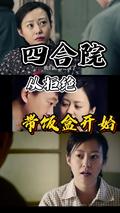 The Beginning of Siheyuan Starts with Refusing to Bring a Lunch Box
27.5kReads8.5Score1.5kShelves
The Beginning of Siheyuan Starts with Refusing to Bring a Lunch Box
27.5kReads8.5Score1.5kShelves
 Era: I Am Zhuang Tunan, and Everything Can Be Dealt With
11kReads8.2Score540Shelves
Era: I Am Zhuang Tunan, and Everything Can Be Dealt With
11kReads8.2Score540Shelves
 The Siheyuan Holds a Demon Refining Pot and the Demon Transforms China
472Reads6.7Score—Shelves
The Siheyuan Holds a Demon Refining Pot and the Demon Transforms China
472Reads6.7Score—Shelves
 I! Second Uncle! It Was a Trap at the Beginning!
13.3kReads8.7Score764Shelves
I! Second Uncle! It Was a Trap at the Beginning!
13.3kReads8.7Score764Shelves
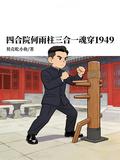 Siheyuan He Yuzhu's Three-In-One Soul Wear 1949
8kReads8.2Score218Shelves
Siheyuan He Yuzhu's Three-In-One Soul Wear 1949
8kReads8.2Score218Shelves
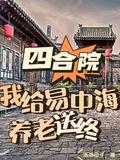 I Will Give Yi Zhonghai His Final Care in the Siheyuan
1.2kReads5.7Score—Shelves
I Will Give Yi Zhonghai His Final Care in the Siheyuan
1.2kReads5.7Score—Shelves
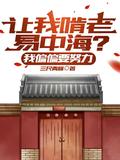 Siheyuan: Almighty Grandmaster
16.6kReads8.7Score870Shelves
Siheyuan: Almighty Grandmaster
16.6kReads8.7Score870Shelves
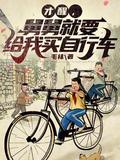 I Just Woke up and My Uncle Wants to Buy Me a Bicycle.
24.6kReads8.4Score1.3kShelves
I Just Woke up and My Uncle Wants to Buy Me a Bicycle.
24.6kReads8.4Score1.3kShelves
 Siheyuan: Rebirth 54 Years Ago, Neighbor Is Stupid
26.1kReads7.4Score1.4kShelves
Siheyuan: Rebirth 54 Years Ago, Neighbor Is Stupid
26.1kReads7.4Score1.4kShelves
 The First Thing to Do When Traveling Through Time Is to Intercept Qin Huairu!
56Reads5.8Score—Shelves
The First Thing to Do When Traveling Through Time Is to Intercept Qin Huairu!
56Reads5.8Score—Shelves
 Courtyard: Being Low-Key, I Am Invincible
18Reads5.8Score—Shelves
Courtyard: Being Low-Key, I Am Invincible
18Reads5.8Score—Shelves
 Siheyuan: Silly Zhu Got Married Secretly, and Everyone Was Dumbfounded
35.2kReads8.1Score1.5kShelves
Siheyuan: Silly Zhu Got Married Secretly, and Everyone Was Dumbfounded
35.2kReads8.1Score1.5kShelves