Hard Science Fiction + Interstellar + Travel or Wandering + Alien Civilization
Views
12.1M
Books
98
Recommendations
794
Updated
3d ago
Those who don't like old battles, fighting from the beginning to the end, from the solar system to the Milky Way, prefer a detailed description of alien society and storylines, just like observing other civilizations.
Families, I found a magical book! The imagination is boundless! 🤯 The author turned Journey to the West into a complete science fiction! The Zhu Bajie here is a grumpy old man who drives a heavy mecha, and his firepower coverage is so cool! Sun Wukong's golden cudgel is set to be made of neutron star material, the kind that can cause a nuclear explosion when dropped! The most outrageous thing is Tang Seng. He is a high-dimensional observer. He can directly modify the parameters of reality without using his hands, turning the goblin's weapons into scrap metal! Worship Buddha? What doesn't exist, he is the law! In the beginning, it was a tough battle with the Heavenly Fleet, and the whole process was high-powered without any mistakes. If you are tired of watching the traditional Journey to the West and want to read something hard-core, emotional, and decisive, this book will definitely satisfy you! Believe me, you can't stop reading Chapter 5. This is the real "physical transcendence"! Just rush and that's it! 👇👇👇
The world view is huge, yet very down-to-earth. This is the most realistic interstellar novel I have ever read. It is as if reality will look like what he describes in his book when it enters the interstellar age. Moreover, the track and story are novel, the imagination is big, the pace is not sluggish, the logic is good, and the writing style is comfortable to read.
It wouldn't be called science fiction without interstellar. When you go exploring on a spacecraft with your hands, you won't be able to use it when encountering high technology. If you don't evolve the technology, you won't be able to use it there.
The description of alien society and storyline is in line with the subject's desire, just like observing other civilizations. Introduction to "Starship Past": Su Xingmo looked at the blue planet outside the window and fell into infinite reverie. Why are we born on a starship in outer space? What secrets are hidden on that planet? His curiosity drove him to start a journey of exploration. Along the way, he met many like-minded partners and experienced many bizarre and bizarre events... Why does a person who falls from a roof freeze in mid-air as if suspended? Why would someone's soul pass through the person who killed him? Why have humans been living on starship arks for thousands of years... The answers to many mysteries are slowly emerging. What will be waiting for the protagonist?
Have you always firmly believed that there are alien hybrids in the world? This is a great legend that takes you between another planet and the earth and traces the origins of mankind!
When the moon begins to count down to the fate of mankind: The ultimate confession about the "Moon Time" series - to all adventurers looking for answers in the long river of time [Written in front] Dear readers, I am sitting in front of the computer at the moment. It has been seven years since the first draft of "Moon Time" was completed. From initially sketching the outline of "City Ruins" on a draft paper, to now having three books piled on my desk - "Moon Time", "Moon Time Instructions", and "Moon Time: Sixty Years of Civilization Stagnation", this story about time, space, civilization and human nature has finally completed its closed loop. Today, as a "novelist" rather than a "book reviewer", I want to take you into the core of this universe and talk about the carefully laid foreshadowings, the repeatedly scrutinized scientific logic, and the soft heartbeat hidden behind the hard-core settings. [From lunar dust to cosmic epic: A countdown spanning three centuries] ▶ It all started with that "hexagon that shouldn't exist." Late one night in 2025, I was staring at the photos of the moon sent back by the astronomical telescope, and was suddenly attracted by the unusual metal distribution in Alfonso Crater—regularly arranged elemental calcium, forming a perfect hexagon in the lunar soil. This discovery, which violated common sense of chemistry, became the starting point of the entire story: If the moon had alien observatories as early as the 20th century, why did it choose to self-destruct in 1957 (the year when humans launched the first satellite)? This question gave rise to the core contradiction of "Moon Time": the fear of alien civilizations towards human beings' "technological explosion". When the light sail fleet of the HD183658 star system approaches at half the speed of light in 2184, mankind has to face a cruel fact: our "progress", in the eyes of higher-dimensional civilizations, may just be the beginning of a countdown. ▶ "Sixty Years of Civilization's Stagnation": Human history that has been pressed on the pause button. The creation of the prequel "Sixty Years of Civilization's Stagnation" stems from a bold hypothesis: What would happen if the lunar city launched a "time anchor" to the earth on the day of the Cuban Missile Crisis in 1962, forcibly freezing human technology? In the book, I fictionalized the distortion of reality by the "time anchor": in the world after 1962, semiconductor technology has stagnated, the space race has terminated, and mankind is trapped in an isolated city in the shadow of the Cold War. But just like the alien message found by the protagonist Wang Keran in the ruins: "Your weapons will tear open the scars of the universe." - This is not only a metaphor for nuclear deterrence, but also an advanced echo of the "Firefly Swarm" star-destroying weapons in the main line of "Moon Time". ▶ "Instruction Manual": A "cheating code" for hard-core science fiction fans. Many readers asked me: "Do the wormhole equations and dark matter engines in the novel really exist?" The answer is hidden in the "Moon Time Instruction Manual". This book is not a simple collection of settings, but a dance between science and fantasy: The "breathing theory" of the multidimensional universe: explains why the time flow rate difference in different universes can reach 1:2000 The "rust paradox" of Cybertron's machinery: reveals why advanced civilizations are afraid of the increase in material entropy Lancer's pocket watch: This recurring image is actually the embodiment of a quantum time capsule Tip: The "Analysis of City Coordinates" on page 237 of the book hides the reality of Apollo The longitude and latitude of the lunar landing site No. 17 Are encrypted - this is my easter egg for astronomy enthusiasts. [Characters that keep me awake at night: They understand loneliness better than I do] ▶ Lancer: The "Savior" Betrayed by Time When I first designed Lancer, I wanted to create an **"anti-hero"**: the commander who leads the combined fleet. On the surface, he is the hope of mankind, but in fact he is the "key" chosen by alien civilization. His pocket watch stopped on October 27, 1962, the most critical moment of the Cuban Missile Crisis, suggesting that his fate had been sealed half a century earlier. The most cruel scene in the book is when he witnesses himself in another universe emitting light particles towards the earth from the other end of the wormhole - when the "savior" and the "destroyer" become two sides of the same person, the joke of time tears apart the fig leaf of civilization. ▶ Dreamland: Drowning in the Flood of Time The inspiration for Dreamland came from a question my daughter asked me before going to bed: "Dad, will my deceased grandma live in another universe?" This girl who can perceive the timeline is actually mankind's collective obsession with "possibility". Each of her "dream talks" are fragments of different branches of the universe: "There is a city under the Antarctic ice" corresponds to the underground base of the Dark Matter Legion "Metal is Singing" hints at the dying cry of Cybertron's machinery. The smile before she disappeared in the final chapter is my romantic annotation of the "parallel universe theory of existence" ▶ Li Erniang and Bai Liu: A love crushed by history. This pair of lovers spanning centuries carries the softest core of the story. Bai Liu's diary written in 2077: "We always think that changing the past can save the future, but we forget that the temperature of our embrace at this moment is the reality." It became the most anti-hardcore declaration in "Moon Time". Their endings hide my creative philosophy: no matter how grand the cosmic narrative is, it will eventually fall back to individual joys and sorrows. [The Tenderness of Hard Science Fiction: When Formulas Meet Humanity] ▶ The "double faces" of scientific settings. Every hard-core concept of "Moon Time" has dual directions of reality and metaphor: Science fiction settings map reality against human nature. Grandfather Paradox. Ethical dilemmas of science and technology. Humanity's obsession with "sense of control". Dark matter army. Capital expansion and resource plunder. The aggressive instinct of civilization. Fireflies swarm (Dyson sphere). Clean energy ideal. Humanity's superstition of "ultimate power". ▶ Deleted Chapter 10: Civilization "The Third Possibility" In the appendix of the "Instructions", I restored the deleted original chapter: When the human fleet and the alien light sail confronted each other in the orbit of Mars, a "hybrid civilization" composed of AI, mechanical bodies and humans suddenly intervened. They showed an alternative future: giving up physical existence and transforming into a quantum state to integrate into the cosmic network. This ending was removed because it was too "idealistic". But in reality, I always believe that the way out for civilization is not conquest, but the courage to understand "differences." [Letter to future readers] As you close the book at this moment, you may be standing in front of the window in 2025, watching the clear light of the moon shine on the pages of the book. Remember: Your today will never happen again!
StarCraft background novel is a hard-core science fiction novel, but the male protagonist is a human soldier and a scientist who travels, explores, and studies the Zerg and Eldar races.
They are all sci-fi novels that I have read personally. They are very good. The first and sixth books are highly recommended. The others are also good. Friends who like them can try them.
This novel is based on scientific theory and aims to tell a series of sci-fi suspense stories. In this story, the plot of each chapter will have corresponding reversals and sublimations, focusing on exploring the future destiny of mankind and the impact of the arrival of unknown advanced life forms on mankind. The novel focuses on human nature, environmental issues in the near future, alien civilization, and how to deal with one's own existential crisis. Use a conspiracy of the coalition government to elicit a large number of clues and promote the development of the plot. I hope to create a sci-fi suspense story that is both imaginative and hard-core enough. I hope this work will be liked by everyone, and I also hope that everyone can comment and give me more suggestions (keywords: Mars expedition report, coalition government, Earth opportunist organization, binary star system, mysterious murals, higher life forms, Agni, black holes, cosmic tunnels)
It must be these two books. Everyone who has read them knows that, especially the captain in the second book is very touching and the writing is also very nuanced. It will definitely make you more and more addicted the more you read it. You will stay up all night long to read it and you can't stop at all [get it]
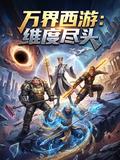 Journey to the West: the End of Dimension
2Reads—Score—Shelves
Journey to the West: the End of Dimension
2Reads—Score—Shelves
 Absolutely Amazing. When You Open Your Eyes, You Will See the Countdown to the Destruction of the Galaxy.
2Reads5.8Score—Shelves
Absolutely Amazing. When You Open Your Eyes, You Will See the Countdown to the Destruction of the Galaxy.
2Reads5.8Score—Shelves
 Live: the Opening Proves the Infinite Multiverse
24.5kReads8.7Score2.9kShelves
Live: the Opening Proves the Infinite Multiverse
24.5kReads8.7Score2.9kShelves
 Evolution Explorer
7Reads—Score—Shelves
Evolution Explorer
7Reads—Score—Shelves
 Start as a Planet Hitting the Earth
14.6kReads9.3Score1.1kShelves
Start as a Planet Hitting the Earth
14.6kReads9.3Score1.1kShelves
 Transform into an Ascidian Larva and Eat Your Brain First
2.8kReads8.9Score308Shelves
Transform into an Ascidian Larva and Eat Your Brain First
2.8kReads8.9Score308Shelves
 Starship Past
2Reads—Score—Shelves
Starship Past
2Reads—Score—Shelves
 Swallow's Nest Curtain
—Reads—Score—Shelves
Swallow's Nest Curtain
—Reads—Score—Shelves
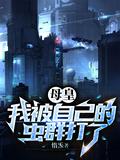 Queen Mother: I Was Beaten by My Own Insect Swarm?
6Reads5.8Score—Shelves
Queen Mother: I Was Beaten by My Own Insect Swarm?
6Reads5.8Score—Shelves
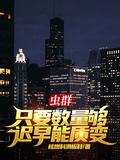 God: Star Sea Insect Swarm
50.3kReads9.3Score4.5kShelves
God: Star Sea Insect Swarm
50.3kReads9.3Score4.5kShelves
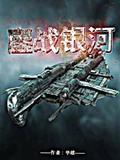 Battle for the Galaxy
922Reads7.4Score108Shelves
Battle for the Galaxy
922Reads7.4Score108Shelves
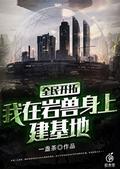 National Development: I Build a Base on the Rock Beast
279Reads5.0Score—Shelves
National Development: I Build a Base on the Rock Beast
279Reads5.0Score—Shelves
 President of the United Nations General Assembly
541Reads8.8Score—Shelves
President of the United Nations General Assembly
541Reads8.8Score—Shelves
 Interstellar Oath
—Reads5.8Score—Shelves
Interstellar Oath
—Reads5.8Score—Shelves
 Global Cataclysm: My Doomsday Fortress Can Be Infinitely Upgraded
2.8kReads6.8Score258Shelves
Global Cataclysm: My Doomsday Fortress Can Be Infinitely Upgraded
2.8kReads6.8Score258Shelves
 Asphalt Hills
3Reads—Score—Shelves
Asphalt Hills
3Reads—Score—Shelves
 A Lonely Boat in the Sea of Entropy
—Reads5.8Score—Shelves
A Lonely Boat in the Sea of Entropy
—Reads5.8Score—Shelves
 Eastern Galaxy War Chronicles
49Reads6.8Score—Shelves
Eastern Galaxy War Chronicles
49Reads6.8Score—Shelves
 Chronicles of the AI Revolution
1Reads—Score—Shelves
Chronicles of the AI Revolution
1Reads—Score—Shelves
 The System Exploded and I Became the System
112.1kReads9.4Score12.4kShelves
The System Exploded and I Became the System
112.1kReads9.4Score12.4kShelves
 I Build Mechas in the Magical World
105Reads5.8Score—Shelves
I Build Mechas in the Magical World
105Reads5.8Score—Shelves
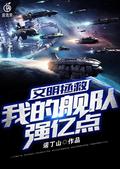 Civilization Salvation: My Fleet Is 100 Million Points Stronger
201Reads5.2Score—Shelves
Civilization Salvation: My Fleet Is 100 Million Points Stronger
201Reads5.2Score—Shelves
 Void Seeder
2Reads5.8Score—Shelves
Void Seeder
2Reads5.8Score—Shelves
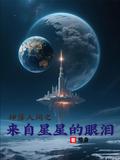 Tears from the Stars
—Reads—Score—Shelves
Tears from the Stars
—Reads—Score—Shelves
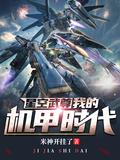 Starry Sky Warrior: My Mecha Era
11.2kReads9.0Score1.1kShelves
Starry Sky Warrior: My Mecha Era
11.2kReads9.0Score1.1kShelves
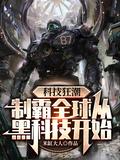 Technology Frenzy: Global Domination Starts with Black Technology
61Reads5.8Score—Shelves
Technology Frenzy: Global Domination Starts with Black Technology
61Reads5.8Score—Shelves
 EVE the Way Home
9Reads5.8Score—Shelves
EVE the Way Home
9Reads5.8Score—Shelves
 Moon Time: Civilization Stagnated for Sixty Years
8Reads5.8Score—Shelves
Moon Time: Civilization Stagnated for Sixty Years
8Reads5.8Score—Shelves
 Starcraft: I Became the Overlord of the Swarm
594Reads7.3Score—Shelves
Starcraft: I Became the Overlord of the Swarm
594Reads7.3Score—Shelves
 A Small Soldier at the Beginning: I Travel Across the Stars
205Reads7.2Score—Shelves
A Small Soldier at the Beginning: I Travel Across the Stars
205Reads7.2Score—Shelves
 Moon Time Manual
10Reads—Score—Shelves
Moon Time Manual
10Reads—Score—Shelves
 Traveling Through All Realms in the Heavens
8.9kReads7.2Score510Shelves
Traveling Through All Realms in the Heavens
8.9kReads7.2Score510Shelves
 Stardome Waste: My Fleet Comes from the Recycling Bin
132Reads6.4Score101Shelves
Stardome Waste: My Fleet Comes from the Recycling Bin
132Reads6.4Score101Shelves
 Lunar Time
15Reads8.5Score—Shelves
Lunar Time
15Reads8.5Score—Shelves
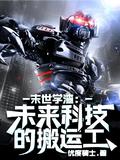 Apocalyptic Scum: Porters of Future Technology
109Reads—Score—Shelves
Apocalyptic Scum: Porters of Future Technology
109Reads—Score—Shelves
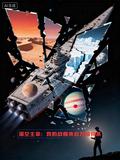 Deep Space Dominator: My Battleship Comes from All Things
4Reads—Score—Shelves
Deep Space Dominator: My Battleship Comes from All Things
4Reads—Score—Shelves
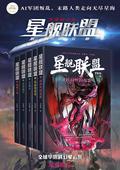 Starship Alliance Series
368Reads9.1Score—Shelves
Starship Alliance Series
368Reads9.1Score—Shelves
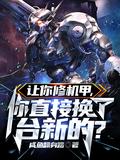 I Asked You to Repair the Mecha, but You Just Replaced It with a New One?
40.7kReads8.9Score3.8kShelves
I Asked You to Repair the Mecha, but You Just Replaced It with a New One?
40.7kReads8.9Score3.8kShelves
 Treasure Digging in the Universe: Digging Out Alien Civilizations at the Start
107Reads6.0Score—Shelves
Treasure Digging in the Universe: Digging Out Alien Civilizations at the Start
107Reads6.0Score—Shelves
 Create a Nine-Level Civilization Starting from the Wandering Starry Sky
16Reads5.8Score—Shelves
Create a Nine-Level Civilization Starting from the Wandering Starry Sky
16Reads5.8Score—Shelves
 Sorry, My Starfleet Only Recruits Female Soldiers
58.9kReads9.1Score6.6kShelves
Sorry, My Starfleet Only Recruits Female Soldiers
58.9kReads9.1Score6.6kShelves
 Three-Body Problem: the Past of the Universe
230Reads—Score—Shelves
Three-Body Problem: the Past of the Universe
230Reads—Score—Shelves
 Black Moon Technology
53Reads—Score—Shelves
Black Moon Technology
53Reads—Score—Shelves
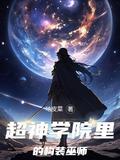 Constructor Wizard in Super Seminary
569Reads5.5Score—Shelves
Constructor Wizard in Super Seminary
569Reads5.5Score—Shelves
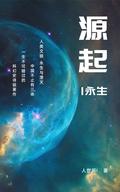 Origin I Eternal Life
45Reads6.3Score—Shelves
Origin I Eternal Life
45Reads6.3Score—Shelves
 Deep Space Mystery
3Reads—Score—Shelves
Deep Space Mystery
3Reads—Score—Shelves
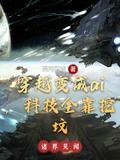 Inherit Civilization and Start Traveling
343Reads—Score—Shelves
Inherit Civilization and Start Traveling
343Reads—Score—Shelves
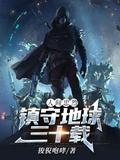 Loyalist on Earth: Guarding the Earth for Thirty Years
21.4kReads9.5Score1.3kShelves
Loyalist on Earth: Guarding the Earth for Thirty Years
21.4kReads9.5Score1.3kShelves
 I Will Rule the Entire Universe with One Fleet!
—Reads—Score—Shelves
I Will Rule the Entire Universe with One Fleet!
—Reads—Score—Shelves
 Qunxing: I Am a Freshman in Xinghai!
11.4kReads9.4Score1.2kShelves
Qunxing: I Am a Freshman in Xinghai!
11.4kReads9.4Score1.2kShelves