I saw a post two days ago saying that the first person is awkward. I finally found out that there are readers who like to read first-person articles, which makes me very happy. I would like to recommend my own novels, first person, fantasy romance, funny and sweet novels, happy enemies type. It tells the story of two immortals who were injured and lost their memory. They re-trained and experienced calamities. They were entangled by fate for three lifetimes and lived a life of chaos. In the end, HE
In fact, at the beginning, I just wanted to write a short story, so I used the first person. As a result, it became longer and longer... But it was difficult to change the person.
Push push! It's actually very interesting. I think few people have noticed this novel. Oh, and by the way, it's a new book and doesn't have any ratings. I want more people to see it. If it doesn't suit your taste, you don't have to read it! I'm not forcing it, I just want to help you find more readers.
The first person is wearing it, the slow-burning growth flow, the sense of substitution is very real! [Bookshelf plus one][Has been planted][Seeking attention]
Brother Killer only recommends good books that are completed and continuously updated 📖 ①The driver of a black car met a beautiful woman late at night, failed to brake quickly and hit her to death. Unexpectedly, a series of horrific things happened. ② Tomato has a book on Aoaohuo. The male protagonist is the driver of the last bus, and all the bizarre and terrifying things he encounters turn out to be a big conspiracy. ③It is said to be a true story and is still being updated. You can gain insights by reading novels.
I wrote it myself and shamelessly posted it [face covering]. It is a first-person time travel demon slayer story. I will humbly accept any review, good or bad.
This is the first time for a newcomer to write an urban novel. If you want to read it, you can start reading it from Chapter 7 or Chapter 39. If you like it, then read the previous ones.
I would like to give a small thumbs up to the little article I wrote. It is a first-person perspective, a Western fantasy adventure novel. It has two protagonists but a fixed perspective of the heroine. I really write it seriously! But not many people read it. Even if there are few people, I will insist on finishing this story. I have already written the outline and will definitely write a complete ending! I'm a newbie, please give me some credit. It's okay to scold me if the writing is not good [crying][crying][crying]
On my homepage, in the bookshelf group, there is a book, The Final Chapter of the God of Creation and the Creator. I wrote it myself. I would like to see reviews.
It's very interesting. The author of "Pujie" went into his own book to fix poison points and complain about slaves. Every story is very interesting. I have read it many times. Old bookworms will probably like it, but it seems that Tomato has not discovered this treasure novel yet. There is depth in the smile and the world of the book is diverse. I like it very much and recommend it to everyone.
When Long Zuo Bingying's pen crosses the stars: a first-person entertainment epic - a review of the narrative revolution and cultural breakthrough of "This Life: Part 1" In the vast sea of tomato novels, "This Life: Part 1" opens up a new dimension of entertainment industry themes from a first-person perspective. The heroine Long Zuo Bingying written by the author Dong Long Liushi is not only the queen of the gods, a top star in the world, but also an agent who walks on the edge of a knife. This "triple identity" setting is subversive in traditional entertainment novels. Through the first-person narrative, readers can immersively experience her tearing and rebirth between the spotlight and the interstellar battlefield. 1. First-person "wall-breaking" magic: "seamless travel" from the entertainment industry to the interstellar world 1. An immersive experience of identity tearing Long Zuo Bingying's first-person monologue is like a double-sided mirror. One side reflects the glitz of the entertainment industry: when she lifts her skirt on the Cannes red carpet, readers can feel the touch of silk brushing against her skin; the other side reflects the machinations of the divine world: when she judges traitors as a queen, the dragon soul flames flowing through her fingertips seem to burn the screen. This kind of multi-dimensional sensory impact is difficult to achieve in third-person narrative. For example, in Chapter 9, "Turning Point, Mysterious Letter", when she receives a secret letter from the Interstellar Alliance, the uneasiness and anticipation that jump between the words directly hit the reader's heart through the details of "My fingers holding the letter trembled slightly". 2. The art of "folding" the timeline. The novel adopts a dual-line structure of "real entertainment industry + past life memory of the divine world", which is naturally connected through first-person memory flashbacks. When Long Zuo Bingying was recording a new song in the recording studio, a scene of war in the divine world suddenly flashed up (such as the dragon soul duel with the old enemy in Chapter 23 "Eternal Rival"), allowing readers to experience the interweaving of two lives in the same time and space. This time-folding narrative technique is unique among the entertainment industry themes of Tomato novels, forming a strong "refreshing contrast". 2. "Breaking the wall" of cultural details: from the rules of the fandom to the "hard-core embedding" of interstellar civilization 1. "Microscopic" deconstruction of the entertainment industry The author's description of the ecology of the entertainment industry can be called an industry textbook. For example, in Chapter 70 "Exclusive interview, first talk about what is an actor", Long Zuo Bingying analyzed the essence of performance and mentioned: "A real actor uses his soul to weave a cocoon for the character. The moment the cocoon breaks out, the audience sees not you, but another universe." This kind of in-depth thinking on the performing arts goes beyond the "slap in the face counterattack" routine of traditional entertainment circles and shows the depth of culture. 2. "Soft landing" in the interstellar setting When the plot advances to the interstellar line, the author skillfully integrates elements of Eastern mythology into the science fiction framework. For example, in Chapter 80 "Title: Underworld", Long Zuo Bingying used the "Dragon Soul Slash" skill to fight against the interstellar Zerg. The names of the moves "Phantom Ecstasy Step" and "Dark Fire Flame Bomb" not only retain the artistic conception of Eastern martial arts, but also give the sci-fi battle a visual impact. This kind of narrative strategy of cultural mashup makes the interstellar plot less obtrusive and instead becomes the highlight of the novel's "circle-breaking". 3. "Breaking the wall" of Tomato ecology: from platform rules to precise control of readers' psychology 1. "Textbook-level" application of cool point design The author is well aware of the preferences of Tomato readers, and incorporates cool points such as "pretending to be a pig and eating a tiger" and "extreme crushing" into the first-person narrative. For example, in Chapter 65 "The Comeback of Director Long Zuo", Long Zuo Bingying swept the film festival as a new director. Through the plot of "the storyboard I modified casually was regarded as a standard by the big guys in the industry", the feeling of information disparity was achieved. This closed loop of "protagonist hiding his strength - supporting character provoking - strength crushing" has been tried and tested repeatedly on the Tomato platform. 2. An attempt to "break dimensions" in interactive narrative. The novel comment area has become the "second battlefield" between readers and characters. When Long Zuo Bingying encountered cyber violence in Chapter 141 "It's Over! Days on the Crew", the author allowed readers to directly participate in the plot through interactive options at the end of the chapter (such as "Would you like to help the heroine fight back against black fans?"). This immersive interaction strengthens the "sense of participation" of Tomato users and is in line with the platform's ecological logic of "reader co-creation". 4. The first-person "ultimate wall-breaking": "cultural dialogue" from novel to reality 1. "Mirror projection" of female growth Long Zuo Bingying's first-person monologue is essentially a spiritual allegory for contemporary women. Her struggles in the entertainment industry (such as the unspoken rules of the industry encountered in Chapter 167, "Isn't it? Destroying Everything with One Sing") reflect the plight of female practitioners in reality; and her reshaping of the interstellar order as the Queen of the God Realm is a metaphor for the awakening of female power. This intertextuality between reality and fiction allows the novel to transcend its entertainment attributes and become a "revelation" for women's growth. 2. The ambition to "break the circle" of cultural export. The author has inserted a large number of traditional Chinese cultural elements into the novel: from the reconstruction of ancient civilization in Chapter 69 "Extra: The Story of the Great First Country in the East" to the Eastern fantasy settings such as "Xuanbing Bow" and "Dragon Soul Armor" in Chapter 129 "Live Broadcast Room: 11VS1", he is trying to promote Chinese aesthetics to global readers through first-person narrative. This kind of cultural consciousness is especially rare among the entertainment topics on the Tomato platform. Conclusion: When the tip of the pen cuts through the stars, the first-person "breaking the wall" will never end. The value of "This Life: Part 1" lies not only in its reconstruction of the narrative paradigm of entertainment novels, but also in its realization of triple wall-breaking among culture, platform and readers through the first-person perspective. The tip of Long Zuo Bingying's pen touches not only the glitz of the entertainment industry and the vastness of the stars, but also the infinite possibilities of contemporary Internet writing in terms of subject matter innovation and cultural expression. In the ecology of tomato novels, this work is writing a new epic of first-person narrative.
The series I read is a bit mixed, but it's all written in the first person, so it's really interesting! The authors are all the kind of people with delicate writing styles [Sending my heart] If you like it, you can come and have a look at my bookshelf
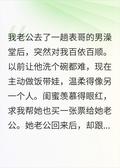 The Day My Husband Became Gentle, My Best Friend's Marriage Died
7.3kReads9.6Score—Shelves
The Day My Husband Became Gentle, My Best Friend's Marriage Died
7.3kReads9.6Score—Shelves
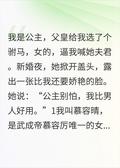 There's Something Wrong with My Consort: Why Is He More Beautiful Than Me?
974Reads8.9Score—Shelves
There's Something Wrong with My Consort: Why Is He More Beautiful Than Me?
974Reads8.9Score—Shelves
 My Harem Just Wants to Run Away, My Ministers Just Want to Rebel
440Reads9.1Score—Shelves
My Harem Just Wants to Run Away, My Ministers Just Want to Rebel
440Reads9.1Score—Shelves
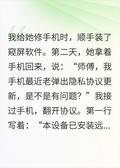 I Was Peeking at Her and She Was Peeking at Me
1.7kReads8.9Score—Shelves
I Was Peeking at Her and She Was Peeking at Me
1.7kReads8.9Score—Shelves
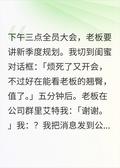 After the Company Sent the Wrong Message, My Boss Blocked Me in the Conference Room
7Reads8.6Score—Shelves
After the Company Sent the Wrong Message, My Boss Blocked Me in the Conference Room
7Reads8.6Score—Shelves
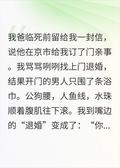 Before My Father Died, He Ordered Me the Wildest Man in Beijing.
26Reads5.8Score—Shelves
Before My Father Died, He Ordered Me the Wildest Man in Beijing.
26Reads5.8Score—Shelves
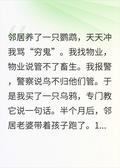 Being Scolded by My Neighbor's Parrot Every Day, I Raised a Crow to Teach Them How to Behave.
12Reads8.5Score—Shelves
Being Scolded by My Neighbor's Parrot Every Day, I Raised a Crow to Teach Them How to Behave.
12Reads8.5Score—Shelves
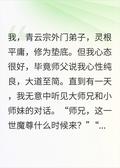 The Whole Sect Is a Reborn Boss, but I'm the Only Real Rookie
67Reads8.5Score—Shelves
The Whole Sect Is a Reborn Boss, but I'm the Only Real Rookie
67Reads8.5Score—Shelves
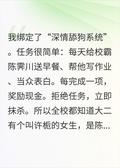 The System Forced Me to Be a Licking Dog, and I Turned the School Bully into a Real Boyfriend
59Reads8.6Score—Shelves
The System Forced Me to Be a Licking Dog, and I Turned the School Bully into a Real Boyfriend
59Reads8.6Score—Shelves
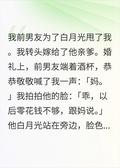 My Ex-Boyfriend Dumped Me and I Became His Stepmother
59Reads5.8Score—Shelves
My Ex-Boyfriend Dumped Me and I Became His Stepmother
59Reads5.8Score—Shelves
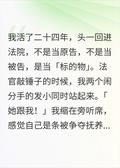 The Two of Us Broke up After a Small Fight, but I Was the Unlucky One.
118Reads9.1Score—Shelves
The Two of Us Broke up After a Small Fight, but I Was the Unlucky One.
118Reads9.1Score—Shelves
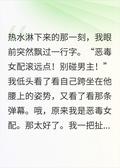 The Barrage Advised Me Not to Touch the Male Protagonist, so I Ripped Off His Bathrobe with My Backhand.
1.3kReads9.7Score—Shelves
The Barrage Advised Me Not to Touch the Male Protagonist, so I Ripped Off His Bathrobe with My Backhand.
1.3kReads9.7Score—Shelves
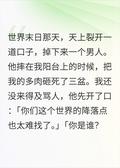 On the Doomsday Day, a 1.9 Meter Male Mother Fell from the Sky
40Reads8.6Score—Shelves
On the Doomsday Day, a 1.9 Meter Male Mother Fell from the Sky
40Reads8.6Score—Shelves
 The Boyfriend I Rented for 500 Yuan Is My Boss's Brother
6kReads9.6Score—Shelves
The Boyfriend I Rented for 500 Yuan Is My Boss's Brother
6kReads9.6Score—Shelves
 On the Day I Left School, I Knocked All the Relatives in the Hospital to Death
2.9kReads8.9Score385Shelves
On the Day I Left School, I Knocked All the Relatives in the Hospital to Death
2.9kReads8.9Score385Shelves
 The Love Tribulation of the Three Lifetimes of the Koi Immortal
5Reads—Score—Shelves
The Love Tribulation of the Three Lifetimes of the Koi Immortal
5Reads—Score—Shelves
 Detective Conan: When the Hunter Travels to the World of Conan
1.3kReads6.9Score157Shelves
Detective Conan: When the Hunter Travels to the World of Conan
1.3kReads6.9Score157Shelves
 Rental Notes
3Reads8.1Score—Shelves
Rental Notes
3Reads8.1Score—Shelves
 Death Breakout: the Second Truth of Life
14Reads—Score—Shelves
Death Breakout: the Second Truth of Life
14Reads—Score—Shelves
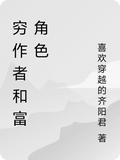 Poor Author and Rich Character
—Reads5.8Score—Shelves
Poor Author and Rich Character
—Reads5.8Score—Shelves
 I Bound the Koi System
28Reads—Score—Shelves
I Bound the Koi System
28Reads—Score—Shelves
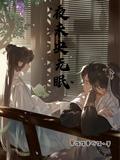 Sleepless Night
7Reads—Score—Shelves
Sleepless Night
7Reads—Score—Shelves
 The Situation After Being Released from Prison
73.3kReads9.5Score8.6kShelves
The Situation After Being Released from Prison
73.3kReads9.5Score8.6kShelves
 Red Bean Ember
5Reads—Score—Shelves
Red Bean Ember
5Reads—Score—Shelves
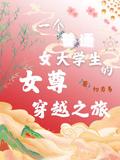 An Ordinary Female College Student's Journey Through Time
30Reads—Score—Shelves
An Ordinary Female College Student's Journey Through Time
30Reads—Score—Shelves
 Please! I Won't Be Your White Moonlight
10Reads—Score—Shelves
Please! I Won't Be Your White Moonlight
10Reads—Score—Shelves
 My Youth Is Like a Puddle of Mud
158.9kReads9.5Score13.2kShelves
My Youth Is Like a Puddle of Mud
158.9kReads9.5Score13.2kShelves
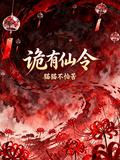 There Is a Mysterious Order
20Reads—Score—Shelves
There Is a Mysterious Order
20Reads—Score—Shelves
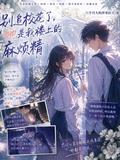 Don't Chase the School Beauty, She's the Troublemaker Upstairs
2.2kReads8.1Score302Shelves
Don't Chase the School Beauty, She's the Troublemaker Upstairs
2.2kReads8.1Score302Shelves
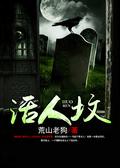 Living Grave
85Reads5.8Score—Shelves
Living Grave
85Reads5.8Score—Shelves
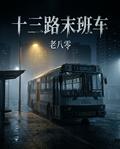 Last Bus on Route 13
152.4kReads5.8Score15.1kShelves
Last Bus on Route 13
152.4kReads5.8Score15.1kShelves
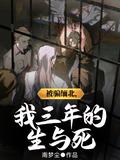 Being Deceived into Northern Myanmar, My Three Years of Life and Death
32Reads5.8Score—Shelves
Being Deceived into Northern Myanmar, My Three Years of Life and Death
32Reads5.8Score—Shelves
 Weird Story About Rules: My Female Classmate and I Are a Dirty Couple
151Reads5.6Score—Shelves
Weird Story About Rules: My Female Classmate and I Are a Dirty Couple
151Reads5.6Score—Shelves
 Juyi Community
2.2kReads8.9Score275Shelves
Juyi Community
2.2kReads8.9Score275Shelves
 Demon Slayer: He Comes from the Fire
580Reads9.1Score105Shelves
Demon Slayer: He Comes from the Fire
580Reads9.1Score105Shelves
 Twelve Star Pavilion Rebirth Records
1Reads—Score—Shelves
Twelve Star Pavilion Rebirth Records
1Reads—Score—Shelves
 My Crazy Girlfriend
—Reads—Score—Shelves
My Crazy Girlfriend
—Reads—Score—Shelves
 Angel Night
—Reads5.8Score—Shelves
Angel Night
—Reads5.8Score—Shelves
 Detective Conan: the Husky Rotary Wood
25Reads5.8Score—Shelves
Detective Conan: the Husky Rotary Wood
25Reads5.8Score—Shelves
 Xuelianzhen
138kReads9.7Score17.9kShelves
Xuelianzhen
138kReads9.7Score17.9kShelves
 The System Asked Me to Edit the Online Article, but the Readers Went Crazy
7Reads—Score—Shelves
The System Asked Me to Edit the Online Article, but the Readers Went Crazy
7Reads—Score—Shelves
 Parallel Quest
1Reads—Score—Shelves
Parallel Quest
1Reads—Score—Shelves
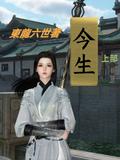 This Life: Part 1
—Reads—Score—Shelves
This Life: Part 1
—Reads—Score—Shelves
 My Aunt Is the Queen and the Prince's White Moonlight
113Reads8.2Score—Shelves
My Aunt Is the Queen and the Prince's White Moonlight
113Reads8.2Score—Shelves
 The Branches Have a Sound
12Reads—Score—Shelves
The Branches Have a Sound
12Reads—Score—Shelves
 Traveling Through Time and Becoming a Dowry, Just Trying to Survive
375Reads8.2Score—Shelves
Traveling Through Time and Becoming a Dowry, Just Trying to Survive
375Reads8.2Score—Shelves
 The Beginning of Heavenly Collapse: I Am the Mad Emperor's Rotten Bai Yueguang
748Reads8.1Score—Shelves
The Beginning of Heavenly Collapse: I Am the Mad Emperor's Rotten Bai Yueguang
748Reads8.1Score—Shelves
 My Strange Time
1kReads9.5Score170Shelves
My Strange Time
1kReads9.5Score170Shelves
 Disturbing Seeds
20Reads—Score—Shelves
Disturbing Seeds
20Reads—Score—Shelves
 My Past Is Like a Fleeting Time
99Reads—Score—Shelves
My Past Is Like a Fleeting Time
99Reads—Score—Shelves