The name is very un-tomato, but the content is very interesting. A descendant of the reborn Zhuge Liang marries a future female agent who has traveled through time and is a descendant of Sima Yi with the same name as his wife? Then one is an undercover agent in the current Qin Dynasty, and the other is catching spies in the Eastern Jin Dynasty? There is also a female partner who has also traveled through time and disguised herself as a man to work? The female villain has brain-controlled Xie Daoyun, a talented woman from the Eastern Jin Dynasty? Yes, this is the story of espionage and intrigue during the Wei, Jin, Southern and Northern Dynasties. This subject is a story written by me, who has been a member of the Wei, Jin, Southern and Northern Dynasties for ten years, and I can't stop writing it. The novel has two heroines, female agents Sima Xiangyun and Ren Miming, respectively, who have passed through the spirit of the Yuyao Princess of the same name in the Eastern Jin Dynasty and traveled together with her human body. After arriving among the refugees, the two met and became involved in a spy war between the various forces of the Eastern Jin Dynasty and the Former Qin Dynasty. The male protagonist Zhuge Bin finally implemented Xie An's plan against the bitter meat in order to undercover the former Qin Dynasty, and was also involved in this espionage war full of conspiracies and tricks.
. In the Central Plains after the Rebellion of the Eight Kings, the Western Jin Dynasty collapsed, the conflict between Hu and Han became acute, and social order completely collapsed. The political corruption of the Western Jin Dynasty was extremely corrupt and unable to deal with internal and external troubles; Han refugees and internally-immigrated Hu people were also oppressed and became revolutionary forces; long-term wars caused the people to desperately desire order, no matter what ethnic group this order came from. As a slave, Shi Le broke free from the shackles of identity; as a Jieren, he broke through the ethnic barriers. The "Eighteen Cavalry" he formed in the early stage showed a multi-ethnic character. Later, when its power grew, it widely absorbed the forces of Han, Xianbei, Wuhuan and other ethnic groups. This open and inclusive talent strategy is in sharp contrast to many forces at the same time that cling to ethnic boundaries. Especially after being assisted by the Han counselor Zhang Bin, Shi Le truly realized the transformation from a rogue bandit to a regime builder. Zhang Bin's strategy of "occupying Xiangguo, establishing Yedu, and benefiting the world" provided Shi Le with a clear development blueprint, which was also a model of elite cooperation between Hu and Han. In the post-Zhao regime established, most of the laws and regulations followed the Han system, including the establishment of Imperial College, the selection of Confucian students, and the embryonic recommendation system of the imperial examination. From a longer historical perspective, Shi Le was a key figure in the Five Hus and Sixteen Kingdoms period who connected the past and the future. He destroyed the former Zhao and basically unified the north, laying the foundation for the subsequent unification of the former Qin; although his policy of dividing Hu and Han was not perfect, it explored a model of multi-ethnic coexistence; his rise itself symbolized the historical transformation of the Hu people from being ruled to rulers, and opened a new stage of the great integration of northern ethnic groups. Ancient Han people and officials mostly regarded it as a barbarian head that "ruined China", while modern historians view its historical role more objectively. In fact, Shi Le was a much more complex character: he was a cruel warrior at first, and he was ruthless in trapping and subduing soldiers; later he was a sober politician, with a profound insight into the laws of history; he was both a cultural imitator and worked hard to learn the Han system; and he was a stickler for national identity, always maintaining a Jieren consciousness. In Shi Le's life, we saw not only the legend of a man, but also the mirror image of an era. In that chaotic and dynamic era, the old order had collapsed, the new order had not yet been established, and everyone was looking for their place. Shi Le found it. From slave to emperor, he completed an almost impossible life journey. But his story also reminds us: personal success is magnificent, but establishing a lasting order and achieving true harmony requires more than military conquest - cultural tolerance, institutional innovation, and the transcendence of human nature. This is the most precious legacy Shi Le left to future generations: an eternal reflection on struggle and limitations, power and wisdom, nation and culture. After thousands of years, we can still see the glory and pathos of that era from him, and we can also illuminate some eternal themes in the human condition. History does not repeat, but it always rhymes - Shi Le's story is still echoing in our time in different ways.
"Kai Xiao Southern and Northern Dynasties" is a classic historical time-travel drama. It leads us through time and space and appreciates different customs and customs. This book uses profound insights and unique insight to reveal that turbulent history, the good, evil and contradictions of human nature. In the process of savoring the fragrance of books, people can't help but be intoxicated and think about a better future!
There is no Southern and Northern Dynasties. Few people read the Southern and Northern Dynasties, and it would not make any money to write about it. Only a great god can write it. Masters write to make money. It is not easy to write a book. The author is disabled and has to earn some living expenses for his children. Whether it looks good or not, I hope it will receive five stars.
The Northern and Southern Dynasties version of Game of Thrones. The Wang family of Langya, the Xie family of Chenjun, the Yang family of Hongnong... The Cui family of Qinghe... Traditional power strategy writing, detailed narrative. But, not time travel.
Is it okay without time travel? It's historical, traditional martial arts, no immortality, no fans, background of the Eastern Jin Dynasty, hot-blooded teenagers, can you try to read it?
Traveling through the Five Dynasties and Ten Kingdoms period, my sister was hit by an arrow at the beginning, and I rose up in troubled times! From a craftsman to an emperor, the Northern Expedition to Yanyun will bring eternal peace to the poor people of the world!
The Bloody Long Song forges an Epic——Comments on the Redemption of Civilization in Troubled Times in "Across the Five Wild Chinas" "Across the Five Wild Chinas: The Bloody War Hymn of Chang'an" is by no means an ordinary historical novel, but a hard-core epic that interrogates the survival of civilization in China's darkest moment. The author uses astonishing historical skills to tear open the bloody scars of Wu Huan Hua: Chang'an's mountains of corpses and seas of blood, the purgatory scenes of refugees exchanging children for food, and the tragic civilization of the Xiongnu digging tombs and burning temples, all of which form the cruel background of the protagonist Xu Zhaoyuan's struggle. The protagonist's time-travel setting is given a heavy mission - he is not an omniscient god, but a "martyr" with modern knowledge. The forgery of blood edicts based on Lueyang was the cunning of the heroes, the sacrifice of the Weishui River to create the "Three Edicts" was the vision of a politician, the turning of refugees into labor in the six major factories was the wisdom of a practical man, and the Great Wall of flesh and blood of Modao Formation when the 50,000 Shihu cavalry were wiped out in Pengpi Marsh was the iron-blooded declaration of the guardians. What's more valuable is that the work directly faces the paradox of civilizational redemption: to implement good governance in farming to save the lives of the people, one must first subdue Pu Hong through deception; to advocate Hu-Han Datong, he was brutally murdered during the Lu Po Lou rebellion. This kind of moral dilemma makes the road to hegemony full of ideological tension. The novel's protection of the "tinder of civilization" is a stroke of genius. From Guo He risking his life to protect classics, to setting up the Academy of Gewu to research gunpowder, and printing with movable type to spread knowledge; from Taixue breaking the monopoly of clans, to inculcating the revolutionary spirit of "please go elsewhere for promotion and fortune" at the Military Academy - the inheritance trio of knowledge, system, and spirit played the strongest voice of civilization under the iron hoof of Hu Qi. The tragic decision of Yang Xianrong to return to Hu is intertwined with the arc of Sima Yue's growth from a distressed princess to a mainstay of domestic politics, revealing the desolation and tenacity of individual destiny in troubled times. The author uses the aesthetics of cold weapon warfare to describe classic battles such as the Bloody Battle of Lishui and Xixian Mo Dao Po Qi. The tactical details are as hard-core as military deductions. When Xu Zhaoyuan resigned from the title of king, he said, "The Celestial Master of the Jin Dynasty is higher than the false throne." His ambition to reshape order through the theocratic regime was clearly revealed. This bloody song finally raised not only the banner of the Han Dynasty on the ruins of Chang'an, but also the dawn of the rebirth of Chinese civilization.
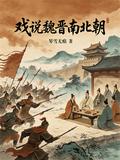 Joking About the Wei, Jin, Southern and Northern Dynasties
3.5kReads6.9Score293Shelves
Joking About the Wei, Jin, Southern and Northern Dynasties
3.5kReads6.9Score293Shelves
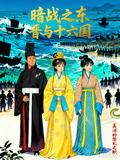 The Secret War of the Eastern Jin Dynasty and the Sixteen Kingdoms
29Reads5.8Score—Shelves
The Secret War of the Eastern Jin Dynasty and the Sixteen Kingdoms
29Reads5.8Score—Shelves
 Rebirth of Qiu Lie, Rejecting the Prince
31Reads—Score—Shelves
Rebirth of Qiu Lie, Rejecting the Prince
31Reads—Score—Shelves
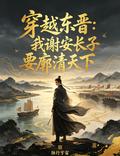 Traveling Through the Eastern Jin Dynasty: I, the Eldest Son of Xie An, Want to Clarify the World
185Reads5.8Score—Shelves
Traveling Through the Eastern Jin Dynasty: I, the Eldest Son of Xie An, Want to Clarify the World
185Reads5.8Score—Shelves
 Return to Yi and Restore Tang Dynasty
12Reads5.8Score—Shelves
Return to Yi and Restore Tang Dynasty
12Reads5.8Score—Shelves
 Traveling Through the Southern and Northern Dynasties: Re-Illuminating the Journey of King Gao and His Thousands of Horses
468Reads5.8Score—Shelves
Traveling Through the Southern and Northern Dynasties: Re-Illuminating the Journey of King Gao and His Thousands of Horses
468Reads5.8Score—Shelves
 The First Volume of the Romance of Later Zhao: the Biography of Shi Le
107Reads5.8Score—Shelves
The First Volume of the Romance of Later Zhao: the Biography of Shi Le
107Reads5.8Score—Shelves
 Bloody Crown: the Time Traveler's Struggle for Hegemony in the Late Song Dynasty
6Reads5.8Score—Shelves
Bloody Crown: the Time Traveler's Struggle for Hegemony in the Late Song Dynasty
6Reads5.8Score—Shelves
 Here in Chang'an
26Reads—Score—Shelves
Here in Chang'an
26Reads—Score—Shelves
 Jiang Yan's Dream Pen Brings Flowers to Life
28Reads5.8Score—Shelves
Jiang Yan's Dream Pen Brings Flowers to Life
28Reads5.8Score—Shelves
 Kai Xiao Southern and Northern Dynasties
—Reads5.8Score—Shelves
Kai Xiao Southern and Northern Dynasties
—Reads5.8Score—Shelves
 The History of the Restoration of the Gao Family in the Three Kingdoms
201Reads5.8Score—Shelves
The History of the Restoration of the Gao Family in the Three Kingdoms
201Reads5.8Score—Shelves
 Yanyu Tower Golden Wind Beauty Yanyu
11Reads—Score—Shelves
Yanyu Tower Golden Wind Beauty Yanyu
11Reads—Score—Shelves
 Liu Ling Doesn't Entertain Guests
4Reads5.8Score—Shelves
Liu Ling Doesn't Entertain Guests
4Reads5.8Score—Shelves
 The Emperor of a Poor Family: the Dragon Rise of Ten Kingdoms
5Reads5.8Score—Shelves
The Emperor of a Poor Family: the Dragon Rise of Ten Kingdoms
5Reads5.8Score—Shelves
 Traveling Through Wuhuanhua: Bloody Chang'an War Hymn
35Reads5.8Score—Shelves
Traveling Through Wuhuanhua: Bloody Chang'an War Hymn
35Reads5.8Score—Shelves
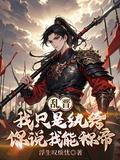 Luan Jin: I'm Just a Playboy, You Said I Can Be Emperor
2Reads5.8Score—Shelves
Luan Jin: I'm Just a Playboy, You Said I Can Be Emperor
2Reads5.8Score—Shelves
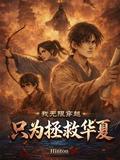 I Travel Infinitely Just to Save China
—Reads5.8Score—Shelves
I Travel Infinitely Just to Save China
—Reads5.8Score—Shelves
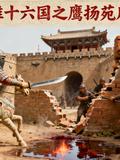 The Eagle of the Sixteen Kingdoms Strives to Yangyuanchuan
3Reads5.8Score—Shelves
The Eagle of the Sixteen Kingdoms Strives to Yangyuanchuan
3Reads5.8Score—Shelves
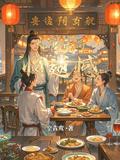 Datang Started with Regrets
9Reads5.8Score—Shelves
Datang Started with Regrets
9Reads5.8Score—Shelves
 Future Sword
—Reads5.8Score—Shelves
Future Sword
—Reads5.8Score—Shelves
 At the End of Jin Dynasty, My Opponents Were Liu Yu and Tuoba Gui
5Reads5.8Score—Shelves
At the End of Jin Dynasty, My Opponents Were Liu Yu and Tuoba Gui
5Reads5.8Score—Shelves