🔥🔥These two are a collection of short stories. Each story is independent. It will make people scared after reading it. It's scary to think about it carefully. I highly recommend it [Like][Like][Like]
This is the novel I read recently. Very short and sweet. Reversal and reversal. The ending is mind-numbing. Those who like suspense novels by Keigo Higashino can read it.
On those souls that refuse to rest in folk ghost stories. On moonlit nights, old people sit around the fire, their voices rising and falling, telling stories that "shouldn't exist but do exist". The children listened with bated breath, eager and fearful, wanting to escape but to get closer. This is the mysterious scene that has been passed down for thousands of years in folk ghost stories - a night ritual of collective unconsciousness, where the living and the dead reach a certain tacit conspiracy to jointly maintain the darkest but most real corner of the national spiritual world. The wandering spirits in Chinese folk ghost stories never follow a simple dichotomy of good and evil. The ghost foxes in Pu Songling's "Strange Stories from a Chinese Studio" often value friendship more than humans. The souls who died unjustly in Ji Xiaolan's "Notes from the Yuewei Cottage" only seek the most basic justice. These stories constitute an inverted world view: the world of the living is hypocritical and snobbish, but the soul after death retains pure humanity. According to the legend of the "drowned ghost" circulating along the coast of Zhejiang, the water ghost's search for a substitute for three years is a rule allowed by heaven. However, when it finally gave up the opportunity to become a substitute and rescued a child who fell into the water, it showed a moral choice that transcended life and death. This complexity elevates ghost stories beyond a mere scare function into thought experiments exploring the limits of human nature. The undead spirits that refuse to leave in folk ghost stories are essentially unfinished narratives. The recurring plot of "injured souls entrusting their dreams" in "Taiping Guangji" is actually the projection of social injustice in the collective psychology. When the real judicial system fails, people create a justice compensation mechanism in the underworld. Behind the legend of "removing corpses" in western Hunan is a poetic expression of the desire of those who died in a foreign land to return to their roots; the story of "ghost marriage" in North China contains gentle compensation for the unfinished life of those who died young. The ghosts in these stories are "troublesome" not because they are inherently evil, but because they have unfulfilled wishes, unsolved grievances, and unexpressed emotions. Folk narratives give them a chance to complete their stories. When justice is achieved and wishes are fulfilled, those souls will leave quietly and complete the transformation from ghosts to ancestors. Today, with the advancement of science, we still need ghost stories. Not because of belief in ghosts, but because these stories carry marginalized memories that mainstream history is unwilling to record. A folklorist recorded in a village in Guizhou: The local legend about the "starving ghost" accurately preserved the traumatic memory of three difficult years, but official documents did not mention it at all. Ghost stories become unofficial historical archives, the wandering undead are unacknowledged victims, and their "haunting" behavior is the resurgence of memory. In the ghost stories of Taiwanese aborigines, their slaughtered ancestors turned into "bird spirits" and returned to their homeland every year; in the stories of old miners in the Northeast, gas explosion victims would continue to patrol the lanes in the form of "blue fireballs". These stories allow obscured historical truths to continue to have a supernatural voice. Contemporary urban legends are variations on ancient ghost stories. The "elevator ghost" in Shanghai's high-rise buildings continues the structure of the traditional house ghost story, but the setting has changed from an old house to a modern apartment; the "last train ghost" mentioned by Beijing taxi drivers is nothing more than an urban variation of the ancient "ghost hitchhiking" story. These new ghost stories also follow the ancient narrative logic: suddenly disappearing passengers, extra seats, unexplained surveillance footage... They constitute the spiritual defense mechanism of modern people - using supernatural explanations to digest the accidents and surprises in urban life. The legend that the ghost of an employee who died suddenly while working overtime at an Internet company "appeared at his workplace on time" is a silent indictment of the overwork culture. The charm of folk ghost stories lies precisely in this ambiguity - they are neither completely true nor purely fictional. When we tell these stories, we are actually conducting a philosophical discussion about the nature of existence: What is reality? Do the invisible things not exist? Where is the dividing line between memory and imagination? In a village in Gansu, people have passed down from generation to generation that there is a "ghost beating the wall" in the back mountain, and geological survey found that there is indeed a strong magnetic field abnormality there, causing disorientation. Scientific explanation and folklore reach a wonderful reconciliation here - the ancients used ghost stories to explain natural phenomena that they could not understand, and this explanation itself contains the confirmation of the phenomenon's existence. Those who laugh at the absurdity of ghost stories may not realize that each nation's attitude towards the dead reflects its civilization's attitude towards history, memory and death. There are very few purely evil ghosts in Chinese folktales; most can be appeased through sacrifice, salvation, or redress of grievances. This concept of "negotiable supernatural" embodies a unique spirit of secularism - even death cannot cut off the ethical responsibilities between people. Burning paper money on the Qingming Festival and setting off river lanterns on the Hungry Ghost Festival are essentially conversations between the living and the dead, and a continuous writing of unfinished stories. In the dead of night, when you walk alone down a dark corridor and suddenly feel an inexplicable chill, when you hear a soft knock on the door despite being alone at home... At that delicate moment between rational explanation and ancient memory, folk ghost stories gain their eternal vitality. They are the code words of our collective subconscious, the embodiment of repressed memories, the faint echoes of countless nameless figures in history. Next time you hear a bizarre ghost story, you might as well put aside your scientific arrogance and think about what kind of memory this story is trying to preserve, what kind of warning it is trying to convey, and what kind of narrative it is trying to complete. Because the souls wandering in the story may be an unrecognized part of ourselves. Although the story has just started, I follow these things (. O‿o.)✎
 Strange Stories from China's Liaozhai Studio: Paper Wife
—Reads8.6Score—Shelves
Strange Stories from China's Liaozhai Studio: Paper Wife
—Reads8.6Score—Shelves
 Folk Tales of Ghosts and Ghosts!
2Reads5.8Score—Shelves
Folk Tales of Ghosts and Ghosts!
2Reads5.8Score—Shelves
 Don't Bow Your Head, There's a Ghost Underground
—Reads8.5Score—Shelves
Don't Bow Your Head, There's a Ghost Underground
—Reads8.5Score—Shelves
 Supernatural Ghost Story: Can Yin Debt
—Reads8.6Score—Shelves
Supernatural Ghost Story: Can Yin Debt
—Reads8.6Score—Shelves
 Aye's Diary of a Ghost Detective: Room 514 of the Old Hotel
—Reads8.5Score—Shelves
Aye's Diary of a Ghost Detective: Room 514 of the Old Hotel
—Reads8.5Score—Shelves
 Mr. Lu's Palm Gummy Candies
—Reads—Score—Shelves
Mr. Lu's Palm Gummy Candies
—Reads—Score—Shelves
 Ano's Diary of a Ghost Detective: Sleeping in a Haunted Mansion
—Reads8.5Score—Shelves
Ano's Diary of a Ghost Detective: Sleeping in a Haunted Mansion
—Reads8.5Score—Shelves
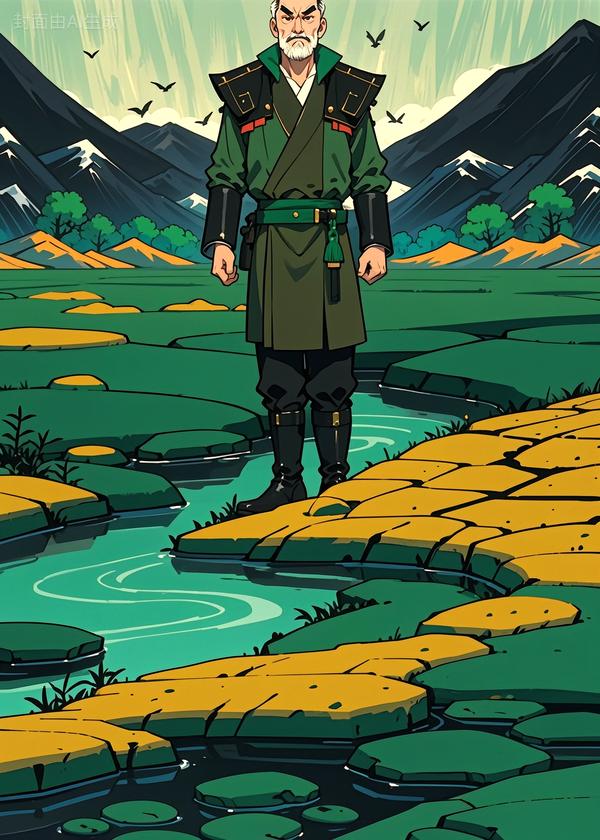 The Iron Coffin in Black Dragon Pond
1Reads8.5Score—Shelves
The Iron Coffin in Black Dragon Pond
1Reads8.5Score—Shelves
 Aye's Diary of a Ghost Detective: the Sound of Dripping Water in the Old House
—Reads8.4Score—Shelves
Aye's Diary of a Ghost Detective: the Sound of Dripping Water in the Old House
—Reads8.4Score—Shelves
 Aye's Diary of a Ghost Detective: the Last Bus on Route 73
—Reads8.5Score—Shelves
Aye's Diary of a Ghost Detective: the Last Bus on Route 73
—Reads8.5Score—Shelves
 Various Kinds of Apiao
—Reads5.8Score—Shelves
Various Kinds of Apiao
—Reads5.8Score—Shelves
 Ano's Diary of a Ghost Detective: the Woman in the Rental House
—Reads8.5Score—Shelves
Ano's Diary of a Ghost Detective: the Woman in the Rental House
—Reads8.5Score—Shelves
 Ano's Spiritual Detective Diary: the Elevator of an Office Building
—Reads8.4Score—Shelves
Ano's Spiritual Detective Diary: the Elevator of an Office Building
—Reads8.4Score—Shelves
 Horrible
62Reads9.0Score—Shelves
Horrible
62Reads9.0Score—Shelves
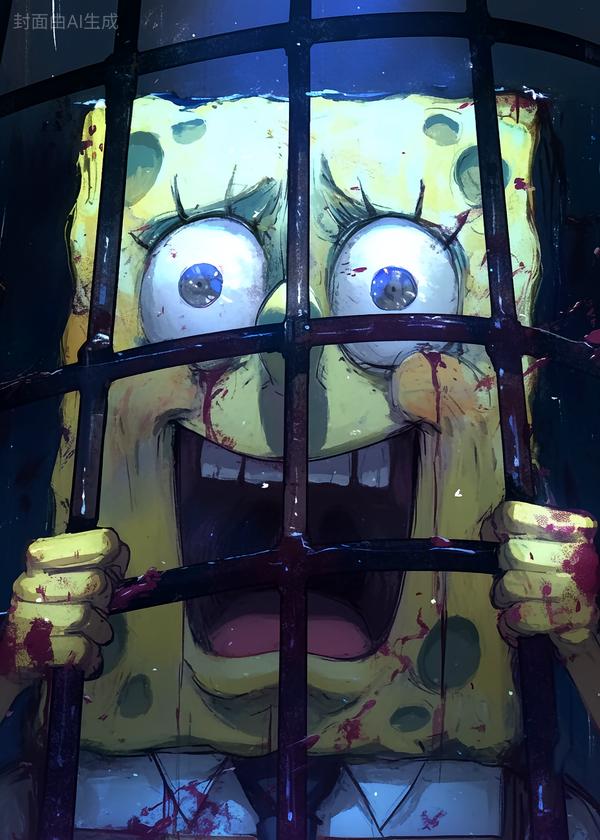 The Adventures of Spongebob Squarepants
1Reads8.6Score—Shelves
The Adventures of Spongebob Squarepants
1Reads8.6Score—Shelves
 After I Ran Away from the Engagement Party, the Prince in Beijing Went Crazy!
173Reads9.0Score—Shelves
After I Ran Away from the Engagement Party, the Prince in Beijing Went Crazy!
173Reads9.0Score—Shelves
 Mysterious Stories
—Reads8.4Score—Shelves
Mysterious Stories
—Reads8.4Score—Shelves
 If You Don't Love Me, We'll Break Up. My Chaebol Heroine Will Never Look Back.
6Reads8.5Score—Shelves
If You Don't Love Me, We'll Break Up. My Chaebol Heroine Will Never Look Back.
6Reads8.5Score—Shelves
 After Returning to the Original World, She Was so Crazy That She Chased Her Out
374Reads9.8Score—Shelves
After Returning to the Original World, She Was so Crazy That She Chased Her Out
374Reads9.8Score—Shelves
 The System Forced Me to Be a Licking Dog, and I Turned the School Bully into a Real Boyfriend
56Reads8.5Score—Shelves
The System Forced Me to Be a Licking Dog, and I Turned the School Bully into a Real Boyfriend
56Reads8.5Score—Shelves
 My Ex-Boyfriend Dumped Me and I Became His Stepmother
54Reads8.4Score—Shelves
My Ex-Boyfriend Dumped Me and I Became His Stepmother
54Reads8.4Score—Shelves
 Nine Ghost Houses
—Reads8.4Score—Shelves
Nine Ghost Houses
—Reads8.4Score—Shelves
 Midnight Surprise
483Reads8.7Score—Shelves
Midnight Surprise
483Reads8.7Score—Shelves
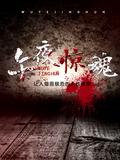 Midnight Terror: a Human Story That Makes People Think Deeply
474Reads8.8Score—Shelves
Midnight Terror: a Human Story That Makes People Think Deeply
474Reads8.8Score—Shelves
 Steal My Engagement Token? No One Can Stop My Fiancé from Going Crazy
384Reads8.5Score—Shelves
Steal My Engagement Token? No One Can Stop My Fiancé from Going Crazy
384Reads8.5Score—Shelves
 Three Kilometers
15Reads—Score—Shelves
Three Kilometers
15Reads—Score—Shelves
 After Being Released from Prison, He Picked up a CEO
7.6kReads9.1Score126Shelves
After Being Released from Prison, He Picked up a CEO
7.6kReads9.1Score126Shelves
 After His Lumbar Disc Herniated, He Cheated Money and Sex
403Reads8.9Score—Shelves
After His Lumbar Disc Herniated, He Cheated Money and Sex
403Reads8.9Score—Shelves
 My Husband Is as Gentle as Jade, but I Died an Unexpected Death
1.8kReads9.8Score—Shelves
My Husband Is as Gentle as Jade, but I Died an Unexpected Death
1.8kReads9.8Score—Shelves
 Atonement: After Plastic Surgery, I Killed My Boyfriend's Family
6Reads—Score—Shelves
Atonement: After Plastic Surgery, I Killed My Boyfriend's Family
6Reads—Score—Shelves
 Cordyceps Immortal
—Reads8.4Score—Shelves
Cordyceps Immortal
—Reads8.4Score—Shelves
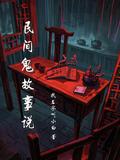 Folk Ghost Stories
66Reads—Score—Shelves
Folk Ghost Stories
66Reads—Score—Shelves
 I Use a Courier Truck to Send Angels to Heaven
—Reads8.5Score—Shelves
I Use a Courier Truck to Send Angels to Heaven
—Reads8.5Score—Shelves
 Exiled to Lingnan, I Made My Whole Family Eat Meat Every Meal
3Reads8.5Score—Shelves
Exiled to Lingnan, I Made My Whole Family Eat Meat Every Meal
3Reads8.5Score—Shelves
 My Rich Wife Insists That I Am a Soft-Boiled Man
1Reads8.5Score—Shelves
My Rich Wife Insists That I Am a Soft-Boiled Man
1Reads8.5Score—Shelves
 33 Days Countdown
—Reads8.4Score—Shelves
33 Days Countdown
—Reads8.4Score—Shelves
 My Husband Said I Was Poor, so I Took Out My Black Card
—Reads8.5Score—Shelves
My Husband Said I Was Poor, so I Took Out My Black Card
—Reads8.5Score—Shelves
 When I Received the Bride, I Discovered That the Groom Also Had a Fiancée
—Reads8.5Score—Shelves
When I Received the Bride, I Discovered That the Groom Also Had a Fiancée
—Reads8.5Score—Shelves
 After I Got Divorced, I Went to Pursue My First Love. My Ex-Wife Knelt in the Rain and Begged Me to Come Back.
—Reads8.5Score—Shelves
After I Got Divorced, I Went to Pursue My First Love. My Ex-Wife Knelt in the Rain and Begged Me to Come Back.
—Reads8.5Score—Shelves
 News Came Out That My Husband Died While on a Business Trip, but I Made an Extra Plate of Braised Pork
—Reads8.5Score—Shelves
News Came Out That My Husband Died While on a Business Trip, but I Made an Extra Plate of Braised Pork
—Reads8.5Score—Shelves
 After Rebirth, I Put My Son and Bride into the Arms of Her Ex-Husband
—Reads8.5Score—Shelves
After Rebirth, I Put My Son and Bride into the Arms of Her Ex-Husband
—Reads8.5Score—Shelves
 On the Day When the CEO Regretted His Marriage, I Took the Triplets and Married My Mortal Enemy.
1Reads8.5Score—Shelves
On the Day When the CEO Regretted His Marriage, I Took the Triplets and Married My Mortal Enemy.
1Reads8.5Score—Shelves
 My Annual Salary Is One Million, but My Wife Secretly Buys a House for My Brother-In-Law
2Reads8.4Score—Shelves
My Annual Salary Is One Million, but My Wife Secretly Buys a House for My Brother-In-Law
2Reads8.4Score—Shelves
 After Sending His Ex-Boyfriend to a Wealthy Family, His Whole Family Was Ruined
13.1kReads9.0Score187Shelves
After Sending His Ex-Boyfriend to a Wealthy Family, His Whole Family Was Ruined
13.1kReads9.0Score187Shelves
 Don't Deliver Takeout in the Middle of the Night
518Reads9.4Score—Shelves
Don't Deliver Takeout in the Middle of the Night
518Reads9.4Score—Shelves
 Divine Product
706Reads5.8Score—Shelves
Divine Product
706Reads5.8Score—Shelves
 I Really Want to Make Peace, but You're Not Happy Anymore
5.9kReads9.2Score—Shelves
I Really Want to Make Peace, but You're Not Happy Anymore
5.9kReads9.2Score—Shelves
 Halloween Horror: If You Don't Give Me Candy, I'll Kill You
—Reads8.5Score—Shelves
Halloween Horror: If You Don't Give Me Candy, I'll Kill You
—Reads8.5Score—Shelves
 This Princess Is Arrogant and Domineering, What Can You Do to Me?
2.3kReads9.0Score—Shelves
This Princess Is Arrogant and Domineering, What Can You Do to Me?
2.3kReads9.0Score—Shelves
 Master, Here I Come!
510Reads8.9Score—Shelves
Master, Here I Come!
510Reads8.9Score—Shelves