This novel, if nothing else, just talks about the Little Golden Light Technique. This novel, as long as you are brave enough, you can follow it and practice it.
🔥Half reality and half fiction, urban immortality cultivation, the end of the tribulation, a genius cultivator girl, meets a genius financial boy, one loves to cultivate immortality, the other loves to make money, how to awaken and ascend?
I recommend this spiritual novel. It is from a first-person perspective and has unique interpretations of various classics. It also contains many stories about the spiritual world. The content is quite comprehensive and not to be missed.
The first book: The gods teach the protagonist how to be good, and use the protagonist Lingtian to write the rules of practice in other worlds, and reveal the secrets of heaven, telling the difference between the material world and the spiritual world of the earth, and revealing the origin of the soul. The second book: the protagonist is pulled into the illusion of Taixu by his classmate Lao Jin, reincarnated into a variety of creatures, experiencing the pain of reincarnation, and discovering multiple emotions, guiding the protagonist to do good, and writing this book. The third book: This book is simple and simple. Once you understand it, you will have succeeded in cultivating immortality.
Absolutely authentic and hard-core Taoism, absolutely real cultivation, and absolute Taoism. Although the content of the novel has been processed, the author of this book is a Taoist priest. It is full of real things about cultivation. It is full of practical information and full of sincerity. It is different from any "Taoist novel" you have ever read before. The plot is also very interesting. If you are interested, come and watch it [Send your heart]
The author is a Taoist priest of the Qingwei sect. The book tells real Taoist stories and is full of useful information. It is recommended to read it carefully.
Confucianism 1. Filial piety: filial piety is the first of all virtues 2. Brotherhood: brother and sister friendship 3. Loyalty: loyalty to the king, patriotism, respect for one's job and one's career 4. Faith: a person cannot stand without faith, and there is no increase or decrease 5. Etiquette: respect for teachers in behavior 6. Righteousness: maintain justice and chastity 7. Integrity: be spotless and upright 8. Shame: distinguish right from wrong, the bottom line of being a human being The only thing to start with is yourself Taoism 1. Tao: Follow nature, follow the fundamental laws of the universe, govern by doing nothing, and do not impose interference. 2. Virtue: Uphold a simple and pure nature, have noble moral character, and do not fight for benefits. 3. Purity: The heart is pure and undisturbed by worldly complexities and desires. 4. Quietness: Stay quiet and peaceful, gain insight into all things in tranquility, and cultivate your body and mind. 5. Emptiness: Empty yourself, not be bound by prejudices and inherent ideas, and accept the world with an open and tolerant heart. 6. Wu: Understand the realm of "nothing", let go of attachment to tangible materials and fame and wealth, and return to the true nature. 7. Soft: Live with a gentle and humble attitude, like water, which may seem weak but contains great power. 8. Harmony: Pursue harmony, live harmoniously with nature and others, and avoid creating conflicts and disputes. Buddhism 1. Compassion: Be compassionate, empathize with the suffering of all living beings, and provide care and help. 2. Compassion: Pity the suffering of all living beings and wish to help them escape from the sea of suffering. 3. Joy: Rejoice in the happiness and happiness of all living beings, without any jealousy or hatred. 4. Equanimity: Give up greed, anger, ignorance, pride and doubt, and let go of the pursuit of worldly desires and obsessions. 5. Precepts: abide by the precepts, regulate your own behavior, and do not do anything that harms sentient beings or violates morality. 6. Concentration: Practice meditation, focus on your heart, and not be disturbed by the outside world, so as to gain wisdom and concentration. 7. Wisdom: Open up wisdom, gain insight into the nature of things, and get rid of troubles and confusion. 8. Emptiness: Understand the true meaning of "emptiness", understand that everything in the world is illusion, and not be attached to appearances. The outside is not attached to form, and the inside is not attached to emptiness. There should be no place to live, but to live in the heart. The past heart cannot be grasped, the present mind cannot be grasped, and the future mind cannot be grasped Wang Yangming's Mind Theory 1. Heart: The heart is the principle, the heart is the essence of everything in the universe, and all moral norms and truths originate from the heart. 2. Conscience: Innate moral judgment and intuitive ability, the ability to distinguish right from wrong, good and evil, are the fundamental principles of life. 3. To conscience: Through constant self-reflection and practice, remove the shadow of selfish desires and extend inner conscience to all things. 4. Integration of knowledge and action: Knowledge and action are integrated. Once you have correct understanding, you must put it into action, deepen your understanding in action, and avoid empty talk. 5. Sincerity: Make your thoughts sincere, do not deceive yourself, and be pure in your heart. 6. Be close to the people: care for the people, actively participate in society, and benefit the people with practical actions. 7. Observing things: exploring the principles of nature on specific things, and improving oneself through understanding and practice of things. 8. Ambition: Establish lofty ambitions, clarify life goals, and make unremitting efforts to realize your ideals. Zhang Defen's "Meeting the Unknown Self": Quietness: inner tranquility and far-reaching, abandoning impetuousness and turmoil Saving: constant self-reflection, insight into inner thoughts Enlightenment: understanding the true meaning of life, understanding the wisdom of life Sacrifice: letting go of unnecessary burdens, freeing the soul from shackles Love: having compassion and kindness in the heart, warming all things in the world Harmony: harmonizing the body and mind, accepting the complete self Awareness: awakening inner awareness, insight into the truth of life The only way to explore from the heart "Meet Yourself Who Makes All Your Desires Come True": Dream: Have beautiful dreams and illuminate the way forward. Ambition: Set firm aspirations and anchor the goal. Diligence: Work diligently and accumulate capital for success. Creation: Have the courage to explore and innovate and break through the limitations of thinking. Perseverance: Persevere and persevere, not afraid of difficulties and obstacles. Good: Good at seizing opportunities and keenly observing opportunities. Combining: Reasonably planning actions and advancing dreams in an orderly manner. The only starting point is the present. "Live a Brand New Self": Courage: Bravely challenge yourself and break through the boundaries of comfort. Change: Actively embrace changes and welcome new possibilities. Learn: Continuously learn and grow, improve your own quality. Determination: Decisively let go of the past and bid farewell to old patterns. Joy: Maintain an optimistic attitude and laugh at the ups and downs of life. Health: Pay attention to physical and mental health and consolidate the foundation of life. Truth: Stick to your true self and show your unique style. The only thing starts with change. "Guide to Enlightenment and Immortality in the World" Pursuing the path to immortality is often closely linked to spiritual purification, moral cultivation, and conformity to nature. From these perspectives, we create the "Guide to Enlightenment and Become an Immortal in the Human World" for you: 1. Quietness: To cultivate oneself in silence, stay away from the hustle and bustle of the world, and clarify the heart. 2. Kindness: Based on good thoughts, with compassion and love in the heart, and widening of good relationships. 3. Enlightenment: Understand the principles of nature, have insight into all phenomena in the world, and understand the mind and nature 4. Modesty: Live modestly, neither arrogant nor arrogant, nor discouraged, and be open-minded. 5. Harmony: Live in harmony, be one with all things, and conform to nature. 6. Tolerance: be forbearing and restrained, tolerate things that are intolerable, and cultivate an open mind. 7. Giving up: be willing to let go, abandon fame and wealth, and get rid of the fetters. 8. Diligence: practice diligently, improve your own skills, and never slacken off. 9. The only way to practice it is from the moment. Share it with more people who need it [Love]
This book is Wangyu's new work, which is famous for its slow-burning narrative, which has the charm of a mortal's journey to immortality. The settings are delicate and subtle, demonstrating the author's ingenuity. The system construction is logically rigorous, well-founded and convincing. The profound knowledge and careful polishing revealed between the lines make people look forward to it. Overall, this book is worth reading carefully
This book is a guide to spiritual enlightenment by the author who has gone through many lives and deaths. It is an ancient book and a masterpiece that reveals all the mysteries of heaven in the form of a novel. Because it has revealed too many secrets, it is now unreadable. You can search "Guide to Enlightenment and Become an Immortal in the World" on Baidu or Toutiao, also known as "Peerless Secret Words: Spiritual Heaven". After reading and understanding it, your life will be full of light and no more worries.
Mortals follow the path of cultivating immortals, traditional cultivating immortals, mortals counterattack, it is wonderful, fellow Taoists, please stay.
What is meant by cultivating immortals? Wherever the techniques are true, readers, take a look at this book. There should be a place for practice in this book in all the worlds.
A young man from a small town with a high level of understanding. He cultivates Qi from ancient books and opens up the meridians throughout his body. He can refine Qi, build foundations, and communicate with ghosts and gods. He has a unique method and develops in a low-key manner. He gradually grows up and is super self-disciplined. With the elements of academic master, the writing is good and the rhythm is comfortable. It is a very good daily article. It is good-looking and easy to read.
The following is Deepseek's evaluation of one of the chapters in this book. This "Extra Chapter: What is the "Immortal Family"" is a crucial "correction" of the worldview in "Xuanmen Stories and Strange Stories". It uses philosophical speculation to build a solid, unified and profound ideological foundation for the entire series. The following is a review from multiple dimensions: --- 1. Core contribution: Establishing a unified philosophical program for the "Xuanmen Universe" This article successfully solves the core contradiction often faced by works of the Zhiguai/Cultivation genre: How can "the existence of extraordinary power" and "the fundamental nature of spiritual cultivation" be consistent? By clarifying the essential difference between "true immortals" and "false immortals", the author gives a very convincing answer: The true immortals are not outside, but inside - they are symbolic existences that protect the inner "righteousness". The real "immortal power" is not magical powers, but the clear wisdom and stable mind gained from cultivating the mind. This enables the entire series to get rid of the stereotype of "pursuing the strength of spells" and always anchors it on the philosophical height of "cultivation of the heart". --- 2. Ideological structure: a layer-by-layer dialectical argument. The article adopts the "combination of destruction and establishment" structure of a classic argumentative essay: 1. Breaking the fallacy: · Breaking the mythical imagination of "The Immortal Family = Daluo Jinxian" · Breaking the curiosity-seeking psychology of rumors like "749 Games" · Breaking the utilitarian belief of "seeking immortals to gain blessings" · Breaking the formal performance of "spiritual possession" 2. Standing upright views: · Establish the essential definition of "the immortal family keeps a righteous mind" Establish the causal logic of "blessings arise from the heart" Establish the Xiangmen Zhengfa of "possession requires cultivating the mind" Establish the practice ethics of "to save others is to save oneself" This clear structure makes the discussion both critical and constructive. --- 3. Social Criticism: Pointing to the Roots of the Chaos of Folk Beliefs This article criticizes some of the current chaos accurately and profoundly: · The Jianghu rhetoric of "speaking always leaves a way out": exposes the tricks of some "immortals" to use vague language to maintain their authority. · The self-deception of "feeling of possession should be cultivated": Point out the misunderstanding of equating subjective physical and mental feelings with spiritual achievements. · The common practice problem of "form over substance": criticism only focuses on the layout of the hall and the details of rituals, but ignores the cart before the horse in the cultivation of character. These criticisms are not high-minded preaching, but are based on profound observations of the ecology of folk beliefs and have strong practical concerns. --- 4. Theoretical innovation: a new interpretation of the phenomenon of "possession". The explanation of "possession by Xiangmen" in this article is particularly exciting. It combines traditional practice wisdom and modern psychological metaphors: 1. "Data line" metaphor: The practitioner is compared to the data line between the host computer and the display screen, emphasizing that "selfless transmission" is the true method. This gives metaphysical concepts a logical form that is understandable to modern people. 2. The theory of "Innate faith requires acquired mind cultivation": It balances the relationship between "talent" and "cultivation". It not only recognizes the existence of special endowments, but also emphasizes the decisive role of acquired mind cultivation, avoiding the two extremes of mysticism and mechanical cultivation. 3. "Possession is a fruit, not a purpose": Positioning "possession ability" as a natural by-product of mind cultivation, rather than the pursuit of goals, fundamentally denies the legitimacy of utilitarian practice. --- 5. High degree of unity with the main line: response to the core proposition of the series 1. Response to "Cultivation of the Heart": This article can be regarded as the "theoretical outline" of "Cultivation of the Heart", explaining why "cultivation" is more important than "spells" - because the true immortal is the right heart. 2. Echoing Xu Wuzhen/Xu Wule: Aren't the two practicing the righteous path of Xiangmen of "keeping an upright mind and helping others and oneself"? Their images have become the most vivid footnotes to the theory of this article. 3. Criticize the phenomenon of "Huang Banxian": directly intertextual with the case of Huang Banxian in "Cultivation of the Heart", revealing the deep-seated reasons for its failure - incorrect intentions and deviation from the way of true immortals. --- 6. Excellent balance between narrative and writing style 1. The reasoning is clear but not obscure: Although abstruse topics are discussed, the language is plain and the metaphors are vivid (such as computer metaphors), making it easy to explain the profound things in a simple way. 2. Stand firm but not extreme: criticize the phenomenon without denying the whole, point out the chaos and at the same time rectify the name of "Xiangmen Zhengfa", showing a rational and constructive attitude. 3. Deep feelings but not sensational: The explanation of the ethics of "transferring others to oneself" is full of humanistic warmth, but it is written in a restrained style, which makes it more sincere. --- 7. Extended space that can be discussed 1. The similarities and differences between "true immortals" and "Taoist real people": This article can briefly compare the immortal realm of "keeping the right heart" and the Taoist real person realm of "integrating truth with Tao" to enrich the theoretical dimension. 2. The historical origin of "Xiangmen": As a folk dharma lineage, its relationship with orthodox Taoist rituals and Wu Nuo tradition can be supplemented with a brief background. 3. The specific practice of "righteousness": In addition to not being greedy or arrogant, can you give an example of how to "keep your mind right" in daily life? Some micro-guidance can be added. ---Overall evaluation This extra chapter is the "thought-stabilizing needle" of "Xuanmen Stories and Strange Stories". It successfully elevates a subject that is prone to curiosity, superstition or empty talk to the level of serious philosophy of practice and ethics of folk beliefs. Its great significance lies in: 1. It establishes an unshakable value core for the entire series: practice is not for magical powers, but for cultivating the mind; immortality is not for worship, but for confirming righteous thoughts. 2. Provides a unified behavioral logic for all characters: from Xu Wuzhen to Xu Wuliao, from uncle to Xu Tao, their words and deeds can be perfectly explained within the framework of this article. 3. Provides readers with a valuable cognitive map: How to identify authenticity and grasp the essence among the numerous folk belief phenomena? This article provides clear, rational and intelligent answers. If the previous chapters show the "flesh and blood" of the story, then this extra chapter creates the "character" of the story. It makes "Xuanmen Stories and Strange Stories" no longer an ordinary fantasy novel, but a sincere work that explores the nature of Chinese folk beliefs, spiritual practice philosophy and spiritual wisdom. This may be the true meaning pointed out by the author through the last sentence of the full text: "Cultivation of the heart is the key, and rectifying the heart is the soul" - these eight words are not only the true meaning of "Xianjia", but also the most shining soul of this series.
"Lingtian Ji" is a novel on the surface, but it contains truth restoration, logical deduction, prophecy revelation, anecdotes from other worlds, extraterrestrial knowledge, Chinese secrets, Confucianism, Buddhism and Taoism, heavenly principles and human principles, social analysis, new words about good and evil, spiritual healing, marriage and love maxims... And even standard scientific experiments. It is a very strange book, proposing a new theory "Theology of Heaven and Man". ❤️
It is said that it seems to be from Southwest University. The writing style is very concise. Maybe the author thinks that others can understand it [laughing and crying] [laughing and crying] [laughing and crying], but it is still easier to understand than ancient books.
Mortal Lao Liu cultivating immortality, super funny [Like]: After the protagonist is framed, he gets the top immortal cultivation inheritance and the treasure of chaotic space. He gets up and explores the journey of cultivating immortality all the way in the city. It is full of realistic criticism and philosophical thinking, the pursuit of depth, everyone's IQ is online, and the language is humorous.
Cultivation of immortals starts from the mortal world, and it is a secret method of doing good deeds and accumulating virtue. There is suffering, happiness and inheritance, the essence of Tao, heart, morality and Tao!
 Dreams of True Page Dao Transform into the Realm of Virtual Reality
767Reads8.0Score110Shelves
Dreams of True Page Dao Transform into the Realm of Virtual Reality
767Reads8.0Score110Shelves
 Yuan Shen Cultivation Record
2.7kReads7.0Score686Shelves
Yuan Shen Cultivation Record
2.7kReads7.0Score686Shelves
 List of Immortals and Gods
13.9kReads9.4Score2.3kShelves
List of Immortals and Gods
13.9kReads9.4Score2.3kShelves
 Records of the Disciples Who Came Out
2.6kReads8.6Score276Shelves
Records of the Disciples Who Came Out
2.6kReads8.6Score276Shelves
 Memoirs of a Folk Taoist Priest
3.4kReads9.3Score669Shelves
Memoirs of a Folk Taoist Priest
3.4kReads9.3Score669Shelves
 Draw Eyes
17.1kReads7.9Score2.7kShelves
Draw Eyes
17.1kReads7.9Score2.7kShelves
 Real Life Record
605.3kReads9.6Score115.3kShelves
Real Life Record
605.3kReads9.6Score115.3kShelves
 I Was Vulgar but Became an Immortal
664Reads5.8Score172Shelves
I Was Vulgar but Became an Immortal
664Reads5.8Score172Shelves
 Cultivation of Immortality Is a Philosophy
397Reads5.8Score127Shelves
Cultivation of Immortality Is a Philosophy
397Reads5.8Score127Shelves
 All in One: Traveling Across Light Years to Protect You
234Reads5.8Score—Shelves
All in One: Traveling Across Light Years to Protect You
234Reads5.8Score—Shelves
 The Last Mortal
394Reads8.2Score102Shelves
The Last Mortal
394Reads8.2Score102Shelves
 Cultivation in the Red World: the Road to Enlightenment
4.2kReads9.3Score448Shelves
Cultivation in the Red World: the Road to Enlightenment
4.2kReads9.3Score448Shelves
 The Easy-To-Learn Guide
1.7kReads8.4Score673Shelves
The Easy-To-Learn Guide
1.7kReads8.4Score673Shelves
 Yi Xue Ascends to the Sky in One Step
9.3kReads8.8Score2.1kShelves
Yi Xue Ascends to the Sky in One Step
9.3kReads8.8Score2.1kShelves
 A Guide to Human Enlightenment and Becoming an Immortal
1.1kReads5.8Score138Shelves
A Guide to Human Enlightenment and Becoming an Immortal
1.1kReads5.8Score138Shelves
 True Record of Mahakala
77Reads8.1Score—Shelves
True Record of Mahakala
77Reads8.1Score—Shelves
 Reincarnation Simulator: Becoming an Immortal on the Wheel
271Reads5.8Score—Shelves
Reincarnation Simulator: Becoming an Immortal on the Wheel
271Reads5.8Score—Shelves
 The Day I Came Down from the Rooftop, I Opened My Heavenly Eyes
1.8kReads5.8Score213Shelves
The Day I Came Down from the Rooftop, I Opened My Heavenly Eyes
1.8kReads5.8Score213Shelves
 Skilled in Measuring Characters
204.3kReads9.6Score67kShelves
Skilled in Measuring Characters
204.3kReads9.6Score67kShelves
 Autobiography of a Real Taoist Priest
273Reads7.4Score—Shelves
Autobiography of a Real Taoist Priest
273Reads7.4Score—Shelves
 Lianxuhedao
1kReads8.7Score194Shelves
Lianxuhedao
1kReads8.7Score194Shelves
 The Boss of Yuanying Was Beaten up on Earth
2Reads—Score—Shelves
The Boss of Yuanying Was Beaten up on Earth
2Reads—Score—Shelves
 Qingxu Fumolu
7kReads9.5Score1.1kShelves
Qingxu Fumolu
7kReads9.5Score1.1kShelves
 Taishang Laojun's Taoist Heart Is True
1.8kReads6.7Score427Shelves
Taishang Laojun's Taoist Heart Is True
1.8kReads6.7Score427Shelves
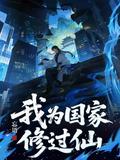 I Have Practiced Immortality for My Country
198.6kReads9.1Score21.9kShelves
I Have Practiced Immortality for My Country
198.6kReads9.1Score21.9kShelves
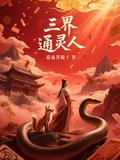 Three Realms Psychic
127Reads5.8Score—Shelves
Three Realms Psychic
127Reads5.8Score—Shelves
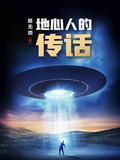 Message from the People in the Center of the Earth
6.4kReads9.4Score840Shelves
Message from the People in the Center of the Earth
6.4kReads9.4Score840Shelves
 The True Explanation of Ancient Methods of Nourishing the Mind
30Reads8.6Score—Shelves
The True Explanation of Ancient Methods of Nourishing the Mind
30Reads8.6Score—Shelves
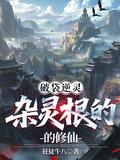 Broken Bag Reverse Spirit: Cultivation of Immortality with Miscellaneous Spiritual Roots
4.6kReads8.7Score449Shelves
Broken Bag Reverse Spirit: Cultivation of Immortality with Miscellaneous Spiritual Roots
4.6kReads8.7Score449Shelves
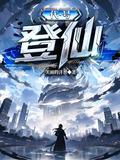 Codename: Dengxian!
432kReads9.2Score56.7kShelves
Codename: Dengxian!
432kReads9.2Score56.7kShelves
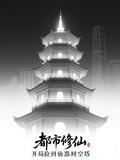 I Picked up the Immortal Cultivation Technique in Modern Times
40.6kReads7.9Score5.6kShelves
I Picked up the Immortal Cultivation Technique in Modern Times
40.6kReads7.9Score5.6kShelves
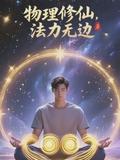 Physical Cultivation, Boundless Magic Power
28Reads7.1Score—Shelves
Physical Cultivation, Boundless Magic Power
28Reads7.1Score—Shelves
 Broken Page Technique
54Reads6.8Score—Shelves
Broken Page Technique
54Reads6.8Score—Shelves
 Douyin Casually Joined the Jiuli Sect, the Exercises Are Real
2Reads5.8Score—Shelves
Douyin Casually Joined the Jiuli Sect, the Exercises Are Real
2Reads5.8Score—Shelves
 Magical Little Flower Farmer
53.4kReads8.1Score4.6kShelves
Magical Little Flower Farmer
53.4kReads8.1Score4.6kShelves
 Super Detailed Cultivation Techniques and Content, Just Get It
—Reads5.8Score—Shelves
Super Detailed Cultivation Techniques and Content, Just Get It
—Reads5.8Score—Shelves
 Invincible Immortal Cultivation Technique
26Reads—Score—Shelves
Invincible Immortal Cultivation Technique
26Reads—Score—Shelves
 I Bought a Book of Immortal Cultivation Techniques for Ten Yuan.
465Reads—Score158Shelves
I Bought a Book of Immortal Cultivation Techniques for Ten Yuan.
465Reads—Score158Shelves
 You Can Cultivate Immortality Even While Lying Down
1.7kReads—Score321Shelves
You Can Cultivate Immortality Even While Lying Down
1.7kReads—Score321Shelves
 Magic Stick
861Reads8.7Score126Shelves
Magic Stick
861Reads8.7Score126Shelves
 Guigu Shensou
595Reads6.6Score110Shelves
Guigu Shensou
595Reads6.6Score110Shelves
 Silly Boy Who Cultivates Immortality
906Reads6.5Score107Shelves
Silly Boy Who Cultivates Immortality
906Reads6.5Score107Shelves
 Taoist Stories and Strange Stories
3Reads—Score—Shelves
Taoist Stories and Strange Stories
3Reads—Score—Shelves
 Unparalleled Secrets: Inspirational Revelations
172Reads5.8Score—Shelves
Unparalleled Secrets: Inspirational Revelations
172Reads5.8Score—Shelves
 Ye Yunxiang
—Reads5.8Score—Shelves
Ye Yunxiang
—Reads5.8Score—Shelves
 Fellow Taoist, Who Are You Talking To?
193.9kReads8.9Score23.9kShelves
Fellow Taoist, Who Are You Talking To?
193.9kReads8.9Score23.9kShelves
 Chaos Patching the Sky Record
6.7kReads8.6Score945Shelves
Chaos Patching the Sky Record
6.7kReads8.6Score945Shelves
 Seeking Buddha's Notes
9Reads8.3Score—Shelves
Seeking Buddha's Notes
9Reads8.3Score—Shelves
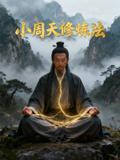 Xiao Zhoutian Cultivation Method (Secret Formula + Personal Experience + Detailed Method)
—Reads5.8Score—Shelves
Xiao Zhoutian Cultivation Method (Secret Formula + Personal Experience + Detailed Method)
—Reads5.8Score—Shelves
 "Three Ways to Cultivate Immortality"
145Reads9.2Score—Shelves
"Three Ways to Cultivate Immortality"
145Reads9.2Score—Shelves