Is There Any Book That Is Better Than "Peerless Martial God"? I Have Been Reading for a Long Time.
Views
46.4k
Books
63
Recommendations
32
Updated
4mo ago
I want someone who uses a sword and then retreats to the mountains and forests to hone his skills after being defeated by others, and then comes back to the world. A little more detailed, such as what you get in each battle, don't be too grinding, don't ask to be better than the peerless Martial God, just be about the same. 😁
If you prefer the gods, Buddhas and ghosts in ancient books, and are obsessed with the passion and tenderness of heroes in troubled times, then "Yide Fengshen Ji" will definitely make you plunge into this wonderland of yin and yang, and it will be difficult to get out. Who would have thought that Zhang Yide, who drove away millions of soldiers with a single shout from Changbanpo, would become a "soul-protecting captain" who traveled between yin and yang after his death? This 500-chapter mythical scroll was written from the time when his soul left the body after he was killed, and gradually revealed the secrets of the underworld and the grievances of the world, carving out the image of "Mercy Zhang Fei" in three aspects - not only the bravery of the snake spear of eight feet to open up the underworld, but also the delicacy of holding the judge's pen to change the fate of the wronged soul, and even hiding the simplest persistence in the word "justice". You will follow him across the Naihe Bridge and see the past that floated in Meng Po Soup: the tofu seller Wang Erniu lost his life to protect the mute orphan girl, the judge who wandered at night changed the book of life and death due to family affection, and even Xia Houjie, who was yelled to death by him, had some unknown grievances hidden in the eighteenth level of hell. Every chapter is a strange case, and every case is entangled with the smoke and fire of the world - there are no dazzling fantasy spells, only folklore passed down orally from our ancestors: the cinnabar of the soul-locking array, the taboo of life-changing ink, Ksitigarbha's tin staff knocking on the door of evil souls, and the yin and yang boundary drawn by the golden hoop separates obsession and peace. The writing style has a deep classical charm. When describing the gloom of the underworld, "the black water of the Forgotten River is covered with bone residue, and the redness of the flowers on the other side is like splashed blood"; when describing the tenderness of the hero, "there are peach petals floating in the golden light of the Xuande sword, which are the fragments of the embroidered handkerchief of the mute girl when she was alone." Between the lines, there is both the strangeness and magnificence of "Journey to the West" and the human warmth of "Liao Zhai". Reading it is like drinking old wine, which feels spicy at first, but after a careful taste, it has a sweet aftertaste. The most touching thing is Zhang Fei's transformation on the road to protecting his soul. From the fierce general who shouted to kill Zhentian, to the "soul-protecting captain" who stops for the souls of wronged souls now, he has held a spear and a pen, seen evil spirits and saved people. You will see him slamming the desk angrily in the Temple of Hell, just to seek justice for the nameless mute woman; you will see him promising to "overturn the verdict one by one" to the resentful ghosts in the city who died in vain, with the light in his eyes brighter than the Xuande sword. How is this a story about gods and Buddhas? It is clearly the thought hidden in every ordinary person's heart - may good and evil be rewarded, and may justice never be delayed. Opening the pages of the book, you follow Zhang Fei on this Yin and Yang road. In the front are the cries by the Naihe Bridge, in the back are the karmic fires of the eighteenth level of hell, on the left are the fireworks that have not cooled down in the world, and on the right are the obsessions that linger in the underworld. The story in five hundred chapters talks about gods and ghosts, but it talks about human hearts. If you also believe that "there is a god three feet above your head" and hope that "the right path in the world is subject to vicissitudes of life," you will definitely read this book late at night and refuse to put it down. When you close the page, your heart will still be burning with a warm fire.
It basically meets your requirements. As long as one person comes to see it, I will be satisfied. It is to constantly hone oneself through practice. Discover your own shortcomings in battle and get guidance from others.
"The Legend of Zhao Zilong" has 500 chapters. It is a heroic epic tempered in the war of the Three Kingdoms, and it is also a long song of rivers and lakes intertwined with chivalry and tenderness. It takes Zhao Yun's life as the main line, from the youthful days of apprenticeship to the vicissitudes of his death from illness in his later years. It combines official historical classics such as "Paanhe saved Gongsun", "Changban savior" and "Hanshui is full of courage" with folk legends such as "Twelve generals in Cao's camp with a spear" and "Persuading Pei Yuanshao to surrender under the moon". You can not only see the majestic battlefield where the guns shoot out like lightning and the horses ride together, but you can also read the warmth of the old woman giving shoes and the children offering fruits; you can not only feel the martial arts charm of the seven gun flowers on the tip of "Hundred Birds Chasing the Phoenix Spear", but also touch the tenderness of Zhao Yun's teaching of marksmanship to the young master under the lamp. The text imitates the simple style of "The Romance of the Three Kingdoms", and the character's temperament can be seen in half the text and half the white: Zhao Yun's sentence "Although I am not talented, I am willing to go through fire and water for the Ming Dynasty" is clear and sincere; Cao Cao sighs "If Zhao Yun is my son, why worry about the uncertainty of the world", showing his cherishment of talent. The chapter chapter condenses the core with seven characters: "Zan was suspicious of him and treated him coldly" to hide the suspicion of the emperor and his ministers; "Zilong defends Xiaopei" to express loyalty and righteousness; foreshadowing and suspense are like tributaries of the Yangtze River, converging into a magnificent epic torrent. The Zhao Yun here is not as brave as an ordinary man. He is responsible for provoking traitors and protecting the people. Loyalty is not loyalty to one master, but the backbone of upholding morality and holding up the world. The legend of five hundred chapters is not only the history of one person's battles, but also the epitome of the Three Kingdoms - the chivalry can be seen in the light of swords, the hearts of the people can be seen in the smoke and lights, and the history of history can be seen in thousands of years of pen and ink. If you love the wars and iron horses of the Three Kingdoms, the happy grudges of the Jianghu, and the innocent heart of heroes, this "Legend of Zhao Zilong" will definitely allow you to meet the true hero of Changshan with a silver spear and a white horse, who protects the world and the people.
The story "Luoshui Yanhua" tells the story of Miss Zhen Mi's "job-hopping" adventures in the troubled times of the Three Kingdoms. In the beginning, she was the second young mistress of the Yuan family, guarding the mulberry garden in Yecheng for a peaceful time. However, when Cao Jun arrived, the good days were shattered into mulberry sauce. He thought he was going to be cannon fodder in troubled times, but Cao Pi took a fancy to him and dragged him into the Cao Mansion as the "General Manager of the Mulberry Garden". Here Cao Pi chased her persistently, delivering mulberry seedlings and learning silk reeling, as clumsy as a chick learning to fly; over there, her ex-husband Yuan Xi was in Liaodong, so he could only ask the swallow to say "wait for me", but the swallow got lost and sent the letter to the wrong place. In the middle, Luo Shui and Luo Shen were interspersed as the "emotional mentor". In the dream, Zhen Mi was given the key point: "Girl, don't fight to the death, Cao Pi is a reliable tree!" So Zhen Mi went from being "forced to do business" to sincerely accepting it, and managed Cao Mansion's mulberry garden to be more prosperous than love. On the wisdom of survival in troubled times? Zhen Mi has proven with her actions that if she can protect the mulberry seedlings and understand people's hearts, even if she changes her "owner", she can still live a successful life - after all, even the gods have stamped and certified it. This fate is reliable!
Reading "The Legend of the Water Margin": A heroic epic that touches the world and the hearts of the people. If there is any Chinese classical novel that can make people feel excited and confused after reading "The Legend of the Water Margin", "The Legend of the Water Margin" must be among them. It is never a simple story of "robbing families and homes", but uses the rise and fall of one hundred and eight heroes to fully describe the morality, helplessness and complexity of human nature in troubled times. You will clench your fists for Lin Chong's desperate counterattack in "Fengxue Mountain Temple", and your blood will surge up for Lu Zhishen's chivalrous spirit and courage in "punching down Guanxi"; you will sigh at Wu Song's bravery in "Fighting Tigers at Jingyanggang", and you will pity Song Jiang's struggle in "Anti-Poetry in Xunyang Tower". These heroes are not perfect gods - Li Kui is reckless and murderous, Wu Song is headstrong, and Song Jiang's obsession with recruiting peace is the foreshadowing of tragedy. But it is this "imperfection" that makes them more vivid than any legendary characters, making them feel like they have really lived in the arena of the Northern Song Dynasty. The world in the book is more than just swords and swords. From the feasting and feasting at Chai Jinzhuang to the "big bowls of drinking wine and large pieces of meat" in Liangshan Poli, the "brotherhood" that the Chinese people yearn for most is hidden; from the imperial recruitment to the brutal conquest of Fangla, the cracks in reality behind "doing justice for heaven" are opened up - heroes can defeat corrupt officials, but they cannot escape the torrent of the times. Whether you are reading classical novels for the first time or want to read them again, "Water Margin" is worth reading. It will make you understand that true heroism is never invincible, but knowing that the road ahead is difficult and still willing to live a vigorous life for the "righteousness" in your heart. Do you need me to help you sort out the personalities and fateful turning points of several key characters in the book, so that you can more easily grasp the core when reading?
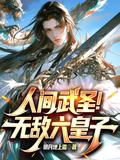 The Martial Saint in the World! the Invincible Sixth Prince
4.1kReads8.8Score222Shelves
The Martial Saint in the World! the Invincible Sixth Prince
4.1kReads8.8Score222Shelves
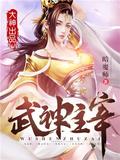 God of War Dominates
23.2kReads9.0Score4.7kShelves
God of War Dominates
23.2kReads9.0Score4.7kShelves
 Phantom Godslayer
—Reads—Score—Shelves
Phantom Godslayer
—Reads—Score—Shelves
 Soul-Breaking Ancient Martial Arts
—Reads—Score—Shelves
Soul-Breaking Ancient Martial Arts
—Reads—Score—Shelves
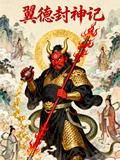 Yide***
—Reads5.8Score—Shelves
Yide***
—Reads5.8Score—Shelves
 Wuhuang Benji
—Reads—Score—Shelves
Wuhuang Benji
—Reads—Score—Shelves
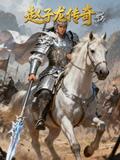 Zhao Zi***
—Reads5.8Score—Shelves
Zhao Zi***
—Reads5.8Score—Shelves
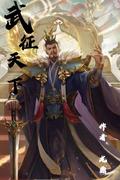 Wu Zheng**
—Reads5.8Score—Shelves
Wu Zheng**
—Reads5.8Score—Shelves
 Luoshui**
—Reads5.8Score—Shelves
Luoshui**
—Reads5.8Score—Shelves
 Martial Arts*
—Reads5.8Score—Shelves
Martial Arts*
—Reads5.8Score—Shelves
 Warrior**
—Reads5.8Score—Shelves
Warrior**
—Reads5.8Score—Shelves
 Water Margin**
—Reads5.8Score—Shelves
Water Margin**
—Reads5.8Score—Shelves